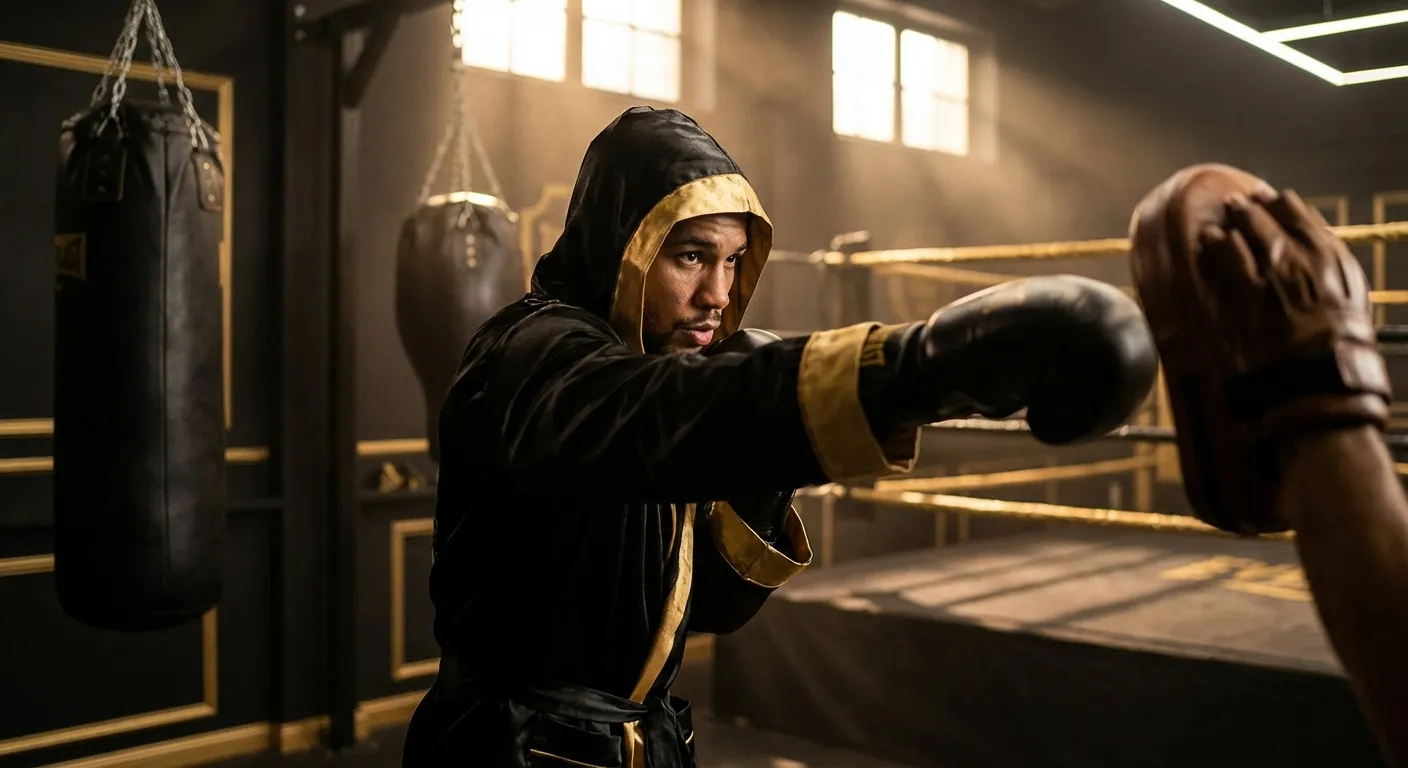
Biomechanics research on the boxing jab shows the jab accounts for the majority of punch output in elite bouts. Boxing Science's technical programme uses jab accuracy as the primary technical assessment metric for beginners.
Almost every boxing instructor will tell you the jab is the most important punch. It sets up everything else - it establishes range, it disrupts your opponent's timing, it creates openings for power shots, and it keeps opponents from being comfortable. Floyd Mayweather, arguably the most technically sound boxer of his generation, described the jab as the most underrated weapon in boxing.
Most beginners have a jab that is decorative rather than functional. Here is how to develop one that actually works.
What a Jab Is Not
Before describing what a proper jab looks like, it helps to describe what most beginners do instead.
A weak jab is thrown with the arm only. The shoulder does not roll forward, the hips do not rotate minimally, and the weight does not shift at all. It is a slap with a closed fist. It does not set anything up because there is no power behind it and a half-attentive opponent simply ignores it.
A telegraphed jab is preceded by a draw-back of the arm. The elbow pulls back slightly before the punch lands. This is the most common amateur tell. Any experienced boxer will see it and slip to land a hard counter.
A slow jab is thrown without commitment. The hand moves toward the target without conviction and retracts the same way. It is easily caught, parried, or simply walked through.
The Mechanics of a Working Jab
Starting position: lead foot forward, weight distributed roughly 60-40 front to back, both hands at chin height, elbows close to ribs, chin slightly tucked.
The jab: the lead hand extends straight toward the target. At the same moment, the lead shoulder rotates slightly forward - not dramatically, but enough that the shoulder bone is ahead of the chin at the moment of impact. The fist rotates from a vertical position to a horizontal one during the extension. The back hand pulls tight to the chin simultaneously.
On return: the hand comes straight back along the same line it left. Not dipping, not swinging. Straight out, straight back.
The whole movement takes less than a third of a second when executed properly.
Why the Shoulder Matters
The shoulder rolling forward serves two purposes. First, it adds the mass of the shoulder to the punch - a jab thrown with shoulder engagement is harder than one thrown with arm alone, even at the same speed. Second, it protects the chin. When the lead shoulder is forward and the back hand is at the cheek, the chin is behind the shoulder on the jabbing side. This makes you harder to counter while you are punching.
A beginner jab exposes the chin. A proper jab protects it.
Drilling the Jab
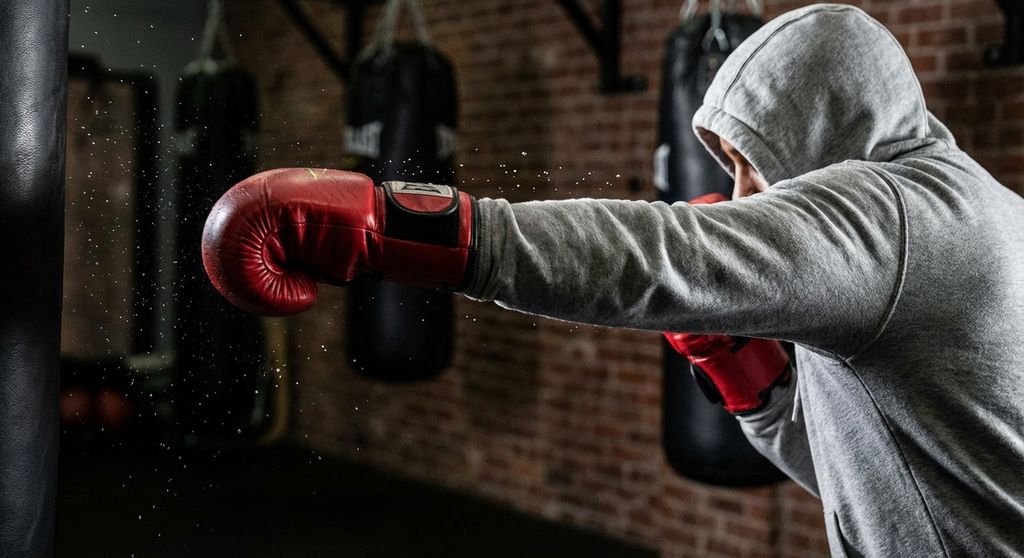
On the bag: stand at jab range - close enough that your full extension reaches the bag. Throw single jabs with a two-second gap between each one. Focus entirely on the shoulder rotation and the straight return. Do this for three minutes without throwing anything else. This is boring. It is also how you build the habit.
In the mirror: watch your shoulder. Is it coming forward? Is your chin coming up as you punch (a common error)? Is the hand returning straight? The mirror is your most honest coach for solo technical work.
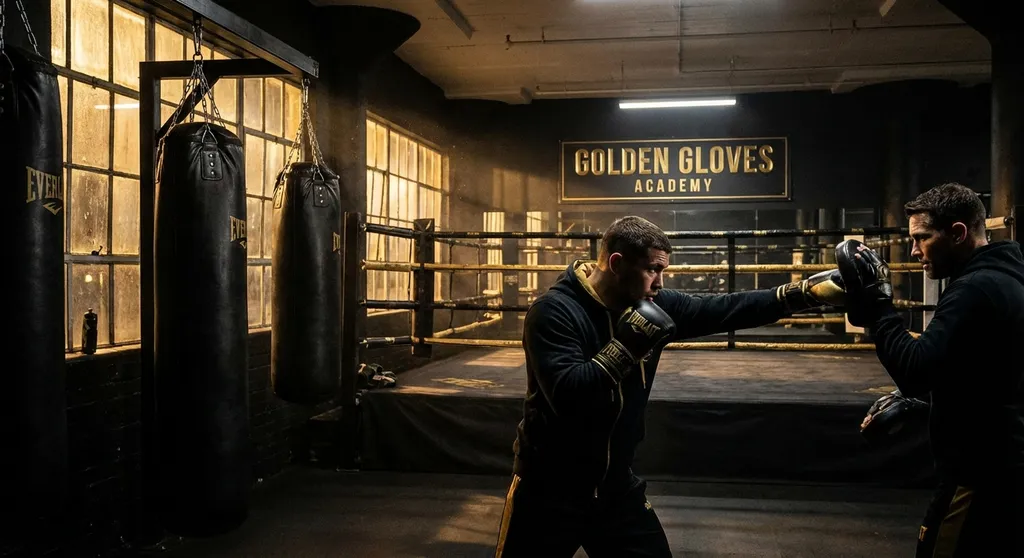
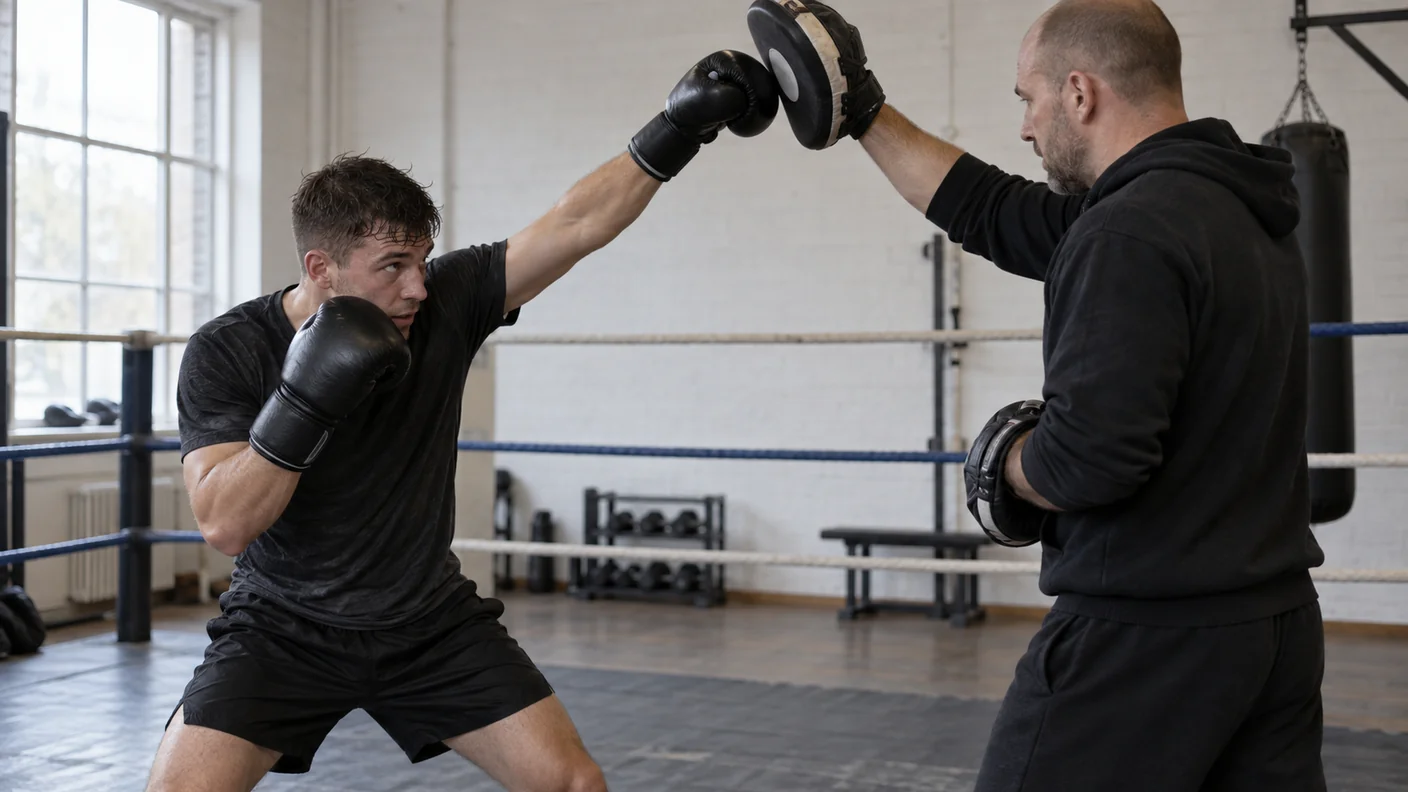
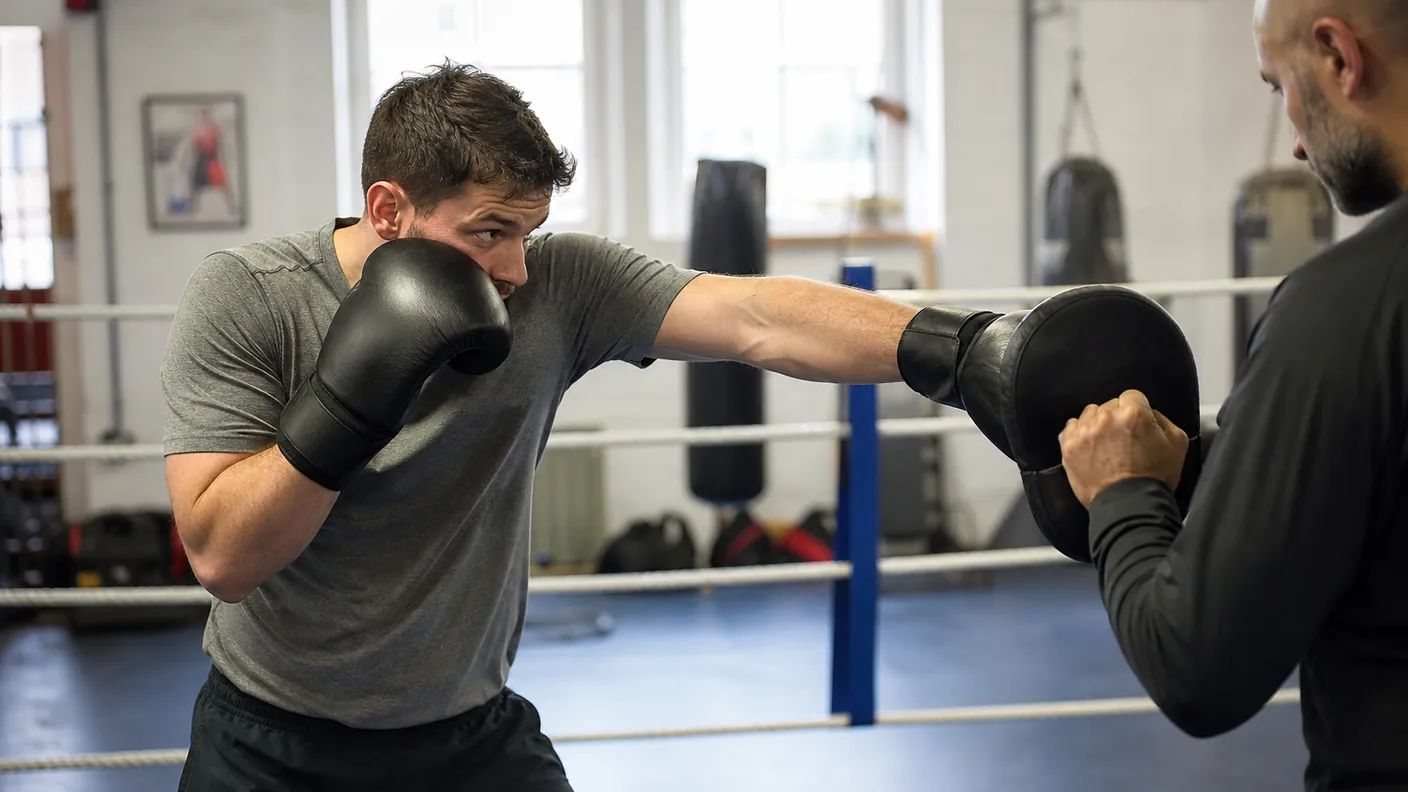
With a coach on pads: a good pad holder will catch your jab at the correct distance and give you feedback on whether it has any weight behind it. You will quickly learn the difference between a jab that lands with substance and one that does not.
The Jab as a Tool
A working jab is used for range finding, disruption, and setup. You throw it when moving forward, sideways, and retreating. You throw it single and double (a fast second jab to the same line). You throw it to the body as well as the head.
The double jab is particularly useful because the first jab draws a defensive response and the second lands before the adjustment is complete. Many boxers who develop a reliable double jab find their cross lands more often simply because the opponent is committed to blocking the jab.
Getting Your Jab Corrected
The jab looks simple and is not. The details - shoulder engagement, chin protection, straight return - are the difference between a shot that changes what happens in a bout and one that is noise.
If you want your jab properly assessed and corrected, you need a coach watching you throw it. The recreational adults class at Honour and Glory Boxing Club in Kidbrooke includes technical coaching on the fundamental punches. Claim a free trial session to have your current jab looked at.
H&G Team
Writer at Honour & Glory Boxing Club, a community boxing gym in Kidbrooke, South East London.
KEEP READING
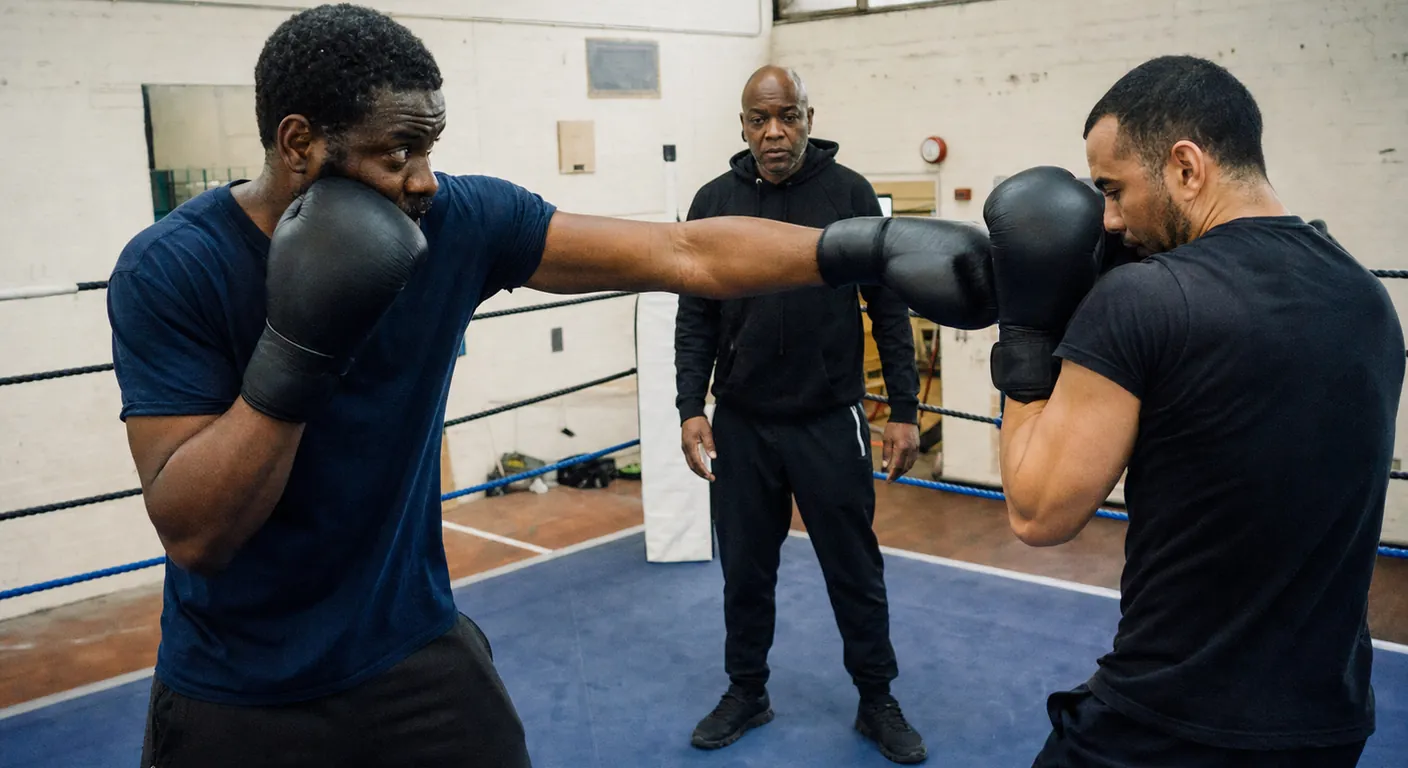
How to Defend the Jab in Boxing
Learn how to defend the jab with a catch, slip, block and exit without losing stance, balance or the chance to punch back.
How to Use an Up Jab in Boxing
Use a compact up jab to change the line, test a high guard and keep your stance ready for the next decision.
The Body Jab: A Safe Boxing Setup
Use a compact body jab to change the target, check range and set up the next decision without falling over your front foot.
Was this page helpful?
It takes one tap, and it genuinely helps.
Choose your next step
Turn this article into the right action
Some readers are ready to book. Some need the class route first. Pick the route that matches what you actually want.