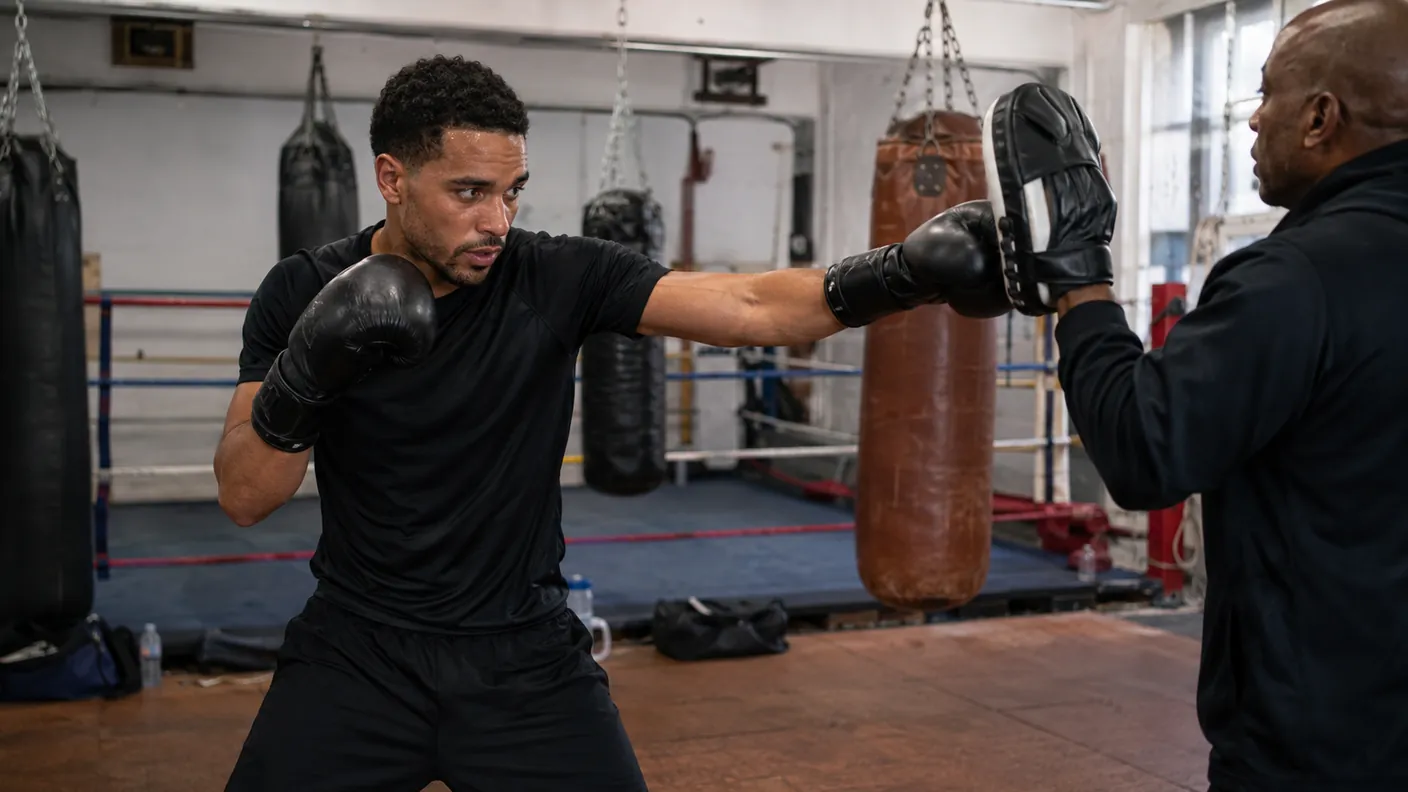
Not every punch needs to hurt.
Some punches are there to make space, cover your entry, occupy a glove or make the other boxer show a habit. They are real punches, but they are thrown with a lighter touch because their main job is to improve the position for the next decision.
That distinction matters. A lazy punch is thrown without balance, intent or a return to guard. A light touch punch has a job. It might help you step into range behind a jab, make a high guard close, or put a glove in the other boxer’s line of sight before a cleaner shot arrives.
Watch the short video below, then use the coaching notes to keep these touches useful rather than busy.
A light touch is still a proper punch
The glove leaves along a sensible line and returns to guard. Your chin stays behind the shoulder. Your feet stay underneath you. The difference is that you do not throw every early punch as if it has to finish the exchange.
Think of a jab used to enter range. You may not expect it to score heavily, but it gives the lead foot cover while the rear foot follows into stance. That creates a better base for a cross, another jab, a step out or a reset. The first punch has made the next action more honest.
A feint is different. A feint suggests a punch without fully delivering it, hoping to draw a defensive reaction. A light touch is an actual punch. It can touch the glove, chest line or a coach-held mitt, then come home before you decide what it told you.
Use the touch to take position
The simplest version is a light jab while stepping in. Start just outside clean punching range. Let the jab travel as the lead foot takes a small step, then let the rear foot recover the stance. Freeze for a beat before adding anything else.
The test is simple. Could you throw a proper cross, cover a return or leave on an angle without rearranging your feet? If the answer is no, the entry was too large or the jab was reaching.
A study of lead straight-punch mechanics describes the punch as a coordinated sequence through the body, rather than an arm thrown in isolation. That is useful here. A light jab does not excuse poor feet. It should make the feet more useful, not leave them behind.
Use this pad drill:
- Stand just outside normal jab range.
- Step in behind one light jab to a mitt.
- Bring the glove home and freeze in stance.
- The coach shows either a second mitt, a guard cue or nothing.
- Throw one measured punch only if the cue and range support it.
If there is no clear follow-up, reset. The first punch still did its job if it brought you into balance.
Make the guard give you information
A light touch can also ask a question without forcing an answer.
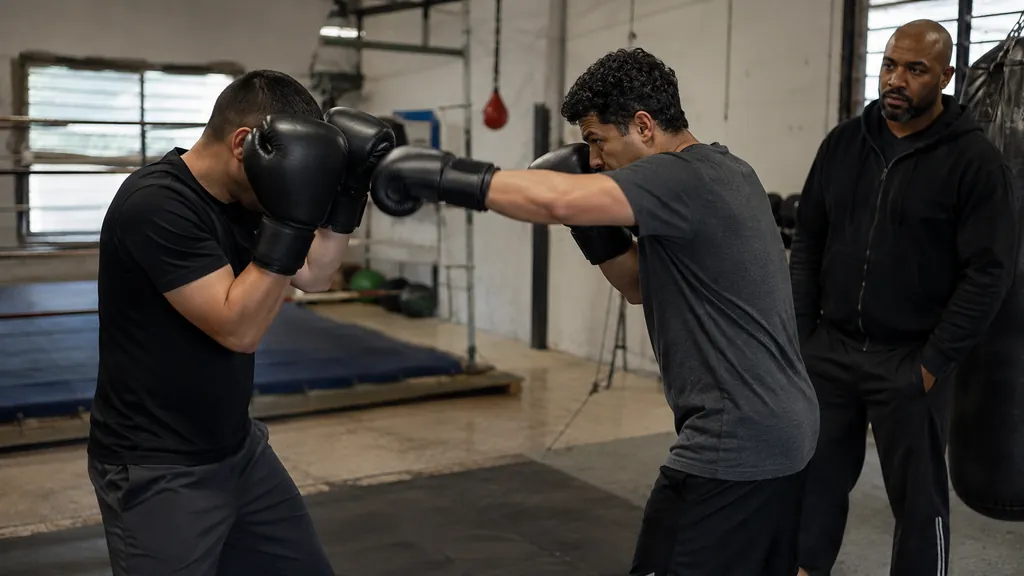
Touch the high guard with a jab and notice what changes. Does the other boxer cover tighter? Does their rear hand reach to parry? Do they step back? Do they slip the same way each time? You are not collecting tricks. You are learning what is in front of you before committing to a harder shot.
A systematic review of anticipation in combat sports found that more experienced performers tend to use early movement information more effectively. In a coached round, that means paying attention to a shoulder turn, glove movement or first step rather than staring only at the target you want to hit.
Keep the first response small. If their high guard closes, a body-line jab may be there later. If they parry wide, the centre may briefly open. If they step back, take ground with your feet before you reach with a cross. If they do nothing, do not become impatient. Bring the glove home and show another honest question.
This connects with boxing set-up jabs. A first jab can score, measure or prepare the next shot. The useful habit is deciding which job it has before you throw it.
Change the tempo without losing your shape
The point of a light touch is not to throw soft punches all round. It is to make the committed punch less predictable.
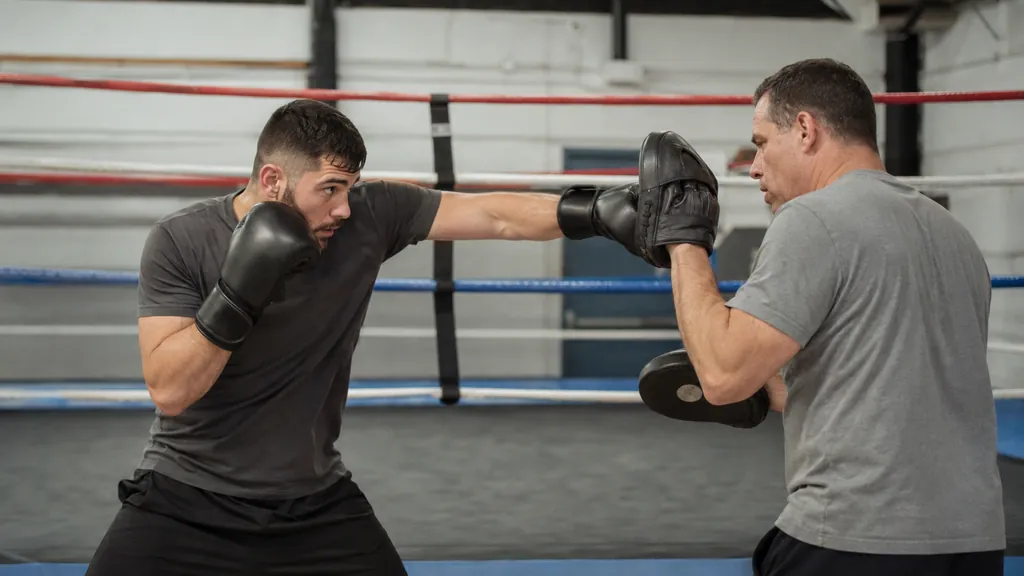
A simple example is two light jabs to a coach-held mitt, followed by one sharper cross when the mitt appears on the third beat. The first two jabs help set range and occupy the guard. The cross is the shot that asks for real acceleration.
Do not force the pattern onto a partner. In a controlled drill, the coach should vary the final cue or take the target away. That teaches you that the light touches are preparation, not permission to throw a pre-planned combination at somebody who has already moved.
A good rhythm change has three parts:
- light touch, return and settle
- another light touch or a small foot adjustment
- one sharper jab or cross only when distance and guard position agree
The first two punches must still look credible. If they float from the elbow, fall short or leave the lead arm parked in front, the other boxer has no reason to respect them. Make them compact enough to return quickly, then let the final shot have a different pace rather than a huge wind-up.
Three rounds to learn the difference
This is technical work. Pads, bag drills and pre-agreed partner feeds are enough. You do not need hard sparring to learn when a light punch is useful.
Round one: touch and return
Work on one target only, such as a focus mitt or the centre of a heavy bag. Throw a light jab, bring it straight home and check the stance. Do not add a second punch until the return is clean.
The coach should watch for a lead hand that stays out too long and a chin that follows the glove. A touch that costs your guard is not preparation. It is an opening for the other person.
Round two: touch and step
Start just outside jab range. Step in behind the light jab and let the rear foot recover the distance between your feet. The coach can show a second mitt only after the feet settle.
If the mitt is there, throw one clean cross or jab. If it is not, reset. This stops the drill becoming a race to complete the combination.
Round three: touch, read and choose
Work with a partner at slow technical pace. Partner A shows a light lead-hand touch. Partner B may hold a high guard, show a small parry, take one step back or stay still. Partner A must make one calm choice: touch again, take a better step, cover or reset.
Do not add a hard counter. The win is recognising that different reactions ask for different answers. For wider work on the same decision-making habit, read the three phases of a boxing exchange.
Common mistakes to stop early
The first mistake is calling every weak punch a set-up. If the glove leaves with no shoulder cover, no foot position and no return, it is not setting anything up. It is just a loose arm.
The second is treating the light touch as a mandatory opening. You may touch, see nothing useful and leave. That is better than chasing a cross from too far away.
The third is making the final punch obvious. A big pullback before the cross tells the other boxer that the pace is changing. The body should stay organised until the shot begins.
The fourth is turning the idea into a hand fight. You do not need to tap, paw and reach for a full round. Ask one question, read the answer and either use it or move on.
The coaching cue is simple: touch with purpose, read the response, then commit from your feet.
If you train in Kidbrooke, Greenwich or nearby, our Recreational Adults boxing classes use pads, bag rounds and controlled partner work to make simple punches useful in a real exchange.
H&G Team
Writer at Honour & Glory Boxing Club, a community boxing gym in Kidbrooke, South East London.
KEEP READING
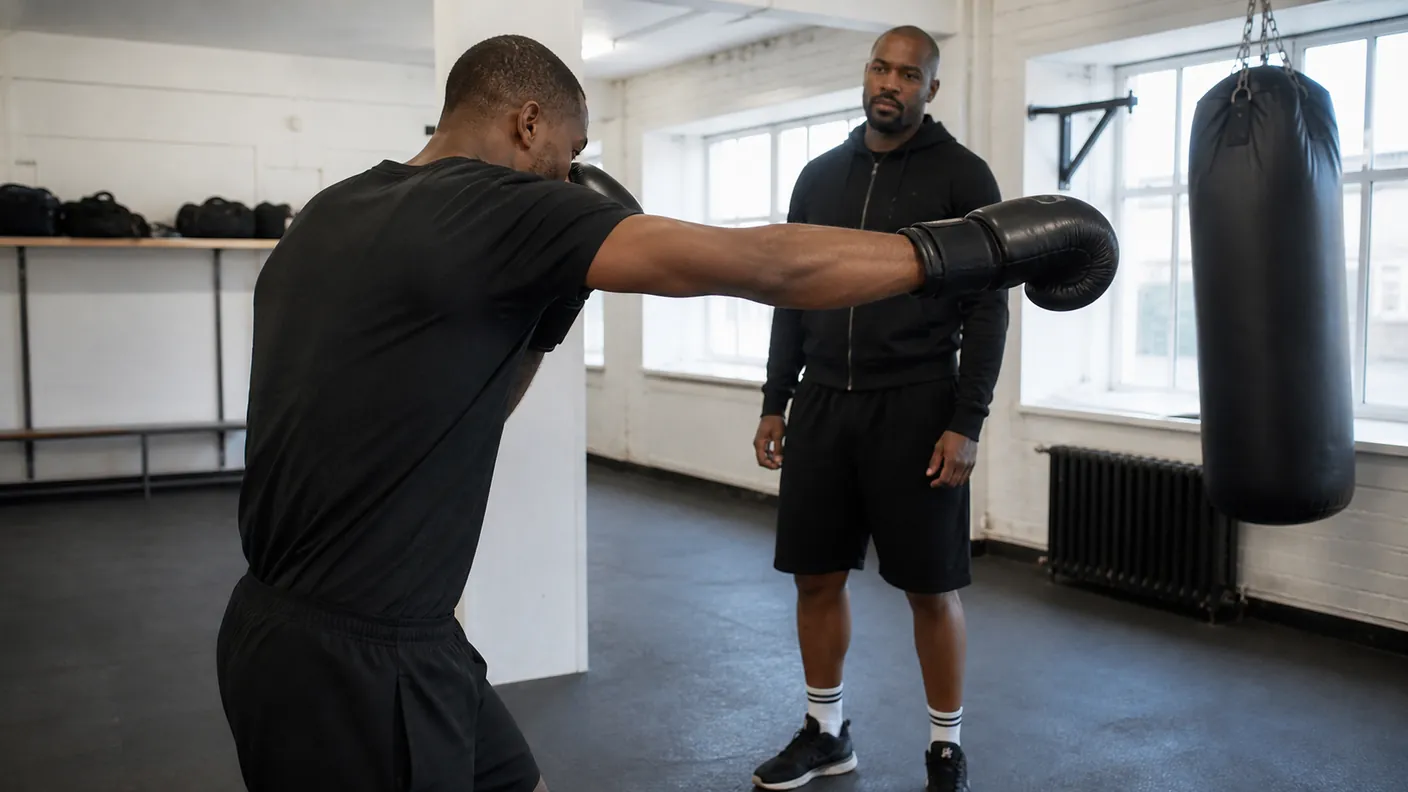
Boxing Set-Up Jabs: Make the First Punch Useful
Use a light set-up jab to take position, hide the next punch and make an opponent react without reaching or throwing for show.
Why You Rush Boxing Combinations
Rushing makes combinations fall apart. Learn how to slow the first punch, keep your stance and build speed that still looks like boxing.
Boxing Combinations for Beginners
Learn the essential boxing combinations every beginner needs to know. From the basic 1-2 to more advanced sequences, these combos form the foundation of your offence.
Was this page helpful?
It takes one tap, and it genuinely helps.
Choose your next step
Turn this article into the right action
Some readers are ready to book. Some need the class route first. Pick the route that matches what you actually want.