Boxing Footwork: Check Your Lead Foot on the Step Back
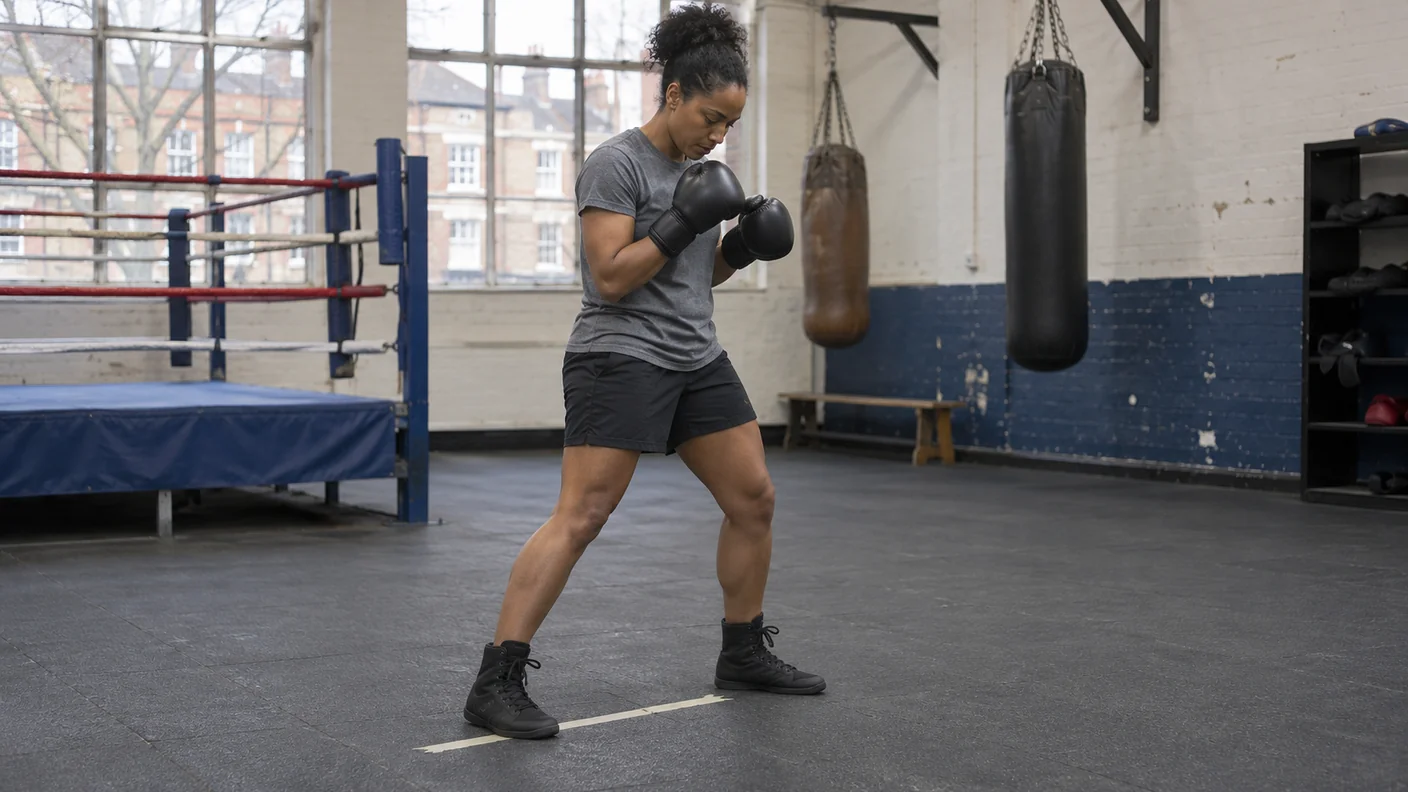
Take a small step back in your boxing stance. Stop, then look at your front shoe. Is it pointing the way it was before you moved? If the toe has swung round and you have to swivel it back before you can step forward again, that little swivel is the bit to work on.
Most beginners check which shoe moved first. That matters, but it misses what happens at the end. The rear shoe can go first, the feet can stay apart, and the lead shoe can still land at an angle you did not choose. Practise the last part on its own before you put it back into a round.
The opening footwork section of this demonstration is the one to watch. Look at the front shoe as the boxer comes back, then try the version below with no punches.
Check the angle you started with, not a number
Stand in your ordinary boxing stance. Notice where the toe of the lead shoe points relative to the way you are facing. If it starts slightly turned in and ends up pointing straight ahead after every short step back, that is a change worth noticing. If your normal stance already has your lead toe pointing more forwards and you can move comfortably from there, that alone is not a fault.
In the demonstration, the boxer uses about 45 degrees as a cue. Treat that as a reference for the drill, not a number to enforce on every pair of feet. It is a straight step back, with no deliberate change of direction. What you want to know is whether you can finish the step without having to rearrange the foot before you move again. Do not twist a planted shoe against a grippy floor to make the angle look right.
If you are still figuring out what a comfortable starting position feels like, try the floor-line boxing stance drill first. Come back to this one when you can find that stance twice in a row without having to look down for long.
Set one short floor marker
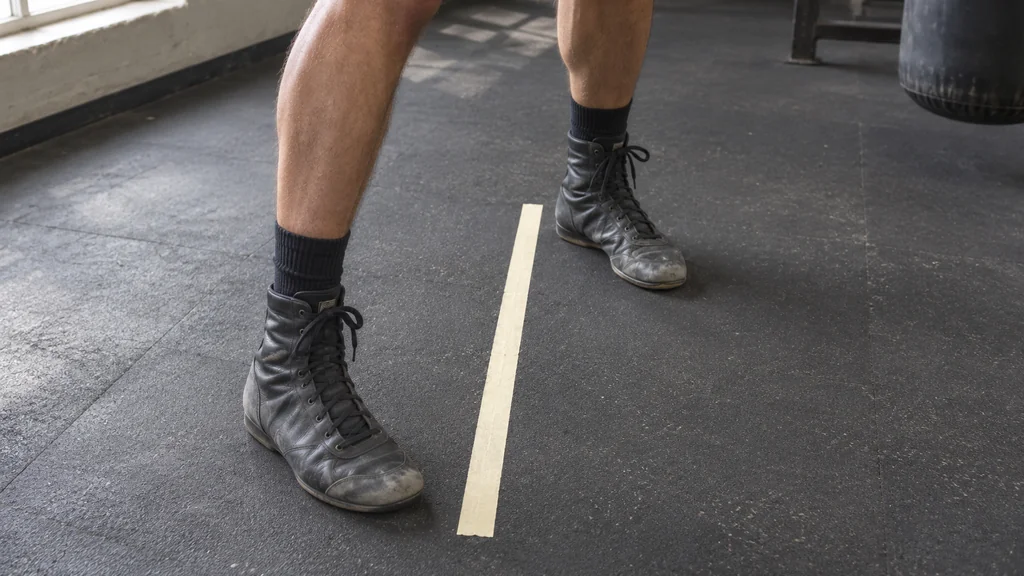
Use a short strip of flat tape on a clear, dry patch of floor, or use a line already there. Set it alongside the direction you plan to move. Put your feet in their usual staggered position. The line is a ruler for your eye, not a track for either shoe. Leave whatever sideways gap between the feet feels comfortable in your normal stance.
Take a moment to check the toe against the line while you are still. You are looking for a rough picture, not making a tracing. If the mark tempts you to put both shoes on it, move it to the outside of your stance instead. You only need to be able to see whether the lead shoe has turned.
Make the step small enough to finish it
Keep your gaze level as you move. Press gently off the lead foot, let the rear foot move a few inches back, then let the front foot follow. Now stop and glance down. Look for both the toe direction and how much room you have left between your shoes. Look up again before the next rep.
The AIBA coaches manual puts the rear foot down before the lead foot follows on a backwards step. The England Boxing coaching handbook singles out another common fault: bringing the front foot too close to the rear and losing the base. Check the gap first if you are wobbly. A neat-looking toe does not fix feet that have finished almost together.
Try five slow repetitions, resetting to the same start between each. If you notice the lead toe turning on most of them, make the next five steps shorter. Think of lifting the lead shoe just enough to put it down in the same direction, rather than sweeping it around to catch yourself. If the short step works, you have a useful place to start. You can add distance later without rebuilding the whole drill.
If the front shoe tends to land closer to the tape as well as turning, the foot is moving sideways as it comes back. Try putting the tape a little farther away and leave the same strip of floor between the shoe and the line at the end. If the feet are coming together before the rear shoe has landed, work on the step-and-slide foot order before worrying about the toe.
Use the next step as your test
Once the quiet finish feels familiar, take one small step back, pause for one count and come back to your starting spot. Do not look at the shoe until you have come forward again. You are testing whether you can reverse direction without first nudging the lead foot around or rocking your weight to free it.
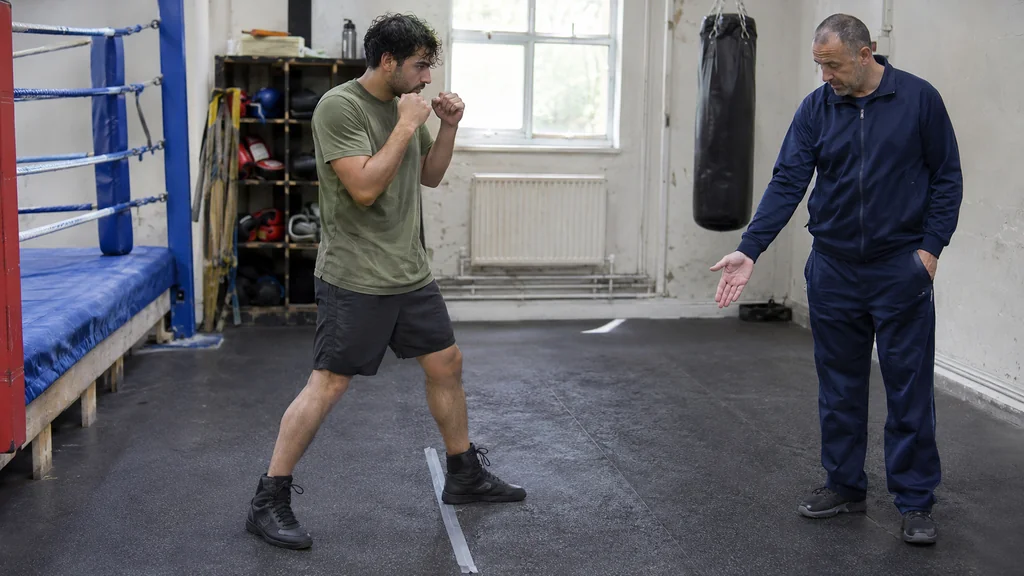
If you need a reset every time, ask a coach to watch two or three reps from the side. A toe that turns could be the first thing they see, not the first thing that went wrong. The rear step might be too long, or your shoulders might be pulling you backwards before either foot has moved. Change one detail at a time so you can tell what helped.
Take the tape away before you speed up
Do the same short step on a clear bit of floor without the tape. Finish, pause and come back. If it feels the same, let the pause shorten naturally. If you start shuffling at the end again, go back to the smaller step. There is no need to start moving faster just because the floor marker has gone.
Give this a minute after a warm-up, before you get on the bags or take on a busier footwork drill. The next time somebody says you are losing your stance on the way back, you have something more useful to check than whether the move looked quick. Ask what your front shoe did when it came down.
If you train near Kidbrooke, our Recreational Adults boxing classes give you a chance to work through small footwork fixes like this with a coach.
H&G Team
Writer at Honour & Glory Boxing Club, a community boxing gym in Kidbrooke, South East London.
KEEP READING
Back Foot Angle in Boxing: Find Your Base
Use your back-foot angle to stay balanced, move cleanly and avoid forcing one stance shape into every boxing drill.
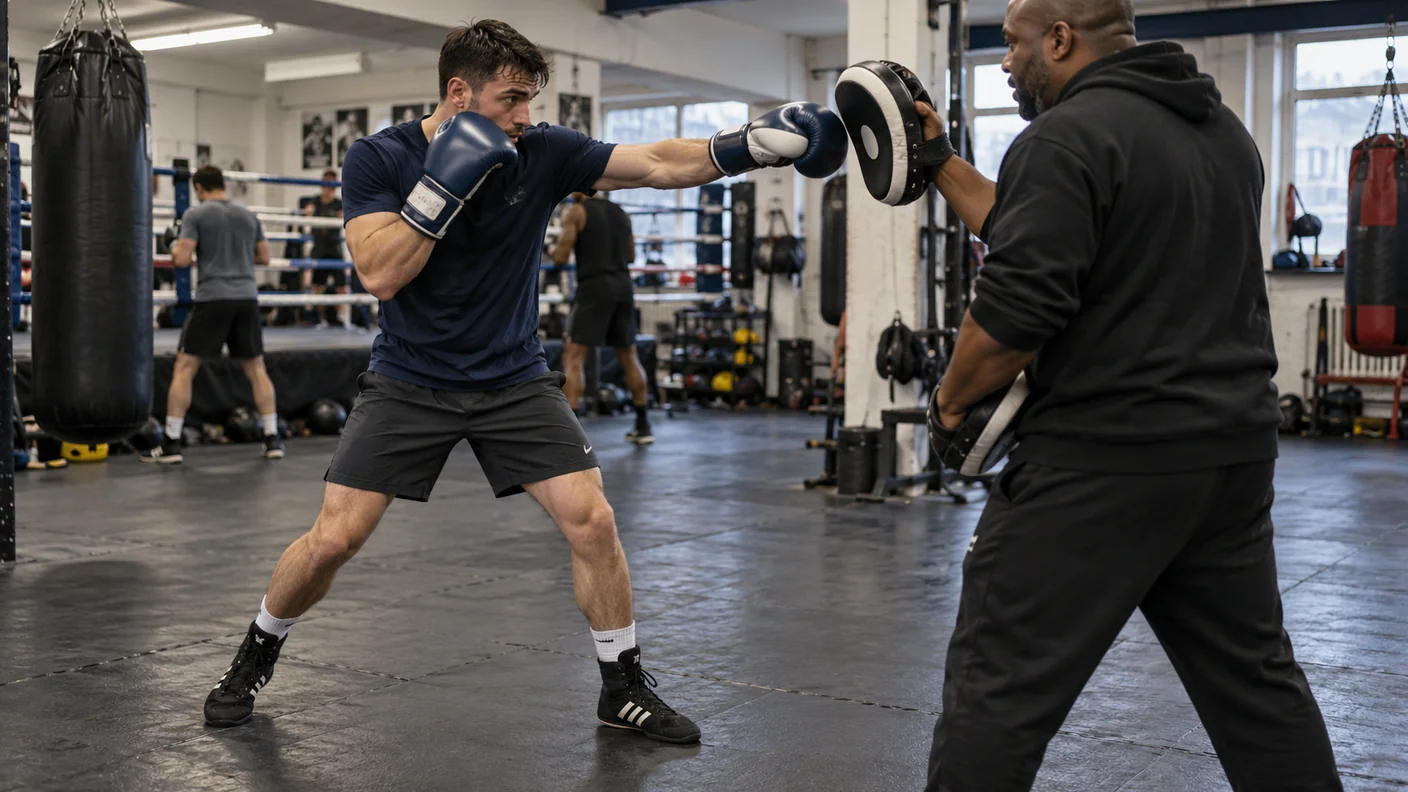
Boxing Back Foot Position: Set It to Move
Your rear foot should support movement, defence and clean punches. Learn how to find an angle that does not trap your stance.
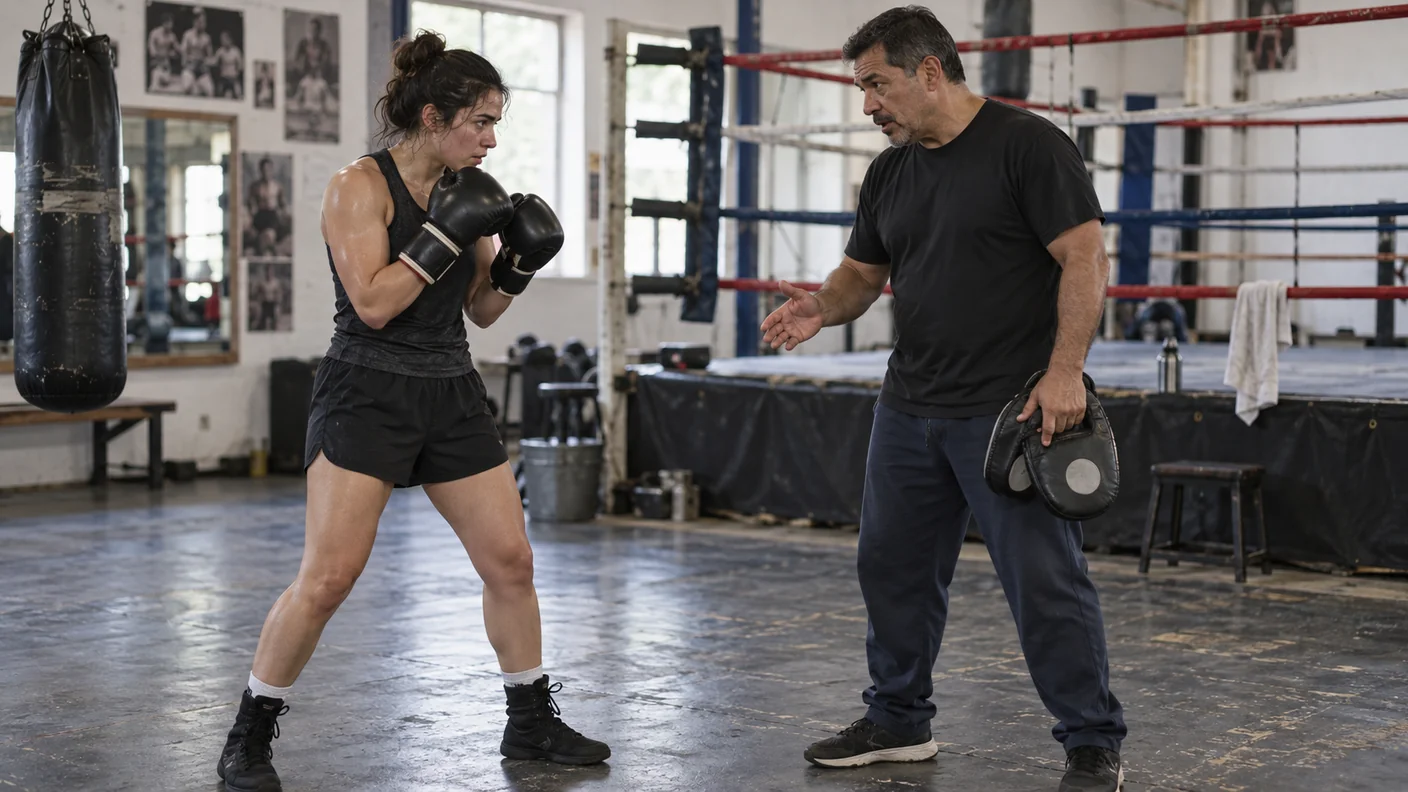
Cross to Lead Hook: A Boxing Footwork Drill
Use a short cross-to-lead-hook drill to take ground, give ground and keep a usable stance after both punches.
Was this page helpful?
It takes one tap, and it genuinely helps.
Choose your next step
Turn this article into the right action
Some readers are ready to book. Some need the class route first. Pick the route that matches what you actually want.