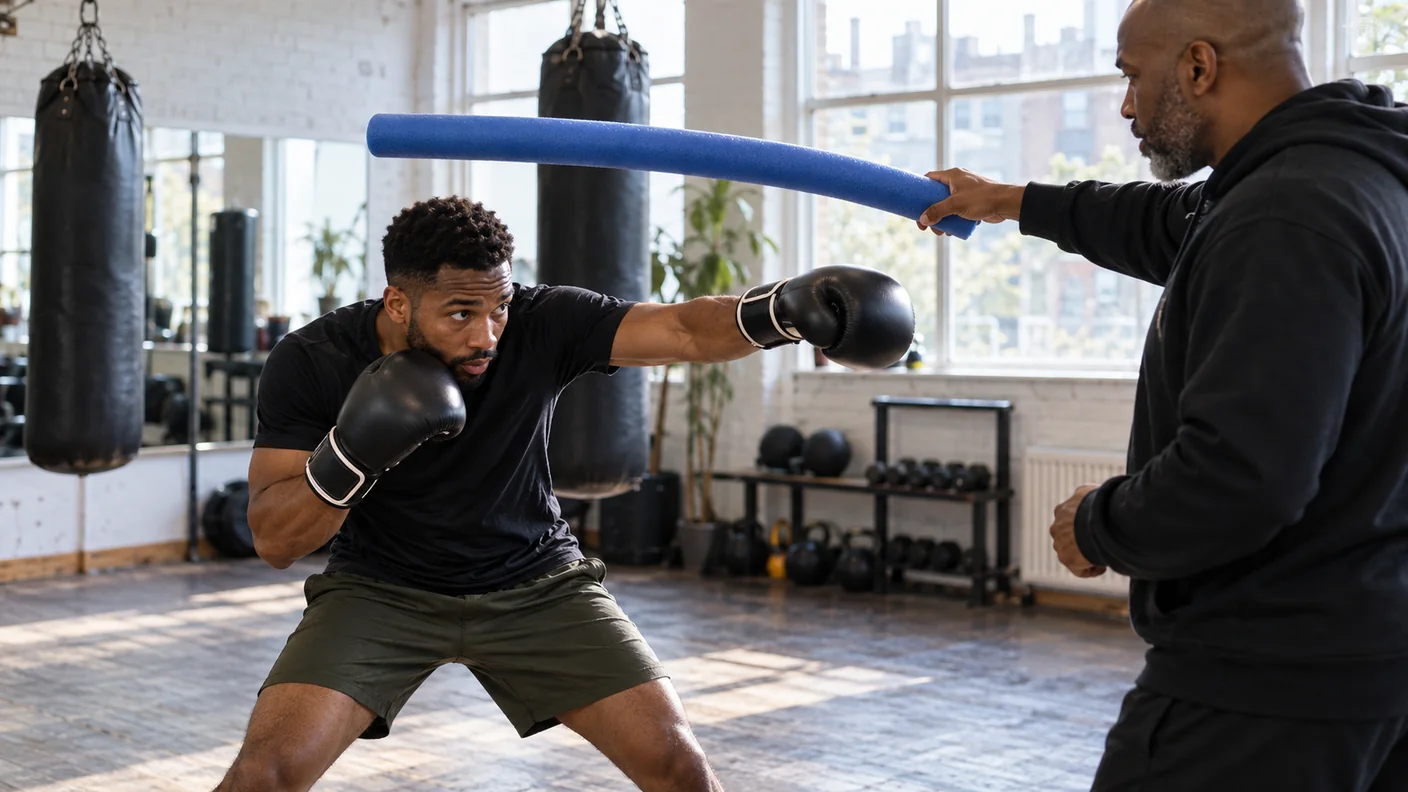
A jab and a roll can either fit together or pull a boxer apart.
The bad version is common. The jab reaches, the head follows it forward, then the boxer remembers the roll too late and folds towards the floor. The body has moved, but the stance has gone. There is no clear view of the return punch and no useful position for the next shot.
The better version is quieter. A light jab finishes and returns. The knees and hips guide the head through a compact roll. Then the cross comes only if the feet, range and guard are still in place. This is not a three-part dance. It is one linked action that teaches you to punch without standing still in the same line.
The short video below is worth watching for the relationship between the jab, roll and cross. Watch the feet and the centre of the body rather than copying the speed. The useful point is that the roll begins from a stable stance and leaves the boxer able to see again.
Let the jab start the movement, not pull you forward
The jab is the first part of the drill, but it does not earn the right to drag the whole body towards the target. Throw it at a range where your shoulder can cover the chin and the rear glove can stay close to the cheek. Bring it back along the same line.
As the lead hand returns, allow the knees to soften and the hips to start the roll. The head moves just far enough to leave the middle line. Your eyes remain up. If your chest has travelled far over the front knee, the jab was too ambitious or the roll was too large.
This matters because a roll is not a bend at the waist. England Boxing puts stance, balance and controlled technical progression at the centre of its coaching handbook. That is a useful test for this drill: after the jab and roll, can you still take a small step, bring both gloves together and see the target?
The roll uses the legs, not a dive
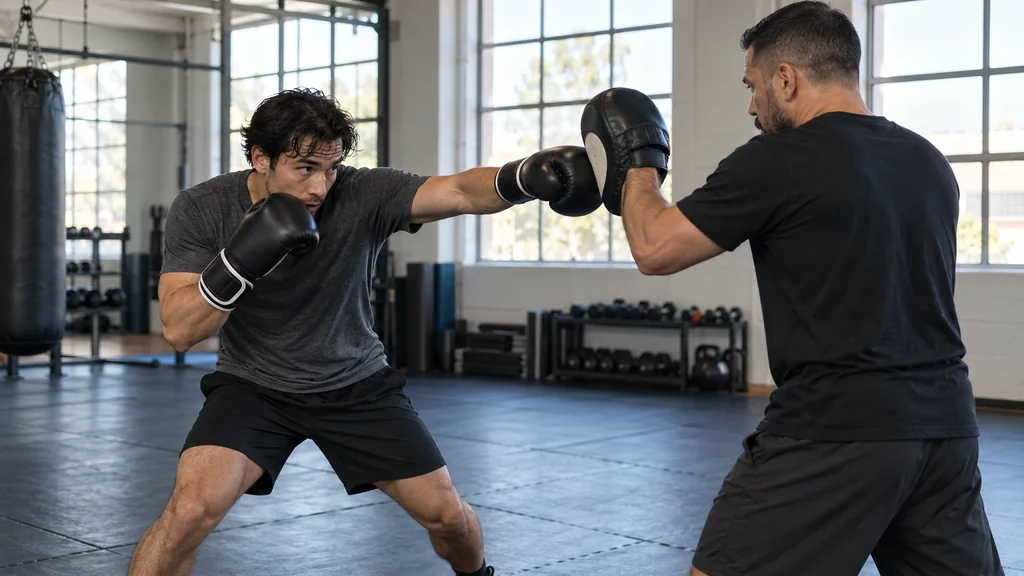
For an orthodox boxer, an inside roll begins with a small movement away from the jab line, then carries under the imagined return. An outside roll begins on the other side. Southpaws reverse the picture, but the standard is identical: the knees and hips make the path while the spine stays long enough to keep the eyes forward.
Do not hunt for a deep crouch. A huge dip can make you feel safe because your head has travelled a long way, but it often leaves you bent, square and late for the next decision. The right amount is the smallest roll that clears the line while keeping you in your stance.
Our guide to rolling under punches without folding breaks down the defensive shape. This drill gives that shape a more demanding job. You have to preserve it immediately after a jab, when it is tempting to follow your own hand forward.
A review of boxing performance research describes effective punching as a joined action through the legs, trunk and upper body rather than an arm movement alone (boxing performance review). You can feel that connection here. If the legs stay under you, the jab, roll and cross have one rhythm. If the feet freeze and the shoulders do all the work, the cross becomes an arm punch.
Add the cross only after the roll is tidy
The cross does not automatically belong at the end of every roll. It belongs when the roll has left you at a sensible range, with the rear foot ready to turn and the opponent still in front of you.
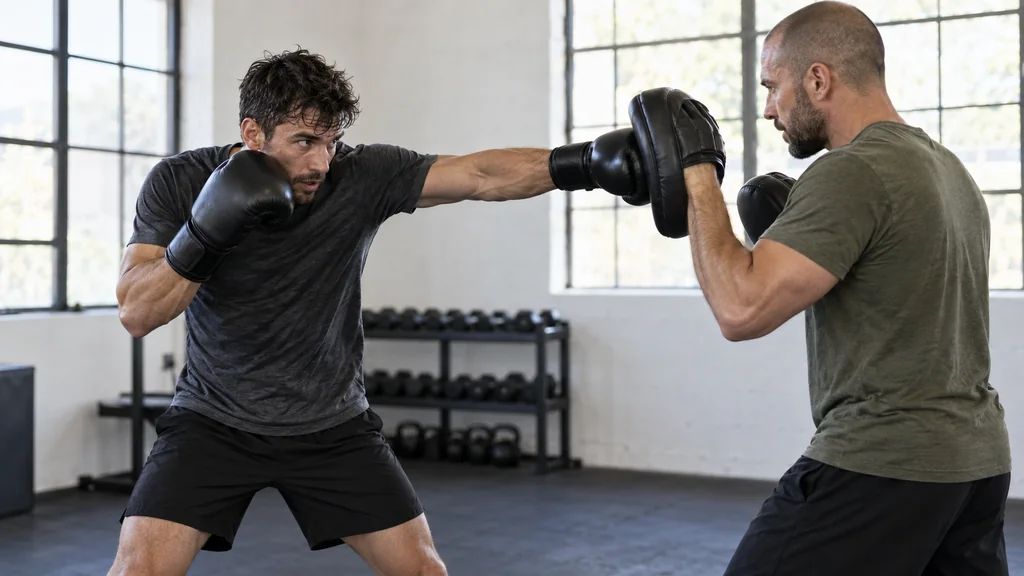
Start with a small cross to a coach-held mitt. Let the rear hip turn, keep the lead glove returning towards the face and stop before the body reaches. The cross should travel through the new line created by the roll, not pull you back onto the old one.
If the mitt is too far away, do not stretch to prove the combination works. Reset. A controlled jab-roll with no cross is better boxing than a long cross that leaves your chin and feet behind.
A four-round jab-roll-cross drill
Use a coach, a partner with one mitt, or shadow boxing at first. Keep the pace low and agree the cues. This is a timing and shape drill, not sparring.
Round one: jab and inside roll
Stand at a comfortable jab range. Throw a light jab, bring it home and make one compact inside roll. Freeze for a count.
Check three things: the rear glove remains near the cheek, the feet are still staggered, and your eyes are looking forward. If the head is hanging over the front knee, shorten the jab and reduce the depth of the roll.
Round two: cross and outside roll
Now begin with a light cross to a mitt or open space. As the rear hand returns, make the matching outside roll. The cross has already turned the rear side, so let that rotation lead naturally into the movement rather than forcing a large second turn.
Do not throw hard. You are learning what each punch leaves available. If you have to shuffle your feet before you can cover or move again, slow the cross down.
Round three: jab, roll, cross
Bring the pieces together. Jab, inside roll, then a light cross to a mitt only if the mitt is waiting at an honest range. Return both hands to guard and reset before the next repetition.
The coach should vary the final picture. Sometimes the mitt is there. Sometimes it is not. The purpose is to stop the cross becoming a compulsory third beat. Boxing is not a sequence where the other person has agreed to stay still.
Round four: choose the defensive finish
Use the same jab-roll-cross pattern, then choose one finish: high guard, a small step out, another compact roll, or a reset at jab range. Pick only one finish for the round.
This makes the drill more useful than a long combination. The final decision forces you to notice where the cross has left you. If the stance has become narrow, or the feet have drifted together, return to round one.
Four faults that break the flow
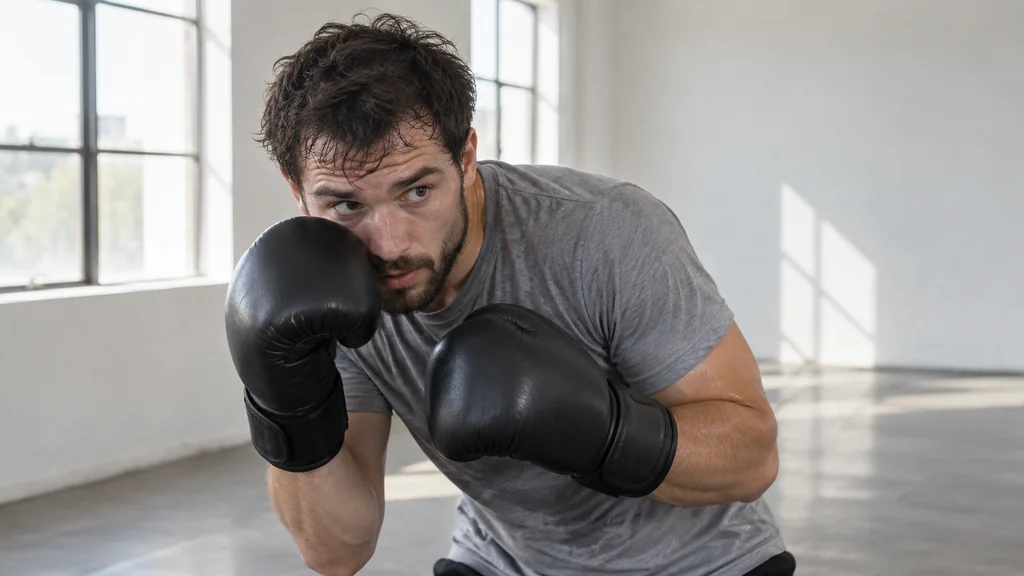
The first is making the jab a lunge. If the head travels with the glove, the roll becomes a rescue attempt instead of a planned defensive movement. Keep the jab light enough that you can bring it home without hauling your body upright.
The second is folding at the waist. A roll should bring the head under a line while the legs stay connected to the floor. Looking at the ground does not make you hard to hit. It makes you unable to see the next punch.
The third is rushing the cross. The roll may have changed the line, but it may also have changed the distance. If the target is no longer there, bring the gloves home and take another step. Our guide to one-two footwork and the stepping jab is a useful reminder that a rear hand needs a settled base.
The fourth is treating the pattern as a licence for hard sparring. Start on pads, with a slow cue or in shadow boxing. A coach can add a realistic return only after the jab, roll and cross stay compact at a calm pace.
Where this drill fits in training
Use the jab-roll-cross after a warm-up and before fast bag rounds or harder pads. It is most useful for boxers who already understand a basic jab, stance and simple roll, but who tend to admire the jab or freeze after it.
Keep the first sessions modest. Three clean repetitions followed by a check are more useful than fifty rushed ones. Once the movement stays organised, a coach can change the cue, alter the target or ask for a different exit. The aim is not to memorise a flashy pattern. It is to make every punch leave you ready for the next decision.
If you train in Kidbrooke, Greenwich or nearby, our Recreational Adults boxing classes use controlled pads and partner drills to connect punches, movement and defensive awareness before the pace rises.
The cue is simple: jab without leaning, roll without folding, then cross only when the line is there.
H&G Team
Writer at Honour & Glory Boxing Club, a community boxing gym in Kidbrooke, South East London.
KEEP READING
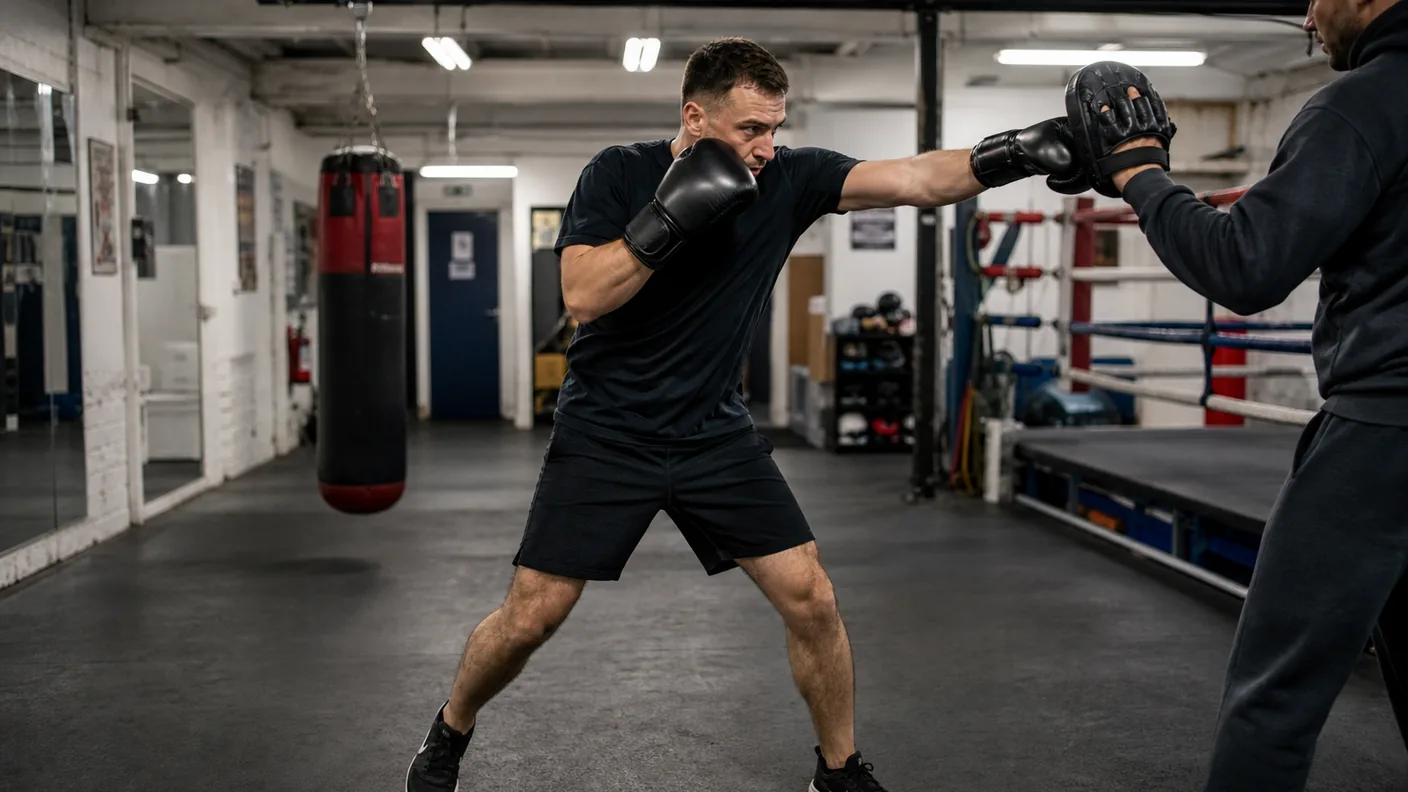
Cross-Roll Drill: Recover After a Right Hand
Use a compact outside roll after the cross to finish balanced, keep your eyes up and avoid standing still for the return.
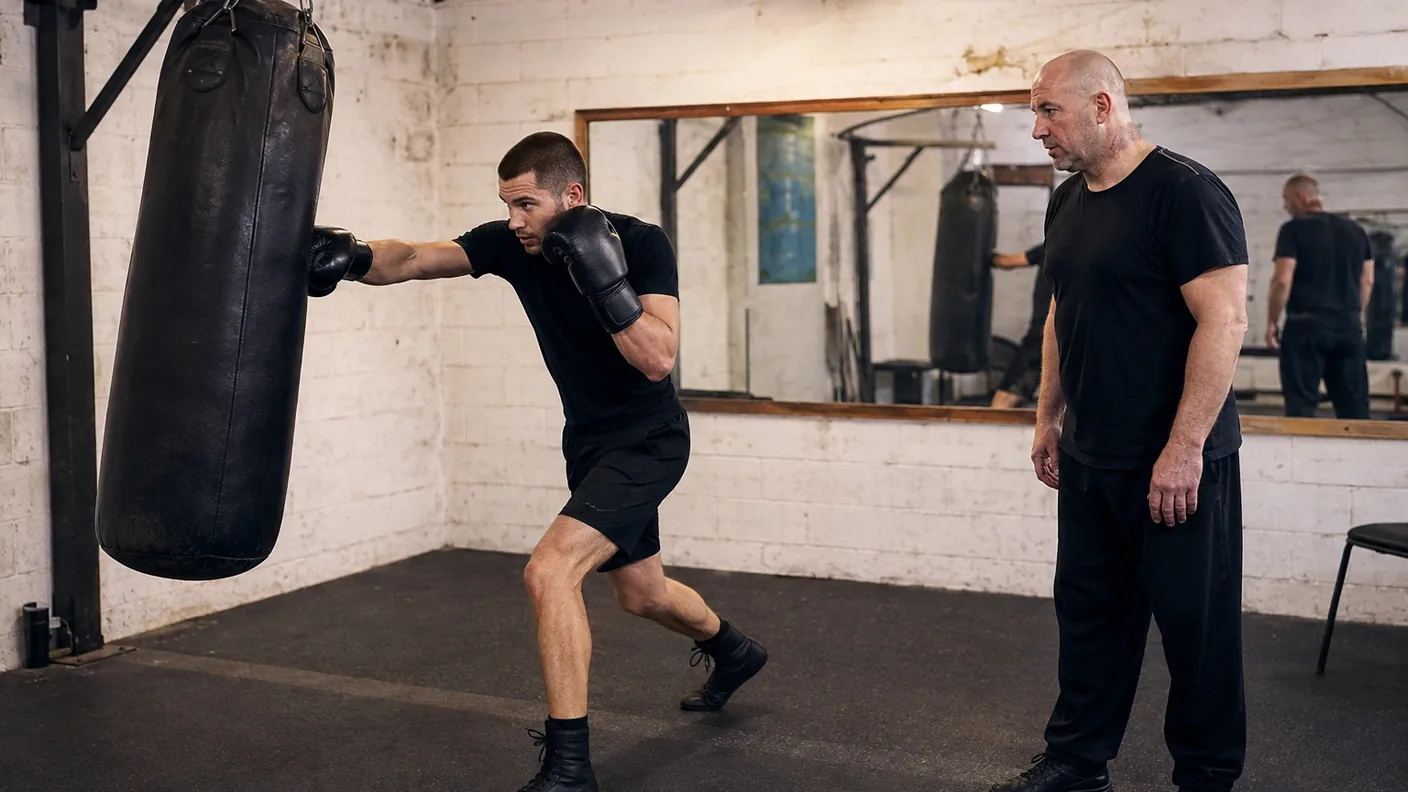
Jab Step-Across Cross: A Boxing Angle Drill
Use a compact jab step-across to open a rear-hand angle without crossing your feet, losing your guard or reaching for the cross.
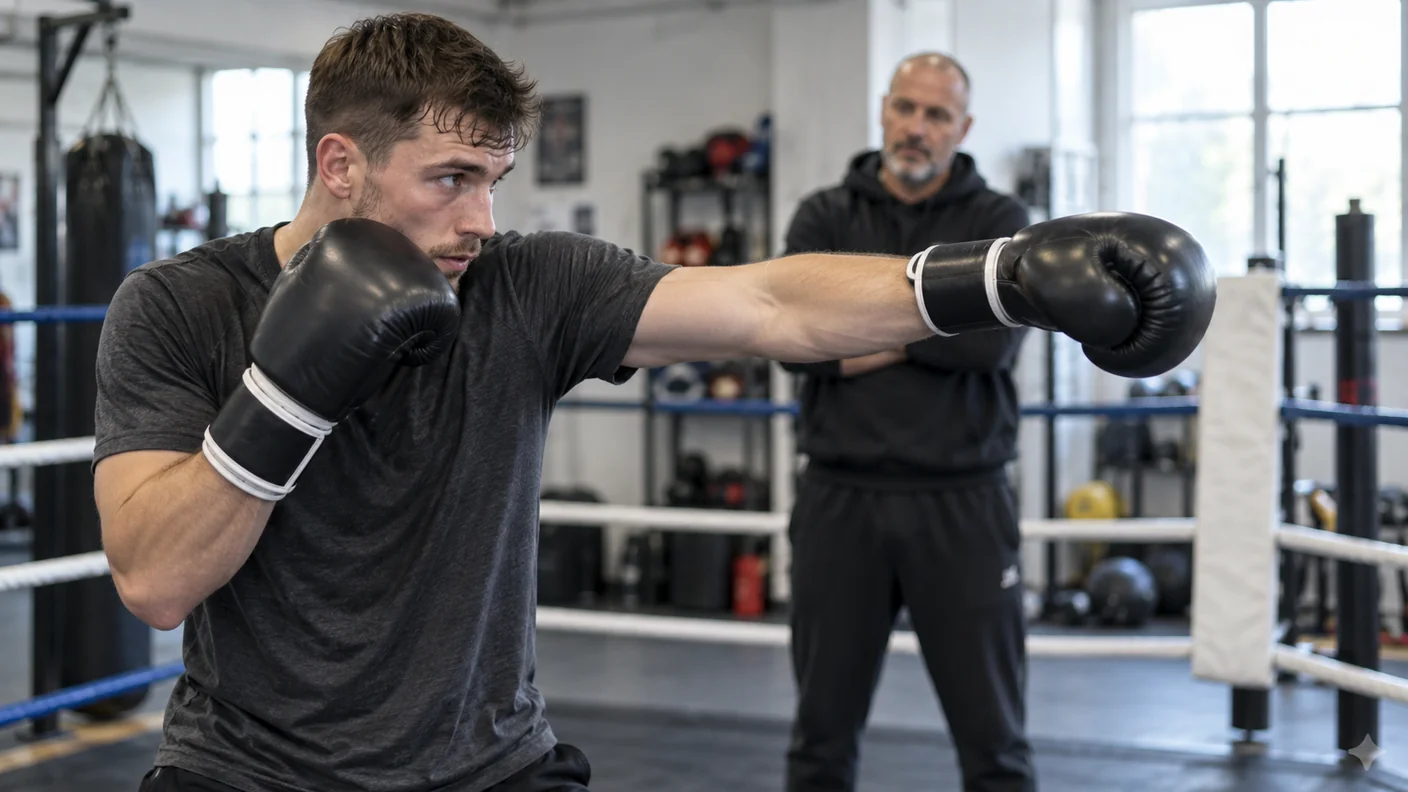
Slow Jab, Fast Cross: Boxing Timing
Use a measured jab and sharp cross to break predictable timing without losing your stance, guard or route out.
Was this page helpful?
It takes one tap, and it genuinely helps.
Choose your next step
Turn this article into the right action
Some readers are ready to book. Some need the class route first. Pick the route that matches what you actually want.