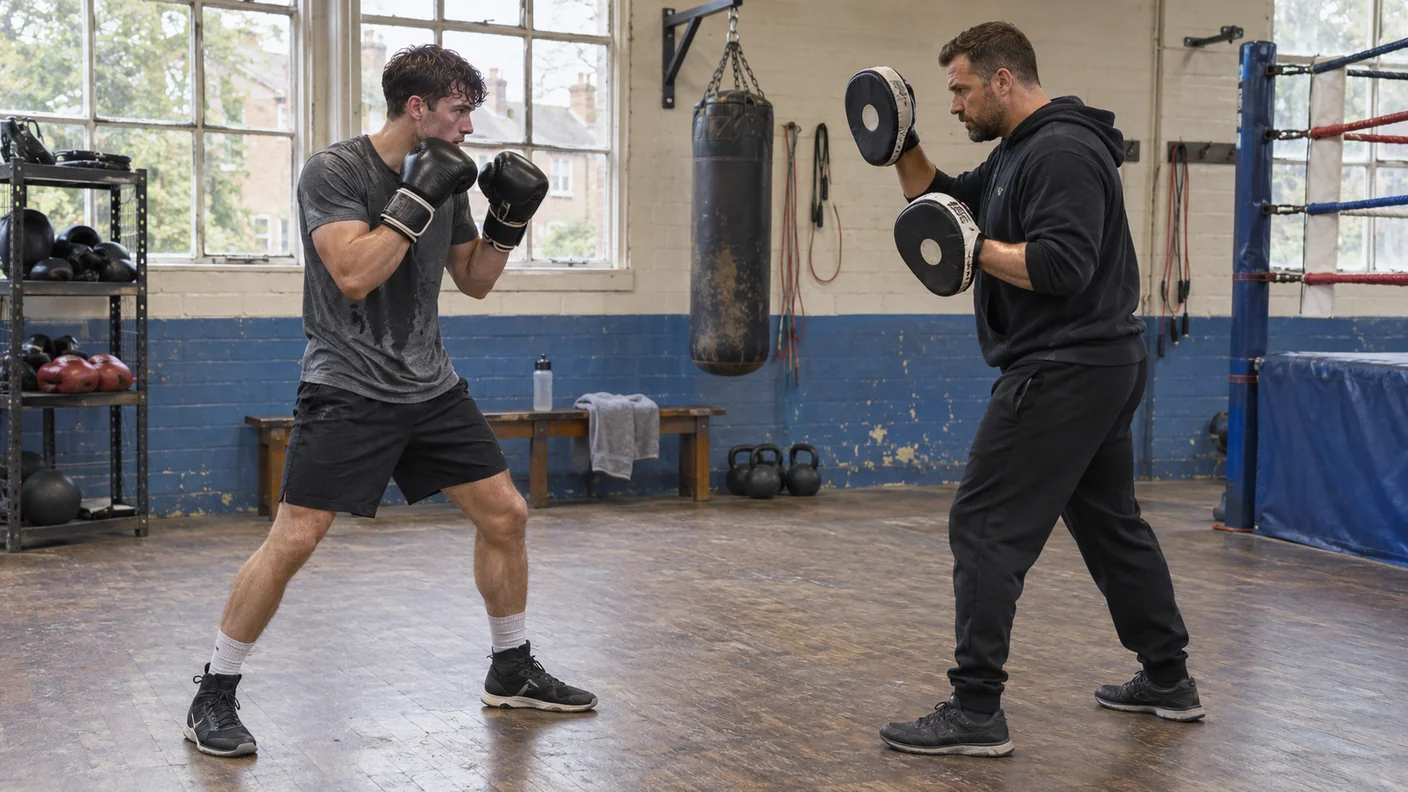
A rear uppercut can look like a short punch with an easy finish. Add two hooks and a roll too quickly, and it becomes a frantic arm drill.
The useful version is quieter. The jab takes you into range. The rear uppercut travels up the middle only when there is room. The roll leaves the return line. The hooks are targets, not a promise when the distance has gone.
This is an intermediate pad or controlled-partner drill, not a reason to trade combinations in sparring.
Watch the demonstration first, then use the progressions below rather than trying to copy every punch at full speed.
The sequence has two attacks and a defensive break
The pattern is jab, rear uppercut, roll, lead hook, lead hook, then reset. It gives you a clear order: enter with a straight line, use the rear hand at honest range, move your head before returning to the lead side.
Do not treat it as a six-count routine. The roll matters because an uppercut can leave you near the other boxer. The first lead hook needs a real mitt, body shield or opening. The second needs balance after the first.
A biomechanical study of the cross, hook and uppercut found that punch execution depends on coordinated contributions from more than the arm. In gym terms, that is the test. If the legs, hips and guard have stopped helping after the uppercut, the hooks will be late arm swings.
Step in behind a jab, not a lunge
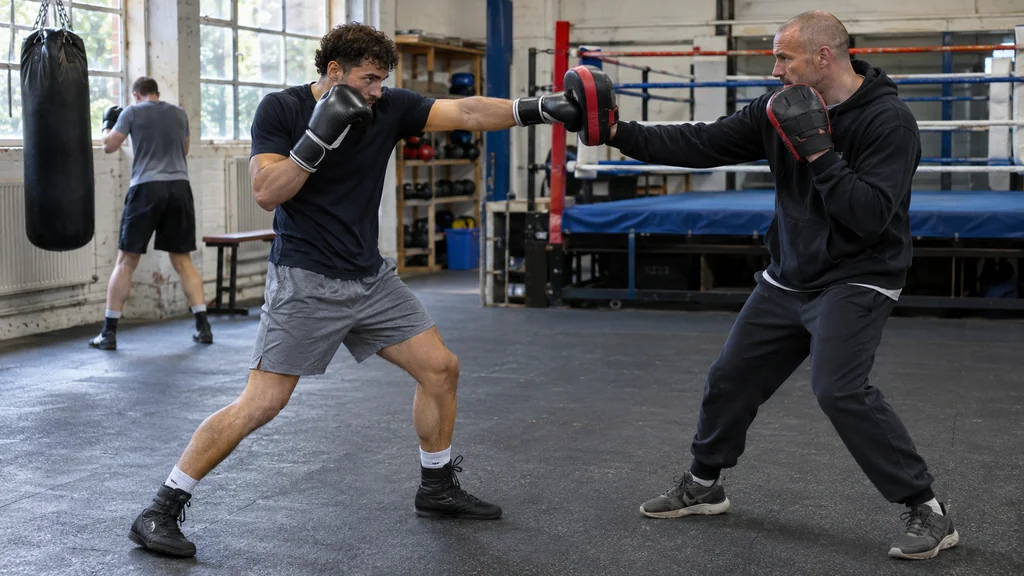
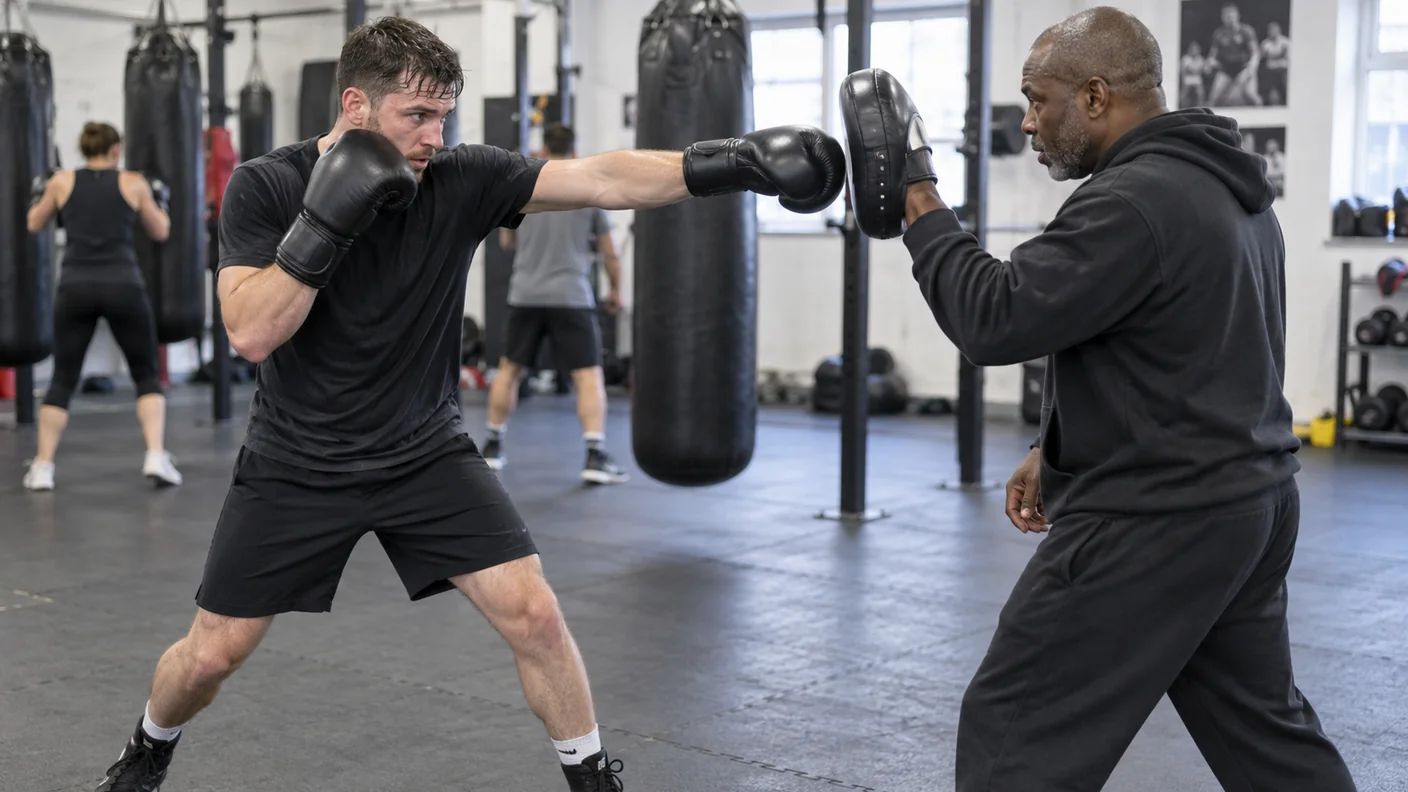
Start just outside ordinary jab range. The first jab has one job: bring you into a distance where the rear uppercut can be short and upright. It does not need to be hard.
Take a modest lead-foot step as the jab travels. Let the rear foot follow enough to preserve the gap between your feet. If the jab lands with your chest falling over the front knee, you have arrived too far forward. If the jab falls short and the rear foot is still miles behind, you have not arrived at all.
The rear glove stays near the cheek while the jab works. That matters because the uppercut is a riskier punch than a jab. If the jab has made the other boxer cover, move backwards or stay tall behind their guard, the next decision may be a reset rather than an uppercut.
England Boxing places controlled skill development and safe coaching at the centre of its coaching handbook. Use that standard here. A good repetition should be slow enough for both people to stop, see the target and protect themselves.
Keep the rear uppercut compact
The rear uppercut is not a shovel from the floor. It begins from the rear side with the knees soft, the hip turning and rising, and the glove travelling up a short route through the middle. The forearm should remain close to vertical as it meets a coach-held mitt.
Do not lower the rear hand to find room. That long dip is a warning signal, and it leaves the head open while the glove is travelling. Keep the lead glove at home as the rear hand works. If you cannot do that, remove the punch from the drill and return to jab-and-reset rounds.
Range decides the version. If the coach has to lean backwards to give you the mitt, your uppercut is too long. If your shoulder is already crowded against the target, there may be no room for a rear uppercut at all. A short lead hook, a cover or a small exit may be the better answer.
For the basic mechanics before adding this sequence, read our guide to throwing an uppercut in boxing. The uppercut should feel like a compact movement from a settled stance, not an attempt to rescue a bad entry.
Let the roll protect the end of the uppercut
After the uppercut, do not stay upright on the centre line waiting to admire it. Make a small roll under an agreed hook-shaped cue. Bend through the knees and hips, keep your eyes on the coach or partner, and keep both gloves close enough to protect the face.
The roll is not a deep bow. If the eyes drop to the floor or the back folds forward, you are no longer reading the next target. Roll only far enough to clear the cue, then arrive in a stance that can still throw, cover or step away.
Your head movement should not be pre-planned theatre. If there is no cue, return the gloves to guard and reset. You do not need to duck under an imaginary hook because the sequence says roll.
Our guide to rolling under punches without folding covers the movement in more detail. Learn that shape on its own before trying to join it to a combination.
Make the double hook a decision, not a finale
The roll can bring you back onto the lead side. That may make a short lead hook to a body-height mitt available. Touch the first mitt, bring the hand back towards guard and look again before the second hook.
The second hook can go to a head-height mitt only when the coach has shown it and the range remains short. If the target has moved, cover and leave.
Keep the hooks compact. The elbow stays bent, the hip gives the punch its turn and the rear glove stays near the cheek. If the arm is swinging across the room, the hook is too large for the distance you have created.
Build it across three rounds
Round one: jab, rear uppercut, reset
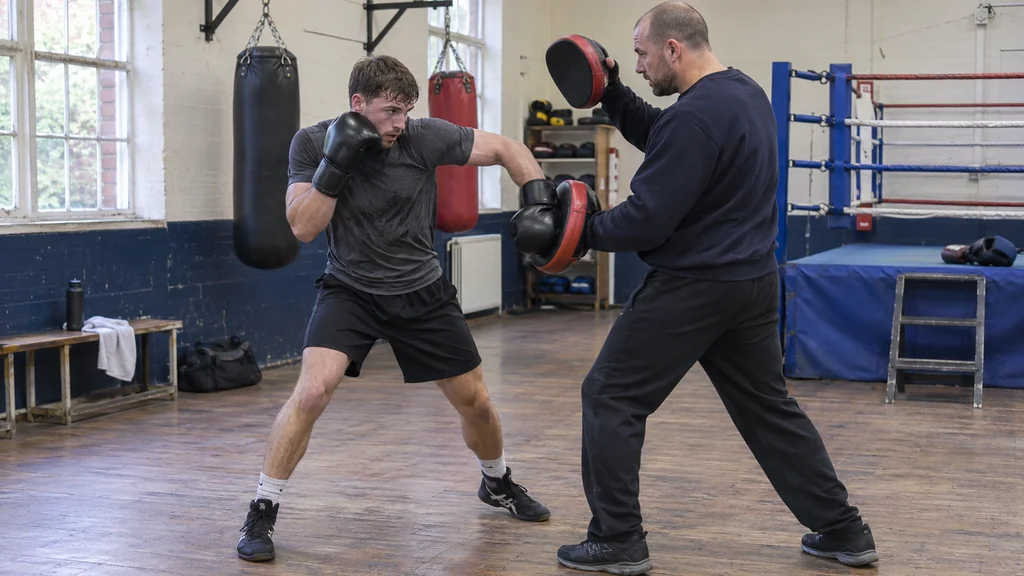
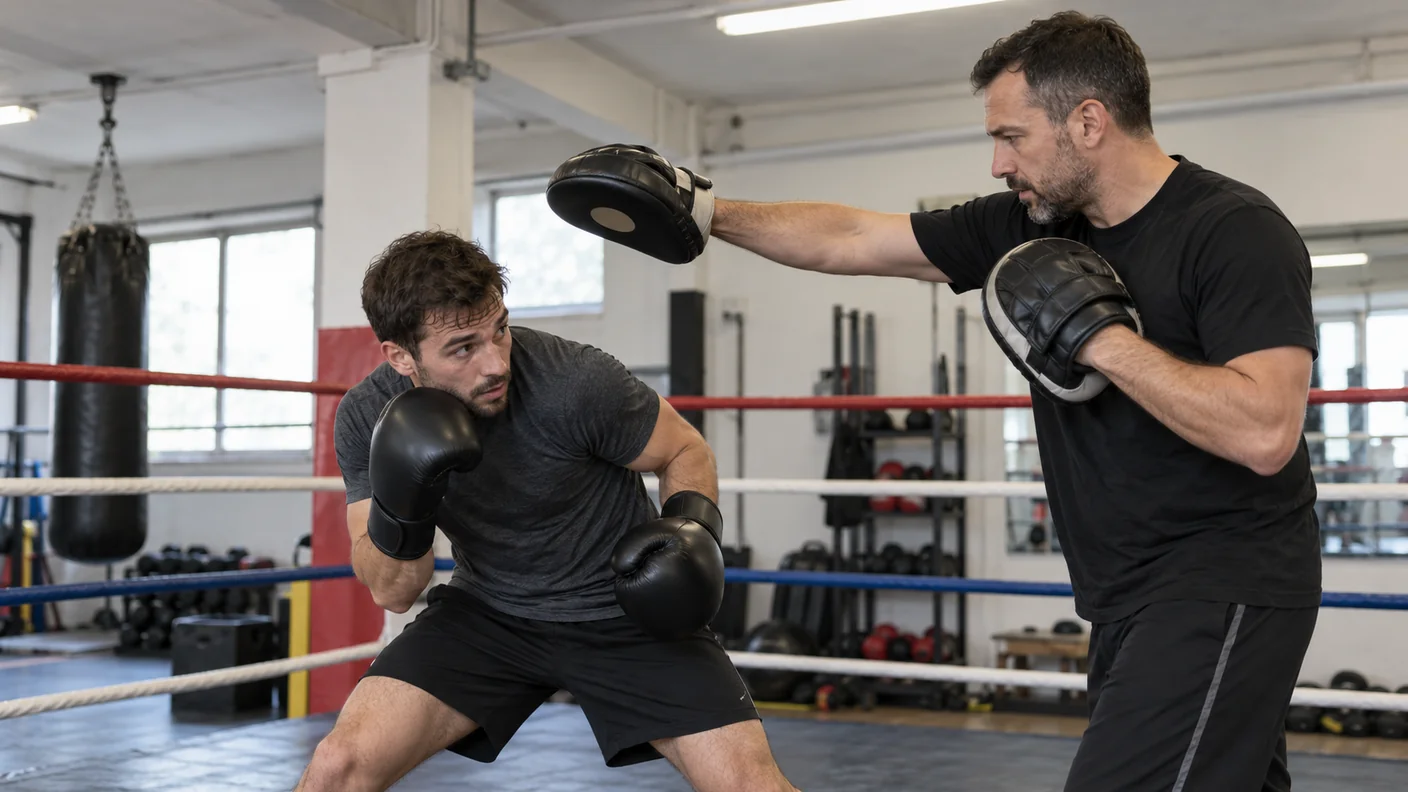
Work on pads at half pace. The coach holds one head-height mitt for the jab and one close, lower mitt for the uppercut. Jab into range, touch the rear uppercut, bring both gloves home and take one small step out.
Do not add the roll until the uppercut can land without the head travelling forward or the lead hand wandering away from the cheek.
Round two: add the roll
After the uppercut, the coach gives one slow hook-shaped cue with a foam noodle or mitt. Roll under it with the knees and hips, then freeze in guard for one count.
The freeze is important. Check that the feet are still staggered, the eyes are up and you could either defend a second cue or move away. If you finish folded over, the roll was too large.
Round three: choose one or two hooks
Now the coach may show a body mitt after the roll, then a head-height mitt. Touch the first hook when the body mitt is there. Throw the second only when the stance is still underneath you.
On other repetitions, the coach should take the mitts away or give a cover cue. Your job is to reset rather than continuing the pattern into empty space. That choice is the point of the drill.
Four mistakes that spoil the sequence
The first is using the jab as a dive. A good entry brings the feet closer. It does not send the head past the front knee.
The second is dropping the rear hand before the uppercut. The rear glove should take a short route from guard. A large dip makes the punch easy to see and leaves your chin alone.
The third is turning the roll into a crouch. You are moving below a line while remaining able to see. You are not trying to touch the floor with your shoulder.
The fourth is throwing both hooks automatically. The target may have gone or you may be too close. Bring the hands home, step out or reset.
For adults in Kidbrooke, Greenwich and nearby, our Recreational Adults boxing classes use pads and controlled partner drills to build clean entries, compact punches and defensive exits without rushing people into hard sparring.
The coaching cue is simple: jab in, lift the rear hand, roll with your eyes up, then hook only when the target stays there.
H&G Team
Writer at Honour & Glory Boxing Club, a community boxing gym in Kidbrooke, South East London.
KEEP READING
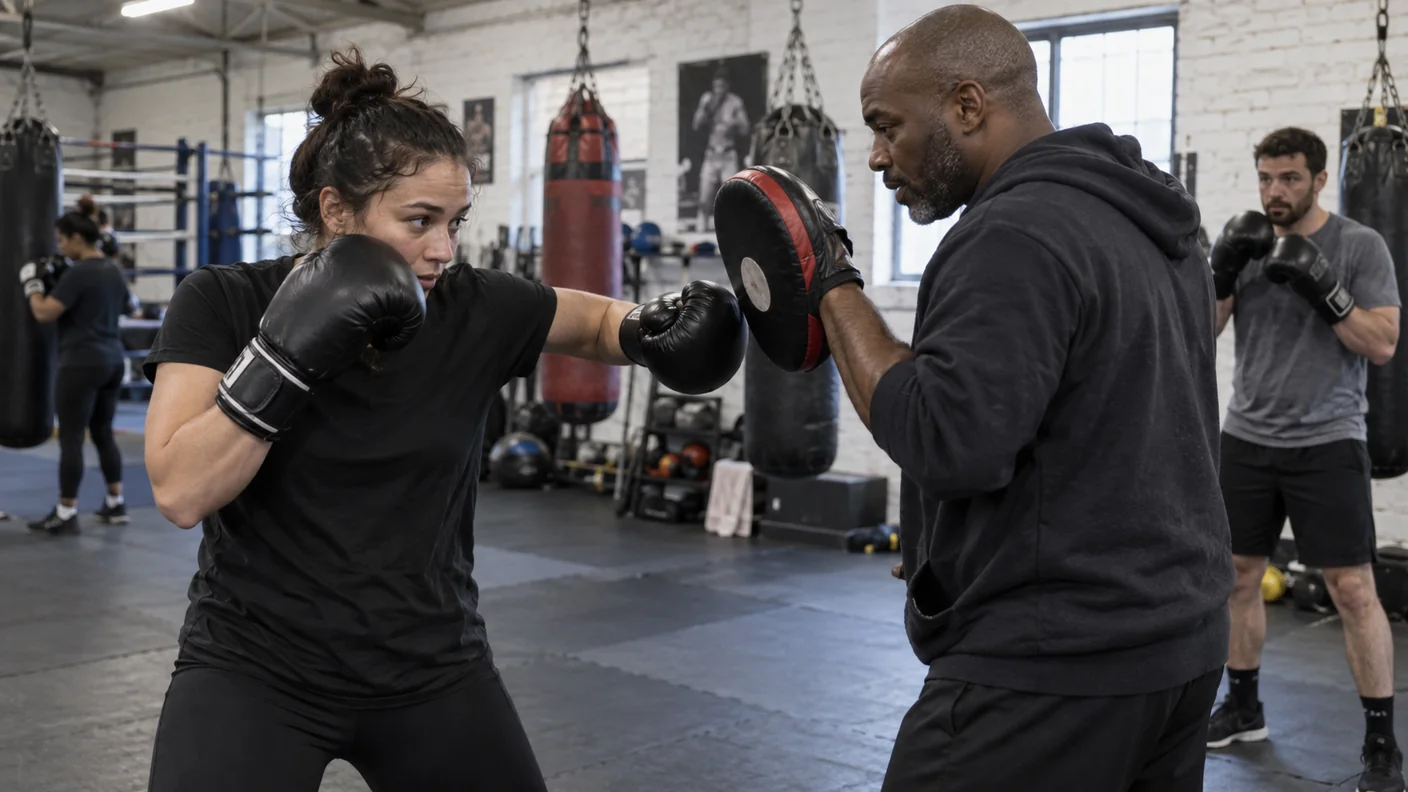
Shoulder Roll to Rear Uppercut: Boxing Drill
Learn when a compact shoulder roll can create a rear uppercut, with a coached drill that keeps range, guard and balance in view.
Slip the Jab to a Rear Uppercut
Use a small outside slip against a jab, then learn when a short rear uppercut is available at close range.
Jab to Rear Uppercut: Find Middle Range
Use a measured jab to enter middle range for a compact rear uppercut without leaning, reaching or losing your guard.
Was this page helpful?
It takes one tap, and it genuinely helps.
Choose your next step
Turn this article into the right action
Some readers are ready to book. Some need the class route first. Pick the route that matches what you actually want.