Inside Boxing: Shoulder Position Without Holding
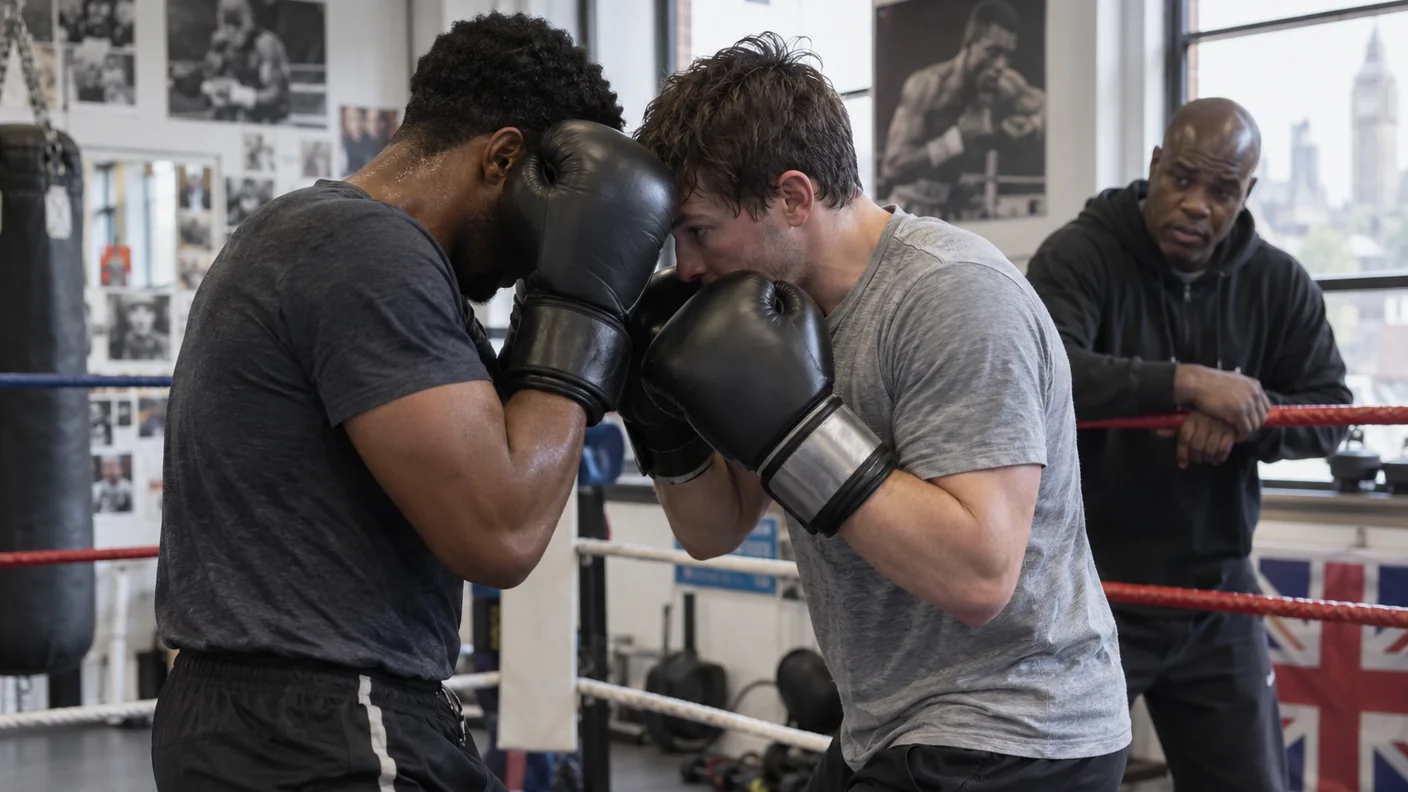
Close range is not automatically a brawl. It is a range problem with less room to hide a mistake.
When two boxers get close, beginners often freeze square in front of each other. Their gloves drift, the chin lifts, and they start trying to create room with both hands. That is when a manageable moment becomes messy. The better first aim is smaller: put your body at a slight angle, keep one side of the guard responsible, and leave if the position no longer gives you a clean choice.
This is not a guide to holding, pinning arms, pulling a guard apart or shoving someone into position. Those are poor habits for a coached drill and can be fouls in competition. It is about using a legal, compact body position to avoid standing in the centre of a close exchange with no plan.
Watch the video below once for the idea of changing your body line at close range. Then use the rules here to keep the practice controlled and useful.
Do not stay square when the range closes
At normal punching range, a regular guard gives you room to jab, catch and step. At close range, a square chest and parallel shoulders can leave both sides available at once. That is why the first correction is usually not a harder punch. It is a small change of position.
For an orthodox boxer facing another orthodox boxer, that might mean standing with your lead shoulder slightly closer to their lead side while the rear glove stays near the cheek. The opposite angle can also work when your feet and space allow it. Southpaws reverse the picture. The principle stays simple: avoid presenting your whole centre line while both boxers are close enough for short punches.
This does not mean burying your head into the other person or leaning your body weight on them. Your head stays upright enough to see the chest and shoulders in front of you. Your knees soften. Your feet remain staggered. If you cannot take a short step, cover a return or leave cleanly, you have not found a boxing position. You have only found a place to get stuck.
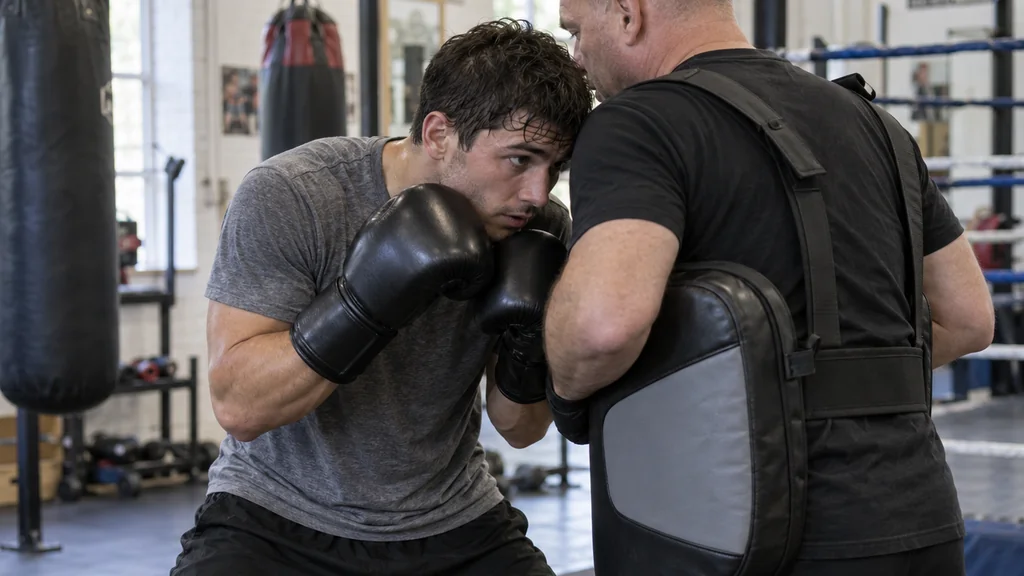
The England Boxing Coaching Handbook puts safe, controlled skill development at the centre of coaching. That is the right standard here. Learn the shape slowly on pads or with a clear partner cue before asking it to survive a faster round.
Shoulder contact is a reference point, not a grip
A light shoulder-to-shoulder reference can tell you that the range has become crowded. It can help you stop rushing a long hook or cross that has no room to travel.
It is not permission to trap the other boxer in place. Do not pull their glove, clamp an arm, push their head or use your forearm to hold them back. Your hands still need to be hands. One protects. One can make a short, coached punch if there is a real target. Both return to guard when the moment ends.
The useful feeling is brief contact without dependence. You should be balanced enough that if the other boxer moves away, you do not fall after them. You should also be able to step away without needing to shove first.
The 2026 England Boxing Technical and Competition Rules list holding, hitting while holding and hitting on the break among the fouls boxers must avoid. That matters even in technical practice. A drill that teaches people to control another person's arms instead of their own balance is training the wrong solution.
Keep one side of the guard responsible
At close range, people often put all their attention on the hand they want to throw. The other side then wanders and the face opens exactly where the partner can see it.
If your body has turned slightly towards one shoulder, keep the far glove close enough to protect that side of the face. The near elbow remains useful for the body line. Do not squeeze both gloves together so tightly that you cannot see, but do not let the guard turn into a pair of hands searching for space either.
A good test is simple. Freeze in the position and ask whether a coach could show a light hook-shaped mitt on either side. Could you cover it without rebuilding yourself first? If the answer is no, make the angle smaller. Close range rewards modest positions, not dramatic contortions.
This connects with our guide to making space at close range. That article is about creating a small pocket to work. This detail comes earlier: use your shoulders and stance to stop yourself becoming square before you decide whether there is any room to make.
Choose the short punch only when it fits
A shoulder-side position can make one side feel available. That does not mean a punch is compulsory.
If a coach presents a body shield at honest short range, a compact hook or uppercut may be there. The hand should travel a short route, the other glove should stay home, and the hips should do enough work that the arm does not need to swing. If the shield is missing, the partner has moved, or the feet have narrowed, cover and reset instead.
The common error is trying to recreate a medium-range punch when the bodies are already close. A long hook becomes an arm swing. A cross becomes a shove. A wild uppercut sends the head forward. None of those actions improve because the boxer tries harder.
Our guide to punch range explains the same practical distinction. The shorter the range, the more honest the punch has to be. If you need a big wind-up, you have chosen the wrong answer for the space.
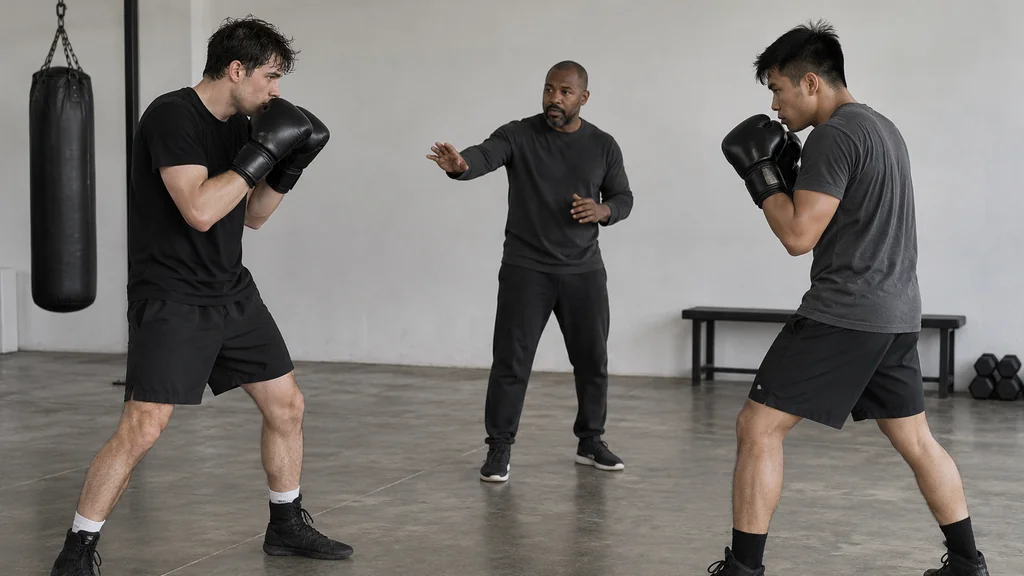
A three-round shoulder-position drill
Use gloves and a coach, or a trusted partner who understands that this is technical work. There is no score, no rough contact and no attempt to win the inside position by force.
Round one: find the angle and freeze
Start close enough that a long cross would feel cramped. Partner A holds a quiet high guard. Partner B takes a small step to one side, turns the shoulders a fraction and settles with both gloves home.
Freeze for one count. Check that the feet are staggered, the eyes are forward and the boxer is not hanging on the partner. Work both sides. The aim is to recognise when the close range has changed the usual stance, not to memorise a favourite side.
Round two: cover or reset
Partner A now gives one slow, pre-agreed hook-shaped mitt cue. Partner B begins from the shoulder-side position, covers the appropriate side with a compact glove and elbow, then takes one small step back to normal range.
Do not throw back yet. The round teaches a more important habit: a close position must still leave you able to defend and leave. If the guard opens during the step, slow the movement down and rebuild it.
Round three: make one honest choice
The coach can now show a body shield, show a cover cue or take a step away. If the shield is at the correct distance, Partner B touches it with one controlled short punch, brings the hand home and exits. If the cover cue appears, cover and leave. If the coach steps away, reset without reaching.
This final choice stops the drill becoming a fixed sequence. Good close-range boxing is not a promise to throw an uppercut every time you turn a shoulder. It is the ability to stay organised when the range becomes awkward.
Four mistakes that make close range worse
The first is leading with the head. Your forehead is not a handle and it is not a battering ram. Keep enough space and posture to see the other boxer.
The second is holding to make the drill work. If the punch only lands because you have stopped the other person moving, it is not an honest punch. Let the target move. Learn to reset when it goes.
The third is forgetting the far hand. A short punch from one side does not excuse leaving the other side of the face open. The guard must remain connected to the position.
The fourth is staying there too long. Close range is a moment, not a resting place. After a compact punch, cover, step out, turn away or reset. Our clinch-break reset drill is a useful companion because it teaches the same discipline after the range has collapsed completely.
Where this fits in training
This is an intermediate technical drill, not a first-session exercise. Start with stance, guard, simple close-range punches and controlled partner work. Then use shoulder position to make those fundamentals hold together when the space gets tight.
For adults in Kidbrooke, Greenwich and nearby, our Recreational Adults boxing classes use pads, bag work and controlled partner drills to develop the position before anybody is asked to work under pressure.
The coaching cue is simple: turn a little, guard the far side, make one choice, then leave.
H&G Team
Writer at Honour & Glory Boxing Club, a community boxing gym in Kidbrooke, South East London.
KEEP READING
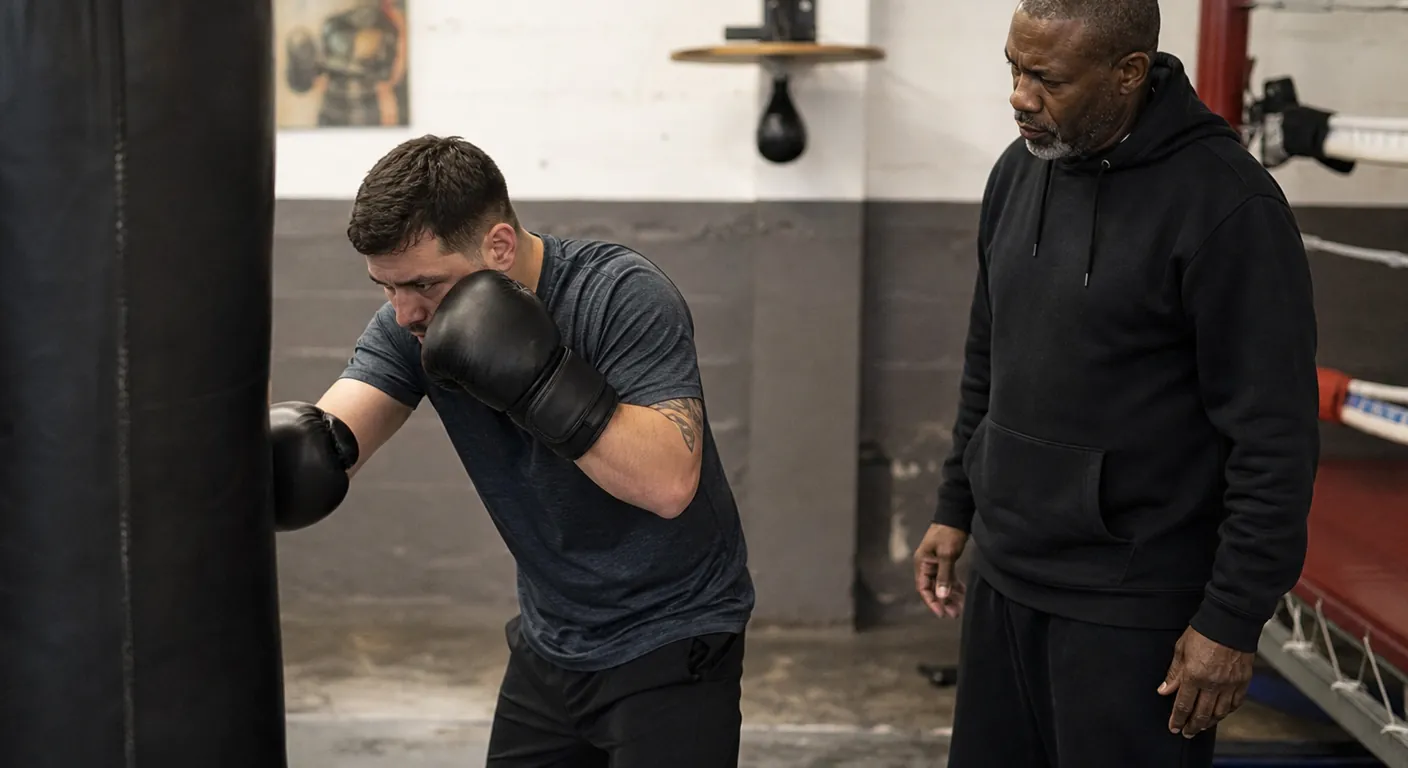
How to Make Space at Close Range in Boxing
Learn how to make space at close range without panicking, pushing illegally, or smothering your own punches.
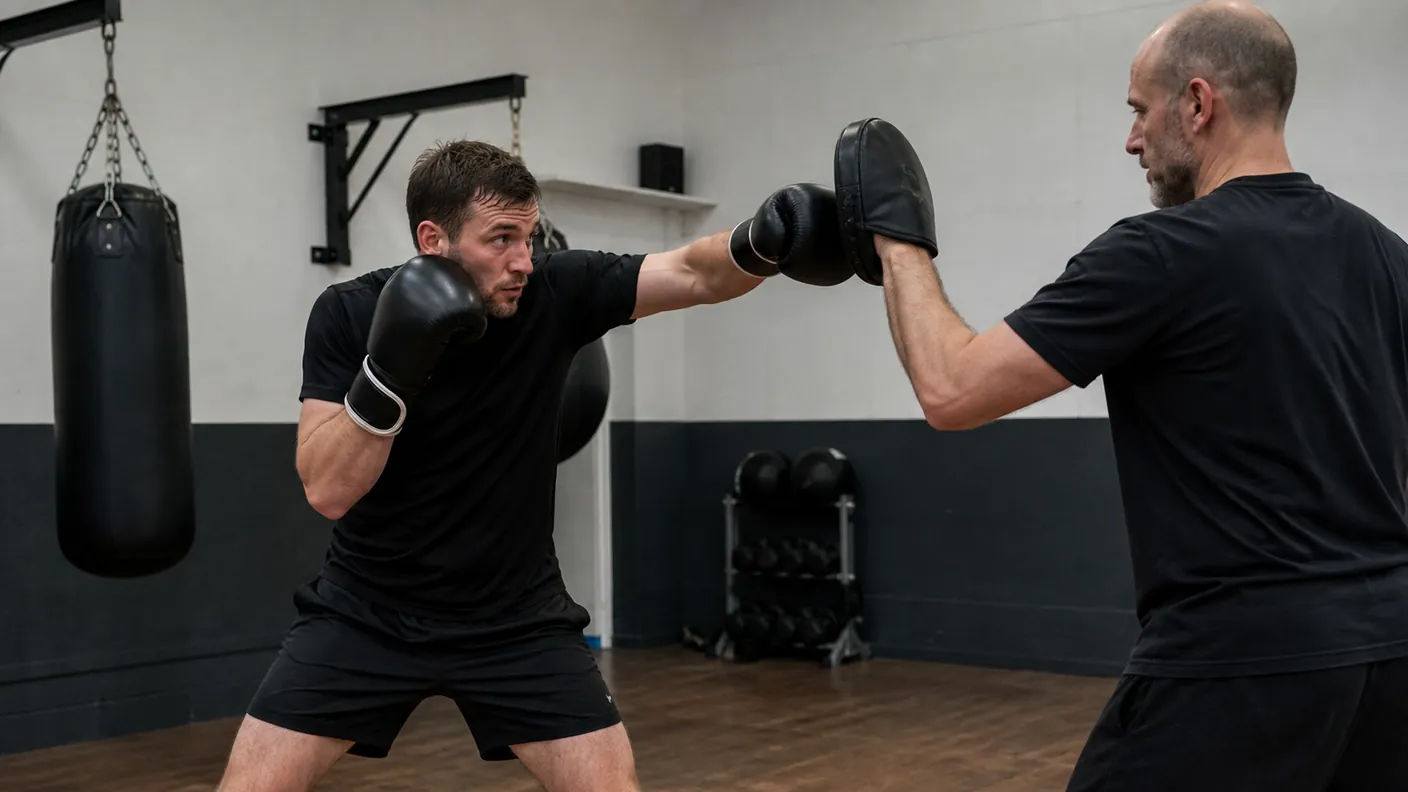
Hook-Slip-Hook: A Calm Close-Range Boxing Drill
Use a compact hook, small defensive slip and second hook to practise close-range boxing without standing still after your first punch.
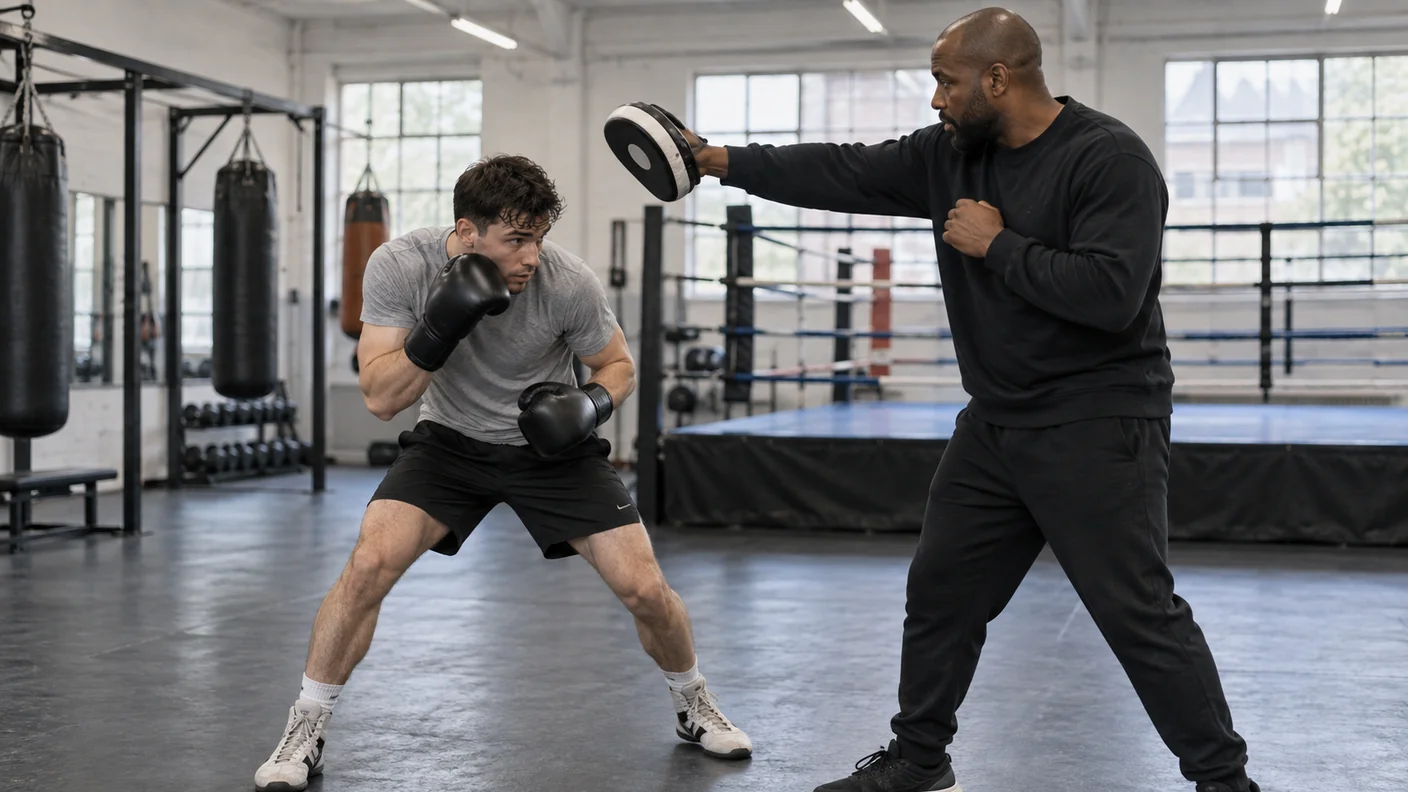
Inside Slip Overhand Right: A Boxing Counter
Use a compact inside slip to clear a jab and land a controlled overhand right only when timing, distance and guard make it safe.
Was this page helpful?
It takes one tap, and it genuinely helps.
Choose your next step
Turn this article into the right action
Some readers are ready to book. Some need the class route first. Pick the route that matches what you actually want.