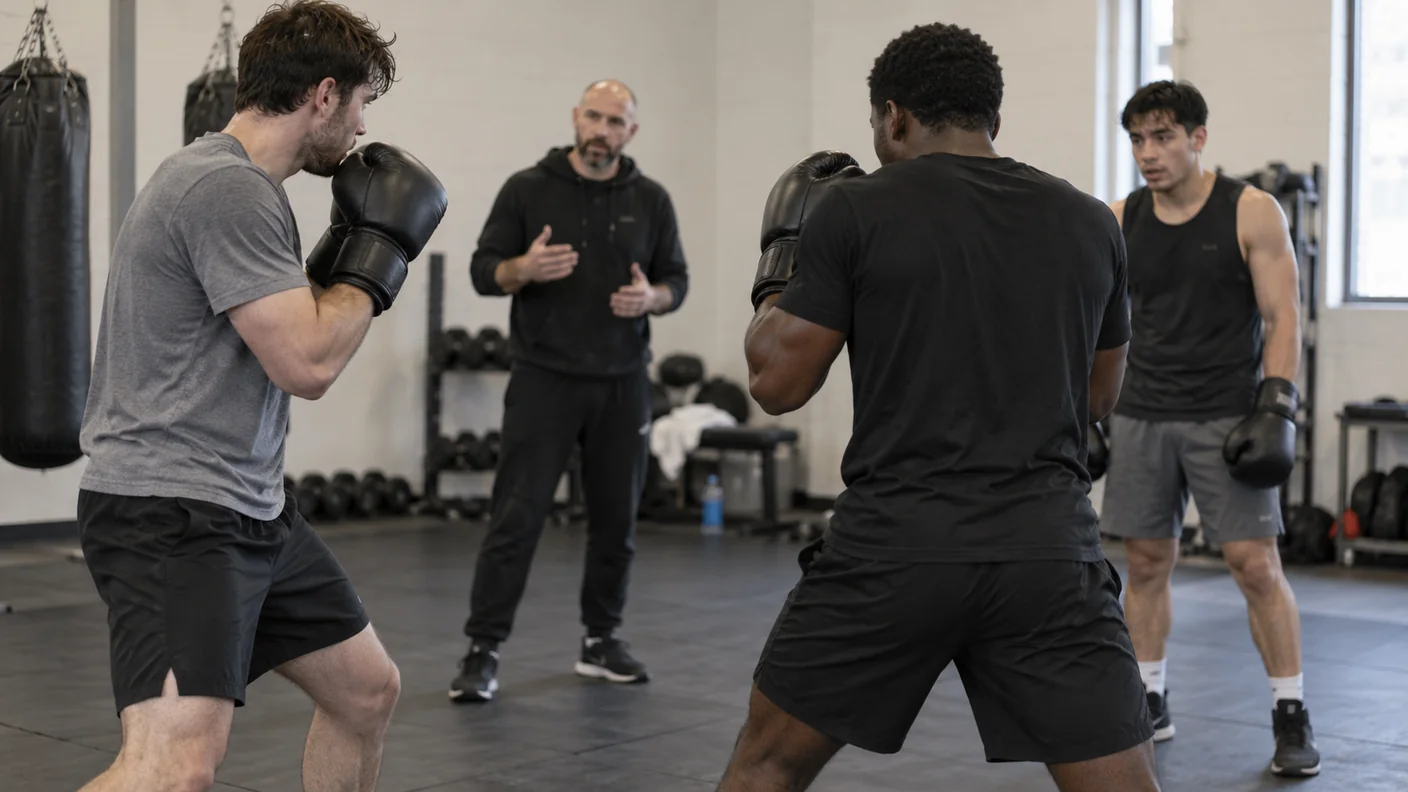
A clinch can stop a messy exchange. It does not end the work.
The vulnerable moment is the separation. Many boxers relax too early, step away with their hands low, or rush out with a long punch because they want to prove they have won the moment. That turns one crowded second into a clean opening for the other person.
A better habit is simple: separate under control, rebuild your stance, see the range, then decide whether you need a jab, a small angle or nothing at all. This is a technical drill for coached partner work, not a way to make close contact rougher.
Watch the demonstration below, then use the steps here to make the reset calm and useful.
A clinch is a pause, not a safe zone
Close range removes the space needed for long punches. When shoulders, gloves and forearms are crowded, trying to force a cross or wide hook usually makes your balance worse. Sometimes the sensible answer is to cover, hold position briefly and wait for the coach or referee to separate the action.
In a bout, the referee's instruction is the instruction. England Boxing's Technical and Competition Rules list holding and hitting on the break among the fouls coaches and boxers must understand. Do not assume the other boxer has heard the instruction at the same moment as you. Do not throw while you are being separated.
In a coached gym drill, the same principle gives you a safer starting point. The coach calls the break, both people create space, and neither tries to steal a shot during the separation. That lets you practise the useful part of the skill: returning to a stance that can actually defend.
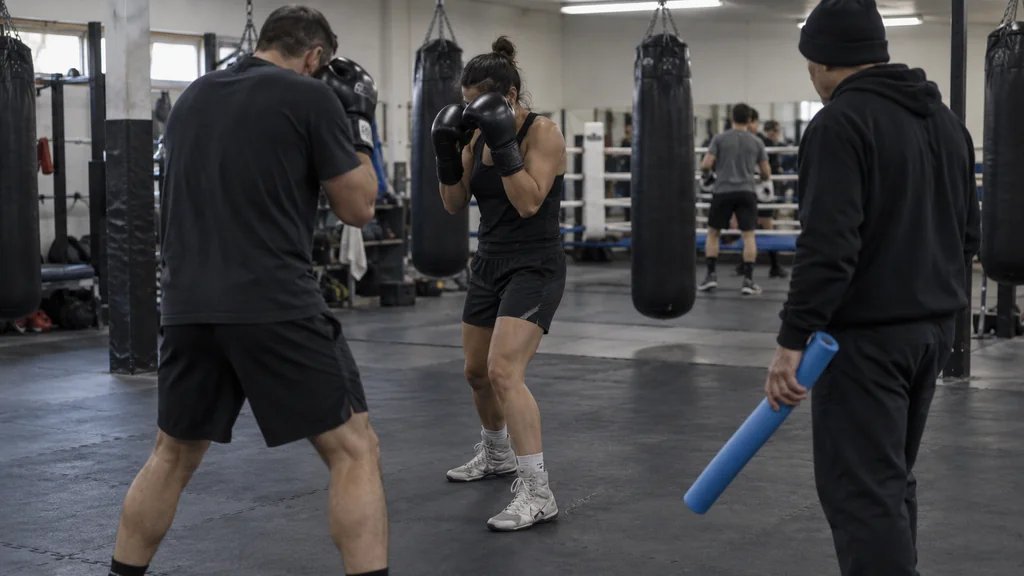
Separate with your feet before your hands start working
The reset begins with a small step, not a punch.
From an orthodox stance, take a short step back with the rear foot, then let the lead foot follow enough to restore your usual distance. Keep the feet staggered. A southpaw uses the same rule on the opposite side. You are not trying to bounce away across the ring. You are trying to regain a position where you can see the other boxer and use both hands without leaning.
Your gloves should travel home as the feet move. Do not let the arms hang because the clinch has ended. Chin down, eyes forward, elbows useful. If the next cue is another jab, your guard is already where it needs to be. If the other boxer is still too close, you can cover or take another small step without panicking.
England Boxing's coaching handbook treats safe progressions and controlled learning as central coaching work. That is the right standard for this drill. Start with no punches. Let the body learn the distance and posture first.
A useful check is whether you can pause for one count after separating. If you are square, falling forward or looking at the floor, the break has happened too quickly. Slow it down. A clean reset should leave you able to jab, step or cover without another repair movement.
Do not chase the first punch after the break
The jab is often the best first action because it can measure the space without asking you to commit everything. It is not compulsory.
If the other boxer has already stepped out, a jab may fall short and pull you over the front foot. If they are still close enough to crowd the punch, you may need a compact guard and a small turn instead. If the coach has called a stop, you do nothing until the next instruction.
That restraint is what makes the drill useful. The aim is not to score a point as soon as the arms separate. The aim is to make a good decision from a stable base.
Our guide to making space at close range covers the moment before a clinch in more detail. This drill starts after that crowded range has passed. It asks one narrower question: can you leave the tie-up without giving away the next exchange?
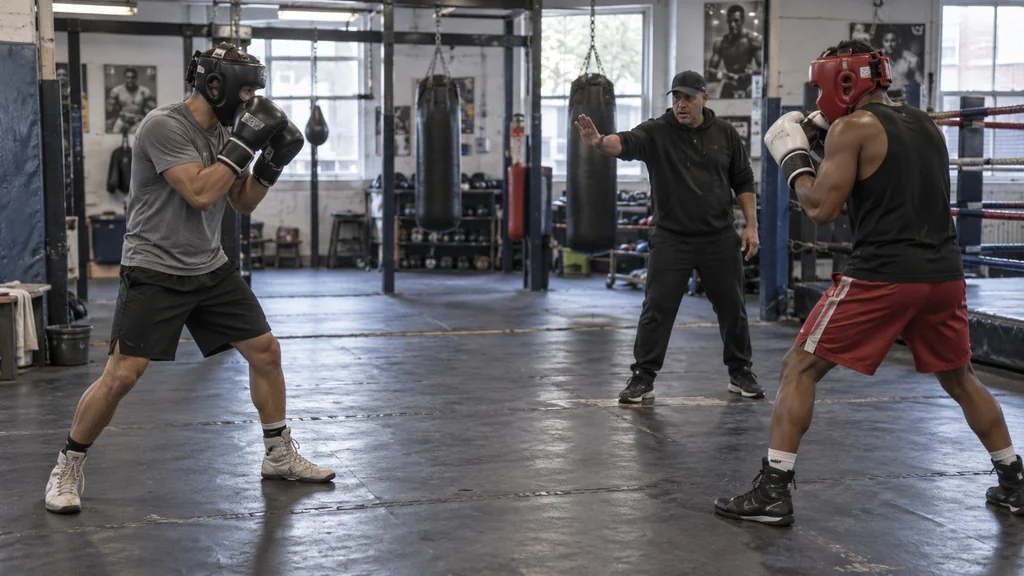
A three-round clinch-break-reset drill
Use gloves, clear rules and a coach who can see both people. Keep contact light. This drill is for boxers who already know a basic stance and guard, and it should never turn into pushing, pulling or wrestling.
Round one: touch, separate, freeze
Stand at close range with both gloves near the shoulders or upper arms. On the coach's call, release the contact and take one short step back into your stance.
Freeze for one count. Check that the feet are staggered, the chin is not sticking forward and both gloves have returned to guard. Repeat slowly for one-minute rounds, changing partners if the size difference makes the drill untidy.
Round two: separate and read the range
Use the same reset, but the coach shows one of three clear cues after the freeze: an open mitt for a light jab, a raised glove for a cover, or no target at all for a full reset.
The cue matters more than the punch. If there is no target, do not throw into empty space. If the cover is shown, keep both gloves home. This is how the drill stops becoming a memorised routine and starts teaching observation.
Round three: add a safe angle
After the separation, take a small step left or right only if the coach has left room for it. Keep the lead foot and rear foot in their usual relationship. Do not cross them and do not spin.
The finish can be a light jab to a mitt, a guard and reset, or a second step to open space. The best choice depends on the cue. A good angle is one that leaves you balanced, not one that looks dramatic.
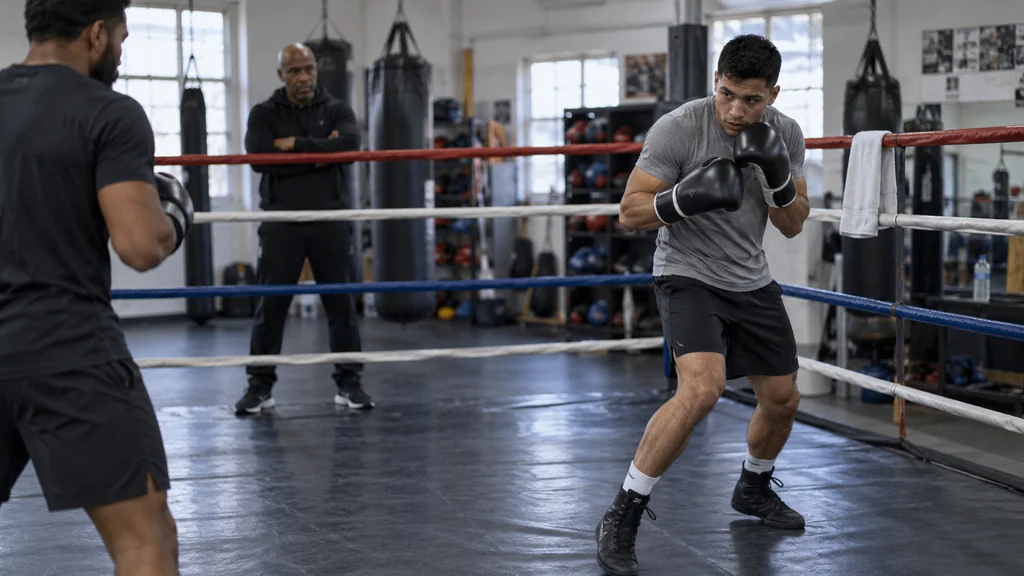
Four mistakes that spoil the reset
The first is stepping back with the chin up. People often think about distance and forget the guard. Bring the gloves home as the feet move.
The second is taking a huge retreating step. That can put you on the ropes and make the next entry harder to read. Recover only the distance you need, then stop and look.
The third is throwing before you have separated. Apart from rule problems in competition, it makes partner work unsafe and teaches poor timing. Wait for the coach's cue or the referee's instruction.
The fourth is treating every break as a chance to attack. A jab can be a sensible first question, but only when the range is there. If it is not, a reset is still a successful repetition.
For a related escape skill, read how to get off the ropes in boxing. The rope drill is about finding open space under pressure. The clinch-break reset is about not making the separation itself the next problem.
Where the drill fits in training
Practise this after a general warm-up or before controlled partner work. It suits technical sessions where the coach wants people to get comfortable at close range without rushing them into hard sparring.
For adults in Kidbrooke, Greenwich and nearby, our Recreational Adults boxing classes use pads, footwork and controlled partner drills to build useful habits without requiring sparring. You can learn the calm reset long before you need to make one under pressure.
The coaching cue is simple: separate small, bring the guard home, then make the next decision.
H&G Team
Writer at Honour & Glory Boxing Club, a community boxing gym in Kidbrooke, South East London.
KEEP READING
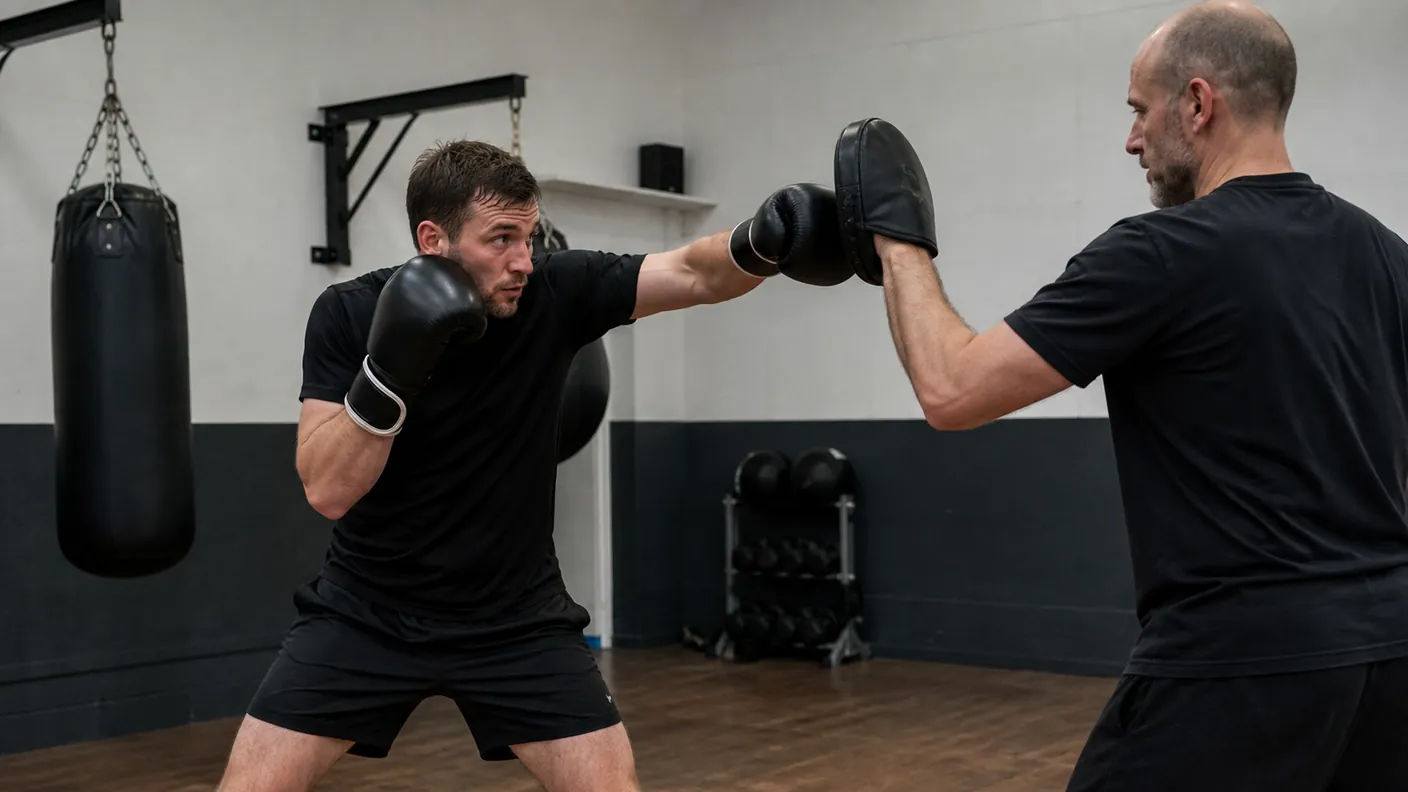
Hook-Slip-Hook: A Calm Close-Range Boxing Drill
Use a compact hook, small defensive slip and second hook to practise close-range boxing without standing still after your first punch.
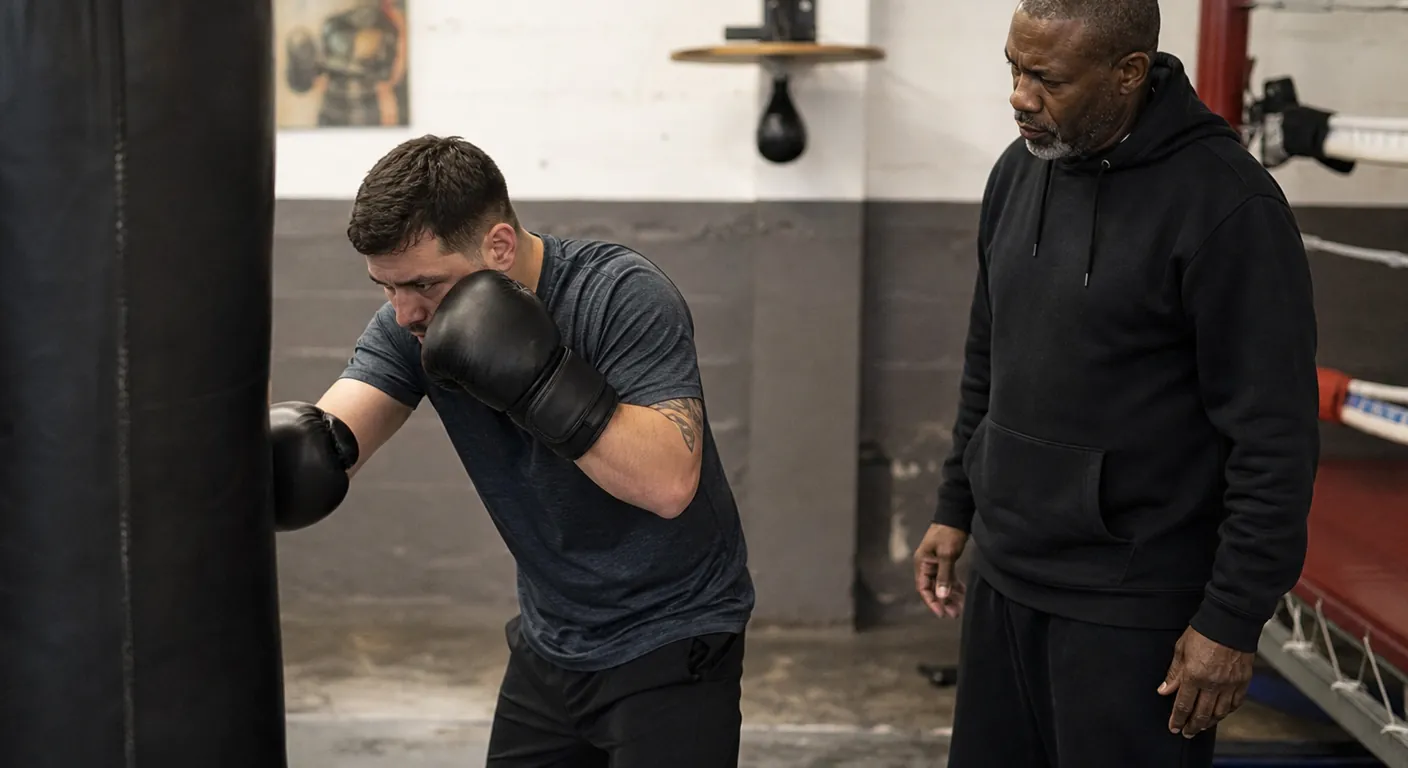
How to Make Space at Close Range in Boxing
Learn how to make space at close range without panicking, pushing illegally, or smothering your own punches.
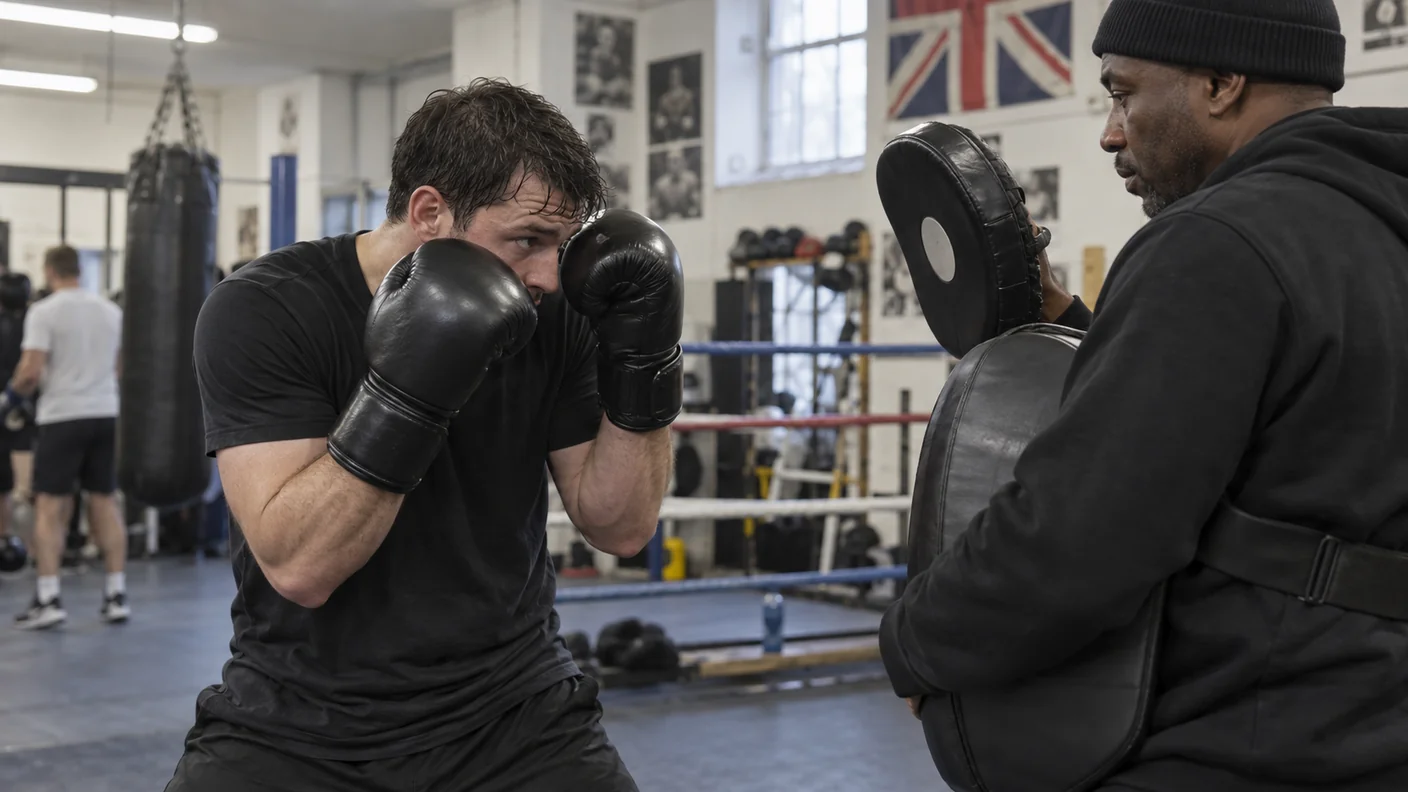
How to Defend an Uppercut in Boxing
Learn how to stay protected against an uppercut with a compact guard, sensible distance and calm exits from close range.
Was this page helpful?
It takes one tap, and it genuinely helps.
Choose your next step
Turn this article into the right action
Some readers are ready to book. Some need the class route first. Pick the route that matches what you actually want.