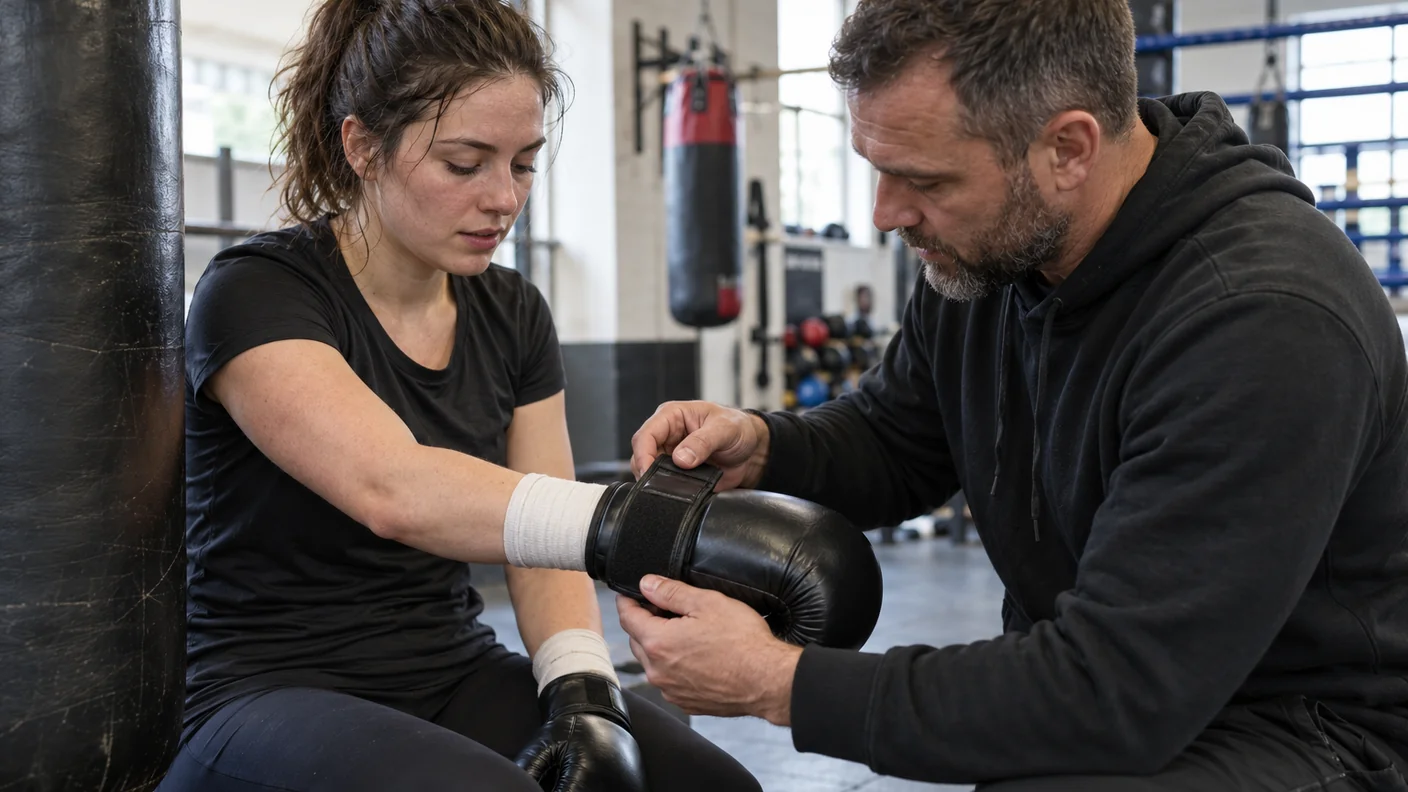
A boxing glove should feel snug, steady and boring once it is on. You should not spend the first round thinking about it.
That rules out two common beginner mistakes. One is a glove that lets the hand slide forward, twist or rub. The other is pulling the wrist strap so hard that your fingers tingle before you have thrown a punch. Neither makes you better protected.
The right fit is not a brand name or a magic glove weight. It is the moment your wrapped hand fills the glove, your wrist feels held in line and you can make a relaxed fist without pain. Get that right before you worry about looking the part.
Start with wraps, not the glove size
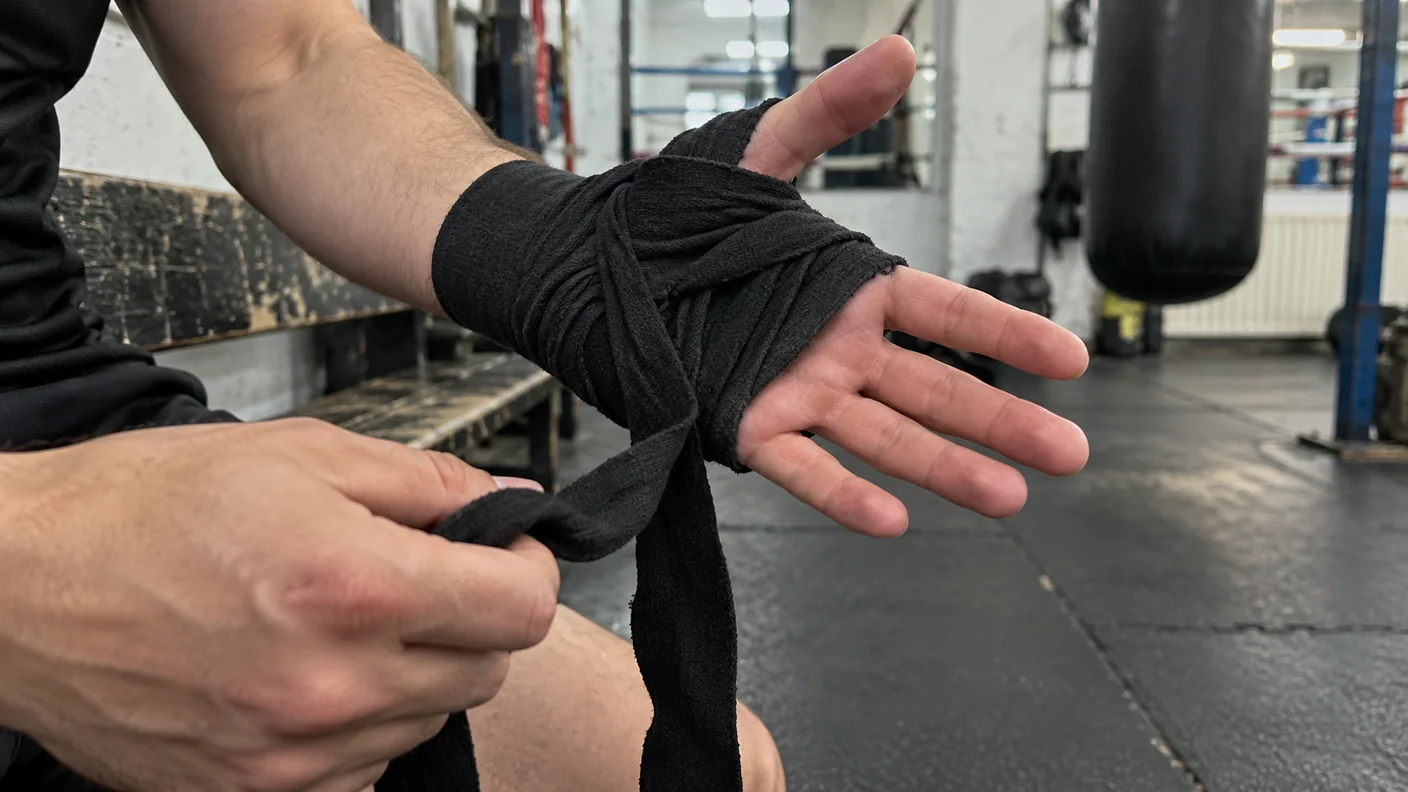
A glove cannot fit properly around a bare hand one week and a heavily padded wrap the next. Your wraps are part of the fit.
Put them on first, then slide the hand into the glove. The fingers should reach the end of the hand compartment without being curled over or forced into a hard fist. The thumb should sit naturally in its compartment, not be squashed sideways. If you are borrowing a pair at the gym, tell the coach if the glove feels wrong before the session begins.
Hand wraps are intended to support the hand and wrist under the glove. A clinical review of elite amateur boxing found hand and wrist problems were a substantial part of the injury picture, including carpometacarpal instability and boxer’s knuckle (the full paper is available through PMC). That does not mean a snug glove makes boxing risk-free. It does mean loose, shifting kit is a bad thing to ignore.
Our guide to wrapping your hands for boxing covers the basic method. The immediate test is simpler: open and close the hand a few times. If the wrap bunches in the palm or pulls your thumb awkwardly, redo it before the glove goes on.
The glove should hold the wrist without cutting circulation
Fasten the wrist strap firmly enough that the glove cuff does not drift when you turn the hand over. It should feel supported, not clamped.
Make a fist, relax it, then spread your fingers. Your fingertips should not go numb, cold or discoloured. You should not feel a sharp line from the strap or pressure around the thumb. A tight glove is not automatically a secure glove. It may simply be too small, badly wrapped or fastened in the wrong place.
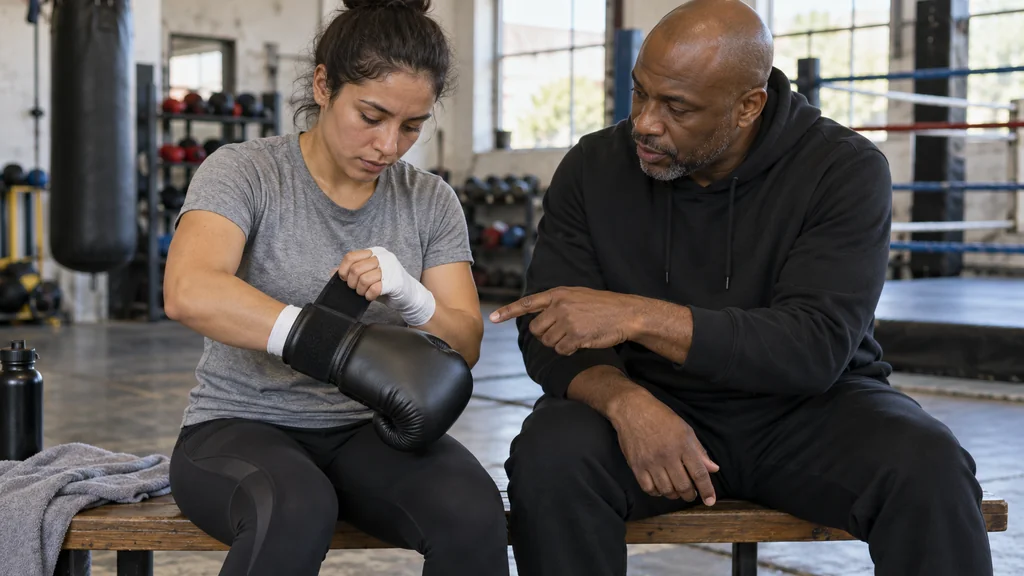
The same rule applies when you are sweaty. A glove that feels acceptable while you are standing still may rub or shift after three rounds on the bag. Adjust it early rather than trying to prove that you can tolerate it.
The NHS wrist-pain guidance lists sharp pain, swelling, bruising, difficulty moving the wrist or gripping as reasons to get medical advice. Stop hitting things if that is what you have. A coach can check glove fit and technique, but cannot diagnose a hand injury from across the gym.
Signs that your boxing gloves are too loose
A loose glove often gives itself away during the first few punches. You might feel the hand slide forward, notice the knuckles moving inside the padding, or keep tightening the strap between rounds.
Look for these signs:
- Your fingertips do not reach the end of the glove when the hand is wrapped
- The glove twists when you turn the palm down for a straight punch
- The wrist cuff moves independently from your forearm
- The palm rubs or develops a hot spot during bag work
- You need to grip hard inside the glove to stop it shifting
Do not solve a loose glove by wrapping until your hand feels like a parcel. A slightly thicker wrap can change the fit, but too much bulk can leave the fingers cramped and make the glove harder to close. Ask a coach to look at the whole set-up: wrap, glove, wrist position and how the punch lands.
If rubbing is already causing a problem, our guide to boxing blisters on hands and feet explains what to change before skin damage becomes the reason you miss training.
Signs that your boxing gloves are too tight
A new glove can feel firm. That is normal. Pain, numbness and a trapped thumb are not a sensible break-in plan.
You probably need to change something if you cannot fully open and close the hand, the thumb compartment presses painfully, the wrist strap leaves tingling in the fingers, or you feel more pressure after each round. First try a flatter wrap with less bulk in the palm. If that does not fix it, try another glove.
This matters because boxing involves repeated impact, and your hand needs to stay organised inside the padding. The same review of boxing hand and wrist injuries is a useful reminder that hand pain is not a badge of commitment (read the research here). You do not need to diagnose every ache. You do need to stop pretending that a glove which hurts before training is a normal fit.
Check the fit with one light round
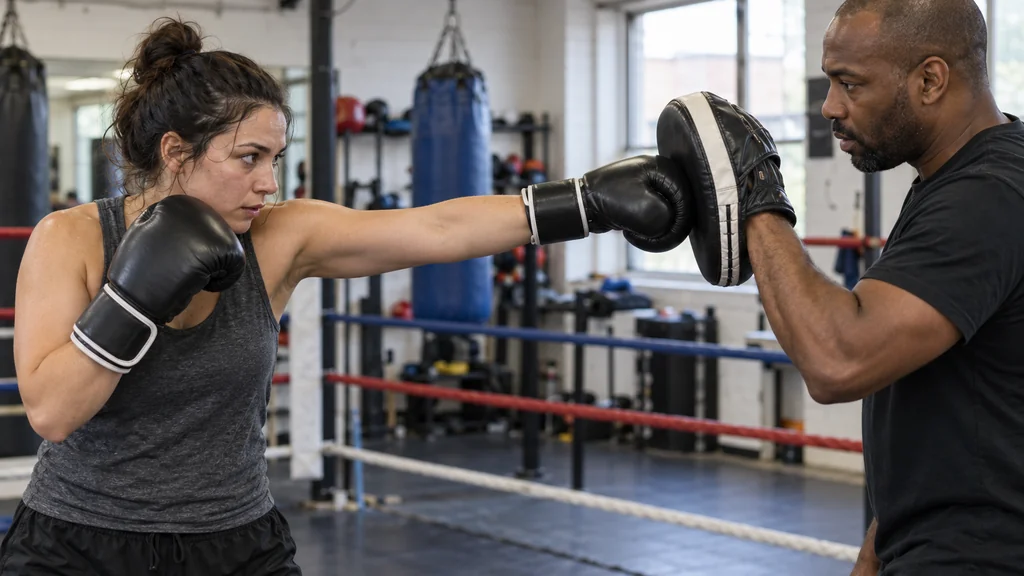
Do not test a new glove by trying to hit the bag as hard as possible. Use a light round on pads or the bag and pay attention to what moves.
Throw a few slow jabs. Feel whether the knuckles meet the glove padding cleanly and whether the wrist stays in line behind the fist. Add a one-two, then a gentle hook if the coach has shown you the angle. If the glove shifts, stop and adjust it.
This is also why new starters do better with coaching than with a heavy bag and a video. A bag does not tell you that your wrist is folding, your glove is too loose or your wrap is bunched. A coach can see it in a few punches and correct the smallest thing first.
At Honour and Glory, adults in Greenwich can start in the Adult Recreational boxing class, where you can learn the basics of wraps, gloves, pads and bag work before deciding what kit is worth buying. You do not need competitive sparring experience to begin.
A good glove fit is quiet. Your hand stays put, your wrist feels supported and you can focus on the punch rather than the equipment. That is the standard.
H&G Team
Writer at Honour & Glory Boxing Club, a community boxing gym in Kidbrooke, South East London.
KEEP READING
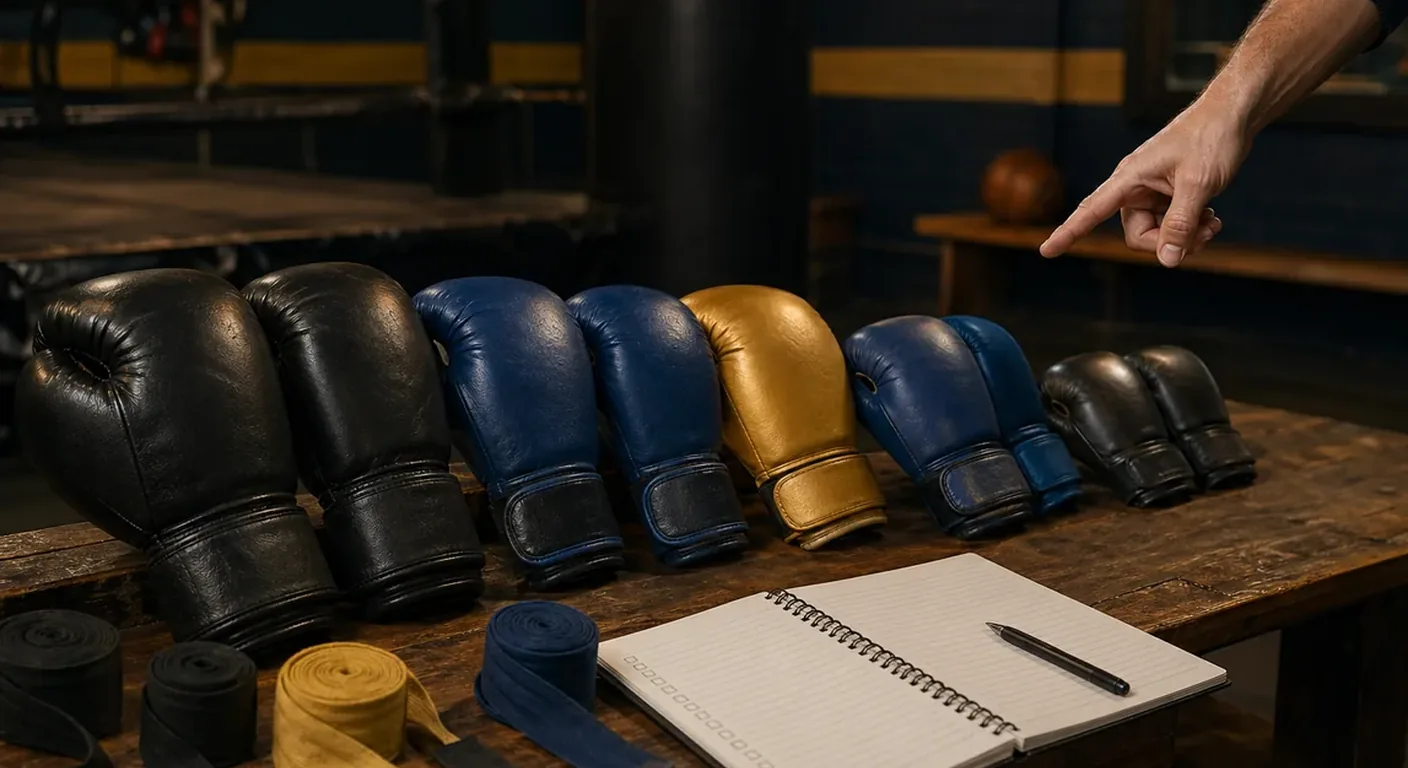
How Should Boxing Gloves Fit?
A practical guide to boxing glove fit: snug hands, straight wrists, wraps, weight, and the mistakes beginners make.

Why Your Wrists Hurt After Boxing
Wrist pain after boxing is usually a technique or equipment problem, not a toughness test. Here is what causes it and what to fix first.
Why Boxing Hand Wraps Come Loose
Loose boxing hand wraps are irritating and can spoil a session. Here is how to spot the cause, reset them and keep your hands comfortable.
Was this page helpful?
It takes one tap, and it genuinely helps.
Choose your next step
Turn this article into the right action
Some readers are ready to book. Some need the class route first. Pick the route that matches what you actually want.