
For most boxing rounds, one minute is the useful default. It is long enough to get your breathing under control and hear one clear coaching point. It is short enough that you cannot treat every break like a sit-down at home.
That answer changes slightly with the job of the round. A beginner learning the jab might need a little more time so the next round is still technical. Someone doing a competition-style three-minute block should use the minute properly, because that is the recovery they will get when the pace matters.
The mistake is seeing rest as empty time. It is part of the round. Use it well and you return calmer, sharper and less likely to throw the next combination with your shoulders around your ears.
One minute is the boxing standard
A one-minute interval is the familiar rhythm of amateur and professional boxing. England Boxing's 2026 technical and competition rules set one-minute rests between rounds across a range of bouts, including three-round formats.
That does not mean every class has to copy a fight exactly. Recreational training has a different job. Coaches might use shorter rounds while you learn, longer rests while technique is being corrected, or several controlled stations that do not follow fight timing at all.
Why a minute can feel so short
A minute feels generous before a hard round and disappears once the bell goes.
That is partly because a boxing round asks for more than a simple effort on a bike or treadmill. You are moving your feet, throwing, returning to guard, listening, choosing range and keeping your balance. When the round ends, your body is trying to settle while your coach may be asking you to remember what happened.
A study of an amateur-boxing simulation used three three-minute rounds with one-minute passive recoveries. It found that blood lactate rose across the rounds, which is a useful reminder that the break does not wipe the slate clean (boxing simulation study). The next round begins with some fatigue still present. That is the point of the format.
Do not panic if your breathing is still fast when the next round starts. The aim is not to feel completely fresh. The aim is to regain enough order that you can move, see and throw properly.
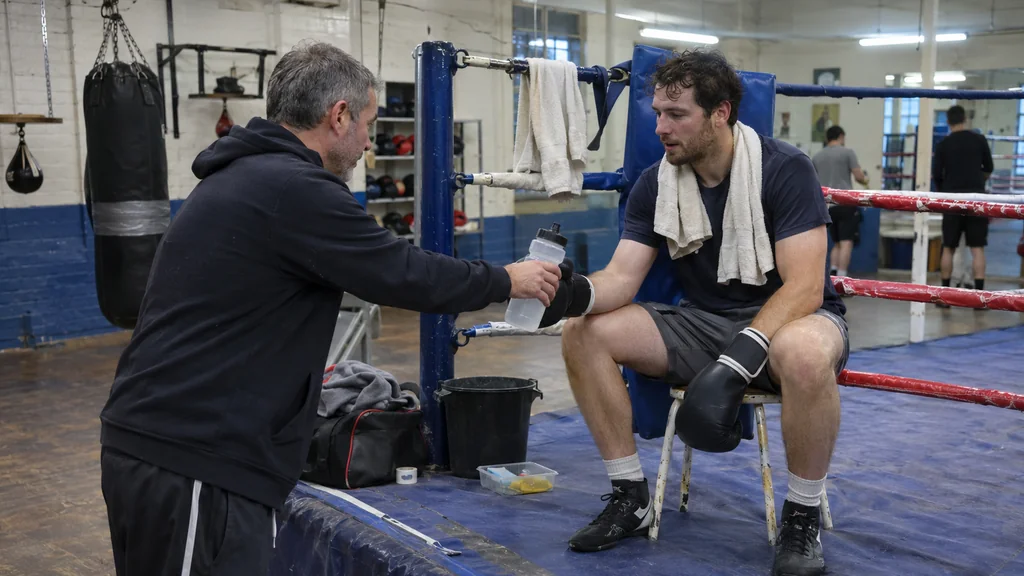
Use the minute in the right order
The best rest periods are boring. That is a compliment.
First, bring the breathing down. Do not stand doubled over with your hands on your knees unless a coach has told you to stop the round. Stand tall or sit if that is the setup, relax the shoulders and take a few slower breaths. You are trying to stop the frantic gulping that makes the next round feel worse.
Second, take a small drink if you need one. Do not spend half the break trying to fix every piece of kit, retie both gloves or have a long conversation. Have water ready before the round starts. A short break disappears quickly when you have to search the floor for your bottle.
Third, choose one instruction. Not four.
If you were reaching with the jab, the next-round cue might be "short jab, then step." If you were backing up in straight lines, it might be "exit left after the cross." If you were throwing too hard, it might simply be "hands home." One useful cue gives you something practical to do when the round restarts.
The worst version is a coach or training partner delivering a full post-match analysis while you nod without hearing any of it. Keep the message small enough to carry into the first ten seconds of the next round.
Rest length should match the purpose of training
If you are copying boxing rounds for conditioning, one minute is a sensible default. It teaches you to recover under some pressure and makes the session easy to repeat and track.
If you are learning a new skill, there is nothing soft about taking 75 or 90 seconds. A little more time can give you a better next round. That matters when the goal is to land a clean jab, hold a balanced stance or practise a defensive movement without rushing it.
The same judgement applies to pads and bag work. A 2024 study comparing pad, bag and sparring sessions used six three-minute rounds with one-minute recovery periods (boxing training comparison). That is useful structure for trained boxers, but it is not a rule that every beginner has to obey on day one.
For adults starting at H&G, the job is to build good rounds before you chase hard ones. Our Recreational Adults boxing classes use controlled work so technique does not disappear as soon as you are tired. There is no prize for finishing a round with your feet square and your gloves at your waist.
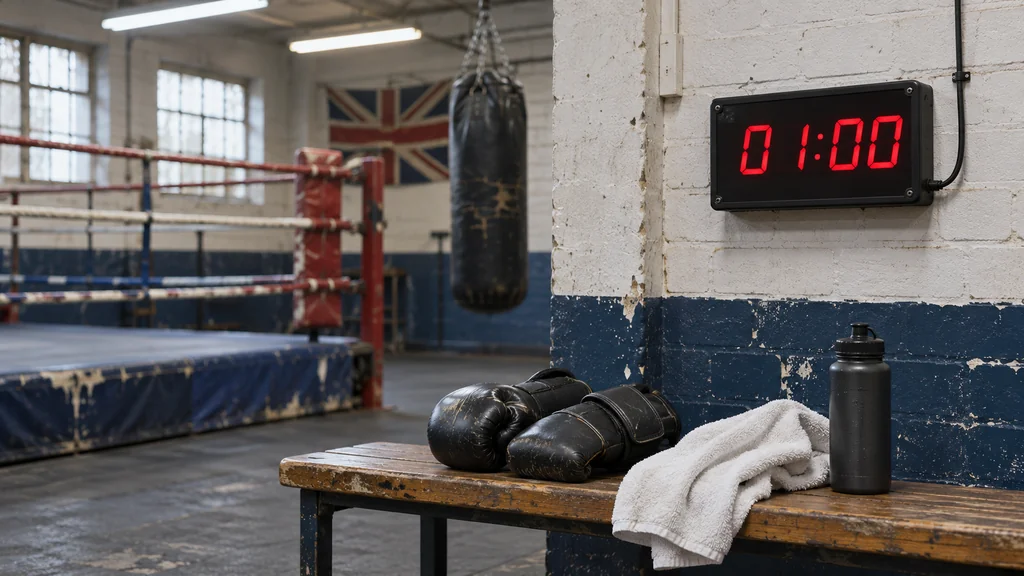
A simple beginner round structure
Try this when you are doing bag work, shadowboxing or coach-led pads at a comfortable level:
- Work for 90 seconds on one clear job, such as jab and step, jab-cross return, or steady bag rhythm.
- Rest for 60 seconds. Breathe, take water if needed, and choose one cue for the next round.
- Repeat for three rounds.
- Keep the same work and rest timing next session, then judge whether the quality improved.
Once three 90-second rounds stay controlled, move to two-minute rounds with the same one-minute rest. Do not jump from a minute of clean work to three minutes of frantic arm punches just because three minutes sounds more like boxing.
If you are working towards harder rounds, our guide to building boxing stamina explains why efficient movement and relaxed shoulders matter as much as general fitness. If you are fading after the first hard minute, why beginners gas out in boxing is worth reading before you add more miles or more bag rounds.
Signs that your rest is too short
Your rest is probably too short for the current drill if the next round is immediately worse in the same predictable ways.
Watch for a guard that cannot stay up, feet that stop moving, punches that turn into swings, or a combination you knew five minutes ago suddenly becoming impossible to remember. Those are not always fitness failures. They can be a signal that the last round was too hard for the skill you are trying to learn.
The answer is usually not to quit the session. Change one variable. Shorten the round, extend the rest slightly, reduce the power, or remove one complicated movement. Make the next rep useful.
This is particularly important with partner drills. If either person is tired enough that control is going, slow down or stop. Boxing skill develops through good repetitions, not through two people trying to look tough while neither can defend properly.
What not to do between rounds
Do not pace around the gym in a panic. Do not start stretching hard. Do not try to replay every mistake in your head. Do not turn the break into a test of how little water you can drink.
Also, do not use the one-minute format to hide a warning sign. If something feels wrong rather than merely hard, tell the coach. Pain after a bad punch, dizziness, chest symptoms, or an injury from contact needs a sensible response, not another round because the timer is running.
A well-run session has room for judgement. The clock gives the training shape. It does not overrule what your body or coach is telling you.
The useful rule to remember
For most boxing training, use one minute between rounds. Treat it as recovery with a job: breathe, drink, listen, reset.
If you are a beginner, protect quality first. A shorter round with a clean stance and a clear idea is more valuable than a longer round where every punch becomes a reach. Build the round length gradually, keep the rest honest, and you will get fitter without practising chaos.
If you are in Kidbrooke, Greenwich or nearby and want coaching that makes the round structure feel manageable, come and train with us.
H&G Team
Writer at Honour & Glory Boxing Club, a community boxing gym in Kidbrooke, South East London.
KEEP READING

How Long Should Beginner Boxing Rounds Be?
Beginner boxing rounds do not need to be three minutes. Learn how to choose a length that keeps your technique useful.
How to Use an Open Boxing Session Well
A simple plan for using open boxing sessions to improve one useful skill instead of drifting through bags, pads and conditioning.

Feeling Sick During Boxing: When to Rest and Stop
Feeling sick in a boxing class can have several ordinary causes. Learn when to take a break, when to go home and when to get medical advice.
Was this page helpful?
It takes one tap, and it genuinely helps.
Choose your next step
Turn this article into the right action
Some readers are ready to book. Some need the class route first. Pick the route that matches what you actually want.