Feeling Sick During Boxing: When to Rest and Stop
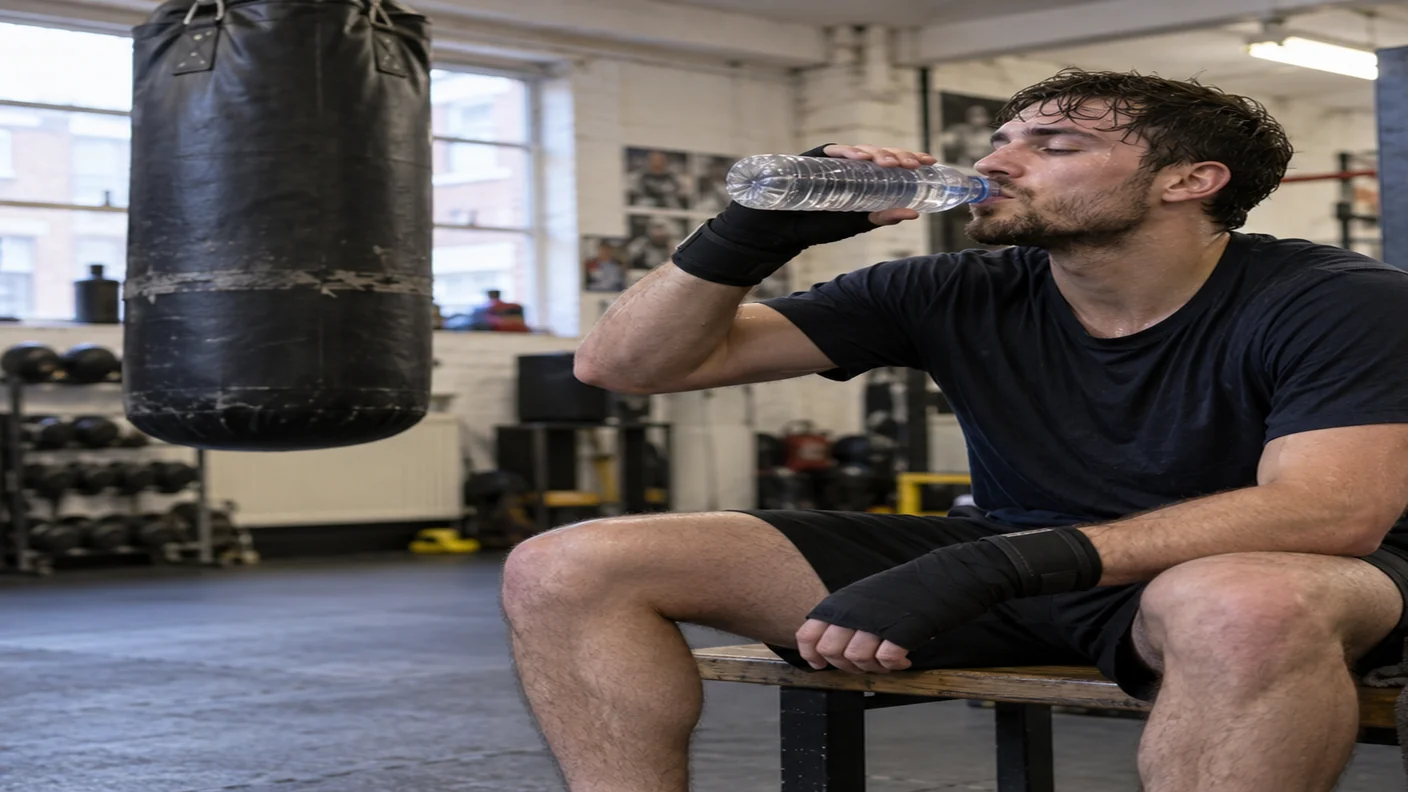
Feeling sick during boxing is a signal to pay attention to, not a challenge to win.
Sometimes the answer is simple. You ate a large meal too close to class, turned up under-fuelled, trained hard in a warm room, or tried to match a pace your body is not ready for. A short rest, water and a calmer next round may be enough.
Sometimes the answer is to stop for the day. If you feel faint, confused, unusually breathless, have chest pain, develop a bad headache after head contact, or feel worse rather than better when you slow down, do not try to tough it out. Tell the coach and get appropriate medical advice.
First, stop trying to hide it
Beginners often feel embarrassed because they think a coach will read nausea as lack of effort. A decent coach reads it as useful information.
Say what is happening early. “I feel sick.” “I feel light-headed.” “My stomach is turning.” That is enough. You do not need to explain your whole life in the middle of a round.
The immediate response should be simple: step away from the bag or pads, sit or stand somewhere safe, loosen the gloves if needed, take small sips of water and let your breathing settle. Do not lie flat on the gym floor and do not immediately chug a litre of water because you feel rough.
If the feeling clears quickly and you are otherwise well, a coach may suggest a lighter version of the next round. Shadowboxing, footwork, or a calm jab-and-reset drill can still be useful. There is no prize for going back in at full pace before you can think clearly.
Food timing can make a hard class feel worse
The two most common food mistakes point in opposite directions.
The first is arriving hungry. A long day, skipped lunch and an evening class can leave someone trying to do intense intervals with very little available energy. The second is eating a heavy meal just before training, then asking the stomach to deal with food while the body wants blood and attention for movement.
Neither mistake means boxing is not for you. It means the routine needs adjusting.
For most evening sessions, leave enough time for a normal meal to settle, or have a smaller familiar snack if the day has got away from you. A banana and yoghurt, toast with peanut butter, a simple sandwich, or cereal with milk can be more useful than arriving empty and hoping adrenaline carries you through. Our guide to what to eat before an evening boxing class gives the practical version without turning dinner into a sports-science project.
Do not diagnose low blood sugar from one bad session. The NHS guidance on hypoglycaemia says it is most common in people with diabetes who take certain medicines, and that shaking, sweating, hunger, dizziness and confusion deserve particular attention. If you have diabetes, follow the plan given by your healthcare team and tell the coach anything that affects safe training.
Heat, dehydration and pace can stack up
Boxing makes people hot quickly. Gloves trap heat, the rounds come in bursts and beginners often tense every muscle because they are trying to get the technique right. Add a crowded warm gym, poor sleep or a busy commute and a normal class can suddenly feel much bigger than it is.
Dehydration can be part of the picture, particularly if you have been sweating heavily, have been unwell, or have not had much to drink through the day. The NHS dehydration guidance specifically lists heavy sweating after exercise as a higher-risk situation and advises fluids when symptoms appear.
That does not mean water fixes every problem. It means you should arrive with a bottle, drink normally through the day and take a sensible pause before fatigue turns into panic.
The other part is pace. A first session does not need maximum-power bag rounds followed by a punishing finisher. If you are breathing hard but can still listen, move with control and recover during the rest, the coach can scale the work. If the room is spinning, you are close to fainting, or you cannot follow a basic instruction, the session is no longer the place to prove anything.
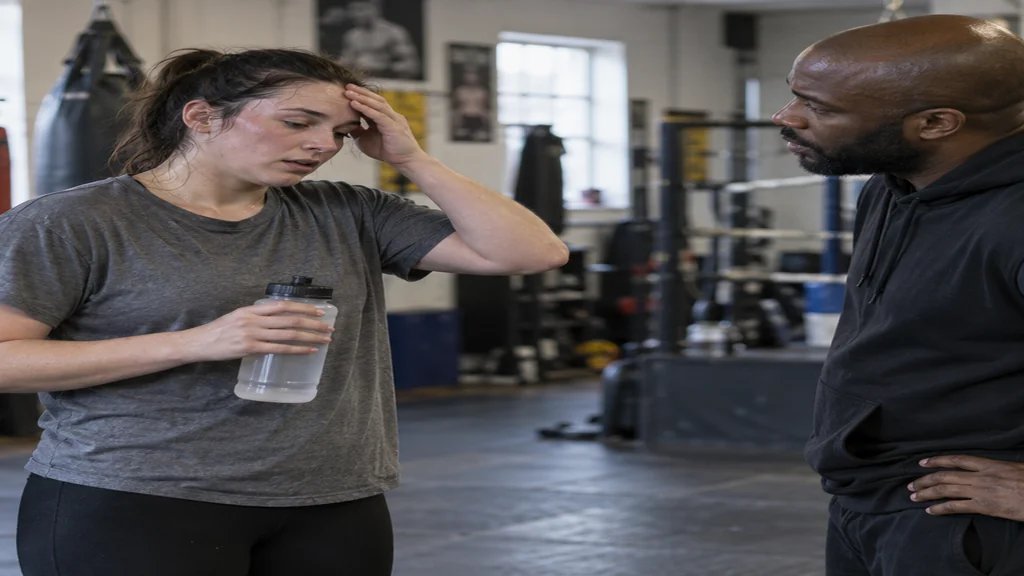
Nausea after a head impact is different
This distinction matters.
Feeling sick after hard conditioning is not the same as feeling sick after a punch, fall, collision or other blow to the head. If nausea follows head contact, especially with headache, dizziness, confusion, vision changes, balance problems, unusual behaviour or vomiting, stop straight away. Do not return to sparring or try one more round to see whether it disappears.
The NHS head injury and concussion guidance explains that symptoms can appear after a head injury and sets out when urgent help is needed. In a boxing gym, the first decision is uncomplicated: tell the coach and remove yourself from contact. Medical assessment comes before any decision about returning.
This article is not a substitute for that assessment. Recreational boxing does not require sparring, and a good beginner session has plenty of value in bags, pads, footwork and controlled drills without contact.
When it is sensible to go home
You can feel disappointed and still make the right call.
Go home rather than forcing the next round if you have vomited, feel faint, have chest pain or chest tightness, severe or unusual breathlessness, a racing heart that feels wrong, confusion, new weakness, severe pain, or symptoms that keep worsening after rest. The same applies if you are feverish, have diarrhoea, are recovering from illness or simply feel properly unwell before the warm-up begins.
Do not turn a group session into a test of whether you can ignore a bad symptom. Your coach can alter boxing work. They cannot diagnose what is causing it.
If this pattern happens repeatedly, make a note of the details. What did you eat and when? How much did you drink? Was the gym unusually hot? Did it happen before, during or after the hard rounds? Were you ill, sleep-deprived or taking any medication that may matter? That gives a clinician, if you need one, something more useful than “boxing makes me sick.”
A better return to the next class
The next class should be more deliberate, not more timid.
Eat something sensible beforehand. Arrive a few minutes early. Tell the coach that the last session made you feel sick. Start with a controlled warm-up, a simple technical target and a pace you can recover from. You might use one-minute bag rounds, lighter pad calls, or more rest between efforts while your body catches up.
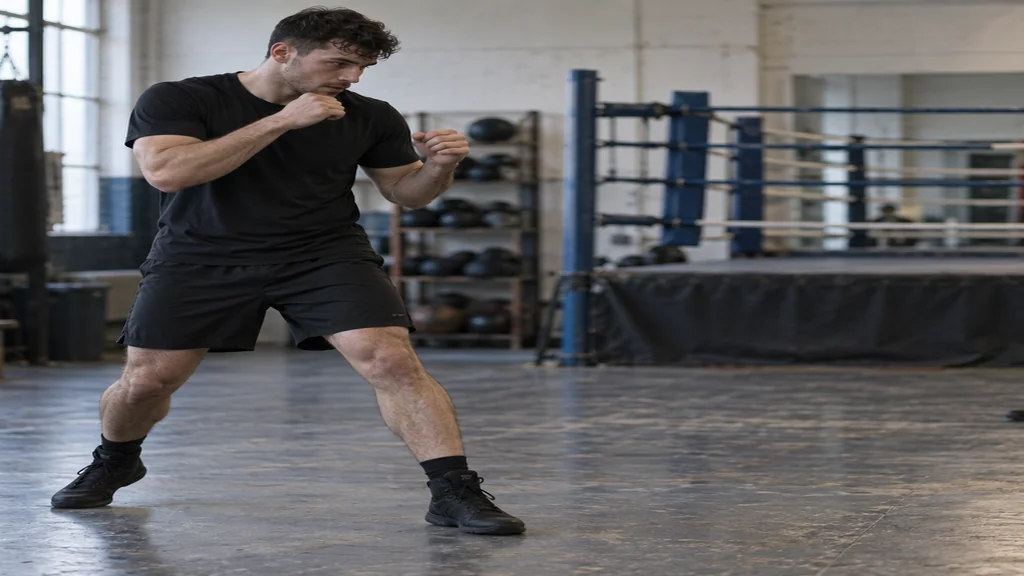
This is not lowering the standard. It is building a standard you can repeat.
Our article on taking breaks in a boxing class explains how a short, honest pause can keep a session safe and useful. If you are otherwise healthy and the feeling was a one-off caused by pace, heat or poor food timing, the next step is usually straightforward: learn from it and come back better organised.
For adults near Kidbrooke, Recreational Adults boxing classes offer coached bags, pads, footwork and conditioning without any need to spar. Tell the coach where you are starting from. The aim is not to survive a room full of strangers. It is to build fitness and skill you can keep coming back to.
H&G Team
Writer at Honour & Glory Boxing Club, a community boxing gym in Kidbrooke, South East London.
KEEP READING
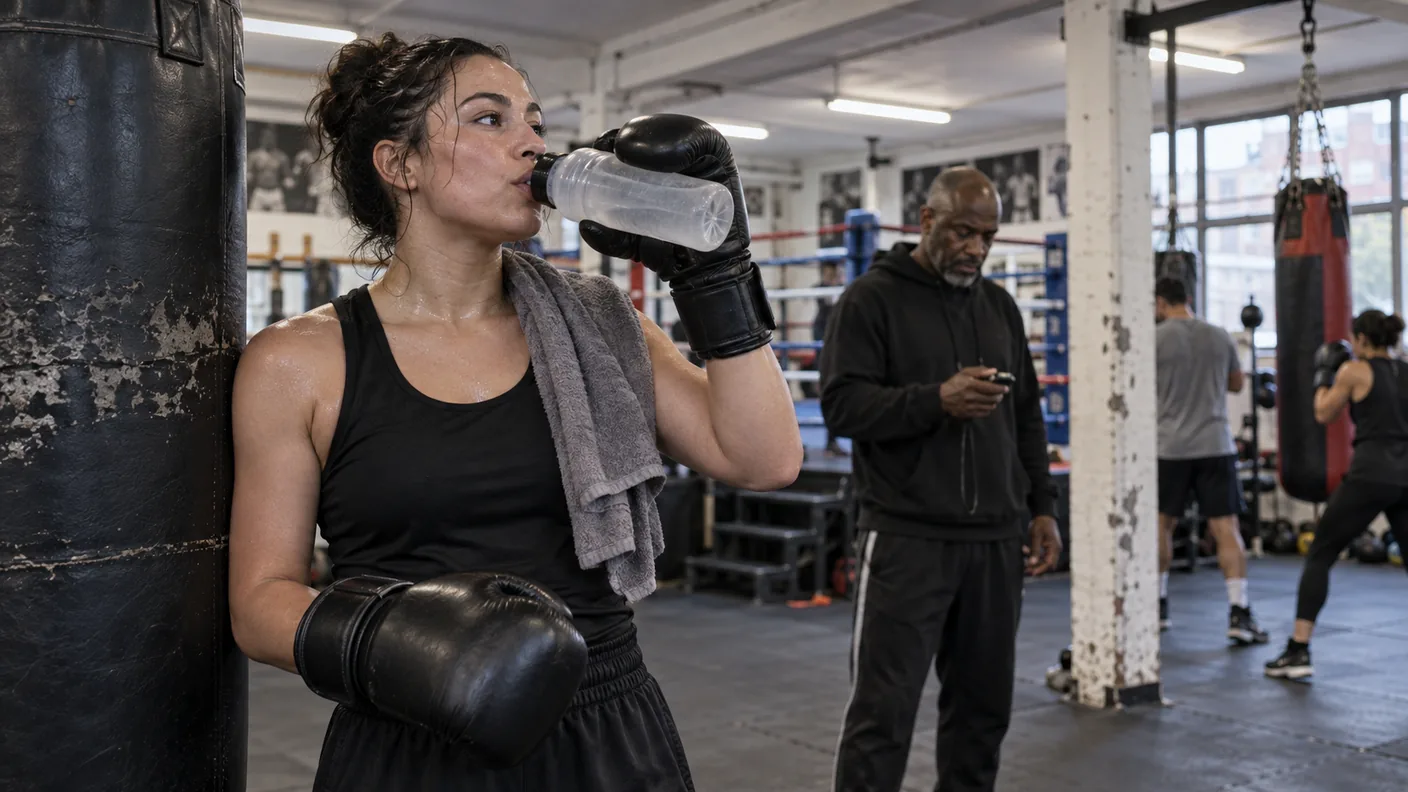
Is It Okay to Take Breaks in Boxing Class?
Yes. A short, honest break can keep a beginner boxing session safe, useful and worth coming back to.

What to Expect at Your First Boxing Class
Nervous about your first boxing class? Here is exactly what happens when you walk through those doors, so you can focus on learning instead of worrying.

Can You Go to a Boxing Class Alone?
Yes. Going to boxing alone is normal. Here is how a good first class should help you settle in, train properly and come back.
Was this page helpful?
It takes one tap, and it genuinely helps.
Choose your next step
Turn this article into the right action
Some readers are ready to book. Some need the class route first. Pick the route that matches what you actually want.