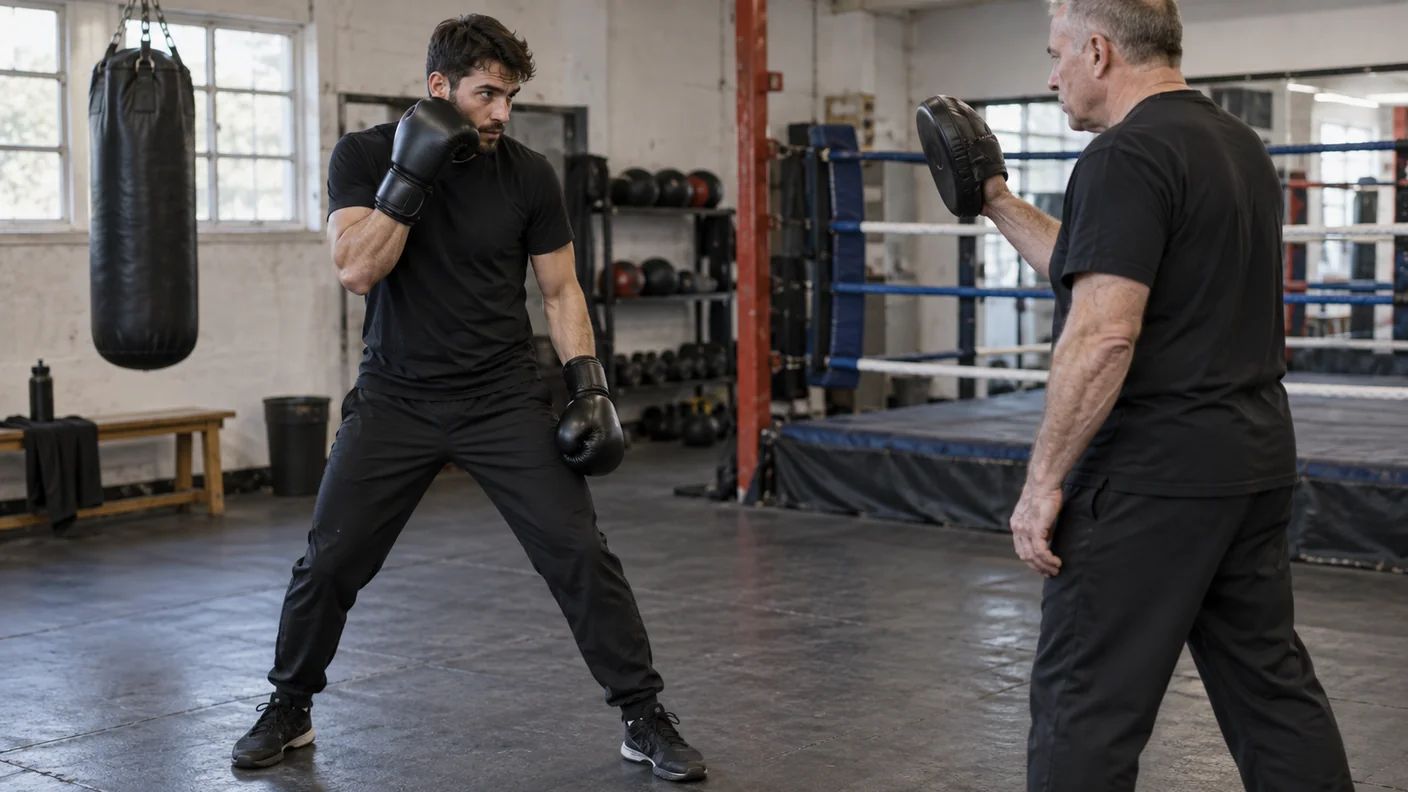
A hip jab is a lead-hand jab that starts lower than a normal guard, close to the front hip, then rises through an unusual line.
It can be awkward to read because the glove does not start from the familiar space beside the cheek. It can also be a bad idea if you use it as an excuse to leave your face open. This is an advanced range drill, not a new default guard for beginners and not something to copy in a fast sparring round.
The useful version has a narrow job. You show a relaxed lead hand at long range, bring it up through the centre only when the distance is honest, then return it to a normal guard before the other boxer can take the opening. If your rear glove, feet or eyes have stopped working, the variation has failed.
Watch the demonstration below, then use the coaching points to keep the jab small and controlled.
Start with an ordinary jab that already works
A low-start jab does not repair a loose guard, a lazy lead hand or a stance that leans too far forward. It only gives a clean jab a less familiar departure point.
Before trying it, you should be able to throw a standard jab without flaring the elbow, lifting the chin or leaving the rear glove behind. You should also be able to return the lead glove to guard without needing to pull your feet back underneath you. Our guide to throwing a jab with clean mechanics is the right starting point.
England Boxing puts balance, stance and controlled technical progression at the centre of its coaching handbook. That is a useful standard here. If a variation makes your basic position worse, it is not advanced boxing. It is just a new way to be open.
The hip jab therefore belongs at the edge of range, when there is room to see the hand travel and recover. It is not a close-range punch. If someone is already crowding you, use a proper guard, cover, clinch under supervision or step away. Do not try to surprise them with a hand that has started too low.
The low hand is a temporary picture, not a resting place
From orthodox stance, the lead glove may sit lower and a little farther forward than usual, around the front hip or lower rib. The rear glove stays by the rear cheek. The chin stays behind the lead shoulder. Southpaws reverse the picture, but the rule stays the same: one hand may change position while the other still protects the obvious line.
Do not let the lead hand hang behind the hip or drift out beyond your knee. That is no longer a change of picture. It is an invitation for the other boxer to jab, hook or step in before you can react.
Keep the elbow soft and the knees alive. The hand should look relaxed enough to move, not dead enough to be forgotten. If the lead shoulder has collapsed forward, the stance has become square or the rear glove has followed the lead hand down, bring both hands home and reset.
A review of boxing performance and biomechanics treats effective punching as a connected task involving the legs, trunk and upper body. That matters more than the unusual hand position. The hip jab is not an arm flick from a low place. Your feet, shoulder, guard and recovery still have to arrive together.
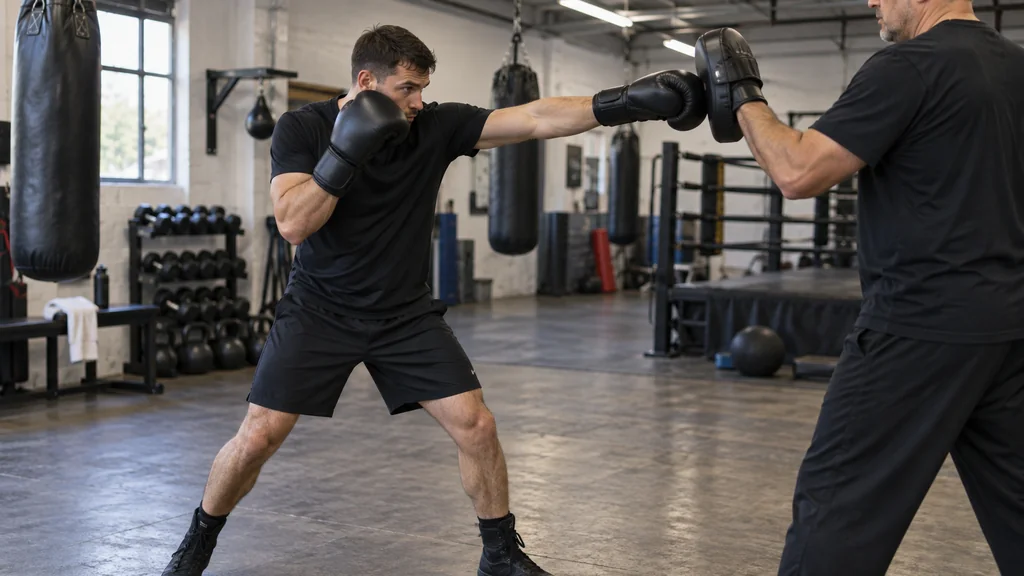
Bring the jab up through a short line
The jab itself should remain a jab. Do not scoop it like an uppercut or send the elbow out sideways to make the route look clever.
From the low lead-hand position, let the glove travel up and forward on a compact line towards a coach-held mitt. The lead shoulder rises just enough to cover the chin. The rear hand remains in place. The front foot may take a small step only if the target is genuinely beyond ordinary jab range.
The point is not to launch the glove from the hip with full power. A light, sharp touch is enough for the first repetitions. You are testing whether the changed starting point has made the mitt harder to read, while still leaving you able to cover a return.
As soon as the glove has reached the mitt, bring it back to a normal working guard. Do not leave it low to admire the shot. The hip jab works only for the brief moment in which the change of level and line has given the other boxer something different to solve.
If the mitt disappears, do not chase it. If the partner steps in, do not throw from the low hand. If your lead foot has landed too far forward, do not force the right hand afterwards. Reset. A restrained repetition teaches more than a creative-looking reach.
Three rounds to learn the hip jab safely
Use a coach with one focus mitt, or a partner who understands that this is a slow technical exercise. There is no need for live exchanges or hard contact. The drill should make the guard and range clearer, not make either person take unnecessary risks.
Round one: show the hand, then return it
Start in your normal stance. Let the lead glove lower only as far as the front hip, while the rear hand remains by the cheek. Hold that shape for one count, then return to a normal guard without throwing.
Repeat at walking pace. Check that your eyes are still on the coach, your front knee has not drifted far over the toes and your rear glove has not moved. If any of those fail, the low hand is too low or you are holding it there too long.
Round two: one low-to-high mitt touch
The coach presents a single mitt at honest jab range. Begin from the same short low-hand position, send one light jab to the mitt and bring the hand straight back to guard.
There is no combination in this round. Pause after every repetition and check that you could take a small step, catch a jab or bring both gloves into cover. If you cannot, reduce the range and make the jab smaller.
Round three: choose between the jab and the reset
Now the coach sometimes shows the mitt and sometimes keeps it away. When the mitt appears at proper range, touch it with the hip jab and recover. When it does not, return to a normal guard with no punch.
This choice is the important part. A low hand can tempt you into feeling that you must throw before the opportunity disappears. Good boxing is not about completing the pattern. It is about noticing whether the line and distance make sense.
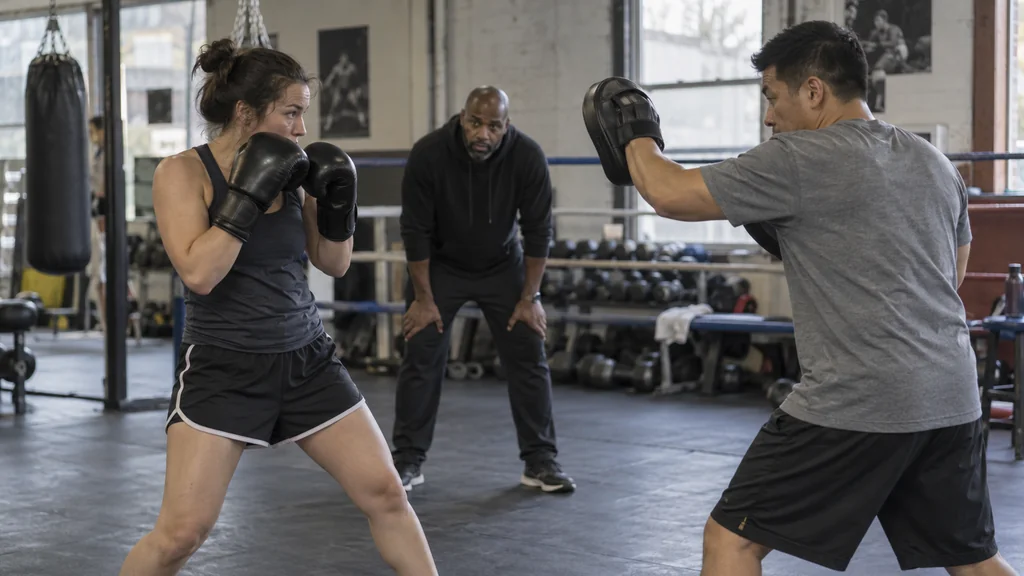
Four ways the hip jab goes wrong
The first error is treating the lead hand as a permanent low guard. The hand drops, the chin follows and the other boxer gets an easy first look. Use the low starting point for a brief coached repetition, then bring the glove home.
The second is turning the jab into an uppercut. The glove may rise from a lower place, but the target is still in front of you. If the elbow drops well below the fist or the hand loops through a big arc, you have changed a short surprise line into a slow tell.
The third is showing it at close range. When the other boxer is already near enough to hook or crowd you, a low lead hand becomes a liability. Keep a standard guard and solve the immediate distance problem first.
The fourth is throwing the jab before the range is there. A low hand can make a boxer feel as if they have found a clever new entry. It has not changed the distance. If the mitt is too far away, use your feet, a normal jab or a reset rather than leaning after it.
For related range work, use our guide to the half-jab as a quick range finder. That version starts from a conventional lead-side lane. The hip jab is a narrower optional variation for someone whose ordinary jab, guard and recovery are already dependable.
Where this belongs in real training
Use the hip jab after basic jab practice, not instead of it. It can fit into a technical pad round or slow shadow boxing when a coach wants you to vary the first picture without losing your defensive shape.
It does not belong in a beginner's first session, in hard sparring or in an uncontrolled attempt to imitate a favourite fighter. A boxer who cannot protect themselves with a normal jab will not become safer by moving the hand lower.
For adults in Kidbrooke, Greenwich and nearby, our Recreational Adults boxing classes build range, guard and footwork through controlled drills before adding more individual variations. Learn the ordinary jab well enough that a small variation still leaves you ready to box.
The coaching cue is simple: show a different line, touch only when it is there, then bring the hand home.
H&G Team
Writer at Honour & Glory Boxing Club, a community boxing gym in Kidbrooke, South East London.
KEEP READING
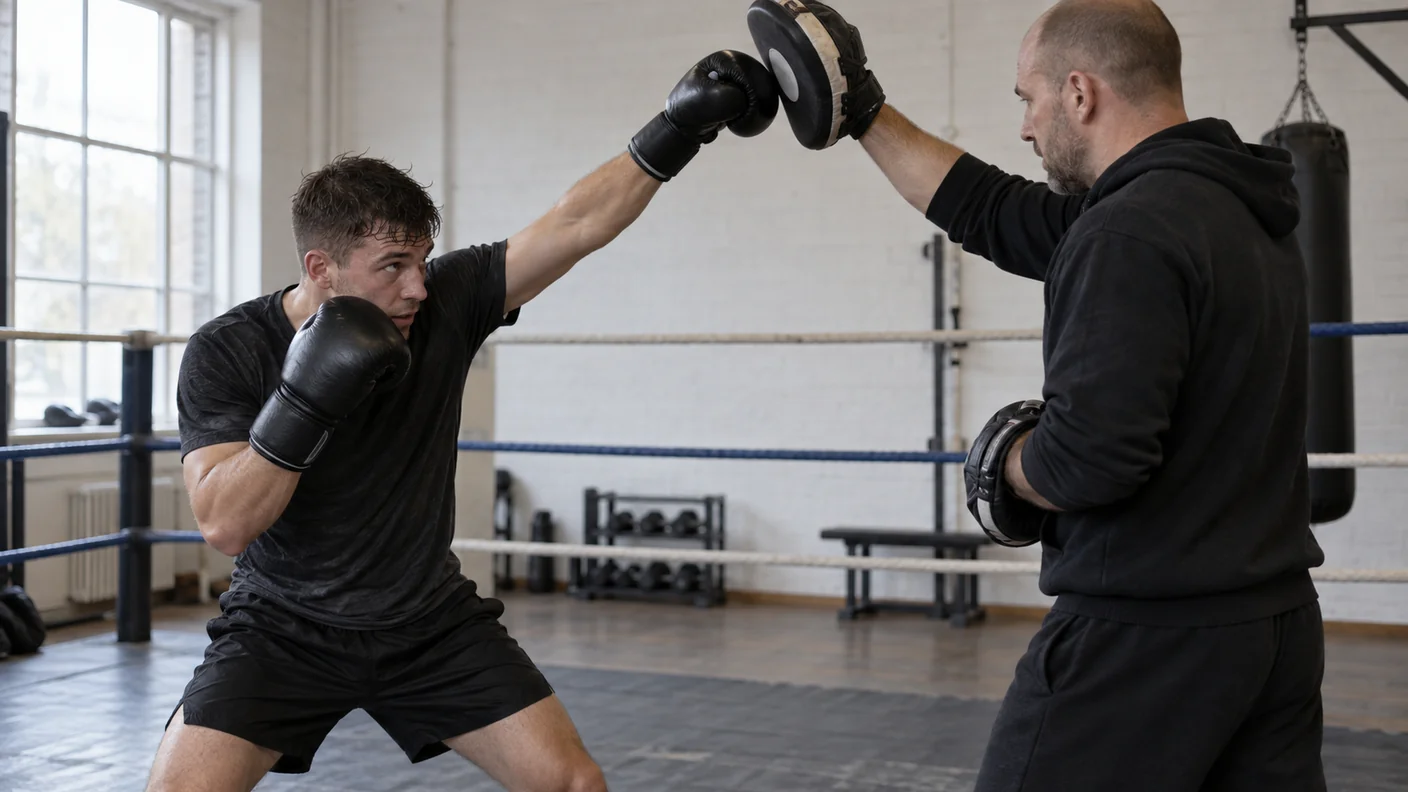
How to Use an Up Jab in Boxing
Use a compact up jab to change the line, test a high guard and keep your stance ready for the next decision.
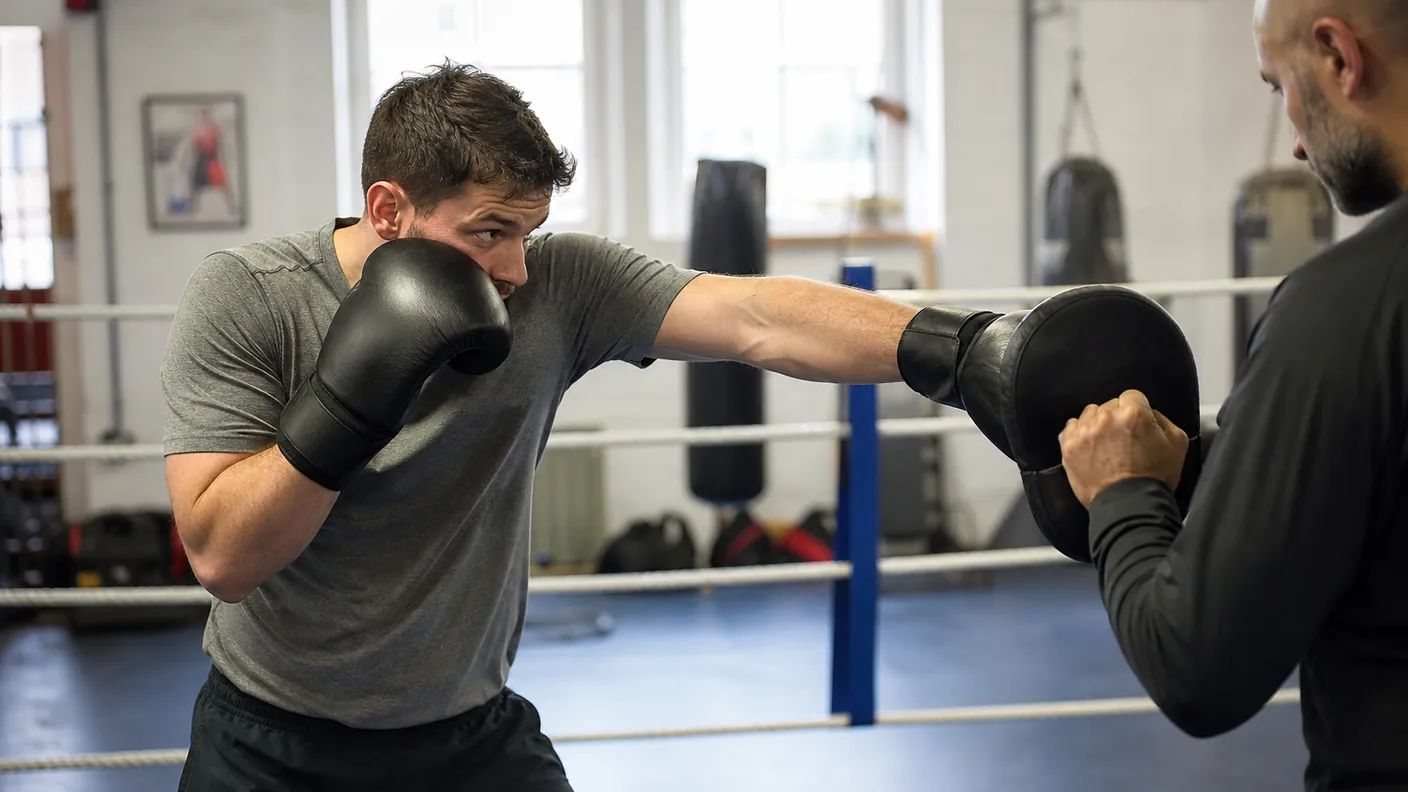
The Body Jab: A Safe Boxing Setup
Use a compact body jab to change the target, check range and set up the next decision without falling over your front foot.
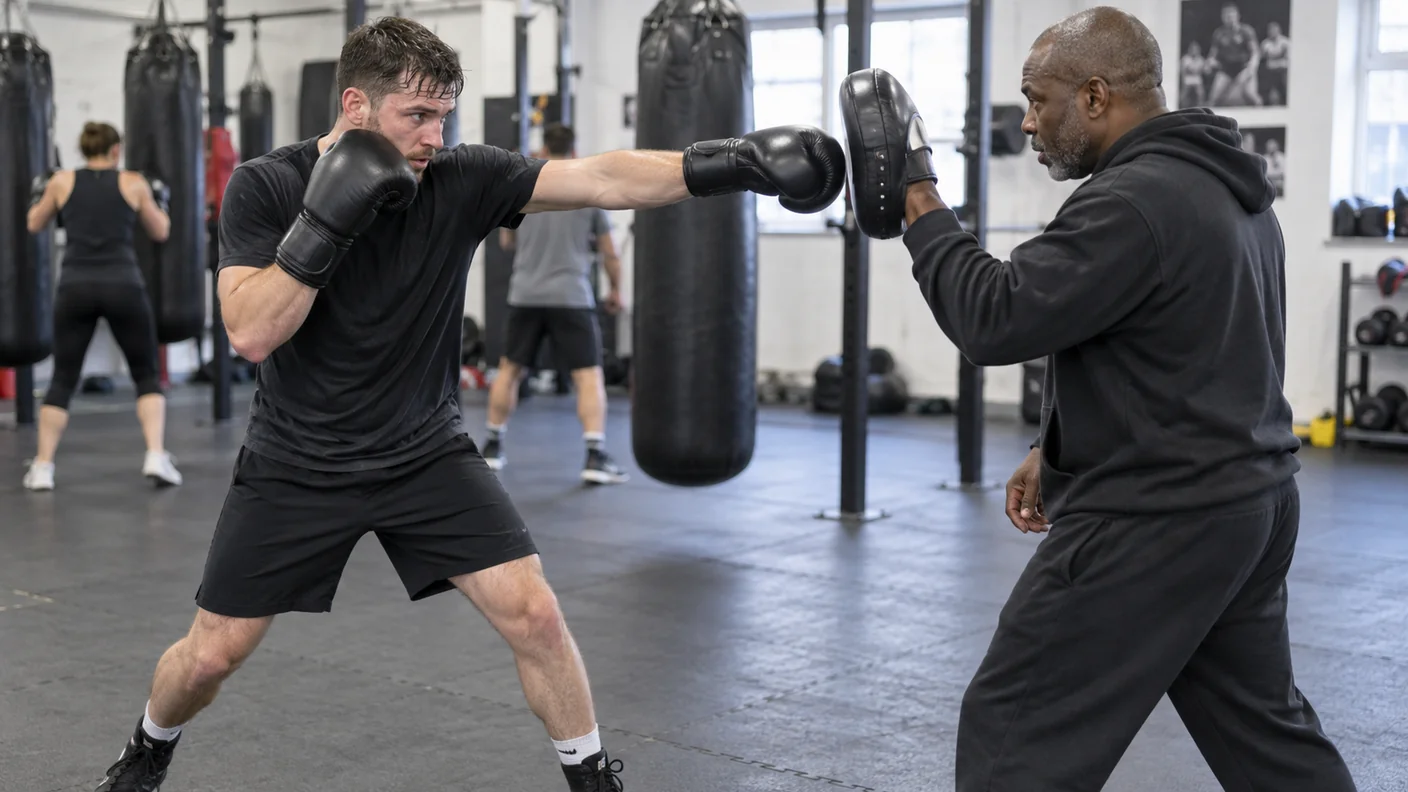
Jab to Rear Uppercut: Find Middle Range
Use a measured jab to enter middle range for a compact rear uppercut without leaning, reaching or losing your guard.
Was this page helpful?
It takes one tap, and it genuinely helps.
Choose your next step
Turn this article into the right action
Some readers are ready to book. Some need the class route first. Pick the route that matches what you actually want.