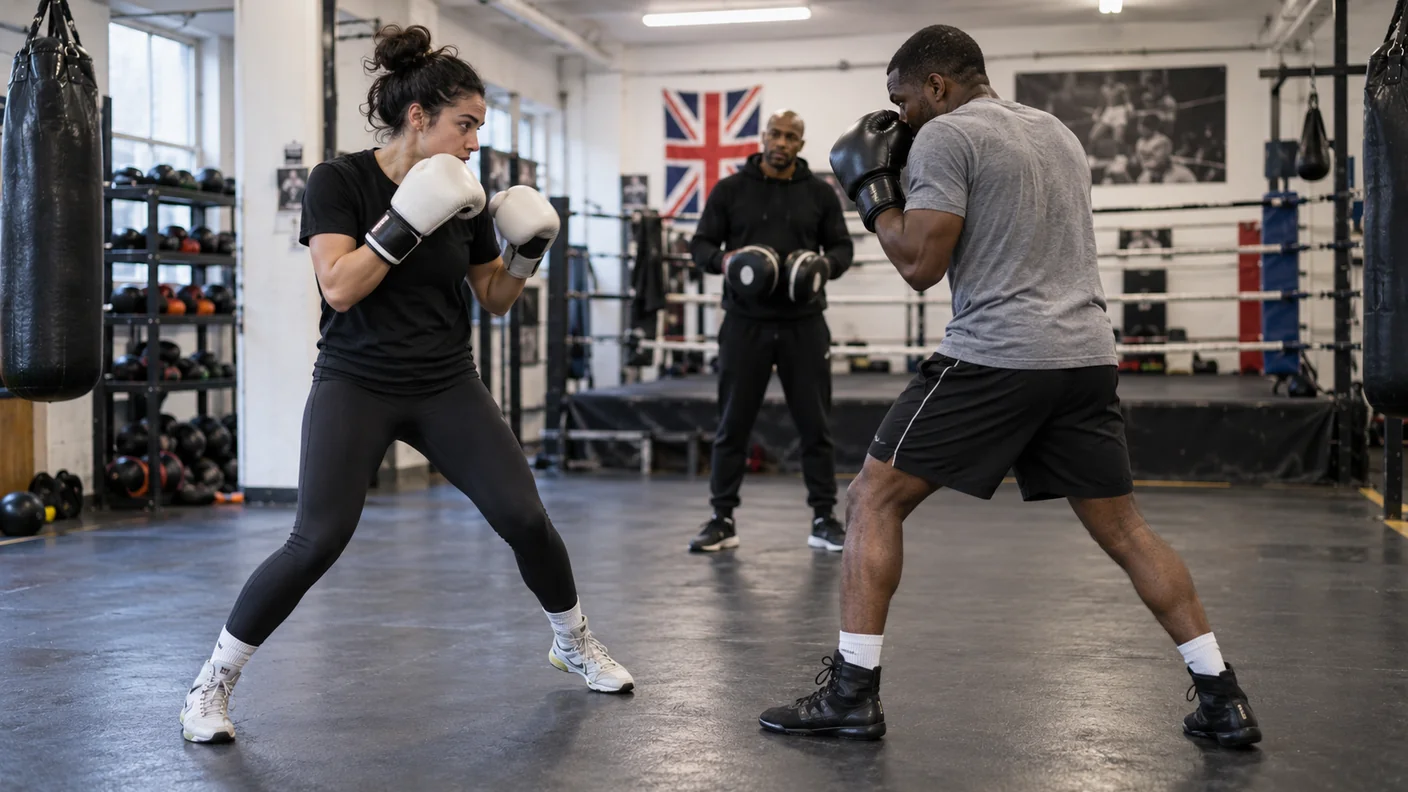
A front step shuffle is not a fast way to run at somebody. It is a way to leave the line they expect, arrive at a new one, then make them turn before they can set their feet again.
That distinction matters because the movement briefly puts the feet closer than an ordinary boxing step. If you try to punch while your stance is changing, or stop halfway through to admire the angle, you have given the other boxer an easy counter. The useful version is compact: show a safe cue, take the small step, finish the shuffle, settle the feet, then decide whether there is actually a punch available.
The video below shows the movement in context. Watch the landing rather than only the first step. The angle helps only when the boxer arrives balanced enough to jab, cover or leave again.
What the front step shuffle is for
A normal angle step keeps the same basic stance throughout. The lead foot moves a short distance, the rear foot follows, and the boxer stays ready to punch from the new line. That should remain your first answer in most sessions.
The front step shuffle is a more demanding variation for changing position quickly. For an orthodox boxer, the lead foot takes a short step forward and slightly to the lead side. The rear foot then chases through as the body turns, allowing you to land at an angle with the stance restored. A southpaw reverses the picture.
The crossing moment is only a transition. Finish with staggered feet and a usable guard. Use the movement after a jab or a coached lead-hand cue, not just because someone has taken one step back.
England Boxing's coaching handbook puts balanced stance, guard and controlled skill progression before more advanced movement. A front step shuffle belongs on top of reliable basic stepping, not in place of it.
A review of boxing performance and biomechanics describes punching as a connected action involving the legs, trunk and upper body. That is the right lens for this drill. The feet are not doing something separate beneath an upper-body attack. The movement must finish in a position that lets the guard, eyes and next punch still work together.
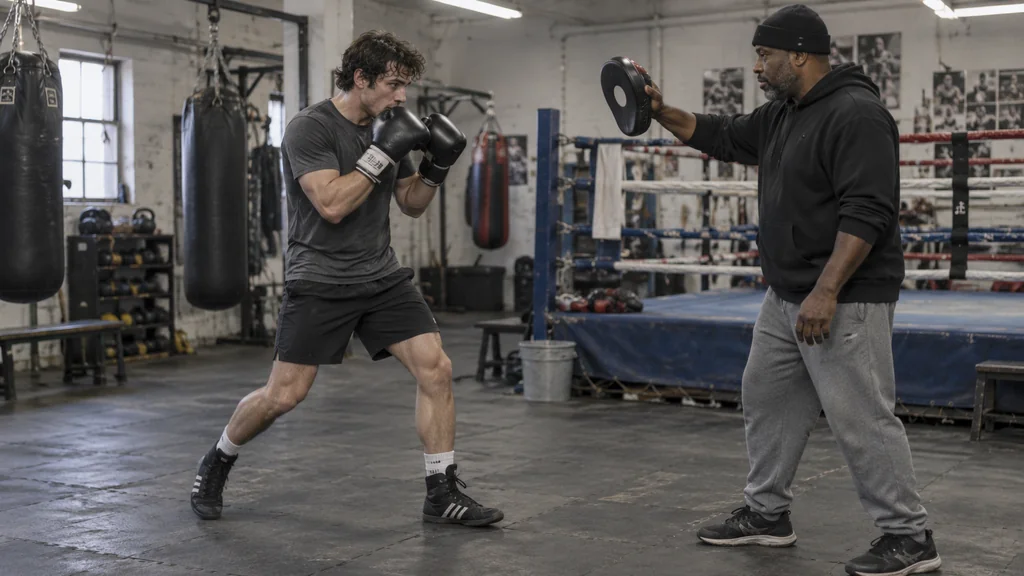
Start with the lead hand, not the feet
The easiest way to make the movement obvious is to step with no reason. Your partner sees the body travel sideways, waits for the feet to cross, then throws down the middle before you have rebuilt your guard.
Give the other boxer a small picture first. A light jab to a mitt, a lead-hand touch or a compact feint can hold their eyes for a moment. The hand is not there to win the exchange. It gives the feet cover while you change the line.
Keep the rear glove near the cheek and the chin behind the lead shoulder. If the lead hand goes out but the rear side falls away, the shuffle has become a long route into a straight punch. Your head should not surge ahead of the feet either. Take the angle with the floor, not with your face.
Our guide to light touch punches that set up attacks covers the first part in more detail. The touch creates a question. The step shuffle is one possible answer only when the distance and response make it sensible.
Finish the movement before you punch
The mistake most people make is trying to add a punch in the middle. The lead foot moves, the shoulders twist early, and the boxer fires a wide hook while the rear foot is still travelling. Even when the glove touches a pad, the position is poor: feet close together, head exposed and no route out.
Slow the drill down and separate the jobs at first:
- Show one light lead-hand cue.
- Take the small step forward and off the original line.
- Let the rear foot complete the shuffle.
- Freeze in a recognisable stance.
- Only then decide whether the coach has shown a safe target.
The freeze is important. You should be able to throw a calm jab from the finished position without an extra shuffle. If you cannot, make the first step shorter.
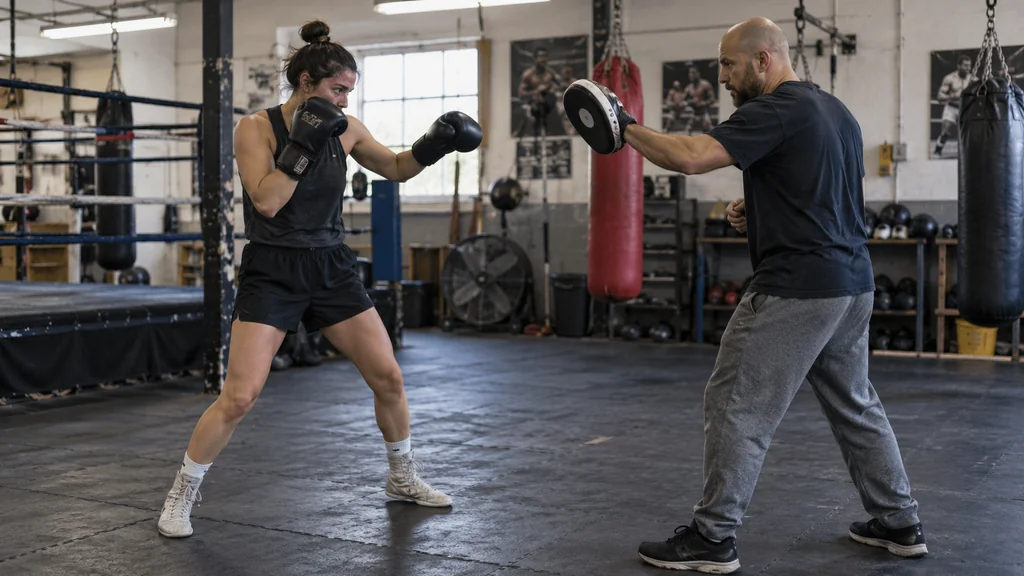
The front step shuffle drill
Use floor tape, a coach with mitts or a trusted partner who understands that this is technical work. It is not a live-sparring pattern and it does not need hard contact to teach the point.
Round one: step, shuffle, freeze
Place a line on the floor pointing towards the target. Start in your normal stance. Take the lead foot a small step forward and just outside the line, then let the rear foot come through so you finish on a new line.
Hold the landing for a count of one. Check that the feet are staggered, knees are soft and both gloves are in a working guard. Repeat on each side only as far as your own stance remains clear. Do not copy a large movement that looks good in someone else’s shadow boxing.
Round two: touch, shuffle, guard
A coach holds one mitt at honest jab range. Touch it with a light jab, then use the same small front step shuffle. There is no follow-up punch in this round.
The coach can give a slow straight-punch cue after you land. Your only job is to cover or take a short exit step from the new stance. This teaches the useful habit: the angle has to leave you safer, not merely closer.
Round three: choose one answer
Now the coach can offer a second mitt after the shuffle, keep the guard closed, or take the target away.
If the mitt is there at sensible range, touch it with one measured jab or straight punch and reset. If the guard is closed, do not swing around it because you feel you have earned an attack. Bring your hands home and take the angle again later. If the target has gone, recover your ordinary stance and start another entry.
Four faults to stop early
The first is taking too large a lead step. A big step makes the rear foot chase from too far behind and leaves the body stretched. Start with a movement no longer than you can finish without leaning.
The second is crossing your feet at the finish. The feet may pass during the shuffle, but they cannot stay that way. If you cannot jab or cover from where you land, there is no boxing position to use.
The third is letting the head lead the movement. A front step shuffle can change an angle, but it cannot make a leaning entry safe. Keep the eyes level, chest tall and chin behind the shoulder as the feet move.
The fourth is adding a hard punch before the landing. The movement has a brief unstable moment. Make the stance solid first, then hit only if the target still belongs there.
For the simpler movement that should come before this one, read our angle-step boxing drill. For a stance-changing entry that travels more directly forward, our forward shift boxing guide explains the different demands of changing lead foot completely. The front step shuffle sits between them: more active than a small angle step, but still built around arriving in one usable stance.
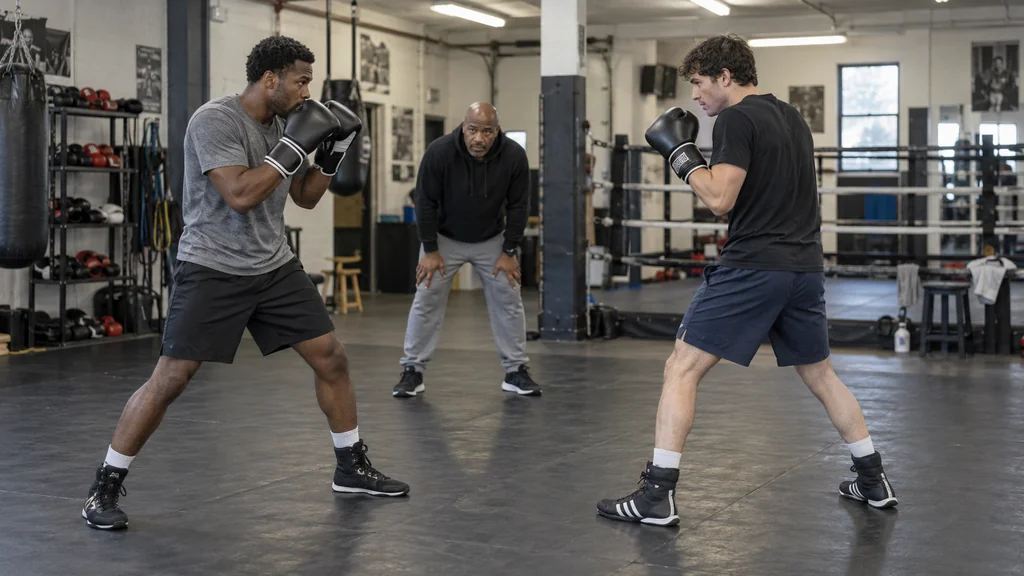
Keep it out of hard sparring until it is boring
This movement belongs after a stable stance, reliable jab, basic pivots and ordinary angle steps. Start with shadow boxing and pads. In partner work, agree the cue, pace and target before the round begins. Once the movement is tidy, a coach can add one predictable response.
For adults in Kidbrooke, Greenwich and nearby, our Recreational Adults boxing classes use pads, bags and controlled partner drills to build footwork in stages. The aim is not flashy movement. It is to arrive where you can still box.
The coaching cue is simple: show the hand, move off the line, land in stance.
H&G Team
Writer at Honour & Glory Boxing Club, a community boxing gym in Kidbrooke, South East London.
KEEP READING
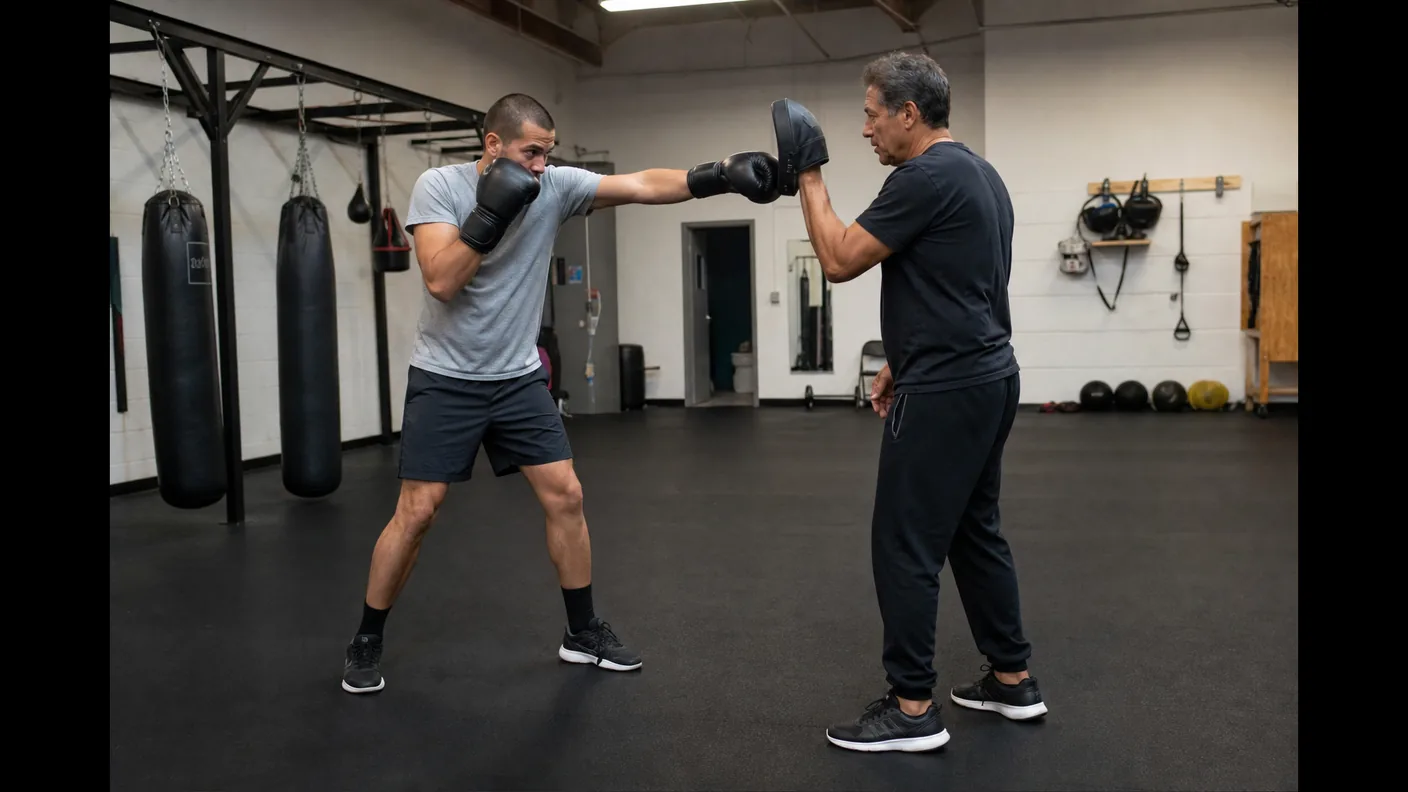
Angle Step Boxing Drill: Stay in Range
Use a compact angle step to keep your punches in range without crossing your feet or chasing a moving partner.
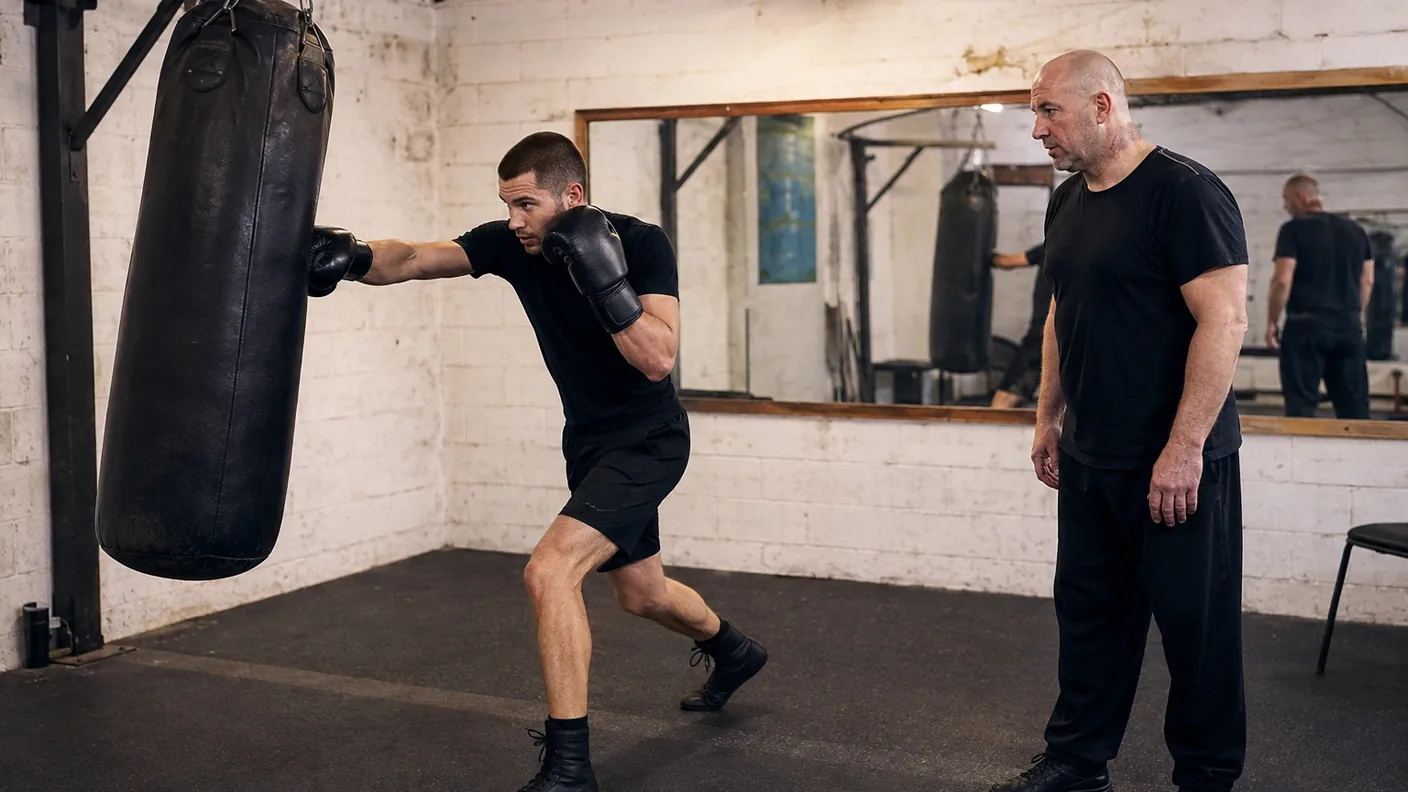
Jab Step-Across Cross: A Boxing Angle Drill
Use a compact jab step-across to open a rear-hand angle without crossing your feet, losing your guard or reaching for the cross.
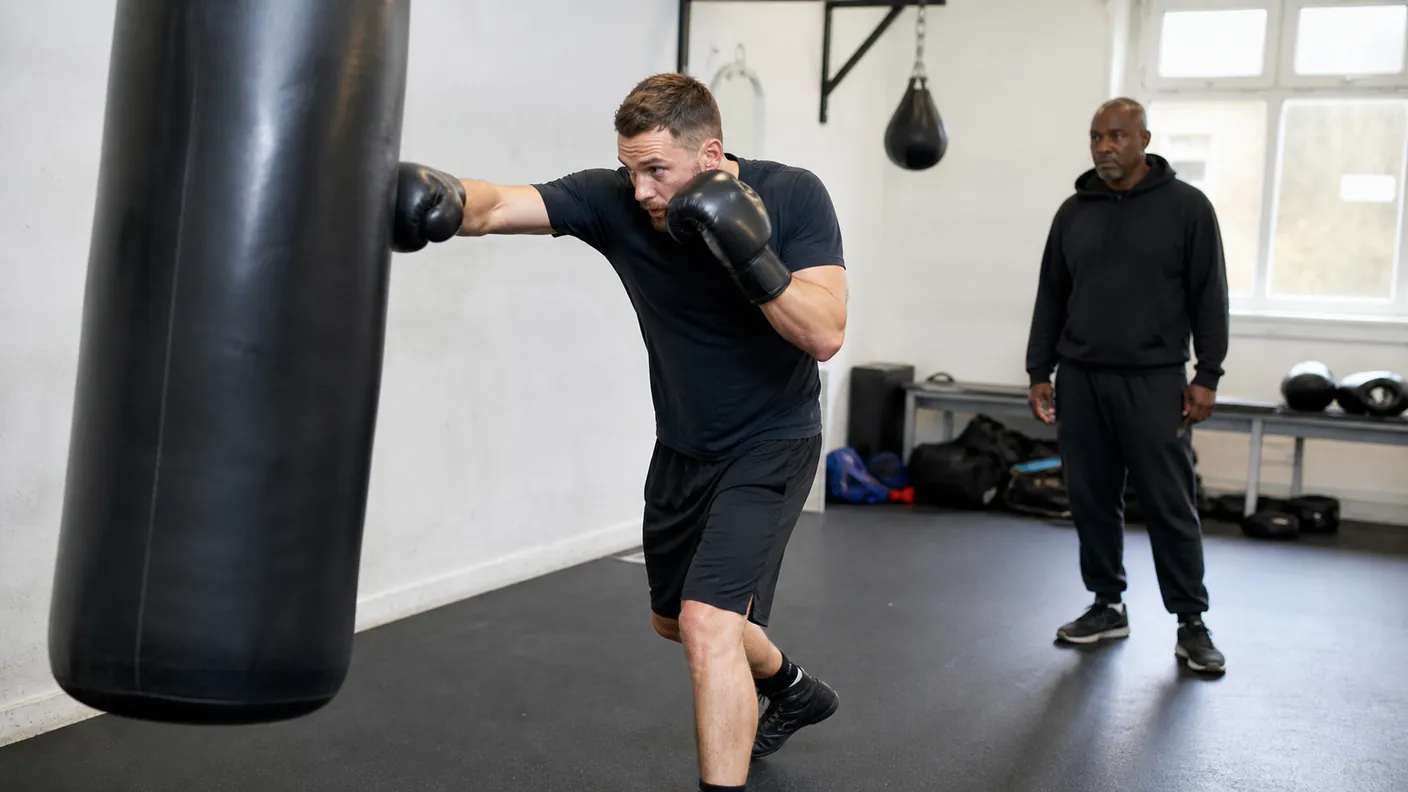
Angle Step to Rear Uppercut Boxing Drill
Use a small angle step after a lead hook to create room for a compact rear uppercut without losing your stance or chasing the target.
Was this page helpful?
It takes one tap, and it genuinely helps.
Choose your next step
Turn this article into the right action
Some readers are ready to book. Some need the class route first. Pick the route that matches what you actually want.