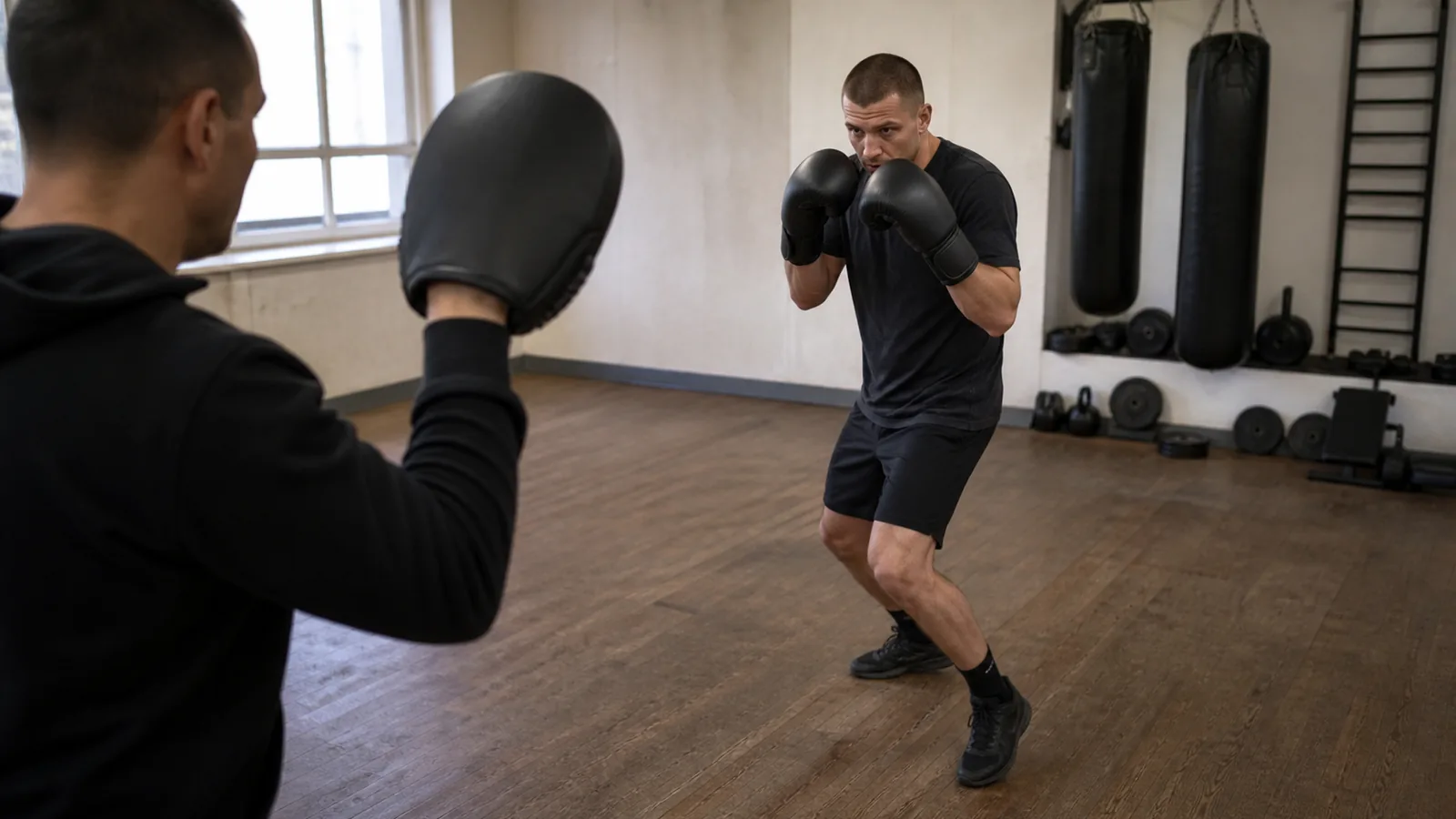
The check hook is not a lead hook thrown while you fall away from somebody.
That version is common on the bag. The boxer sees a partner coming forward, takes a huge step back, throws a wide left hook and ends with their shoulders behind the rear knee. It can look dramatic. It also leaves them too far away to follow up, too square to move cleanly and too exposed if the other boxer has not stopped.
A useful check hook is smaller. You make the incoming boxer miss or hesitate, keep enough cover through the turn, place a compact lead hook only when the range is honest, then leave in a stance you could still use. The hook matters, but the balance is the lesson.
Watch the demonstration below before trying the drill. Pay attention to how the body shifts from the retreat into the hook rather than treating them as two separate movements.
Why a check hook can feel weak or leave you stuck
A lead hook needs the lead side to do some work. The front foot and hip help turn the body into the punch while the rear hand stays home. That is simple enough when you are planted. It becomes harder when you have just moved backwards to avoid pressure.
A big retreat moves your weight towards the rear side. If you throw the hook from there without reorganising, the arm often swings across the body while the hips stay behind it. The hook feels light, the chin comes up, and the feet are not ready for the next step.
A biomechanics study of straight punches and uppercuts found that trunk and upper-limb movement both influence peak punch speed. The practical coaching point is less technical: the arm cannot rescue a position that has already lost its base.
Start with the retreat, not the hook
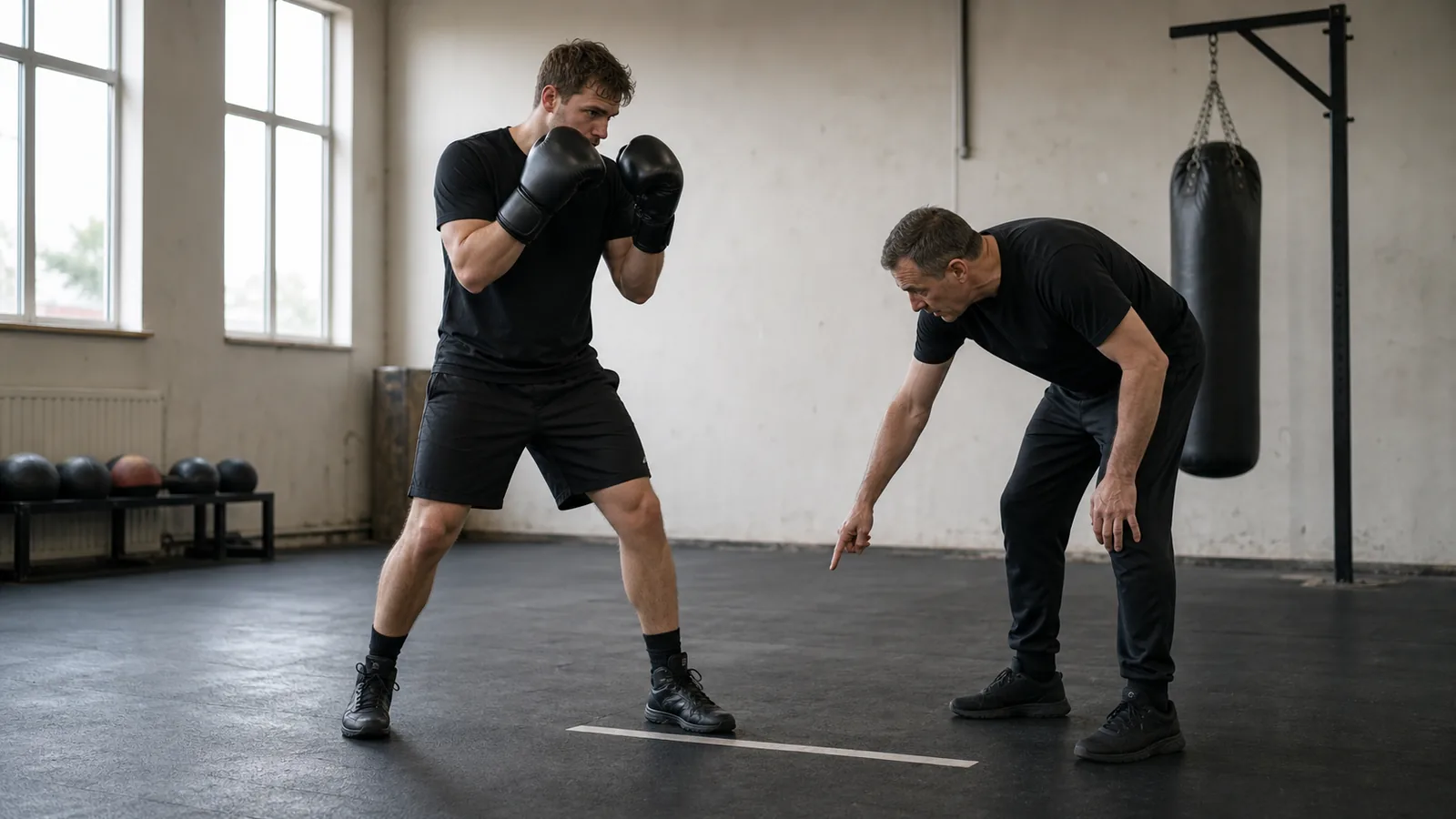
Use a partner with a single focus mitt, or shadow box beside a floor line. The first repetition has no hook at all.
From a normal stance, take a small step back as the partner shows a slow, clear advance. Keep the chin down, both gloves close to the face and eyes on the partner. Do not lean the upper body away as if avoiding rain. Let the feet create the distance.
Freeze after the step. Your feet should still be staggered. Your head should sit between them, not behind the rear heel. If you had to reach back with the front foot or you have narrowed the stance into a tightrope, make the step shorter.
This matters because the step is not an escape for its own sake. It is a way of changing the range without donating your posture. Our guide to shift counters against pressure explains the larger problem: retreating without shape can teach the other boxer to keep walking you down.
Turn back towards the lead side before the hook
Once the retreat is tidy, add the lead hook at half speed. As the advancing cue reaches the edge of your range, let the lead side begin to turn back into the available lane. The lead foot pivots a little, the hip follows and the hook travels on a compact path. The rear glove stays near the cheek.
The hook is not a windmill that has to reach across the gym. It is a short answer to someone who has brought their head or guard into range while coming forward. If they are still two steps away, keep moving or jab. A check hook thrown at empty space teaches reaching, not timing.
For an orthodox boxer, this is normally a lead left hook. Southpaws reverse the picture. The principle does not change: move enough to change the target, then turn back only as far as the real distance allows.
The difference between a check hook and an ordinary lead hook is not a secret hand position. It is the job of the punch. A pivot hook changes the angle as you attack. A check hook is usually a compact answer to forward pressure. Both need the feet and hip to arrive with the glove, but neither should become a spin.
Keep a cover during the turn
The risk is not only missing the hook. It is opening the line while you are trying to make the hook look sharp.
Do not throw the rear hand towards the floor. Do not let the lead shoulder pull your chin into view. Do not turn so far that you lose sight of the partner. A small cover, a tucked chin and a compact hook give you a chance to see whether the other boxer has stopped, stepped again or changed their line.
England Boxing describes its Level 1 coach training as covering practical and technical fundamentals alongside health and safety. That order is worth keeping in a normal club drill too. Start with distance and shape. Add the shot once the position is controlled. Their coaching course overview is a reminder that good technical work is not only about making a punch look fast.
If the hook lands on a mitt, bring it straight home. If the partner has continued to close distance, cover and take another step rather than forcing a second long hook. If they have stopped, reset your stance before looking for the next attack.
The three-round check hook balance drill
Keep the speed low enough that the person throwing can say where their weight has ended. This is a timing and posture drill, not a sparring contest.
Round one: retreat and hold
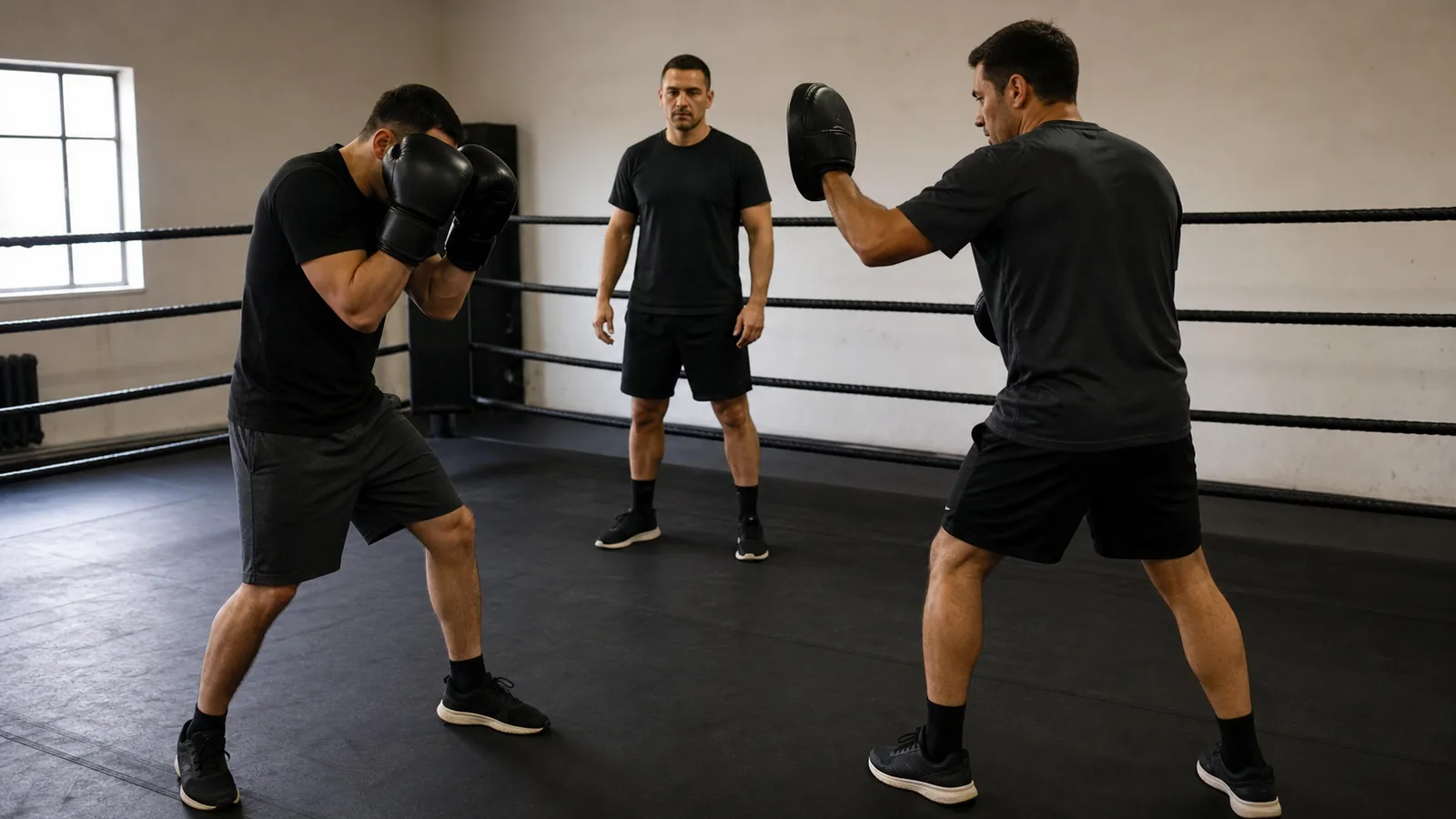
Partner A takes one controlled step in with a mitt held safely away from the face line. Partner B takes one small step back and freezes with both gloves high.
The coach checks the rear foot, chin and stance width. There is no hook in this round. Ten sound repetitions teach more than thirty hurried ones.
Round two: retreat, turn, hook, return
Partner A gives the same slow advance. Partner B steps back, turns the lead side enough to place a short hook on the mitt, then brings the lead hand back to guard and freezes.
The partner should not chase the hook with the mitt. It arrives only where the hook can be thrown without stretching. If the boxer starts leaning back while the glove travels forward, reduce the step and shorten the shot.
Round three: choose the finish
Now Partner A can make one of three clear choices after stepping in: hold the mitt for the hook, stop outside range, or keep the mitt close as a cue to cover and move.
Partner B must not decide that every advance earns a hook. Take the hook only when it is there. If the target has stopped short, use a jab, move away or reset. If the pressure has closed the distance, cover first. That choice is the difference between a drill pattern and boxing judgement.
Four mistakes that ruin the check hook
The first is taking too large a step back. A big retreat puts the target out of range and makes the hook a reach. Keep the first movement small enough that the partner has to decide whether to follow.
The second is throwing while the body is still falling backwards. Let the feet make the space, then organise the turn. A hook needs a base, not a panic lean.
The third is swinging the arm. The elbow stays bent and the hand travels on a short line. If the hook starts behind your shoulder, it will take too long and pull the guard apart.
The fourth is treating the hook as compulsory. A good counter is the one that fits the range and leaves you safe afterwards. Sometimes that is a check hook. Sometimes it is a jab, a pivot, a cover or no punch at all. Our guide to choosing the right punch for boxing range is useful here.
Where this fits in training
Use this drill after basic stance and lead-hook work, before faster pad rounds or controlled partner drills. It suits boxers who keep stepping back from pressure but have not yet learned how to make that retreat useful.
Do not use it as an excuse to stand and trade hooks. The partner cue should be slow, agreed and clearly non-contact. The goal is to learn whether the step, cover and turn still leave a stance underneath you.
If you are near Kidbrooke, our Recreational Adults boxing classes use controlled pads, footwork and partner drills to build that judgement. You learn to move away from pressure without abandoning your own balance.
The coaching cue is simple: make space, turn back, hook only when it is there.
H&G Team
Writer at Honour & Glory Boxing Club, a community boxing gym in Kidbrooke, South East London.
KEEP READING
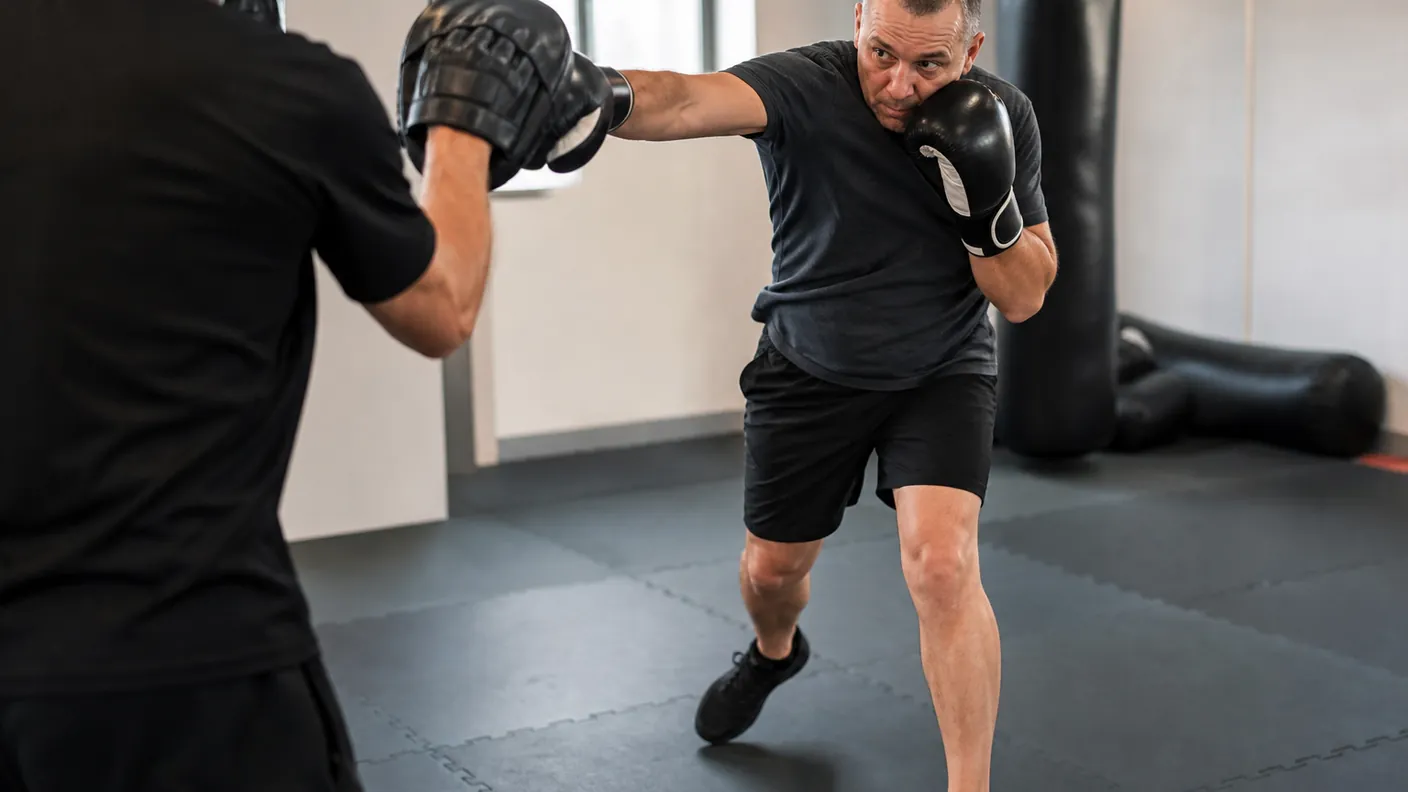
Two-Step Hook Drill for Boxing Balance
Use two small foot adjustments to find range for a compact hook without stretching, spinning or losing your guard.
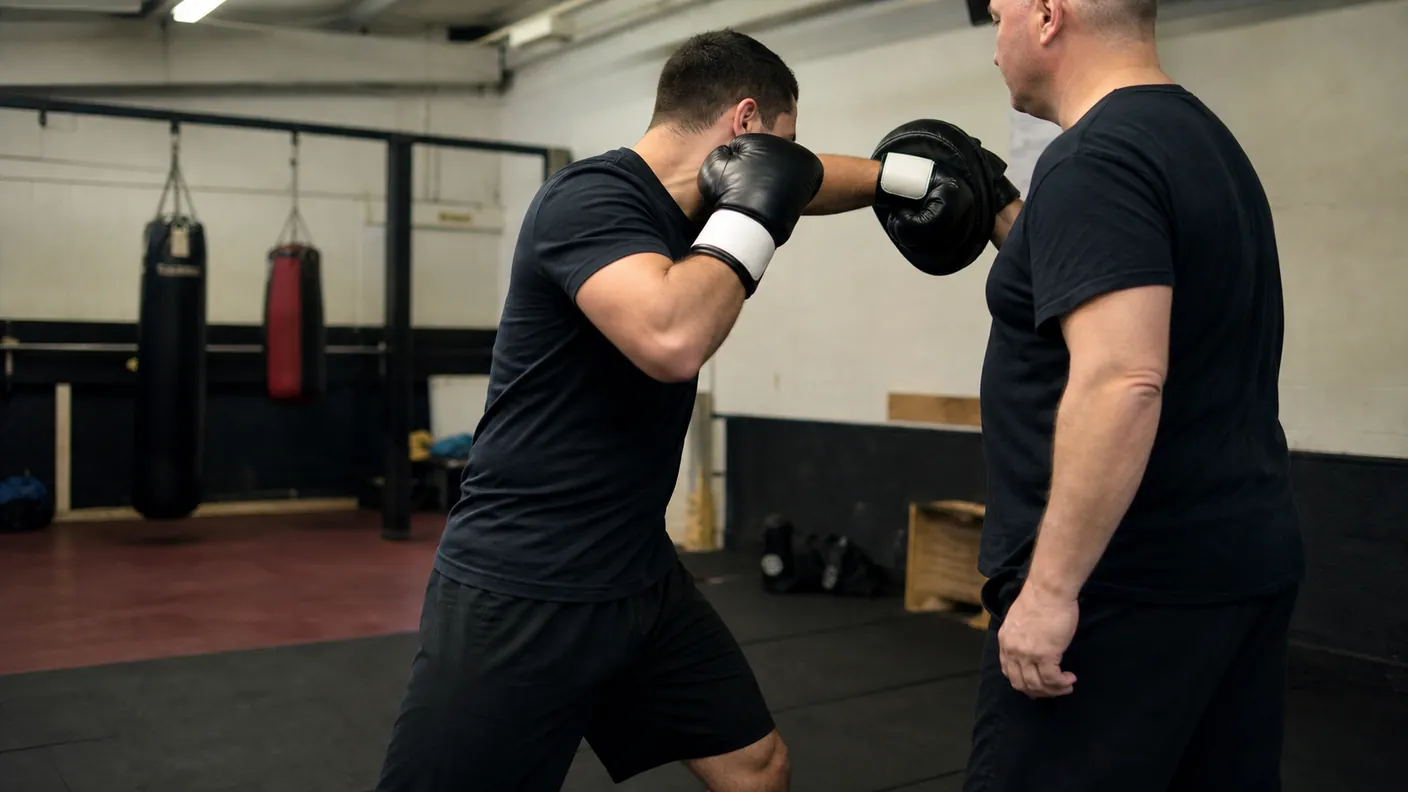
The Hook-Jab: Use Your Lead Hand Twice
Learn how a compact hook-jab can change the line of attack, bring your lead hand home and help you leave the pocket in balance.
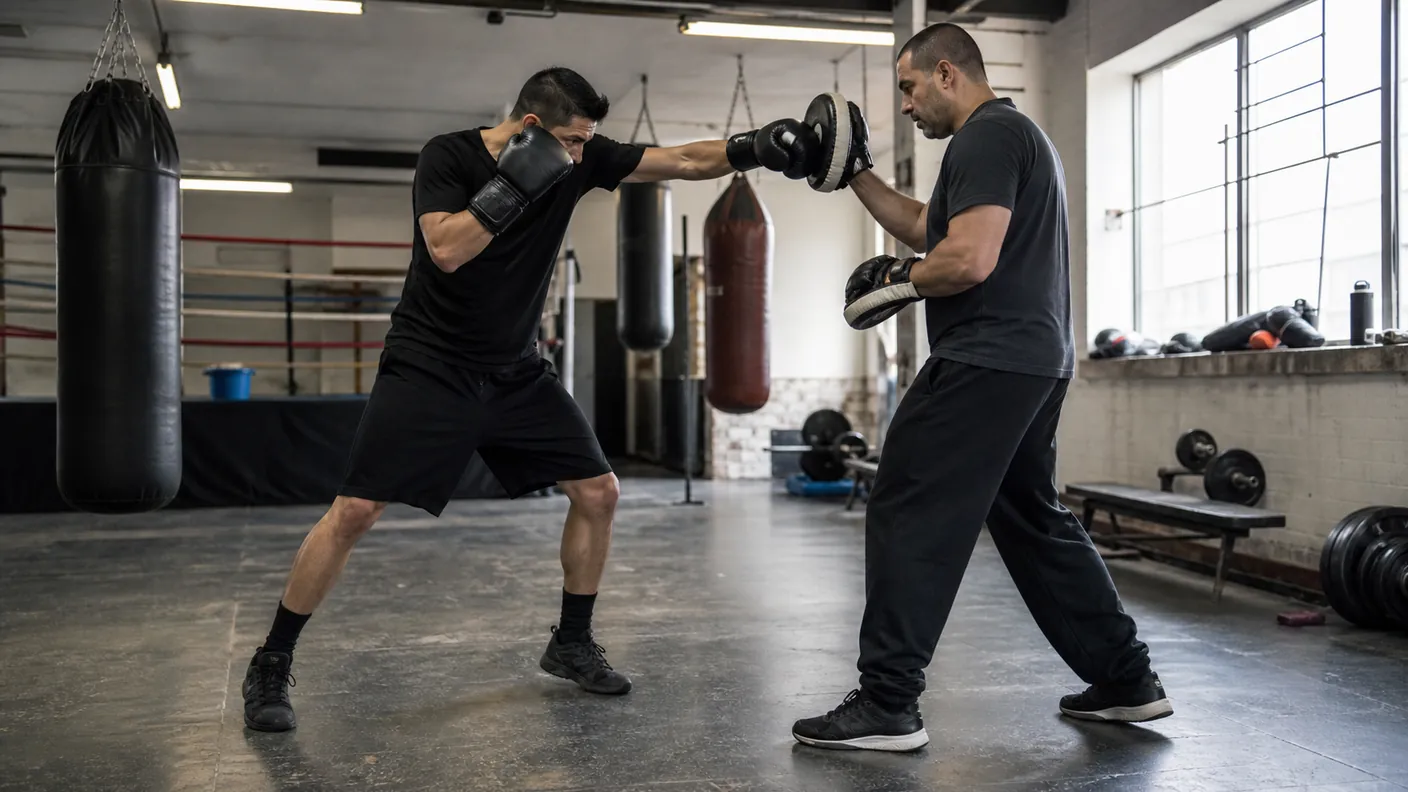
Fast Long-Range Lead Hook: Stay Balanced
Use a fast long-range lead hook to change the line without reaching, swinging wide or losing the stance that keeps you safe.
Was this page helpful?
It takes one tap, and it genuinely helps.
Choose your next step
Turn this article into the right action
Some readers are ready to book. Some need the class route first. Pick the route that matches what you actually want.