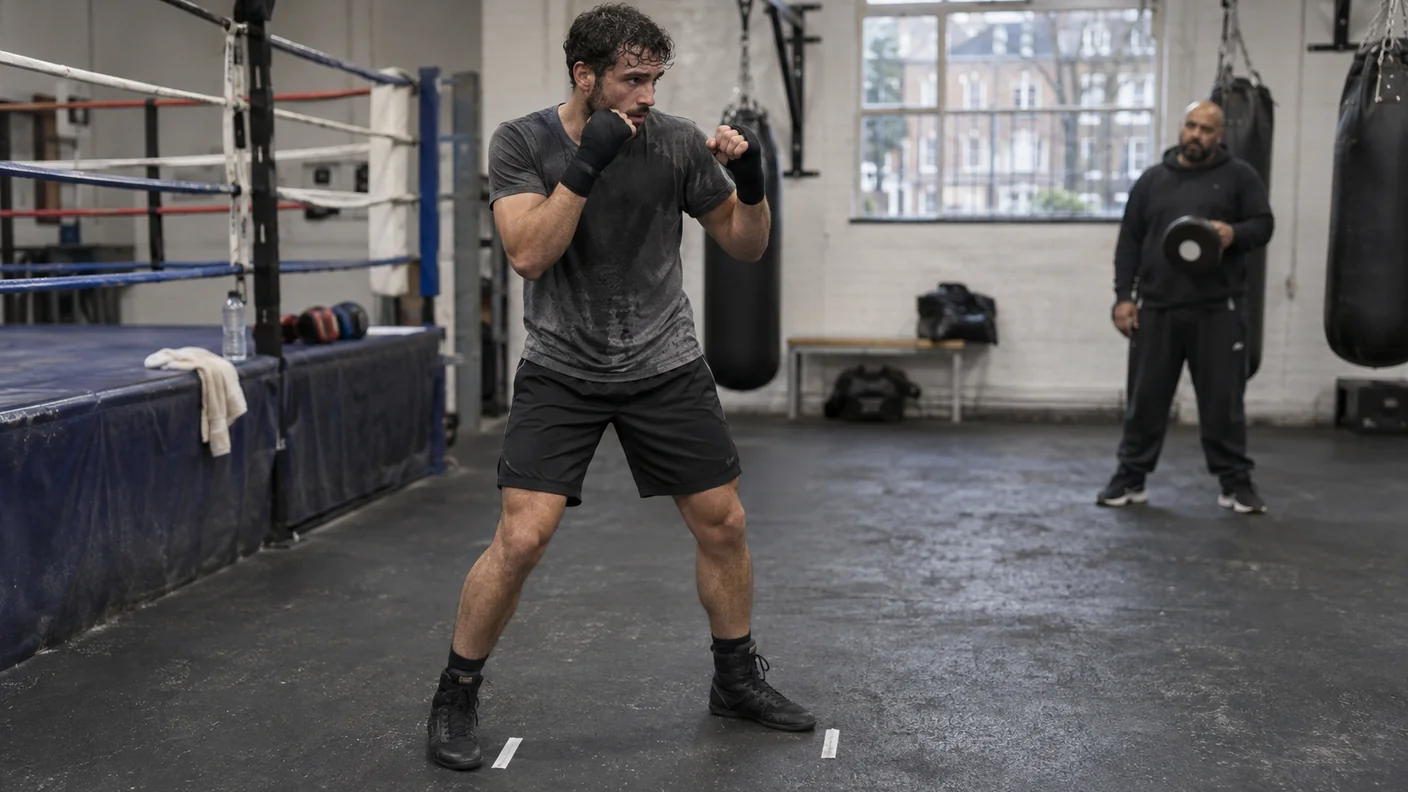
A boxing stance can be too short. Everyone notices that problem. Your feet meet in the middle, your base disappears and one shove can make you stumble.
A stance can also be too long. That mistake is quieter, which is why it stays around. You take a step, leave the rear foot behind, then try to punch from a shape that looks athletic but gives you no clean way to turn, defend or leave again.
The useful question is not whether your stance looks wide in a mirror. It is whether you can move from it without a repair step. Can you jab, cover a return, turn out or step back while the feet still work together? If the answer is no, the stance is too long for that moment.
Watch the video below, then use the drill later in this article at a slow, coached pace.
Stance length is a working distance, not a fixed measurement
There is no tape measure that gives every boxer the same perfect distance between the feet. Height, leg length, stance, range and the job you are doing all change the picture.
The useful starting point is a base with enough width to resist a nudge and enough length to turn the hips, but not so much length that your back foot is stranded. You should feel pressure through both feet, with the knees available rather than locked.
England Boxing's coaching handbook makes the same practical point: good footwork keeps balance while moving into and out of range, and needs enough width and length for a boxer to change direction. That is the standard to use. A stance is not a pose. It is the place you return to after every step.
For an orthodox boxer, the lead foot sits forward and slightly left of the rear foot. For a southpaw, reverse it. In both cases, the feet should not form a tightrope and they should not look like the start of a long lunge. Your upper body should still have room to rotate without the head tipping over the lead knee.
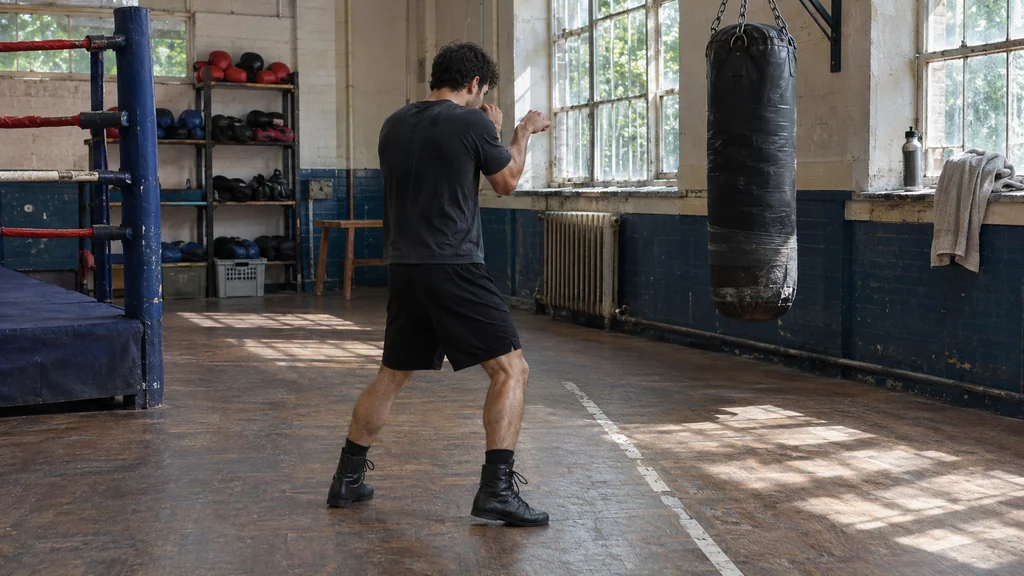
The long-stance problem appears after the first step
Most boxers do not begin a round in a huge split stance. They arrive there.
It often happens after stepping in behind a jab, reaching after a retreating partner or sliding back a little too eagerly. The lead foot goes first, which is fine. The trouble begins when the rear foot does not follow enough to restore the base.
From that long shape, the hips have to work around a stretched lower body. A rear hand can turn into an arm punch. A lead hook can pull you farther over the front leg. If the other boxer throws back, your first move is often a hurried shuffle because the rear foot is too far away to help.
That is why an over-long stance makes people feel slow even when they are trying hard to move. The issue is not a lack of effort. It is that the body is split between two positions: one foot has entered range while the other is still outside it.
A review of boxing performance describes boxing as a combination of attacking, defending, distance management and tactical choices rather than isolated punches. Stance length sits underneath all of them. A punch may look powerful in isolation, but it is less useful if the finish leaves you unable to defend the next action.
Find the stance you can recover from
Try a simple check before you think about combinations.
Start in your normal stance, just outside range. Take one small step forward as though you are following a jab. Stop. Without moving your feet again, see if you can do all four of these things:
- Turn the rear hip for a straight rear hand without leaning.
- Bring both gloves into a compact guard.
- Take one small step back without crossing the feet.
- Change direction with a short side step or pivot.
If one of those actions feels awkward, shorten the distance between the feet by bringing the trailing foot in a little. Do not drag it underneath you or stand square. You are only restoring the relationship that lets the feet share the work.
The best stance length feels almost unremarkable. That is a good sign. You do not want to feel trapped in a squat or stretched between two rails. You want to feel as if you could punch, cover or leave without announcing which one is coming.
This also explains why a good boxer can look still without being stuck. The feet are quiet because the base is ready. There is no need for extra shuffling just to put the body back together.
Move tall enough to travel, then settle to punch
Beginners are often told to stay low. The intention is sensible: soft knees and a stable base help you absorb movement and throw with control.
The mistake is treating that instruction as a permanent crouch. If you try to march around the ring from the same deeply planted shape you use to throw a committed punch, every step can feel heavy. You may start widening the stance just to make room for the next movement.
A more useful rhythm is to travel with soft, loose knees and a lighter base, then settle enough to punch or defend as range closes. This is not bouncing for the sake of it. It is a small change in readiness.
Think of two gears. The travelling gear lets you change direction. The planting gear lets you put a punch into the floor, cover a return or take a short defensive action. The important part is that neither gear should wreck your stance length.
A three-round stance-length drill
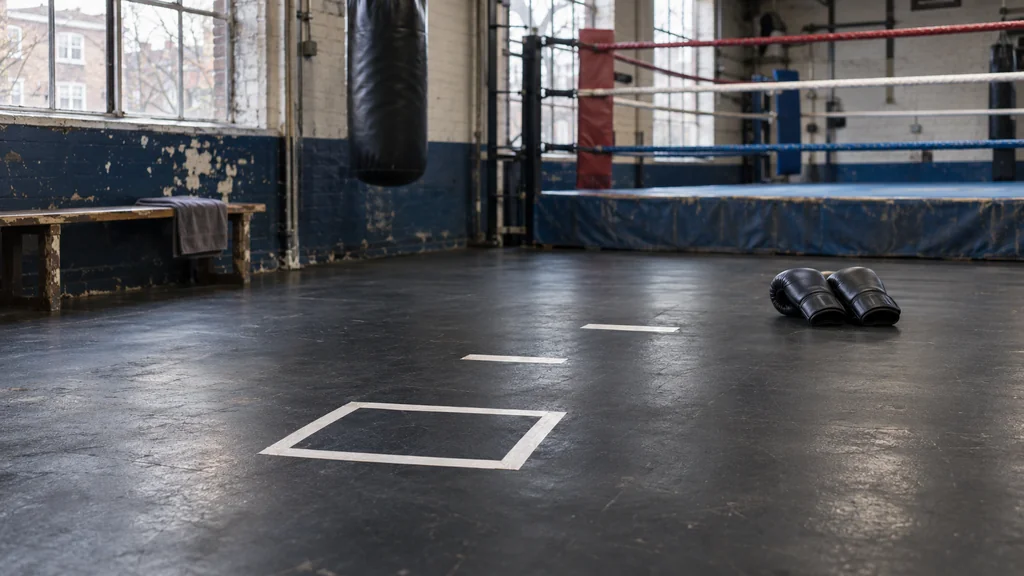
This drill works on a taped floor, in open space or with a coach holding one mitt. Keep the first rounds slow. You are teaching the feet where home is, not trying to win a race.
Round one: step and restore
Put two short pieces of tape on the floor to mark your usual lead and rear-foot positions. Start in stance, take one small step forward with the lead foot, then let the rear foot follow until you are back at your normal length.
Freeze after every repetition. Check that the feet are staggered, the knees are soft and the head is not pushed ahead of the front knee. Then step back: rear foot first, lead foot follows, same shape restored.
Do not chase speed. If the trailing foot lands so close that you are square, you have shortened too much. If it never catches up, you have kept the long stance problem.
Round two: add the jab without reaching
Now add a light jab as the lead foot moves. The jab is a timing cue, not a reason to throw yourself forward.
As the glove returns, the rear foot restores the base. Freeze for one count before the next action. If the jab pulls your chest over the front knee, make the step smaller. If the back foot takes two repairs to find the floor, bring it with you sooner.
A coach can use one mitt at long range for this. The target should reward a clean step, not encourage a lunge.
Round three: make a choice from the restored stance
After the jab and recovery step, the coach gives one of three cues: a mitt for a rear hand, a raised glove for a compact cover, or no cue at all.
The boxer chooses one response. Rear hand if the feet are under them. Cover if the cue arrives early. Reset if nothing is there.
That final option matters. A sound stance is not a promise to throw. It is what makes a good decision possible.
Four signs that your stance has become too long
The first sign is the rear foot going quiet. If it is so far back that you cannot turn, push or recover from it, the stance is no longer helping you.
The second is the lead knee carrying everything. A little pressure on the front leg is normal. Constantly hanging over it makes the head easy to find and makes a quick retreat harder.
The third is punching before the feet finish. A boxer steps, feels stretched, then throws anyway because the target appeared. Slow the drill down. The feet do not need to be frozen, but they need to support the shot.
The fourth is mistaking a long stance for range control. Range comes from feet, timing, guard, eyes and the lead hand together. Splitting the feet wider does not automatically keep someone away. It often makes it harder to leave when they close distance.
Our guide to keeping a side step in stance develops the same principle from another angle. The step changes position, then the stance comes back with you. And when pressure has already forced you back, getting off the ropes without panic starts with the same requirement: feet that can still turn and leave.
Where this fits in your training
Work on stance length before advanced combinations, fast pivots or hard sparring. It is useful for a complete beginner because it gives every later skill a place to start. It stays useful for experienced boxers because fatigue and pressure are exactly when the feet begin to drift apart.
Use it in shadow boxing, then on pads, then in controlled partner drills. A partner does not need to hit you hard to expose a long stance. A light jab cue or a small step forward is enough to show whether you can cover, move or answer from the position you have created.
If you train in Greenwich, Kidbrooke or nearby, our Recreational Adults boxing classes use coached footwork and pad drills to help you build a stance that works in motion, not only when someone tells you to hold still.
The coaching cue is simple: step, restore, then decide.
H&G Team
Writer at Honour & Glory Boxing Club, a community boxing gym in Kidbrooke, South East London.
KEEP READING
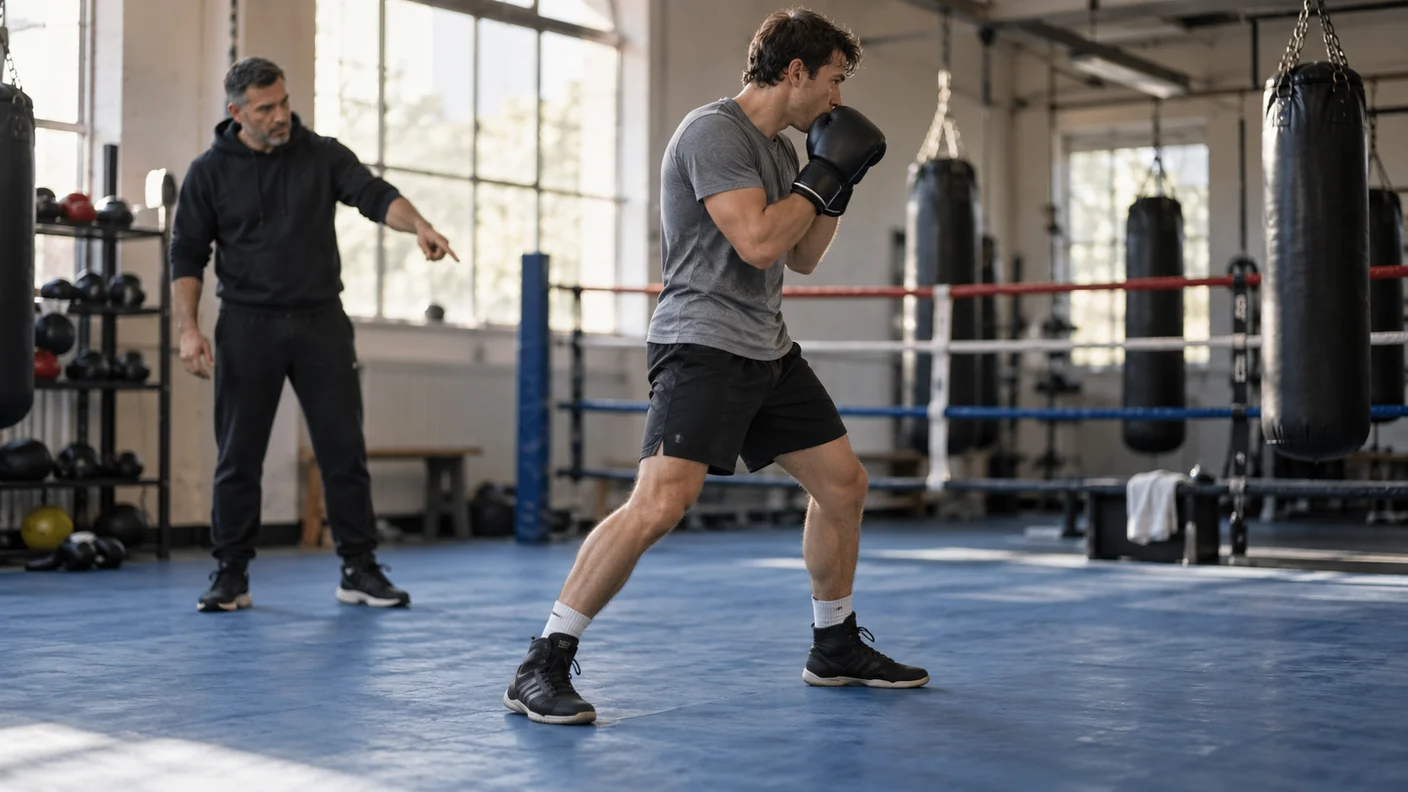
Back Foot Angle in Boxing: Find Your Base
Use your back-foot angle to stay balanced, move cleanly and avoid forcing one stance shape into every boxing drill.
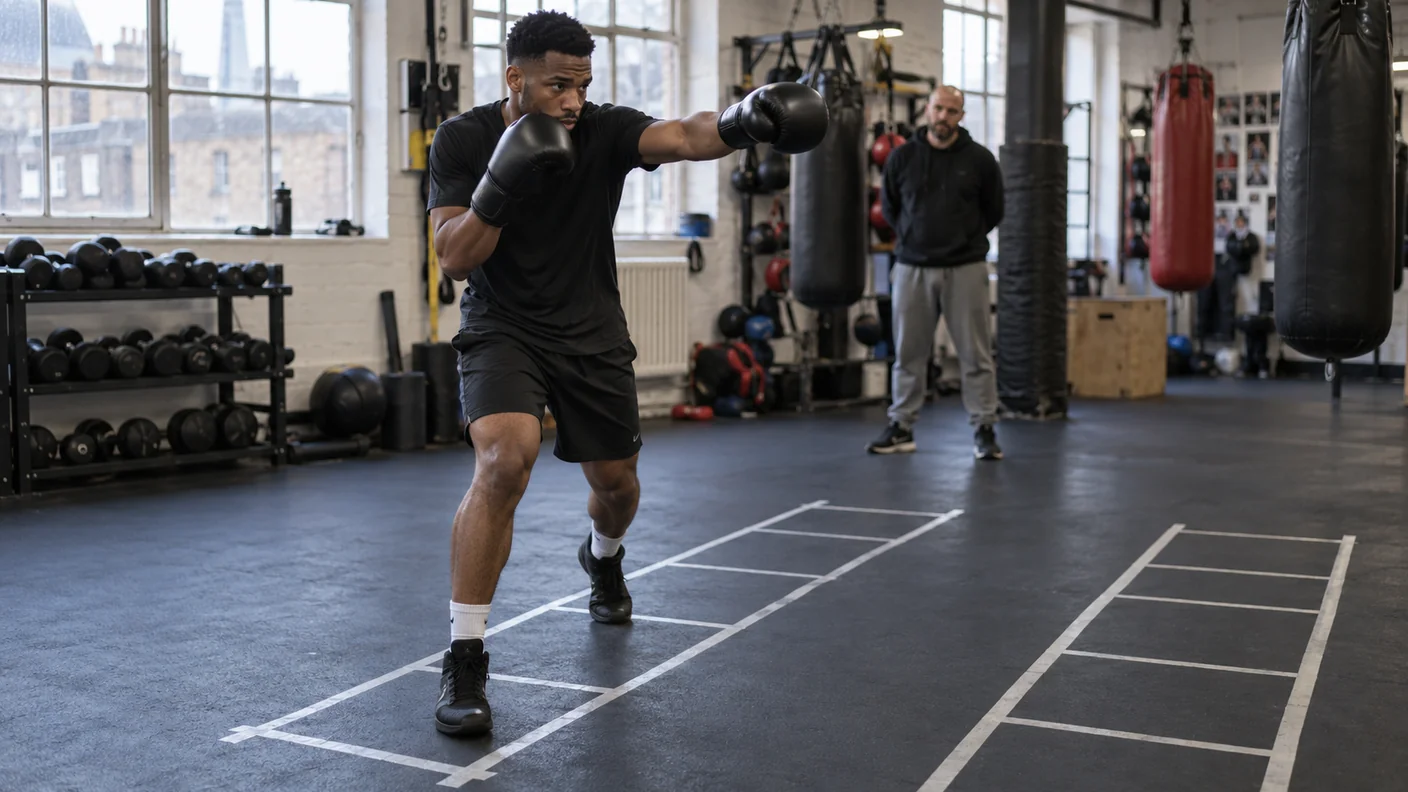
In, Out, Across: Boxing Footwork Drill
A three-direction boxing footwork drill for entering range, leaving safely and changing the line without losing your stance.
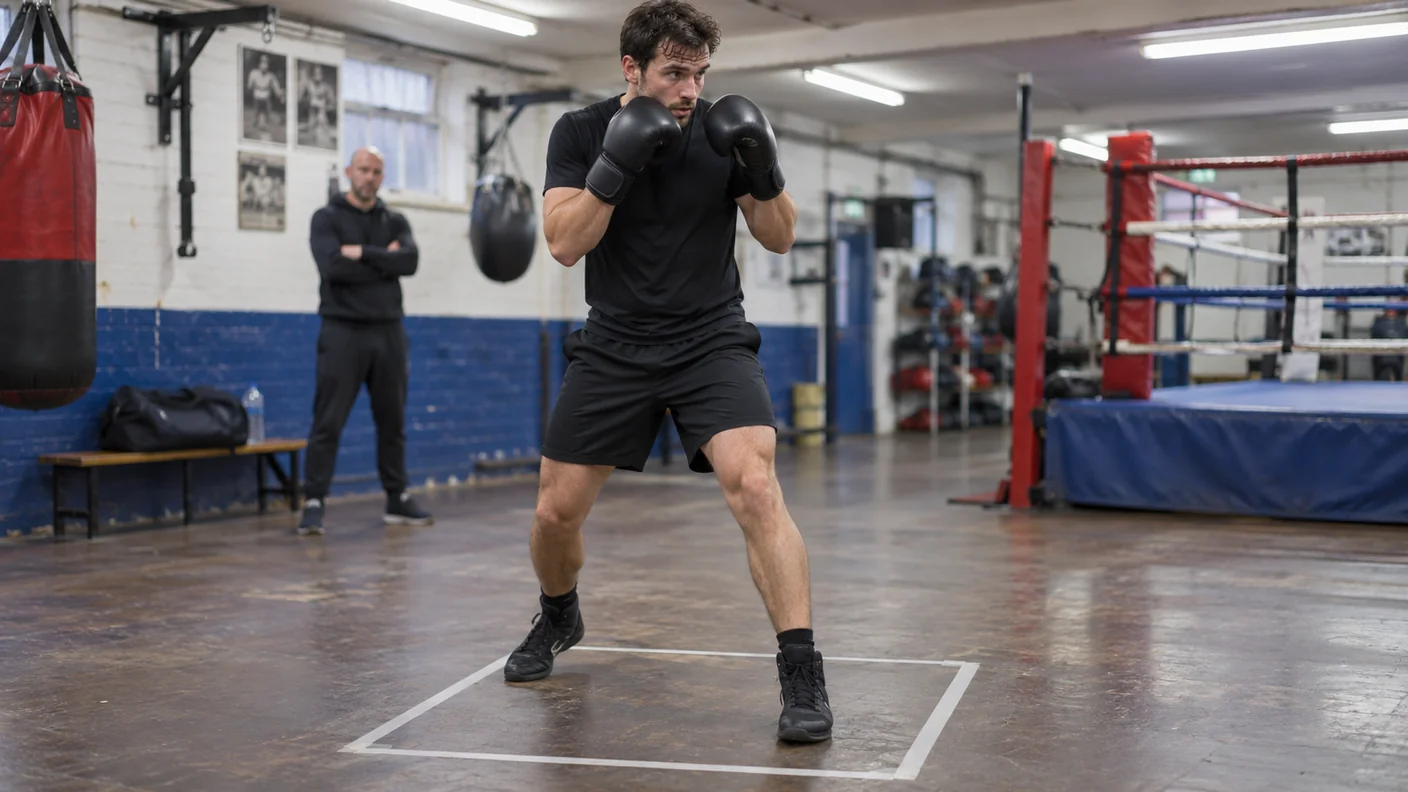
Box Steps in Boxing: A Four-Direction Footwork Drill
Use box steps to move in four directions while keeping your stance, guard and next decision organised.
Was this page helpful?
It takes one tap, and it genuinely helps.
Choose your next step
Turn this article into the right action
Some readers are ready to book. Some need the class route first. Pick the route that matches what you actually want.