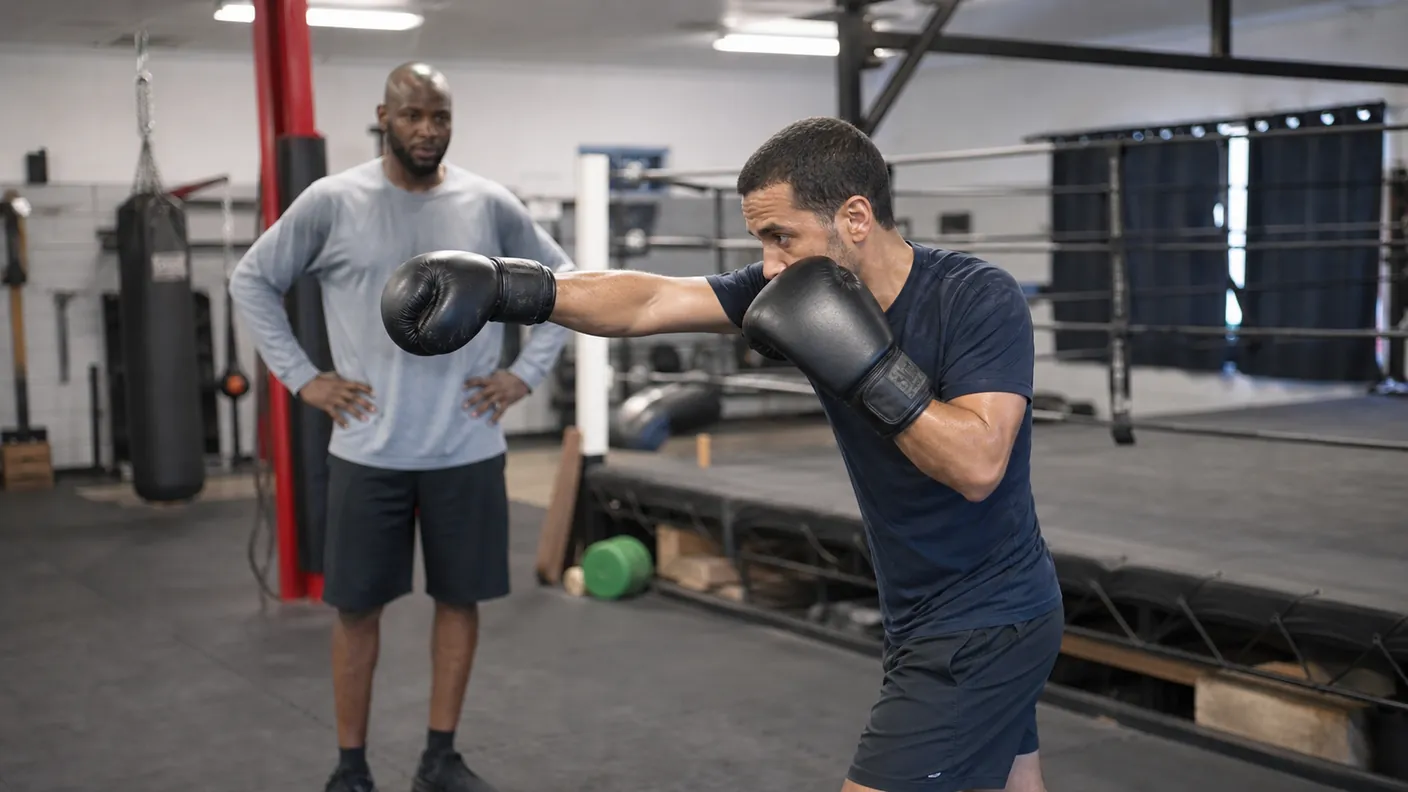
A lot of boxing mistakes begin above the waist.
The feet might be in the right place. The gloves might start high. Then the jab reaches, the shoulders hurry forward and the back folds towards the target. The punch lands on the bag, so it can feel fine. But the boxer has given away their balance, their eyes and their next move.
Good posture in boxing is not about standing bolt upright. You need a small bend in the knees, a forward-ready stance and enough freedom to rotate. The useful shape is long through the back, settled through the hips and organised enough that you can punch, cover or move without first pulling yourself back together.
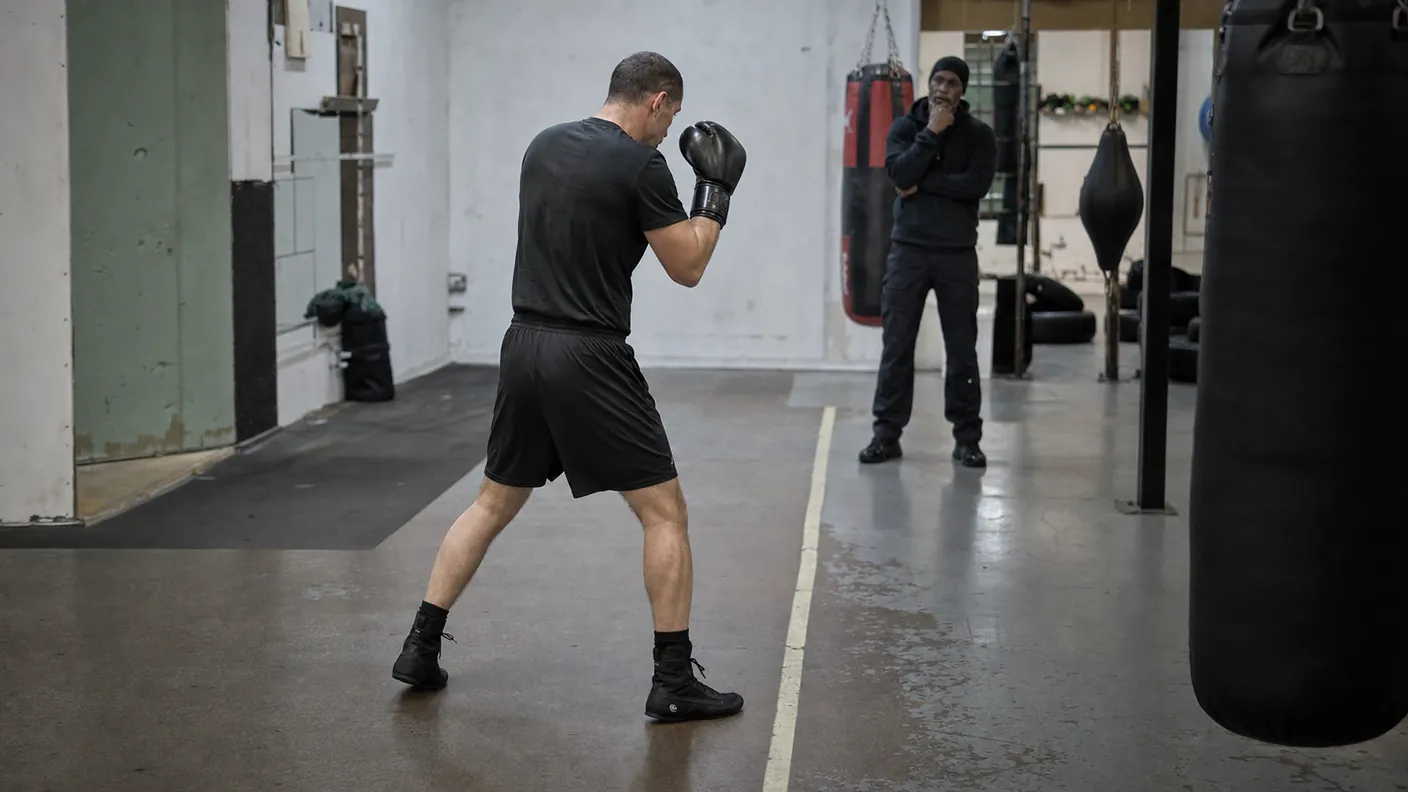
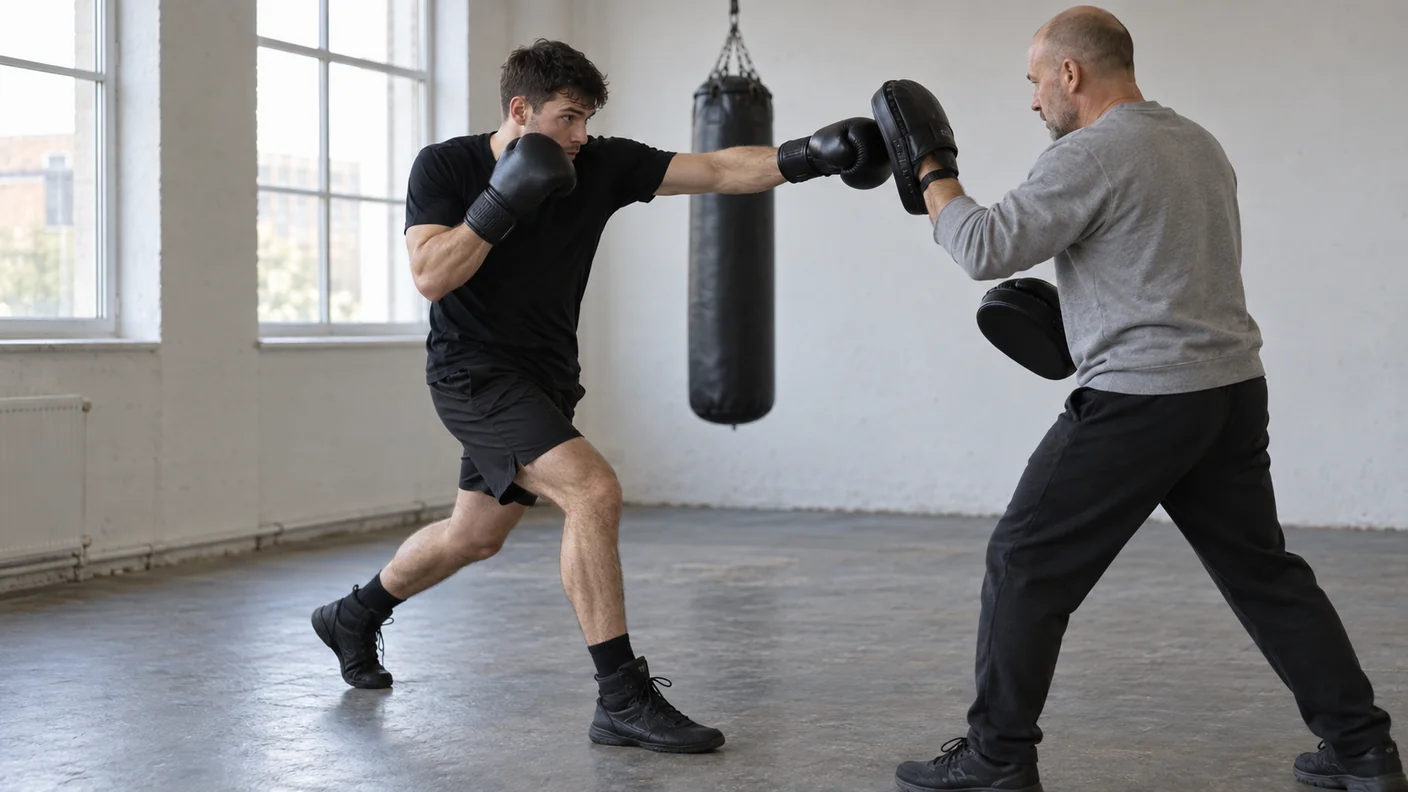
The short demonstration below gives a useful posture check. Watch the difference between reaching for the furthest possible target and keeping a shape that leaves the body ready for another action.
Folding forward is not the same as getting into range
Most people fold because they are trying to make a punch reach.
The chin goes first, then the chest follows, then the shoulders take over from the legs. It can make the glove arrive, but it does not create honest range. If the target moves back a few inches, the boxer is left leaning into empty space with the rear foot struggling to catch up.
A more useful rule is simple: move the feet to find the range, then let the punch travel from the stance you have earned. Your head should stay between the feet rather than chasing the glove past the lead knee.
That does not mean you must hold the torso rigid. Boxing needs rotation. The hips and shoulders turn together for straight punches, hooks and defensive movement. The difference is whether that turn starts from a stable base or from a body already collapsing forward.
A review of boxing punch impact notes that lower-body strength and explosive strength are strongly linked with punch force in elite amateur boxers (review of strength and punch impact). The practical lesson for a recreational boxer is not to chase force figures. It is to stop asking the shoulders to make up for feet and hips that have not done their job.
The long-back check
You do not need a complicated posture test. Use a mirror, a coach or a phone set safely to one side.
Take your normal stance. Soften the knees and let the hands settle near the face. Without punching, make a small shift as if you were about to jab. Your chest can incline slightly, but the back should not round and the eyes should not drop towards the floor.
Now throw a light jab at half speed and freeze before the glove returns. Check three things:
- Your eyes are still looking at the target.
- Your head has not travelled far ahead of the lead knee.
- You could take a small step back or throw another controlled punch without hauling your upper body upright first.
If the answer to the third question is no, you have probably borrowed range with the spine. Take a smaller punch, start closer or move the lead foot first. A clean reset is worth more than a long jab that leaves you stuck.
Use the knees and hips to change level
The same rule matters when you want to work lower.
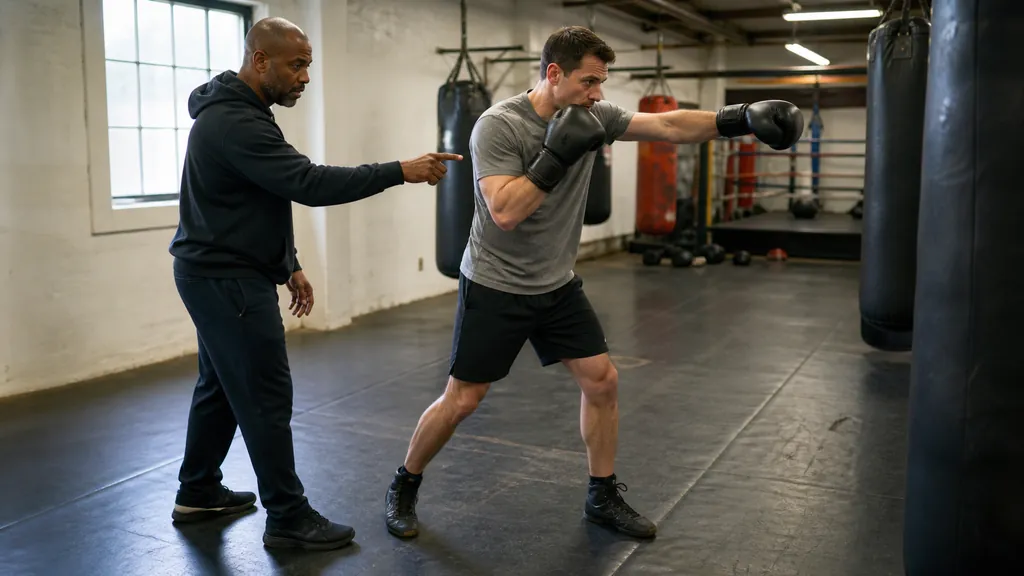
A body shot, duck or roll does not need the boxer to bend at the waist and stare at the canvas. The legs lower the body. The hips and knees share the movement. The back stays long enough that the gloves, eyes and balance still belong to the exchange.
That is why a small level change should feel as if you have sat down a fraction, rather than folded in half. You can still see a mitt. You can still bring the rear hand to the cheek. You can still rise into guard or take a short step away.
A recent study of six common boxing punches found that lower-body fatigue changed both punch output and lower-limb contribution (study of lower-limb kinetics in boxing). That is a useful warning for training. The posture that looks tidy in the first thirty seconds can disappear when the legs and shoulders tire. Do not wait for the final round to notice it.
A three-part posture drill
Use this after a warm-up, before fast bag work or harder pads. The first purpose is awareness. The second is keeping that awareness once a hand starts moving.
Part one: stance and reach
Stand in front of a coach-held mitt, a mirror or an imaginary target. Put the lead glove out only as far as you can without letting the chest tip forward. Bring it home. Repeat slowly for one minute.
This is not a power round. The coach should be able to stop you at any point and see a recognisable stance: feet apart, knees soft, chin tucked and hands ready.
If you are practising alone, use a wall as a distance marker rather than punching it. Stand far enough away that your knuckles cannot touch the wall. Extend a slow lead hand towards it, then return to guard. The wall tells you whether you are reaching with the body to steal another inch.
Part two: kneeling straight-punch check
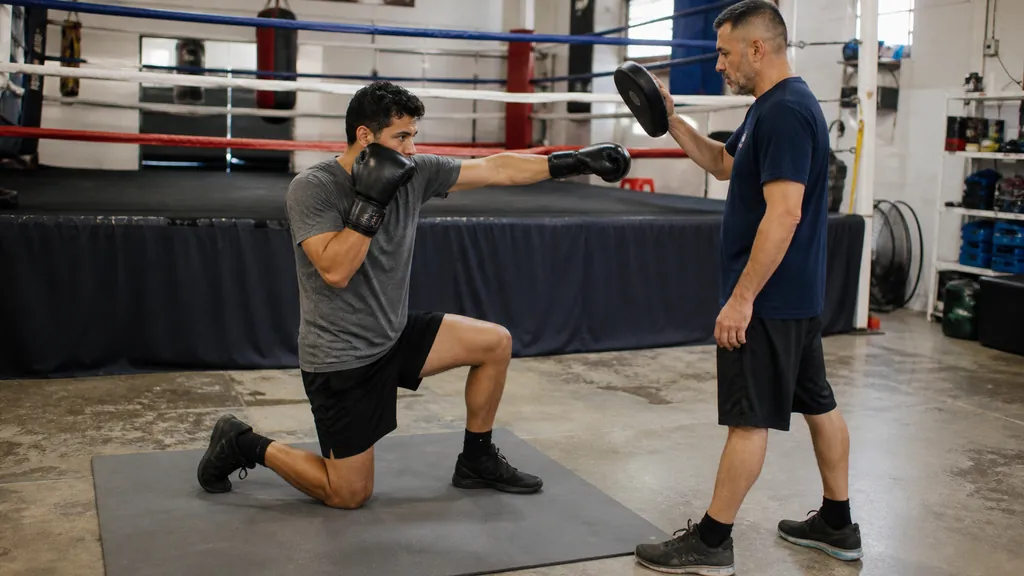
For a simple way to feel the upper-body shape, use a half-kneeling position with a coach holding one focus mitt at a comfortable distance. The front foot stays flat, the back knee rests on a pad and the hips stay under the ribs.
Throw short, light straight punches to the mitt. The kneeling position removes the temptation to chase the target with a big step, so it makes a rounded back obvious. If you need to shove the head forward to touch the mitt, the target is too far away.
Keep this gentle and brief. It is a posture check, not a conditioning test and not a substitute for standing boxing. Once you can keep the back long and the rear glove useful, stand up and take the same shape into normal stance.
Part three: jab, reset, step
Now work in stance with a coach or partner holding one mitt. Jab lightly, bring the glove home, then take one small step back or to the side. Reset before the next jab.
The step is important. It tells you whether the punch has left your body in a position that can still move. If you feel yourself pulling the chest upright after every jab, reduce the range and slow the round down.
This connects with moving in and out without crossing your feet. Good footwork does not repair a bad punch after the fact. It gives the punch a stable place to start and a clean place to finish.
Four habits that make posture worse
The first is looking down at the bag. A bag does not need your eyes. A partner, coach or moving target does. Keep the gaze forward and let the chin sit naturally behind the lead shoulder.
The second is reaching from the shoulders. If the mitt is too far away, close the distance with your feet. Do not let a long arm turn into a long neck and a rounded back.
The third is lifting the chin while you try to stay tall. Long posture does not mean a proud chest and high head. Keep the chin tucked and the shoulders relaxed enough to cover during the punch.
The fourth is treating tired posture as normal. Once the back starts folding and the hands drift, take a short break, reduce the pace or return to shadow boxing. Repeating a poor shape until it feels familiar is not toughness. It is just rehearsing the wrong answer.
Put posture back into real boxing
The goal is not to think about your spine through every round. The goal is to build a shape that keeps working when the drill gets busy.
Start with one clear cue: eyes up, back long, feet underneath. Use it for a round of shadow boxing, then a round of controlled pads. If the shape goes, do not add speed to hide it. Make the punch shorter, restore the stance and begin again.
Our guide to punching without dropping your guard is a useful next read because posture and guard fail together. When the chest folds and the head reaches, the non-punching hand often starts to wander too. Fixing the body shape gives both gloves a better place to work from.
At Honour and Glory, our Recreational Adults boxing classes use slow technical rounds, pads and coached partner drills to make the stance hold up before pressure rises. If you are near Kidbrooke, Greenwich or Blackheath, a coach can help you see whether a range problem is really a posture problem.
The coaching cue is simple: do not reach with your back. Move the feet, punch from shape and leave yourself ready for the next decision.
H&G Team
Writer at Honour & Glory Boxing Club, a community boxing gym in Kidbrooke, South East London.
KEEP READING
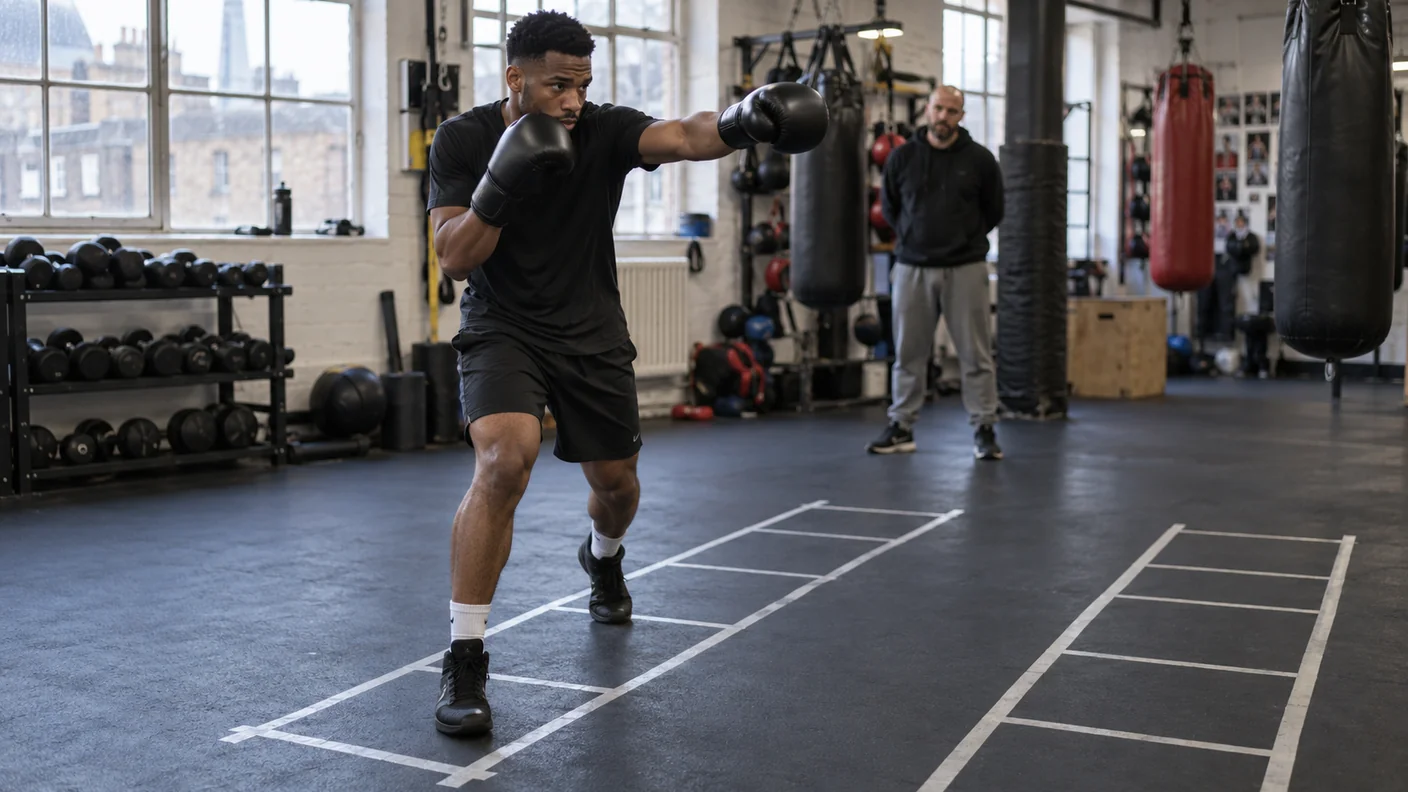
In, Out, Across: Boxing Footwork Drill
A three-direction boxing footwork drill for entering range, leaving safely and changing the line without losing your stance.
The Floor-Line Drill for a Better Boxing Stance
Use one line on the floor to build a boxing stance that stays balanced, mobile and ready to punch without standing square.
Forward Shift Boxing: Close Distance Without Lunging
Use a controlled forward stance shift to close distance only when your guard, feet and next decision stay organised.
Was this page helpful?
It takes one tap, and it genuinely helps.
Choose your next step
Turn this article into the right action
Some readers are ready to book. Some need the class route first. Pick the route that matches what you actually want.