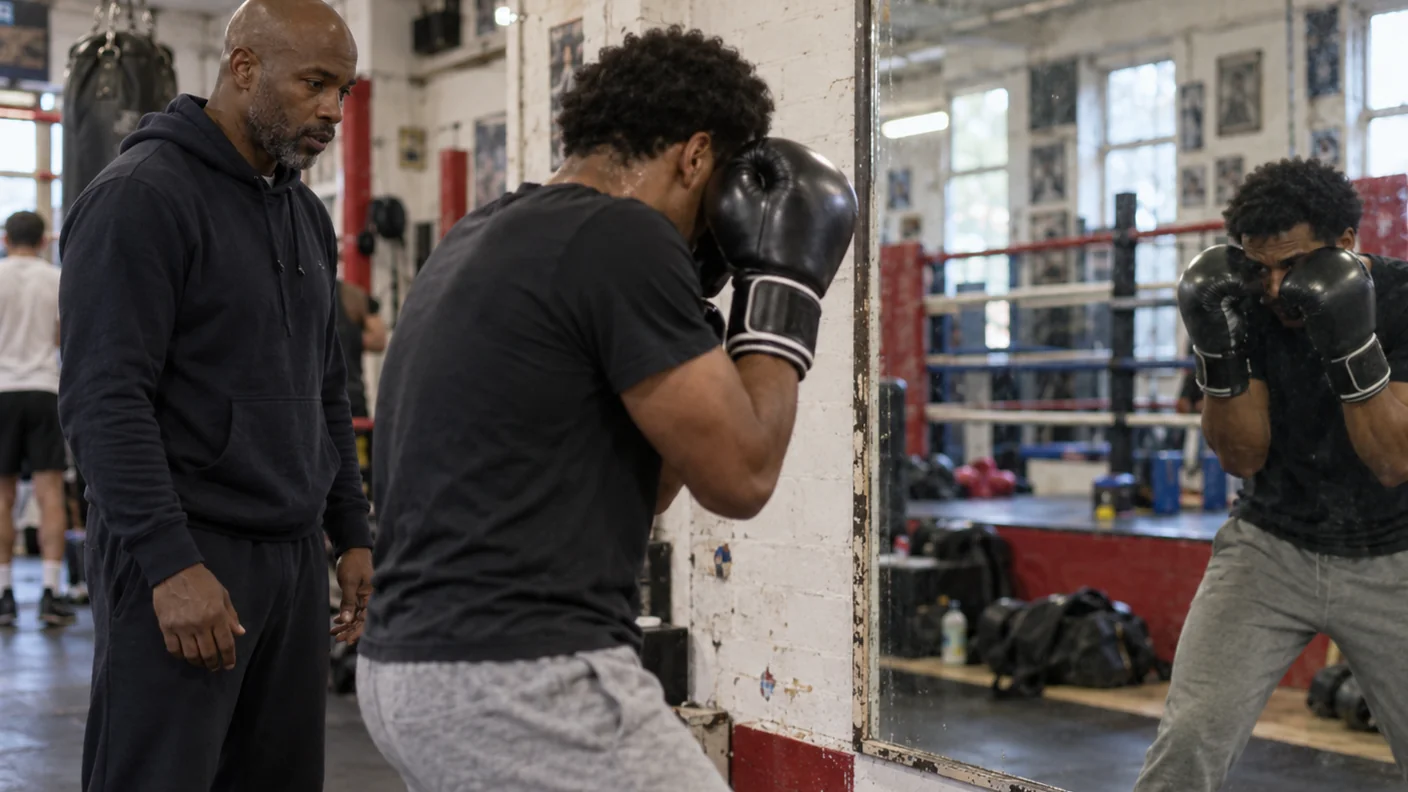
A jab does not always arrive at the range where a neat catch feels available.
Sometimes you have stepped in at the same moment. Sometimes the other boxer has used a feint. Sometimes you have simply read the punch late. At that point, reaching for a parry can pull your guard apart. The useful answer is often smaller: bring the glove and forearm into one compact wedge, protect the line, then get back to a stance that can still move.
This is not a fancy counter and it is not a way to walk through punches. It is a short cover for the moment when the jab is already in your space.
What the forearm wedge is for
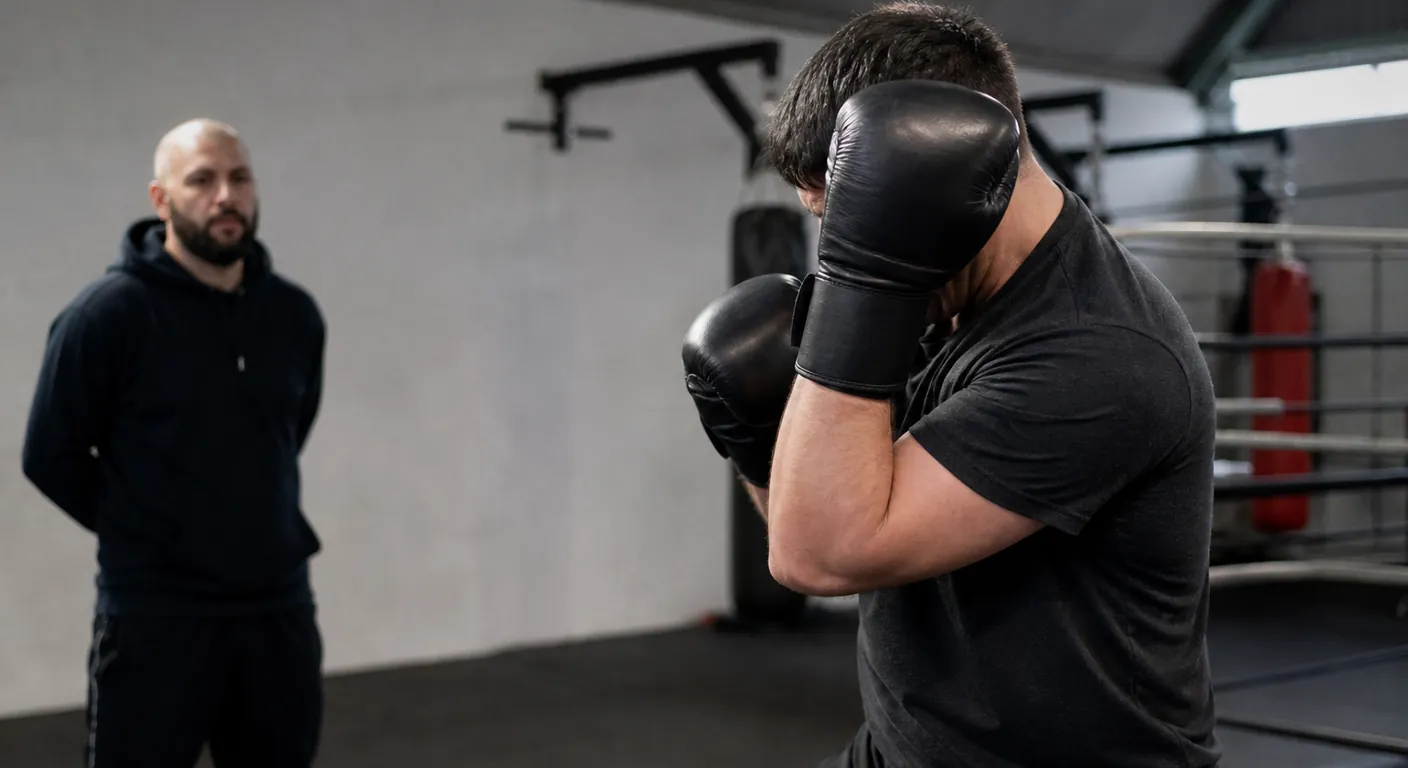
The forearm wedge is a close-range answer to a straight punch. Your glove stays near the cheek, your forearm angles across the lane in front of the face, and your elbow remains close enough to protect the body. The chin stays down behind the structure.
Think of it as closing a narrow door, not swinging an arm at a glove. The punch meets a compact part of your guard rather than your face. You are buying one quiet second to see whether the next job is a step, another cover or a measured return.
The wedge is most useful when a jab has come too close for a relaxed catch. At longer range, a catch, small parry or step back may be cheaper. At close range, your hand does not need to travel towards the attacker. It needs to protect the space you already occupy.
A review of anticipation in combat sports found that experienced athletes use early movement information more effectively. That does not mean you will always read the jab early enough to make it miss cleanly. It means you can build an honest emergency answer for the moments when you do not.
Make a wedge without hiding behind it
For an orthodox boxer facing orthodox, the lead forearm can make the wedge against the incoming lead jab while the rear glove remains close to the rear cheek. Southpaws reverse the picture. The names of the sides matter less than the rule: one arm protects the direct line, the other hand stays responsible for the far side of the face.
Keep the adjustment short. The lead glove may rise a little towards the temple. The forearm turns just enough to deny the lane. The elbow does not flare towards the wall and the shoulder does not climb into the ear.
If your elbow lifts too high, you can expose the ribs. If the forearm reaches too far forward, the other boxer can change the line or come around it. If both hands squeeze together in front of the nose, you lose your view and make your next punch slow.
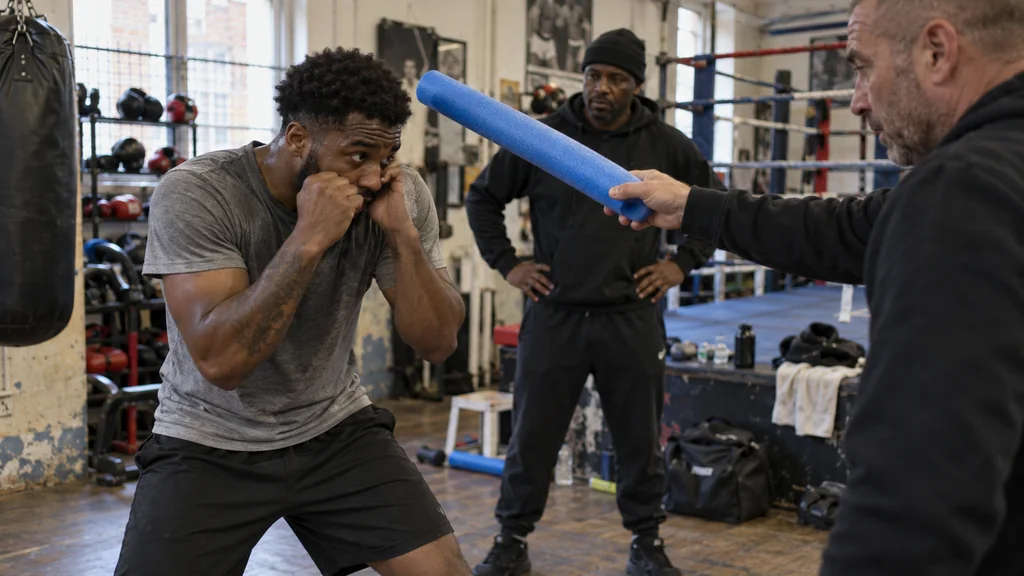
The point is not to make a perfect shield. The point is to meet the jab with enough structure that you remain a boxer afterwards.
England Boxing puts stance, guard and controlled technical progressions at the centre of its coaching handbook. That is a good test for this detail. Once the jab has met the wedge, can you still see forward, take a small step or return both hands to their ordinary lanes? If not, the cover was too large.
The difference between a wedge, a catch and a high guard
These tools can look similar from across the gym, but they solve different range problems.
A catch asks you to receive a longer jab near the space your face occupies. The glove makes a small movement, turns the jab away and returns home. It is useful when you have time to see the shot and your feet are not crowded.
A high guard covers more of the head and can help when several punches are possible. It gives you a short shelter, but it can become passive if you stand still waiting for the exchange to finish.
The forearm wedge sits between them. It is a compact line-specific cover when a jab is already close and a catch would make you reach. You protect the middle without trying to turn the whole upper body into a shell.
Do not force a wedge because you have memorised it. If you are at the edge of range, use a smaller catch or let the punch fall short. If a hook is coming around the side, cover the side rather than trying to keep a straight-punch shape. The line of the punch decides the answer.
For the broader choices, read our guide to defending the jab in boxing. This drill narrows the job to one particular picture: a close straight line that needs a compact cover.
Keep your eyes and feet useful
The usual mistake after a block is freezing.
A boxer feels the glove meet the forearm, decides the danger has passed and stays directly in front of the partner. That works on a bag because the bag does not have another hand. It fails in partner work because the jab may be followed by a cross, hook or another step forward.
After the wedge, do one of three things. Return to ordinary guard and take a small step out. Cover a second cue if the partner remains close. Or touch a coach-held mitt with a measured jab if the range has opened honestly.
Do not throw a hard counter just because you blocked a jab. A block is information, not permission. If your feet are square, your view is crowded or the other boxer has moved, reset.
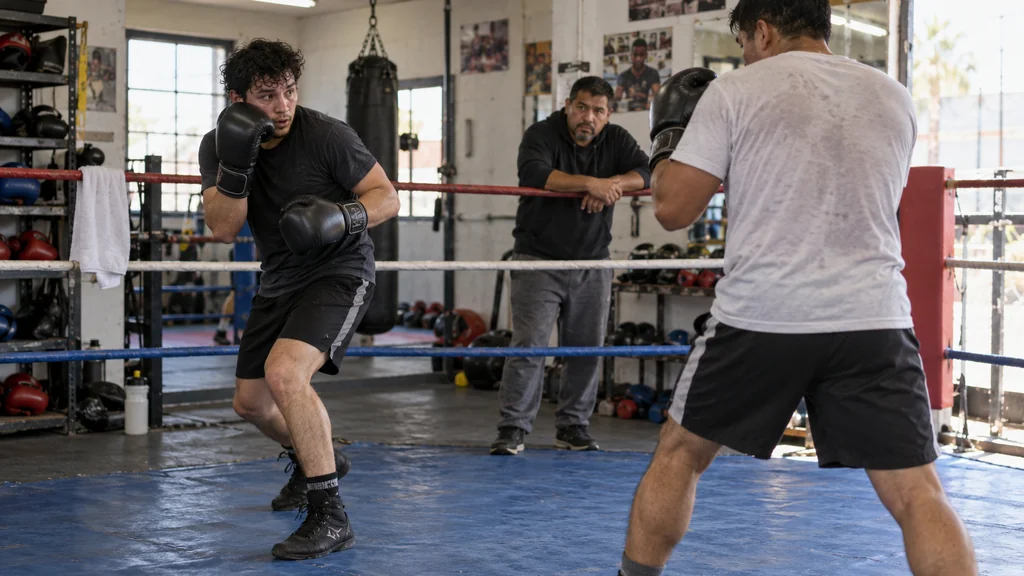
This is where the wedge becomes more than a static shape. It protects you long enough to make a decision instead of panicking into a return shot.
A three-round forearm wedge drill
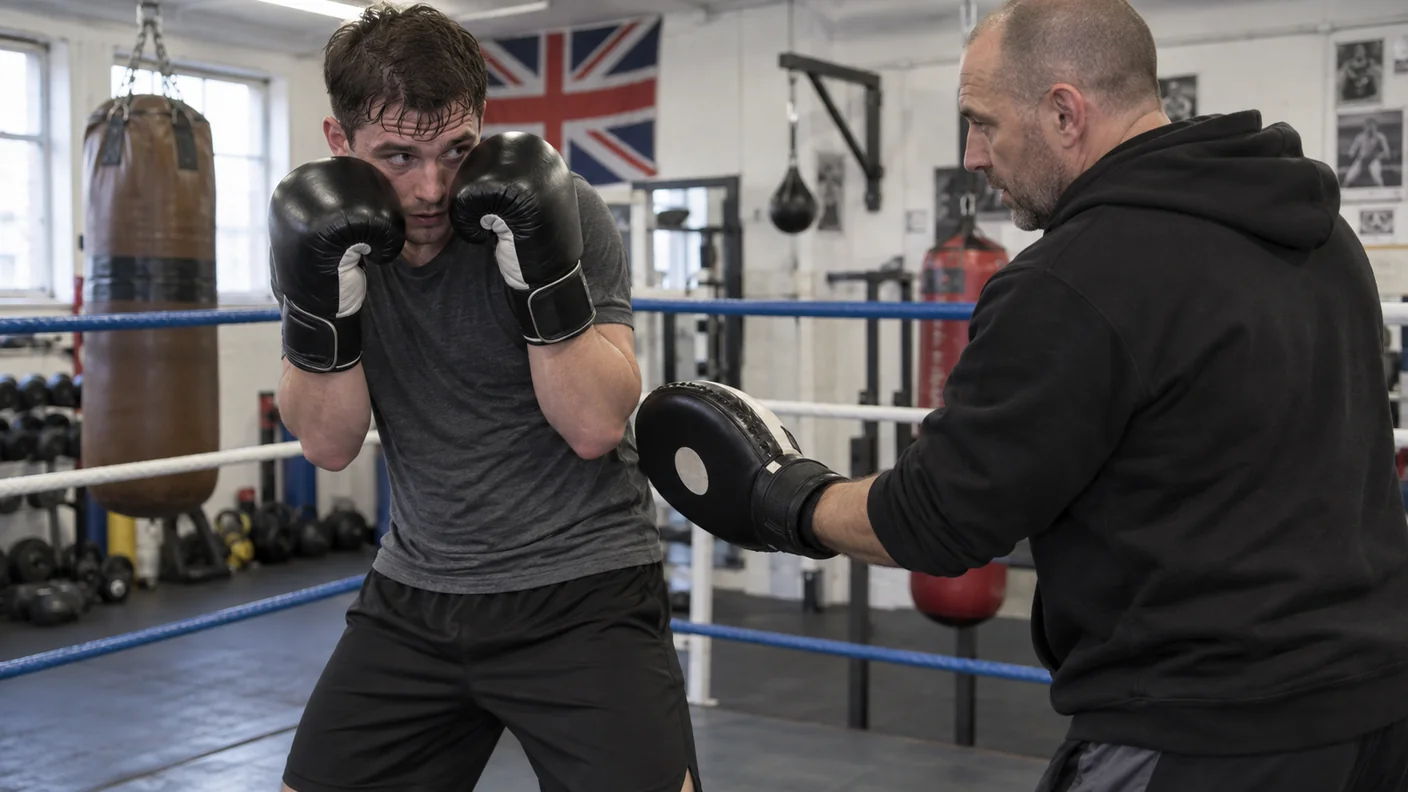
Use gloves, a coach or a trusted partner and a slow agreed jab cue. The feeder should be helping the boxer learn the range, not trying to land the jab through the guard.
Round one: find the line
Partner A shows one slow jab at close but controlled range. Partner B brings the lead glove and forearm into the compact wedge, then freezes for one count.
Check the chin, elbow and eyes. The chin should remain behind the guard. The elbow should still be useful for the body. The eyes should still see the partner's chest and shoulders. Repeat on both sides with southpaws reversing the position.
Round two: wedge and reset
Use the same jab cue, but add a small exit after the cover. Partner B makes the wedge, lets both hands return to their normal guard, then takes one modest step back or to the open side.
Do not leap away. If the step takes you so far that your own jab would need a reach, it was too large. The exit should leave you at a range where you can see and choose again.
Round three: wedge, then choose
Now the coach can show a second straight cue, hold a mitt at honest jab range or take the target away. Partner B makes the first wedge, then covers again, jabs lightly or resets according to the picture.
This matters because boxing is not a sequence you perform regardless of what happens. A tidy reset is the correct answer when there is no clean mitt and no safe line.
Four mistakes that spoil the cover
The first is reaching forward with the forearm. You are trying to protect a close lane, not intercept a punch near the other boxer's shoulder. Let the jab enter your defensive space and meet it there.
The second is lifting both elbows. A high elbow can look protective but often opens the body and tightens the shoulders. Keep the adjustment as small as the punch allows.
The third is turning sideways so far that you lose the other hand. The far glove must still protect the other side of the face. A one-sided cover becomes a problem if the partner can simply change hands.
The fourth is throwing back automatically. The best follow-up may be a jab, a step or no punch at all. Your stance, the available range and the next cue decide.
Our guide to high guard defence against straight punches and hooks explains the related question of changing the guard shape as the line of attack changes. The same principle applies here: use the smallest cover that leaves you able to box.
Where this belongs in training
Use the forearm wedge after you already understand a basic guard and jab defence. It is not a replacement for catching, slipping or moving your feet. It is a compact option for the moment when those choices arrive late.
A few slow, clean repetitions are enough. Build the position with a coach, then let it become one option in controlled partner work. Harder rounds can wait until the shape stays calm.
For adults in Kidbrooke, Greenwich and nearby, our Recreational Adults boxing classes use coach-led pads and controlled drills to build the defensive shapes that stop a small mistake becoming a messy exchange.
The coaching cue is simple: close the line, keep the far hand home, then choose your next position.
H&G Team
Writer at Honour & Glory Boxing Club, a community boxing gym in Kidbrooke, South East London.
KEEP READING
How to Block Body Hooks in Boxing
Use a compact elbow-and-glove cover to block body hooks without exposing your head, folding forward or getting stuck at close range.
How to Block Hooks in Boxing Without Opening Up
Learn a compact hook block that protects your head, keeps your eyes up and leaves you ready to answer at close range.
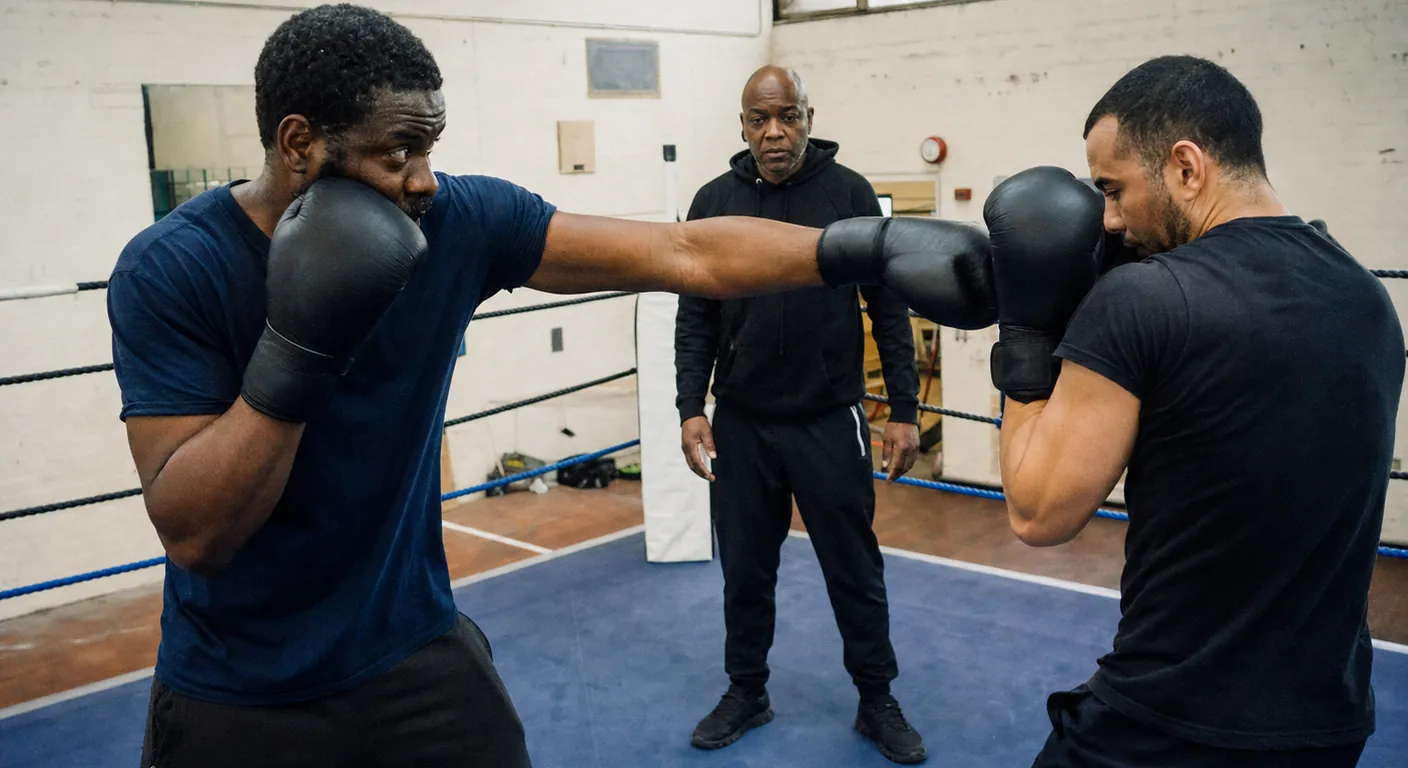
How to Defend the Jab in Boxing
Learn how to defend the jab with a catch, slip, block and exit without losing stance, balance or the chance to punch back.
Was this page helpful?
It takes one tap, and it genuinely helps.
Choose your next step
Turn this article into the right action
Some readers are ready to book. Some need the class route first. Pick the route that matches what you actually want.