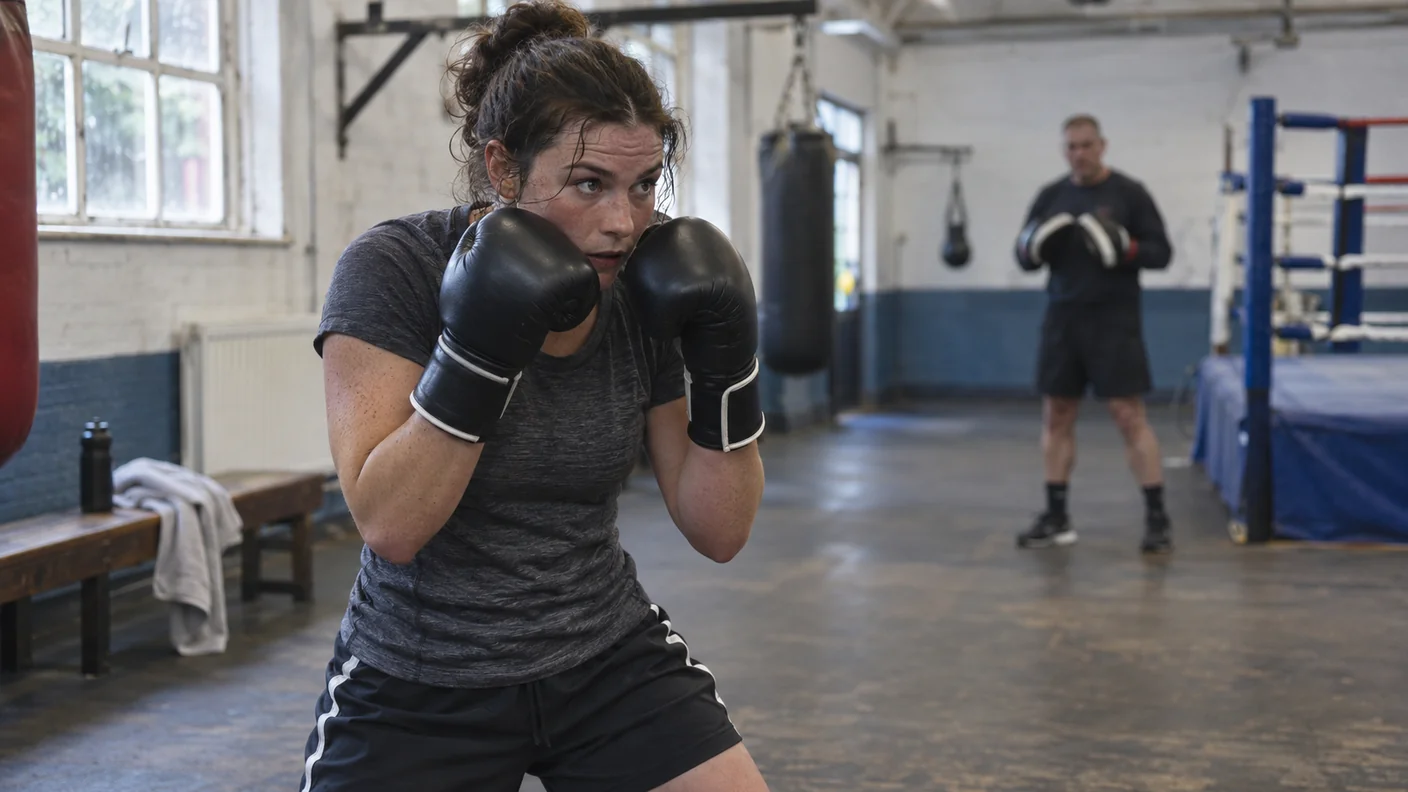
A jab can make a beginner feel busy without ever doing much damage. The glove comes towards the face, both hands fly out, the stance stiffens, and the next shot has an easy route through the middle.
The rear-hand block is a quieter answer. Instead of chasing the jab, you let it arrive close to your guard, make a small turn, meet it with the rear glove and return to a position where you can still see and move. It is not a fancy counter. It is a useful way to stop a jab becoming an invitation for the next punch.
The video below is worth watching once before trying the drill. Pay attention to how little the blocking hand travels. The useful detail is not a big swat. It is a short movement that keeps the defender organised.
What the rear-hand jab block is for
For an orthodox boxer facing another orthodox boxer, the rear hand is the right glove. When a jab comes down the centre, that glove can come forward a few inches, turn to meet the punch and return home. Southpaws reverse the picture.
This is not the only way to defend a jab. A catch, parry, small slip or step can all be right depending on range. The rear-hand block earns its place when the jab is close enough to need a firm answer, but you still have enough time to see it and stay composed.
The aim is to keep your face covered without giving the opponent a big gap. You are not trying to knock their glove across the gym. You are making their jab finish in your defensive space, then taking the line away with a small, solid action.
That distinction matters. The England Boxing coaching handbook puts balance, guard and controlled technical progression at the centre of sound boxing practice. In a rear-hand block, those basics are the technique. If your guard has opened, your feet have stopped or your eyes have gone down, the block has not done its job.
Build the block from the floor, not from the shoulder
The rear-hand block should not feel like you are waving at the jab. A loose arm cannot reliably stop a straight punch, especially if the other boxer has stepped in behind it.
Start in a normal stance. Keep the rear glove near the cheek and the lead glove honest on the other side. As the jab comes close, press lightly from the ball of the rear foot and make a small turn through the hips and upper body. The rear glove moves forward only enough to meet the jab near where your face was.
That small turn gives the glove some structure. The elbow stays close enough that the arm still protects the ribs. The chin stays tucked. Your head does not need to swing away from the punch because the guard is doing the work.
Think of the block as closing a door, not throwing a door open. The glove comes out, meets the jab and returns. If it reaches beyond your shoulder, it has probably travelled too far.
Do not reach for the jab
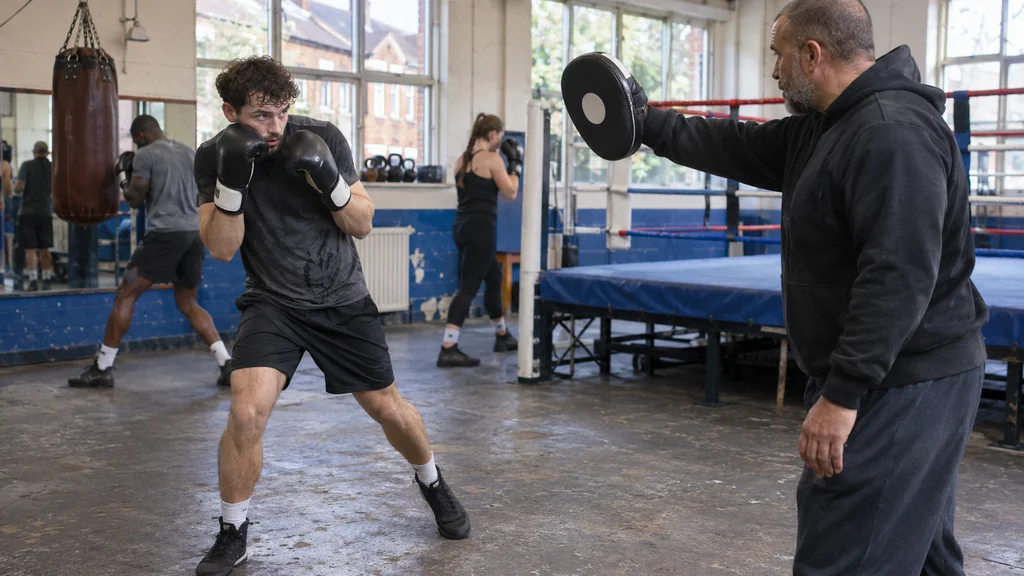
The biggest mistake is reaching forward to intercept the jab early.
It can look tidy in shadow boxing because there is no second punch. Against a partner, a long blocking hand gives the other boxer a clear sight of your centre line. They can feint the jab, turn it into a hook or step in with the rear hand while your glove is stranded away from your face.
A compact block asks for more patience. Let the jab enter the space just in front of your guard. That may feel late at first, but it leaves your elbow, shoulder and other glove in useful positions. You can still cover a follow-up, move your feet or return a shot.
The same principle runs through our guide to defending the jab in boxing: use the smallest answer that works. The rear-hand block is not better because it is dramatic. It is useful because it does not spend more of your stance than the jab requires.
There is another common error: making the block an arm-only action. If the glove comes up without any settled legs or body position behind it, a firm jab can fold the arm back into your own face. Keep the motion small, but give it a base.
Return one shot only when the line is honest
A good block can put you in range to answer. It does not guarantee that you should.
The attacking jab has extended one glove away from the opponent's face. That can open a clear line for a jab back, a straight rear hand or a short lead-hand shot, depending on distance and stance. But the counter must come from the finish of the block, not after a dramatic wind-up.
Start with the simplest return: block, jab back. It teaches the right rhythm because the jab comes straight from guard and brings the lead shoulder back into the picture. If the partner is too close or already loading the rear hand, do not force it. Cover and move.
A review of anticipation in combat sports found that more experienced fighters make better use of early movement cues. In the gym, that does not mean predicting every punch. It means keeping your eyes on the chest and shoulders after the block so you can tell whether the jab was a single probe, the start of a double jab or cover for a rear hand.
The useful coaching rule is simple: block, check the picture, then decide. Do not turn every defended jab into a race to throw back.
Finish with a defensive exit
The block is only the middle of the exchange. If you land a return and stand in the same place admiring it, the other boxer has a simple job: fire again.
After a block-and-jab return, take a small step out or a short angle step if the range asks for it. Keep both gloves close enough to defend while you move. You are not sprinting away. You are creating just enough space to make the opponent reset before they can build the next attack.
If the other boxer doubles the jab, the first block should not leave you frozen. Bring the glove home, make a small second defence and move your head or feet before committing to a return. Our double-jab defence guide covers that second beat in more detail.
A three-round drill for the rear-hand block
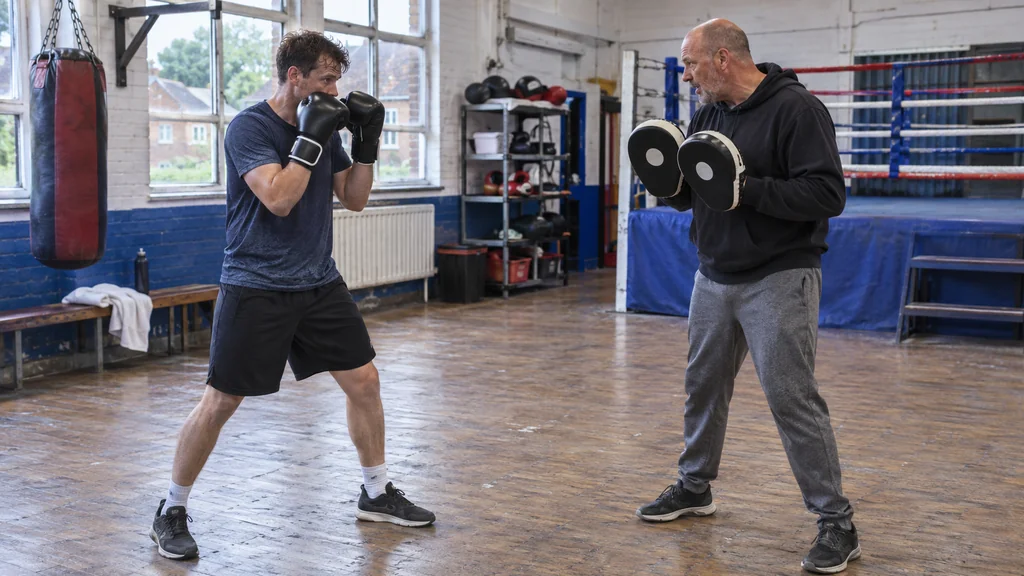
Use gloves, a trusted partner and a slow technical pace. The feeder should give a clear jab cue rather than trying to score. This is about positions, not toughness.
Round one: block and freeze
Partner A throws one slow jab to the forehead line. Partner B uses the rear-hand block and freezes for one count before returning the glove to the cheek.
Check the finish each time. The head should be up, the elbow should not be winging away, and the feet should still be in a usable stance. There is no counter in this round. Learn to make the block compact before adding anything else.
Round two: block and jab back
Partner A repeats the slow jab. Partner B blocks, returns one light jab to a coach-held mitt or a clearly agreed partner target, then resets.
Keep the return short. If the jab back needs a big pull of the arm or a lunge from the feet, the first block has left you too far out of shape. Slow down and make the block smaller.
Round three: block, choose, leave
Partner A can now give a single jab, a double jab or a jab followed by a slow rear-hand cue. Partner B blocks the first jab and chooses one answer: jab back and step out, cover the second jab, or reset with both gloves home.
This round stops the drill becoming a memorised sequence. You are learning that the jab is information. The block gives you time to read it rather than panic at it.
Four faults to correct early
The first is reaching. If your rear glove ends up far in front of the face, bring the block closer to home.
The second is turning the whole body sideways. A small hip turn is enough. If the shoulder rolls so far that you cannot see the other glove, the block has become a gamble.
The third is dropping the lead hand while the rear hand works. The jab might be covered, but the other side of the head is now empty. Keep the lead glove in position as the rear hand moves.
The fourth is countering before you have defended. New boxers often hear "block and return" and skip the first half. Let the block actually settle the jab, then throw only if the target and distance are still there.
For adults in Kidbrooke, Greenwich and nearby, our Recreational Adults boxing classes use pads and controlled partner drills to build this kind of defensive decision-making without rushing anyone into hard sparring.
The coaching cue is short: block close, see clearly, return only when you can leave safely.
H&G Team
Writer at Honour & Glory Boxing Club, a community boxing gym in Kidbrooke, South East London.
KEEP READING
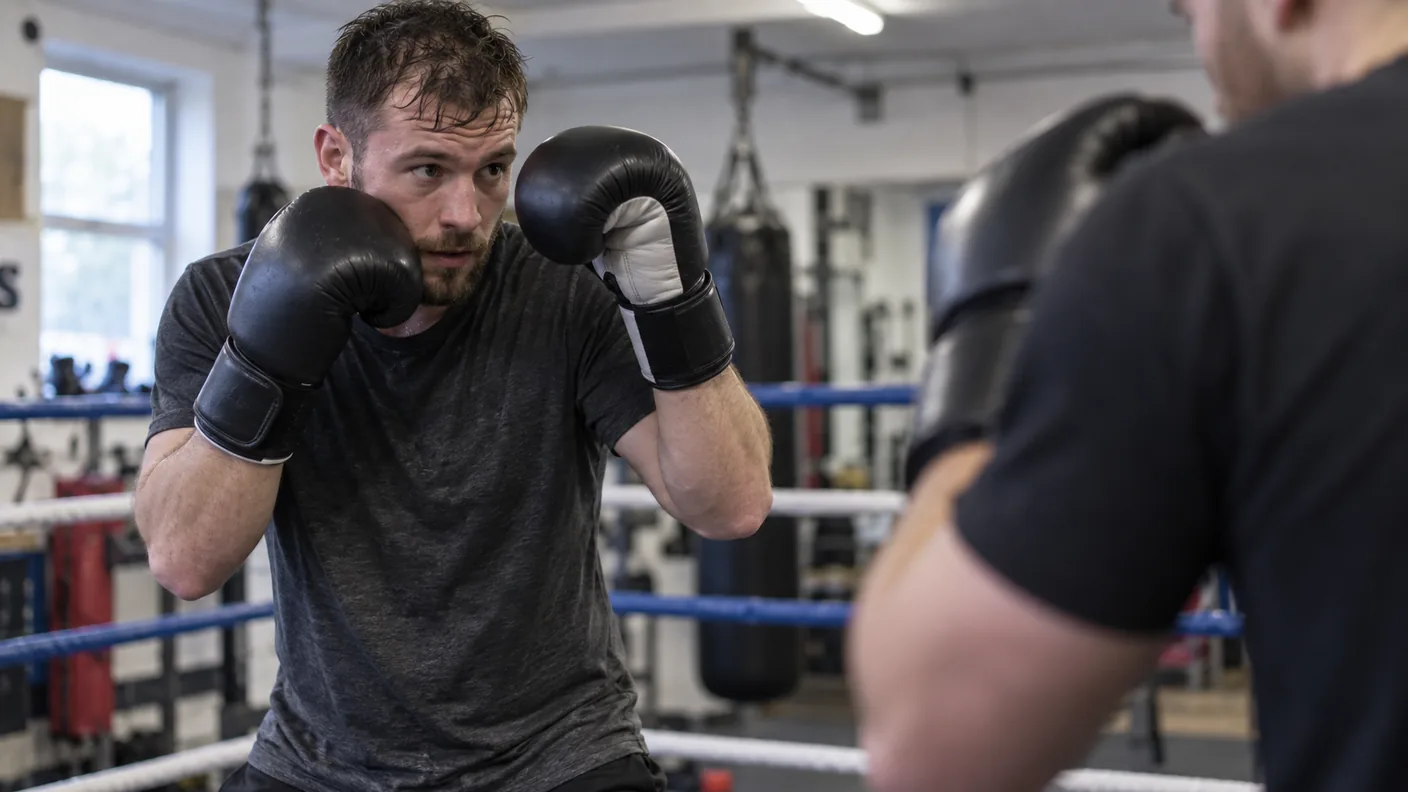
Lead-Hand Catcher Mitt: A Jab Defence Drill
Use a light lead-hand catch to manage the jab line, then return to guard before adding a calm counter or exit.
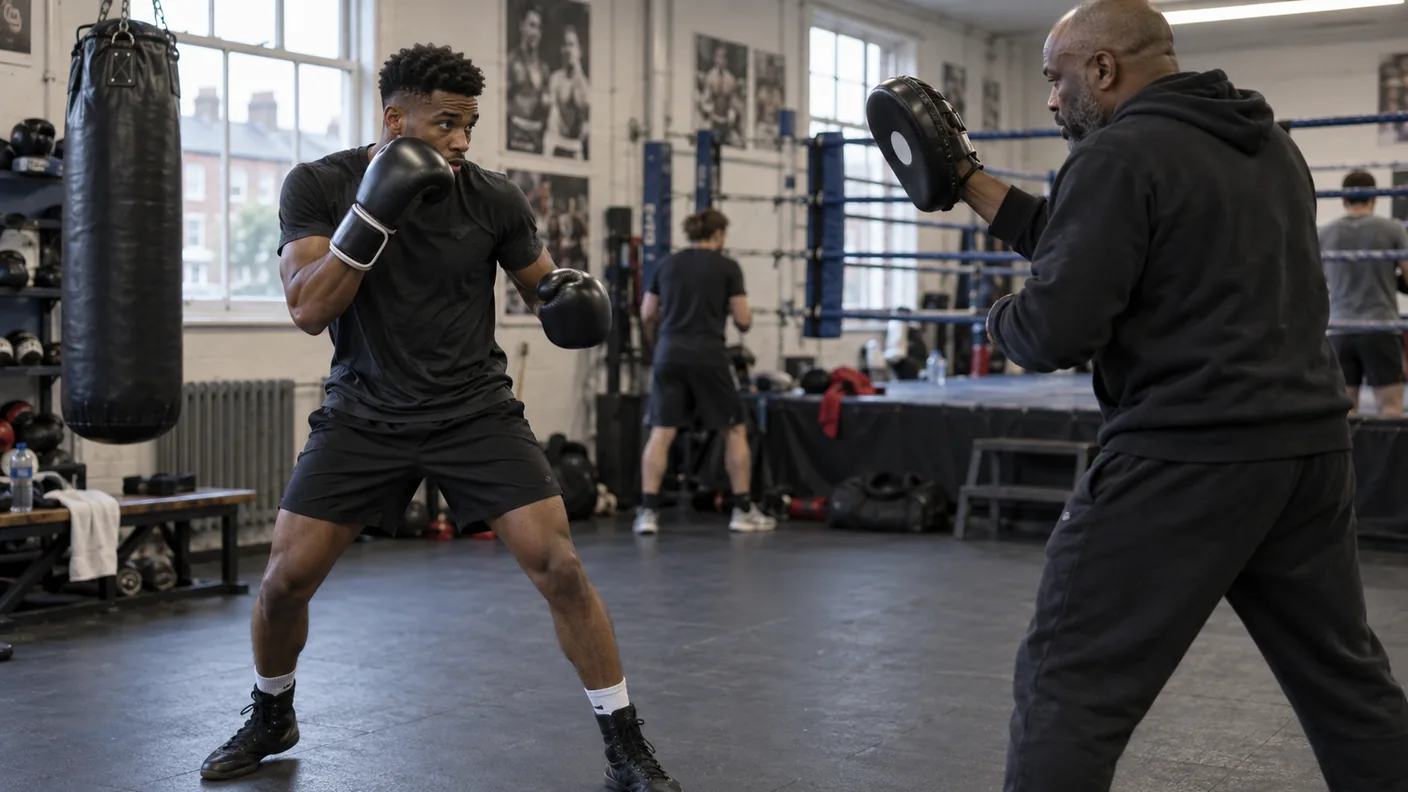
Feint, Block, One-Two: A Boxing Counter Drill
Use a small feint, compact block and balanced one-two to turn a predictable jab into a calmer boxing counter drill.
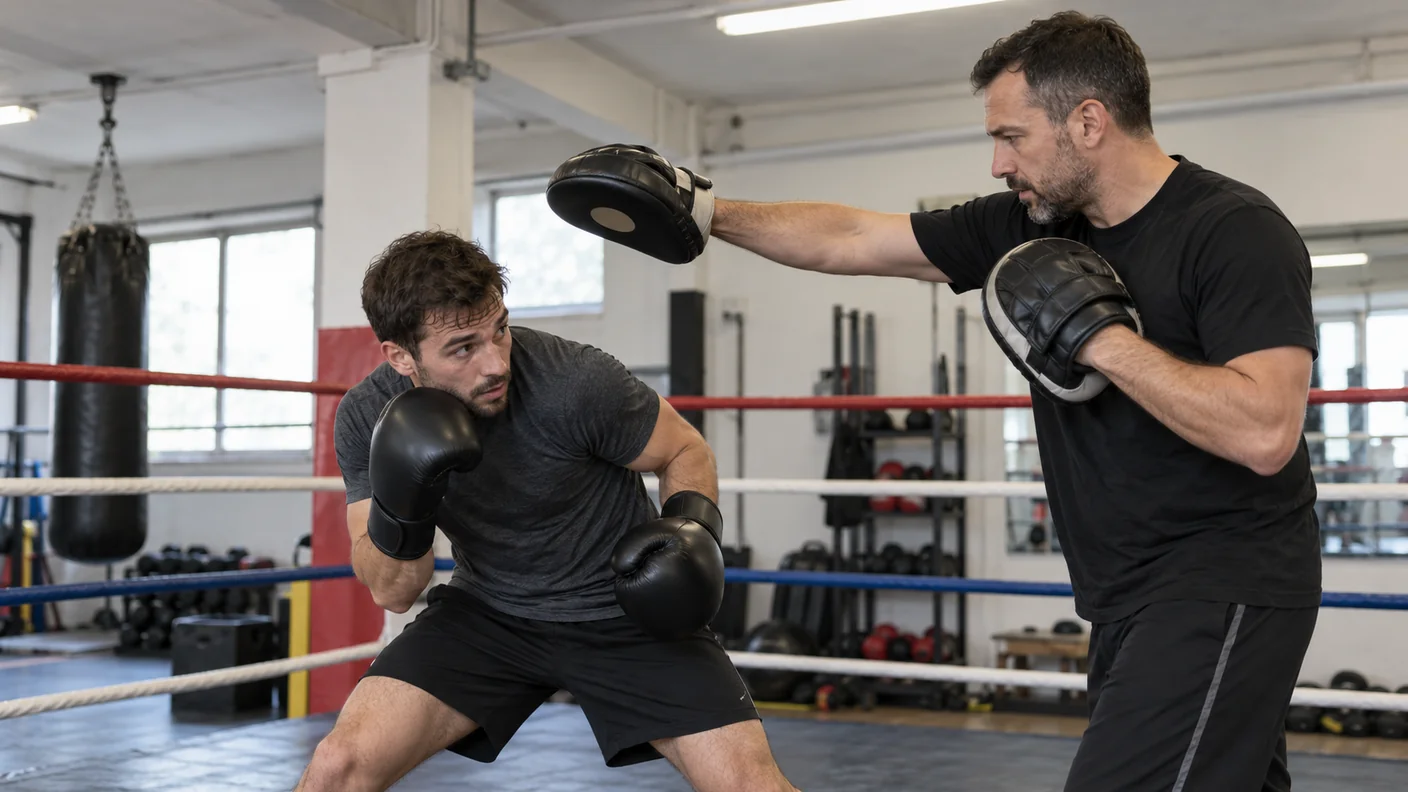
Slip the Jab to a Rear Uppercut
Use a small outside slip against a jab, then learn when a short rear uppercut is available at close range.
Was this page helpful?
It takes one tap, and it genuinely helps.
Choose your next step
Turn this article into the right action
Some readers are ready to book. Some need the class route first. Pick the route that matches what you actually want.