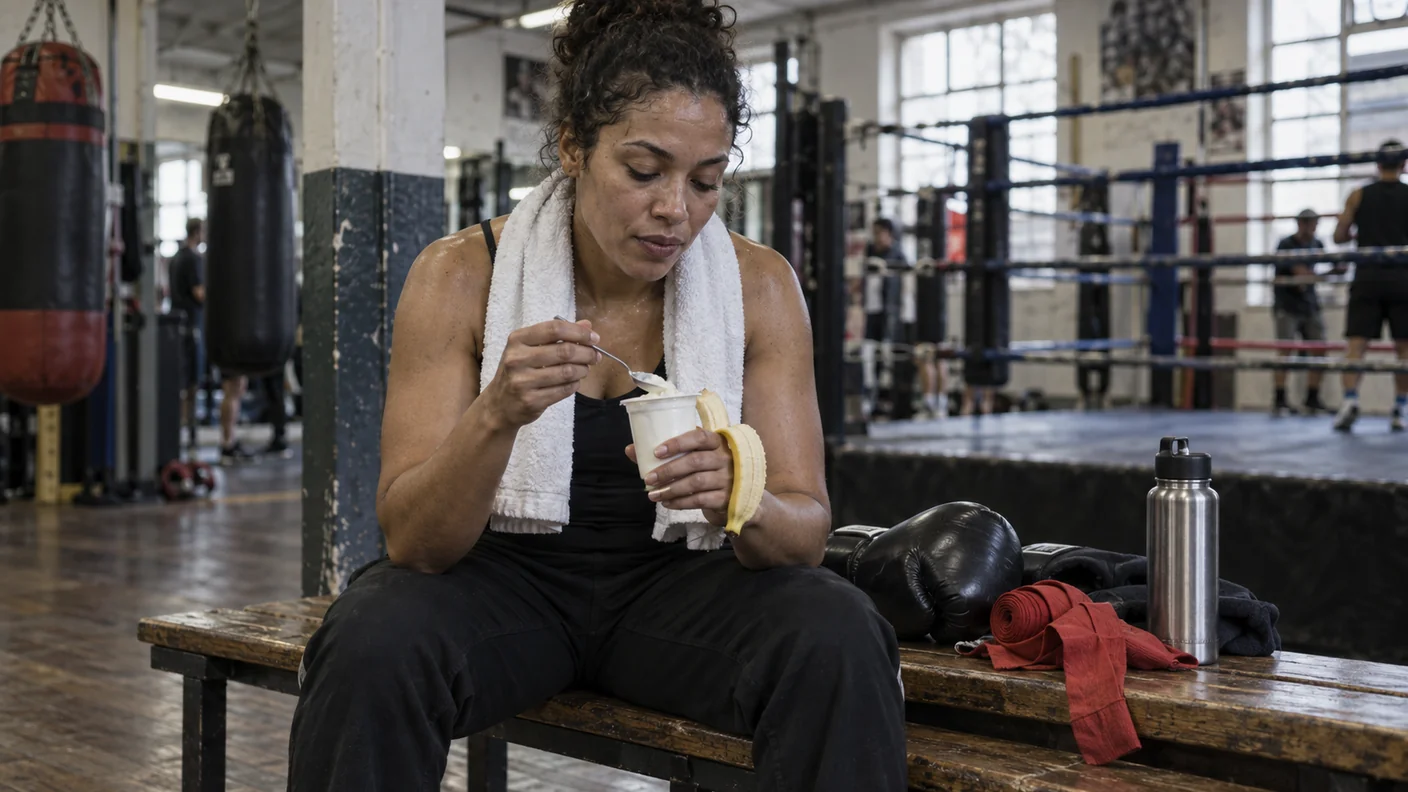
You finish boxing feeling fine. You have water, shower, get home, sit down and then suddenly the cupboard looks like it has been personally disrespectful.
That delayed hunger is common after a hard evening session. It does not mean you lack willpower, and it does not automatically mean you need to eat everything in sight. It usually means the demands of the session have caught up with a day of work, commuting and ordinary meals that may not have matched the effort.
The useful answer is not to white-knuckle it or turn dinner into a reward. It is to understand the pattern, arrive at training sensibly fuelled and have a normal post-session meal ready for when hunger arrives.
Why hunger can arrive after the session, not during it
Hard exercise does not always make people hungry immediately. In fact, a review of exercise and appetite found that intense exercise can briefly suppress the feeling of hunger, even though that effect does not last (International Journal of Obesity review). That fits the experience of a hard boxing class.
During rounds, your body has a lot to do. You are moving, listening, punching, recovering, drinking water and trying not to let the coach see you staring at the clock. Food is not the priority in that moment.
Then the session ends. The heart rate settles, the journey home begins and the appetite that did not have much room during training becomes obvious. For some people that is a normal dinner-sized hunger. For others, especially after a light lunch and a hard evening class, it can feel like a full raid on the kitchen.
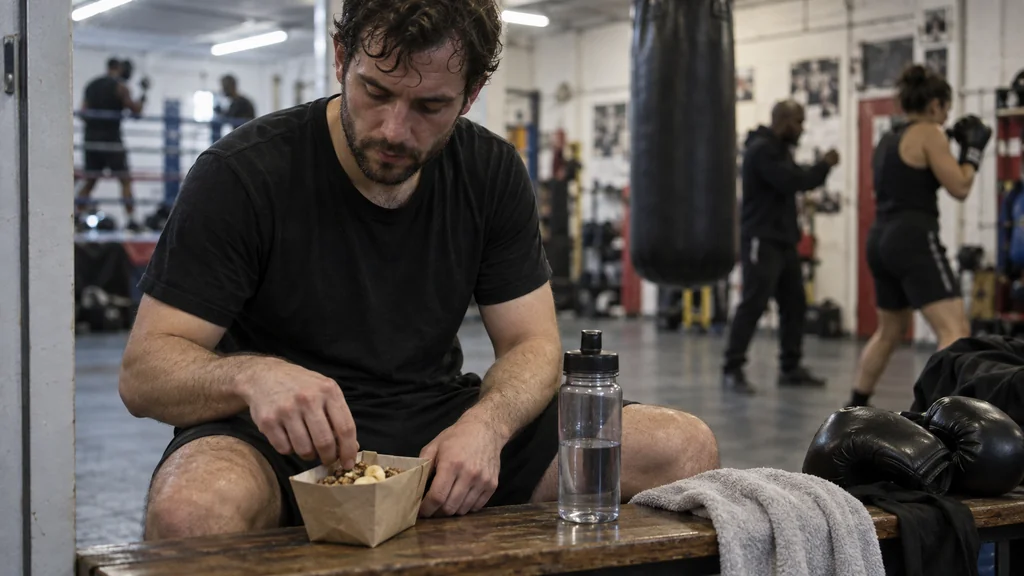
That does not prove that every boxing session creates huge hunger. A 2024 review found that acute exercise does not consistently lead to meaningful increases in appetite or food intake across everyone studied (Nutrients review). People respond differently. The point is practical: notice your own pattern rather than borrowing somebody else's food rules.
A hard class often exposes an under-fuelled day
The most common reason for late hunger is boring rather than mysterious: the day did not contain enough food before training.
An adult who has a coffee, a rushed sandwich, a long commute and a demanding boxing class has not failed a test of discipline. They have created a long gap between proper meals and then asked their body to work hard. It is no surprise that hunger shows up later.
This is especially common with evening boxing. People try to save calories for dinner, meetings take over the afternoon, or they avoid eating because they do not want to feel heavy on pads. The result can be a session that feels flat followed by a strong urge for quick, high-calorie food.
Our guide to what to eat before an evening boxing class covers the useful middle ground. For most people, a familiar meal a couple of hours before training or a smaller snack nearer class is more effective than arriving empty and trying to recover the whole day at 10pm.
Hunger is not a reason to panic about weight loss
People who start boxing for weight loss often make this harder than it needs to be. They assume a hard session should cancel hunger, then feel as if they have ruined the session when they want food afterwards.
That is the wrong frame. Boxing is work. Recovery still matters. The question is not whether you are allowed to eat after training. The question is whether the meal helps you recover and fits the wider week.
The NHS advice for healthy weight loss is not built around skipping meals after exercise. It recommends regular meals, protein sources and filling foods such as vegetables and wholegrains (NHS healthy eating guidance). That is more useful than pretending a late-night biscuit binge and an empty fridge are a nutrition strategy.
If fat loss is your goal, read our more detailed guide to boxing and realistic weight loss expectations. It makes the same point without pretending boxing gives you a free pass to eat without noticing it.
Have a normal post-training meal planned
The best post-boxing meal is usually ordinary food you will actually eat. It does not need a supplement label or a shaker bottle the size of a fire extinguisher.
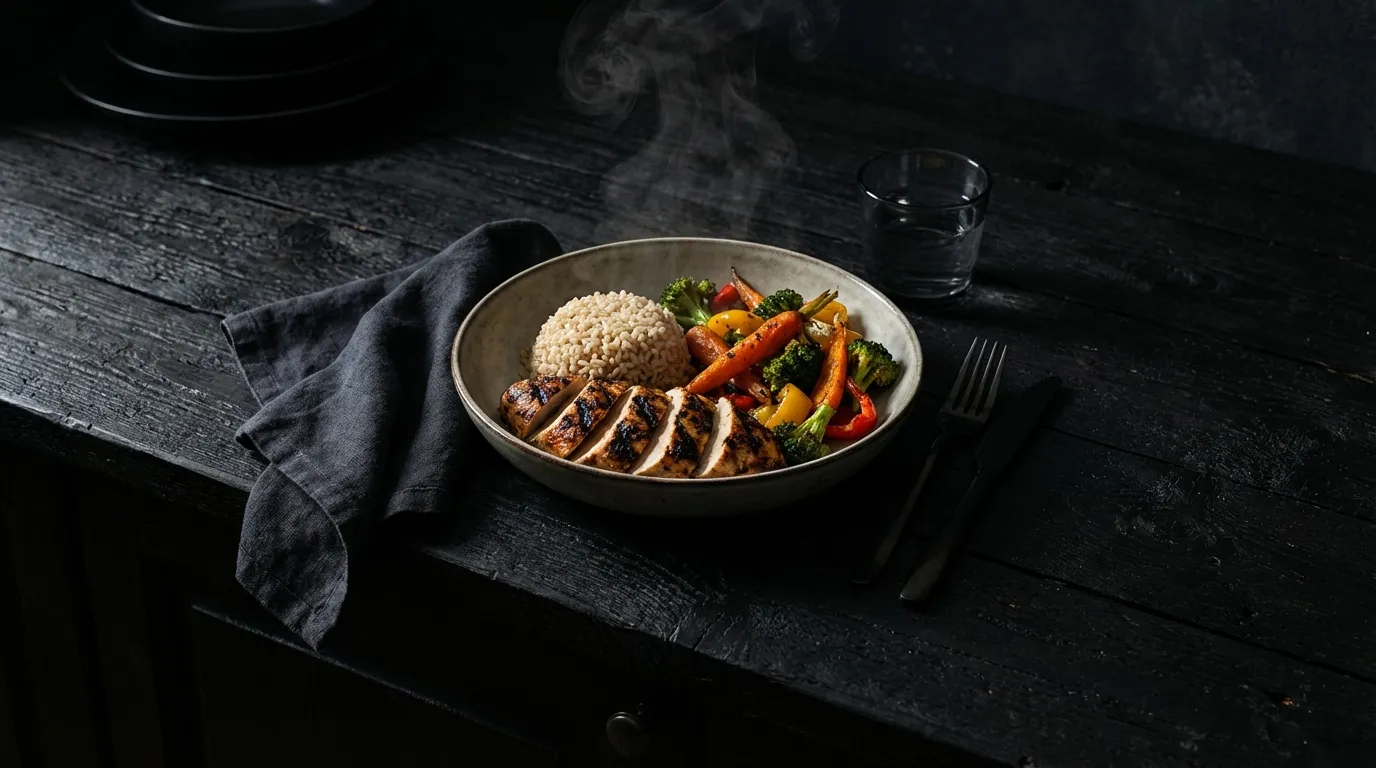
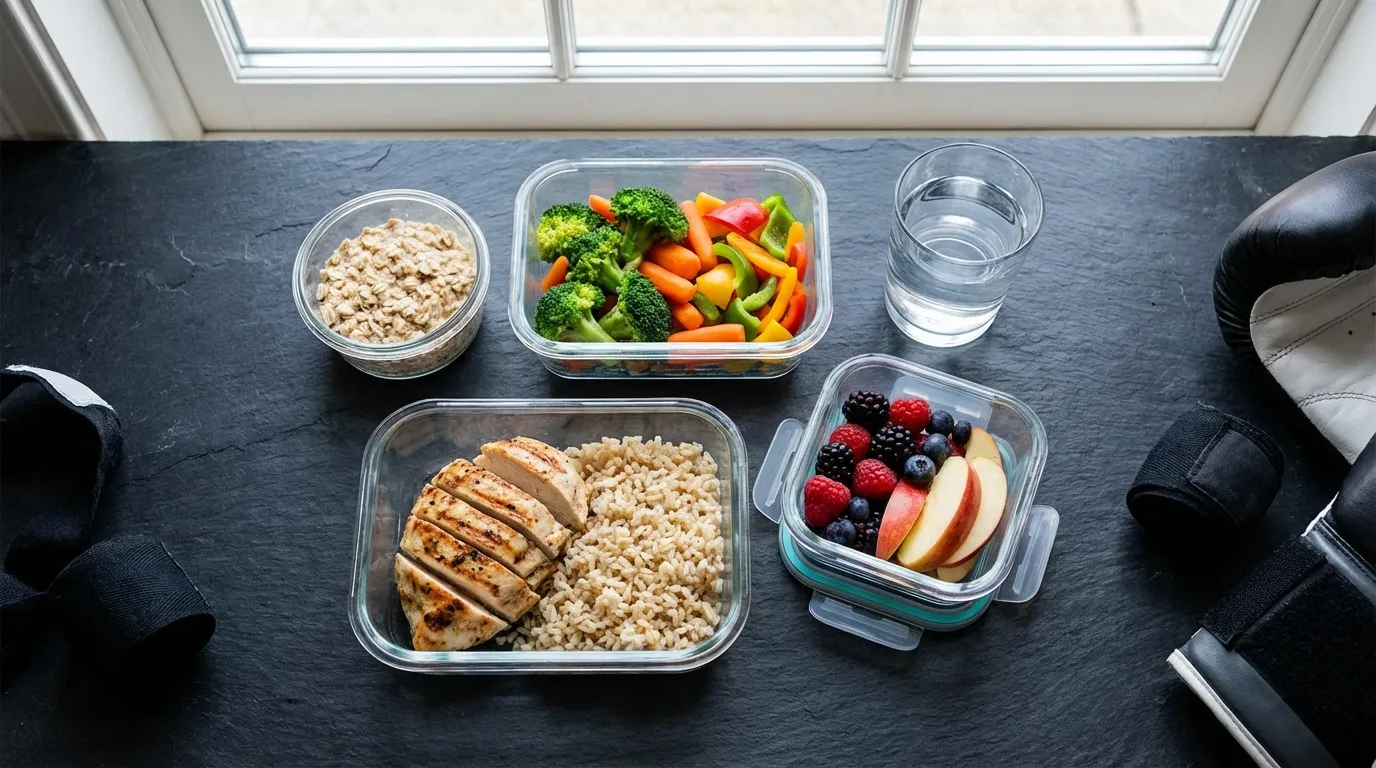
A simple plate with carbohydrate, protein and some fruit or vegetables gives most recreational boxers a sensible starting point. Rice and chicken, eggs on toast with fruit, a jacket potato with tuna, pasta with beans or mince, or yoghurt with fruit and cereal can all do the job. Choose what suits your appetite, budget and the time you get home.
The bigger rule is to plan it before class. If you know you get hungry at 9:30pm, make the decision at 5pm when you are thinking clearly. Buy the ingredients, prepare part of the meal, or put a sensible snack in your bag.
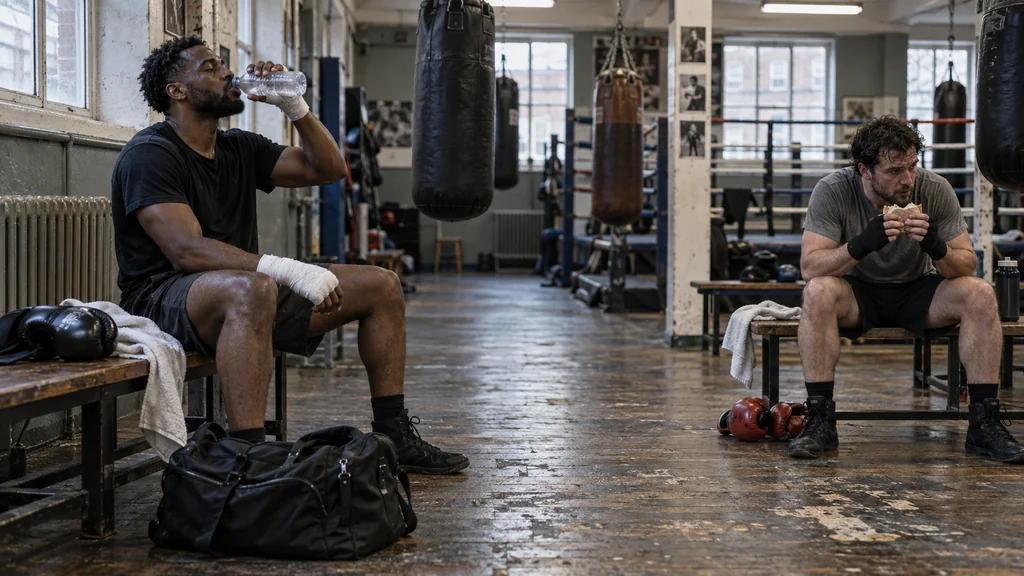
That is not meal prep theatre. It is removing the moment where tiredness chooses for you.
Do not confuse thirst, exhaustion and hunger
After a warm session, several things can arrive together: genuine hunger, thirst, tiredness and the urge to sit down with something salty. They can feel very similar when you are sweaty and tired.
Start by drinking water during and after class, then give yourself ten minutes before deciding you need a huge amount of food. If you have barely eaten all day, eat a proper meal. If you had a good dinner before class and only feel peckish, a smaller snack may be enough.
The mistake is turning every sensation into a verdict. You do not need to become a nutrition detective at the side of the ring. Just notice whether you have eaten and drunk enough, then make the next decision calmly.
If hunger comes with nausea, dizziness, shaking, confusion or feeling unwell, that is a different conversation. Stop training, tell the coach and use our guide to feeling sick during boxing class for the practical warning signs. Do not try to push through symptoms because you think they are ordinary hunger.
Your next class should feel better, not punished
A good boxing routine gives you something you can repeat. That includes eating normally enough that you can train with energy, recover afterwards and return without dreading the session.
At Honour and Glory, our Recreational Adults boxing classes are for people learning the sport alongside ordinary lives, not for people who want to turn every evening into a punishment. If you are in Greenwich or nearby, train, learn the basics and give yourself a sensible meal afterwards.
The aim is not to finish every session starving. It is to build a routine where hard work, food and recovery fit together well enough that you can keep coming back.
H&G Team
Writer at Honour & Glory Boxing Club, a community boxing gym in Kidbrooke, South East London.
KEEP READING

What to Eat Before an Evening Boxing Class
A practical guide to food timing before an evening boxing class, so you arrive ready to move without training on a full stomach.
Post-Workout Nutrition for Boxing
What you eat after boxing determines how well you recover for your next session. Here is how to optimise your post-training nutrition.
Boxing Diet Plan for Beginners
Starting boxing and confused about nutrition? Here is a simple, practical diet plan that will not overwhelm you.
Was this page helpful?
It takes one tap, and it genuinely helps.
Choose your next step
Turn this article into the right action
Some readers are ready to book. Some need the class route first. Pick the route that matches what you actually want.