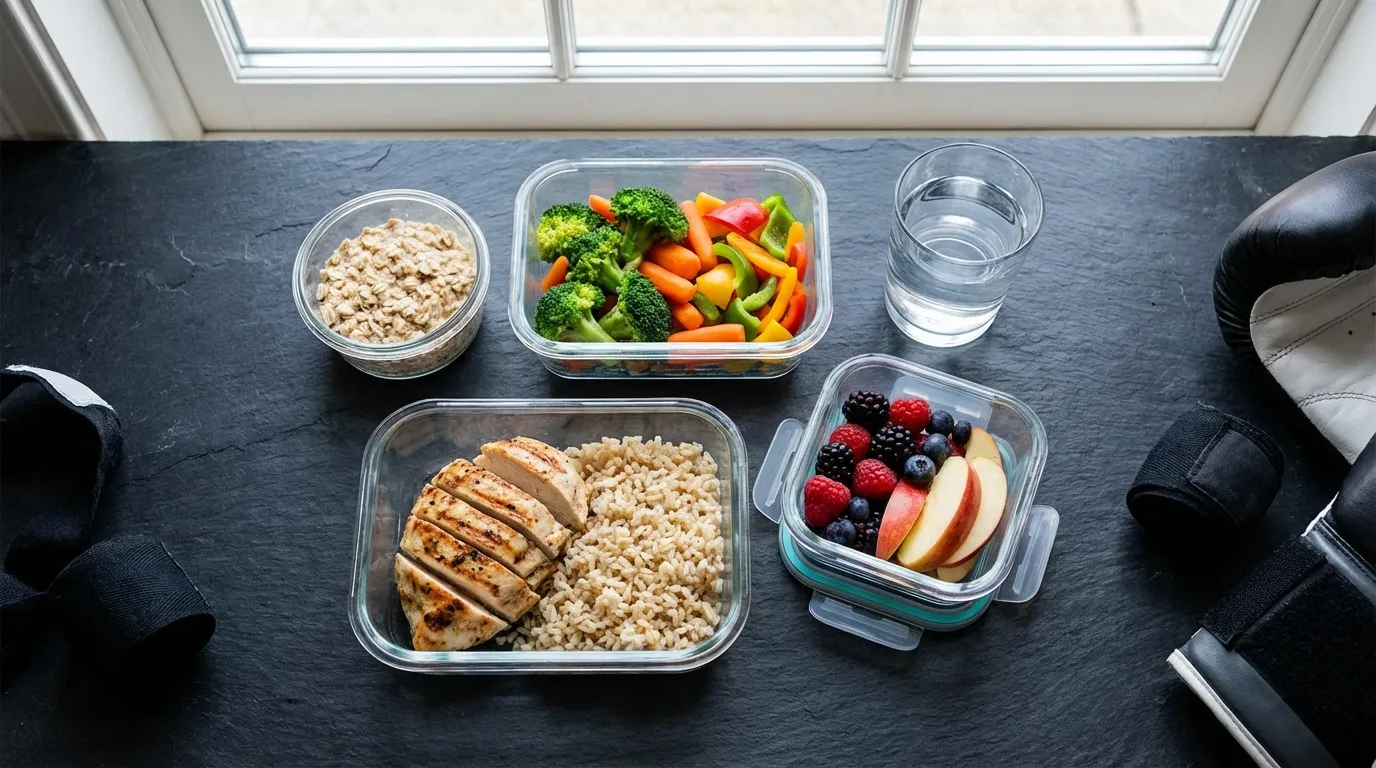
You have started boxing. Maybe you are a few sessions in, maybe you are about to book your first class. Either way, you are probably wondering what you should be eating to support your training.
Good news: the boxing diet plan for beginners does not need to be complicated. Forget meal prep services, expensive supplements, or eating chicken and broccoli six times a day. You need a solid foundation that you can actually stick to.
On a budget, that is easier than it looks. Our cheapest protein for boxers ranking shows you can hit your protein cheaply with milk, eggs and dried pulses, and you can search any food's ranking to build your own list.
The Beginner's Nutrition Priorities
When you are new to boxing, focus on these things in order:
- Eat enough food - Training burns energy. Under-eating kills progress.
- Get adequate protein - Muscles need it to recover from training.
- Time meals around sessions - Do not train hungry or stuffed.
- Stay hydrated - Dehydration tanks your performance.
- Sleep properly - This is where recovery actually happens.
Notice I did not mention supplements, macros, or meal timing windows. That stuff matters eventually. Right now? Just nail the basics.
Your Calorie Targets
As a beginner, you need to eat enough to fuel training without going overboard. Here is a rough starting point:
- Women: 1,600-1,900 calories
- Men: 2,000-2,400 calories
- Women: 1,900-2,300 calories
- Men: 2,400-2,900 calories
- Women: 2,200-2,600 calories
- Men: 2,800-3,400 calories
These are estimates. Track your weight weekly and adjust. Losing too fast? Eat more. Gaining when you do not want to? Eat less.
A Simple One-Week Meal Plan
Here is a practical week of eating. Nothing fancy. Foods you can buy at any supermarket.
Monday
- Breakfast. Scrambled eggs (3) on wholemeal toast with a banana
- Lunch. Chicken salad sandwich on wholemeal bread, apple, yoghurt
- Dinner. Spaghetti bolognese (lean beef mince) with a side salad
- Snacks. Handful of nuts, piece of fruit
Tuesday
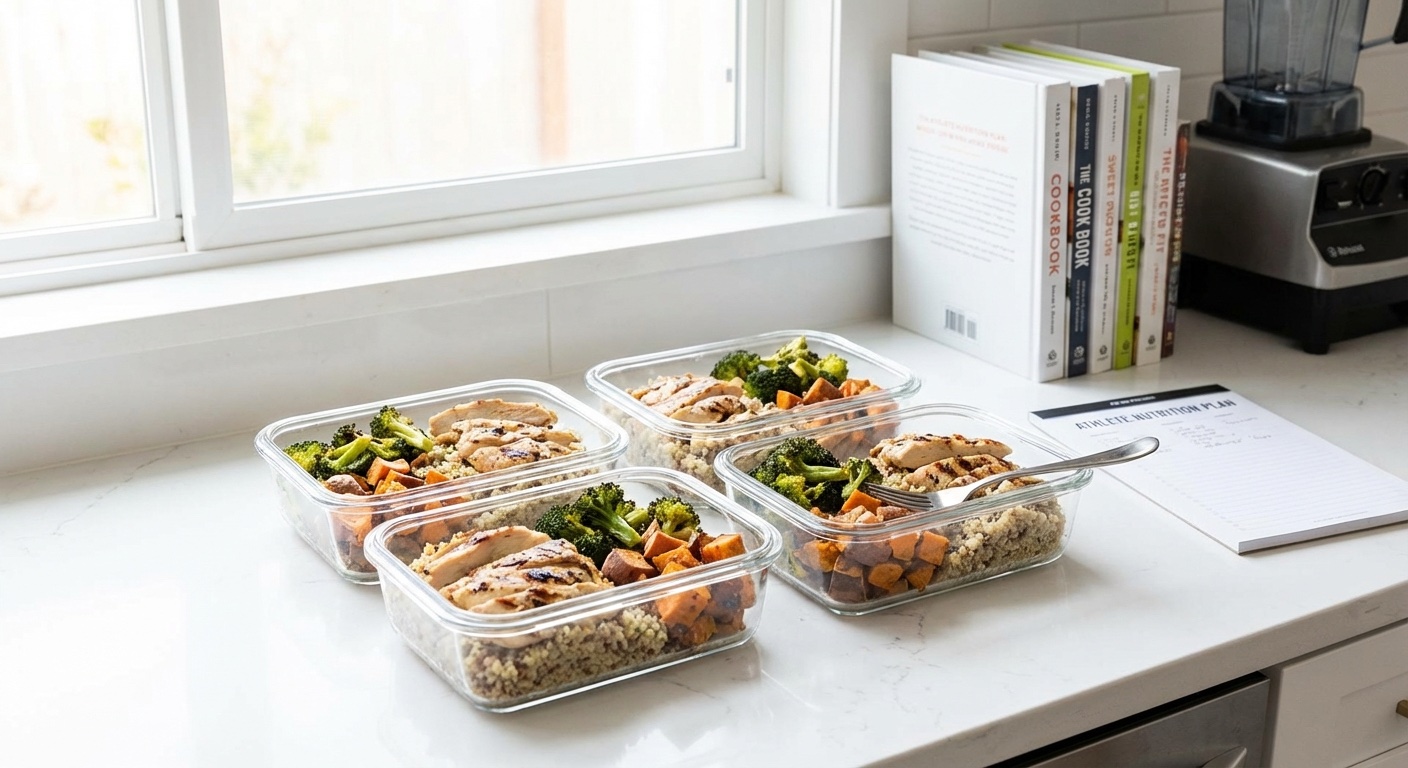
- Breakfast. Porridge with honey, mixed berries, and a splash of milk
- Lunch. Tuna mayo jacket potato with salad
- Dinner. Grilled salmon, new potatoes, green beans
- Snacks. Greek yoghurt, rice cakes with peanut butter
Wednesday
- Breakfast. Greek yoghurt with granola and sliced banana
- Lunch. Leftover salmon and potatoes, or a prawn salad
- Dinner. Chicken stir fry with rice and mixed vegetables
- Snacks. Boiled eggs, apple with nut butter
Thursday
- Breakfast. Scrambled eggs (3) with avocado on toast
- Lunch. Chicken wrap with hummus, lettuce, and peppers
- Dinner. Beef mince chilli with rice and sour cream
- Snacks. Protein bar, orange
Friday
- Breakfast. Overnight oats with berries (prepared night before)
- Lunch. Soup (any variety) with crusty bread and cheese
- Dinner. Fish and chips (oven-baked, not fried) with mushy peas
- Snacks. Cottage cheese with pineapple, handful of almonds
Saturday
- Breakfast. Full English (grilled bacon, eggs, beans, mushrooms, toast - skip the fried stuff)
- Lunch. BLT sandwich on wholemeal, crisps
- Dinner. Roast chicken with roast potatoes and vegetables
- Snacks. Whatever you fancy - it is the weekend
Sunday
- Breakfast. Pancakes with fruit and a drizzle of maple syrup
- Lunch. Leftover roast chicken in a sandwich or salad
- Dinner. Homemade pizza (make your own for better ingredients)
- Snacks. Relax. You have earned it.
What to Eat Before Boxing Training
Timing your pre-training meal matters. Here is the breakdown:
- Chicken, rice, and vegetables
- Pasta with meat sauce
- Jacket potato with tuna
- Sandwich
- Yoghurt with fruit and granola
- Small portion of pasta
- Banana
- Rice cakes
- Small handful of dried fruit
Less than 30 minutes:
Honestly? Just drink water. Eating this close to training often leads to feeling sick during the session.
What to Eat After Boxing Training
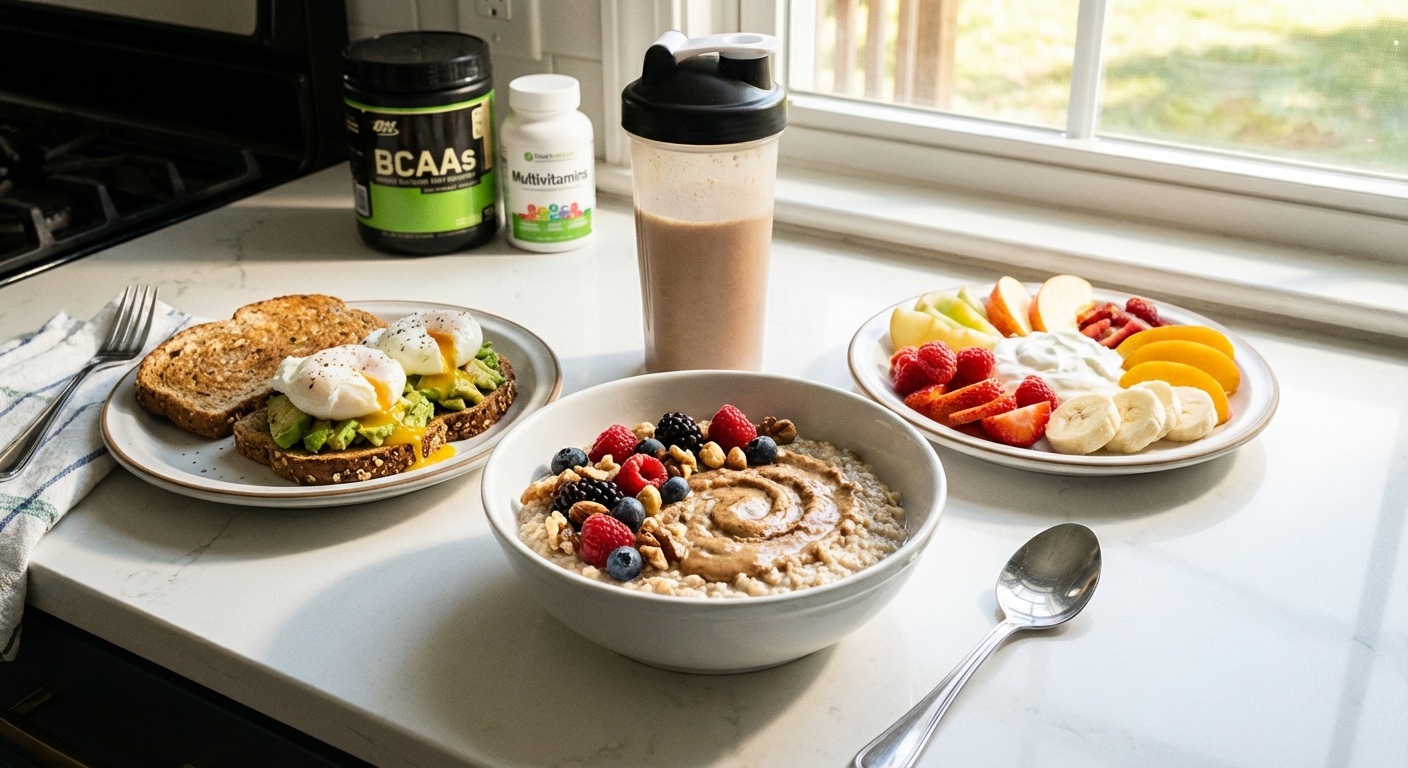
Post-training nutrition helps you recover for the next session.
- Protein shake with a banana
- Chocolate milk (surprisingly effective)
- Yoghurt with granola
- Any balanced dinner with protein, carbs, and vegetables
- Do not overthink it - just eat real food
The "30-minute anabolic window" is somewhat overstated. But eating soon after training does help with recovery, especially if you are training frequently.
Hydration for Beginners
Boxing makes you sweat. A lot. Dehydration causes:
- Reduced power and speed
- Worse coordination
- Faster fatigue
- Headaches and dizziness
- Minimum: 2 litres
- Training days: 2.5-3 litres
- Hot weather or double sessions: 3-4 litres
How to check hydration:
Look at your urine. Pale yellow = good. Dark yellow = drink more.
During training:
Sip water throughout your session. Do not wait until you are gasping for a drink.
Supplements for Beginners (Keep It Simple)
The supplement industry wants your money. Most products are unnecessary.
- Whey protein - Convenient if you struggle to hit protein targets from food
- Vitamin D - Most people in the UK are deficient, especially in winter
- Creatine - Well-researched, helps with power output (5g daily)
- Pre-workout (just have a coffee)
- BCAAs (if you eat enough protein, you do not need them)
- Fat burners (waste of money)
- Mass gainers (just eat more food)
Get your diet right first. Supplements are the final 5%, not the foundation (source).
Common Beginner Mistakes
Not eating enough
Boxing burns serious calories. If you are tired all the time and not recovering between sessions, you are probably under-eating.
Skipping meals before training
Some people train fasted to "burn more fat." In practice, they just perform worse and feel rubbish. Eat before you train.
Focusing on restriction instead of quality
Do not think "what can I cut out?" Think "what good stuff can I add?" More protein, more vegetables, more water.
Weekend blowouts
Eating well Monday to Friday then demolishing a takeaway and ten pints every weekend will undo your progress. Balance, not perfection.
Overcomplicating things
You do not need perfect macros, meal timing, or organic everything. Eat real food, eat enough protein, drink water, sleep well. That is 90% of it (source).
Making It Stick
The best diet plan is one you will actually follow. Here are some practical tips:
Meal prep basics
Cook extra dinner and take leftovers for lunch. You do not need matching containers and Instagram photos. Just have food ready.
Stock your kitchen
Keep eggs, bread, chicken, rice, frozen vegetables, and bananas always available. These form the base of most good meals.
Do not ban foods
Complete restriction leads to bingeing. Have a treat occasionally. Just do not make it the norm.
Track for awareness
Use MyFitnessPal for a couple of weeks to learn what is in the foods you eat. You do not need to track forever, but the education helps.
Ready to start your boxing journey with proper nutrition behind you? Book a free trial at Honour & Glory and see what training feels like when you are properly fuelled.
Frequently Asked Questions
How much protein do beginner boxers need?
Aim for 1.6-2g of protein per kg of bodyweight. For a 70kg person, that is 112-140g daily. Focus on having a protein source at every meal.
Should I eat before morning boxing training?
Yes, at least something small. A banana or a few rice cakes gives you energy without weighing you down. Training completely fasted usually means a worse session.
Can I lose weight while boxing?
Absolutely. Boxing burns significant calories. Combine training with a moderate calorie deficit (300-500 calories below maintenance) and you will see results. Do not crash diet.
Do I need to buy protein powder?
Not necessarily. If you eat enough protein from food (meat, fish, eggs, dairy), supplements are optional. Protein powder is convenient, not essential.
H&G Team
Writer at Honour & Glory Boxing Club, a community boxing gym in Kidbrooke, South East London.
KEEP READING
The Boxing Diet - What Boxers Actually Eat
Forget the Hollywood montages of raw eggs. Here is what boxers really eat to fuel training, make weight, and perform at their best.
What Do Professional Boxers Eat?
Ever wondered what professional boxers eat to stay in fighting shape? Here is a detailed look at the diets behind elite fighters.
If You Could Only Eat 5 Foods for Life
The five-food answer first, then the boxing nutrition stress test: what one, ten and twenty-five foods fix or still leave missing.
Was this page helpful?
It takes one tap, and it genuinely helps.
Choose your next step
Turn this article into the right action
Some readers are ready to book. Some need the class route first. Pick the route that matches what you actually want.