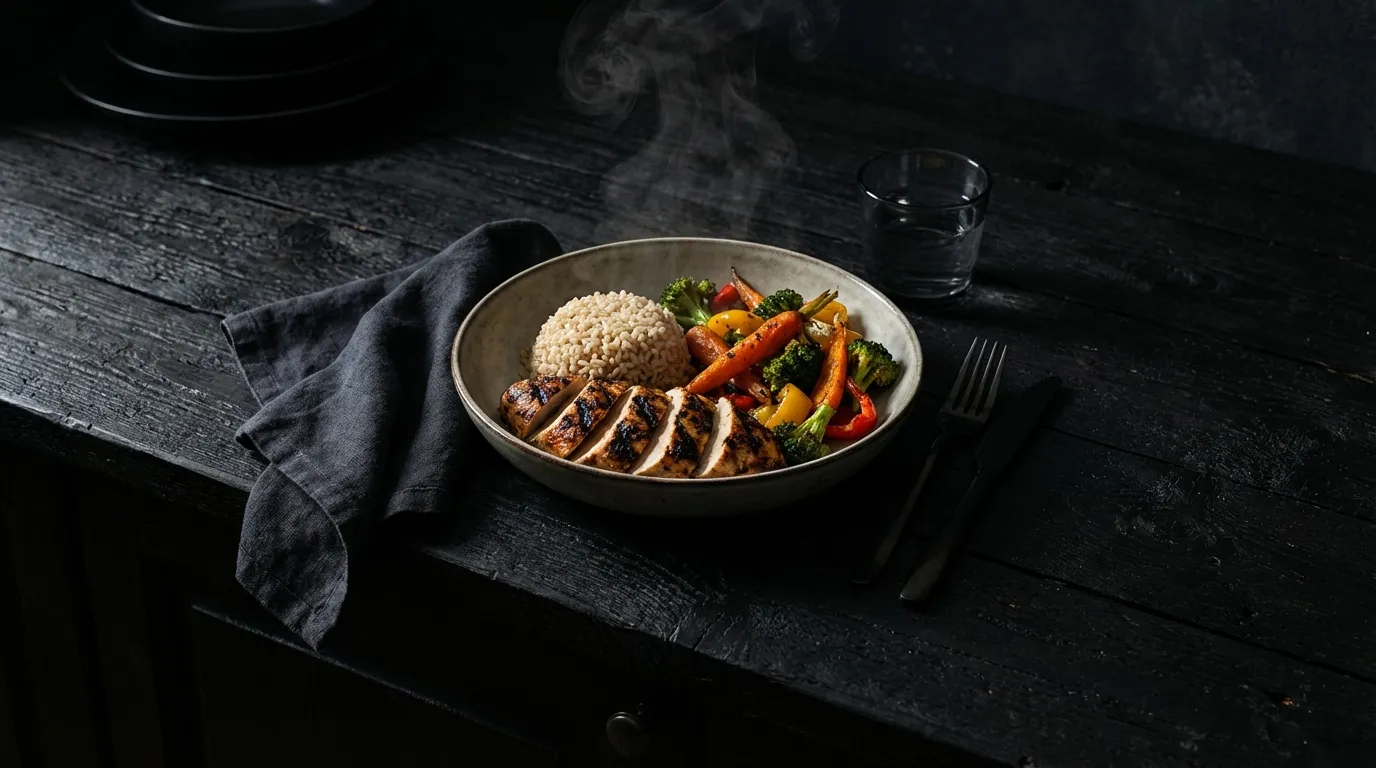
You have just finished a hard boxing session. You are sweating, breathing heavy, and your muscles are tired. What you eat in the next few hours matters more than you might think.
Post-workout nutrition is not about some magical "anabolic window" that closes after 30 minutes. But eating the right foods after training really accelerates recovery, reduces muscle soreness, and prepares you for your next session.
Protein leads recovery, so it helps to know which foods deliver the most. See our highest-protein-per-calorie ranking and the best-value protein for everyday recovery meals.
What Happens After Training
When you finish boxing, your body is in recovery mode:
Glycogen is depleted
Your muscles have burned through their stored carbohydrates. They need replenishing, especially if you are training again within 24 hours.
Muscle fibres are damaged
Training causes microscopic tears in muscle tissue. This is normal and how you get stronger. But repair requires protein.
You are dehydrated
Even in a cool gym, boxing makes you sweat heavily. Lost fluids and electrolytes need replacing.
Inflammation is elevated
The stress of training triggers an inflammatory response. This is part of adaptation, but excessive inflammation slows recovery.
Post-workout nutrition addresses all four of these. Supplements can help at the margins, but food does most of the work. If you want a sensible supplement hierarchy, read our guide to legal recovery supplements for boxing.
The Two-Phase Approach
Think of post-workout nutrition in two phases:
Phase 1: Immediate (Within 30-60 minutes)
This is the quick recovery window. Your muscles are primed to absorb nutrients.
- Start glycogen replenishment
- Begin muscle repair
- Rehydrate
- 20-40g protein
- 30-60g carbohydrates
- 500ml+ water
- Protein shake with banana
- Chocolate milk (really effective)
- Greek yoghurt with fruit
- Chicken sandwich (if you are near food)
- Recovery shake
This does not need to be a full meal. It is a bridge to get nutrients in quickly while you shower and get home.
Phase 2: Full Meal (Within 2-3 hours)
This is where real recovery happens. A proper meal that completes the refuelling process.
- Complete glycogen restoration
- Provide sustained protein for ongoing repair
- Restore vitamins and minerals
- Support sleep and recovery
- 30-50g protein
- 50-100g carbohydrates
- Moderate healthy fats
- Vegetables for micronutrients
- Grilled salmon with rice and vegetables
- Chicken breast with sweet potato and greens
- Lean beef stir fry with noodles
- Pasta with meat sauce and salad
Protein: The Recovery Essential
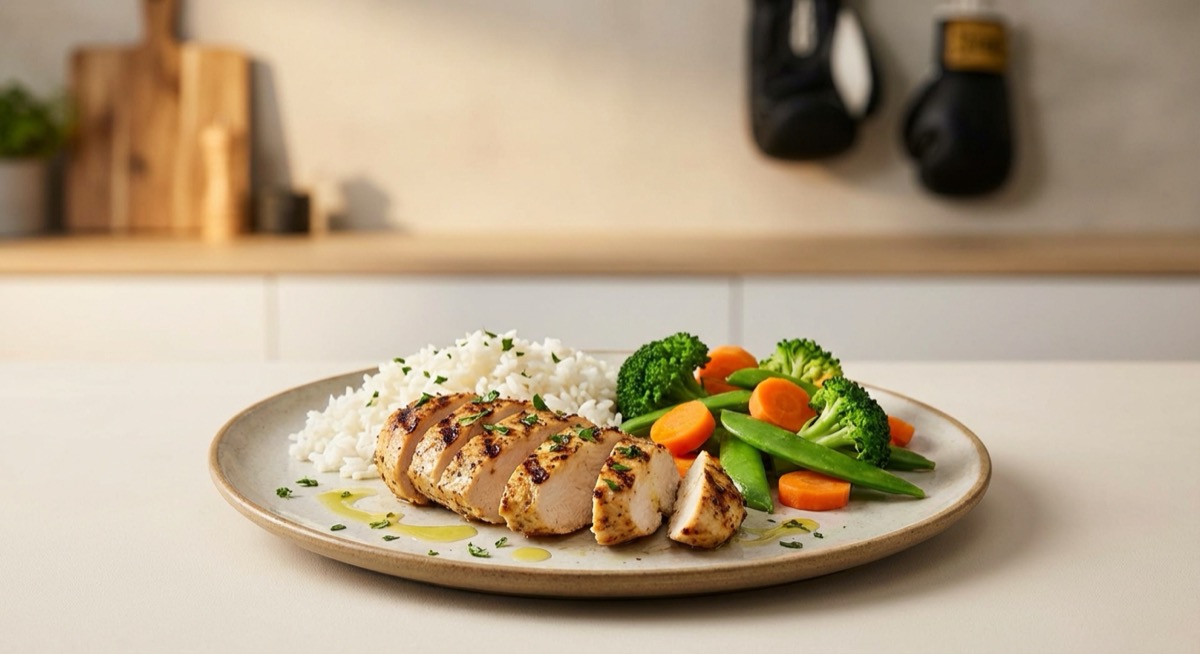
Protein provides the amino acids needed to repair and build muscle. Without adequate protein, recovery is compromised.
- 0.3-0.5g per kg bodyweight per meal
- For a 75kg person: 22-37g protein post-training
Best protein sources for recovery:
- Whey protein powder (20-25g per scoop)
- Egg whites (3.6g per egg white)
- Skimmed milk (8g per 250ml)
- Greek yoghurt (10g per 100g)
- Chicken breast (31g per 100g)
- Salmon (20g per 100g)
- Lean beef (26g per 100g)
- Eggs (6g per whole egg)
- Turkey (29g per 100g)
- Tuna (25g per 100g)
If you want to think more deeply about food choice rather than timing, see our whole-food breakdown of what a boxer gains and loses if they could only eat 5 foods for life.
Carbohydrates: Refuelling the Tank
Carbs restore glycogen - your primary fuel for boxing. Training depletes these stores significantly.
- 0.5-1g per kg bodyweight
- Higher end if training again within 24 hours
- For a 75kg person: 37-75g carbs post-training
Best carb sources for recovery:
- White rice (28g carbs per 100g cooked)
- White bread (49g per 100g)
- Bananas (23g per medium banana)
- Fruit juice (12g per 100ml)
- Rice cakes (7g per cake)
- Sweet potato (20g per 100g)
- Brown rice (23g per 100g cooked)
- Oats (66g per 100g dry)
- Wholemeal pasta (25g per 100g cooked)
- Quinoa (21g per 100g cooked)
Rehydration: Replacing What You Lost
Boxing causes significant fluid loss through sweat. A typical session might cost you 0.5-1.5 litres of sweat, possibly more in hot conditions.
- 150% of weight lost during training (source).
- If you lost 1kg, drink 1.5 litres
- Spread over 2-4 hours (do not chug it all at once)
- Water (the default choice)
- Milk (protein, carbs, and electrolytes)
- Coconut water (natural electrolytes)
- Sports drinks (if training was very long or intense)
- Electrolyte tablets in water
- Pale yellow urine
- Normal energy levels
- No headache or dizziness
- Not excessively thirsty
Skip alcohol post-training. It impairs protein synthesis, disrupts sleep, and dehydrates you further.
Recovery Meal Examples
Here are complete post-training meals with macros:
Quick and Easy
- Chicken breast (200g) - 62g protein
- White rice (200g cooked) - 56g carbs
- Steamed vegetables - vitamins and fibre
- Drizzle of olive oil - healthy fats
Total: 62g protein, 60g carbs, 500-600 calories
- Salmon fillet (150g) - 30g protein
- Pasta (200g cooked) - 50g carbs
- Cherry tomatoes and spinach - micronutrients
- Parmesan cheese - extra protein and fats
Total: 40g protein, 55g carbs, 550-650 calories
Grab and Go

- Protein shake (1 scoop in water) - 25g protein
- Banana - 27g carbs
- Handful of almonds - healthy fats
- 500ml water
Total: 30g protein, 35g carbs, 400 calories
- Rotisserie chicken (quarter) - 35g protein
- Pre-made rice pot - 50g carbs
- Pre-cut fruit pot - vitamins
- Bottle of water
Total: 40g protein, 60g carbs, 500-600 calories
Breakfast After Morning Training
- Scrambled eggs (3) - 18g protein
- Wholemeal toast (2 slices) - 30g carbs
- Avocado (half) - healthy fats
- Orange juice - vitamin C and carbs
- Greek yoghurt - extra protein
Total: 35g protein, 55g carbs, 600-700 calories
Post-Evening Session
- Steak (200g sirloin) - 52g protein
- Sweet potato (medium) - 26g carbs
- Green vegetables - micronutrients
- Small salad with olive oil
Total: 55g protein, 35g carbs, 600-700 calories
Foods That Enhance Recovery
Beyond basic macros, certain foods support recovery through specific nutrients:
- Fatty fish (salmon, mackerel) - omega-3s
- Berries (blueberries, cherries) - antioxidants
- Leafy greens (spinach, kale) - vitamins
- Turmeric - curcumin
- Ginger - reduces muscle soreness
- Turkey - tryptophan
- Tart cherry juice - natural melatonin
- Almonds - magnesium
- Kiwi - serotonin (source).
- Eggs - complete amino acid profile
- Cottage cheese - casein protein (slow release)
- Milk - protein, carbs, and calcium
- Greek yoghurt - protein and probiotics
Common Post-Workout Mistakes
Skipping food entirely
"I will eat when I get home" turns into not eating for hours. Your recovery suffers. Have something within 60 minutes.
Only having protein
Protein alone is not enough. You need carbs to restore glycogen and support protein uptake. Both together work better than either alone.
Eating junk food
"I trained hard, I earned this pizza" is fine occasionally. But junk food is poor quality fuel for recovery. It works, but whole foods work better.
Not drinking enough
People focus on food and forget fluids. You need both. Dehydration impairs every aspect of recovery.
Having alcohol
A pint after training feels social and rewarding. But alcohol impairs muscle protein synthesis by up to 37%, disrupts sleep quality, and dehydrates you.
Overdoing supplements
Recovery does not require ten different powders. Protein, maybe creatine, maybe omega-3s. Beyond that, spend your money on real food.
Supplements for Recovery
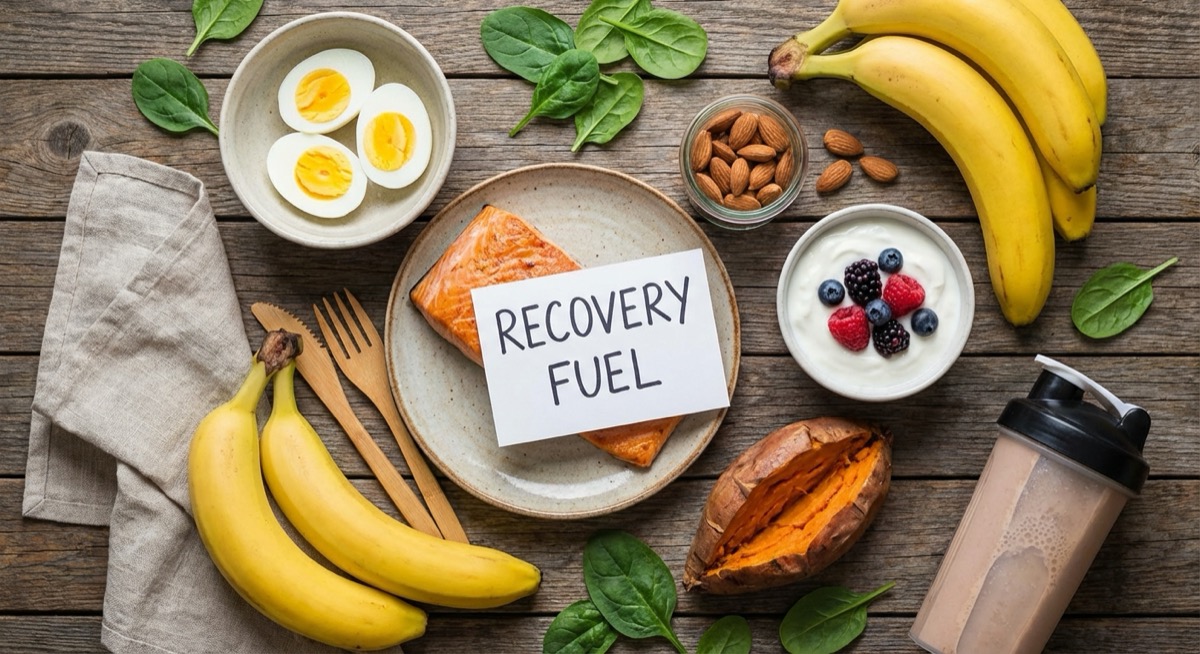
A few supplements have genuine evidence for recovery benefits:
Whey protein
Convenient, fast-absorbing, well-researched. 20-30g post-training helps hit protein targets.
Creatine
5g daily (any time, not specifically post-workout) supports power output and recovery. Well-researched and safe.
Omega-3 fish oils
2-3g daily reduces inflammation and supports recovery. Especially useful if you do not eat fatty fish regularly.
Vitamin D
Most people in the UK are deficient. Supports immune function and muscle repair. 1000-2000 IU daily, especially in winter.
Magnesium
Supports muscle function and sleep. 300-400mg in the evening helps recovery and rest.
Everything else? Probably not worth your money. BCAAs, for example, are pointless if you are eating adequate protein.
Timing Around Life
Real life does not always allow perfect meal timing. Here is how to adapt:
- Have a protein shake immediately after
- Eat proper breakfast at the office
- Pack it the night before so it is ready
- Eat a substantial breakfast
- Have a shake and snack post-training
- Eat a bigger dinner to compensate
- Have dinner waiting at home (meal prep helps)
- Or eat a recovery meal on the way home
- Do not skip dinner because it is late
- Have a lighter recovery meal
- Something with casein (cottage cheese, milk) helps overnight recovery
- Do not go to bed immediately after eating heavily
Building a Recovery Routine
Consistency beats perfection. Build habits that work:
- Always have something ready - A protein shake in your bag, a banana, something
- Meal prep on Sundays - Cook chicken, rice, vegetables in batches
- Keep your kitchen stocked - Eggs, bread, yoghurt, fruit should always be available
- Track your recovery - Note how you feel in subsequent sessions based on what you ate
The difference between mediocre and excellent recovery is often just preparation.
Want to maximise your training with proper recovery nutrition? Book a free trial at Honour & Glory and see how much better you can feel between sessions.
Frequently Asked Questions
How soon after boxing should I eat?
Have something within 30-60 minutes (shake, fruit, small snack), then a full meal within 2-3 hours. This is not an exact science - just do not leave it hours.
What is the best post-workout meal for boxing?
Chicken or fish with rice and vegetables is a classic for good reason. 30-50g protein, 50-100g carbs, some vegetables. Simple and effective.
Is chocolate milk good for recovery?
Yes, surprisingly. It has a good ratio of protein to carbs, plus fluids and electrolytes. Not as good as a proper meal, but excellent for immediate post-training.
Do I need a protein shake after boxing?
Not necessarily. They are convenient, not magical. If you can eat whole food within 60 minutes, that works just as well. Shakes are useful when real food is not practical.
H&G Team
Writer at Honour & Glory Boxing Club, a community boxing gym in Kidbrooke, South East London.
KEEP READING
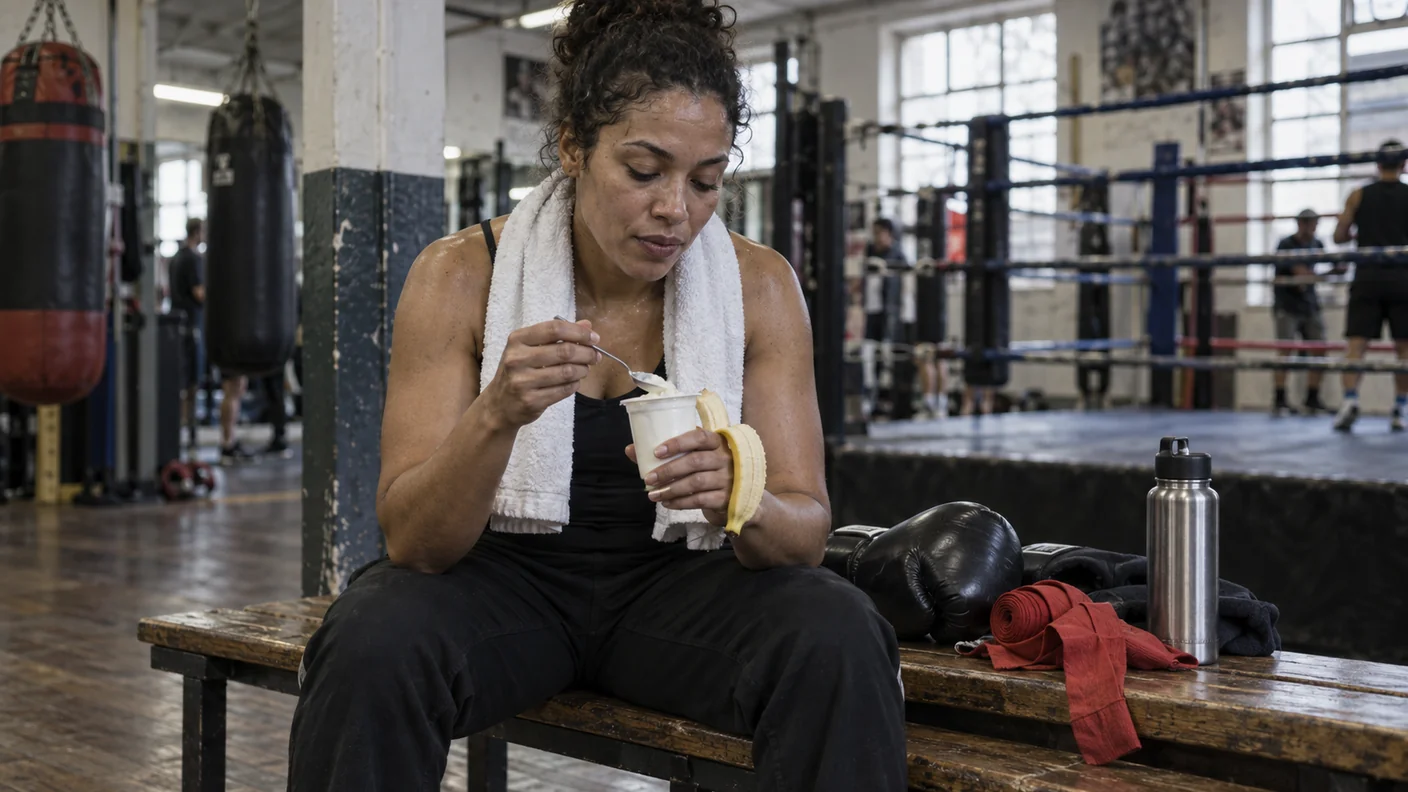
Why Boxing Makes You Hungry Later
A hard boxing class can leave you hungry later in the evening. Learn why it happens and how to plan without overeating.
What to Eat Before Boxing Training
What you eat before boxing training directly affects your performance. Here is exactly what to eat and when for your best sessions.
If You Could Only Eat 5 Foods for Life
The five-food answer first, then the boxing nutrition stress test: what one, ten and twenty-five foods fix or still leave missing.
Was this page helpful?
It takes one tap, and it genuinely helps.
Choose your next step
Turn this article into the right action
Some readers are ready to book. Some need the class route first. Pick the route that matches what you actually want.