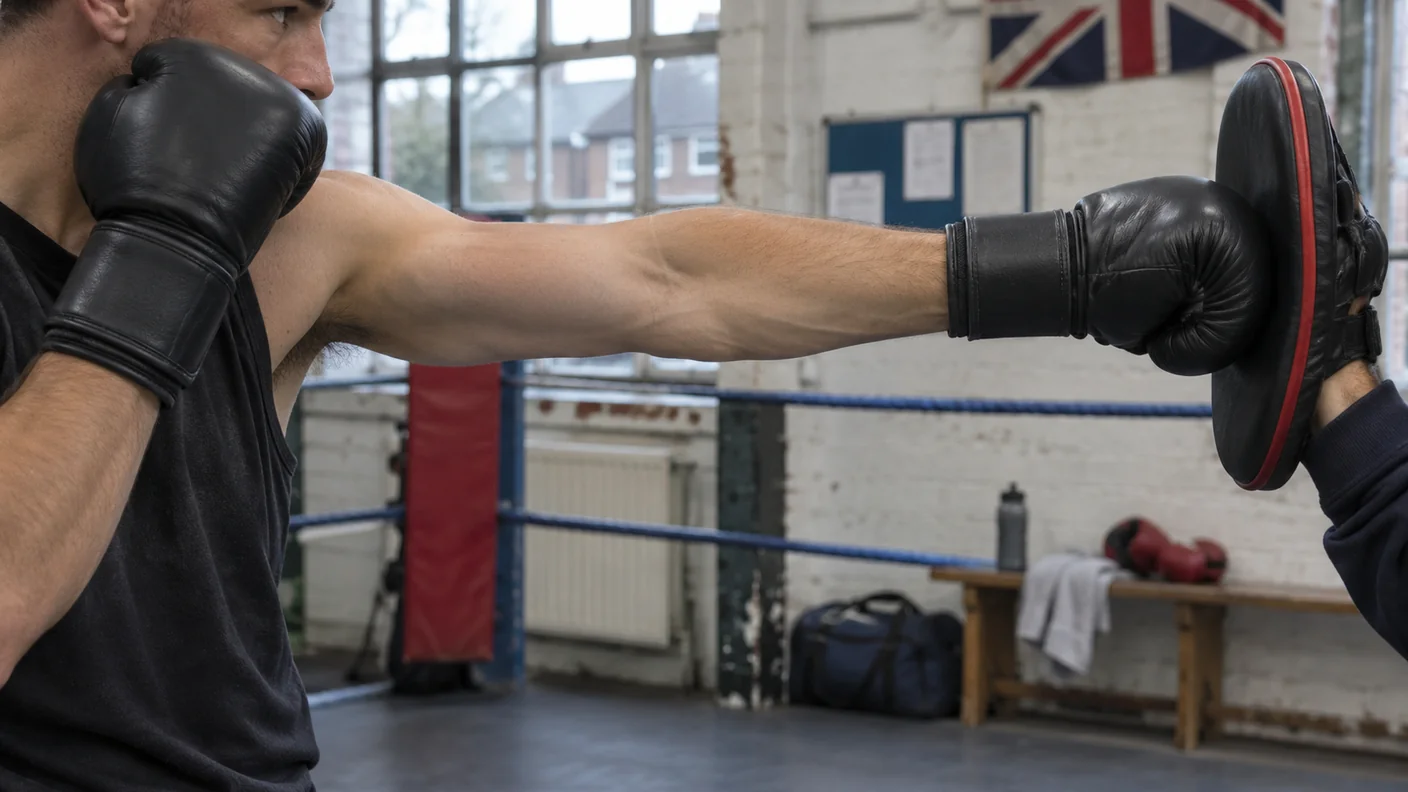
A straight punch should feel as though your forearm is travelling into the glove, not stopping at a loose wrist before it reaches the target.
A bag still makes a satisfying noise when the hand lands at an awkward angle. Pads can hide it too, particularly when the pace is fast. The issue only becomes obvious when the wrist feels unstable, the fist turns late, or the punch returns with the elbow flaring away from its own line.
The useful aim is not to freeze the joint rigidly. It is to keep the wrist supported and broadly in line with the forearm as the glove reaches the target, then return the hand to guard before the arm starts wandering.
Watch the short demonstration below before trying the drill.
The glove should not arrive alone
A clean straight punch begins from a settled stance. The fist, wrist, elbow and shoulder have a route to the target, with the shoulder helping protect the chin and the other hand staying available.
When the fist turns over too early, the elbow often drifts sideways. When the wrist bends away from the line of the forearm, the glove can feel as if it is arriving separately from the rest of the arm. Neither fault is fixed by gripping the glove tighter. They are usually signs that the punch has been rushed or pushed from the arm.
Start by thinking about the forearm. On a jab, the lead forearm travels towards the target without a big wind-up. On a cross, the rear hip and shoulder help the arm travel through the same clean lane. In both cases, the glove should meet the target as the end of a connected movement, not as something flicked at it.
England Boxing's coaching handbook puts balance, guard and controlled technical progression at the base of good boxing. That is the right order here. A wrist position is only useful if the feet, shoulder and guard have left the hand a stable job to do.
Turn the fist as the punch reaches its line
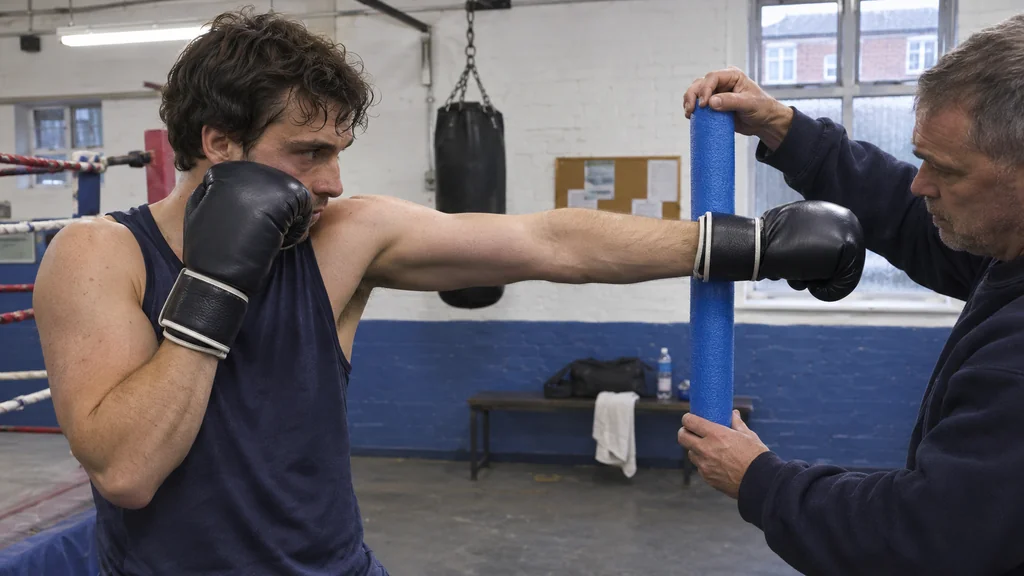
Most straight punches finish with the knuckles facing forwards or slightly downwards. The exact glove angle changes with range, target height and the boxer, so do not chase a single photograph-perfect position.
What matters more is the relationship between the fist and forearm. The hand should not be hanging below the forearm, folding sharply sideways or trying to find its line after the elbow has already opened. If you need to twist hard at the very end of every punch, slow down and check whether the elbow is travelling straight.
The technical review of boxing performance describes punch mechanics as coordinated work through the lower body, trunk and upper body. That is why the wrist cannot be coached well in isolation. A poor stance or a reaching head will spoil the final line before the glove arrives.
Our guide to punching without dropping your guard is a useful companion. Wrist alignment is not a separate trick. It belongs to the same sequence: punch with shape, return with shape, then make the next decision.
Use the elbow to check the route
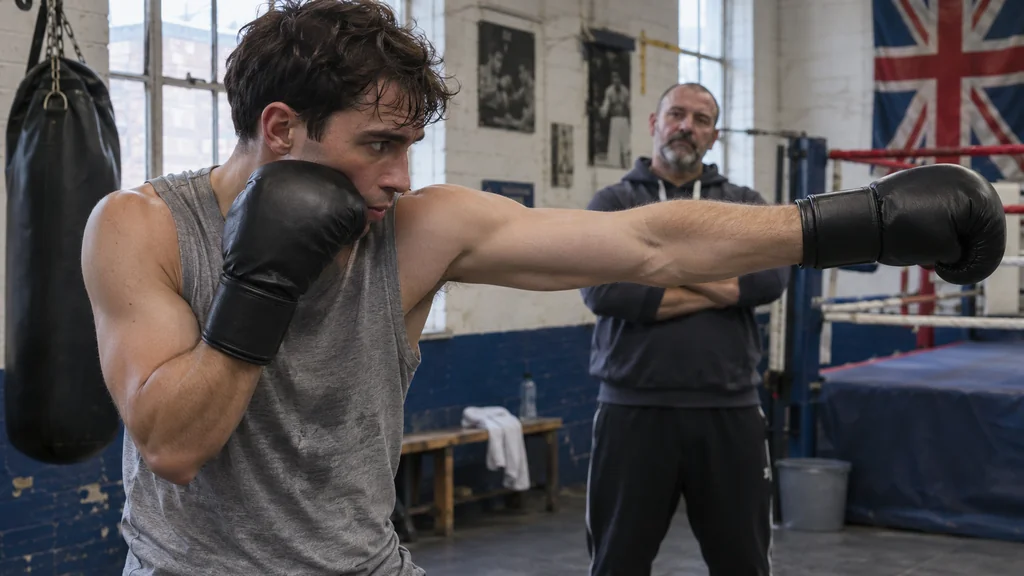
The elbow is an honest guide. On a straight punch, it should broadly follow the route of the fist rather than lifting far out to the side.
An elbow that flares early often makes the glove travel in a curve. The fist may still touch the target, but the punch takes longer, the shoulder loses its cover and the wrist has to work harder to correct the final position. This is a common reason a jab looks more like a push than a quick straight touch.
Try one quiet round on a bag or with a coach-held mitt. Throw single jabs at about half pace. After every fifth jab, freeze at the end for one second. Check four things:
- Is the shoulder close enough to cover the chin naturally?
- Has the rear hand stayed near the cheek?
- Is the elbow broadly behind the glove rather than pointing away?
- Can the glove return straight to guard without a loop?
If the answer to any of those questions is no, do not add power. Make the punch shorter and slower until the return feels uncomplicated.
Build the line before you hit hard
A useful three-round drill gives each part of the punch one clear job. Use a coach and focus mitts if possible. A bag works for the first two rounds, but pads make it easier to see whether the line changes as the target moves.
Round one: shadowbox and freeze
Work from a normal stance. Throw one relaxed jab, freeze just before full extension and check the forearm, glove and shoulder line. Bring the hand home, take one small step and repeat.
There is no need to watch your hand during every rep. Look forward, feel the movement, then use the mirror or coach for a quick check between repetitions. If you look at your glove as it travels, you may drop your gaze and lose the rest of your shape.
Round two: one jab to a mitt
A coach holds a single mitt at honest jab range. Throw one measured jab, land it cleanly, then bring the glove back to guard before the next cue.
The coach should move the mitt only slightly at first. The goal is not a reaction test. It is to see whether the wrist stays supported when the target is not in exactly the same place every time. If the range changes too much, move the feet rather than reaching the arm.
For a wider explanation of this part of the punch, see our guide to keeping the shoulder, glove and chin connected. The two checks work together. One keeps the chin protected, while the other stops the hand becoming the weak link at the end of the line.
Round three: jab, cross, reset
Add a slow jab-cross only after the single jab is tidy. The jab returns to guard, the cross follows from the rear side, and both gloves return before the next combination starts.
Do not chase a heavy cross. After the rear hand lands, ask whether the lead hand is still guarding and whether the body remains balanced enough to step. If the front foot has become stuck or the head has travelled over the lead knee, reduce the speed and range.
The drill is successful when the punches stay connected at the start, through impact and on the return. It is not successful merely because the mitt made a loud sound.
Four mistakes to stop early
The first is bending the wrist to reach a target that is too far away. The fix is a step or a reset, not a longer arm.
The second is turning the fist long before the punch has begun. That often pulls the elbow out and gives the punch an obvious signal. Let the arm travel cleanly, then allow the glove to settle onto the target as part of the extension.
The third is locking every joint. A straight line does not mean a stiff body. Keep the knees, shoulder and arm relaxed enough to punch and recover.
The fourth is treating wraps and gloves as a solution to bad mechanics. Secure gloves and properly fitted wraps matter, but they cannot make a poor line safe. The Boxfit hand-wrapping guide is useful for the equipment side. Use it alongside calm technical work, not instead of it.
Where this fits in training
Use this drill during a warm-up, at the start of a pad round or after a coach has spotted the hand folding at impact. It is not a reason to diagnose an injury or train through pain. If your wrist is sore, swollen, weak or painful after a punch, stop hitting and speak to a qualified clinician before returning to hard bag or pad work.
For adults in Kidbrooke, Greenwich and nearby, our Recreational Adults boxing classes use coached bags, mitts and partner drills to make the small details useful before the pace goes up.
The coaching cue is simple: straight line, calm hand, glove home.
H&G Team
Writer at Honour & Glory Boxing Club, a community boxing gym in Kidbrooke, South East London.
KEEP READING
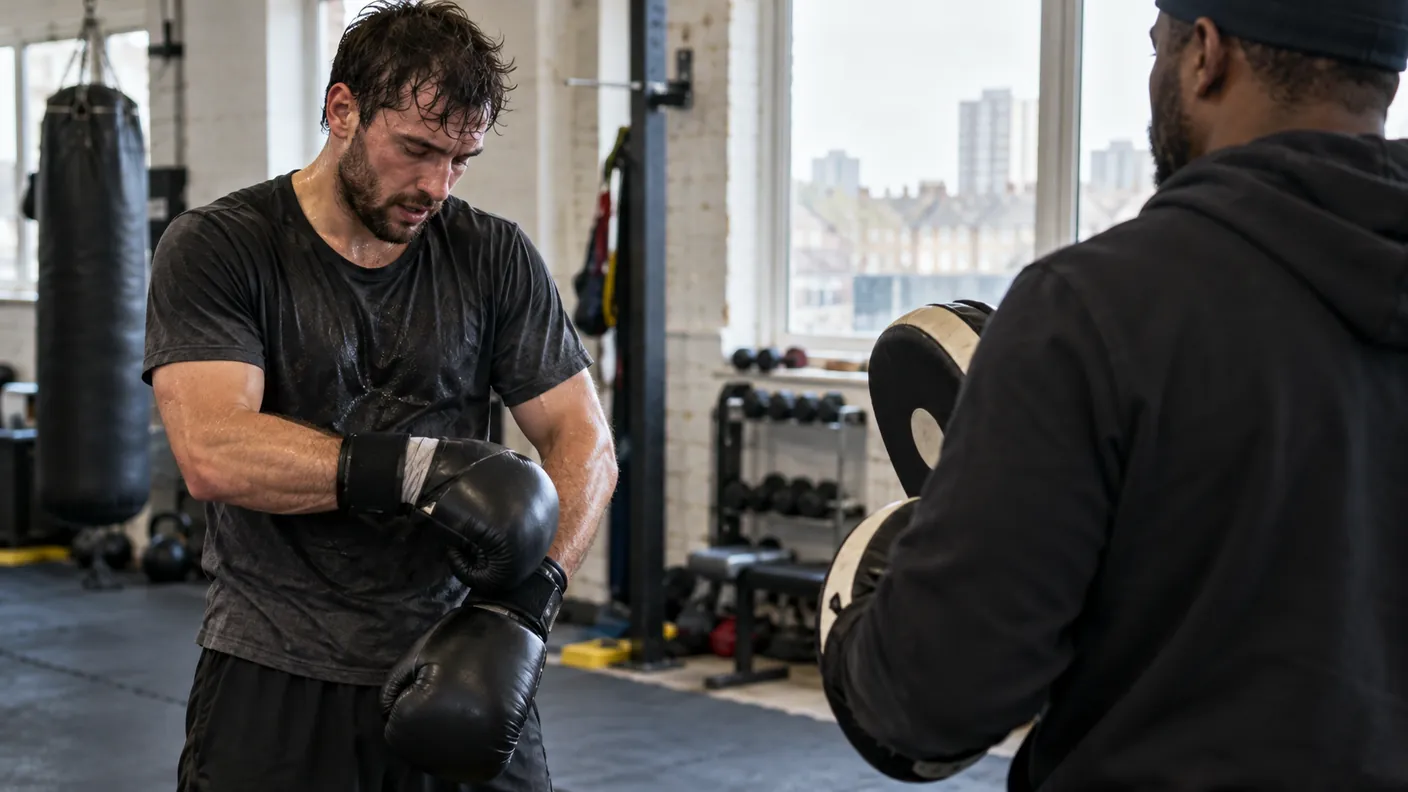
Why Your Forearms Burn in Boxing
Forearms burning before the round ends? Learn what beginners usually do wrong, how to relax the grip, and when pain needs proper advice.
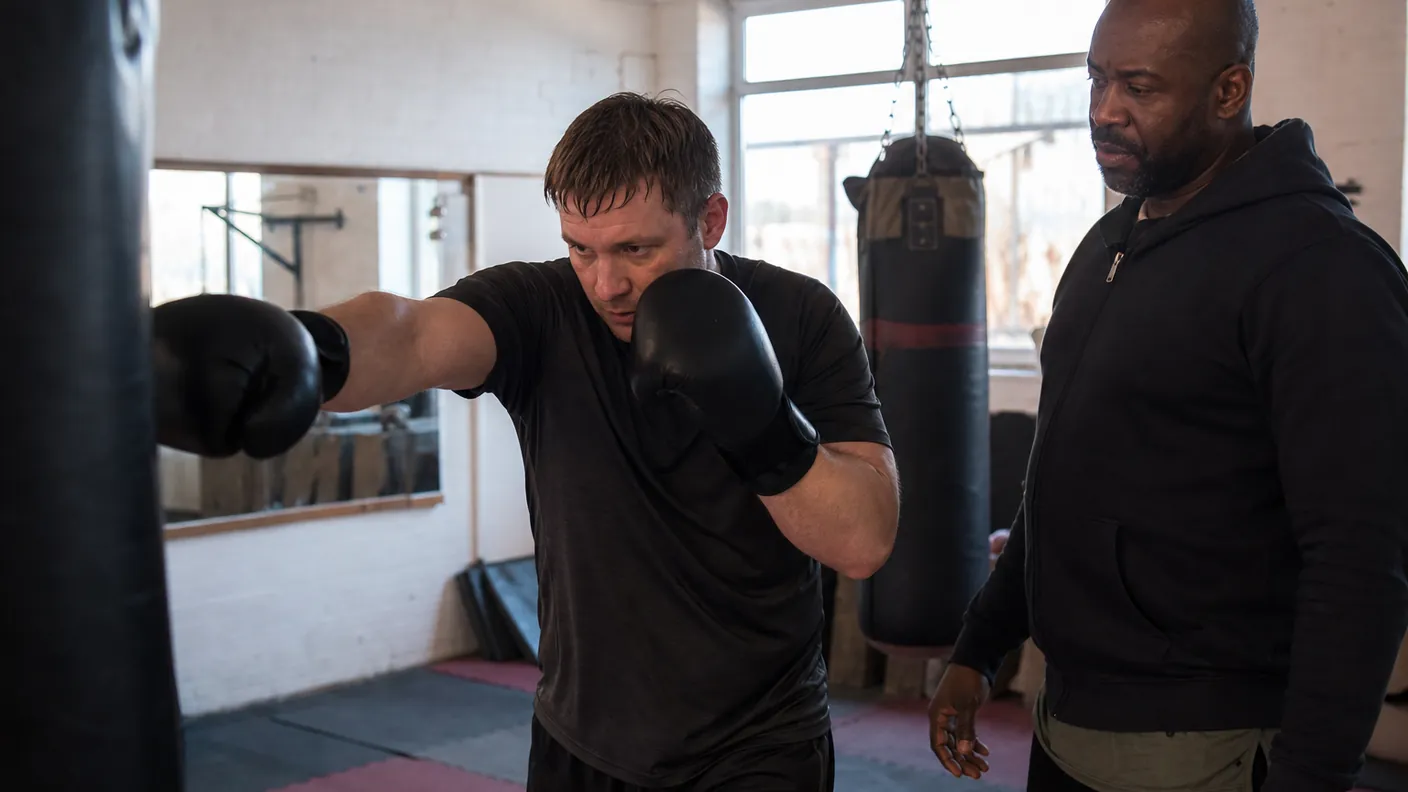
Straight Punch Shoulder Line Drill
A simple straight-punch drill for keeping the shoulder, glove and chin connected instead of reaching with the head.
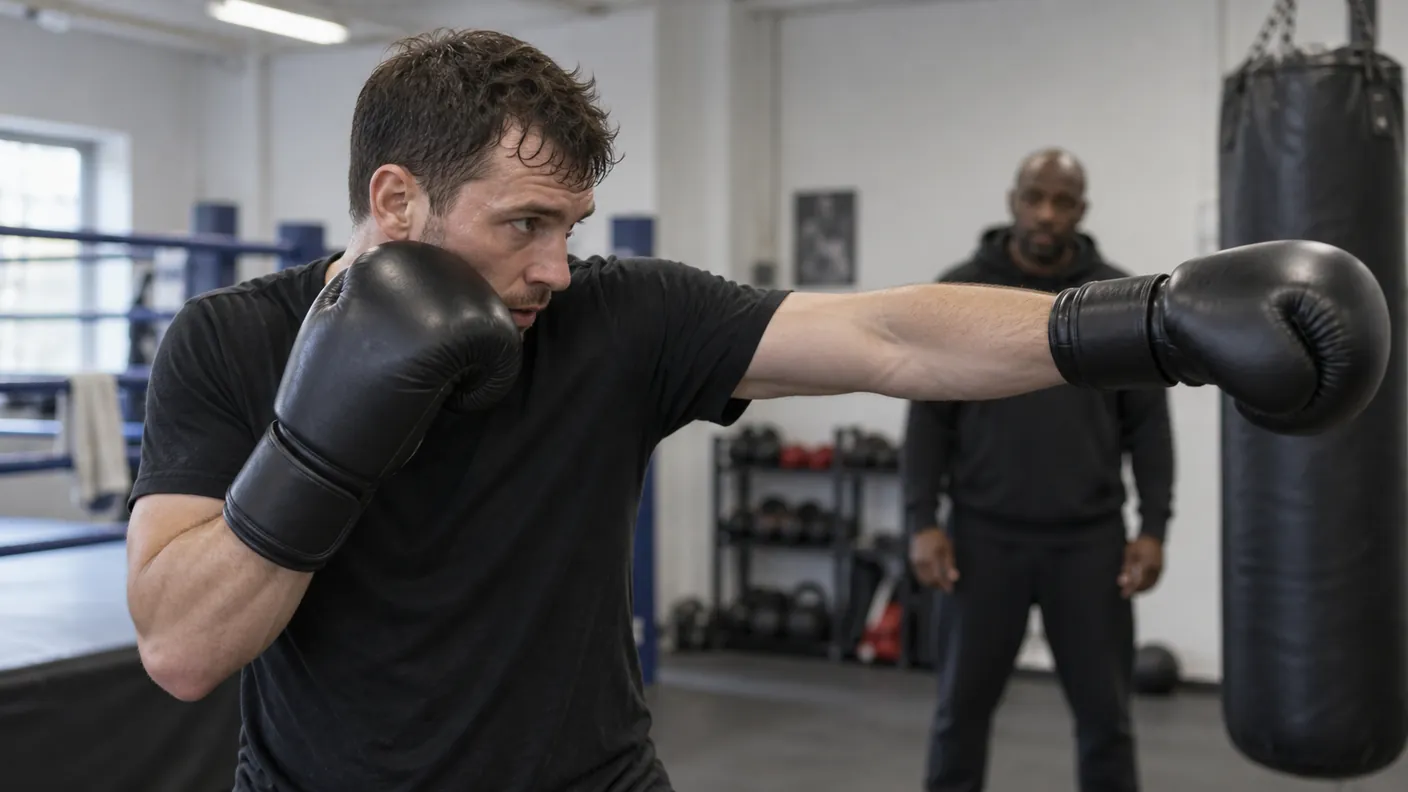
Keep Your Jab Straight: Stop the Elbow Flare
A simple boxing drill to keep your jab on line, protect the rear hand and replace a slow paw with a clean return.
Was this page helpful?
It takes one tap, and it genuinely helps.
Choose your next step
Turn this article into the right action
Some readers are ready to book. Some need the class route first. Pick the route that matches what you actually want.