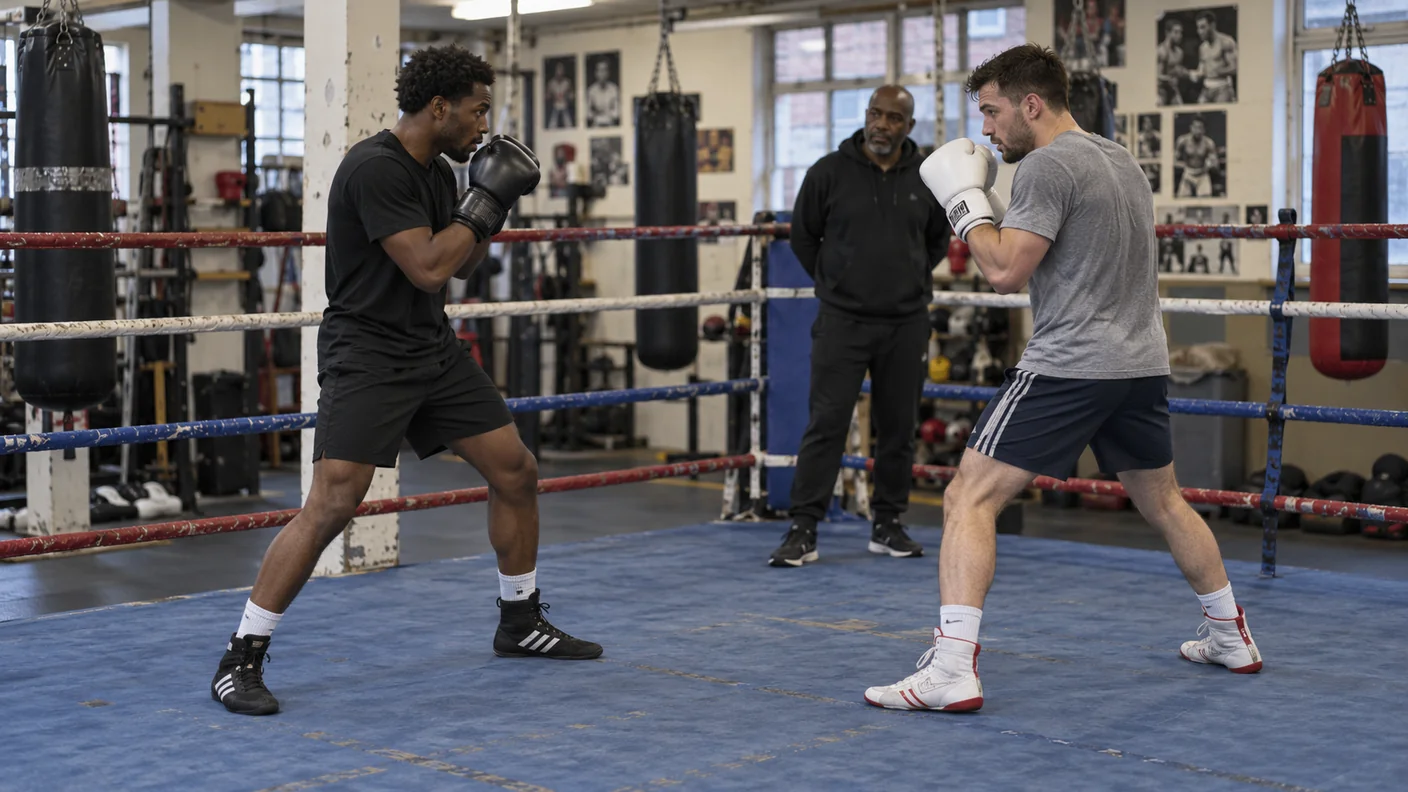
A boxer can be quick and still be easy to read.
The giveaway is usually not one punch. It is the repeated beat before it: step in, jab, reset. Bounce twice, jab, cross. Take a long pause, then rush. Once you have seen the same entry a few times, you can start to anticipate it. That is why a fighter who throws plenty can sometimes feel simpler to deal with than one who throws less.
Reading rhythm does not mean guessing. It means noticing the small habits that appear before a punch or a movement, then staying calm long enough to act on what you have seen. The goal is not to chase the other boxer around the ring. It is to make their familiar pattern less comfortable.
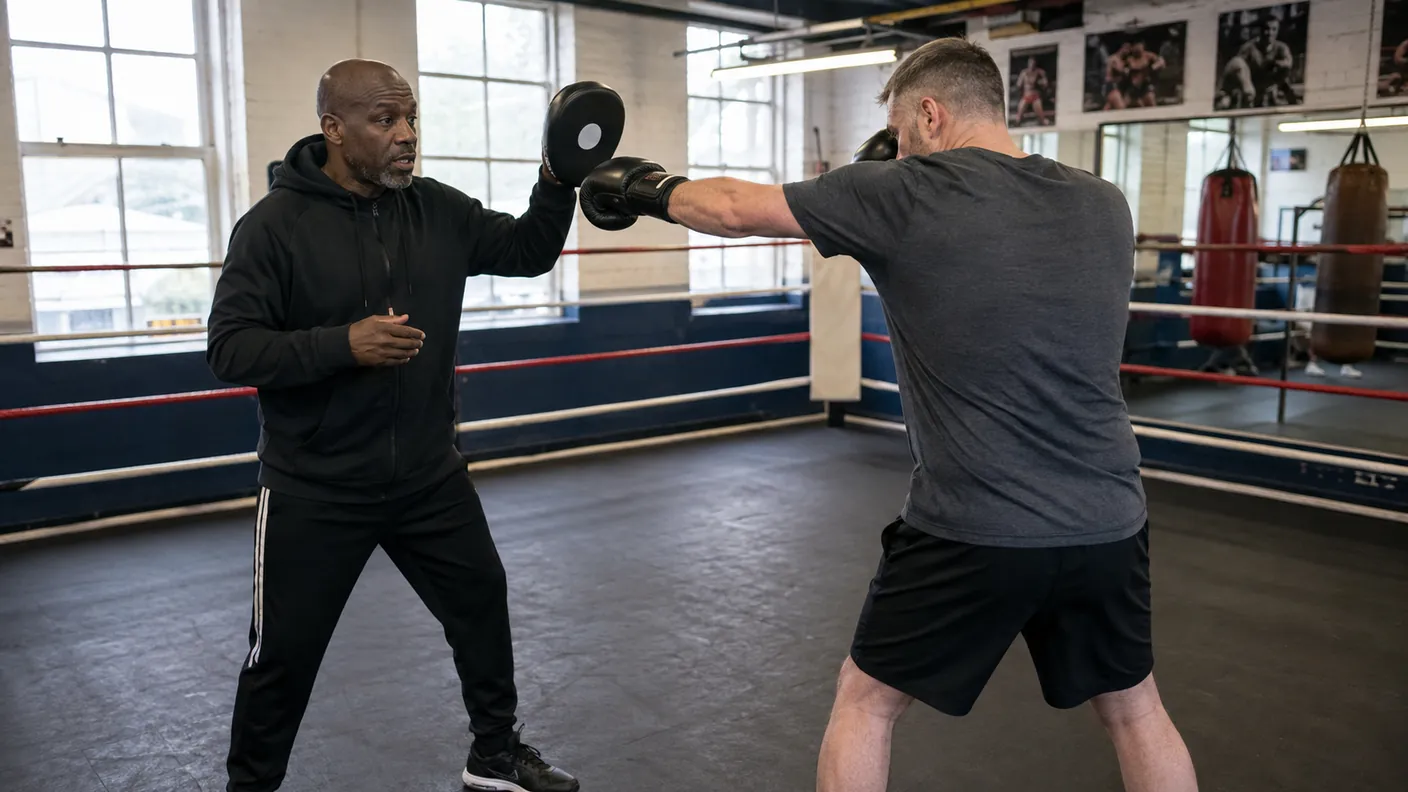
Watch the video below, then use the drills to turn rhythm from a vague idea into something you can see in pads, shadow boxing and controlled partner work.
Rhythm is the pattern before the action
Every boxer has habits. Some move on a steady beat. Some take their time, then burst into a short attack. Some keep touching with the jab until they feel safe enough to step in. None of those habits is automatically wrong. The issue begins when the pattern never changes.
Think about a partner who always takes two small steps before the jab. The first step tells you they are closing distance. The second tells you the jab may be close. If they do that ten times in a round, you do not need to react to the fist at the last second. You can watch the feet and shoulders that begin the sequence.
That does not mean you should launch a counter the instant you recognise a habit. First, make sure it is actually a habit. One step might be an accident. Three similar entries are more useful information.
A systematic review of anticipation in combat sports describes how experienced athletes use early movement information more effectively than less experienced athletes. In a boxing gym, the practical version is simple: look at the chest, shoulders and feet, not only at the glove when it is already on its way.
Watch one thing at a time
Trying to read every cue at once makes most beginners stare and freeze. Pick one thing for a round.
In the first round, watch the lead foot. Does it creep forward before the jab? Does it plant heavily before the cross? Does the boxer always move left after a combination? In the next round, watch the lead shoulder. Does it twitch before the jab? Does it lift before a hook? Then watch the breathing and pace. Do they throw quickly for five seconds, then settle for ten?
You are not looking for a secret tell. You are learning to see which movements repeat. That is more reliable and more useful.
Keep your own stance while you do it. A common mistake is becoming so interested in the other boxer that your own hands drift down and your feet stop moving. Your reading only matters if you are still ready to cover, step or jab.
England Boxing’s coaching handbook puts stance, balance and controlled progression at the base of skill development. That is the right standard for this work. You are not trying to become clever while standing square in front of somebody.
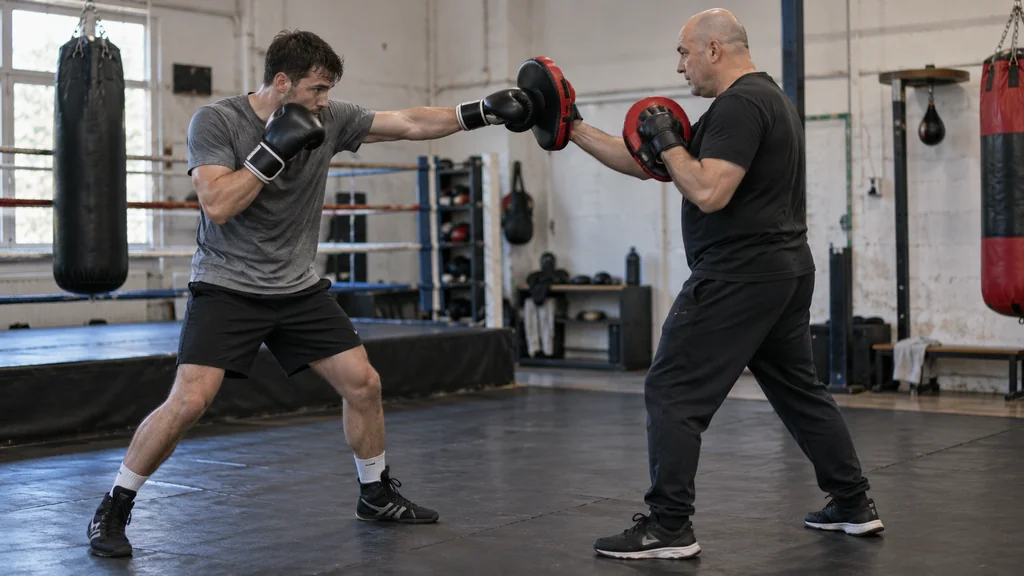
Do not answer every beat with a big move
Once you see a repeated pattern, the temptation is to do too much. A boxer notices the other person steps in twice before the jab and immediately tries to leap in with a hard counter. That usually turns a good observation into a bad decision.
Use the smallest answer first.
If the partner keeps stepping in on the same rhythm, show a quiet jab before their usual second step. If they always rush after a pause, take a small step out and let them arrive without range. If they keep using a fast one-two on the same count, give them a compact cover, then reset from a better line.
The purpose is to interrupt the pattern, not to win the whole exchange with one shot. A clean jab, a small angle or a calm reset can make someone hesitate. That hesitation is useful because it forces them to choose a new rhythm rather than running the same one again.
Our guide to the delayed jab shows one way to change your own first beat without making a large feint. This article asks a different question: what should you notice before you decide to change the pace?
Set a pattern before you break it
You can use rhythm yourself, but only if you have first given the other boxer something believable to read.
Start with a plain, sensible pattern. For example, touch with the jab, take a small step away, then return to the same range. Do that calmly a few times. The point is not to perform a dance. It is to establish an ordinary pace that your partner can begin to expect.
Then change one part only. You might jab on the first step instead of the second. You might take the same first step, pause and reset. You might finish the jab with a small angle rather than standing on the line.
Do not change everything at once. If you add a feint, a level change, a big side step and a three-punch combination together, you will not know which action worked. You will also probably lose the shape of your stance.
The better standard is modest: establish one rhythm, make one sensible change, then see what the other boxer does. A useful variation should leave you able to defend if they do not react as expected.
A three-round rhythm-reading drill
Use light technical rounds with a coach or a trusted partner. There is no need for hard contact. In fact, speed makes it harder to see whether either person is reading or merely guessing.
Round one: name the pattern
Boxer A works at a low pace with one repeated entry: two small steps and a jab, for example. Boxer B does not counter. They simply keep their own stance and say the pattern out loud after each attempt: “two steps, jab.”
After one minute, swap roles. This might feel basic, but it teaches the eyes to separate the entry from the punch. The person watching is not trying to be clever. They are learning to notice what comes first.
Round two: interrupt with one choice
Use the same repeated entry. Now Boxer B has one agreed answer: a light jab before the second step, a small step back, or a compact high cover. Pick one answer for the whole round.
The aim is to place the answer at the right point in the pattern, not to throw it hard. If the jab lands on a mitt or touches the guard, fine. If the range is wrong, reset. Do not lean after the partner because you recognised the sequence one beat too late.
Round three: change the rhythm yourself
Both boxers can now use a calm, repeated pattern for two or three exchanges, then change one detail. Partner A might go step, step, jab twice, then step, pause, jab. Partner B should not pre-empt the change. They must watch the actual movement and choose to cover, step or touch with the jab.
This is the useful part. The drill stops being a memorised counter and becomes a conversation. Both people are learning that a rhythm is information, not a promise.
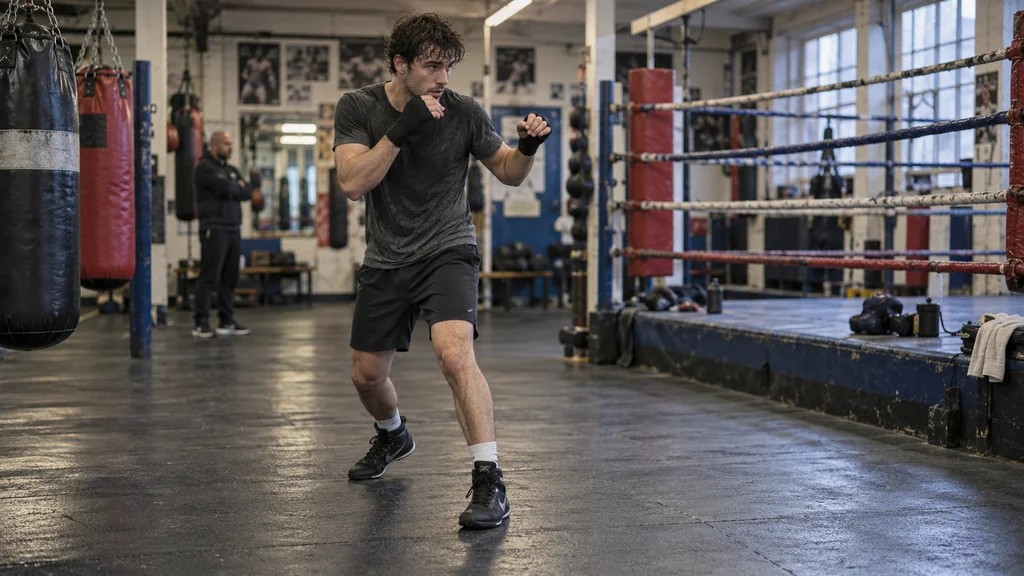
Use the bag for your own rhythm, not opponent reading
A heavy bag cannot give you a real pattern to read. It is still useful for making your own entries less repetitive.
Set a two-minute round with a simple rule. For the first 30 seconds, use a normal jab and step. For the next 30, make the same step but pause before the jab. Then return to the normal rhythm. Finish by mixing three normal entries with one changed entry.
Keep the punches measured. The bag should not pull you forward or make you stand square after the cross. If your feet fall apart as soon as you change pace, you are working too quickly.
For a partner drill that develops the next stage, see our guide to improving boxing timing. Timing is what lets you use the pattern you have noticed. Rhythm is the repeated shape that gives you something to time in the first place.
Four mistakes that make rhythm work pointless
The first mistake is deciding you have read somebody after one exchange. Give yourself enough evidence. A repeated cue is useful. One random shuffle is not.
The second is watching the hands only. Gloves can move late and fast. The feet, hips and shoulders often begin the action earlier. Keep your eyes high enough to see the whole picture.
The third is forcing a counter. If the other boxer changes their rhythm, your planned answer may no longer fit. Cover, step or reset. Good reading includes accepting that the picture has changed.
The fourth is becoming predictable yourself. If you step back every time you notice a jab coming, a thoughtful partner will start to follow you. Mix the smallest safe answers: cover once, jab once, step once, then return to stance.
Where this fits in training
Rhythm reading belongs in technical work, after you have warmed up and before harder bag rounds or sparring. It works especially well with people who are learning not to panic when the other boxer moves first.
Beginners should start with pre-agreed entries and no head contact. More experienced boxers can add more choices, but the standard stays the same: observe, make one balanced decision, then recover your stance.
If you are in Kidbrooke, Greenwich or nearby, our Recreational Adults boxing classes use pads, bags and controlled partner drills to make footwork, defence and timing part of the same decision.
The coaching cue is simple: see the beat, interrupt it lightly, then stay ready for the next one.
H&G Team
Writer at Honour & Glory Boxing Club, a community boxing gym in Kidbrooke, South East London.
KEEP READING

How to Improve Your Boxing Timing: Drills That Actually Work
Timing separates a boxer who looks good on the bag from one who performs under pressure. Here is how to build it properly.
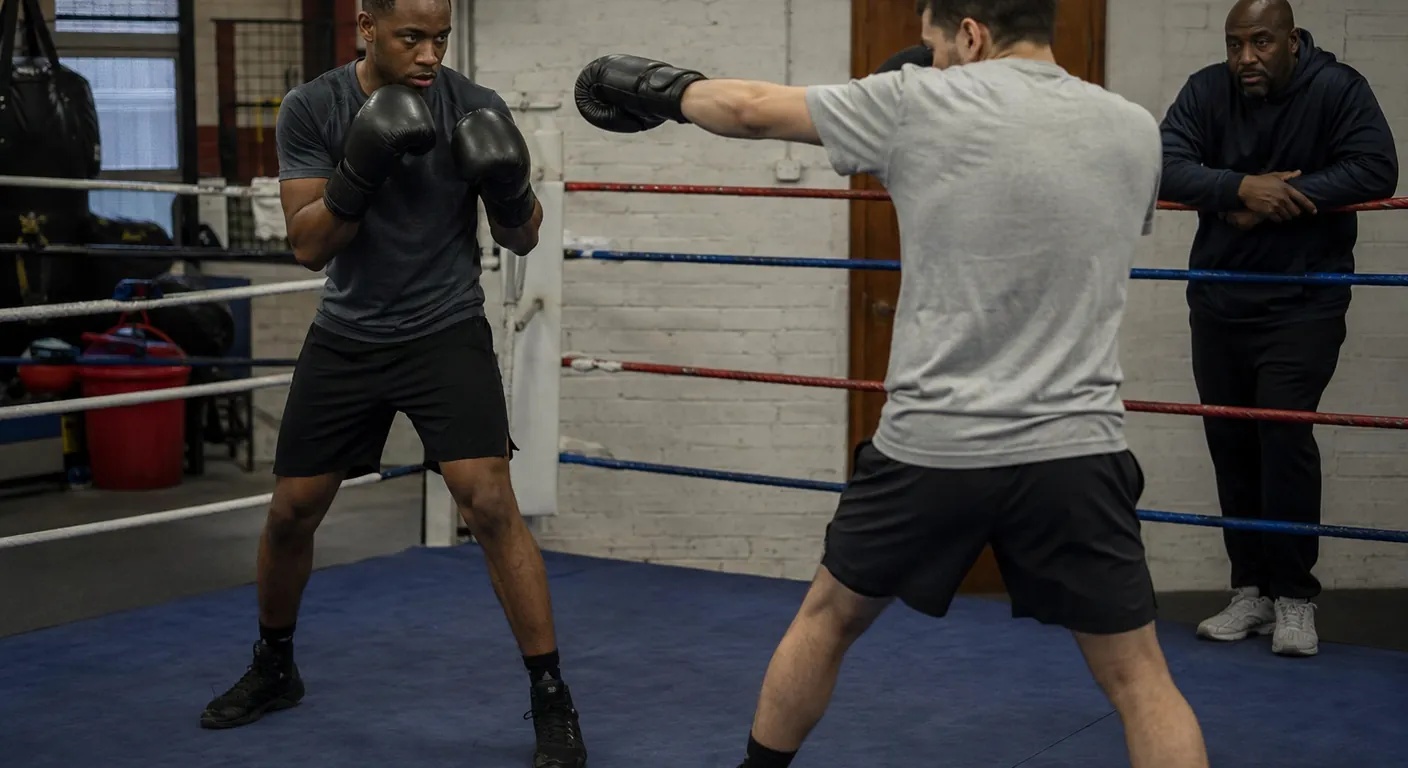
Read Boxing Weight Shifts Before the Punch
Learn to spot small weight shifts in boxing, then choose a calm defence or counter without guessing at every movement.
The Delayed Jab: A Simple Boxing Timing Drill
Use a small shoulder cue before the jab to change the rhythm, draw a reaction and keep your stance ready for the next decision.
Was this page helpful?
It takes one tap, and it genuinely helps.
Choose your next step
Turn this article into the right action
Some readers are ready to book. Some need the class route first. Pick the route that matches what you actually want.