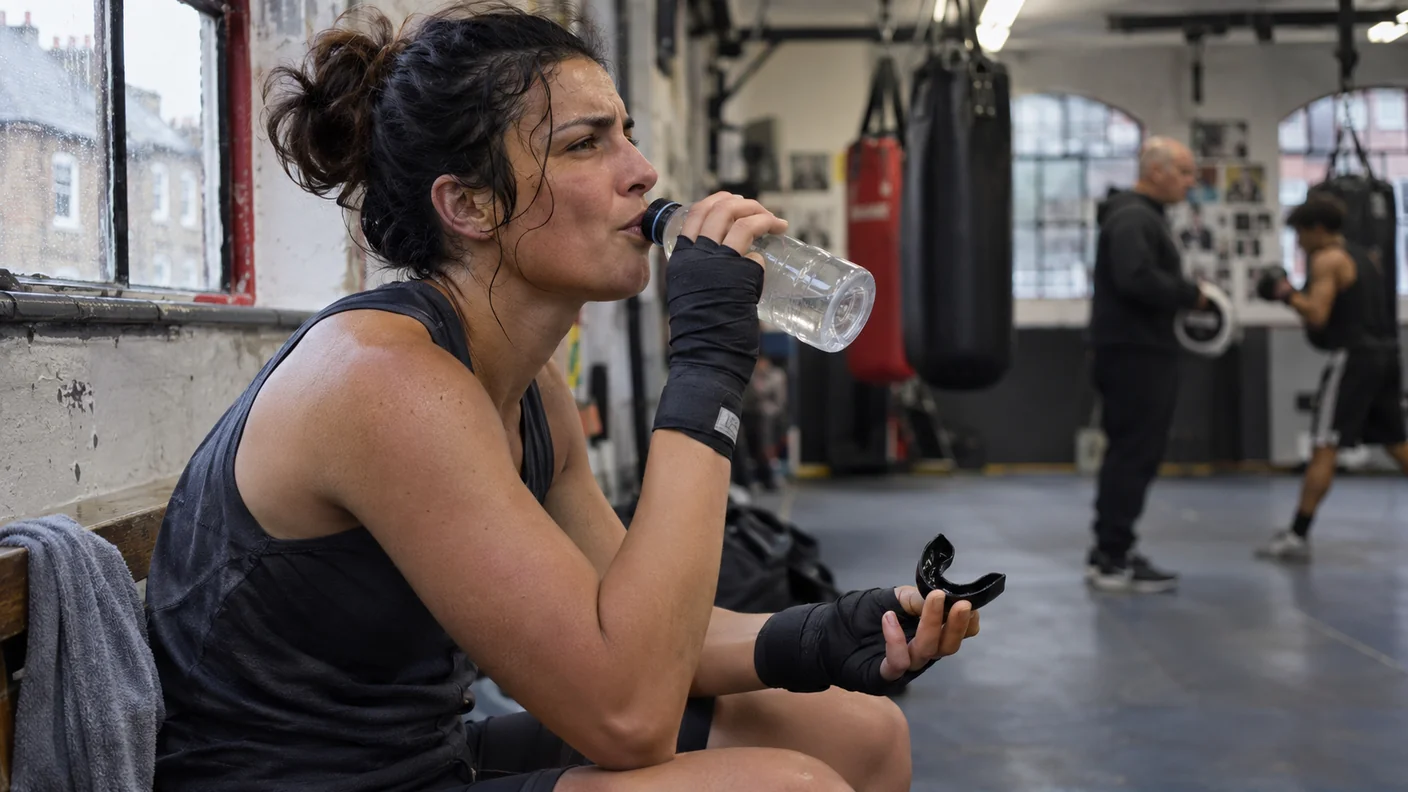
A mouthguard that makes you gag is not a rite of passage. It is usually a sign that the guard is too bulky, sits too far back, moves when you breathe, or was moulded badly in the first place.
That matters because a gumshield you cannot keep in your mouth is not doing its job. You take it out between rounds, chew it to stop it slipping, or avoid wearing it when a coach asks for contact work. None of those are sensible fixes. The goal is a guard that stays seated on the upper teeth, lets you breathe and does not dominate your attention.
For a beginner, there is also an important distinction. Bags, pads and ordinary non-contact drills do not require you to force a mouthguard through an uncomfortable session. If a class includes sparring or another drill with a genuine risk of a knock to the mouth, pause and sort the fit before you take part.
Gagging usually means the guard is too far back or too loose
The back edge of a mouthguard is the usual culprit. If it reaches too far towards the soft palate, it can set off the gag reflex. A loose guard can do the same thing because it shifts backwards every time you speak, inhale sharply or open your mouth.
Do not confuse discomfort with protection. A mouthguard should feel present, but it should not make you retch, choke, or keep swallowing to stop it moving. A review of mouthguard types reports that custom-made guards generally offer better comfort and can reduce gag-reflex symptoms compared with stock or mouth-formed versions (mouthguard types and performance review).
That does not mean every recreational boxer needs the most expensive option on day one. It does mean that a stock guard which bounces around the mouth is a false economy. A decent boil-and-bite can work well when it has been fitted carefully and actually stays in place.

Check the fit before you blame your gag reflex
Start with a simple test while you are standing still. Place the guard over the upper teeth. It should stay there without you biting down hard or holding it with your tongue. You should be able to close your lips, breathe through your nose and say a few words without it dropping or sliding backwards.
If it falls off the upper teeth as soon as you relax your jaw, it is not fitted well enough. If it feels as though you need to clamp your teeth together to stop it travelling, it is too loose for contact training. Chewing it into position every round also flattens the material and makes the problem worse.
Follow the maker's fitting instructions rather than guessing with water temperature or timing. A rushed boil-and-bite mould often leaves the guard thick around the back teeth and vague around the front. You then get the worst combination: bulk at the back and no stable hold at the front.
If the guard has already been remoulded and still feels wrong, replace it rather than forcing it. Your mouth is not failing an endurance test. The piece of equipment is failing the job.
Do not start cutting a guard without proper advice
You may see people trim the back of a boil-and-bite guard to reduce a gagging feeling. That can be appropriate for some products, but it is not a universal home repair. Cutting too much away can change coverage, leave a sharp edge or make a guard less secure.
The sensible first step is to check the manufacturer's instructions or ask the dental professional who supplied it. If they confirm that trimming is suitable for that product, follow their guidance exactly. If they do not, do not improvise with scissors in the changing room before sparring.
A custom-made mouthguard is worth considering if you have tried a quality boil-and-bite properly and still cannot tolerate it. A recent position statement on sports mouthguards found custom-made guards generally provide better fit, comfort and protection than stock or mouth-formed versions (Position Statement and Recommendations for Custom-Made Sport Mouthguards). The point is not to buy status equipment. It is to get a guard you will actually wear.
Breathing should feel different from gagging
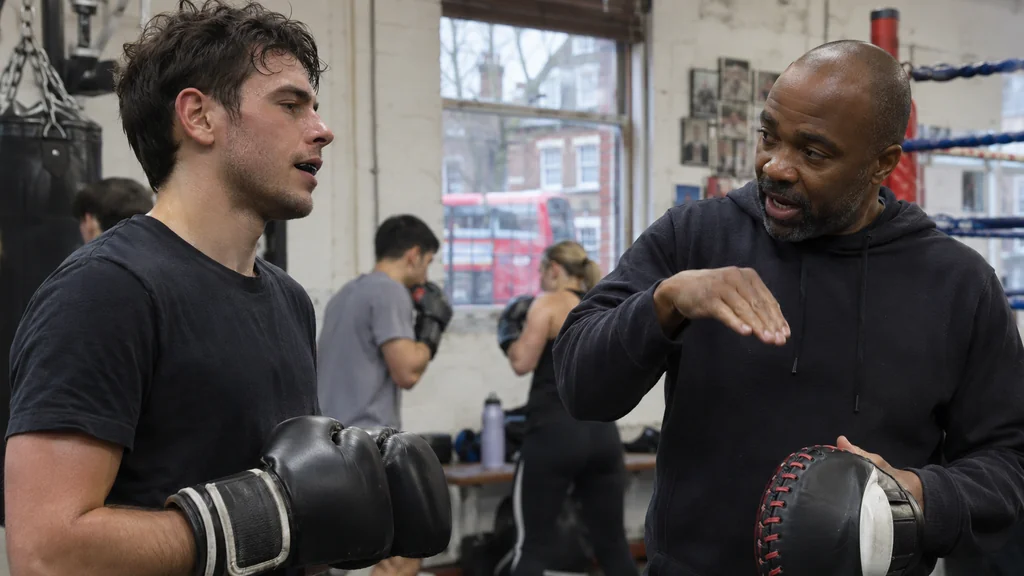
A mouthguard changes how the mouth feels. That is normal. It may also make you more aware of your breathing during early sessions. That is not the same as a guard triggering a gag reflex or blocking the airway.
With a secure guard, use the nose between actions where you can and keep the jaw relaxed instead of biting down all round. If you start holding your breath because the guard feels alien, slow the drill down and reset. Our guide to breathing properly in boxing covers the practical rhythm for pads, bags and partner work.
Do not use hard rounds to "get used to" gagging. The body does adapt to unfamiliar equipment, but repeated retching is not a technical drill. It is a distraction that can make you tense, breathe badly and stop listening to the coach.
If the issue is only happening when you are anxious before sparring, say so. The first answer may be a more controlled drill, not a harder one. England Boxing's coaching handbook describes technique sparring as controlled-speed practice with a semi-passive partner and calls it vital for beginners (England Boxing coaching handbook). A mouthguard problem is easier to assess in that setting than in a fast round where you are trying to prove you are fine.
Braces, dental work and changing teeth need a different answer
Do not remould an ordinary mouthguard over fixed braces and assume the question is settled. Teeth can move during orthodontic treatment, and a guard that fits one month may become tight or unstable later.
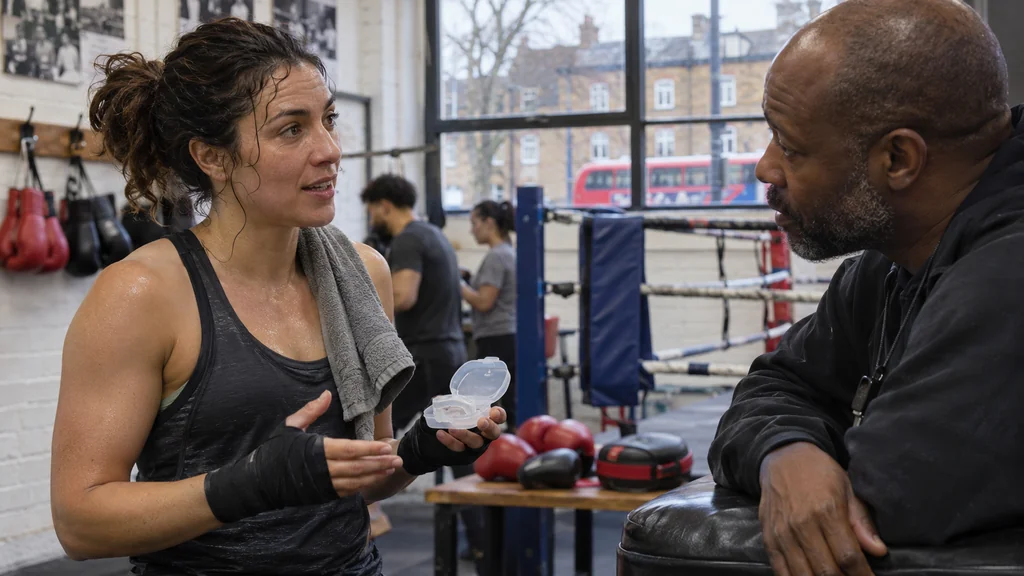
The British Orthodontic Society advises that people with fixed braces use a mouthguard designed to accommodate the appliance and tooth movement. That is a dentist or orthodontist conversation, not something a coach should diagnose from across the gym.
The same applies if you have had recent dental treatment, have a loose tooth, jaw pain, a sore gum, or a guard that has become suddenly uncomfortable after an impact. Do not train through it to avoid missing a round. Tell the coach and get dental advice before returning to work where contact is possible.
Our practical guide to boxing with braces explains what can still be trained safely while the right guard is being sorted.
A short checklist before your next contact session
Keep the test boring and honest:
- The guard stays on the upper teeth without constant biting or tongue pressure.
- You can breathe calmly and speak a short sentence without it dropping or sliding back.
- It does not trigger gagging, choking or persistent nausea.
- The edges feel smooth and there are no cracks, tears or hard spots pressing into the gum.
- If you have braces or recent dental work, the guard has been checked by the appropriate dental professional.
- If it is still wrong after a careful remould, you replace it or seek a custom option rather than forcing it.
A decent gumshield should become uninteresting once the round starts. You should be thinking about stance, distance and the coach's cue, not whether the thing in your mouth is about to make you gag.
For adults in Greenwich and nearby, our Recreational Adults boxing classes start with coached non-contact work, so you can build skills before deciding whether sparring is part of your training.
H&G Team
Writer at Honour & Glory Boxing Club, a community boxing gym in Kidbrooke, South East London.
KEEP READING
How Should Boxing Gloves Fit?
A practical guide to boxing glove fit: snug hands, straight wrists, wraps, weight, and the mistakes beginners make.

Can You Box With Long Nails?
Long nails can make boxing gloves uncomfortable and partner drills less safe. Here is the practical answer before your next class.
Can You Box With Retainers? A Practical Guide
You can train boxing with retainers, but removable retainers and contact work need a clear plan.
Was this page helpful?
It takes one tap, and it genuinely helps.
Choose your next step
Turn this article into the right action
Some readers are ready to book. Some need the class route first. Pick the route that matches what you actually want.