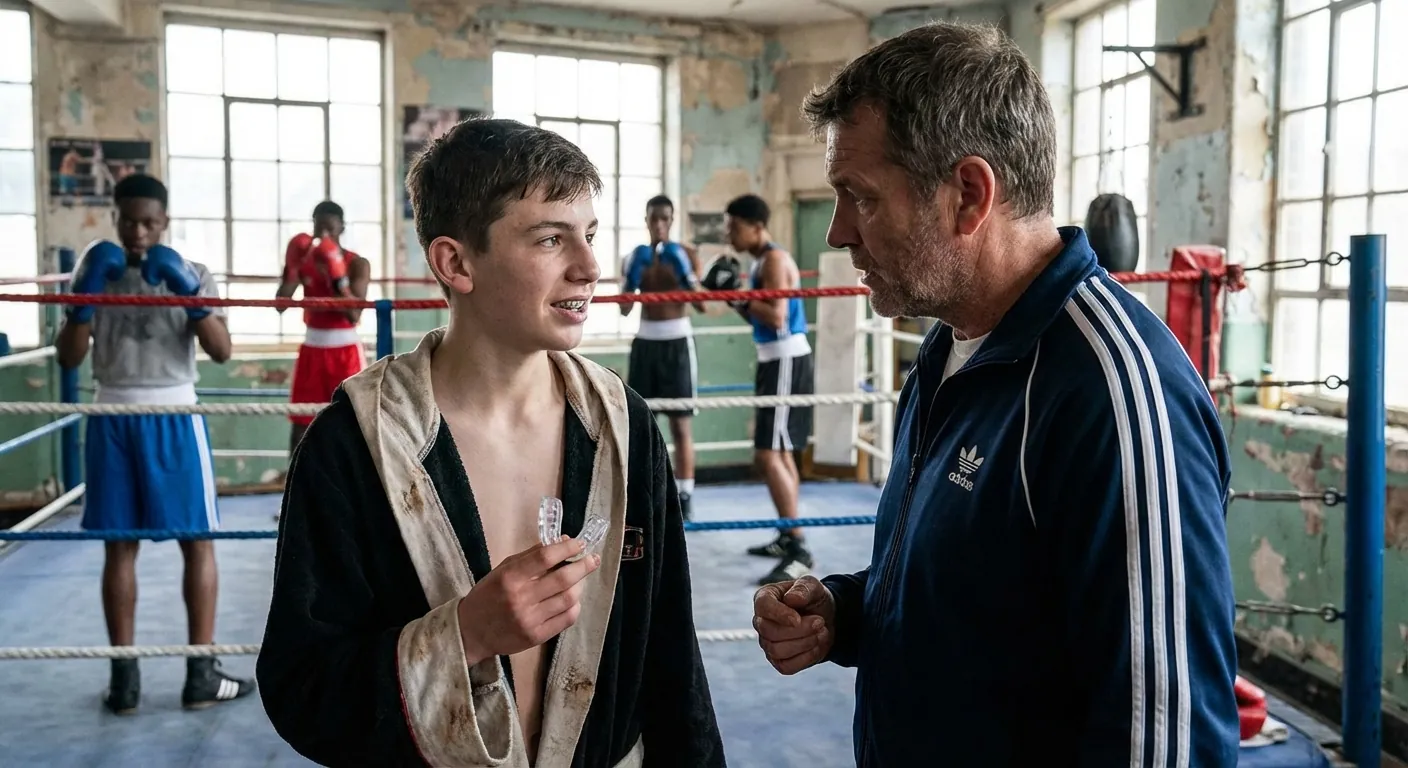
Yes. Having braces does not stop a young person joining a boxing class. The sensible answer is to separate ordinary coached training from any drill where there is a chance of contact to the face.
A first class is usually built around stance, footwork, shadowboxing, bags, pads and conditioning. Nobody needs to hit a child for them to learn boxing. For a young person with braces, that is useful: they can start learning, get comfortable in the gym and let the coach know about their brace before the session begins.
The point is not to be casual about it. A fixed brace changes the mouthguard question. The British Orthodontic Society's advice on contact sports and mouthguards says conventional mouthguards can become ill-fitting as teeth move, and recommends an orthodontic mouthguard made to accommodate a fixed brace. That is the piece to sort properly before any contact work.
What braces change in a boxing class
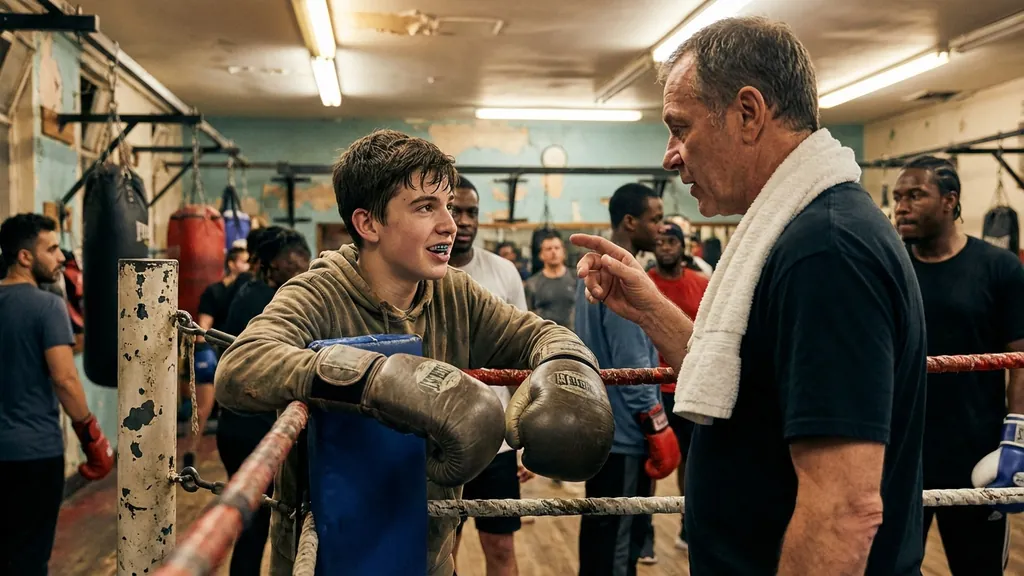
Braces do not make basic boxing drills off limits. They do mean that a coach should know before pair work begins and that a parent should take the mouthguard seriously rather than buying the first cheap guard near the till.
For non-contact training, the main issues are comfort and communication. New braces can make the mouth tender for a few days. A bracket that is rubbing, a loose wire or a sore gum can make a gumshield uncomfortable. That is a reason to adjust the session or ask the orthodontic team for advice, not a reason to force through it.
The British Orthodontic Society notes that a mouthguard worn over a fixed brace can help reduce cuts inside the mouth, damage to the brace and dental injury in contact sport. Its guidance is clear that the guard needs room for tooth movement. A regular moulded gumshield may fit well one month and feel wrong later.
For a young boxer, the practical rule is simple: tell the coach about the braces, say whether the mouth is sore that day, and do not treat a badly fitting mouthguard as good enough because the session has started.
Can a child start boxing before getting a mouthguard?
Usually, yes, if the session is genuinely non-contact and the coach knows about the braces. A child can learn stance, movement, guard position, shadowboxing, skipping, bag work and controlled fitness work without taking punches to the mouth.
That does not mean every gym runs every drill the same way. Tell the coach at the beginning of the session. If partner work involves close-range movement, defensive reactions or anything that could bring gloves near the face, the coach can change the drill or keep the child on a non-contact option.
At Honour and Glory, new juniors are not pushed into sparring. The first job is to learn to stand, move and listen. Our Junior Recreational boxing classes are the right starting point for most young people aged 10 to 16, including those who are dealing with a brace for the first time.
Do not let a brace create a made-up deadline. There is plenty to learn before contact becomes relevant.
The right mouthguard for braces
This is where parents should slow down and ask one good question: is this mouthguard actually designed to fit over a fixed brace?
The British Orthodontic Society distinguishes between a standard guard and an orthodontic guard. It says that a guard for braces needs a channel or trough to accommodate the appliance and allow for teeth moving during treatment. Some orthodontic guards can be remoulded as the bite changes. A custom guard may also need adjusting or replacing during orthodontic treatment.
That means a normal boil-and-bite guard is not automatically the cheap shortcut it looks like. It may press against brackets, become tight as teeth move, or stop fitting properly. Ask the orthodontist or dentist which type is right for the specific brace. They know the treatment plan and the mouth in front of them. A boxing coach does not.
Our boxing mouthguard guide explains the normal choices for people without braces. With braces, start with the orthodontic advice first, then choose the guard.
When a mouthguard becomes non-negotiable
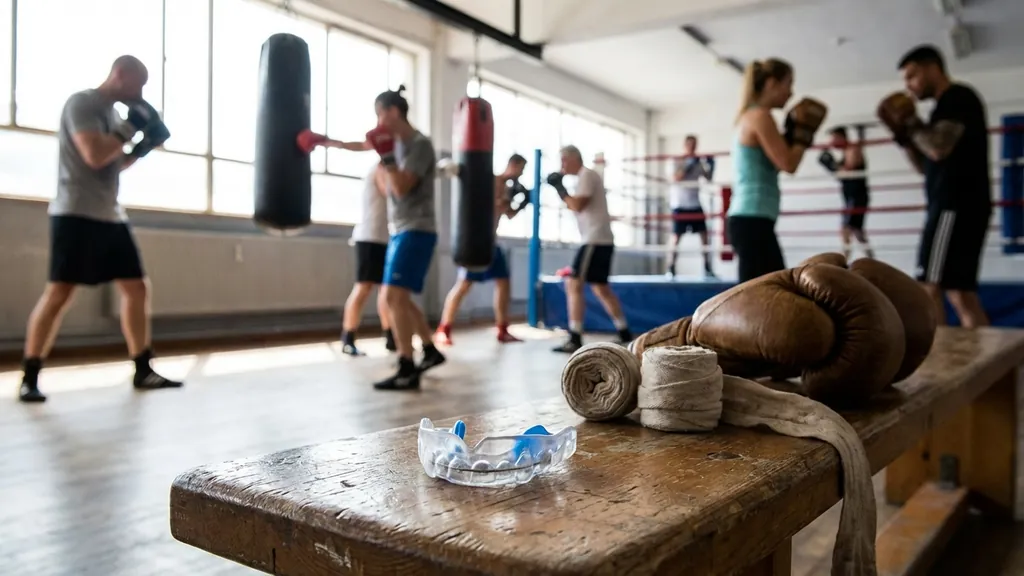
Any drill with a real chance of contact to the face needs the right guard in place. That includes sparring, competitive boxing and contact-heavy partner work. Do not rely on a hand over the mouth, a headguard or a promise that the drill will be light.
The British Orthodontic Society guide for schools specifically lists boxing among the contact sports where orthodontic patients are strongly advised to use a mouthguard. The advice is not there to make sport awkward. Brackets add hard edges inside the mouth, and a small accidental knock can turn into a cut, a broken bracket or damage that interrupts treatment.
A young boxer with braces does not need to make a decision about sparring on day one. At a good club, that decision comes later, with coaching, suitable equipment and a clear conversation with the parent. If the orthodontist has set restrictions, those restrictions come first.
What to do if the brace is sore or damaged
Do not make medical decisions from a boxing article. If there is a loose bracket, broken wire, sharp edge, swelling, significant pain or a tooth injury, stop contact work and speak to the orthodontist or dentist.
For tooth injuries, the NHS-backed Just One Norfolk oral-health guidance says to seek dental advice as soon as possible and use NHS 111 out of hours when needed. It also advises parents to speak to the dental team about mouthguard choice for children who take part in contact sport.
There is no prize for carrying on with a mouth that is sore enough to change how a child breathes, bites or concentrates. Tell the coach. A sensible session can be adapted. A damaged brace needs the dental team, not a tougher attitude.
A parent checklist before the first session
Keep it straightforward:
- Tell the coach that your child has fixed braces before the warm-up.
- Ask whether that day's session is fully non-contact.
- If any contact work is planned, use a brace-friendly mouthguard approved by the orthodontist or dentist.
- Check the guard still feels comfortable as the teeth move.
- Keep the mouthguard clean, dry and in a ventilated case.
- If a bracket or wire is loose, sharp or painful, pause contact work and contact the orthodontic team.
- Do not let a child feel pressured to spar because other people are doing it.
For families around Kidbrooke, the useful first step is still the ordinary one: book a trial, tell us about the braces and let the coach set a suitable non-contact starting point. Braces are a detail to manage, not a reason to miss the chance to learn a sport.
H&G Team
Writer at Honour & Glory Boxing Club, a community boxing gym in Kidbrooke, South East London.
KEEP READING
Are 2026 boxing headguards improving sparring safety?
Use the Rival 2026 release as the news peg, then answer the practical question club boxers actually care about: visibility, cheek protection, weight, heat, fit and when a more protective headguard helps or hurts sparring quality.
How Should Boxing Gloves Fit?
A practical guide to boxing glove fit: snug hands, straight wrists, wraps, weight, and the mistakes beginners make.
How to Wash Boxing Hand Wraps
A practical guide to washing boxing hand wraps properly, drying them faster, and stopping glove smell before it starts.
Was this page helpful?
It takes one tap, and it genuinely helps.
Choose your next step
Turn this article into the right action
Some readers are ready to book. Some need the class route first. Pick the route that matches what you actually want.