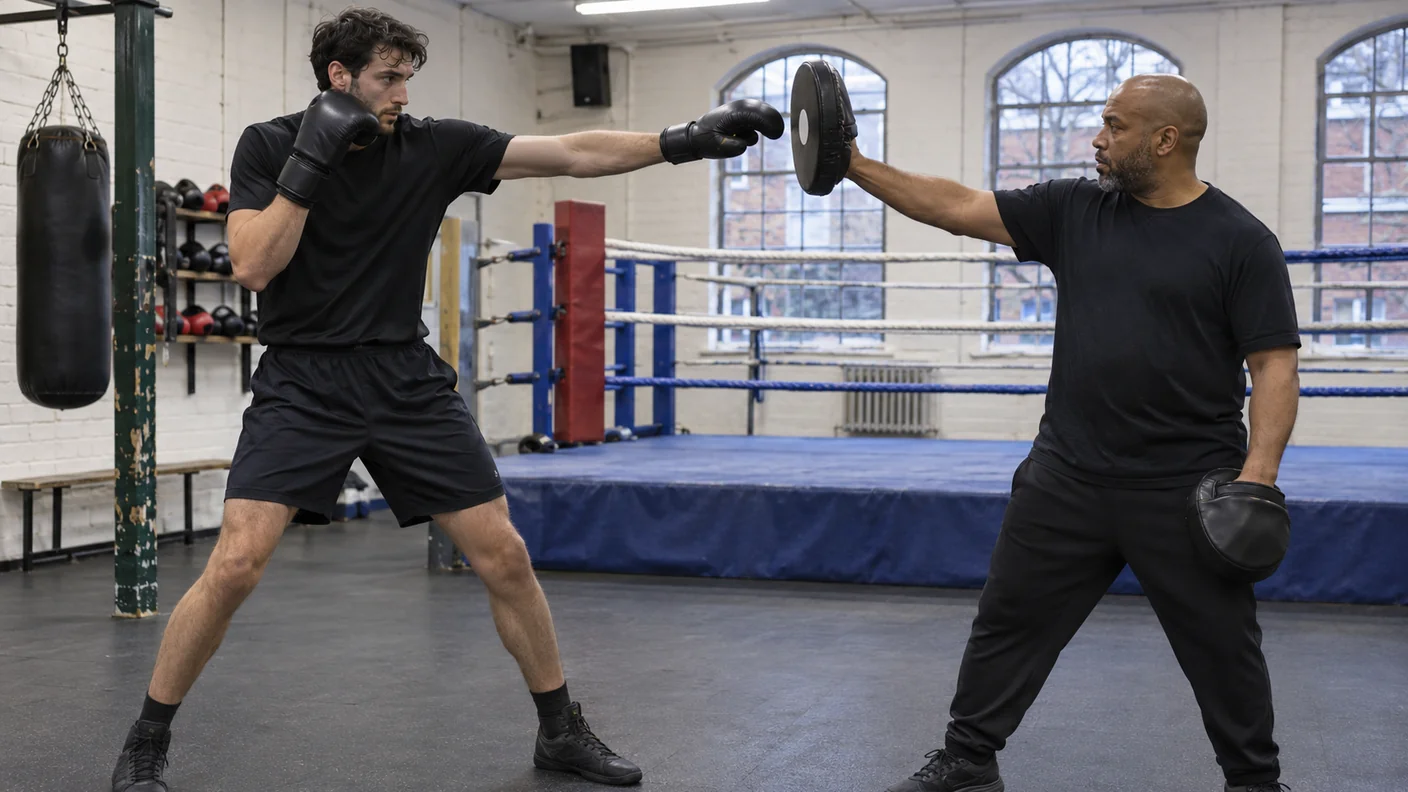
Being taller does not solve the range problem for you. It only gives you more room to solve it well.
A shorter boxer who wants to get close will often make you nervous into one of two bad choices. You either retreat in a straight line until the ropes catch you, or you stick the lead hand out hard, leave it there and turn a useful guard into a push. Neither keeps the exchange on your terms.
The long guard is more useful when it is light. The lead hand gives you a reference at the edge of range, lets you feel a step coming, and buys time to move your feet. It is not there to hold somebody away. The moment the hand becomes a stiff bar, you lose the ability to jab, parry, cover or leave.
Watch the short demonstration below before trying the drill. Notice the distance and the feet more than the punches.
A long guard is a range check, not a shove
For an orthodox boxer, the left hand sits in front of the lead shoulder while the right glove remains close to the cheek. For a southpaw, reverse the picture. The arm is not fully locked out. Keep a soft bend at the elbow and enough shoulder relaxation to bring the hand home quickly.
At honest long range, a light open glove can tell you whether the other boxer is just outside your jab, standing at its end, or beginning to close the gap. If their movement brings your elbow from nearly straight to noticeably bent, the distance has changed. That is your cue to make a decision with your feet, not to push harder with the hand.
A review of boxing performance research describes boxing skill as a connected action through the lower body, trunk and upper body. That matters here. The extended hand is not an independent trick. It works only if your stance still lets you step, jab, turn or cover.
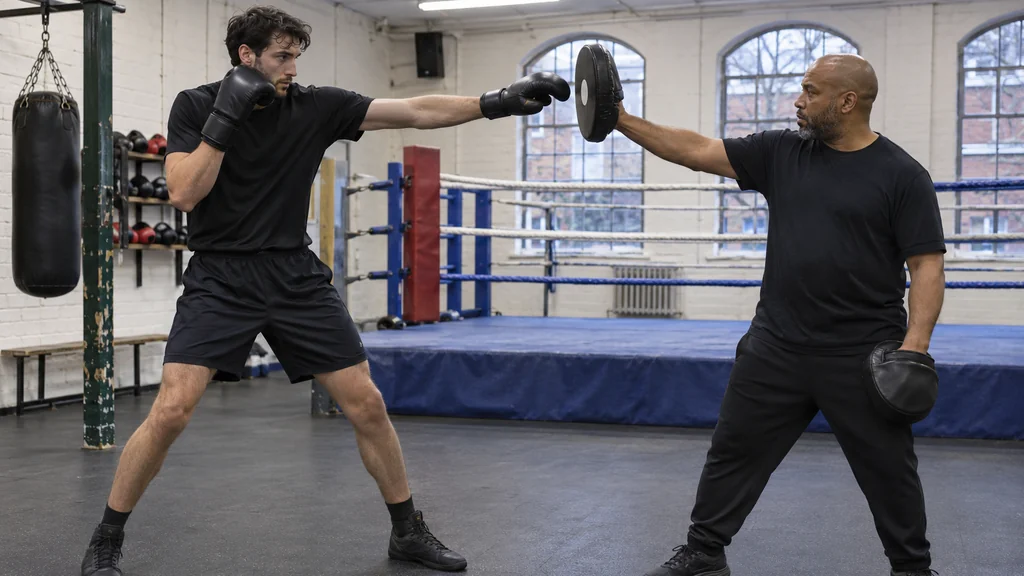
If your shoulder reaches forward, your head follows the hand or your rear glove drops, the guard has already stopped doing its job. Pull the lead hand back, rebuild your stance and work from a range you can manage.
Our guide to long guard boxing and range control explains the basic shape. This drill gives that shape a specific job against a partner who is trying to get past it: feel the entry, then make a clean exit before the range collapses.
Keep the shorter boxer working to enter
A shorter boxer should not be treated as a smaller target at the end of your jab. They are often trying to make the distance uncomfortable, draw a long punch, get their head off the centre line and arrive close enough for compact shots.
Your job is not to freeze them with your lead hand. Your job is to keep changing the question. A light post can make them show whether they are stepping in, reaching for your glove or waiting to counter. A jab can interrupt their feet. A side step can make them turn. A small pivot can keep you off the ropes.
The mistake is backing up without a plan. A straight retreat gives the other boxer a clear route forward. Use the lead hand to see the approach, then take a small side step or pivot while there is still room to do it. The exit does not need to be dramatic. It only needs to preserve the distance where your jab and straight punches are still useful.
England Boxing's coaching handbook puts balanced stance, guard and controlled progression ahead of complicated exchanges. That order is sensible. A long guard that leaves you able to move is better than a clever-looking hand position that leaves you square.
Post, step, reset
Use this three-beat pattern in shadow boxing or with a coach holding mitts:
- Show a light lead-hand post at the edge of range.
- Notice the imagined step forward and take one small angle step.
- Bring the lead hand back to guard, then reset at jab range.
Do not throw a punch at first. The aim is to make the feet respond to the range change while the hand remains tidy. If you can only move after pulling the lead arm all the way back, the arm has reached too far. Make the post shorter.
Once the step is clean, add a single jab after the reset. The jab comes from the recovered guard, not from a hand that is already parked on the other boxer. That distinction keeps the punch hard to read and stops you from falling across the front foot.
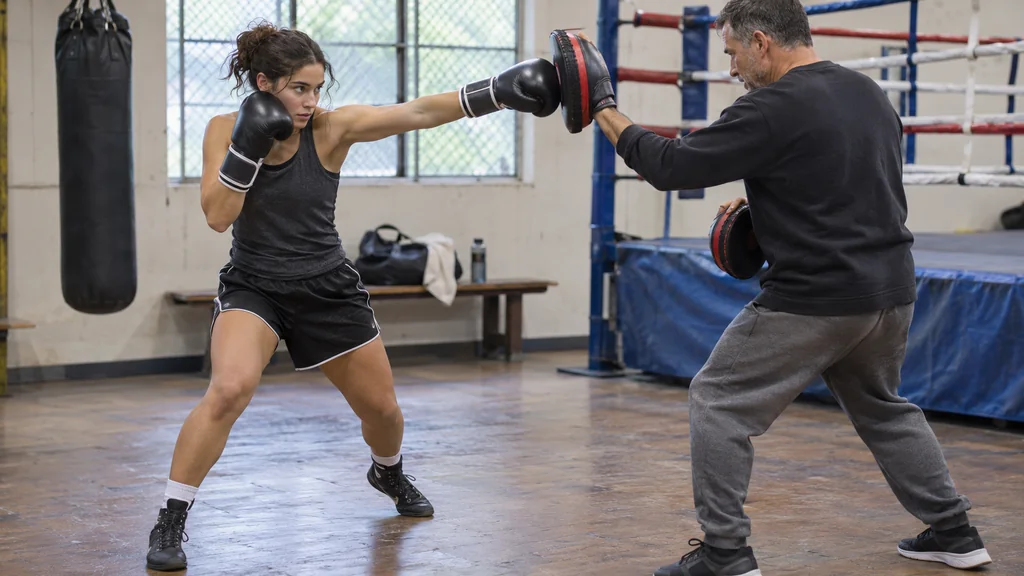
The point is not to make every exit lead to an attack. Sometimes you post, see the other boxer surge forward and choose to cover or leave. Sometimes the opponent stops short and a jab becomes available. Sometimes they wait, and you can return to a normal stance without throwing anything. The range check has still done its job.
For the other side of the matchup, read how to box a shorter opponent without reaching. The rule remains the same in both articles: do not solve a footwork problem by stretching the upper body towards it.
Three rounds for the long-guard exit
Use a coach, a trusted partner or a mirror. Keep the partner work pre-agreed and light. There is no need for hard contact or a contest over the lead hand.
Round one: post and recover
Stand at the edge of jab range. Touch a coach-held mitt with the open lead glove, then bring the hand straight back to guard. Do not push the mitt and do not step yet.
Freeze after each repetition. Check that the rear glove is close to the cheek, the chin has not followed the lead shoulder and the feet are still staggered. If the front knee has travelled too far forward, move back and shorten the arm.
Round two: post and step out
Repeat the light post. This time, the coach takes a small step towards you as the glove makes contact. You answer with one controlled side step or a small pivot, then bring the lead hand back to guard.
The coach should not chase you across the floor. The drill is about recognising one range change, not escaping a storm of punches. Keep the feet far enough apart that you could jab or block as soon as you land.
Round three: read the target
Now vary the coach's cue after the light post. They can step in, stay still or take a small step back.
When they step in, take the agreed exit and reset. When they stay still, return the hand to guard and touch one jab only if the range is honest. When they step back, take space with your feet rather than reaching with a cross. The correct finish depends on what the range says, not on a pre-planned combination.
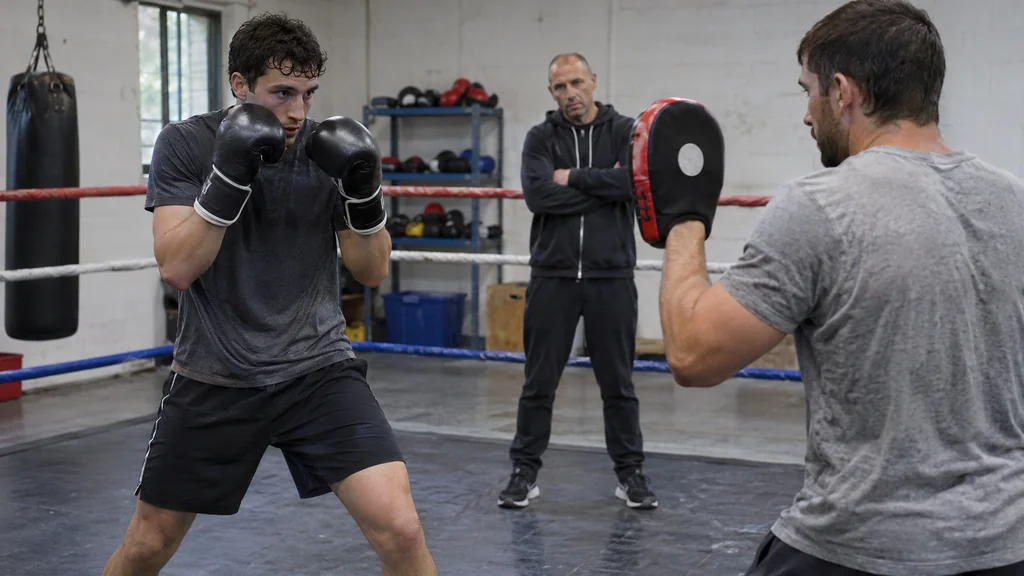
Four mistakes that give the range away
The first is locking the elbow. A straight, rigid arm feels safe until the other boxer knocks it down, steps around it or simply makes you carry it for a full round. Keep the elbow alive enough to retract, jab or parry.
The second is staring at the glove. The lead hand gives you a feel for range, but the chest, shoulders and feet tell you what the other boxer is about to do. Keep your eyes up.
The third is backing straight up. If you leave in one line, a determined pressure boxer will eventually walk you to the ropes. Use the post to buy a small angle, not just another step backwards.
The fourth is treating the lead hand as permission to push. In a club drill, use a light touch on a mitt or glove. Do not hold, shove or try to steer your partner around. If the range has become too close for a clean guard, use the coach's agreed cover, exit or clinch reset instead.
Where this fits in training
This is a useful drill for an adult boxer who already has a settled guard, basic jab and simple side step. It belongs in shadow boxing, pads and controlled partner work before anyone tries to use it under real pressure.
The taller boxer should finish the drill able to jab from range, turn out when the entry comes and recover both gloves before the next decision. The shorter boxer gets a useful training partner too: someone who makes them earn the entry instead of either holding them off or running away.
If you train near Kidbrooke, our Recreational Adults boxing classes use coached pads, footwork and technical partner drills to make range work practical without requiring sparring.
H&G Team
Writer at Honour & Glory Boxing Club, a community boxing gym in Kidbrooke, South East London.
KEEP READING
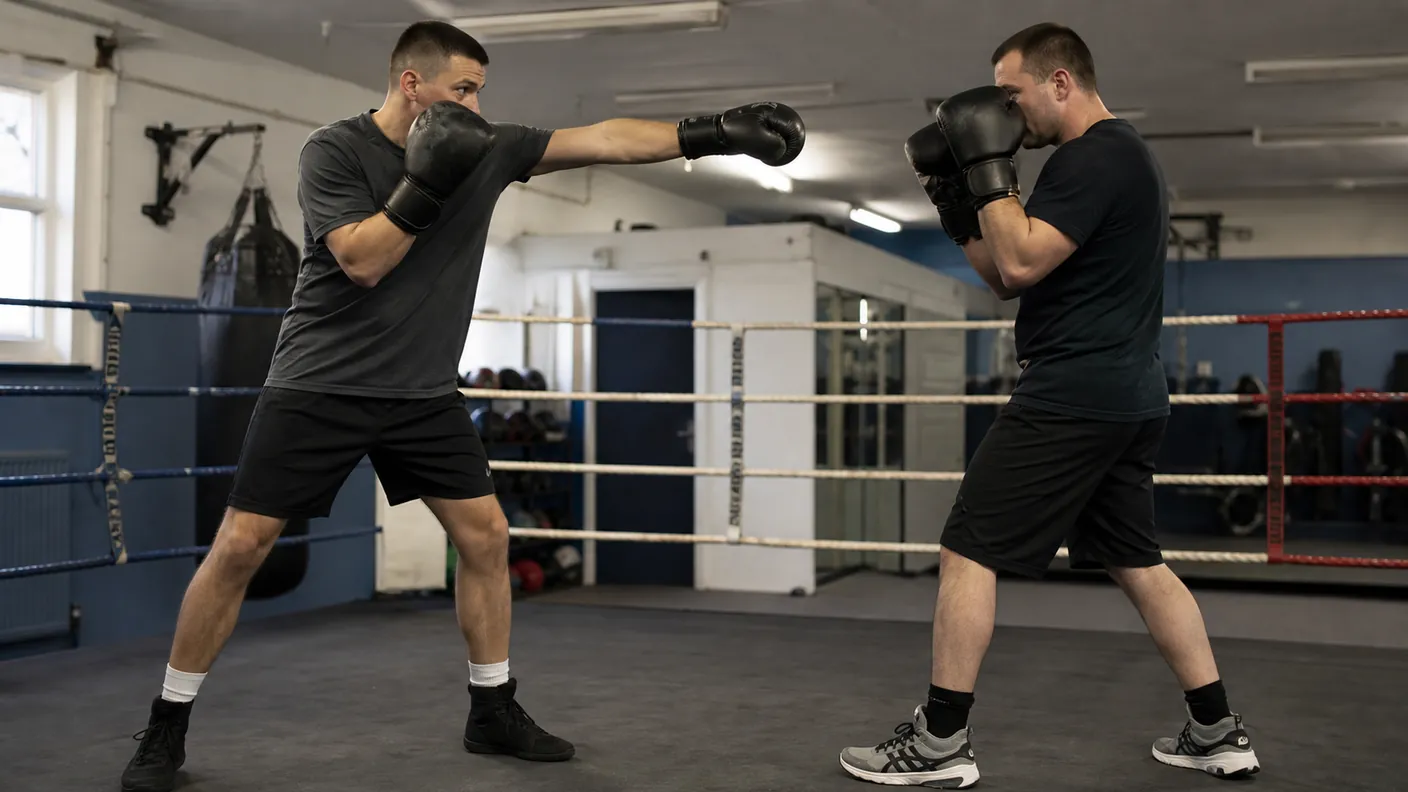
Long Guard Boxing: Keep Range Without Reaching
Use a long guard to judge range, interrupt a jab and leave yourself balanced enough to punch, defend or step away.
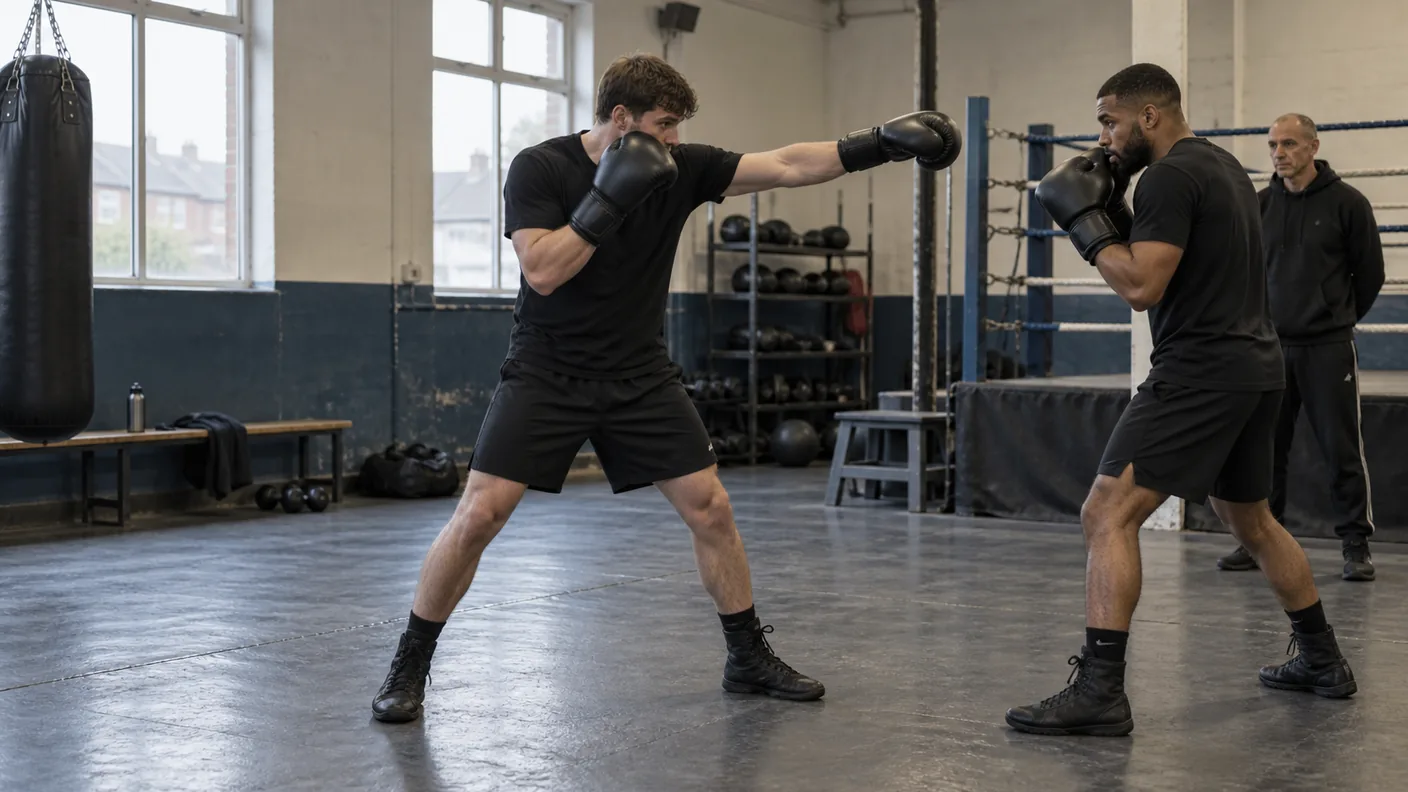
How to Counter a Long Guard in Boxing
Use feints, body-line touches and patient footwork to answer a long guard without chasing the lead hand or reaching.
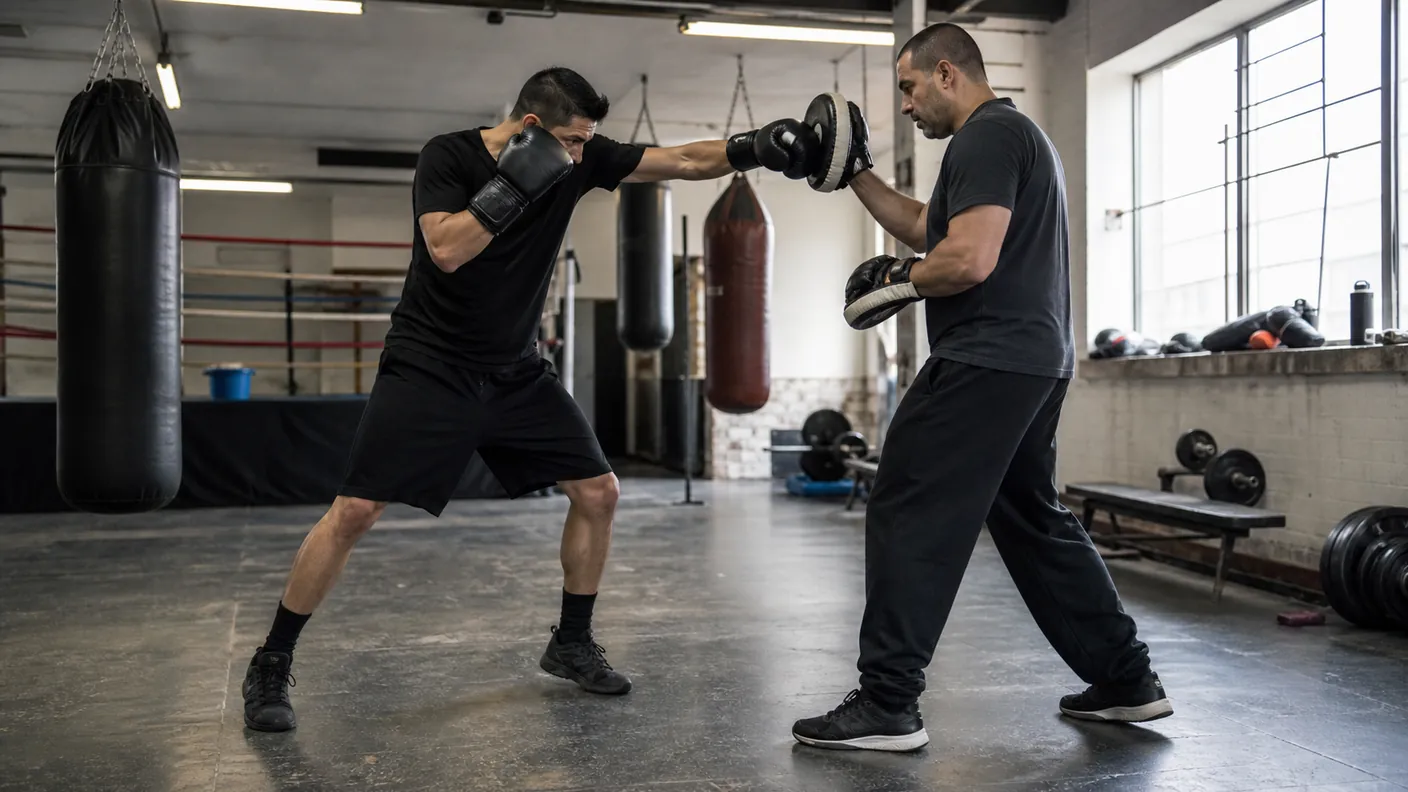
Fast Long-Range Lead Hook: Stay Balanced
Use a fast long-range lead hook to change the line without reaching, swinging wide or losing the stance that keeps you safe.
Was this page helpful?
It takes one tap, and it genuinely helps.
Choose your next step
Turn this article into the right action
Some readers are ready to book. Some need the class route first. Pick the route that matches what you actually want.