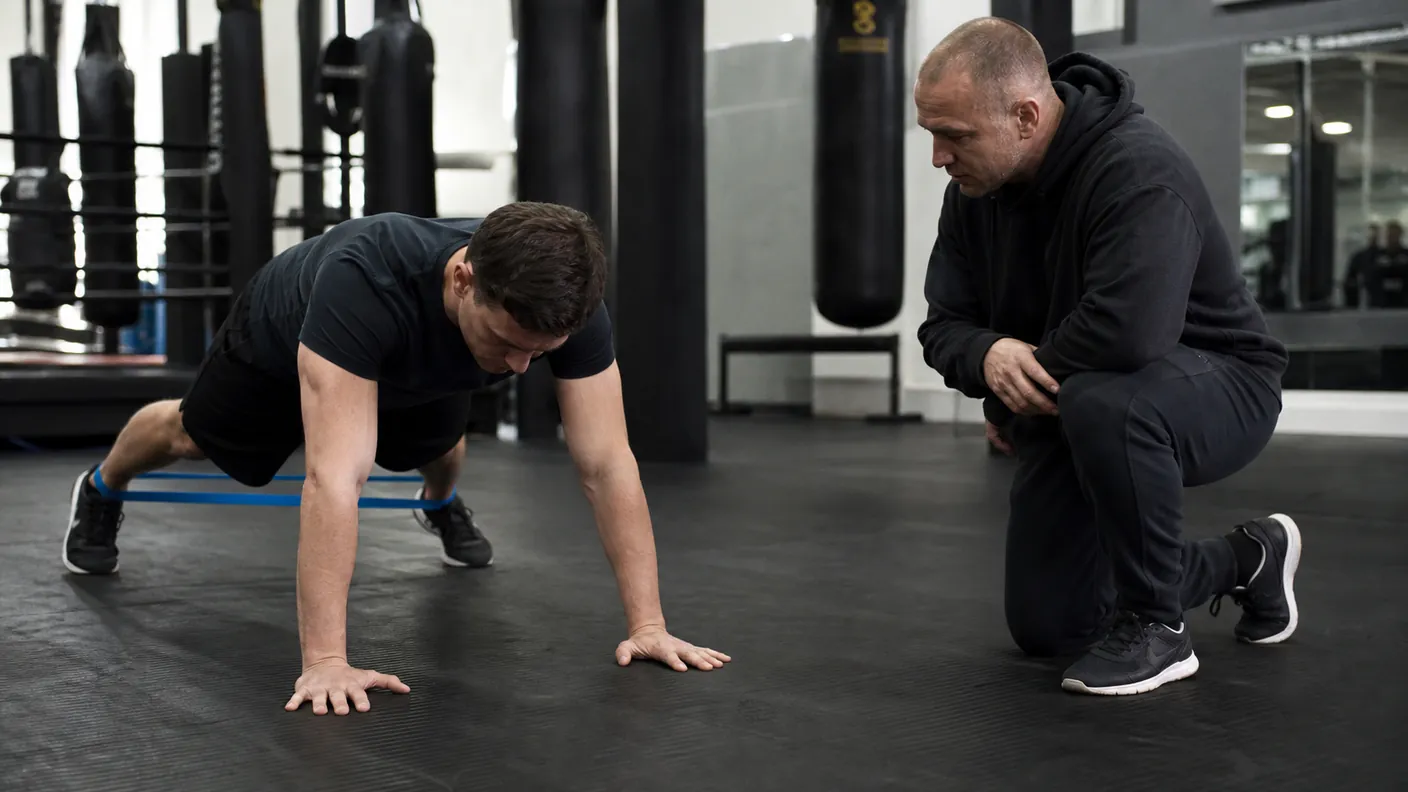
A lateral plank walk is not a glamorous boxing drill.
You are in a high plank, a light band is around the ankles, and you move sideways one small step at a time. There is no bag moving, no sharp pad noise and no combination for anyone to admire. Do it properly, though, and it exposes a problem that shows up everywhere in boxing: the body cannot keep the shoulders, hips and hands organised at the same time.
That matters when the guard starts dropping late in a round. It matters when a cross pulls the lead shoulder away. It matters when a boxer has enough effort to throw, but not enough control to return to shape afterwards.
The drill is not a replacement for boxing. It is a short supporting exercise that gives the trunk and shoulders a job similar to the one they need between punches: stay connected while the limbs move.
Watch the video below first. Then use the progression after it as a controlled addition to warm-ups or strength work.
What a lateral plank walk trains for boxing
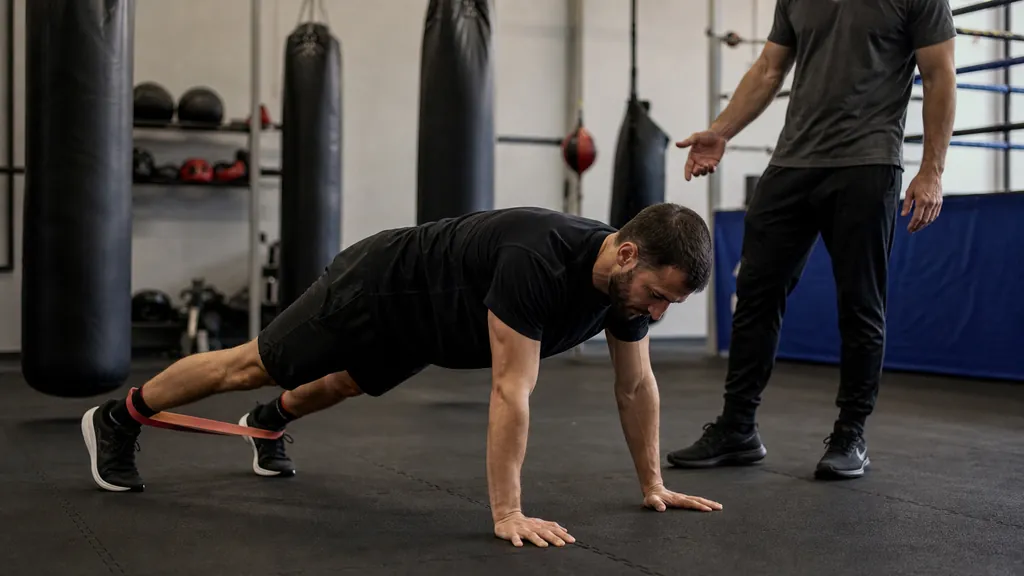
A lateral plank walk asks you to keep a long, stable line from shoulders to hips while moving sideways. The band adds a small sideways pull through the legs. Your hands and feet have to move without the trunk sagging, twisting or racing ahead.
In boxing terms, that is useful because the punch is not only a hand action. The body has to give the shoulder a base, keep the ribs from flaring, and allow the opposite hand to stay ready. A biomechanical analysis of boxing punches describes punches as a linked action through the pelvis, trunk, shoulder, elbow and wrist. If one link loses its position, the punch and recovery both get less tidy.
Do not oversell the exercise. A plank walk will not make a jab sharp by itself. It will not replace pads, bag work, footwork or coached partner drills. What it can do is make a boxer more aware of where the hips and shoulders go when the arms are working.
That awareness has value. A boxer whose hips rotate wildly while the hands move often finds the guard drifting, the feet becoming square, or the shoulders tiring far earlier than they should.
Set the position before you move
Start in a high plank, not a collapsed press-up position.
Put the hands under or just slightly in front of the shoulders. Spread the fingers and press the floor away without locking the elbows hard. Your head should stay in line with the spine. Look a little ahead of the hands, not between the feet.
Set the feet about hip-width apart. If you are using a mini-band, place it around the ankles first. A light band is enough. A heavy band can pull the knees and hips out of shape before you have learned the movement.
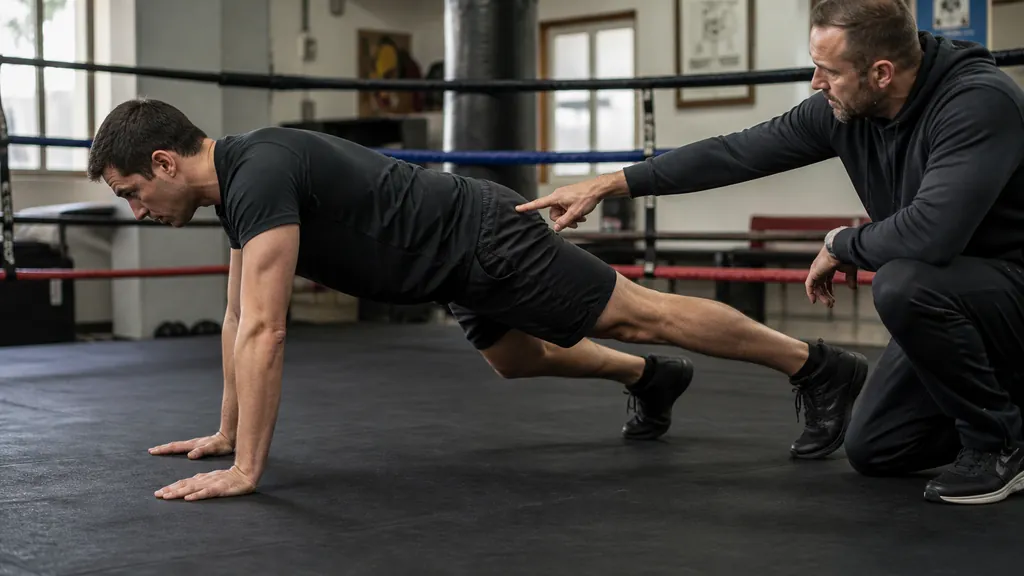
Now check the middle of the body. Do not let the low back drop towards the floor. Do not lift the hips high in the air either. Think of a straight, useful line rather than a perfect photograph. You should be able to breathe, brace lightly and move without holding your breath.
The test is simple: if a coach placed a stick across your shoulder blades and hips, it should not show a large twist or sag when you take a step.
Use the foot-hand-follow pattern
The basic version is deliberately unexciting.
Move the outside foot a short distance sideways. Move the hand on the same side. Then bring the trailing foot and hand back underneath you. The body travels as one unit. The steps do not need to be large. In fact, large steps usually turn a useful drill into a scramble.
Going foot first gives the body a moment to find stability before the hand moves. That is a good starting point for people who feel their hips swinging around. Once the basic route is steady, you can use a hand-first version, but only if the shoulders remain over the wrists and the hips stay level.
Do not rush to make it harder. A lateral plank walk only works if the position survives the movement. If each step puts one hand too far in front, turns the hips towards the ceiling or lets the knees cave in, reduce the band tension and shorten the step.
Why shoulder position matters to the guard
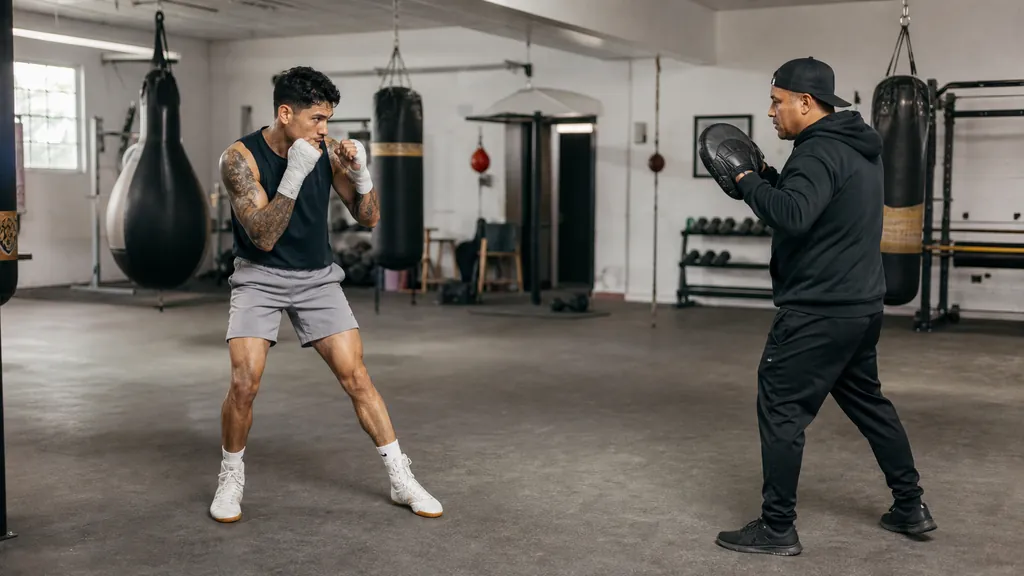
Boxers often hear “keep your hands up” as if the answer is simply more effort from the arms.
Sometimes it is. More often, the problem starts lower down. The shoulders creep towards the ears, the ribs flare, the body gets stiff, and the gloves start feeling heavier than they should. The boxer tries to fix it by clenching harder, which makes the shoulders tire even faster.
A good plank walk makes that pattern obvious. If you shrug the shoulders towards the ears, the hands feel weak against the floor. If the upper back loses control, the body shifts from side to side. If the trunk goes soft, the legs and arms start doing separate jobs.
The useful cue is not “squeeze everything”. It is “push the floor away, keep the neck long, and move without spilling the hips”. That gives the shoulder blades a stable platform without turning the drill into a tense contest.
A study of highly trained amateur boxers found that lower-body strength related more clearly to peak punch force than upper-body strength measures alone (Journal of Strength and Conditioning Research). This drill is not a power test and it does not prove a direct punch-force effect. The wider lesson is more useful: boxing performance comes from the body working as a connected system, not from trying to solve every technical problem with the shoulders and arms.
Keep it as a quality drill, not punishment
A lateral plank walk can become ugly quickly when people turn it into a race.
The band gets heavier. The steps get wider. The hips wobble. The coach starts counting loudly. Everyone finishes tired, but nobody has learned whether they can hold a sound position. That is conditioning with a band, not a technical support exercise.
For most recreational boxers, two or three short sets are enough. Start with six to eight controlled steps in one direction, then return. Rest long enough to make the next set look the same. If the lower back starts doing the work or the wrists become uncomfortable, stop the set and adjust.
This fits best near the start or end of a session, not in the middle of hard bag rounds. Before training, it can wake up the shoulders and trunk without tiring them. After technical work, it can be a short reminder to stay organised when the body is already a little fatigued.
A simple three-stage progression
Build this slowly. The aim is control that survives, not a heroic set on day one.
Stage one: no band, small steps
Use bodyweight only. Take four small steps right, then four small steps left. Pause if the hips twist. The coach should watch the hands, not only the feet. If the shoulders creep behind the wrists or the elbows lock out, reset.
This is the version for someone new to planks, returning after a break, or learning how their own hips move. There is no benefit in adding resistance before this is steady.
Stage two: light band at the ankles
Add a light mini-band. Keep the same four-steps-each-way structure. The band should make you work a little harder to keep the feet controlled, not make the knees collapse inwards or force a giant step.
Keep the pace slow enough to breathe. If your face is straining and your hands are slapping the floor, the set is already too hard.
Stage three: connect it back to stance
After the final plank step, stand up calmly into your normal boxing stance. Hold the guard for two seconds. Then make one light jab into the air and reset.
The plank walk is not meant to imitate a punch. The point of this final stage is to feel the difference between a body that has stayed organised and a body that has rushed. If you stand up dizzy, crooked or with the shoulders by the ears, return to an easier version.
For more work on keeping the upper body useful during punches, read our guide to punching without dropping your guard. The plank walk supports that lesson. It does not replace it.
Common mistakes
The first is walking with the hands far in front of the shoulders. That puts more strain through the arms and makes it harder to keep the trunk stable. Bring the body forward enough that the shoulders stay over the wrists.
The second is letting the hips lead. If the backside swings side to side before the feet and hands move, slow down. The hips should travel with the body, not drag the rest of it behind.
The third is a band that is too heavy. Resistance is useful only if it lets you keep the same posture. Choose the band that gives you good repetitions, not the one that makes the most dramatic video.
The fourth is holding the breath. Exhale lightly as you move. A boxer who cannot breathe in a plank is likely to tense unnecessarily when the gloves go on too.
The fifth is treating it as a substitute for technical coaching. The drill can support shoulder and trunk control. It cannot teach range, timing, punch selection or defence against a moving person. Those jobs need proper boxing practice.
Put the drill in the right session
Use lateral plank walks as a short support block around boxing, not the main event.
They work well after a general warm-up and before pad work. They also work after a controlled bag session, when the goal is to finish with one clean set rather than chase exhaustion. If you train at home, pair them with light shadowboxing: plank walk, stand, settle into stance, throw a few relaxed jabs, then rest.
If you are near Kidbrooke, our Recreational Adults boxing classes combine technical boxing with sensible conditioning. You will work on the punch, the guard, the feet and the body position that lets all of those things hold together.
H&G Team
Writer at Honour & Glory Boxing Club, a community boxing gym in Kidbrooke, South East London.
KEEP READING
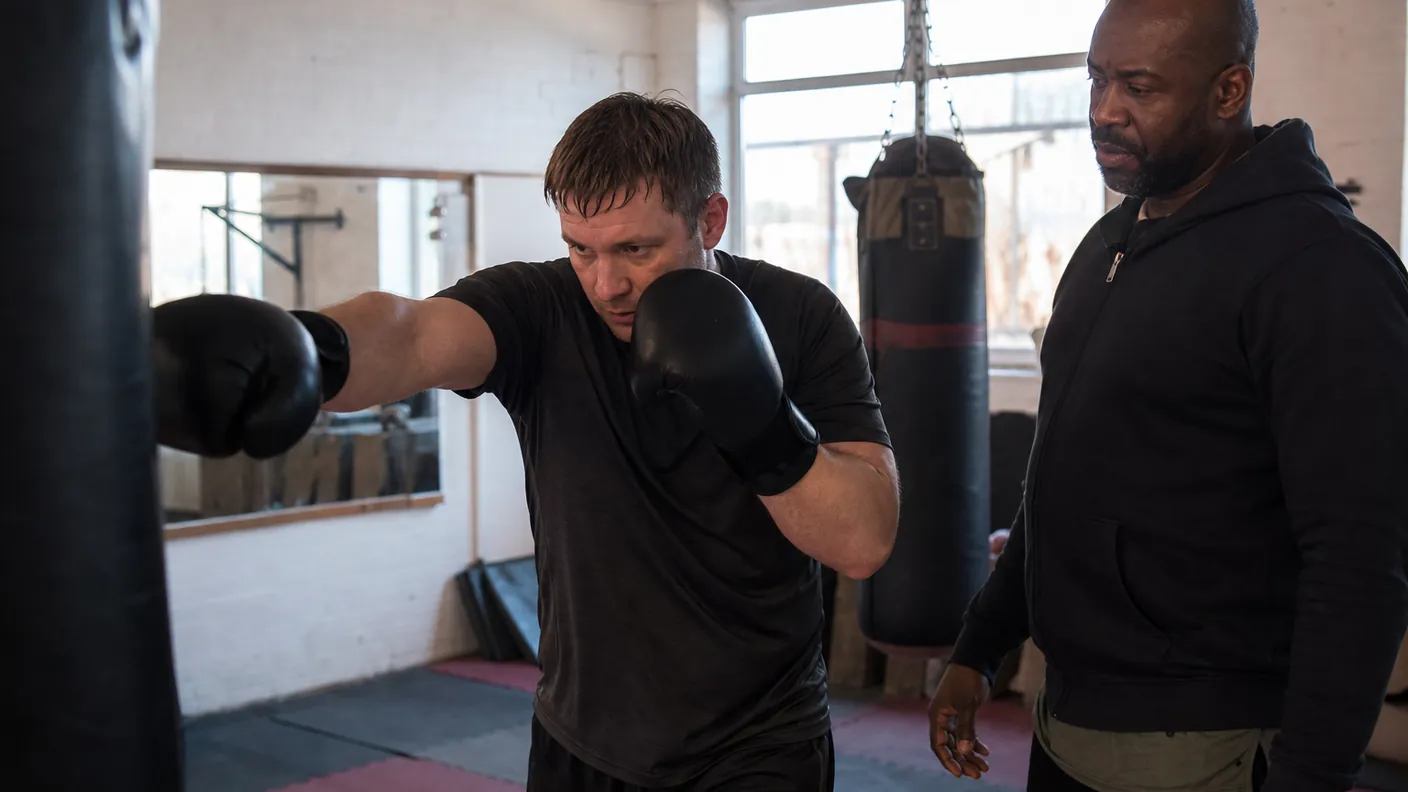
Straight Punch Shoulder Line Drill
A simple straight-punch drill for keeping the shoulder, glove and chin connected instead of reaching with the head.
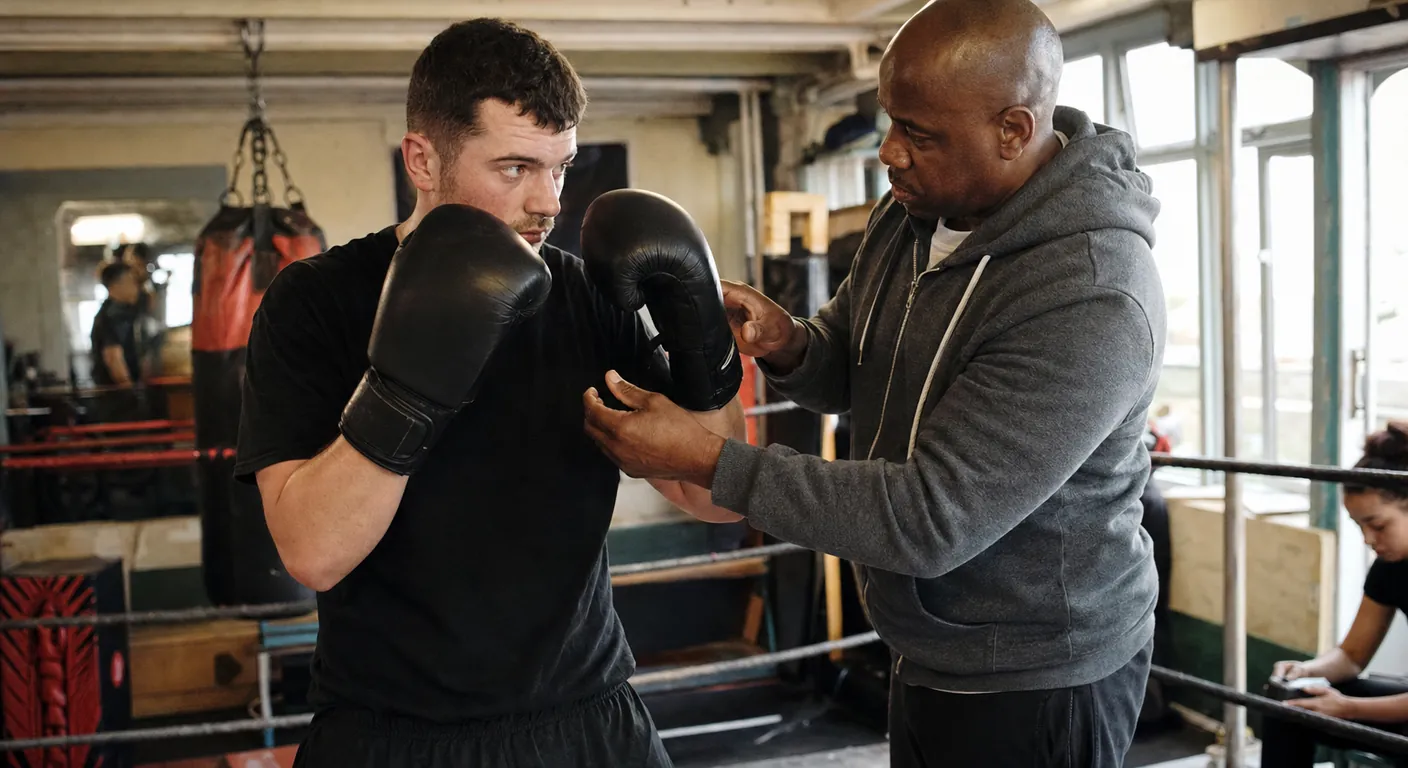
Boxing Guard: Do Not Squeeze Your Hands Together
A practical guard lesson for boxers who keep their gloves too narrow and lose shoulder position when they punch.
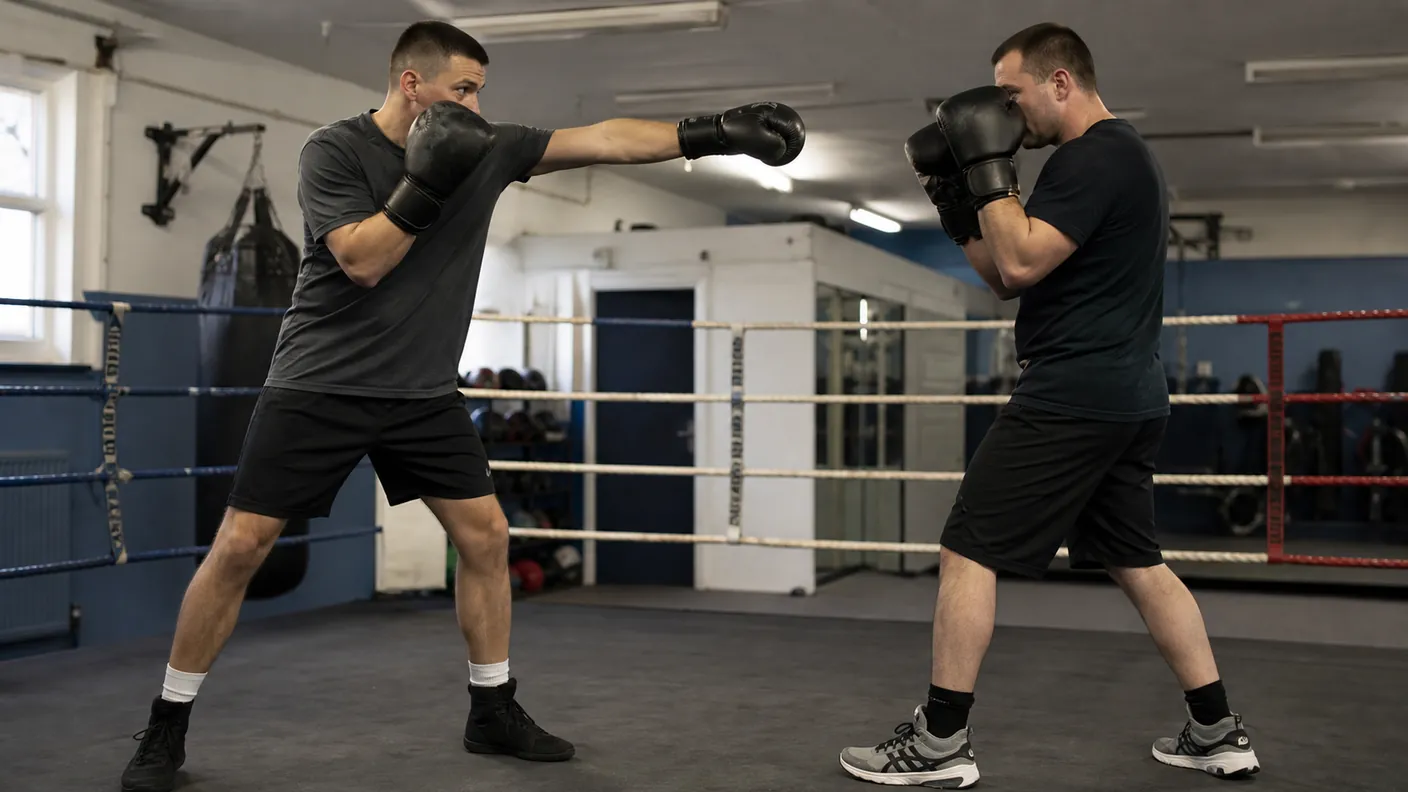
Long Guard Boxing: Keep Range Without Reaching
Use a long guard to judge range, interrupt a jab and leave yourself balanced enough to punch, defend or step away.
Was this page helpful?
It takes one tap, and it genuinely helps.
Choose your next step
Turn this article into the right action
Some readers are ready to book. Some need the class route first. Pick the route that matches what you actually want.