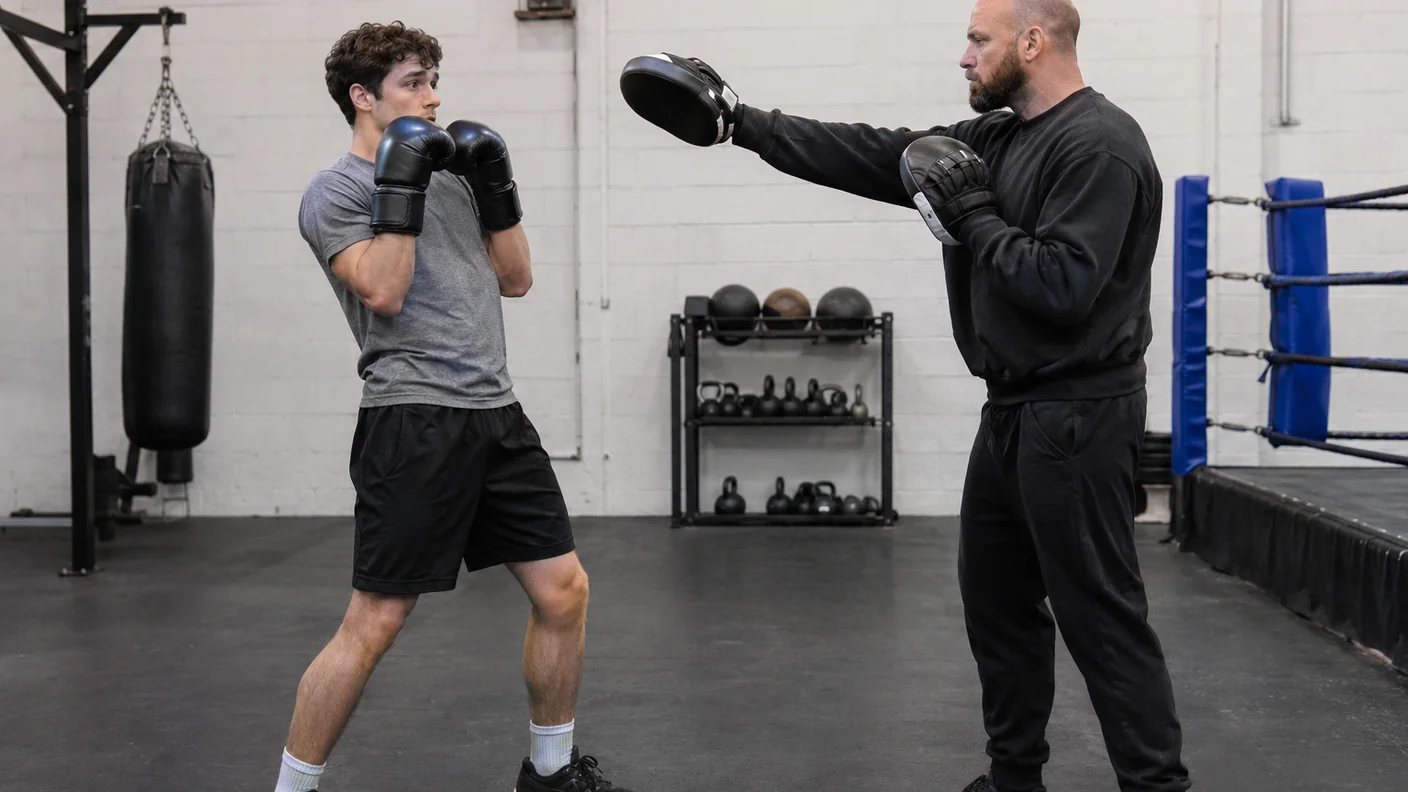
A clean jab can invite a clean answer.
That does not mean you should become frightened of using the lead hand. It means a jab that lands and stays on the same line is easy to time. A small layback after the jab can make a predictable return fall short, then leave you close enough to jab again if the other boxer has overreached.
The important word is small. This is not a dramatic bend at the waist or a way to stand with your chin in the air. It is a coached timing drill: send a measured jab, soften the rear knee to move the head a short distance back, then return with another jab only if your feet have stayed underneath you.
Watch the drill once at a calm pace. Notice that the head moves back because the legs make room for it, not because the back folds away from the target.
Why the first jab can create a return line
A jab changes the picture for both boxers. Your lead hand moves into their space, your shoulder comes forward, and they may want to answer straight back before you have recovered the glove.
That makes the jab-layback-jab useful as a training pattern. The first jab asks a question. The small layback checks whether the answer was a return jab. The final jab is only there if the other boxer has reached, paused or left a real lane in front of you.
England Boxing puts balance, guard and controlled progressions at the centre of its coaching handbook. That gives you a better test than whether the movement looks smooth. After the first jab, can you still cover, step out or punch again without rebuilding your stance? If not, make the jab or the layback smaller.
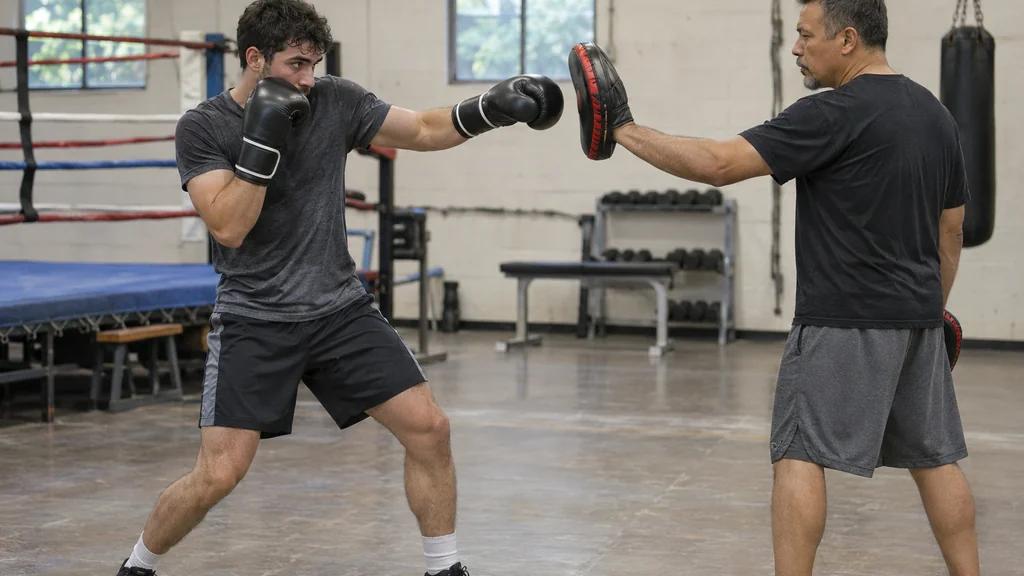
The layback comes from the rear leg, not the lower back
A useful layback is a short withdrawal. The rear knee bends, the hips settle slightly back and the upper body stays organised above them. Your eyes remain on the person in front of you. Both gloves remain close enough to protect the head.
Do not throw the shoulders behind the rear foot or arch the lower back to escape the line. That may move your face away for a moment, but it leaves you slow to come forward, square to the target and exposed to a hook or body shot. If you need to lean that far, the range was already wrong.
For an orthodox boxer, the lead jab goes out as the left hand and the rear knee is on the right side. Southpaws reverse the picture. The rule does not change: the non-punching hand stays near the face, the stance remains staggered and the movement must leave you able to move in either direction.
A review of boxing biomechanics describes boxing actions as linked through the legs, trunk and upper body. In practical coaching terms, do not ask the spine to rescue a position that the feet have already lost. The bend in the rear leg is what gives the head room to leave the line and return under control.
Build the jab-layback-jab in three rounds
Use a coach with mitts, or shadow box in front of a mirror before bringing in a partner. Keep the return cue slow and agreed. This drill is about timing and posture, not making somebody miss at full speed.
Round one: jab and recover
Stand at honest jab range. Send one light jab to a mitt, bring it straight back to guard and freeze for one count.
Check the usual details before adding the layback. Your rear glove should be near the cheek. Your head should not be beyond the lead knee. Your feet should still have enough space between them to take a step. If the jab itself has put you too far forward, no defensive finish will make the next part sensible.
Round two: jab, small layback, guard
The coach now gives a slow straight-line cue after your jab starts to return. Bend through the rear knee just enough to let the head leave that line. Keep the chest tall and the eyes forward.
Do not throw a second jab in this round. Bring both gloves home, settle into stance and reset. That pause teaches the important part: moving the head is not a cue to rush a counter. It is a way to buy enough time to see whether the other boxer has stayed close, stepped away or prepared another punch.
Our guide to using the layback without losing your stance gives the defensive base in more detail. This drill adds one narrow problem: can your first jab make you ready for the return rather than leave you waiting for it?
Round three: re-jab only when the range stays honest
Now the coach can choose between three pictures after the layback. A mitt that remains at jab range invites one measured second jab. A mitt that disappears means you reset. A closer mitt or forward step asks you to bring the guard together or take a small exit instead.
The final jab should be a clean touch, not a leap forward to collect a combination. If the other boxer has fallen short, the range may be there. If they have recovered their stance, your second jab may simply walk you back into their guard. Make the decision from the picture, not from the drill name.
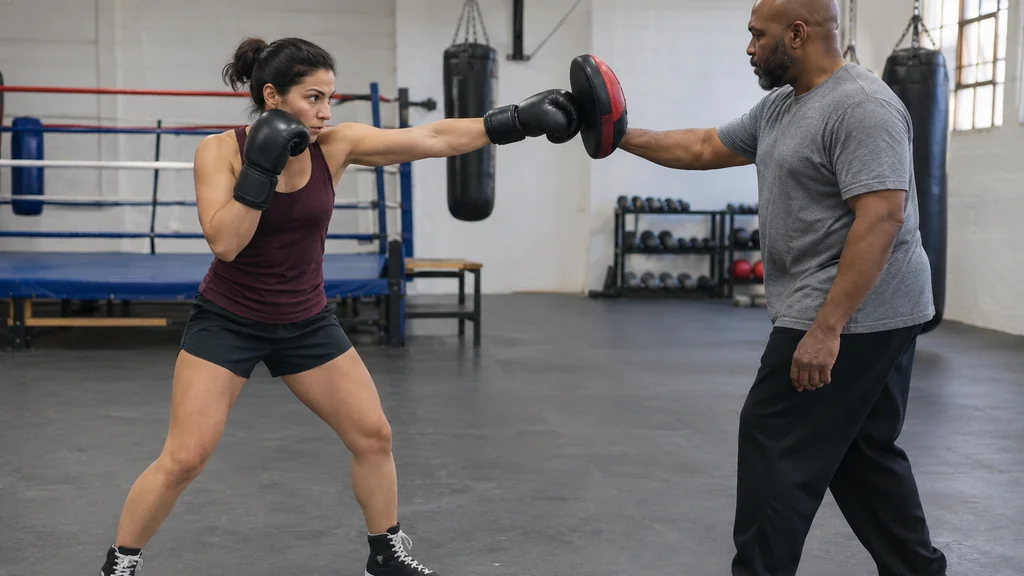
Four mistakes that turn it into a bad habit
The first is leaning from the waist. A large backward bend takes the head away, but it usually takes the hips and feet out of the next action too. Keep the movement in the knees and ankles, with the torso stacked rather than folded.
The second is reaching on the first jab. A long jab with the head over the front knee leaves too much work for the layback. Start close enough that the lead hand can touch the mitt without the rear foot dragging to catch you.
The third is dropping the rear glove while the jab works. The other boxer is most likely to return down the centre just when the lead hand has left home. Keep the rear glove useful rather than trusting head movement alone.
The fourth is making the final jab compulsory. A guarded-jab drill is a useful companion because it reinforces the same rule: a jab should leave you ready to defend. If the coach gives no target after the layback, returning to guard is the correct repetition.
Where this drill belongs in training
Use it after a warm-up, in a quiet pad round or as a short shadow-boxing block. It suits someone who already has a basic jab and can hold a sensible stance. It does not belong in hard sparring before the movement is reliable.
Start with a light jab, a visible return line and plenty of room. More experienced boxers can change the finish later with a short side step, a compact cover or a different counter. The basic version is enough to teach the useful habit: jab, expect an answer, make a little space, then choose.
For adults in Kidbrooke, Greenwich and nearby, our Recreational Adults boxing classes use controlled pad work and partner drills to make those decisions feel practical without rushing anyone into hard exchanges.
The coaching cue is simple: jab with shape, bend the rear knee, re-jab only if you are still balanced.
H&G Team
Writer at Honour & Glory Boxing Club, a community boxing gym in Kidbrooke, South East London.
KEEP READING
How to Use the Layback in Boxing
Learn the boxing layback as a small defensive pull that keeps you balanced enough to counter, not a big lean away from danger.
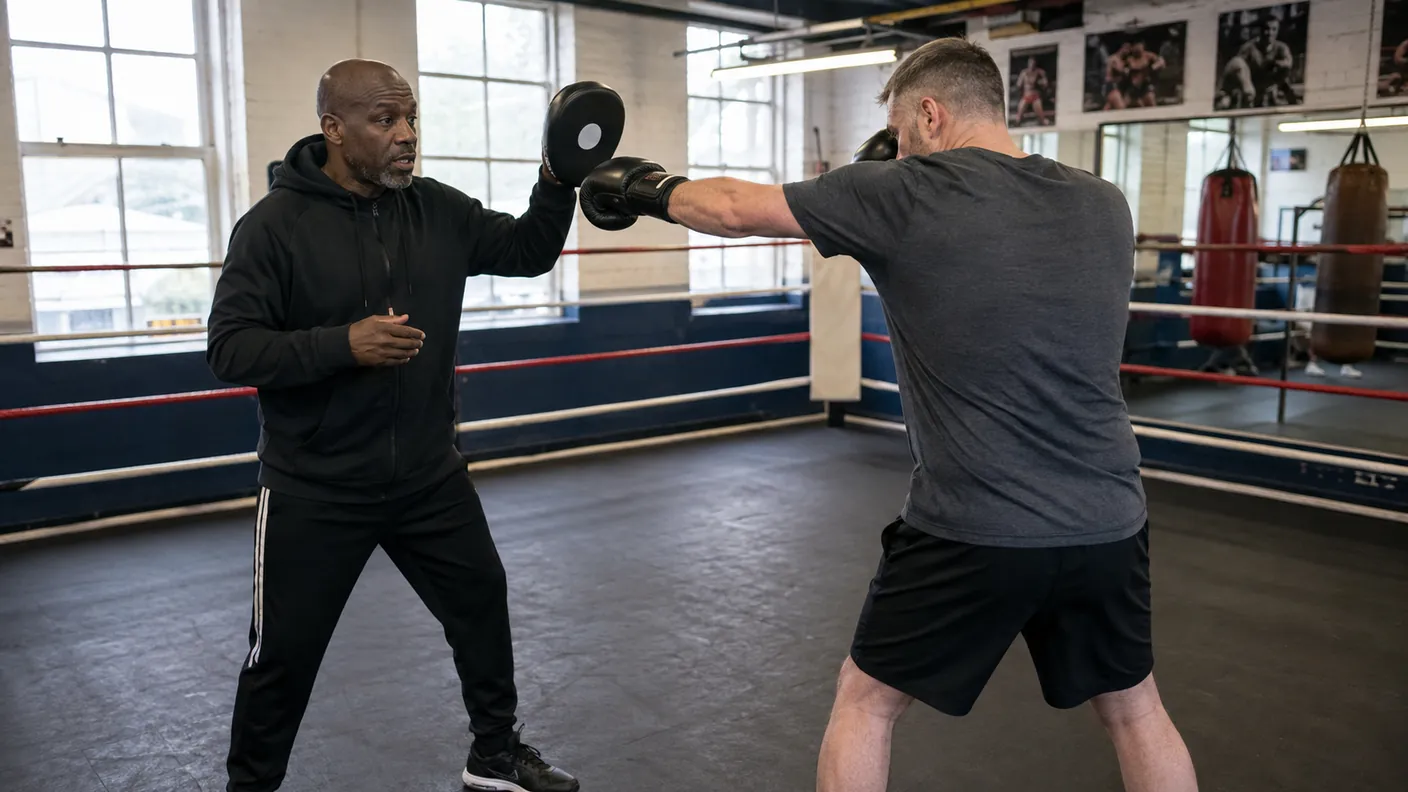
The Delayed Jab: A Simple Boxing Timing Drill
Use a small shoulder cue before the jab to change the rhythm, draw a reaction and keep your stance ready for the next decision.
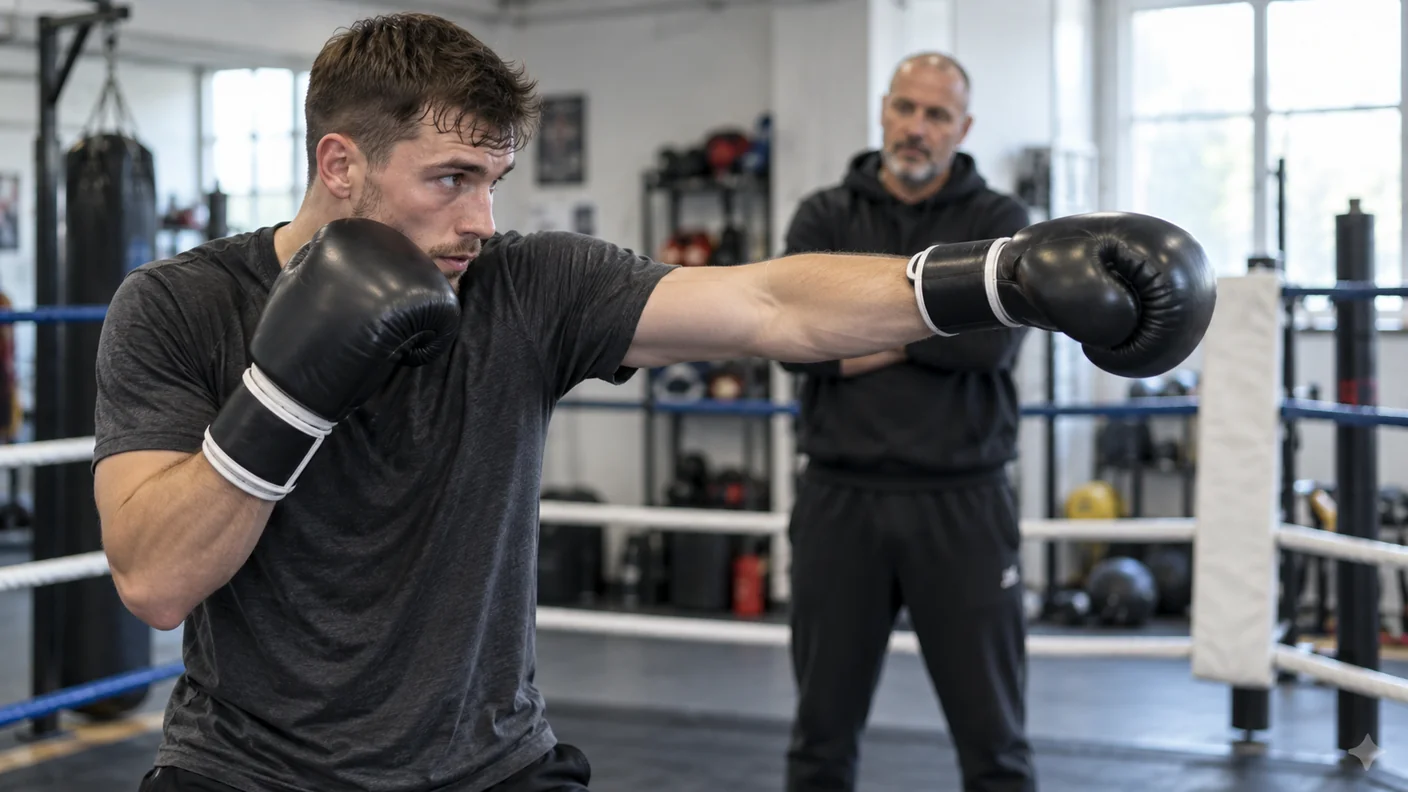
Slow Jab, Fast Cross: Boxing Timing
Use a measured jab and sharp cross to break predictable timing without losing your stance, guard or route out.
Was this page helpful?
It takes one tap, and it genuinely helps.
Choose your next step
Turn this article into the right action
Some readers are ready to book. Some need the class route first. Pick the route that matches what you actually want.