Hook-Duck Boxing Drill: Finish Without Standing Still
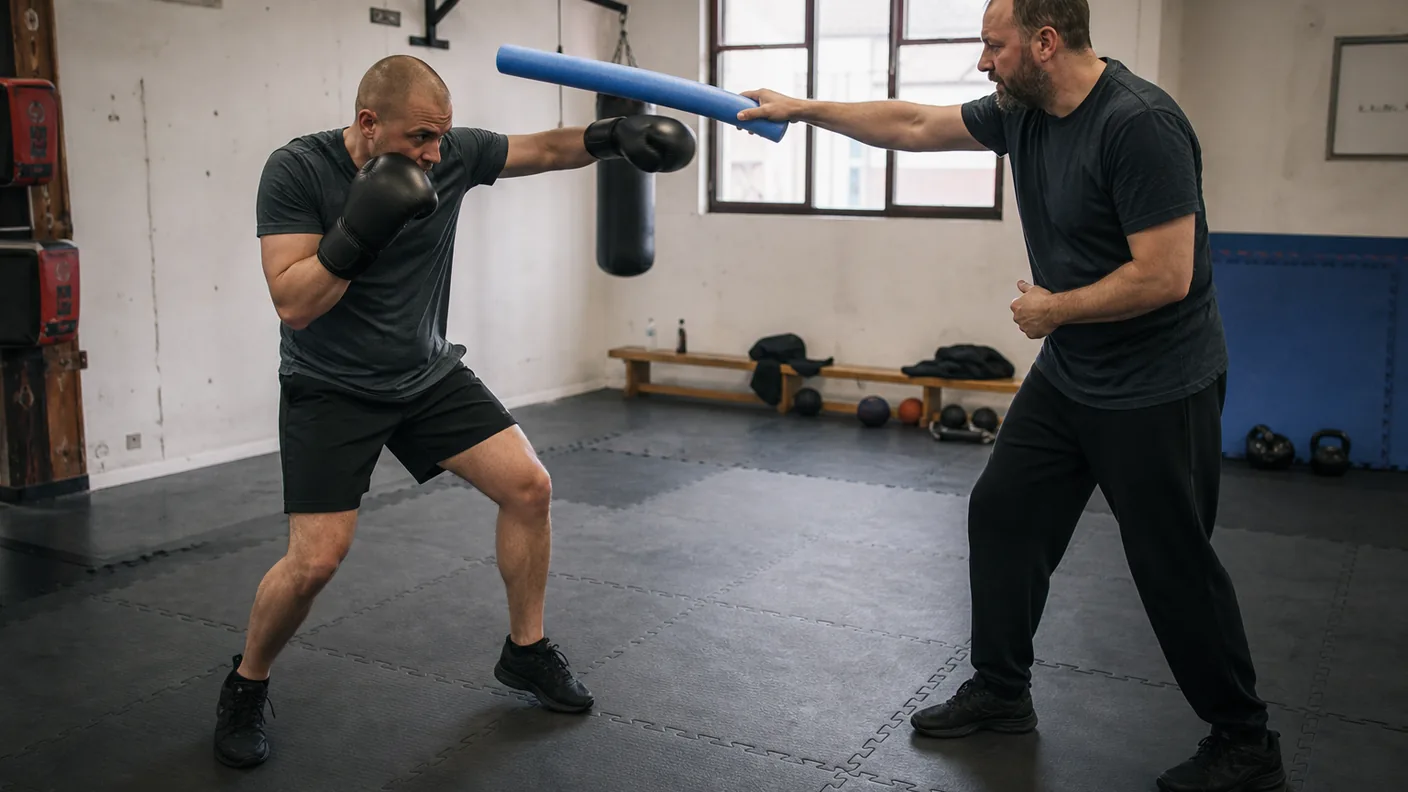
A hook can land cleanly and still leave you in trouble.
The usual mistake comes straight after the punch. A boxer turns into a lead hook, watches it land and stays upright in the same lane. On a bag, that looks harmless. With a partner, it is the moment a return hook, straight shot or pressure step can arrive.
The hook-duck drill gives the finish a job. Throw one compact hook, bring the hand home, bend through the knees just enough to change the head line, then return to a stance that can still defend or move. It is not a way to duck under every punch. It is a technical habit for not treating the hook as the end of an exchange.
Watch the short demonstration below, then use the coaching notes to keep the movement small and useful.
The duck belongs after the hook has returned
A good lead hook turns from the floor through the hip and trunk. It does not need a huge wind-up, and it does not need the arm to stay out after it has landed. Once the glove has travelled, bring it back towards the cheek before you think about the duck.
That order matters. If you dip while the hook is still hanging out, you leave one side of your face open and turn the movement into a scramble. Hook, recover the glove, then make the small level change. The rear hand stays near the face throughout.
A review of boxing mechanics describes punches as linked actions involving the legs, trunk and upper body. The practical lesson is simple: the hook and duck should be connected, but they should not arrive as one loose, falling movement.
Start with a light hook to a mitt or bag. Do not chase power. If the hook pulls your chest over the front knee, it is already too large to follow cleanly. A compact hook leaves enough shape for the knees to do their work afterwards.
The duck comes from the legs, not the waist
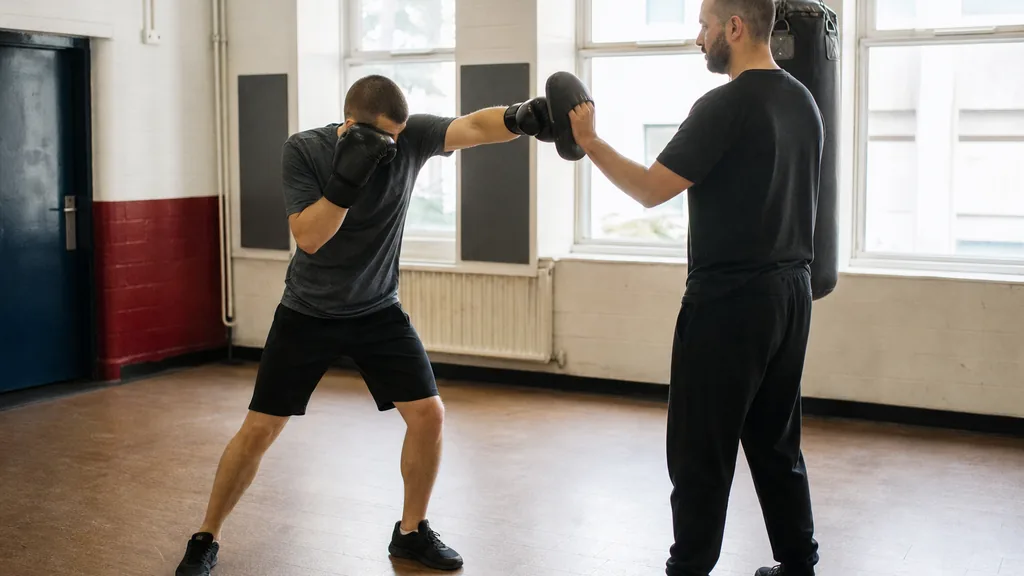
The duck is a short level change. Bend through the knees and hips, keep the back long and keep the eyes forward. You are not bowing at the floor, and you are not trying to squat as low as possible.
The target is only to move the head off a return line while preserving your stance. If a coach paused you at the bottom, you should still have both feet beneath you, both hands useful and enough balance to take a small step.
England Boxing's coaching handbook puts balance and controlled technical progressions at the base of learning. That is the right standard here. The duck is not successful because it looks deep. It is successful because you can come back up ready to make the next decision.
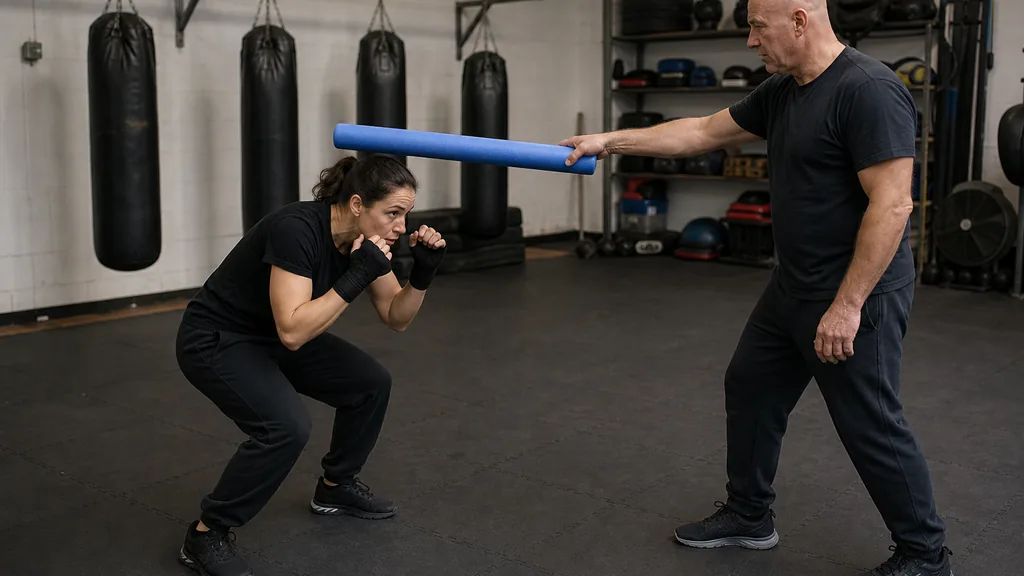
A common error is folding forward after the hook. The eyes drop, the back rounds and the rear glove slides away from the cheek. Make the movement smaller. Imagine you are lowering beneath a low string, not reaching for something on the ground.
Build the hook-duck in three controlled rounds
Use this as technical work after a warm-up. It fits shadow boxing, a bag, pads or slow partner drills. The bag is useful for feeling the hook, but the partner version is where you learn whether you can see the next cue without panicking.
Round one: hook, recover, hold
Throw one light lead hook to a mitt, bag or the air. Bring the glove back to guard and hold your stance for one second.
Check the feet. They should still be staggered. Check the rear hand. It should still be near the cheek. If the hook has left you square or leaning, do not add the duck yet. Shorten the hook and settle the base first.
Round two: hook, duck, return to guard
Now add the defensive beat. Hook, recover the glove, bend the knees enough to lower the head a little, then rise back into guard. Do not add a counter.
The lack of a counter is deliberate. It stops the drill turning into a memorised flurry. At first, you are checking whether the duck leaves you balanced, sighted and able to cover. If your eyes stay on the floor, the movement is too large.
Round three: hook, duck, choose one answer
Ask a coach or partner to show one slow, agreed cue after your duck. They may hold a high mitt for a jab, a body mitt for a light touch, or show no target at all. Your job is to make one sensible choice: jab, touch the body target, cover and step out, or reset.
Do not decide the answer before the hook. Boxing changes quickly. The point of the duck is to make your next option available, not to force a second or third punch regardless of range.
Why this is different from a jab-duck
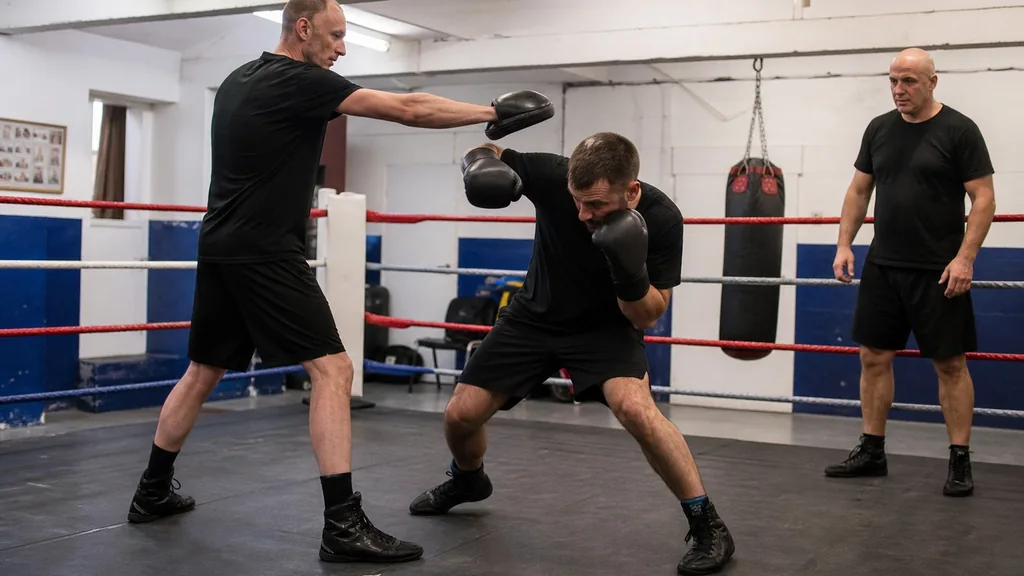
A jab-duck begins at long range and teaches you not to stand tall after the lead hand. The hook-duck is a closer-range finish. The hook has already turned the body, so the next job is to recover the guard, lower without folding and avoid staying still in front of a possible return.
That does not mean a duck is always the answer after a hook. If the other boxer has stepped away, there may be nothing to duck under. If you are too close, a tight guard or frame may be better. If you are near ropes, a small exit can matter more than another level change.
Treat the drill as one option, not a rule for every exchange. Our guide to rolling under punches without folding is useful when you need a fuller movement around a hook line. For the simpler problem of finishing one punch with your shape intact, the hook-duck keeps the task narrow.
Four mistakes that spoil the drill
The first is throwing the hook too long. If the elbow straightens or the shoulder follows the glove, you will need a dramatic duck to recover. Make the hook shorter and use a target at an honest range.
The second is dropping the rear hand while you dip. The duck does not replace your guard. Keep the rear glove close and return the hooking hand before lowering.
The third is looking down. The coach, partner and next target are in front of you. Keep the eyes forward so you can decide whether to rise, cover or leave.
The fourth is adding speed before shape. Fast hook-ducks can look lively while hiding crossed feet, low hands and a poor back position. Slow repetitions make those faults obvious. Work at a pace where a coach could pause you at any point and still see a boxer.
Where it fits in training
This is not a sparring invitation. Use agreed cues, light mitt work and controlled partner rounds. A beginner can shadow the hook-recover-duck pattern without anyone throwing at them. A more experienced boxer can let a coach vary the safe follow-up target after the duck.
If you are in Kidbrooke, our Recreational Adults boxing classes use pads, bags and calm partner drills to make defensive habits part of every punch. You learn to finish a combination with balance rather than standing in front of the next answer.
The coaching cue is simple: hook, gloves home, knees soft, eyes up.
H&G Team
Writer at Honour & Glory Boxing Club, a community boxing gym in Kidbrooke, South East London.
KEEP READING
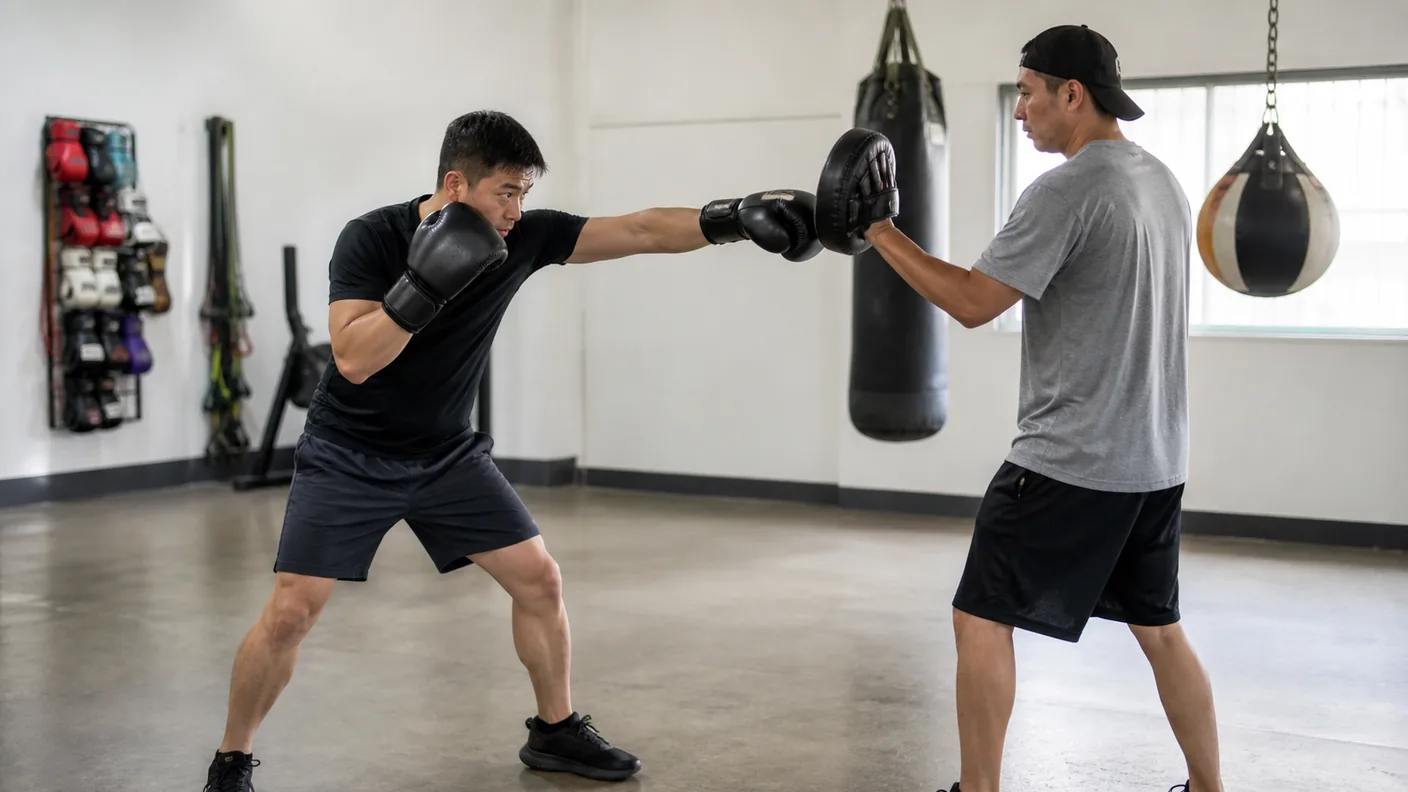
Jab-Duck Drill: Stay Low Without Folding
Use a jab-duck drill to change level with your eyes up, feet underneath you and guard ready for the next decision.
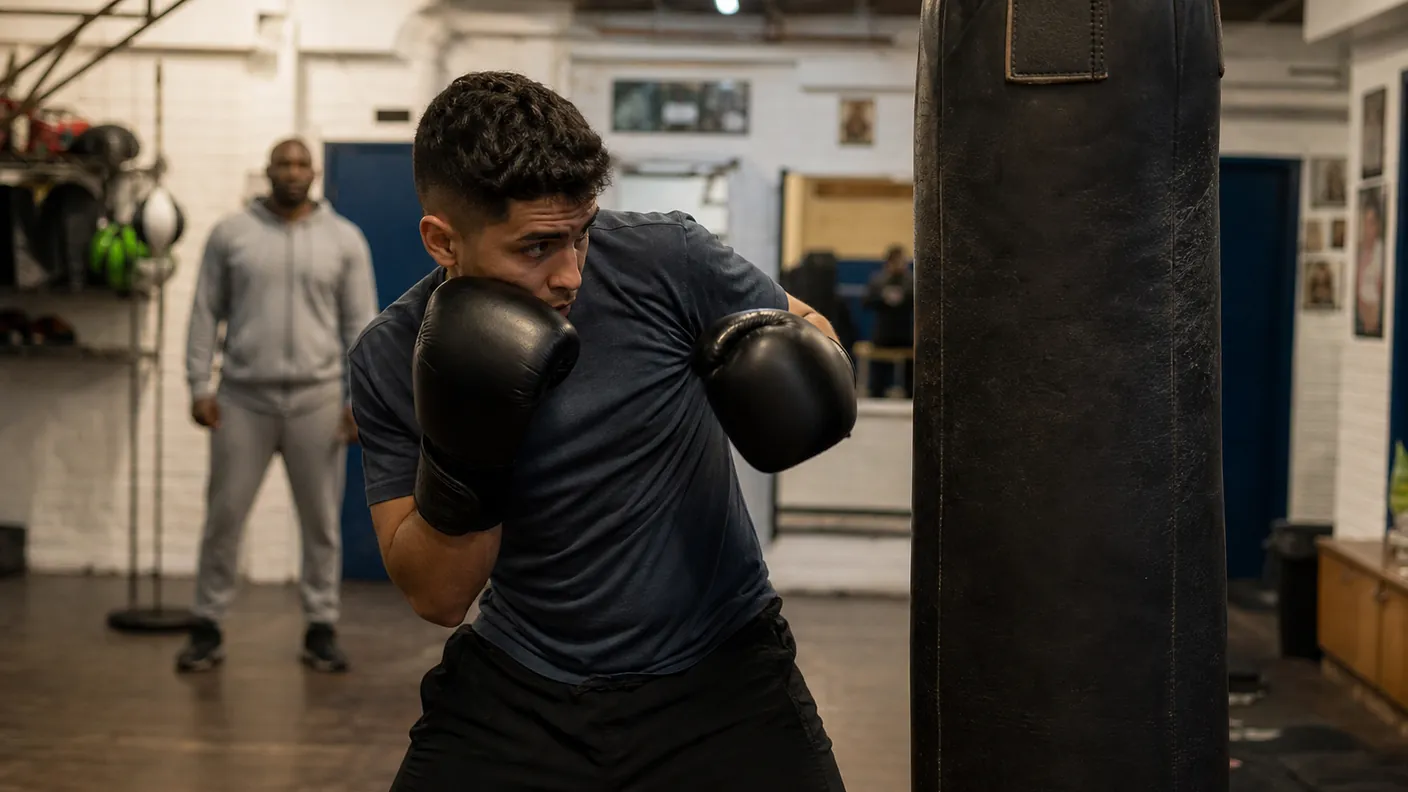
Jab, Slip, Slip, Hook: A Calm Boxing Drill
Use a controlled jab-slip-slip-hook drill to join your guard, head movement and lead hook without rushing the exchange.
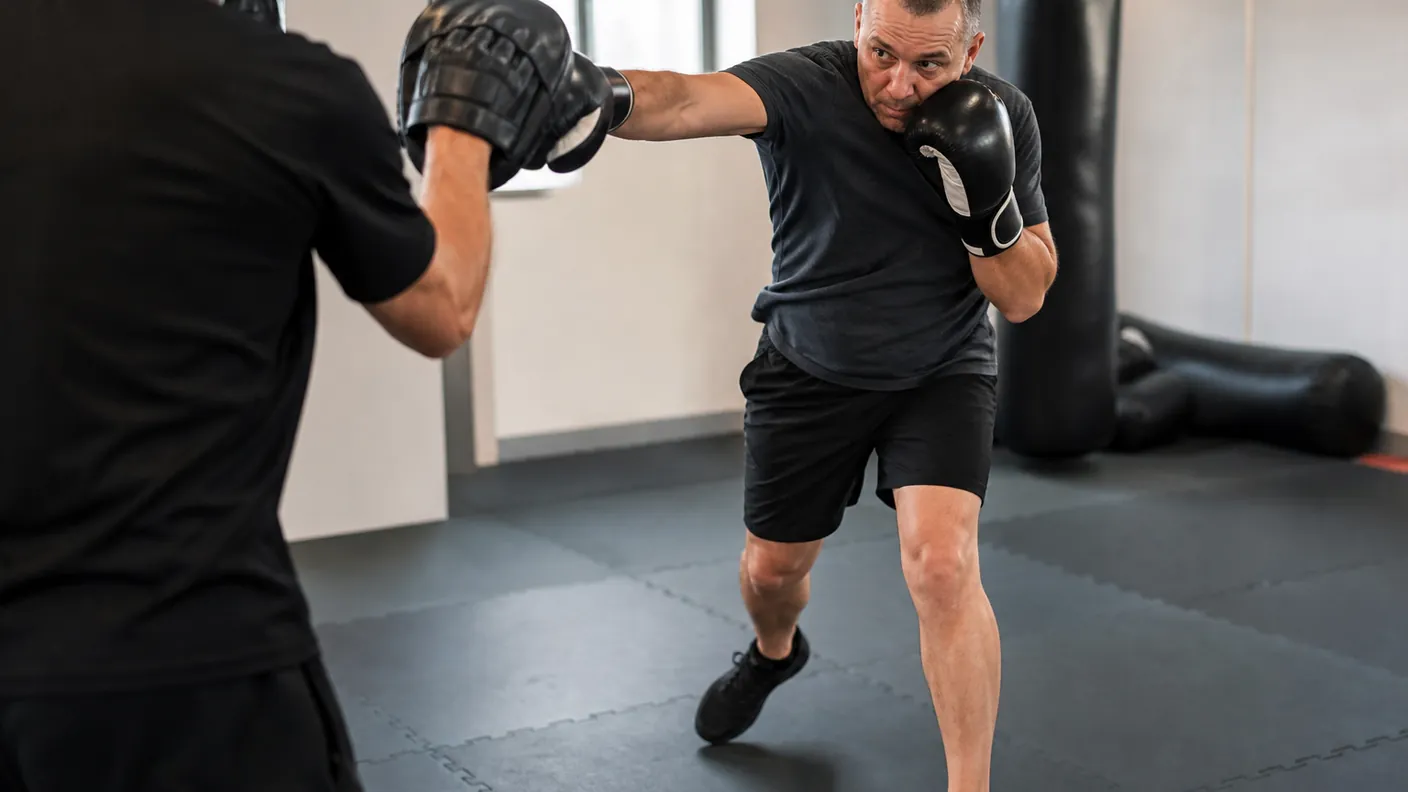
Two-Step Hook Drill for Boxing Balance
Use two small foot adjustments to find range for a compact hook without stretching, spinning or losing your guard.
Was this page helpful?
It takes one tap, and it genuinely helps.
Choose your next step
Turn this article into the right action
Some readers are ready to book. Some need the class route first. Pick the route that matches what you actually want.