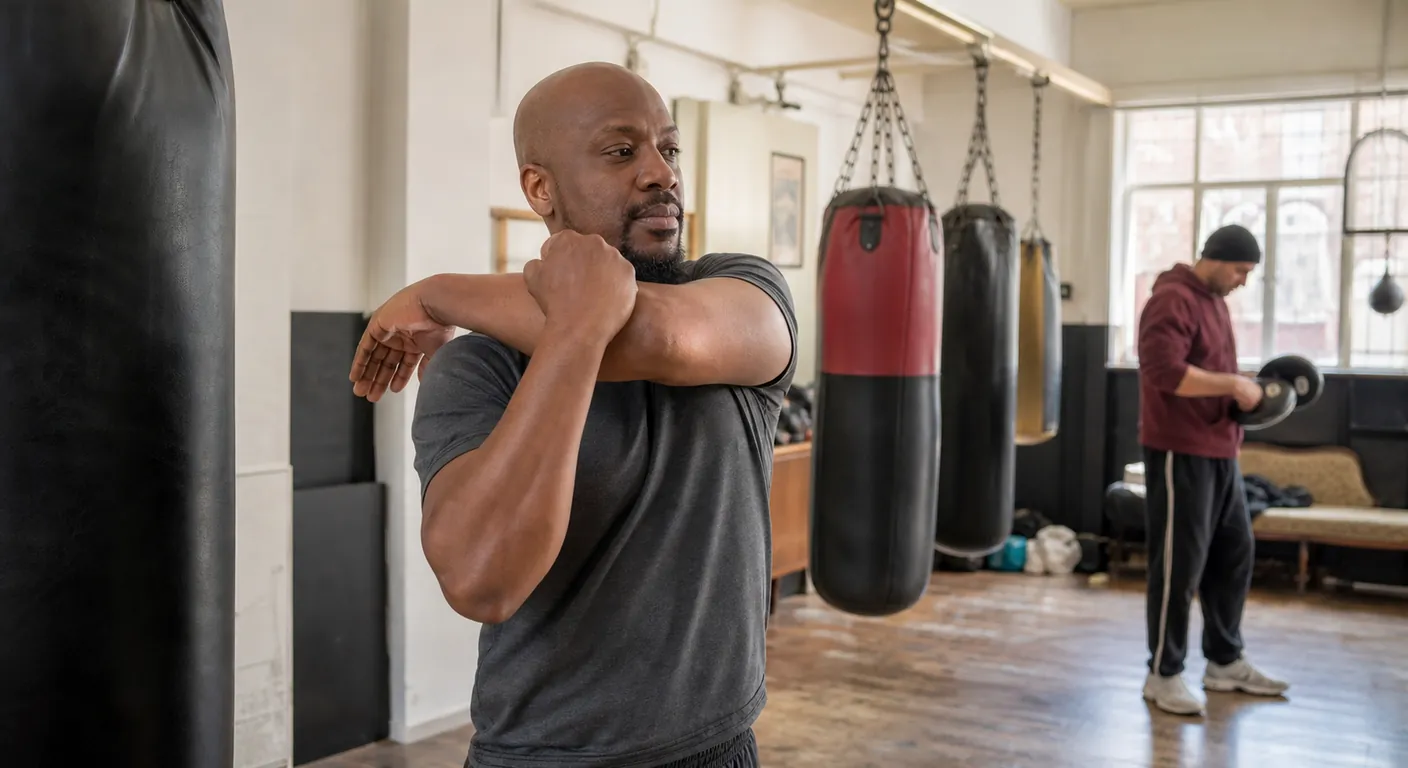
No. You do not need to touch your toes, sit in the splits or move like a dancer before you start boxing.
You need enough comfortable movement to stand in a balanced stance, bend your knees a little, turn your upper body, raise your hands and step without pain. Everything beyond that can improve as you train.
People often put boxing off because they feel stiff. They have spent years at a desk, on their feet at work, lifting weights, driving, looking after children, or simply not doing much structured exercise. Then they watch a skilful boxer slip, pivot and rotate, and decide they need a month of stretching before they are allowed in the gym.
That is the wrong order. Start with controlled coaching. Build range where it helps. Do not make flexibility another excuse to stay on the sofa.
What flexibility means in a boxing class
Flexibility is not a party trick. It is whether a joint can move through the range needed for daily activity and exercise. The NHS describes flexibility exercises in much the same practical way: helping joints maintain the movement needed for normal tasks and physical activity.
For a new boxer, that means useful range rather than dramatic range.
You need to be able to:
- stand with your feet under you rather than locking your knees
- turn the ribs and hips enough to throw straight punches without wrenching the lower back
- lift the arms into a guard without shoulder pain
- take a short step forwards, backwards and sideways without crossing the feet
- bend the ankles and knees enough to stay balanced
- move your head a small amount without folding at the waist
None of that requires gymnastic flexibility. Boxing is not kickboxing. You are not trying to put a shin above somebody's shoulder. A good boxing stance is compact, balanced and relaxed enough to move again.
Being stiff is information, not a ban
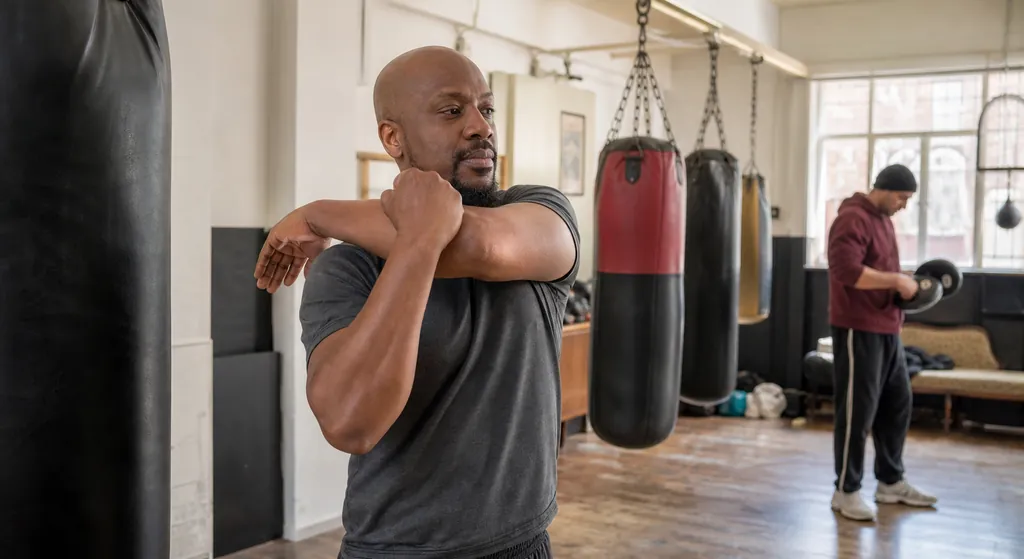
Stiffness is worth noticing, especially if it is new, one-sided or painful. It is not a reason to self-reject from a beginner session.
The useful question is not "am I flexible enough?" It is "can I move comfortably enough to learn today?"
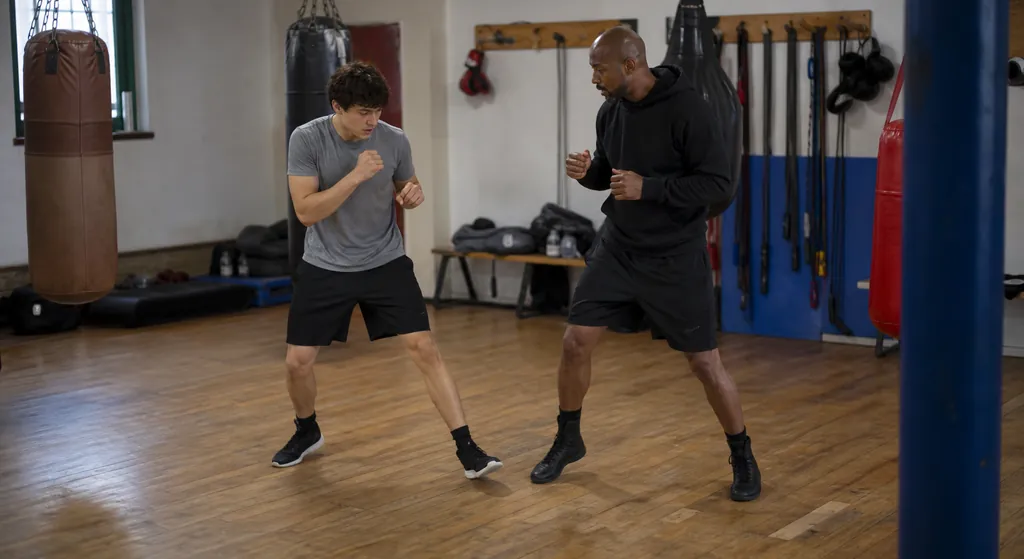
A coach can see whether your stance is too wide, whether your shoulders climb towards your ears, whether your rear heel refuses to turn, or whether a short step makes your knees collapse in. Those are coaching details. They do not mean you have failed a physical entrance exam.
In the first few sessions, tight calves can make skipping feel unfamiliar. Stiff ankles can make a deep squat awkward. A tight upper back can make the guard feel heavy. These are common starting points, not character flaws.
The answer is usually to reduce the demand, not abandon the movement. Smaller steps. Slower shadowboxing. Shorter rounds. A little more warm-up. A coach who says "do not force that" is doing their job.
Boxing needs mobility, not loose joints
Mobility is the ability to control a movement through a useful range. That distinction matters more than how far you can stretch.
A boxer who can fold forwards dramatically but cannot keep their feet under them is not in a better position than a stiffer boxer with a clean stance. A loose shoulder is not automatically a stable shoulder. A deep lunge is not useful if you cannot recover into guard.
Boxing asks for control in a few key places:
Ankles and knees
Your feet do most of the quiet work. You need enough ankle bend to push off, brake and change direction, and enough knee bend to stay springy rather than standing bolt upright.
That does not mean bouncing around like a calf in a field. It means soft knees and feet that can move without your body tipping forward.
Hips and upper back
A punch starts from the floor, travels through the legs and hips, and finishes through the trunk and arm. If your hips and upper back do not turn easily, people often try to make up for it by wrenching the lower back or swinging the arm.
A coach will usually slow the punch down, shorten the range and teach you to turn as one connected movement. More power can wait.
Shoulders and hands
Your arms need to come up into guard and return there after a punch. Tight shoulders can make that tiring, but forcing a painful stretch before class is not the answer.
The aim is a guard that is present without being clenched. Think alert, not rigid.
Do not stretch hard before you know what hurts
There is a difference between normal stiffness and pain.
If a movement feels unfamiliar but settles as you warm up, tell the coach and work within a comfortable range. If it is sharp, catches, causes pins and needles, makes you limp, or gets worse every time you rotate or punch, stop treating it as a flexibility problem. That needs proper attention.
The NHS stretching guidance is clear that people with an injury, medical condition or pregnancy may need individual changes to their stretching routine. That is sensible for boxing too. Your coach can adapt the session, but they cannot diagnose a shoulder, back, hip or ankle problem.
If you are returning after an injury, speak to a qualified clinician about what is appropriate before you test it on bags or pads. Our guide to boxing soreness versus injury explains the practical warning signs that should make you stop rather than push through.
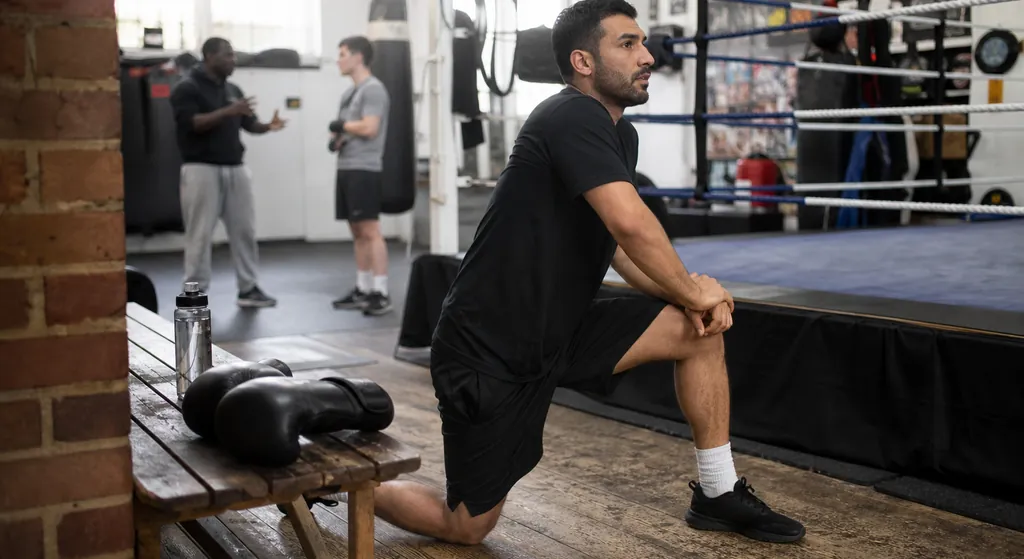
For everybody else, make the warm-up match the work. Walk, skip lightly, move the shoulders, turn through the upper back, shadowbox slowly, and let your range arrive gradually. Do not turn the first five minutes into a competition to see who can pull the hardest stretch.
Will boxing make you more flexible?
It can improve useful movement, but it will not replace a dedicated flexibility practice if that is your main goal.
Boxing gives you repeated, controlled work through a practical range: stance, steps, rotation, reaching, defensive movement and posture under fatigue. Regular training can make those positions feel less foreign. But if you want a deeper squat, a more comfortable overhead reach or greater hip range, a short mobility routine alongside boxing is sensible.
There is no need to choose between lifting and stretching either. A systematic review comparing strength training and stretching found that both approaches can improve range of motion. The practical takeaway is simple: controlled strength work does not automatically make you stiff, and stretching is not the only route to better movement.
At H&G, the sensible version is not a complicated corrective programme. It is arriving early enough to warm up, listening when a coach adjusts your range, and doing a few useful movements on non-boxing days if you know a particular area gets tight.
A simple mobility check before your first class
You do not need to test yourself in the mirror for an hour. Ask four plain questions.
Can you walk briskly without pain? Can you step into a comfortable staggered stance? Can you raise both hands near your face? Can you turn gently to look over each shoulder?
If the answer is yes, you are in a workable place to start a beginner class.
If one movement is limited but comfortable, tell the coach before the warm-up. They can watch how it responds and give you an easier version where needed.
If you have significant pain, recent surgery, a condition affecting balance, or a problem that has not been assessed, speak to the appropriate clinician first. Starting carefully is not the same as waiting until you are perfect.
The better first goal
Your first goal is not to become flexible. It is to become more capable.
Learn to stand without tension. Learn to keep your balance while you step. Learn to turn without throwing your whole body at the bag. Learn to breathe while your arms are working. Those are boxing skills, and they improve through repetition and correction.
If you are starting from a stiff place, good coaching matters even more. The coach can make the session hard enough to be useful without making you force positions that your body does not own yet.
For adults near Kidbrooke, our Recreational Adults boxing classes are the right starting point. You do not need to arrive flexible. You need to arrive honest about how you feel and willing to learn.
H&G Team
Writer at Honour & Glory Boxing Club, a community boxing gym in Kidbrooke, South East London.
KEEP READING
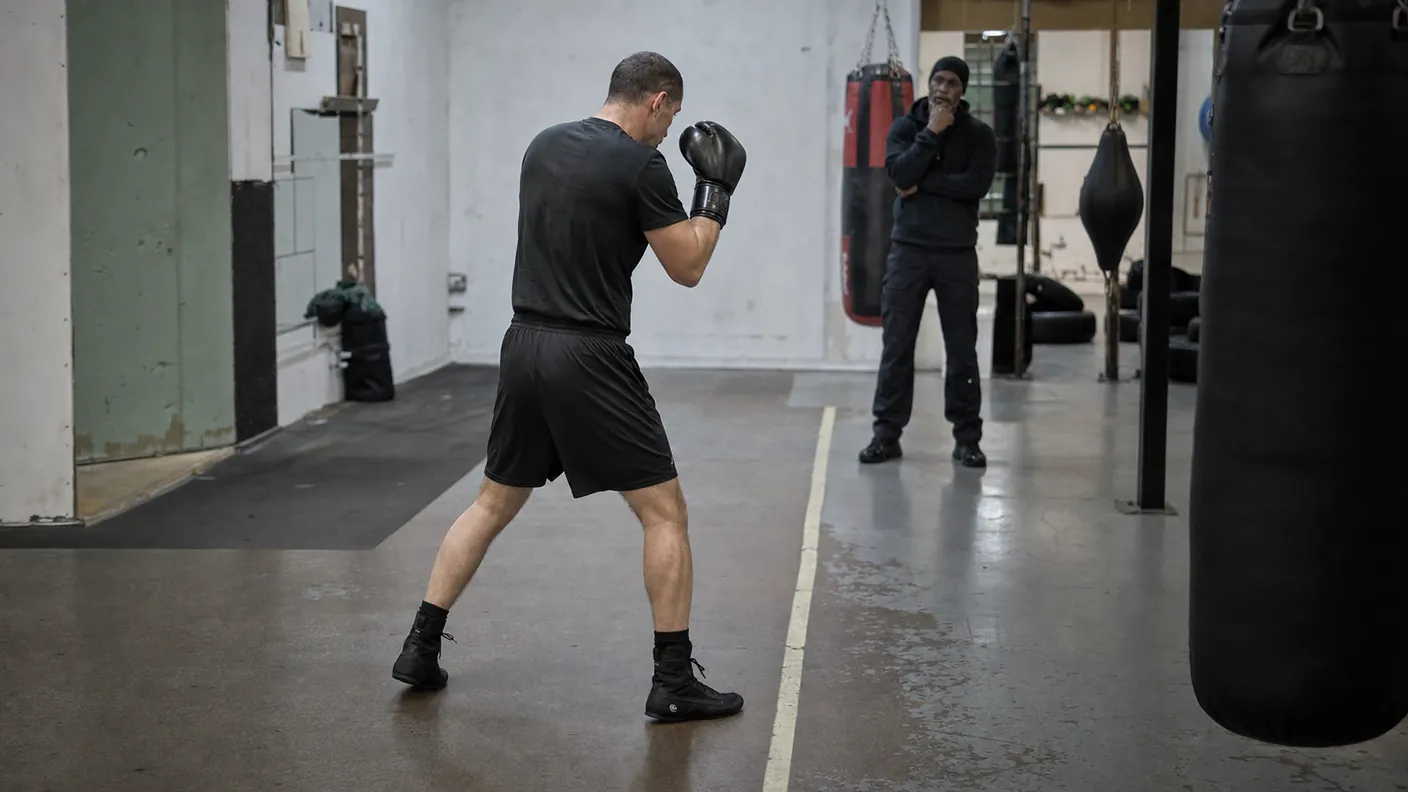
The Floor-Line Drill for a Better Boxing Stance
Use one line on the floor to build a boxing stance that stays balanced, mobile and ready to punch without standing square.
Why You Look at the Floor When Boxing
Looking down makes boxing feel faster and less controlled. Learn the simple visual habits that keep your stance, guard and decisions organised.
Boxing Stance and Guard Basics
Learn the proper boxing stance for beginners and how to hold your guard. Get these foundations right and everything else becomes easier.
Was this page helpful?
It takes one tap, and it genuinely helps.
Choose your next step
Turn this article into the right action
Some readers are ready to book. Some need the class route first. Pick the route that matches what you actually want.