Diego Pacheco’s late stoppage: how pressure wins
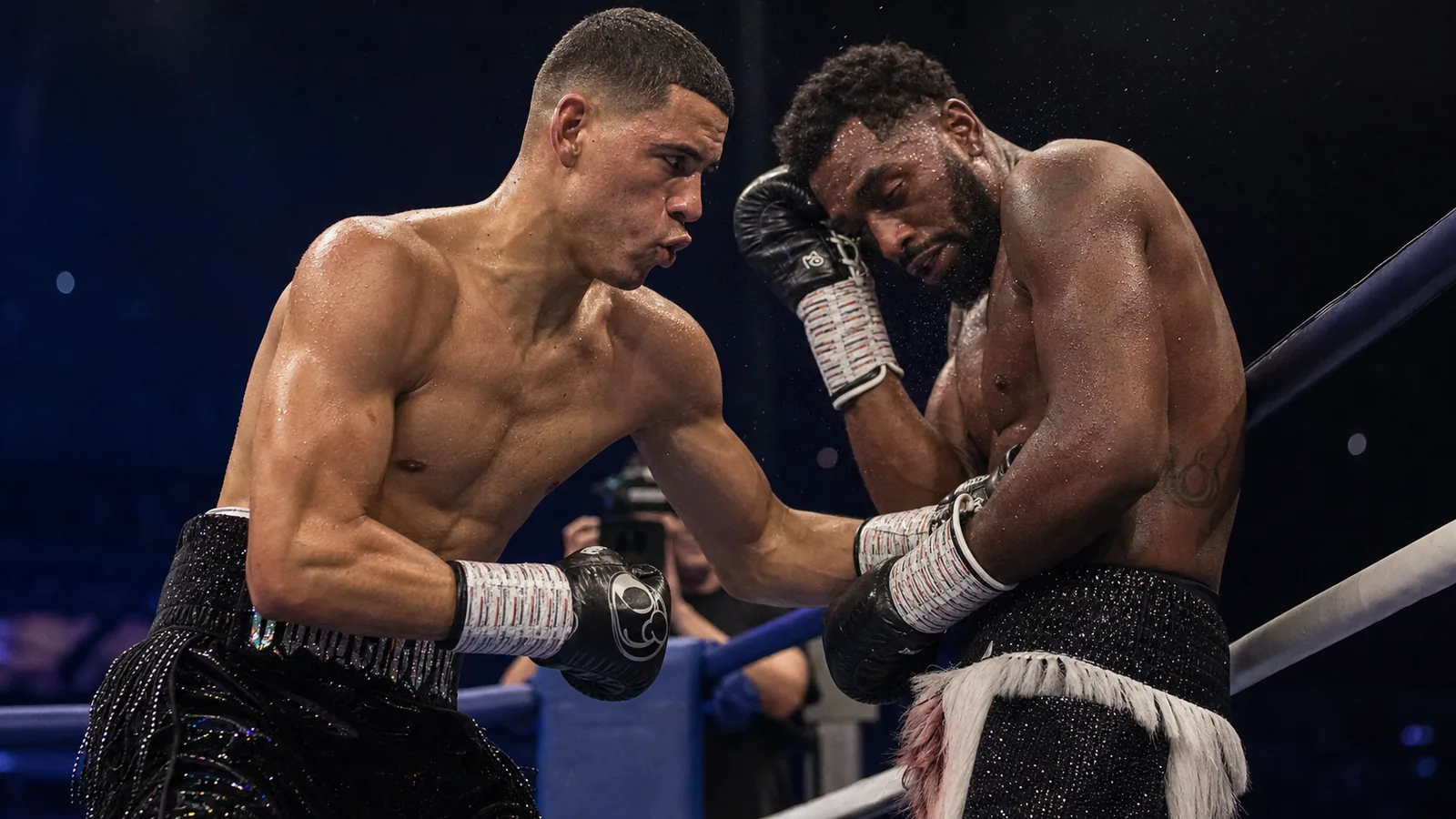
Diego Pacheco vs Immanuwel Aleem: How Pressure Wins Without Chasing
A late stoppage can look simple once it lands. One man is trapped, the other is throwing, the referee steps in, and the highlights begin. Diego Pacheco’s 11th-round TKO of Immanuwel Aleem in Carson, California was not simple at all.
It was a lesson in how a tall, patient boxer can turn control into damage without becoming reckless. Pacheco did not spend ten rounds sprinting after a knockout. He used his jab, kept Aleem working to enter range, invested downstairs, and let the cumulative effect change the contest. By the 11th, Aleem was not beaten by one spectacular punch. He was beaten by the bill arriving for every difficult minute that came before it.
Pacheco improved to 26-0 with 19 knockouts, while Aleem, a hard, experienced veteran, fell to 22-5-3. The fight listing and tale of the tape showed the physical problem clearly before the first bell: Pacheco stood 6ft 4in with a 79-inch reach, against Aleem’s 5ft 9in and 70 inches. Size does not win fights by itself. Using it properly does.
The jab was not decoration
Pacheco’s jab was the fight’s controlling weapon. It was not thrown simply to score points or look busy. It did three jobs at once.
First, it kept Aleem at the end of Pacheco’s reach. Aleem needed to cross a substantial distance to work, and every entry had a price. A jab in the face interrupts the feet. A jab to the chest halts momentum and makes an opponent reset his stance. Pacheco used both.
Second, the jab gave Pacheco information. He could see when Aleem was dipping low, rushing in, bringing his gloves together, or loading up his right hand. That meant he was not guessing when he chose the right hand, uppercut or body shot behind it.
Third, it made Aleem mentally tired. There is a particular frustration in being kept just outside your own range. You feel close enough to attack, but each step in is met by a punch, a clinch, a step back or a pivot. The shorter fighter begins to force entries, and forced entries are where clean boxing breaks down.
Boxing News 24’s report from Carson noted that Pacheco repeatedly used the jab to Aleem’s face and chest, preventing him from putting more than a punch or two together. That is the key distinction. Pacheco was not retreating. He was deciding the distance.
For young boxers watching at Honour & Glory, this is worth understanding. A jab is not a weak punch that exists before the “real” punches. It is often the punch that makes every other punch possible.
Body work changed the pace of the fight
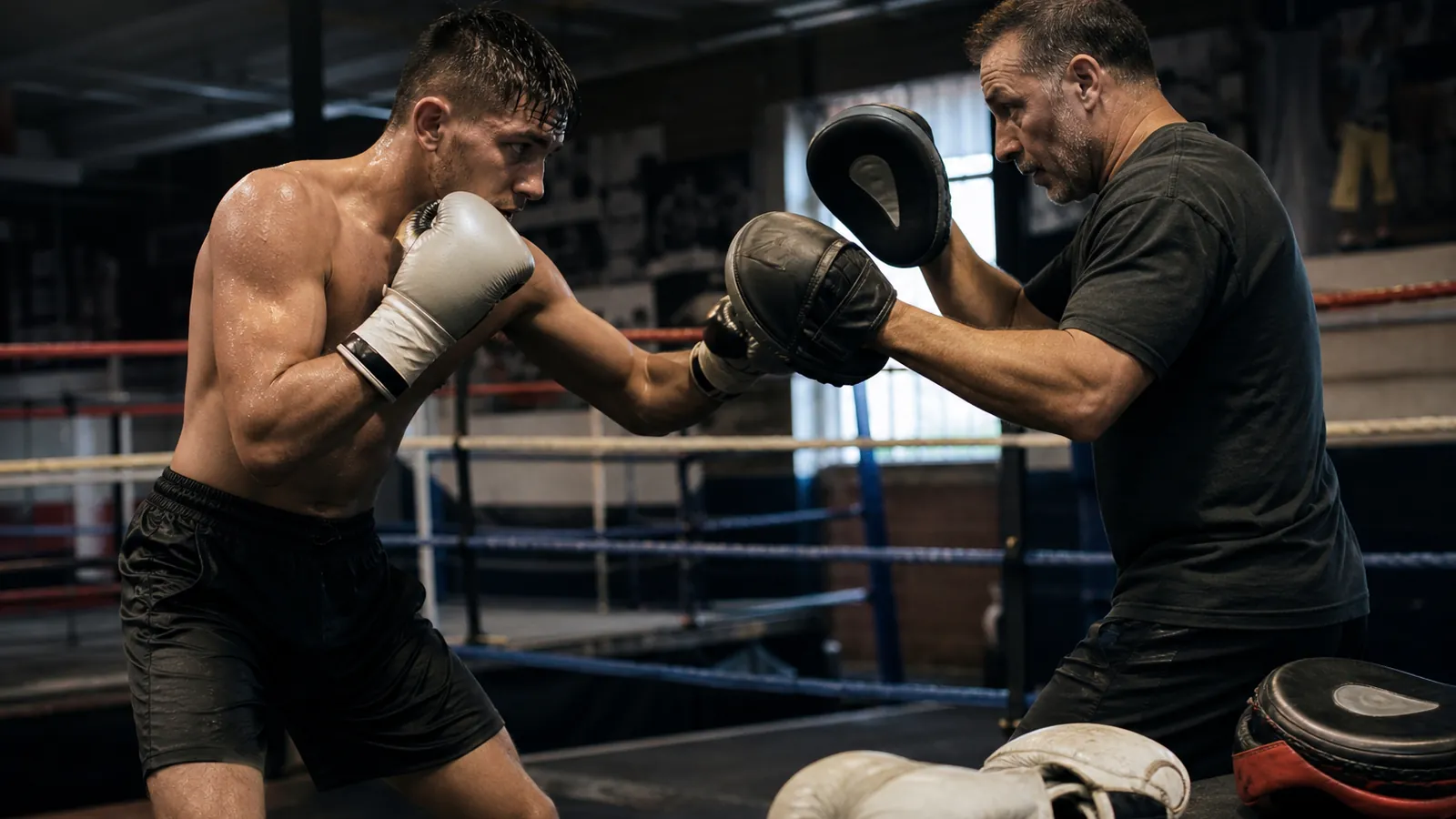
Pacheco’s best adjustment was his commitment to the body. In the highlights, there are hooks and short shots downstairs when Aleem gets close, followed by straight punches when he tries to leave. That is disciplined pressure.
A tall boxer can make the mistake of falling in love with head shots. The target is visible, the reach is there, and the highlight is tempting. But Aleem had come to survive difficult moments. Pacheco needed to make survival costly.
The body attack did that. It shortened Aleem’s movement, lowered his posture, and gradually took the snap from his counters. The effect was not instant. It did not need to be. Good body work is an investment. You may not see a dramatic reaction in round three, but you may see an opponent stop slipping the jab properly in round eight, hold his feet a little longer in round nine, or bend forward into an uppercut in round 10.
That sequence was visible here. Boxing247’s account of the stoppage described Pacheco mixing hooks to the body with straight punches upstairs through the middle rounds, before his shots carried more authority in the championship rounds. The fight was being built rather than rushed.
There is a coaching point here that does not get enough attention: go to the body when you can land cleanly, not because a trainer shouts “body”. Pacheco did not lean over his front foot and throw blind hooks from too far away. He used the jab to establish range, worked in close when Aleem entered, and took the body shot when Aleem’s position gave it to him.
That is why the punches counted.
Pressure is about taking options away
Many people think pressure means walking forward with a high guard and throwing loads of punches. That is one kind of pressure, but it is not the clever kind.
Pacheco’s pressure was positional. He made Aleem work at the range Pacheco chose. He occupied space without smothering his own punches. He kept the taller man’s long weapons available and did not give Aleem a clean, predictable exit.
The most effective pressure fighters are not necessarily the busiest. They are the fighters who make the ring feel smaller. They cut off a route, take a half-step forward after a jab, and stand in a position that makes the opponent choose between a bad exchange and a bad angle.
Pacheco did not chase Aleem around the ring with his feet crossing or his chin in the air. He closed distance in stages. Jab. Step. Touch the body. Reset. Jab again. That rhythm matters because it keeps the attacker balanced enough to defend against the counter.
Aleem landed the odd right hand and tried to create moments of resistance. A durable professional does not simply surrender. But Pacheco’s response was revealing. He did not lose his head because he had been touched. He returned to the jab, returned to the body, and continued putting Aleem back where he wanted him.
The DAZN live coverage and Bleacher Report’s fight preview both framed Pacheco as a leading super-middleweight contender. This was the useful evidence. Against a man who had been in with serious opposition, Pacheco was able to control a fight for a long time without showing impatience.
The finish came because Aleem had nowhere left to go
By the 11th, Pacheco had earned the right to attack harder.
Aleem had spent round after round trying to get past the jab, absorb body shots and find a way to upset Pacheco’s rhythm. His feet were slower, his guard was absorbing more than it was returning, and the ropes became a trap rather than a place to regroup.
When Pacheco hurt him, he did not throw one wild, looping shot and hope. He put together uppercuts, body punches and straight shots, keeping Aleem under fire. The referee stepped in after a sustained barrage. BoxingNews.com’s result report recorded it as Pacheco’s return to knockout form after recent distance fights, while the live results from Boxing News 24 identified the jab, body attack and steady combinations as the foundation.
That is the point. The stoppage was the final chapter, not the whole story.
There is a bad habit among inexperienced boxers: they see a tired opponent, get excited, and abandon the very technique that created the opening. Their feet become square, their punches become wide, and they walk into the one counter the hurt opponent can still throw.
Pacheco avoided that trap. Even when the finish was there, he stayed close enough to land and far enough to see what was coming back. He pressed with purpose rather than panic.
What to take into your own training
Nobody in a Kidbrooke boxing class needs to copy an 11th-round finish. The useful lessons are much simpler.
Build the jab into your footwork
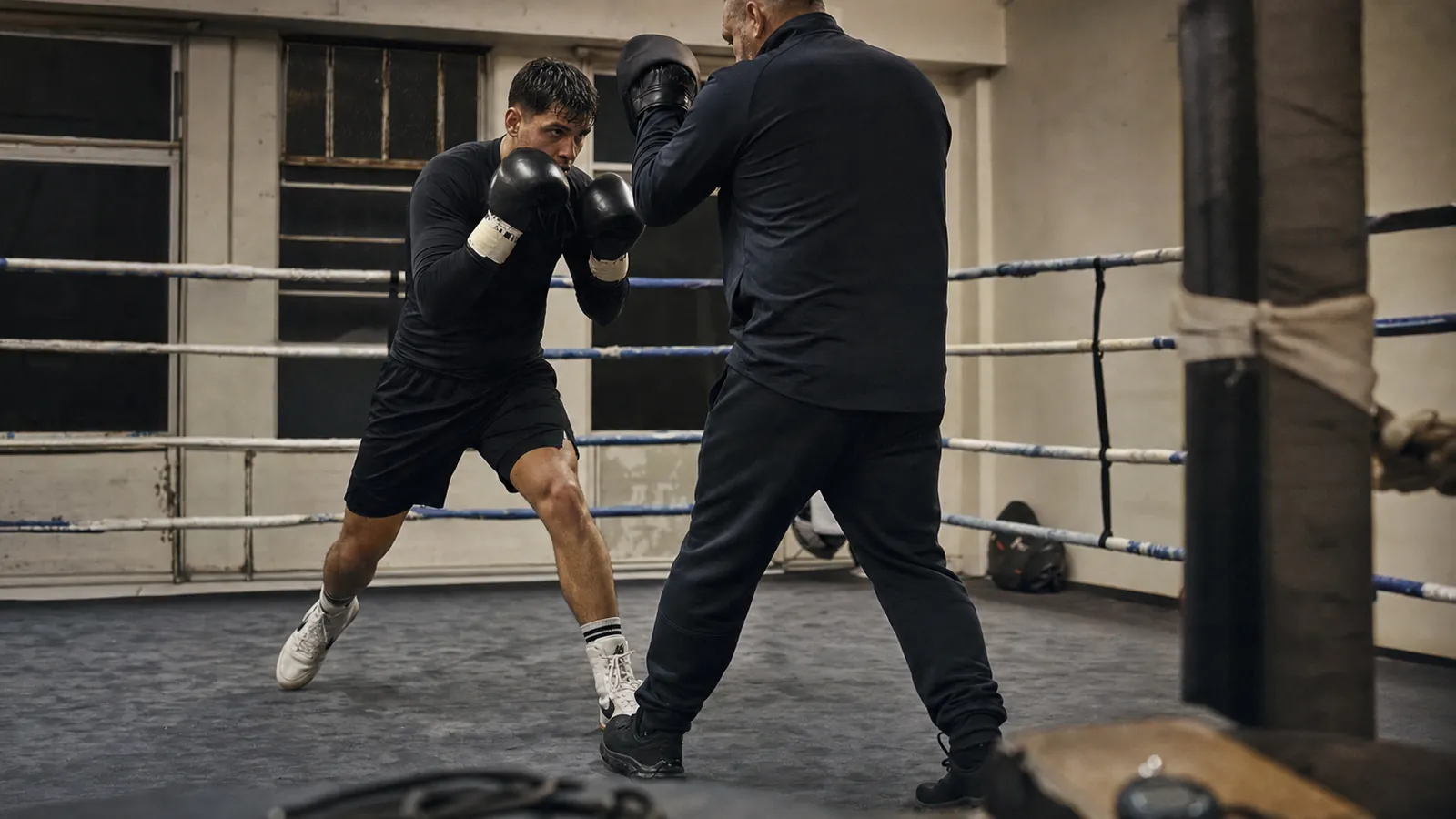
Do not throw the jab and stand still. Use it to claim space, make your opponent pause, and put yourself in a better position for the next punch. A good jab lets you attack without gambling.
Work the body with a reason
Body shots are not magic. They work when you set them up, keep your balance and place them where an opponent is exposed. If you reach for them, you become easy to counter.
Make patience an active choice
Patience does not mean waiting and hoping. It means collecting good work, staying organised, and refusing to trade your position for one desperate punch.
Finish safely
If an opponent is hurt, keep your shape. Do not run in with your hands low. Use straight punches, watch the return, and remember that a boxer under pressure can still be dangerous.
Pacheco’s performance was not a lesson in hunting a knockout. It was a lesson in making a knockout more likely through better decisions. That is proper pressure: intelligent, disciplined and repeated until the other fighter has fewer answers than questions.
For anyone aged 7 and over who wants to learn those foundations properly, from the jab and footwork through to controlled combination work, book a trial at Honour & Glory Boxing Club.
H&G Team
Writer at Honour & Glory Boxing Club, a community boxing gym in Kidbrooke, South East London.
KEEP READING
Omari Jones vs Diego Osuna: Prospect Lessons
Break down what developing boxers can learn from a fresh DAZN-highlighted prospect fight: composure, unbeaten confidence, tempo and how amateurs transition into pro-style rounds.
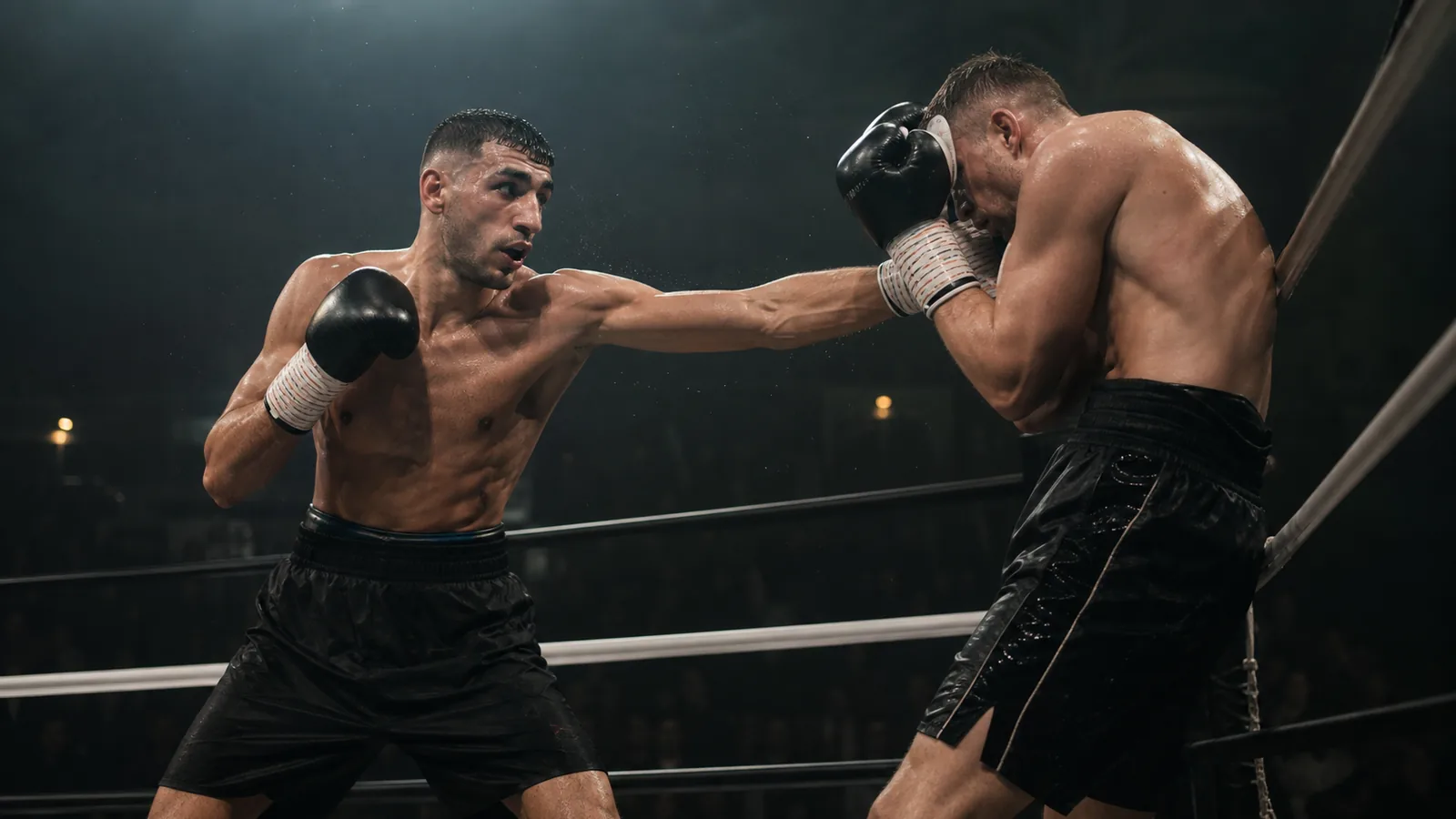
Hamzah Sheeraz vs Zachenhuber: the pressure that changed it
Use the fresh DAZN highlights to examine how Sheeraz built attacks, managed distance and turned sustained pressure into meaningful work against Simon Zachenhuber.
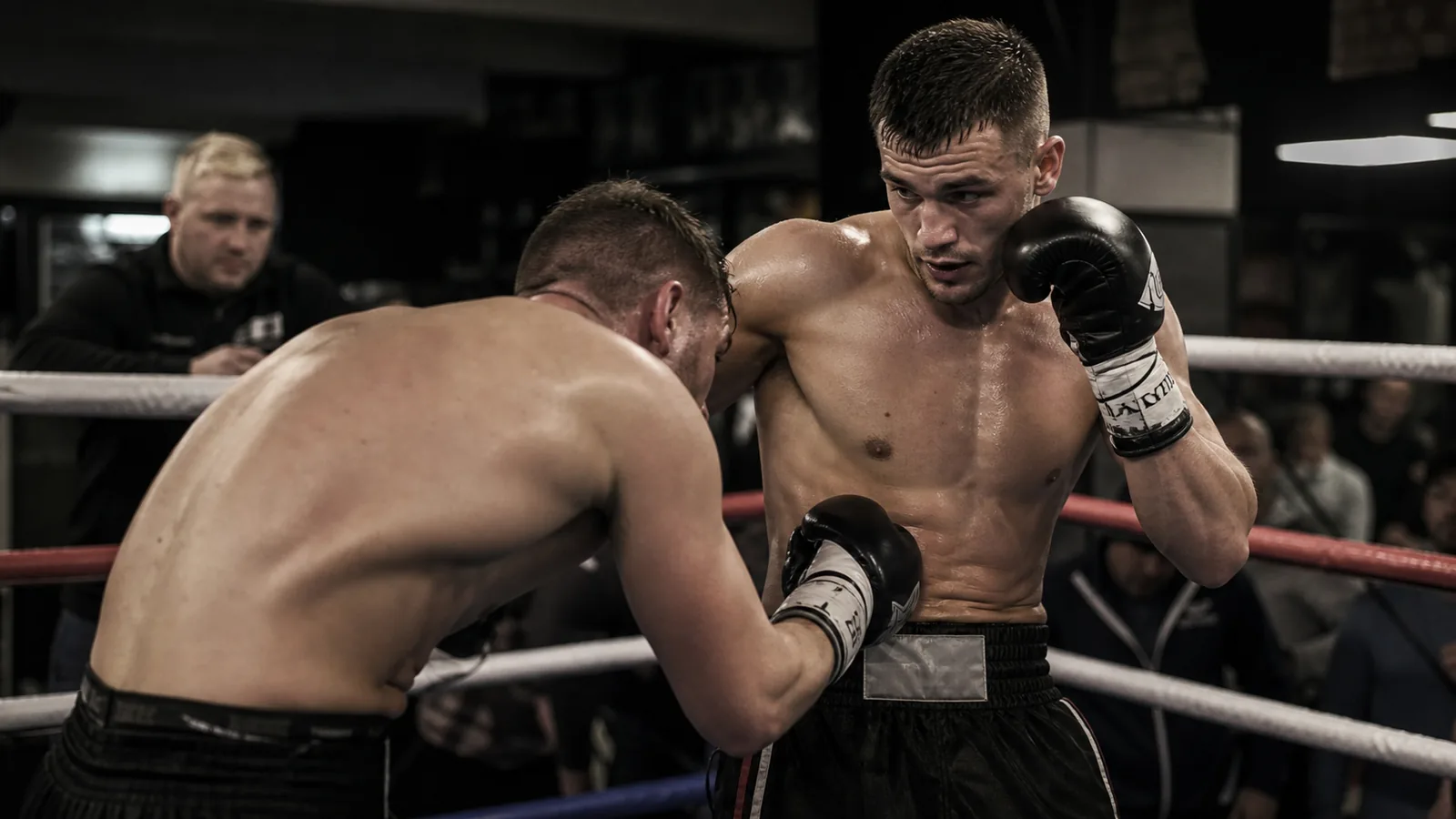
Ryan Garner vs Michael Magnesi: pressure-fight lessons
Use Garner's fresh interim-title fight footage to explain how pressure, body work and composure decide hard domestic-level step-ups.
Was this page helpful?
It takes one tap, and it genuinely helps.
Choose your next step
Turn this article into the right action
Some readers are ready to book. Some need the class route first. Pick the route that matches what you actually want.