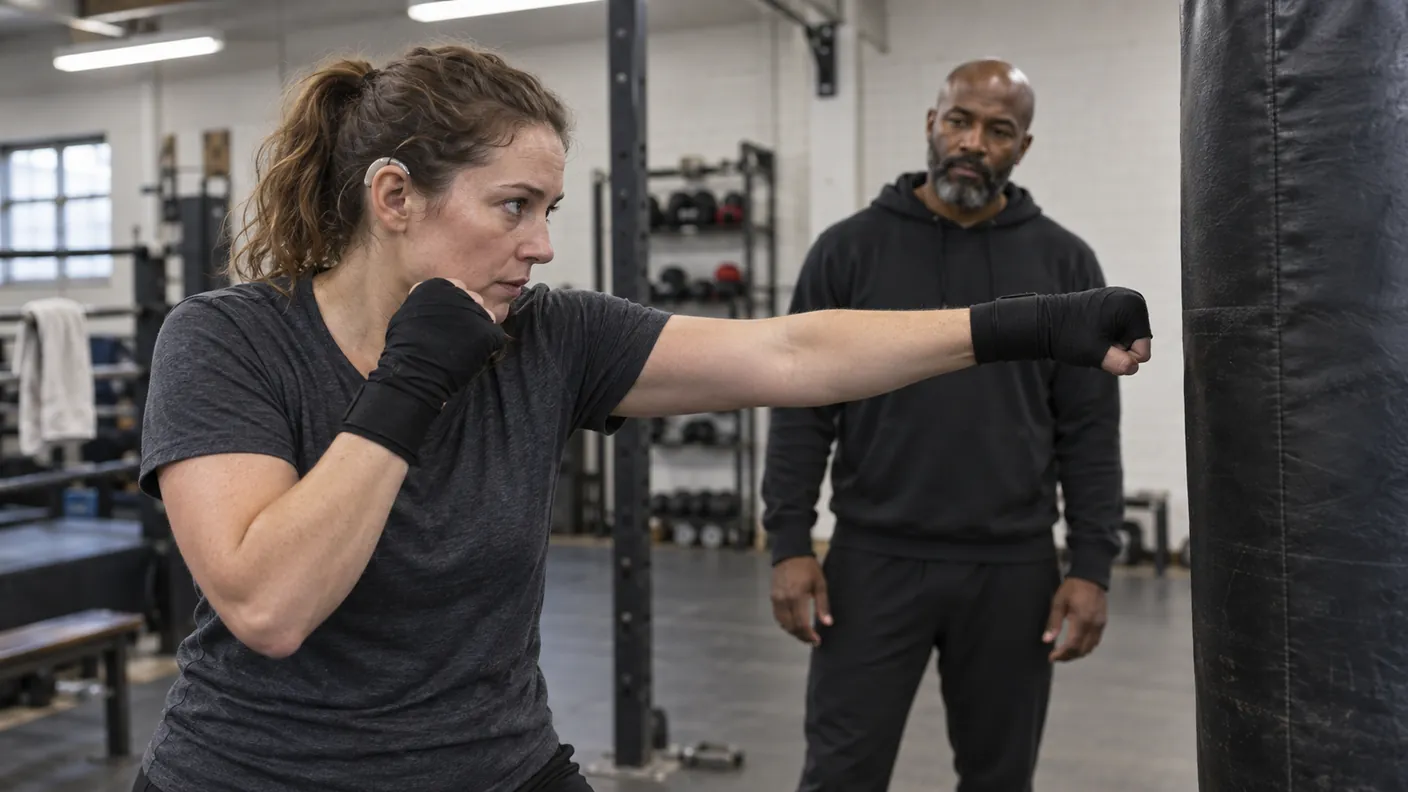
Yes, you can box with hearing aids. For plenty of people, the sensible starting point is non-contact work: stance, footwork, shadowboxing, bags, controlled pads and conditioning.
The practical question is not whether you have to leave your hearing aids at home. It is whether they stay secure, let you follow the session and suit the drill in front of you. Sweat, a loose device, a noisy room and partner contact all change the answer. A good boxing class should be able to work with that rather than treating a hearing aid as a reason to sit out.
The first rule is simple: tell the coach before the warm-up. You do not need to explain your whole hearing history. You do need a clear plan for hearing instructions, keeping the device safe, and deciding when it comes out.
Non-contact boxing is the straightforward place to start
A beginner does not need sparring to learn boxing. You can build real skill through your stance, guard, footwork, bag work, pads and fitness rounds before contact is even a consideration.
That makes many early drills workable with hearing aids. Wearing them may help you hear the coach, follow a countdown and respond to simple cues. It can also make the unfamiliar room less stressful. If you rely on your aids to understand speech, taking them out for a whole session may make the class needlessly difficult.
Start with drills where there is space and a clear task. Shadowboxing, footwork lines, a calm bag round and coach-led pads are very different from a busy partner drill where people are moving close to each other. Your coach can choose a position where you can see demonstrations and keep instructions short and direct.
If you are worried about the wider first-session experience, our guide to what happens in your first boxing class lays out the usual rhythm from warm-up to bags and pads. The important part here is that you should not be expected to guess what is happening because an instruction was hard to hear.
Tell the coach what helps you hear
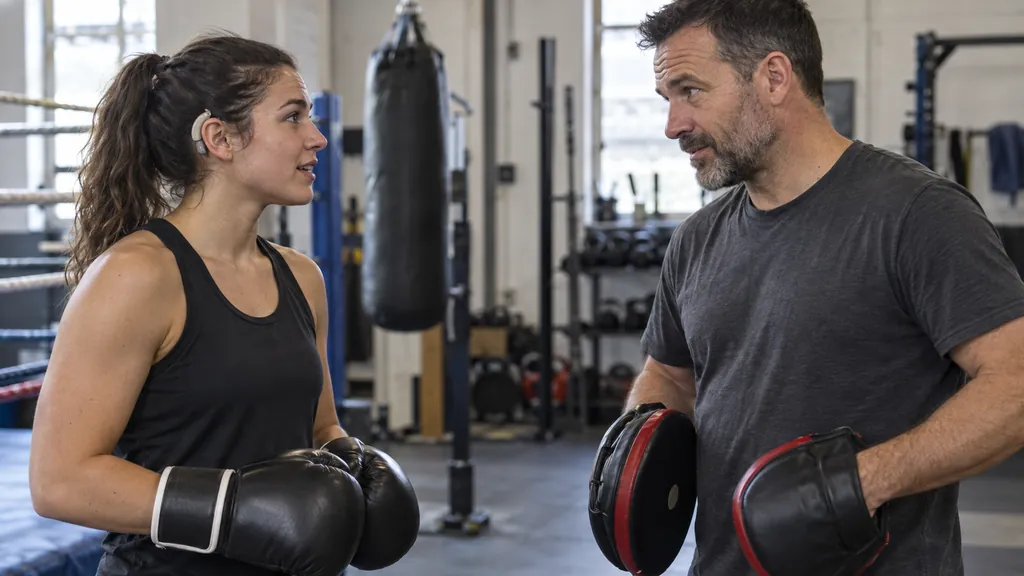
The most useful conversation is practical, not dramatic. Tell the coach that you wear hearing aids and say what makes instructions easier to follow.
You might say:
- "I wear hearing aids and hear best when you face me."
- "I can follow demonstrations, but I may miss a shouted instruction across the room."
- "Please get my attention before changing the drill."
- "I need to take my hearing aid out for any contact work."
- "If the gym is very loud, I may need the combination shown once."
That gives a coach something they can use. Facing you before speaking, checking that you have seen a new instruction and demonstrating a combination are ordinary good-coaching habits. They also make a class more accessible without turning you into the centre of attention.
A simple position can help too. Stand where you can see the coach and avoid hiding at the back behind a heavy bag. When the next round is explained, move close enough to hear or ask for the key sequence again. Nobody sensible will mind.
Sweat and security are the main equipment issues
A hearing aid that is comfortable on the way into the gym can feel different after twenty minutes of skipping and bag work. Sweat can make it shift. A loose device can turn every head movement into a distraction. Treat that as a kit problem to solve, not something to ignore until it falls out.
Your own audiologist or hearing-aid provider is the best source for the care instructions for your model. Some devices have different moisture ratings, retention options and cleaning routines. Do not assume another member's device will respond to sweat or impact in the same way as yours.
There are still a few sensible basics. The University College London Hospitals hearing-aid information describes drying kits or dehumidifiers as a way to absorb moisture and help maintain function (UCLH hearing-aid fitting information). That is useful after a sweaty training session, provided it matches your provider's advice.
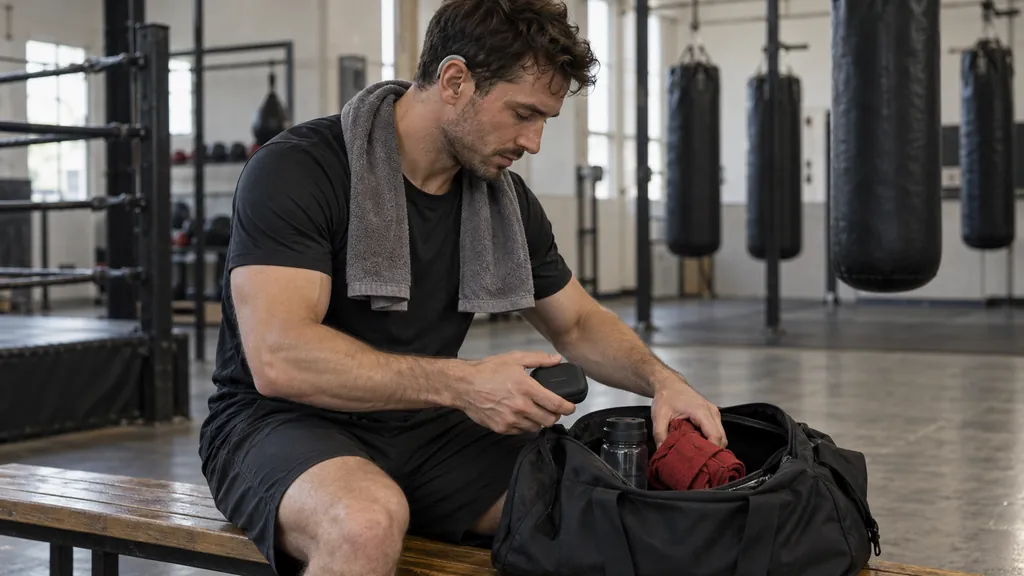
Check the fit before class starts. If you use a retention clip, sports loop or headband, test it during warm-up and footwork first. Bring a proper case, not a loose pocket. Keep it somewhere you can reach without leaving it beside a busy bag line or on a bench full of other people's kit.
A small towel helps as well. Wipe sweat from your face and around the device during a break if you need to. After training, follow the manufacturer's cleaning and drying advice. The goal is boring reliability: device secure, case safe, no panicked search across the gym floor.
Do not treat sparring as the same question
This is where the answer changes. A hearing aid may be practical for non-contact training and unsuitable for a drill involving head contact, close-range defence or uncontrolled movement.
Do not spar in a hearing aid without a specific conversation with your coach and your hearing-care professional. A headguard is not a universal answer. It may press on the device, move it, change how securely it sits or create a new pressure point. Do not buy extra kit online and assume that it solves the risk.
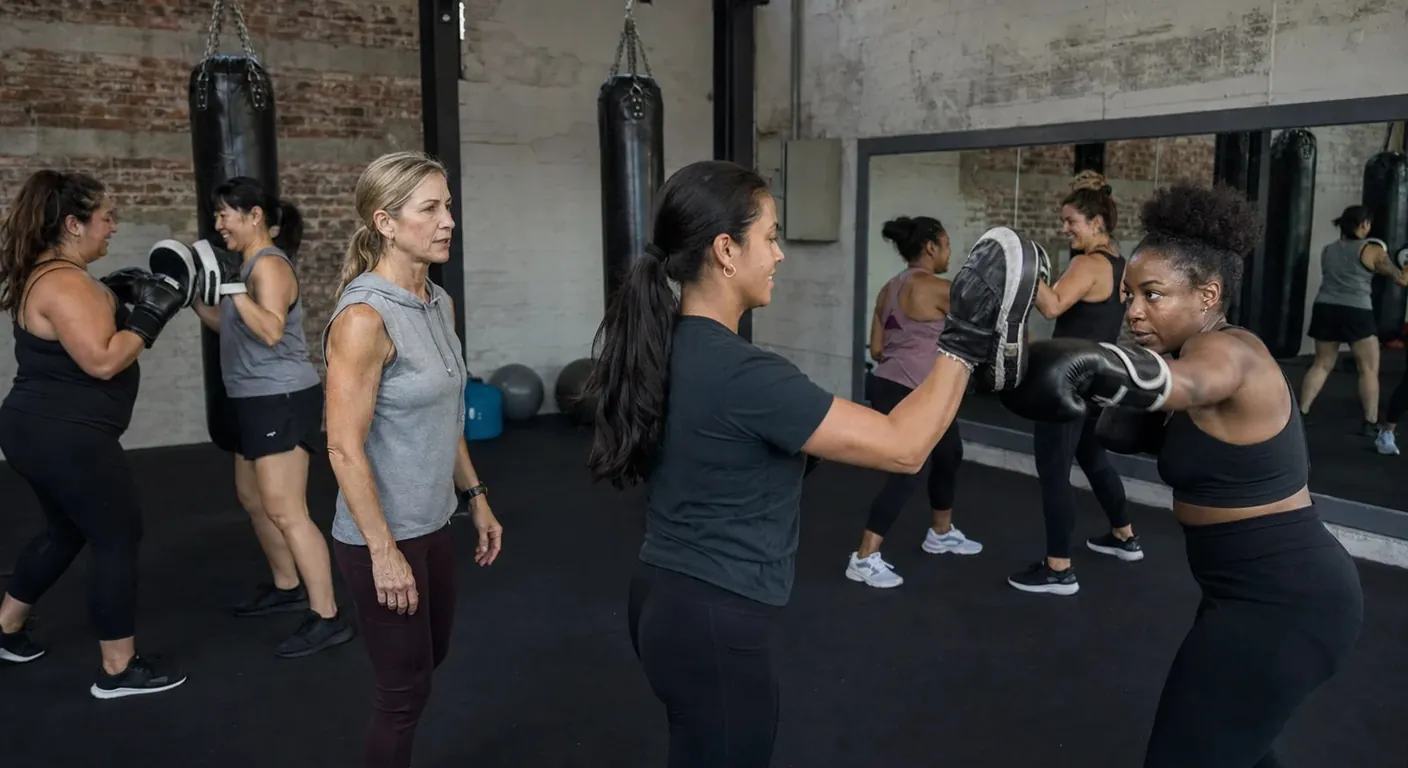
You also do not have to be a sparring boxer to train properly. Recreational Adults boxing classes can give you coached technique, conditioning, pads and bag work without turning a trial into a contact decision. If competitive boxing is a goal later, take the time to work through it properly with the coach, your audiologist and the rules of the organisation you would compete under.
The same common sense applies if you notice new symptoms rather than a known, managed hearing loss. Ringing in the ears, sudden hearing changes, dizziness or ear pain are not normal boxing obstacles to grit through. RNID advises people concerned about hearing loss to get their hearing tested, with NHS or private routes available (RNID hearing-test advice). Get appropriate clinical advice before you decide that a harder session is the answer.
Use visual cues as part of your boxing, not as a backup plan
Boxing is visual anyway. You are watching the coach, reading body position, following pads and keeping track of your own feet. Visual cues can make a session easier to follow when the room gets noisy.
Ask the coach to show the combination before the round starts. Watch the first repetition at a slower pace if needed. Agree a simple signal for stop, change or water. For pad work, the person holding the pads can demonstrate the order once before the timer starts rather than calling a long sequence over loud music.
This does not mean you need a private lesson. It means the class has to communicate clearly. The best coaches already do that because a shouted instruction is a poor substitute for a clean demonstration.
If you also wear glasses, there is a separate practical question around frames, sweat and partner drills. Our guide to boxing with glasses explains where ordinary specs are fine and where they should come off. Treat both pieces of equipment honestly. Your ability to hear and see the work matters more than looking effortless.
A first-session checklist
Keep the first visit simple.
- tell the coach that you wear hearing aids before the warm-up
- say whether you hear best face-to-face, close up or with a demonstration
- bring your usual hearing-aid case and any retention accessory you already trust
- test the fit during light movement before hard rounds begin
- agree when the hearing aid should come out for a particular drill
- do not leave it loose beside bags, pads or shared benches
- ask again if you miss an instruction rather than improvising the wrong drill
- stop and seek appropriate advice for new ear symptoms or a problem with the device
You do not need to solve every future boxing question before one first class. Start with the safe, coached version of the sport. Learn what you can hear, see and follow comfortably in the room. Then make the next decision with actual experience instead of letting a practical detail keep you away.
If you are in Greenwich, Kidbrooke, Blackheath or nearby, come to a coached session and tell us what helps you train well. The aim is not to make a hearing aid disappear. It is to make sure it does not stop you learning.
H&G Team
Writer at Honour & Glory Boxing Club, a community boxing gym in Kidbrooke, South East London.
KEEP READING
Can You Box If You Wear Glasses?
Yes, many beginners can box with glasses. Here is what to wear, what to avoid, and when to ask your optician first.
Is It Okay to Take Breaks in Boxing Class?
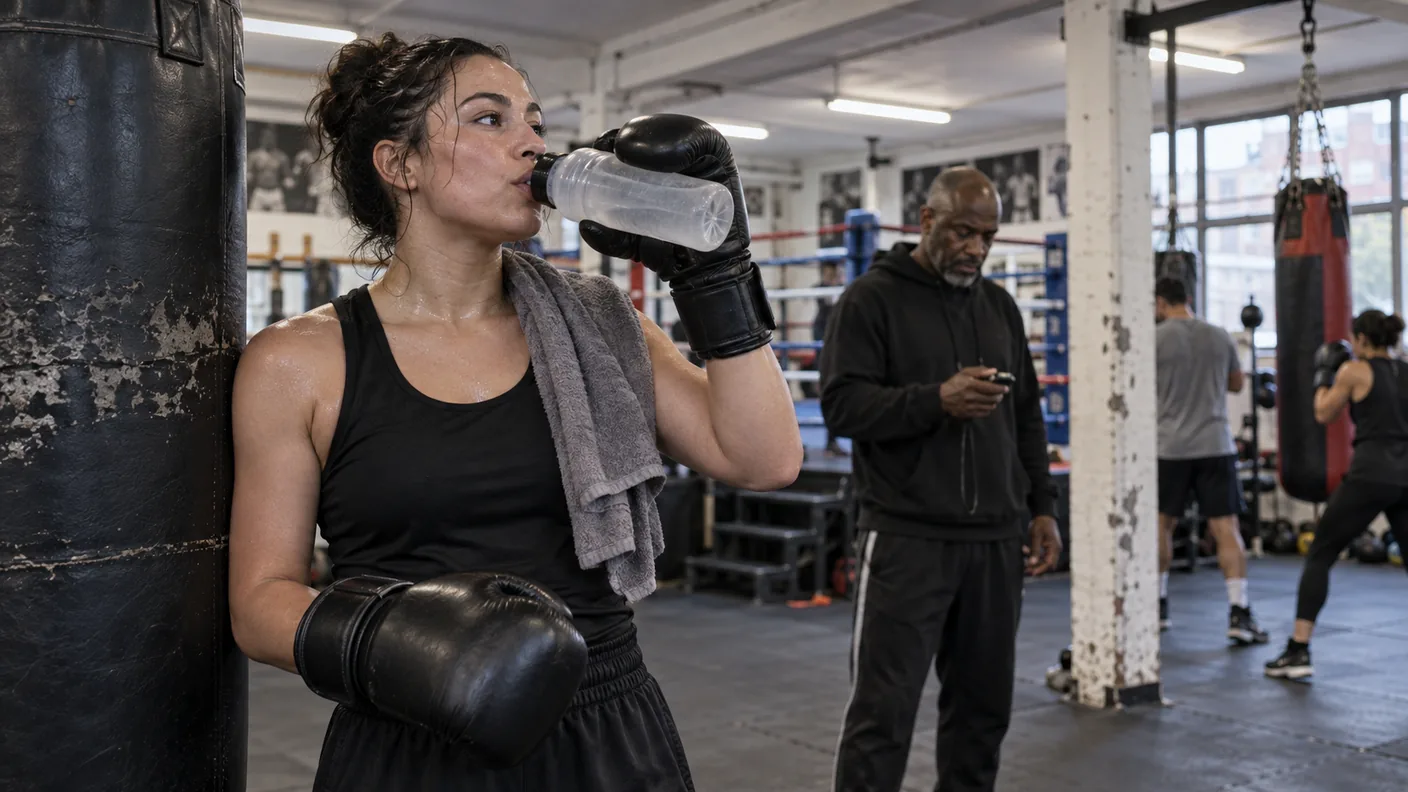
Yes. A short, honest break can keep a beginner boxing session safe, useful and worth coming back to.
Can You Go to a Boxing Class Alone?
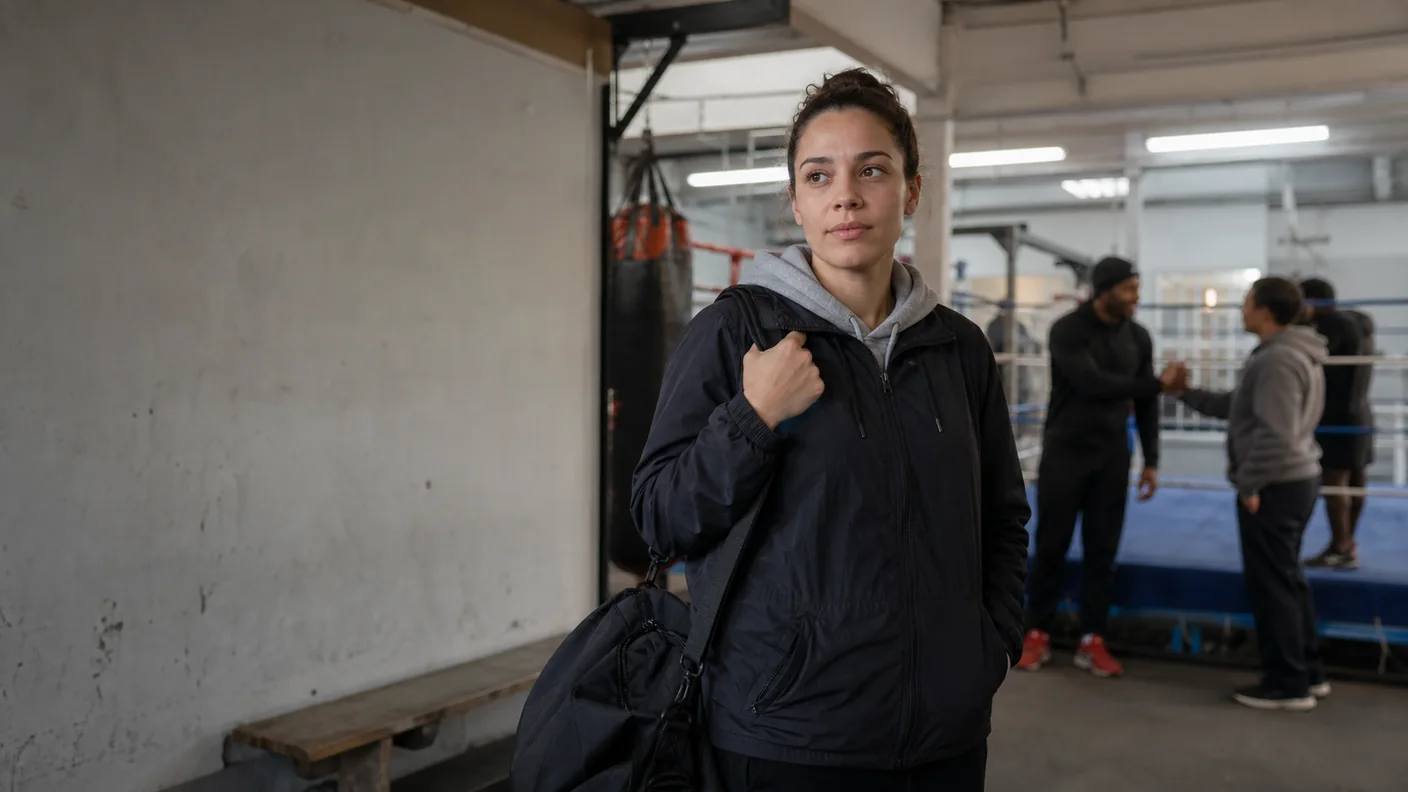
Yes. Going to boxing alone is normal. Here is how a good first class should help you settle in, train properly and come back.
Was this page helpful?
It takes one tap, and it genuinely helps.
Choose your next step
Turn this article into the right action
Some readers are ready to book. Some need the class route first. Pick the route that matches what you actually want.