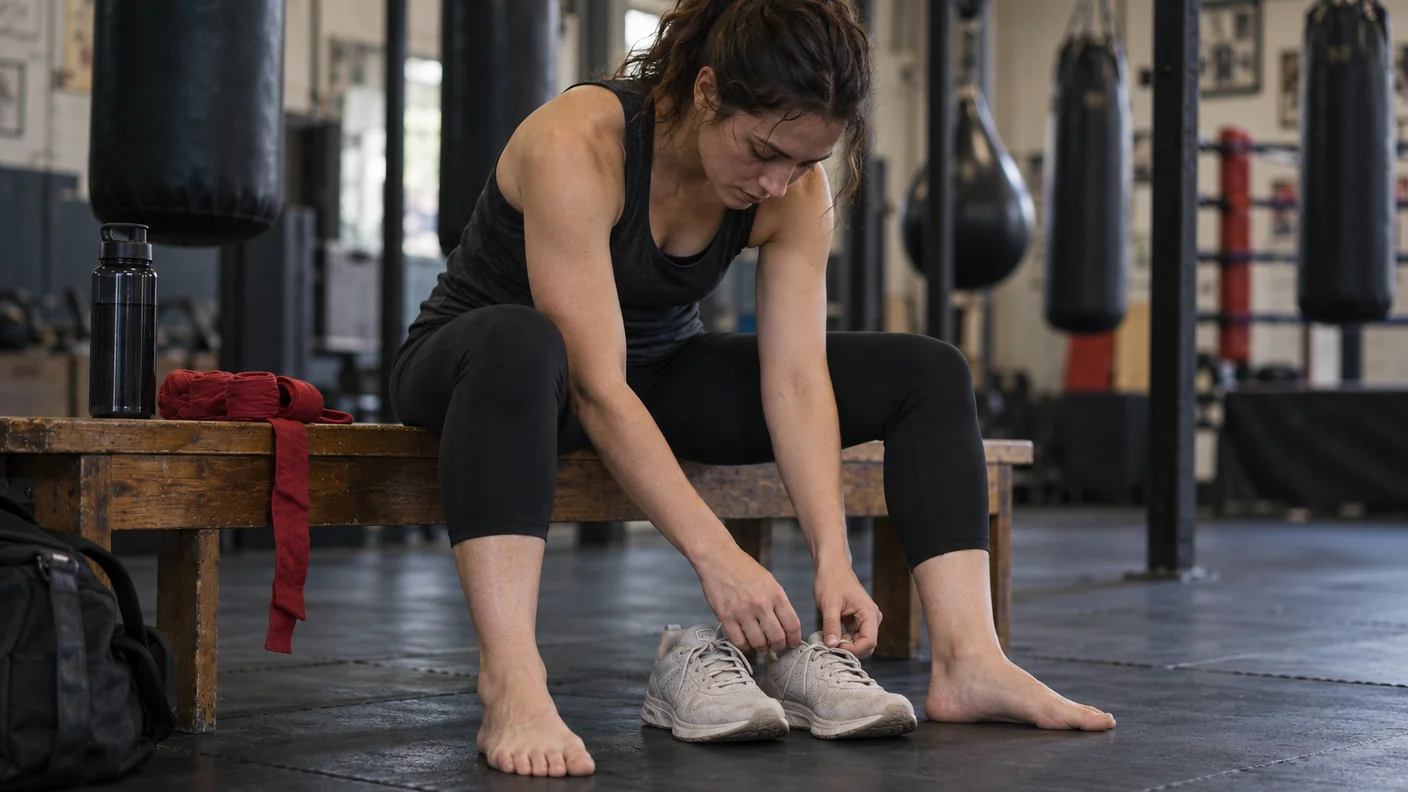
Yes, you can usually box with flat feet.
Flat feet are common. For plenty of people they are simply the way their feet are built, not a diagnosis and not a reason to rule themselves out of sport. The NHS is clear that flat feet do not usually cause problems and should not stop people taking part in activities, including sport (NHS flat-feet guidance).
The useful question is not whether your arch looks like somebody else’s. It is whether you can train without pain, move with control, and recover normally afterwards. Boxing asks a lot from feet and ankles, but it does not require a textbook-looking arch.
Flat feet are not a boxing ban
A low arch can look alarming if you have spent time watching trainers, insoles and running-shoe adverts. It is easy to decide that a foot shape must need correcting before you can learn a stance.
That is not a sensible starting point. One prospective study of 196 collegiate athletes found that flat-footedness, measured by midfoot contact area, did not predict later lower-limb injuries in that group (the original study). It does not prove that every foot or every sport is identical. It does mean flat feet alone are a poor reason to predict that boxing will go badly.
Boxing is not a running test. You will be stepping, turning, shifting weight, skipping and sometimes staying light on the feet. A coach can see whether those movements look comfortable and make practical adjustments without turning your first session into a diagnosis.
The sensible rule is straightforward: train the person in front of you, not a label attached to their feet.
What matters in a boxing stance
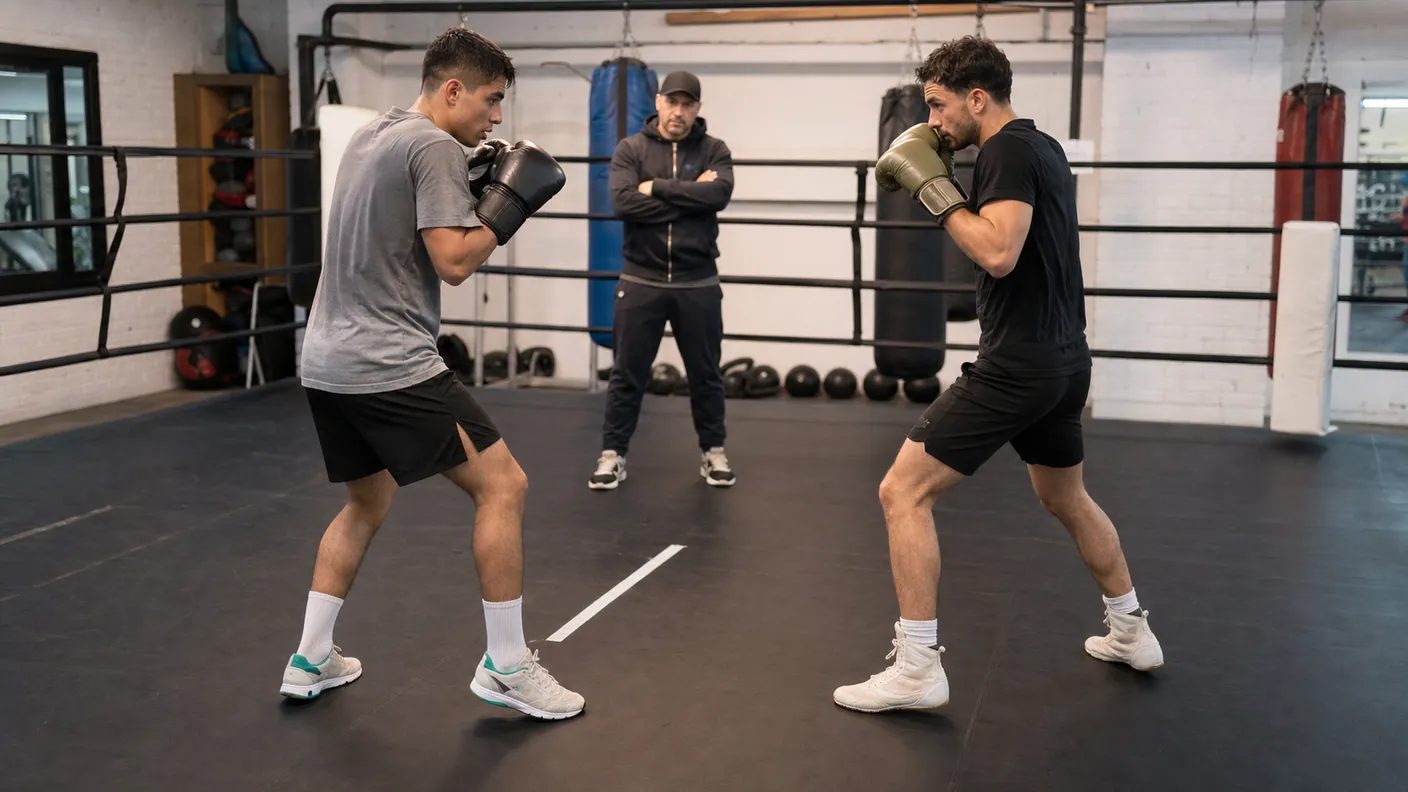
A good boxing stance needs balance before it needs style. You should be able to move forward, back and sideways without the feet crossing, then settle quickly enough to throw a controlled punch or bring the guard home.
Flat feet do not automatically prevent any of that. Some people with low arches move brilliantly. Some people with high arches have stiff ankles, poor balance or sore feet. The important evidence is what happens when you move, not what a bare footprint looks like on a bathroom floor.
Start with smaller steps than you think you need. Beginners often make their stance too wide, push too hard off the back foot and tense their calves in an attempt to look athletic. That can make any foot feel clumsy.
Your rear heel may come up a little when you punch or step. That is normal boxing movement. It does not mean you should force yourself onto the balls of both feet for an entire session. If your calves cramp, your toes grip the floor or your feet feel unstable, slow down and let the coach see it.
For the wider technical picture, our guide to boxing stance and guard explains how feet, balance and hand position should work together.
Tell the coach before the class starts
You do not need to announce your feet to a room full of strangers. Just have a quick word with the coach before warm-up if you know you have flat feet, wear insoles, have had repeated ankle trouble, or feel pain when you skip and pivot.
That gives the coach useful context. They may watch the first rounds of skipping more closely, reduce the pace of a footwork drill, or suggest that you build volume gradually. None of that is special treatment. It is normal good coaching.
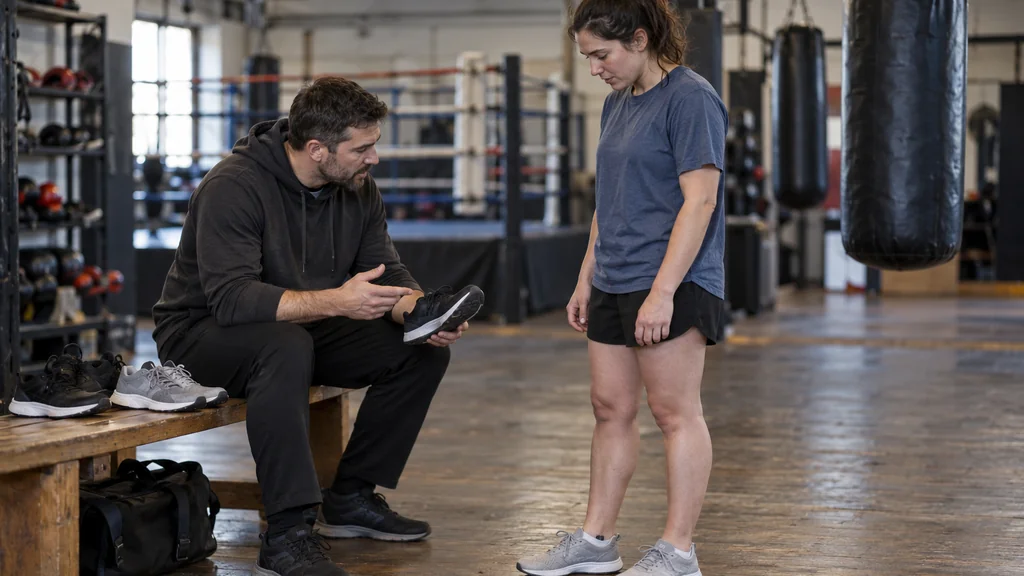
The first few sessions should be about learning what your feet can do in a boxing stance. A clean step, a calm turn and a controlled reset matter more than covering the whole gym at speed.
If you already use insoles or supportive shoes because a clinician has advised them, bring the footwear you normally train in and tell the coach. Do not bin something that helps just because a boxing video claims that everyone must wear the same kind of shoe.
Shoes should feel secure, not corrective
Boxing footwear can be useful, but it is not a medical fix. A pair of shoes cannot teach balance, erase pain or make a too-large training jump sensible.
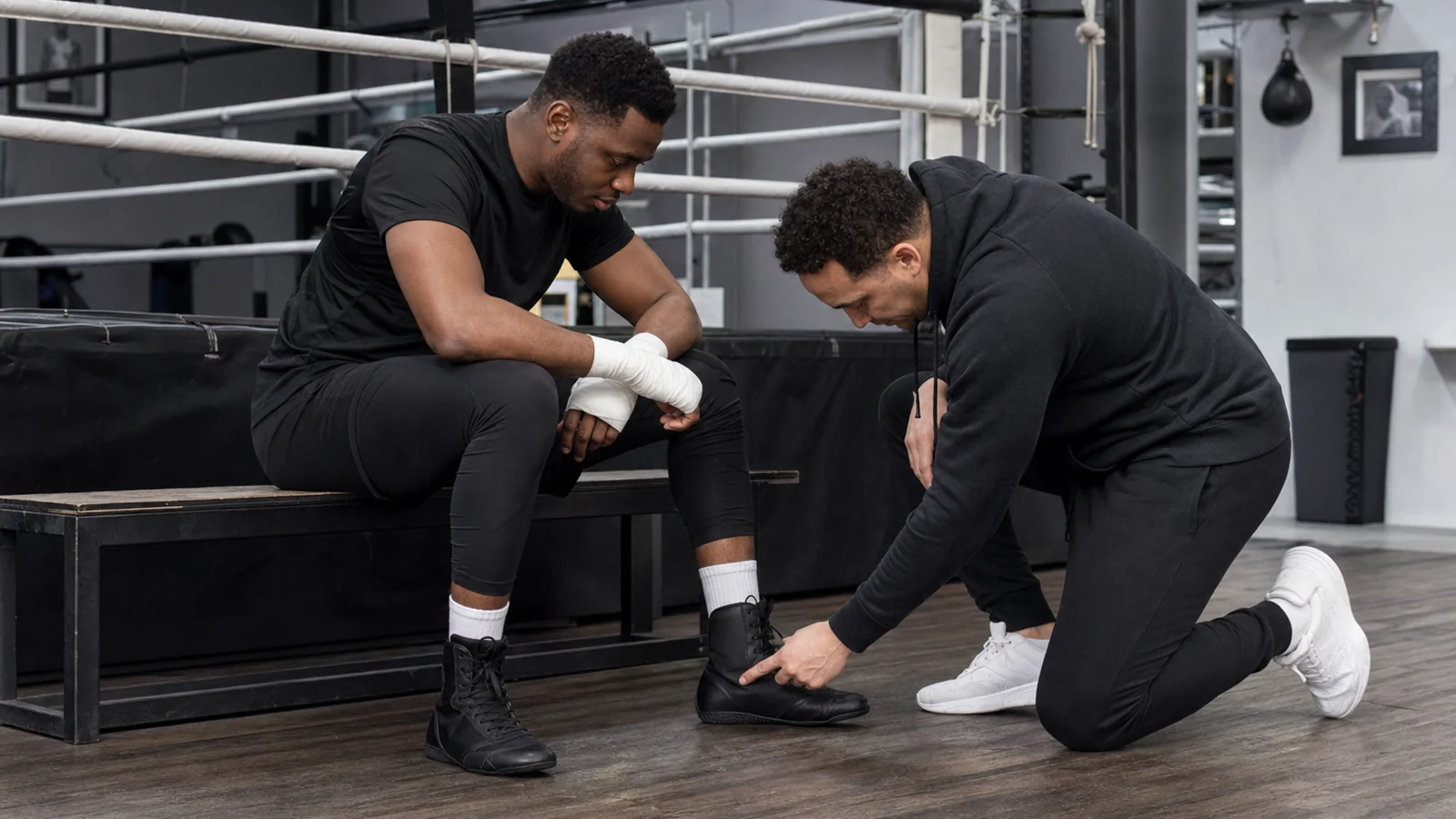
For a beginner class, the priority is a clean pair that feels stable, fits properly and does not slide around the heel. You want enough grip to move with confidence, but not so much that every pivot sticks. If the shoe makes your foot feel cramped, numb or unsteady, it is not helping.
The NHS notes that a foot specialist may advise on wide, comfortable shoes, insoles, stretches or exercises when flat feet are causing symptoms (NHS advice on treatment options). That is individual advice. A coach can help with stance and session load, but should not pretend to prescribe footwear for a painful foot.
If you are buying dedicated boxing shoes later, try them on after you have trained enough to know what feels stable in your own stance. Expensive kit is not a substitute for a coach noticing that your foot is collapsing inward when you are tired, or that a shoe is rubbing the same place every session.
Build footwork slowly before adding hard rounds
The first useful progression is simple:
- learn your stance at walking speed
- take short steps while keeping the feet under you
- practise small pivots without forcing the turn
- add light bag or pad work
- increase skipping, rounds and pace over time
That order matters because boxing footwork is a skill, not just a calf workout. You are learning to organise the foot, ankle, knee, hip and hands at the same time. Rushing it can make a normal adjustment feel like proof that something is wrong.
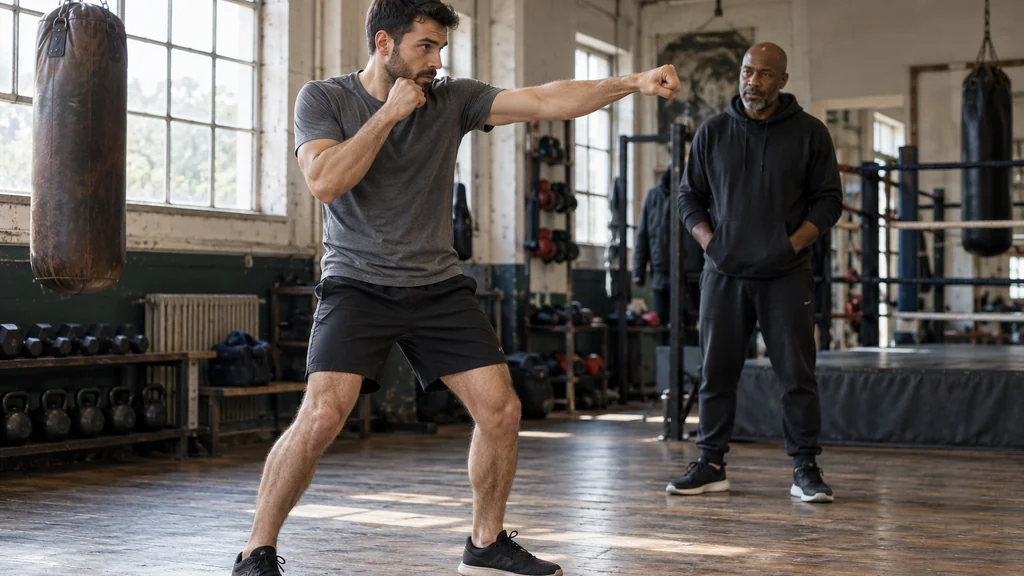
A stable, repeatable pattern will help more than trying to stretch, strengthen or tape everything at once. If you want a short piece of home practice, use the calm drills in our guide to boxing footwork drills at home. Keep the pace low enough that you can finish each step in balance.
When pain changes the answer
Flat feet are often harmless. Pain is a different conversation.
Stop treating it as an ordinary training ache if you have pain around the inner foot, ankle or lower leg that keeps returning, if your foot feels stiff, weak or numb, if you are repeatedly rolling an ankle, or if walking and balance are becoming difficult. The NHS specifically lists those signs as reasons to seek advice, along with a new change in one foot or symptoms on only one side (when to get flat feet checked).
Do not try to diagnose the source by smashing through bag rounds. Tell the coach, reduce the impact work, and speak to a GP, podiatrist or physiotherapist where appropriate. A good club will not mistake sensible information for a lack of commitment.
The same goes for a sudden injury. A sharp twist, major swelling, numbness or a foot that will not take weight needs a different response from mild tiredness after learning to skip. Our guide to boxing ankle and Achilles injuries explains why a recurring foot or ankle issue is worth handling early.
The practical first-session plan
If flat feet are painless and you are otherwise ready to exercise, come to class in comfortable trainers, take the warm-up seriously and let the coach know if something feels off.
Do not spend the entire session staring at your arches. Pay attention to simpler markers: Can you stand comfortably? Can you take a short step and recover your balance? Can you work a light round without pain changing the way you move? Those are useful answers.
Honour and Glory’s Recreational Adults boxing classes are built around coached technique, pads, bags and conditioning, with no sparring required. If you are in Kidbrooke, Greenwich or nearby, you can start with the basics and build your footwork at a sensible pace.
H&G Team
Writer at Honour & Glory Boxing Club, a community boxing gym in Kidbrooke, South East London.
KEEP READING
Stop Crossing Your Feet in Boxing
Crossed feet wreck balance, defence and punch recovery. Here is how beginners can fix the habit with simple boxing footwork drills.
Move In and Out in Boxing Without Crossing Your Feet
Learn the step-and-slide rule that keeps your stance usable when you close distance or move away from pressure.
Ankle Sprains and Achilles Pain in Boxing: Footwork, Warning Signs and Return to Training
A careful boxing guide to ankle sprains and Achilles pain: why footwork, pivots and skipping can overload the lower leg, NHS-backed warning signs, rehab phases and return to boxing.
Was this page helpful?
It takes one tap, and it genuinely helps.
Choose your next step
Turn this article into the right action
Some readers are ready to book. Some need the class route first. Pick the route that matches what you actually want.