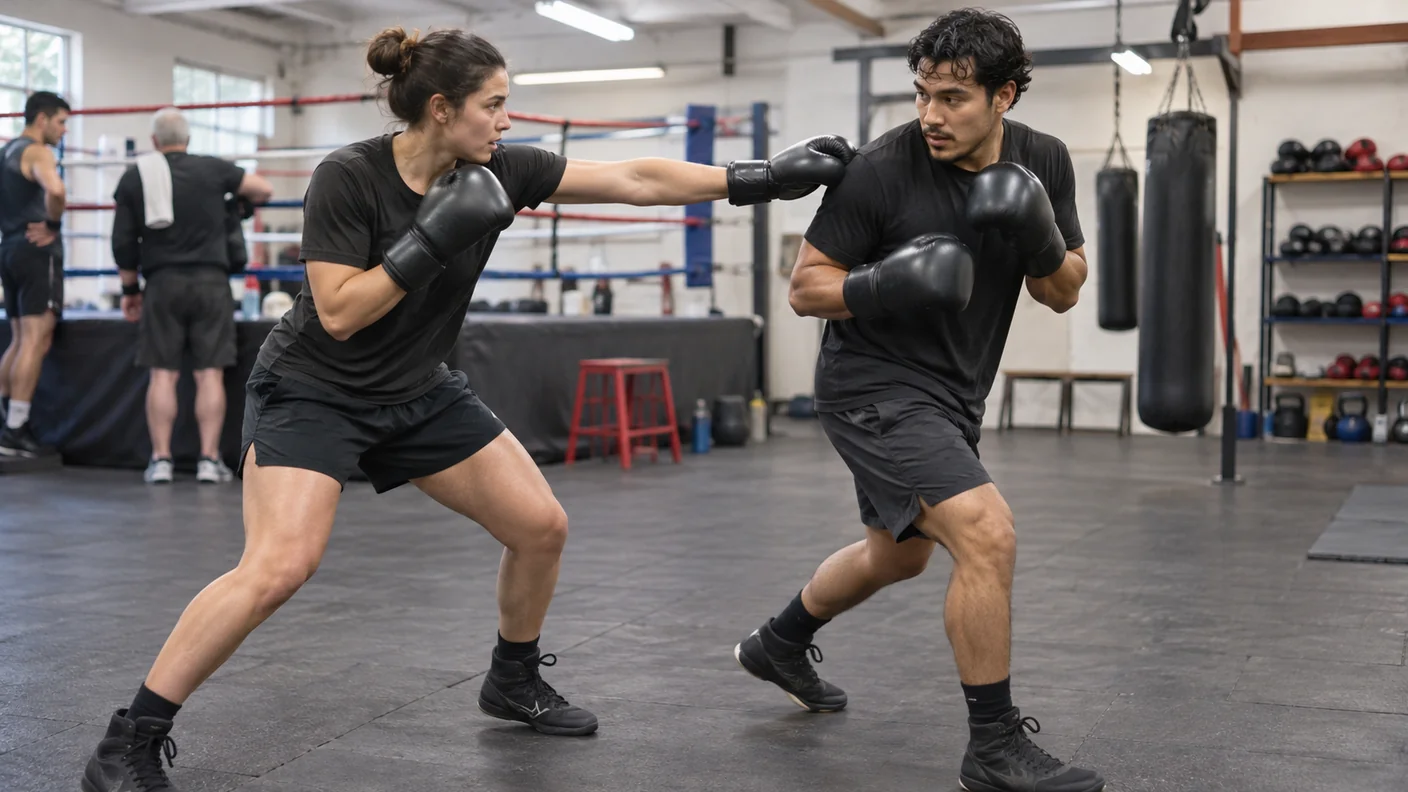
Boxers often learn range through hard sparring far too late. They stand just close enough to be touched, reach with the front hand, then discover that the feet are nowhere useful when the other person moves.
The shoulder-touch drill gives you a quieter way to solve that problem. Two partners work at arm's length. Each tries to make a light touch on the other person's outer shoulder while staying in stance and moving out of the return touch. There are no punches to the head, no score to settle and no reason to turn it into sparring. The work is about distance, feet and attention.
The video below shows the basic idea. Watch the space between the partners as much as the hands. A useful rep is won by arriving in balance and leaving in balance, not by lunging to get the first touch.
Why a shoulder touch teaches real range
A shoulder is a simple target. It is high enough that you must keep your posture organised, wide enough that a light touch is easy to see, and close enough that a reckless reach will expose itself immediately.
Start just outside touching distance. If you can touch the shoulder without moving your feet, you are already too close for the first version. If you need a long dive, you are too far away. The useful starting point is where one small step can create the touch and one small step can remove it again.
That is a central boxing skill. A technical review of boxing performance describes punching, movement, defence and distance as connected rather than separate jobs. The shoulder-touch drill makes that obvious. A hand that reaches without the feet does not land cleanly. Feet that move without the guard leave the head careless. A touch only counts if the whole stance has arrived with it.
Start without gloves and without ego
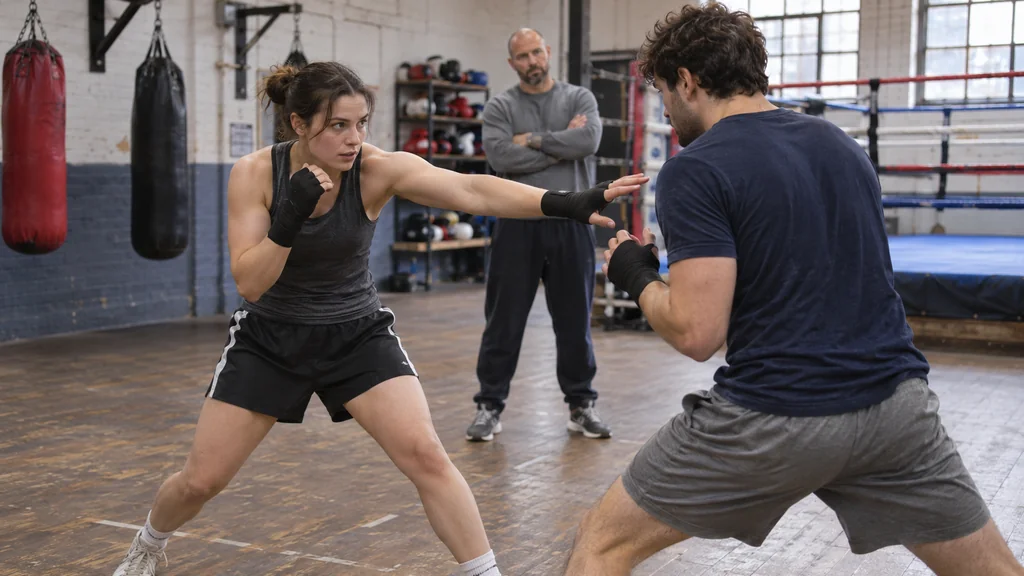
For the first round, use clean hands or light wraps rather than heavy gloves. The point is a visible touch, not impact. Aim for the outer shoulder or upper arm, never the face, throat or back of the head.
Stand in a normal boxing stance with a relaxed guard. Your front hand can reach for the touch, but the other hand should stay close enough to protect the cheek. Keep the chin down, eyes on the upper body and knees soft enough to move in either direction.
The partner has the same job. They are not frozen target practice. They can take a small step back, a side step or a gentle turn away. They should not run across the gym or spin out of stance. If one person is sprinting and the other is chasing, reduce the space and slow the pace.
England Boxing's coaching handbook puts balance, stance and controlled progression before complex work. This drill needs exactly that order. Keep the target light, the steps short and the shape recognisable before anyone tries to be quick.
The touch comes from a step, not a lean
The common mistake is to see the shoulder, throw the hand and let the head follow it. The touch may land, but the chest moves past the front knee, the rear foot drags behind and the partner has an easy route to touch you back.
Instead, let the front foot begin the entry. For an orthodox boxer, step lightly with the left foot as the left hand reaches. The rear foot follows enough to restore the normal stance gap. Southpaws reverse the picture. Keep the touch light and bring the hand home as the feet settle.
Do not make the step bigger than the target requires. You are not trying to cover the floor in one jump. You are learning what one honest step feels like at a safe distance.
Use this cue: foot arrives, hand arrives, guard returns.
That sequence matters more than whether the touch was fast. If the hand has landed but you cannot take another step, cover your face or answer the next cue, the entry was too ambitious.
Leave on an angle after the touch
The drill gets useful when the touch is not the end.
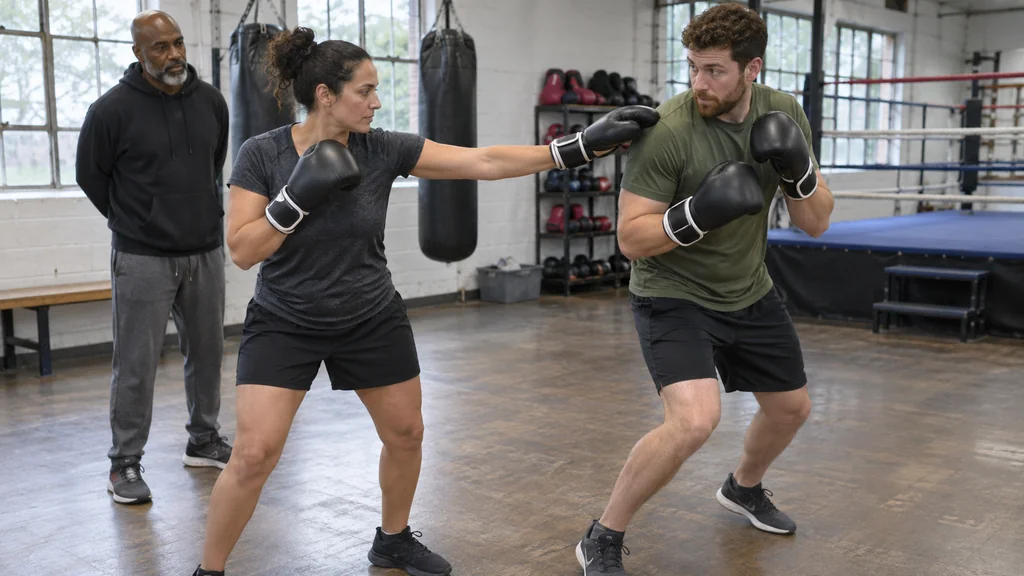
After a light front-hand touch, take a small step to the side or back into stance. Do not stand in front of the partner waiting to be touched in return. At the same time, do not overreact with a huge pivot that turns your back or crosses your feet.
Think of the exit as a reset rather than an escape. You have tested the distance, entered it briefly and returned to a place where you can see again. The step can be straight back, a small move to the lead-hand side or a short pivot if your coach has already taught it. The right choice depends on where the other boxer has moved.
This is why the drill is more useful than a static target exercise. A systematic review of perceptual anticipation in combat sports found that more experienced athletes tend to respond faster and with better precision to an opponent's actions, while using fewer visual fixation points. The practical lesson is not to stare at a shoulder. Look through the chest and shoulders, notice the step and make the next small decision.
For a related no-contact task, partner shadow boxing helps you read feet, shoulders and guard without turning the round into a contest. The shoulder touch adds one clear range marker to that wider picture.
A three-round shoulder-touch progression
Keep each round short, calm and technical. Thirty to sixty seconds each is enough for a first attempt, then swap jobs or restart from neutral distance.
Round one: enter and reset
Partner A holds position with a normal guard. Partner B takes one small step, makes a light lead-hand touch on the outer shoulder and steps back into stance. There is no return touch yet.
The coach checks whether the head stayed between the feet, the spare hand stayed useful and the rear foot followed. If the boxer leans or crosses the feet, shorten the entry before repeating it.
Round two: touch and evade
Now Partner A can make a light return shoulder touch after Partner B has entered. Partner B touches, brings the hand home and makes one coached exit: small step back, side step or turn.
Keep the response delayed at first. The learner needs time to recognise whether the entry left them balanced. Gradually make the return touch more immediate, but do not allow either partner to slap, grab or chase.
Round three: both partners choose the moment
Both partners can now move and try to touch the outer shoulder. The rule is one touch, then reset. No combinations. No barging in. No scorekeeping beyond a quiet count if the coach wants one.
This version shows whether the drill is becoming boxing rather than tag. A good touch should come after a small change in distance, a readable foot placement and a quick return to guard. If both people start reaching at once, pause and rebuild the range.
Four mistakes that spoil the drill
The first is reaching with the head. If the nose gets ahead of the front knee, the target is too far away or the step is too late.
The second is touching and staying. A shoulder touch is a range check, not an invitation to stand still in front of somebody. Bring the hand home and take the next position.
The third is forgetting the spare hand. The non-touching hand should remain near the cheek or in a calm guard lane. If both hands are reaching forward, the drill is teaching a bad habit.
The fourth is making it competitive too soon. Light contact and clear limits make the drill useful for beginners. If the pace becomes frantic, the feet get noisy and the shoulders tense, go back to round one.
For another practical distance drill, the boxing footwork ball drill gives the feet a fixed marker. The shoulder-touch version adds a moving person, which means you have to judge when the range is genuinely there rather than arriving at the same spot every time.
Where it belongs in training
Use the shoulder-touch drill after the warm-up and before pads, bag work or controlled partner drills. It is a good bridge between shadow boxing and any later technical sparring because it asks for distance awareness without asking either partner to take punches.
It is especially useful for the boxer who either stays too far away, reaches for every target or panics backwards after an entry. Keep the first sessions slow enough that the feet can be corrected. Speed only helps after both people can touch, reset and keep their stance.
If you train in Kidbrooke, Greenwich or nearby, our Recreational Adults boxing classes use coached partner drills to make these range decisions clear before pressure rises. You do not need to be hit to learn how close is close enough.
The coaching cue is simple: arrive balanced, touch lightly, leave ready.
H&G Team
Writer at Honour & Glory Boxing Club, a community boxing gym in Kidbrooke, South East London.
KEEP READING
Boxing Footwork Ball Drill for Better Range
Use one small ball to practise stepping into range, seeing the distance and leaving without crossing your feet or reaching.
Creep Into Boxing Range Without Reaching
Use small, patient steps to close boxing range without lunging, losing your stance or handing an opponent an easy counter.
Angle Step Boxing Drill: Stay in Range
Use a compact angle step to keep your punches in range without crossing your feet or chasing a moving partner.
Was this page helpful?
It takes one tap, and it genuinely helps.
Choose your next step
Turn this article into the right action
Some readers are ready to book. Some need the class route first. Pick the route that matches what you actually want.