Boxing Hook Hand Position: Palm In or Palm Down?
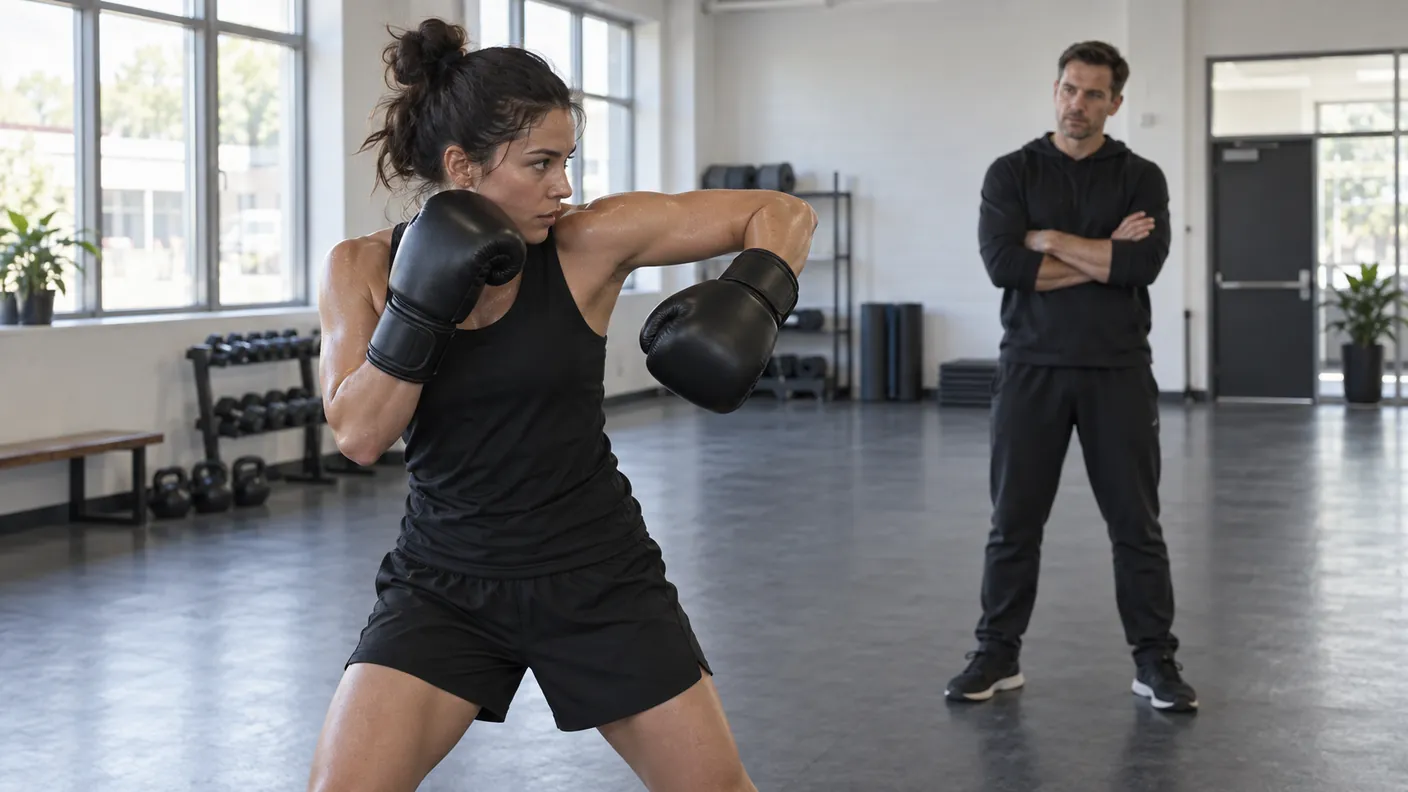
A lead hook is not one fixed hand shape.
Ask five coaches whether the palm should face in or down and you may get five confident answers. The useful answer is less dramatic. The hook has to suit the distance, the target and the position you can recover from. If the hand position makes the punch reach cleanly while your wrist stays straight and your guard stays useful, it has done its job.
The mistake is treating a close hook and a longer hook as the same punch with a different amount of effort. They are related, but the space changes the arm path. A close hook has less room and a shorter arc. A hook nearer the edge of middle range needs a slightly longer line around the target. Trying to force one hand angle across both situations is how a tidy punch becomes a slap or a swing.
The short demonstration below is useful for seeing the question in motion. Watch the range first. The hand position follows the distance, not the other way around.
Start with the range, not the fist
Before worrying about palm position, check whether a hook is available.
At close range, the other boxer is near enough that your elbow stays bent and the glove has a short route to the side of the target. At a more open middle range, there is room for the forearm and shoulder to travel around the line without your head chasing the punch.
That distinction matters more than a rule you copied from a bag video. If the target is too far away, a palm-in hook can turn into a loose slap because the arm is trying to extend while it curves. If you are crowded, a long palm-down shape can make you open the elbow and lose the compact position you need at close range.
England Boxing places stance, balance and controlled movement at the centre of technical development in its coaching handbook. That is a better test than winning an argument about the glove. At the end of the hook, could you still cover, step or throw a measured jab? If not, the punch was too ambitious for the distance.
Palm in suits a compact hook
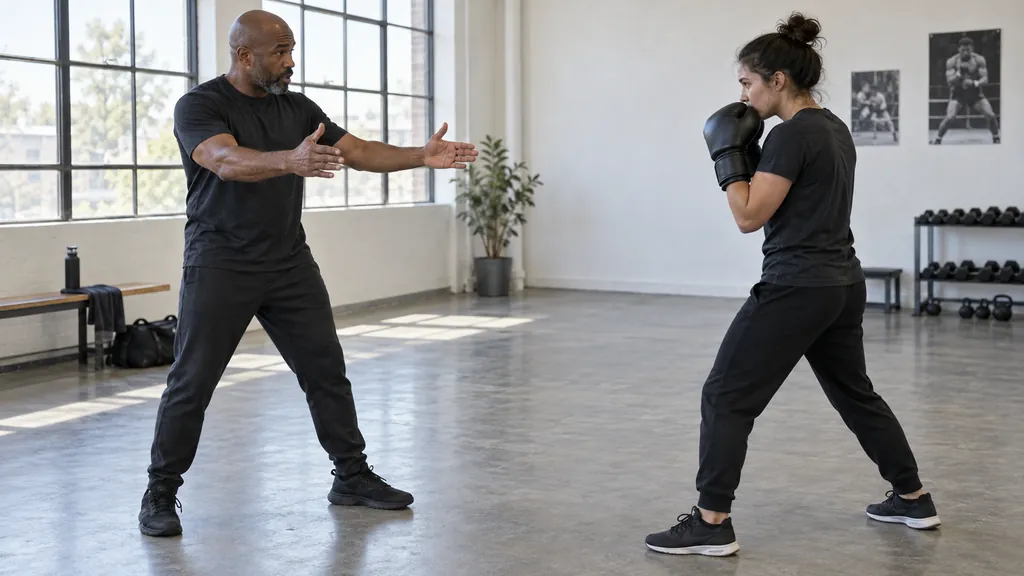
A palm-in position usually feels natural when the target is close and the elbow is clearly bent. The glove can travel on a tight arc, the forearm stays organised and the fist can arrive without reaching across your own body.
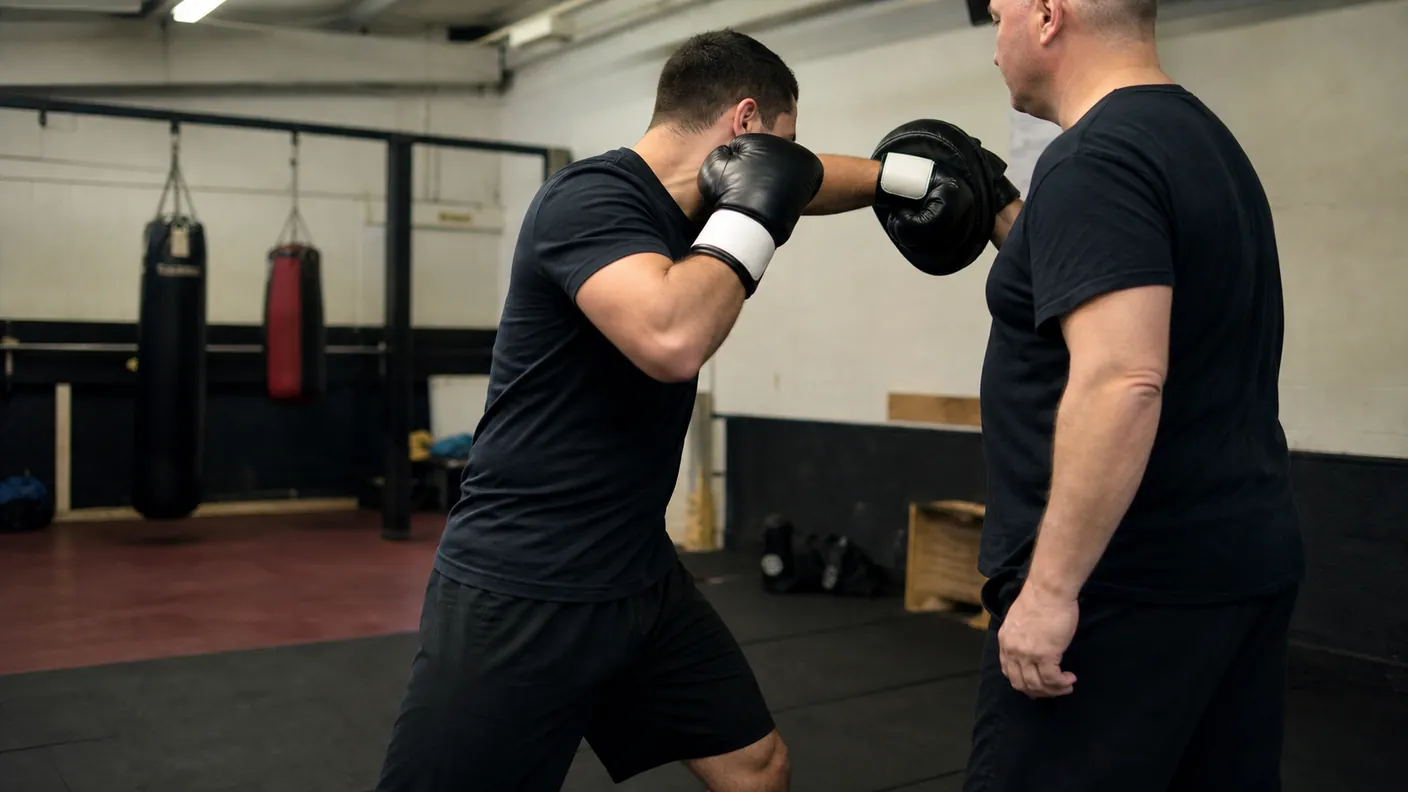
Think of a short lead hook to a coach-held body shield. You bend lightly through the knees, turn from the lead side and bring the glove around a short path. The rear glove stays near the cheek. You do not need to pull the lead hand back behind your ear or drop it below the ribs to make the shot feel heavy.
The palm-in shape is not a licence to throw from anywhere. If you are a full arm-length away, the fist may no longer land cleanly. The elbow begins to open, the wrist can lose its line and the shoulder can drag your head towards the target. That is the moment to take a small step, use a jab or choose a longer hook shape instead.
A review of boxing biomechanics describes the hook as a whole-body action involving the legs, trunk and upper body. In the gym, that means the hand should not be left to solve a distance problem on its own. The turn comes from the floor and the glove completes it.
Palm down can give the hook more room
A palm-down hook can make more sense when you have a little more space and want the glove to travel around a straight-line guard without straightening the arm completely.
This is not a long swing. The elbow remains bent, the shoulder and hip still turn together, and the rear glove remains in guard. The difference is that the forearm has a line which can stay cleaner as the target moves slightly farther around the lead side.
Use it as a light, fast shot before you try to make it heavy. On a mitt or bag, work at half speed and freeze after contact. If the glove has landed with a solid wrist, your head is still between your feet and the rear hand is home, the shape is probably useful. If the arm has gone long and the chest has fallen forward, you have asked the hook to do a jab's job.
The palm-down version is often useful after a small jab, feint or lead-hand touch has made the other boxer cover a straight line. It can bend around the outside, then leave you ready to reset. It does not need to finish every exchange. A quick touch, a clear read and a safe exit are enough.
Keep the wrist and knuckles honest
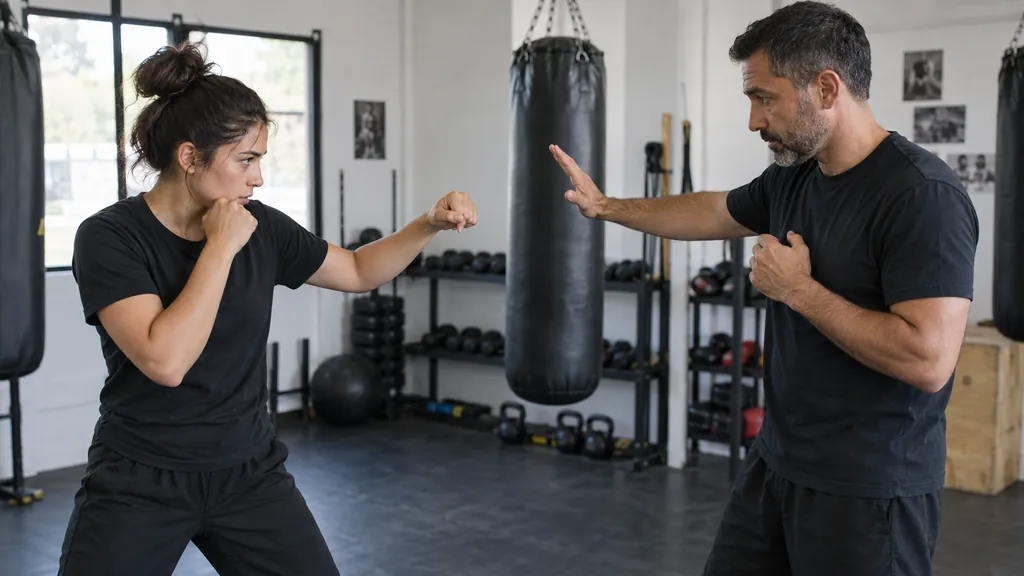
Do not turn this into an argument about labels. There are small variations between boxers, gloves and targets. A coach may ask for a slight change in fist position because your wrist collapses, your elbow drops or you are landing with the wrong part of the glove.
The non-negotiables are simpler:
- Keep the wrist straight behind the fist.
- Keep the elbow bent enough that the hook stays a hook.
- Turn from the legs and hip rather than winding the arm back.
- Keep the opposite hand available to guard.
- Return to stance before you decide on the next punch.
If the hand position puts stress into the wrist, makes contact feel awkward or leaves the elbow pointing at the floor, slow down. There is no prize for copying an advanced-looking hook when a compact version is cleaner.
Our guide to throwing a lead hook in boxing covers the basic turn and guard. This is the next question: once the hook shape is settled, can you adjust it honestly when the gap changes?
A three-round hand-position drill
Use a coach, a pad holder or a heavy bag. Keep the pace controlled. This is about feeling the difference between useful range and a forced punch, not about winning a hard bag round.
Round one: close hook shape
Stand close enough to a body shield or bag that your lead elbow stays comfortably bent. Throw a light single lead hook with a compact palm-in shape. Freeze after each repetition.
Check the rear hand, your chin and the wrist. If you have to pull the glove from below your waist or lift your chin to see the target, shorten the movement.
Round two: middle-range hook shape
Take half a step back. Use a coach-held mitt or a clear mark on the bag. Throw a light palm-down lead hook only when the feet have put you in a range where the elbow can remain bent.
Do not add a large lunge. The foot adjustment should be small enough that you can still jab as soon as the glove returns.
Round three: choose, then leave
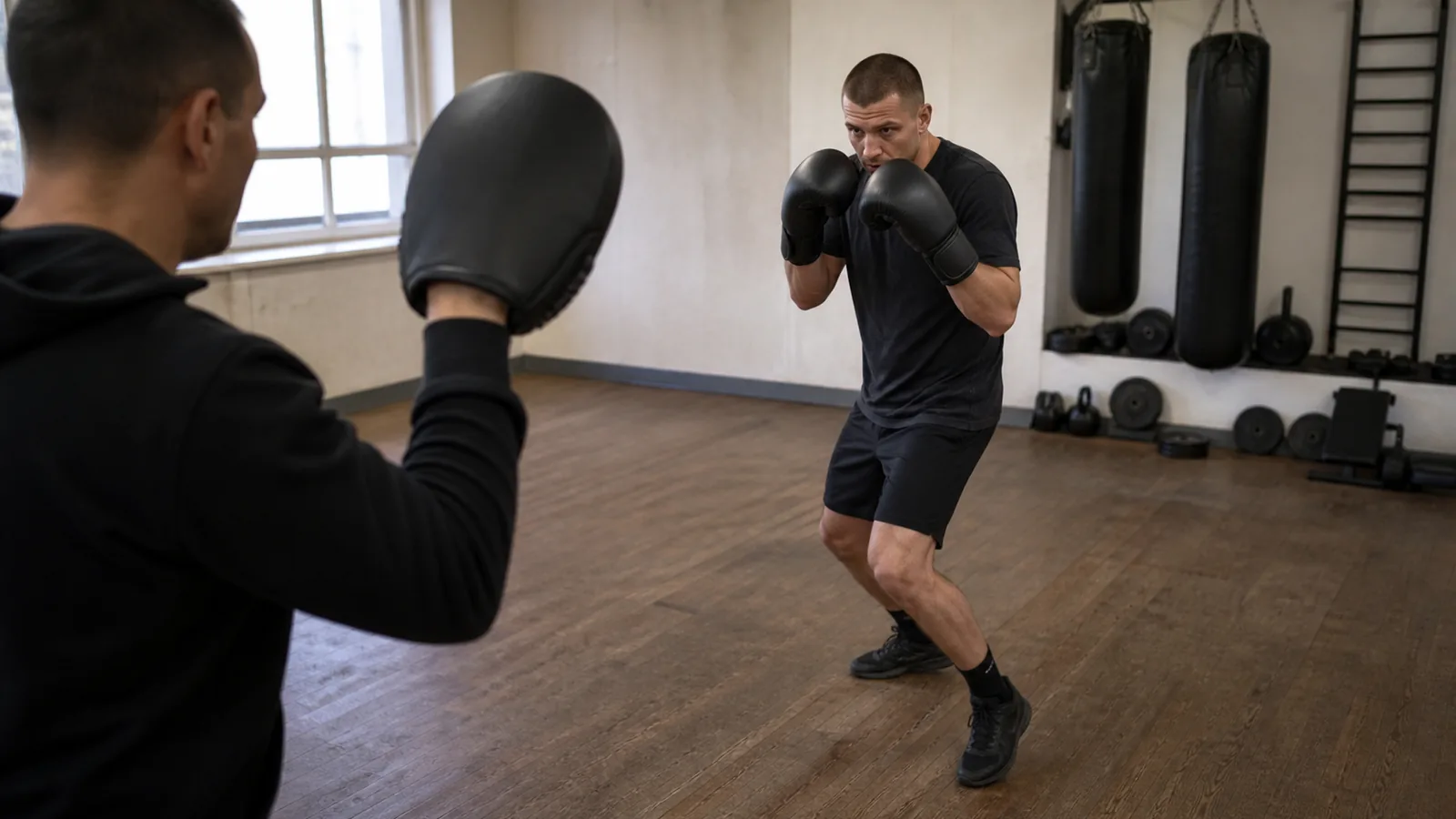
Ask a coach to vary the target distance slightly. At close range, show the compact hook shape. At middle range, use the more open palm-down version. If neither fits, jab, step or reset instead.
That last decision is the point. A boxer who always throws the hook because it was next in the drill is practising choreography. A boxer who sees the distance and keeps the option to do nothing is learning to box.
Four mistakes to catch early
The first is treating palm-in as a power setting. It works at close range because the shape is compact, not because it gives permission to reach.
The second is treating palm-down as a longer arm. The elbow still needs a bend. If the glove arrives after the arm has straightened, you are throwing a rounder version of a jab and losing the point of the hook.
The third is changing the hand but forgetting the feet. A good fist position cannot rescue a stance which has gone square or a head which has travelled over the front knee.
The fourth is admiring the punch. Whether the glove lands palm in or palm down, bring it home. The bag does not counter, but a partner will notice the hand that stays away from guard.
The coaching cue is simple: match the hook to the gap, then bring your hand back ready to box.
If you are in Kidbrooke, Greenwich or nearby, our Recreational Adults boxing classes use pads, bags and controlled partner drills to help you find the right punch shape without rushing into hard sparring.
H&G Team
Writer at Honour & Glory Boxing Club, a community boxing gym in Kidbrooke, South East London.
KEEP READING
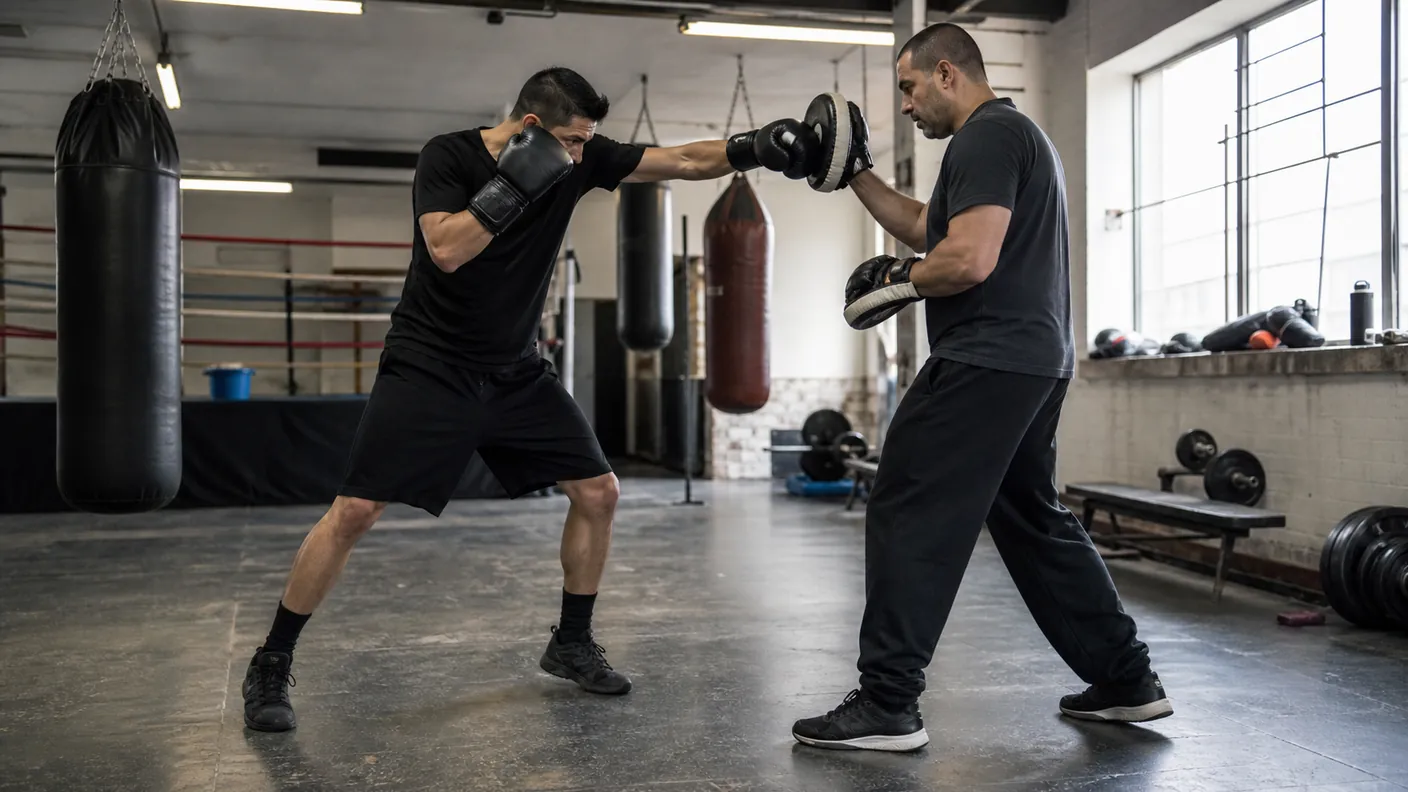
Fast Long-Range Lead Hook: Stay Balanced
Use a fast long-range lead hook to change the line without reaching, swinging wide or losing the stance that keeps you safe.
The Hook-Jab: Use Your Lead Hand Twice
Learn how a compact hook-jab can change the line of attack, bring your lead hand home and help you leave the pocket in balance.
Check Hook Balance Drill: Do Not Fall Backwards
Use a short check hook only when the step back, guard and lead-side turn leave you balanced enough to exit or reset.
Was this page helpful?
It takes one tap, and it genuinely helps.
Choose your next step
Turn this article into the right action
Some readers are ready to book. Some need the class route first. Pick the route that matches what you actually want.