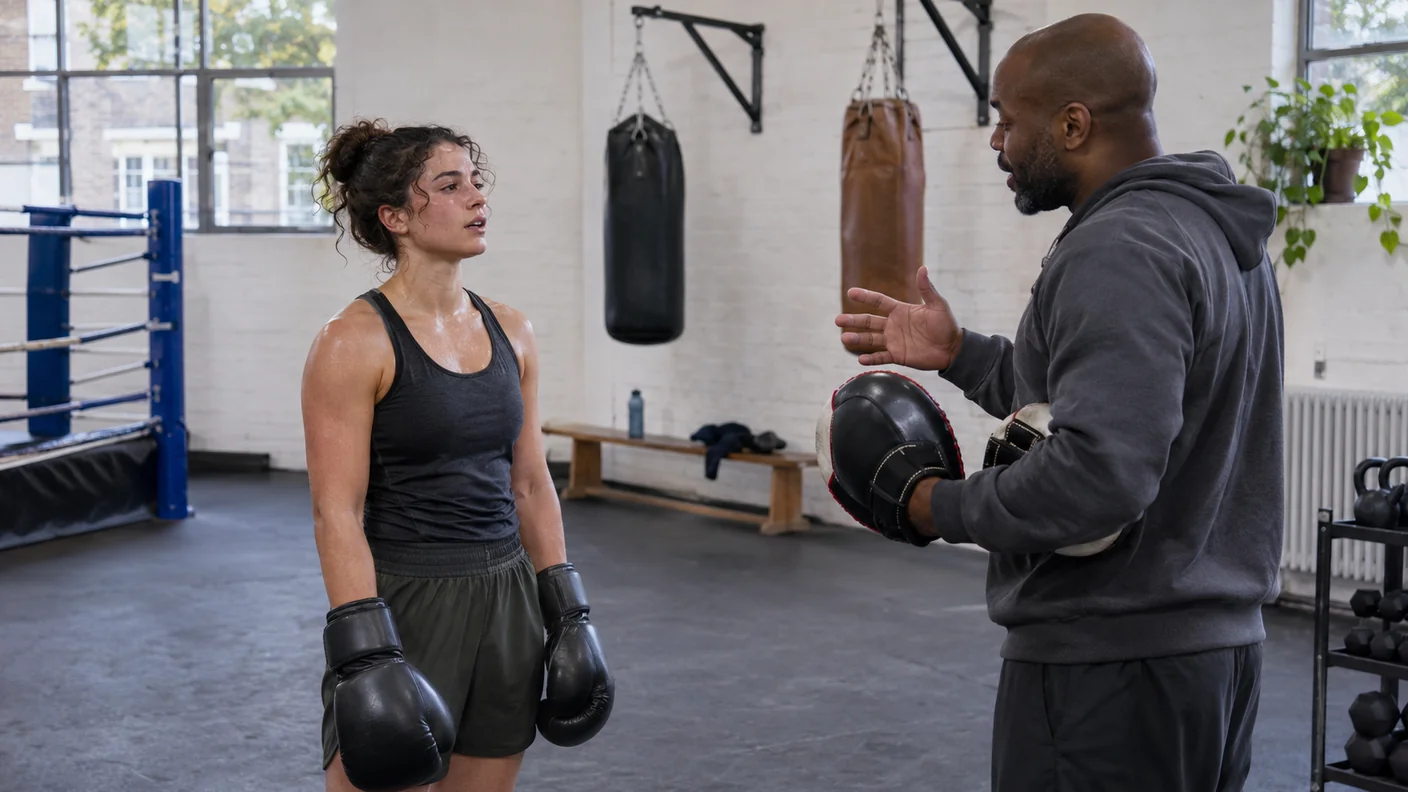
Jaw pain after boxing is usually a sign that something has become too tense. You may be grinding your teeth through every bag round, holding your breath during combinations, or forcing a mouthguard that does not fit properly.
That does not make it a toughness issue. It makes it useful feedback. A jaw should not be doing a three-minute strength hold while the rest of the body tries to learn footwork, guard and punch mechanics.
The first question is simple: did the pain follow a direct blow, or did it build during ordinary pads, bags or conditioning? Contact, a damaged tooth and trouble opening or closing the mouth need a different level of care from a tired jaw that has been clenched all session.
The common beginner problem is tension, not weakness
Beginners often box as though every instruction is an emergency. The fists close too hard. The shoulders rise. The tongue presses into the roof of the mouth. The teeth come together and stay there.
That is understandable. Boxing asks you to move, watch, listen and work hard at the same time. But constant clenching makes the whole upper body more expensive to run. The shoulders tire early, breathing becomes shallow and punches start to look pushed rather than sharp.
A jaw that aches after a non-contact session may be part of that pattern. It often travels with a stiff neck or burning forearms because the body has decided that tension is protection. It is not. It is usually just wasted effort.
The NHS advice for temporomandibular disorder is direct: avoid clenching the teeth when you are not eating. It also lists jaw and facial pain, clicking, headaches and difficulty moving the jaw among symptoms worth discussing with a clinician or dentist when they persist (NHS guidance on jaw disorders).
A boxing guard should be alert, not locked
Keeping your chin covered does not mean crushing it into your chest. Keeping your hands up does not mean biting down as if somebody is about to take them away.
A good guard is ready to move. Your hands return to the right place, your eyes stay level and your shoulders settle between actions. The jaw can stay closed lightly without the teeth being welded together.
Try this in a slow shadowboxing round. Throw one jab, breathe out, bring the hand home and deliberately let the lower jaw loosen before the next punch. Then do the same with a jab-cross. If you cannot feel the difference, you are probably still holding more tension than you need.
This is not about boxing with your mouth open. It is about refusing to turn every repetition into a grimace. Our relaxed-hands shadowboxing drill helps with the same habit in the fists and shoulders.
Breath-holding can pull the jaw into the problem
A clenched jaw and bad breathing often arrive together.
When a boxer holds a big breath before a combination, the chest stiffens, the shoulders climb and the jaw closes hard. After a few rushed exchanges, the boxer is breathing late, their arms feel heavy and the face is working as hard as the legs.
Use a short exhale on the punch and a calmer breath during the reset. The point is not to make a dramatic noise. It is to stop the body treating each jab-cross like a lift that must be braced for from head to toe.
A 2023 review of breathing strategies in sport found that controlled breathing may influence heart rate, focus and anxiety, while also noting that direct performance effects remain uncertain (review in Sports). That is the sensible frame. Breathing will not make a poor punch technically sound, but it can stop tension turning a manageable round into panic.
If your jaw tightens as soon as the pace rises, reduce the pace before you add more power. A clean slow combination gives a coach something to correct. A fast, clenched mess does not.
Your mouthguard should not force you to bite all round
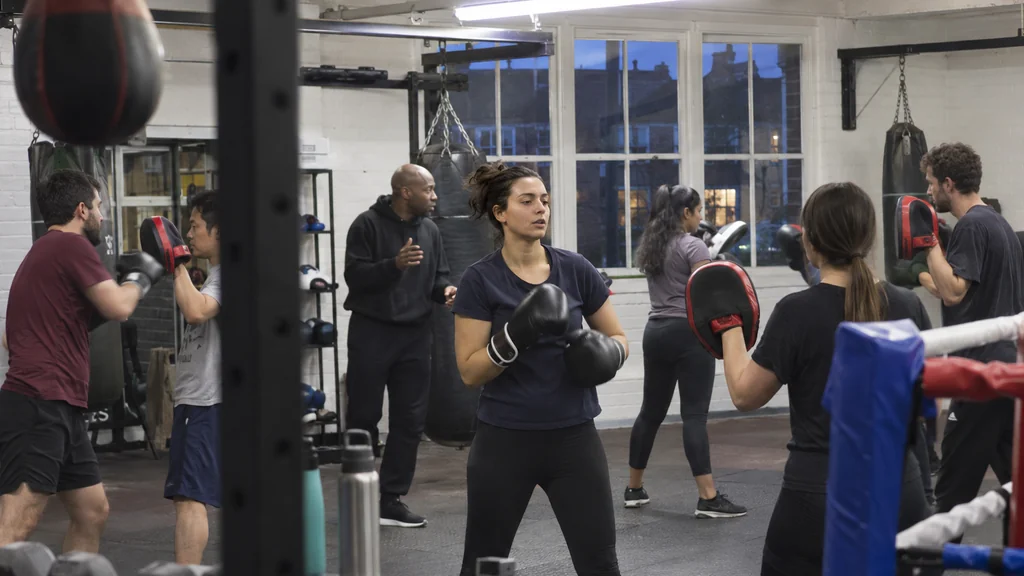
For bags, pads and ordinary non-contact sessions, you may not need a mouthguard at all. For sparring or drills where contact is genuinely possible, the guard needs to fit and stay put.
A badly fitted guard creates its own tension. If it slides, feels bulky at the back, makes you gag or only stays in place when you bite as hard as possible, you will spend the round fighting the equipment. That can leave the jaw muscles sore even when nobody has hit you.
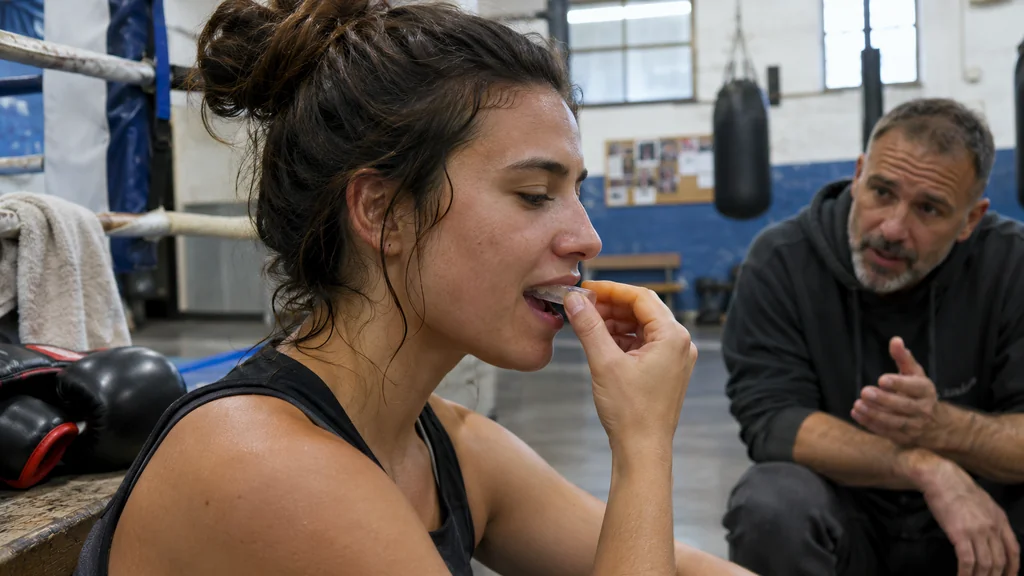
A properly fitted guard should sit securely on the upper teeth without constant tongue pressure. It should not make normal breathing feel impossible. A recent review found that custom-made sports mouthguards generally provide better comfort and fit than stock or mouth-formed guards, although the right choice still depends on the person and the level of contact (mouthguard review).
Do not cut up a guard in the changing room because somebody online says that is the answer. Check the manufacturer's advice or ask the dental professional who supplied it. If a guard remains uncomfortable after a careful fitting, replace it or ask about a custom option.
Our guide to a boxing mouthguard that makes you gag covers the practical fit checks. If the guard is new and the jaw pain started after a blow, speak to a dentist before you return to contact work.
Do not confuse jaw fatigue with a reason to push through
Mild muscle tiredness that settles can happen when you are new to a sport that makes you brace, breathe and concentrate differently. Sharp pain, a bite that suddenly feels different, a loose or damaged tooth, swelling, locking, or difficulty opening the mouth are not in the same category.
After a direct blow, seek urgent medical help if you cannot move the jaw properly, your teeth no longer meet normally, there is significant swelling or bleeding, or you have a serious facial injury (MedlinePlus guidance on broken or dislocated jaws). The exact cause needs assessment after a direct blow. Do not let a coach, training partner or article talk you out of that.
For persistent jaw pain without a clear injury, a dentist or GP can help work out whether teeth grinding, a dental problem or a jaw joint issue is involved. This article can help you notice a training pattern. It cannot diagnose the reason for pain.
Five things to change in your next session
1. Lower the effort before you change the gear
Start with a technical round at about half speed. If the jaw stays calmer, the main issue is probably tension and pacing rather than a mysterious strength problem.
2. Keep the teeth apart between actions
You need to make a proper fist on impact. You do not need to keep the whole face switched on between punches. Let the jaw soften as you reset your feet and guard.
3. Ask a coach to watch one full round
Do not ask only whether your chin is down. Ask whether your shoulders rise, your head reaches, or your face tightens when the combination gets quicker. Those clues are usually visible.
4. Check the mouthguard while standing still
If you use one for contact work, it should sit on the upper teeth without you chewing it into place. If it shifts, presses painfully or triggers gagging, sort that before the next sparring session.
5. Stop treating every bag round like a test
Heavy bags reward clean mechanics, not a clenched expression. If your technique falls apart as power rises, take the power down until your feet, hands and breathing agree again.
The bigger lesson is to spend effort carefully
Boxing is hard enough without making the jaw, neck and shoulders do unnecessary work. Beginners often think they need to look intense in order to train seriously. The opposite is usually closer to the truth.
Good boxing keeps enough tension to stay organised, then releases what is not needed. The hands come home. The shoulders settle. The jaw stays quiet. You see the next cue and you can breathe before you need to panic.
If you also get neck pain, our guide to why your neck hurts after boxing explains how a tense guard and overreaching punches can pull the same pattern higher up the body.
For adults in Greenwich and nearby, our Recreational Adults boxing classes give beginners time to learn these basics without treating sparring as a requirement.
H&G Team
Writer at Honour & Glory Boxing Club, a community boxing gym in Kidbrooke, South East London.
KEEP READING
Why Does My Boxing Mouthguard Make Me Gag?
A gagging mouthguard is usually a fit problem, not something you should simply endure. Here is what to check before contact training.

Why Your Thumb Hurts After Boxing
Thumb pain after boxing can come from poor alignment, wraps or glove fit. Learn what to fix and when to stop training.
Why Your Wrists Hurt After Boxing
Wrist pain after boxing is usually a technique or equipment problem, not a toughness test. Here is what causes it and what to fix first.
Was this page helpful?
It takes one tap, and it genuinely helps.
Choose your next step
Turn this article into the right action
Some readers are ready to book. Some need the class route first. Pick the route that matches what you actually want.