Usyk Wants Benavidez Next: Is Cruiserweight the Real Route?
Usyk Wants Benavidez Next: Is Cruiserweight the Real Route?
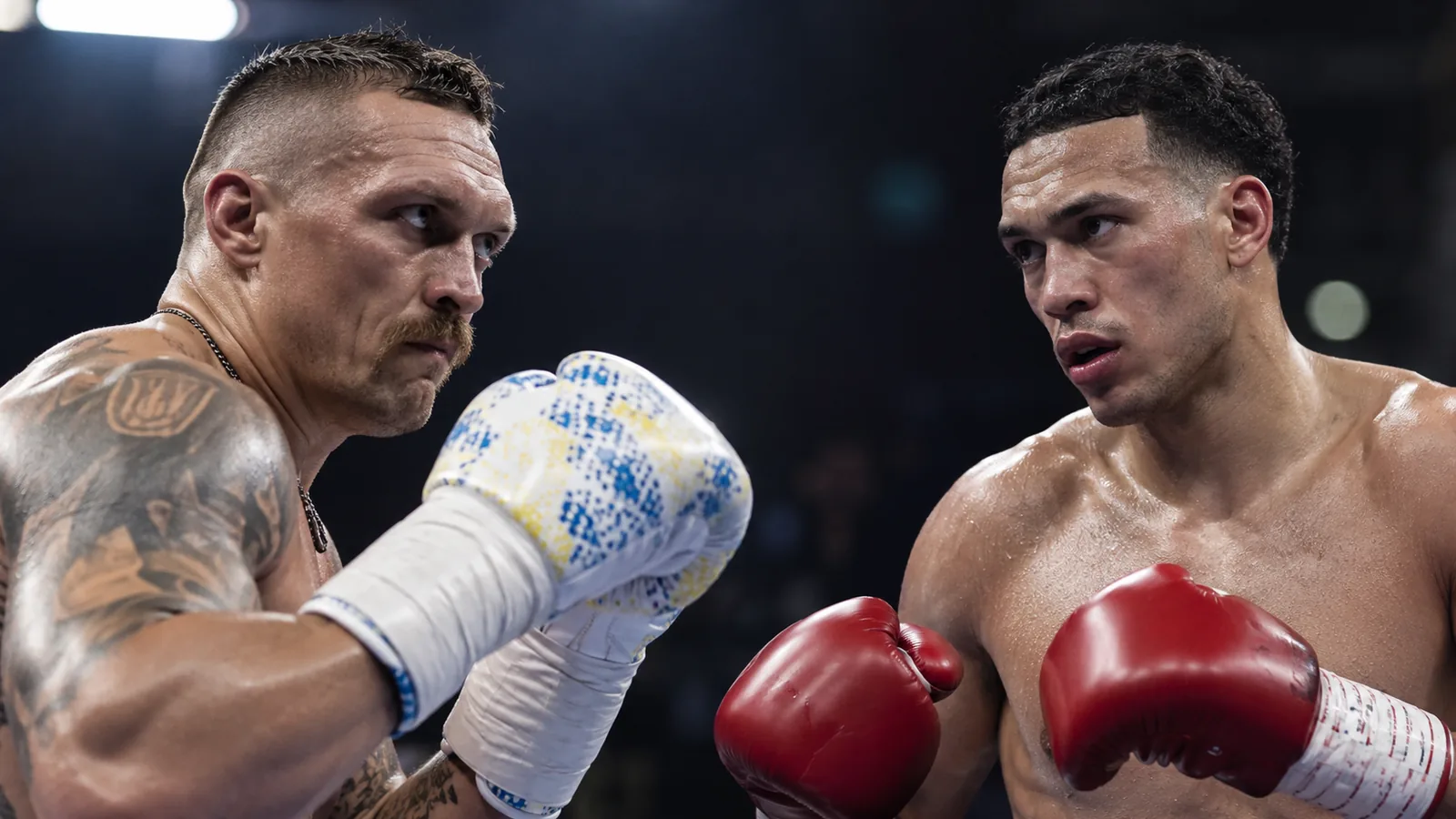
Oleksandr Usyk against David Benavidez sounds, on first hearing, like the kind of fight boxing invents on social media before the practicalities catch up. One is the modern era’s defining heavyweight, the other an unbeaten, pressure-heavy American who has carried his ambition through several weight classes.
Yet this is not simply a fantasy match-up. Usyk’s adviser Sergey Lapin has outlined a plan for the Ukrainian to return to cruiserweight in 2027, win a vacant world title and then pursue Benavidez in a unification fight. The BBC’s report on Usyk’s proposed final chapter makes the key point clear: the intended fight is at cruiserweight, not as an immediate heavyweight event.
That is the route that makes sense. It is difficult, ambitious and far from guaranteed, but it is credible. A straight jump to Usyk versus Benavidez at heavyweight would be commercially tempting and competitively muddled.
The recent discussion is captured in this video coverage:
The attraction is obvious
Usyk is 25-0 with 16 knockouts and has already done what many believed could not be done in the modern heavyweight division. He became undisputed at cruiserweight, moved up, beat Anthony Joshua twice, Tyson Fury twice and Daniel Dubois twice, then became a two-time undisputed heavyweight champion.
There is no need for Usyk to hunt easy nights or build a record. If he has one final chapter left, a return to the division where he first unified the belts has a proper sense of purpose.
Benavidez offers the right sort of challenge. He is 32-0 with 26 stoppages, holds the WBO and WBA cruiserweight belts, and is scheduled to face Michał Cieślak for the WBC title on 5 December. As ESPN reported, the IBF belt is vacant after Jai Opetaia was stripped in March. There is a visible route to a four-belt fight.
That matters. Boxing has spent too much time trying to sell fights because they are “massive” rather than because they settle something meaningful. Usyk versus Benavidez at 200lb would not be a novelty bout. It would be a possible undisputed championship fight between two unbeaten elite operators.
The Yahoo Sports report on Usyk making the cruiserweight plan official adds weight to the idea that this is more than an offhand call-out. The target is a big champion, and Benavidez is now exactly that.
Why heavyweight is the wrong immediate setting
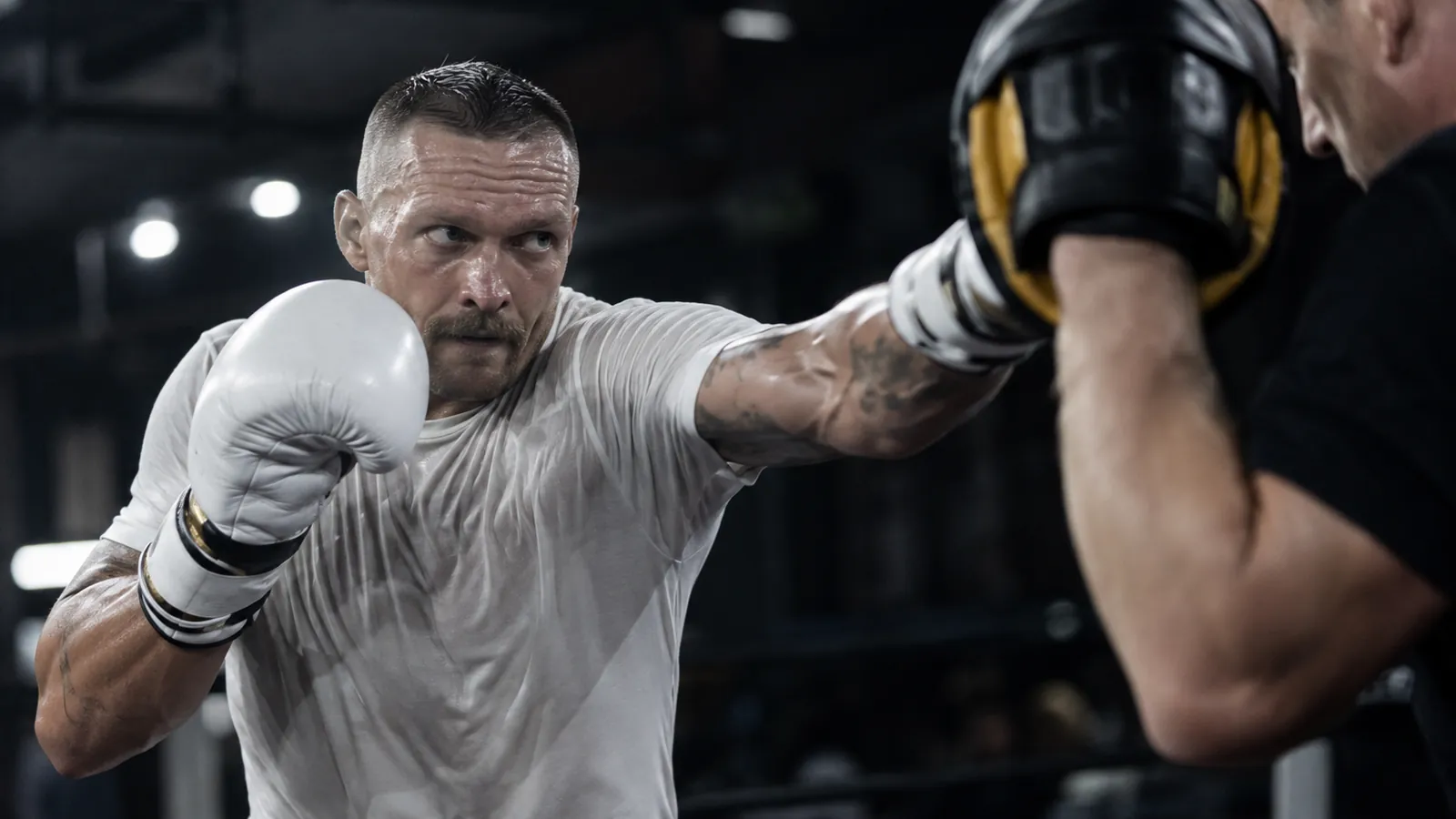
The obvious response is that both men could fight at heavyweight. Usyk is already proven there and Benavidez has spoken about moving up eventually. But “can make heavyweight” and “should make this fight at heavyweight now” are very different claims.
Benavidez is a formidable fighter, but he would be entering the biggest division without the gradual physical education that heavyweight demands. His aggression, combination punching and ability to work the body have carried him through his career, but heavyweights do not react to pressure in the same way as light-heavyweights and cruisers.
At heavyweight, every defensive lapse costs more. Every clinch becomes more exhausting. Every clean right hand has greater consequence.
Usyk knows this better than anyone. His rise from cruiserweight was not based on suddenly becoming the biggest man in the division. It came from timing, footwork, composure, conditioning and an almost obsessive ability to make larger opponents reset. He learned how to survive and then thrive among men who outweighed him substantially.
Benavidez would need his own adjustment period. One competitive heavyweight outing is not the same as winning a world-level fight against Usyk. Calling for that match-up immediately risks turning an excellent sporting contest into a physical experiment.
Trainer Robert Garcia has been frank about the scale of that task, discussing Benavidez’s chances against Usyk at heavyweight. It is not disrespectful to Benavidez to say the Ukrainian would begin as a heavy favourite there. It is an acknowledgement of experience. Usyk has already solved the heavyweight puzzle. Benavidez has not yet sat the exam.
Cruiserweight is difficult, but it gives the fight real stakes
The complication is that Usyk is 39. Returning to the cruiserweight limit of 200lb after years competing above it is not a casual cut. He will not be the same fighter he was when he beat Marco Huck, Mairis Briedis, Murat Gassiev and Tony Bellew in his original run through the division.
A mature athlete can lose weight. The question is what comes off with it.
Does Usyk retain the sharpness in his legs? Does he recover as well after hard sessions? Can he take the weight down without draining the reserves that have made him so effective in championship rounds? Those are the questions a sensible camp must answer before contracts are signed.
The video footage of Usyk appearing lean has naturally added fuel to the discussion, but a fighter looking trim in a gym is not proof that a 200lb championship weight is healthy or sustainable. Making a division is one job. Performing at elite level after making it is another.
Still, cruiserweight remains the honest sporting route because it puts both fighters in a defined championship structure. Benavidez would not be asked to rush his heavyweight development. Usyk would not be asking a smaller man to step into the heavyweight ring solely because the names create headlines.
It also restores an old truth about boxing: weight divisions exist to create contests between similarly sized, properly prepared athletes. They are not obstacles to be brushed aside whenever a promoter sees a viral poster.
Benavidez may be the fresher man at 200lb
If this fight takes place at cruiserweight, Benavidez would not be an opponent brought in to make up the numbers. He would bring youth, size at the weight and a style capable of asking serious questions.
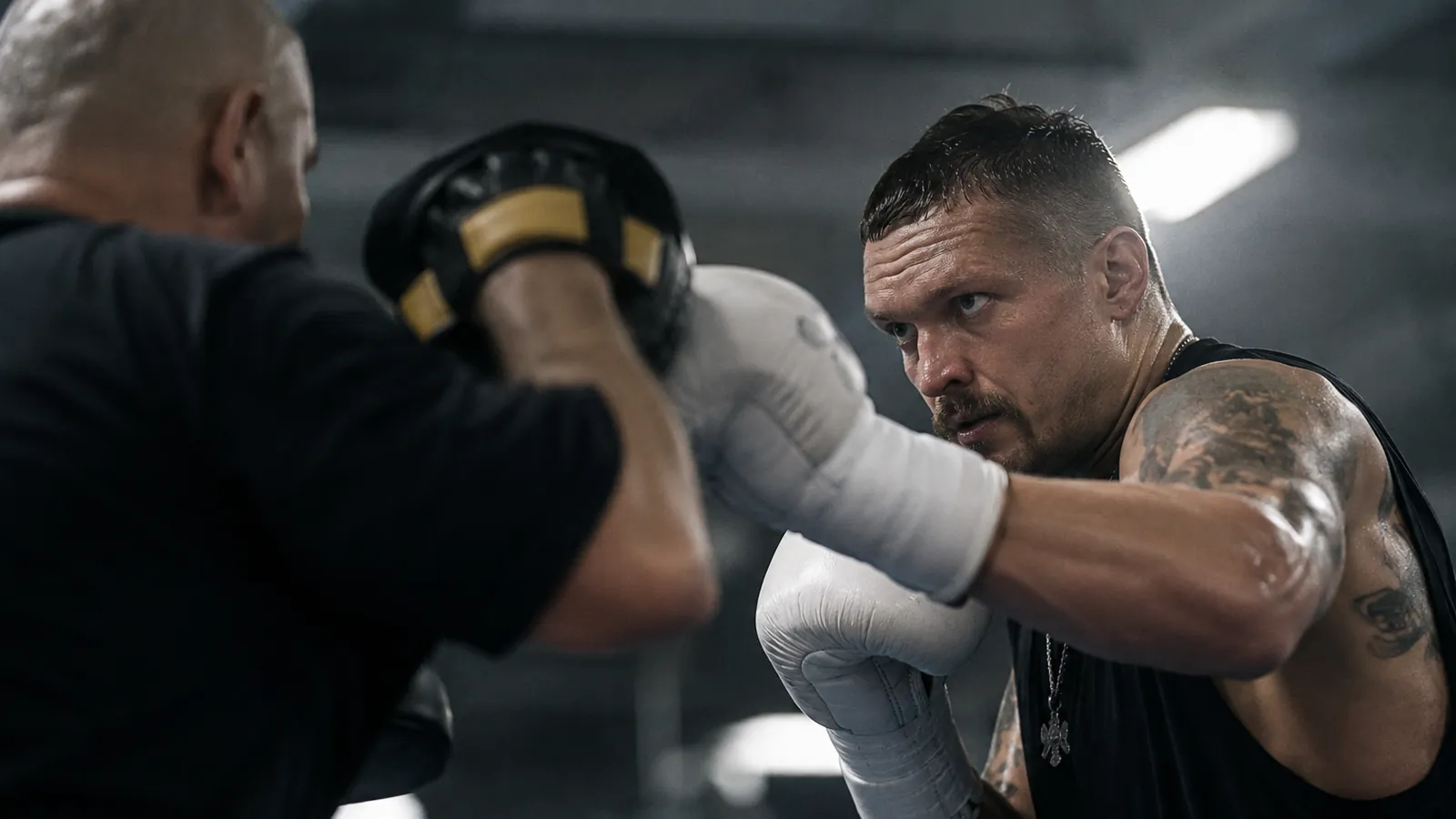
His best work comes when he establishes rhythm. Benavidez does not throw a single flashy burst and wait for applause. He presses, varies the target and makes opponents work at an uncomfortable pace. Against many fighters, that volume slowly removes their options.
Against Usyk, though, pressure has to be intelligent. Joshua, Fury and Dubois all discovered that chasing Usyk without controlling his exits leaves space for the Ukrainian’s left hand and his rapid counters around the guard. Benavidez would need to cut the ring, take away Usyk’s angles and avoid smothering his own punches.
That is why this would be fascinating at 200lb. Benavidez could bring the physical presence of a genuine cruiserweight champion, while Usyk would bring the experience of the division’s greatest modern tournament winner and one of boxing’s cleverest southpaws.
The latest coverage of Usyk’s next-fight situation is worth following because there are still several moving parts. Benavidez must first deal with Cieślak, Usyk must prove that a cruiserweight return is realistic, and the vacant IBF title needs to be resolved.
A final dance worth earning
The sensible sequence is already there: Usyk returns at cruiserweight against a credible opponent for a vacant belt, Benavidez completes his own title business, then the two meet with all the meaningful hardware on the line.
That is better than a rushed heavyweight spectacle. It is better for Benavidez, who deserves time to decide whether heavyweight is his future. It is better for Usyk, who has earned the right to pursue a legacy fight rather than another obligatory defence. Most importantly, it is better for the sport.
Usyk versus Benavidez at cruiserweight would be a proper championship fight, not merely a meeting of famous names. If Usyk can safely make 200lb, that is where it belongs.
For young boxers, the lesson is simpler than the headlines: progress through the weights and levels with patience. At Honour & Glory Boxing Club’s classes in Kidbrooke, boxers aged 7+ learn the fundamentals before being pushed towards the next challenge. In boxing, the exciting route is not always the rushed route.
H&G Team
Writer at Honour & Glory Boxing Club, a community boxing gym in Kidbrooke, South East London.
KEEP READING
Usyk vacates heavyweight belts: the vacant-title routes
The defining heavyweight governance story: what surrendering the WBC, WBA and IBF belts changes, why it does not equal retirement, and how mandatory and vacant-title routes now shape the division.
Frank Warren’s Usyk hint raises Itauma stakes
Why a possible Usyk opportunity would change the stakes of Itauma-Hrgovic, and what world-title timing means for a young heavyweight.
Viddal Riley eyes a world-title route at cruiserweight
A UK-focused look at Riley’s stated ambitions, his November headline date and why calling for major fights is different from building a credible route to them.
Was this page helpful?
It takes one tap, and it genuinely helps.
Choose your next step
Turn this article into the right action
Some readers are ready to book. Some need the class route first. Pick the route that matches what you actually want.