Stevie McKenna’s 65-second knockout: what early pressure can do
Stevie McKenna’s 65-second knockout: what early pressure can do
A first round does not have to be a feeling-out round.
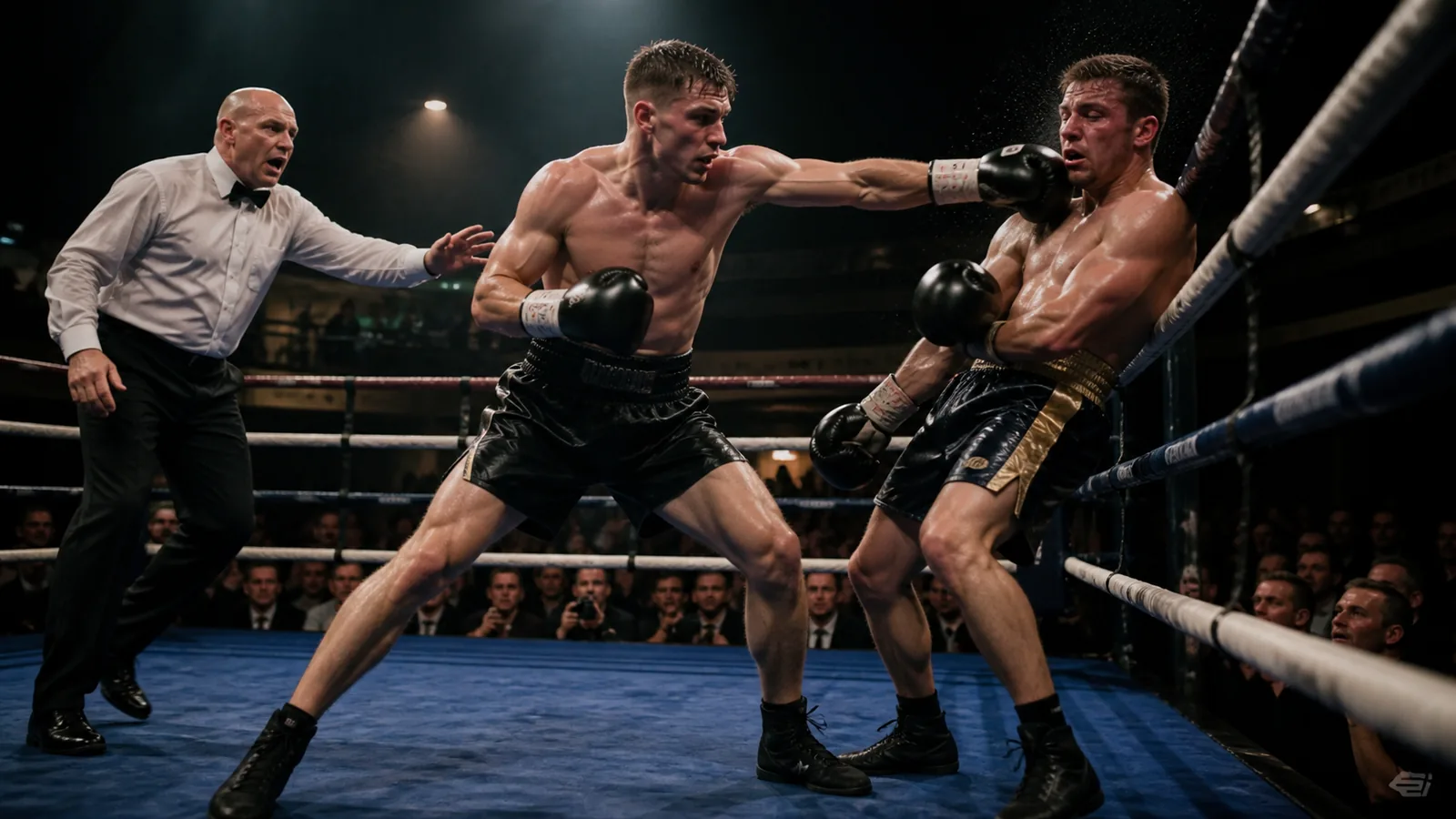
That is the lesson in Stevie McKenna’s 65-second stoppage of Owen O’Neill at Zuffa Boxing 10 in Dublin. McKenna did not wait to discover the shape of the fight. He imposed one before O’Neill could find his feet, jab, rhythm or exit route.
The official result was a first-round TKO at 1:05. It was not a lucky swing or a wild rush. McKenna turned early pressure into a finish through three simple things: purposeful forward movement, control of the available space, and a clean punch delivered when O’Neill’s defence had begun to break down.
For anyone learning boxing, that sequence is worth studying. Not to copy the violence or charge at sparring partners, but to understand what good pressure is actually for.
The official Zuffa Boxing results recorded McKenna’s win over Belfast’s O’Neill at 1:05 of the opening round. The UFC highlight called it another highlight-reel moment for McKenna. The clip is spectacular. The more useful part is how quickly O’Neill is denied the space to do anything else.
McKenna did not just come forward. He took away choices.
There is a difference between pressure and chasing.
Chasing is following somebody around the ring, reaching with shots and hoping that activity becomes control. It is exhausting, easy to counter and usually makes a boxer look more open than dangerous.
Pressure is about making the opponent spend every second responding to you.
McKenna came out fast, but he was not simply sprinting forward in a straight line. He loomed over O’Neill, kept him moving backwards and made him deal with heavy punches immediately. Sky Sports described O’Neill hopping back as McKenna stayed on him with wide, forceful attacks, including a big left hook before the decisive sequence.
That matters because backward movement is not automatically defence. A boxer can retreat safely if they have room to reset their feet, use the jab, pivot off the ropes or tie up at the right moment. O’Neill did not get enough of that time.
McKenna’s work forced him into survival mode before the fight had properly developed.
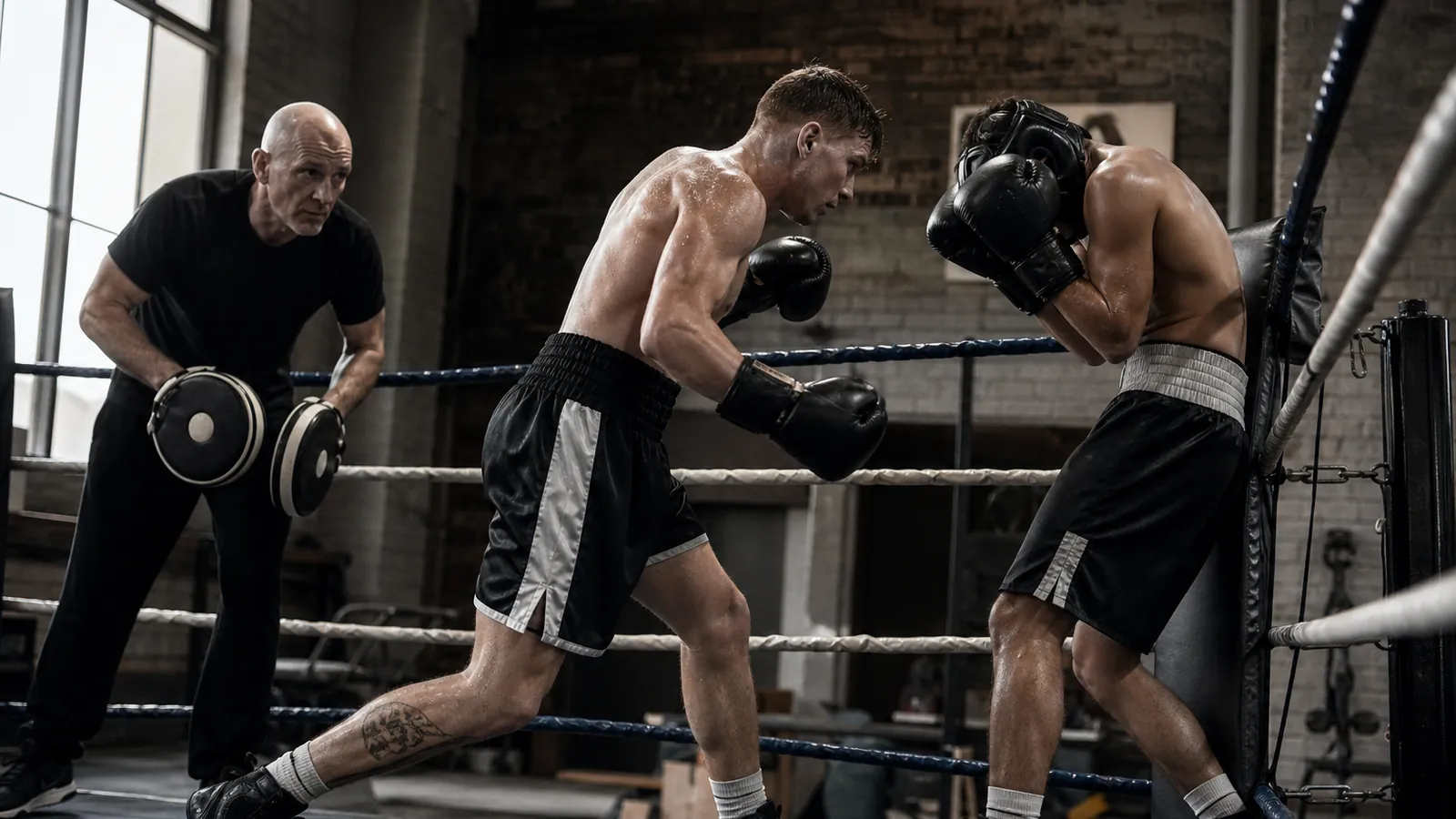
The Sky Sports report captured the pattern well: O’Neill moved backwards, McKenna kept punching, then O’Neill tucked up under the attack. Once a boxer is only covering and waiting, rather than seeing and answering, the pressure fighter has changed the fight.
That is the objective. Not to throw as many punches as possible. To make the other boxer stop making useful decisions.
The early attack made O’Neill defend without settling
The opening minute is often tense because both boxers are trying to establish distance.
Who owns the outside range?
Who is quicker to the jab?
Can either boxer lead without being countered?
Which direction is the exit available?
McKenna gave O’Neill no calm opportunity to answer those questions.
The official account says McKenna swarmed O’Neill from the opening bell and that a pair of heavy left hooks left him unsteady as he tried to dip and duck away. That description is important. O’Neill was not merely standing still and absorbing punches. He was trying to move his head, but he was doing it while already under sustained pressure.
There is a hard coaching truth here: head movement without a route out is incomplete defence.
Ducking beneath a punch can help. Dipping can make a hook miss. But if your feet do not take you to a safer line, you often come up in front of the next shot. McKenna found exactly that moment. As O’Neill lifted his head after trying to evade the attack, McKenna landed the finishing right hand.
The official Zuffa Boxing report described the shot as a massive right that sent O’Neill down in front of his corner. Sky Sports called the finish a one-two followed by a right cross. Whichever angle you watch, the central point is the same: the final shot landed because the previous pressure had narrowed O’Neill’s options.
A knockout punch is often discussed as if it appears in isolation. It rarely does. The punch that ends the fight is usually the last answer in a chain of problems.
Distance control is what made the pressure dangerous
McKenna’s attack worked because he stayed close enough to make O’Neill react, but did not give him the clean long range he needed to settle behind a jab.
That is the awkward middle ground for a boxer under pressure. You are too far away to clinch, too close to relax, and too busy covering up to establish your own offence.
Pressure fighters need to understand that closing distance is not the same as smothering your own work. If you walk in until your chest is on the other boxer, your punches lose room to travel and you can be tied up. If you stay a step too far out, you are just following.
The useful range is where the opponent feels you can punch at any moment, so they cannot reset freely.
McKenna kept O’Neill in that range. His presence forced O’Neill backwards, then his punches made the retreat more hurried. Once O’Neill was covering up, McKenna had the space to put a clean right hand through the centre.
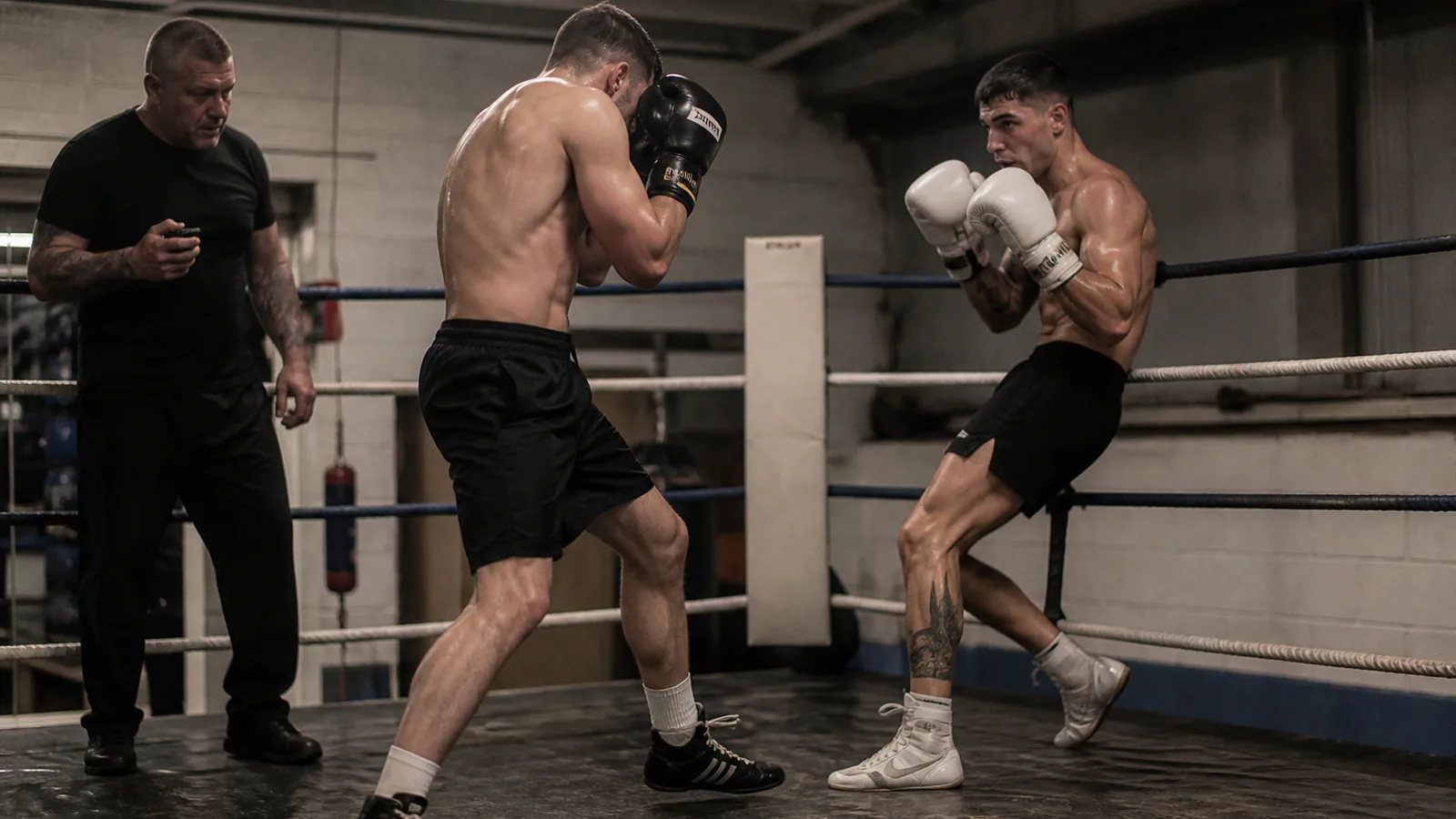
At H&G, we work on this in controlled drills rather than by telling beginners to throw themselves forward. A boxer learns to step behind the jab, take a small angle after punching, keep their balance and recognise when a partner is backing up with no safe exit. The goal is composure, not chaos.
If you want to learn those foundations in a coached setting, our boxing classes in Kidbrooke are open to new joiners aged 7 and over.
The finishing sequence was clean, not reckless
McKenna is a naturally aggressive fighter. Before this bout, he told Sky Sports that he wanted to get a knockout before joining his brother Aaron’s corner later that night.
It would be easy to look at the result and conclude that aggression alone won it. That is not right.
Reckless aggression creates openings for the other boxer. Purposeful aggression creates openings for you.
McKenna did not wait until O’Neill was ready to exchange on his own terms. He used the hooks to force a defensive reaction, stayed present as O’Neill tried to duck away, then landed the right hand when O’Neill came back up. He did not throw the finisher from miles away. He threw it after taking away O’Neill’s ability to see it early and move properly.
That is a clean finishing sequence:
- Establish pressure without falling over the front foot.
- Make the opponent move or cover.
- Notice when their defensive reactions become predictable.
- Land the straight, accurate shot through the opening.
- Do not keep taking unnecessary risks once the referee steps in.
The order matters. Young boxers sometimes chase the last step. They want the hard right hand before they have earned the position for it. Against a live opponent, that is how you walk into a jab, hook or counter.
What a boxer can take from this without copying the risk
Nobody in a normal gym should try to recreate a professional first-round stoppage in sparring. Sparring is where you learn to see, position, defend and make good choices. It is not where you hunt a teammate.
But McKenna’s performance offers useful lessons for every level.
Start with intention
Do not spend the first minute frozen at the edge of range. You do not need to rush, but you should have a plan: establish the jab, take the centre, test the opponent’s response to a feint, or make them move towards a chosen side.
Pressure with your feet first
Punching while your feet are too far behind you turns pressure into reaching. Step well, stay balanced and make sure you can defend after you punch. The pressure must be repeatable.
Do not let an opponent reset for free
If a partner or opponent moves backwards after you jab, use your feet to hold the distance. Do not leap in. Do not cross your feet. Take a measured step, stay in stance and make them show how they plan to leave.
Watch the exit, not only the target
A fighter under pressure often repeats the same escape: dipping low, pulling straight back, circling towards their rear hand or covering up without moving. The useful information is in the repeated response. McKenna capitalised when O’Neill’s duck became a predictable place to find him.
Finish with accuracy
Power is useful. Accuracy arrives first. The right hand that ended the fight landed because McKenna had created a clear target and was close enough to deliver it properly.
A short fight, a serious reminder
McKenna’s win helped set the tone for a major night in Dublin. His brother Aaron McKenna went on to win the IBF middleweight title against Etinosa Oliha, as reported by BoxingInsider. Stevie’s result moved him to 18-1 with 17 knockouts, according to Balls.ie.
But the 65 seconds against O’Neill are more useful than a record line.
They show that a fight can change before either boxer has settled, provided the pressure has a purpose. McKenna did not win because he threw himself forward. He won because he made O’Neill retreat, made that retreat uncomfortable, and turned a defensive habit into an opening.
That is what early pressure can do when it is backed by balance, distance and clear intent.
H&G Team
Writer at Honour & Glory Boxing Club, a community boxing gym in Kidbrooke, South East London.
KEEP READING
Shift Counter in Boxing: Punch as You Move
Learn the shift counter: a simple way to step off pressure and punch while you change angle, instead of backing up in panic.
Follow a Retreating Boxer Without Reaching
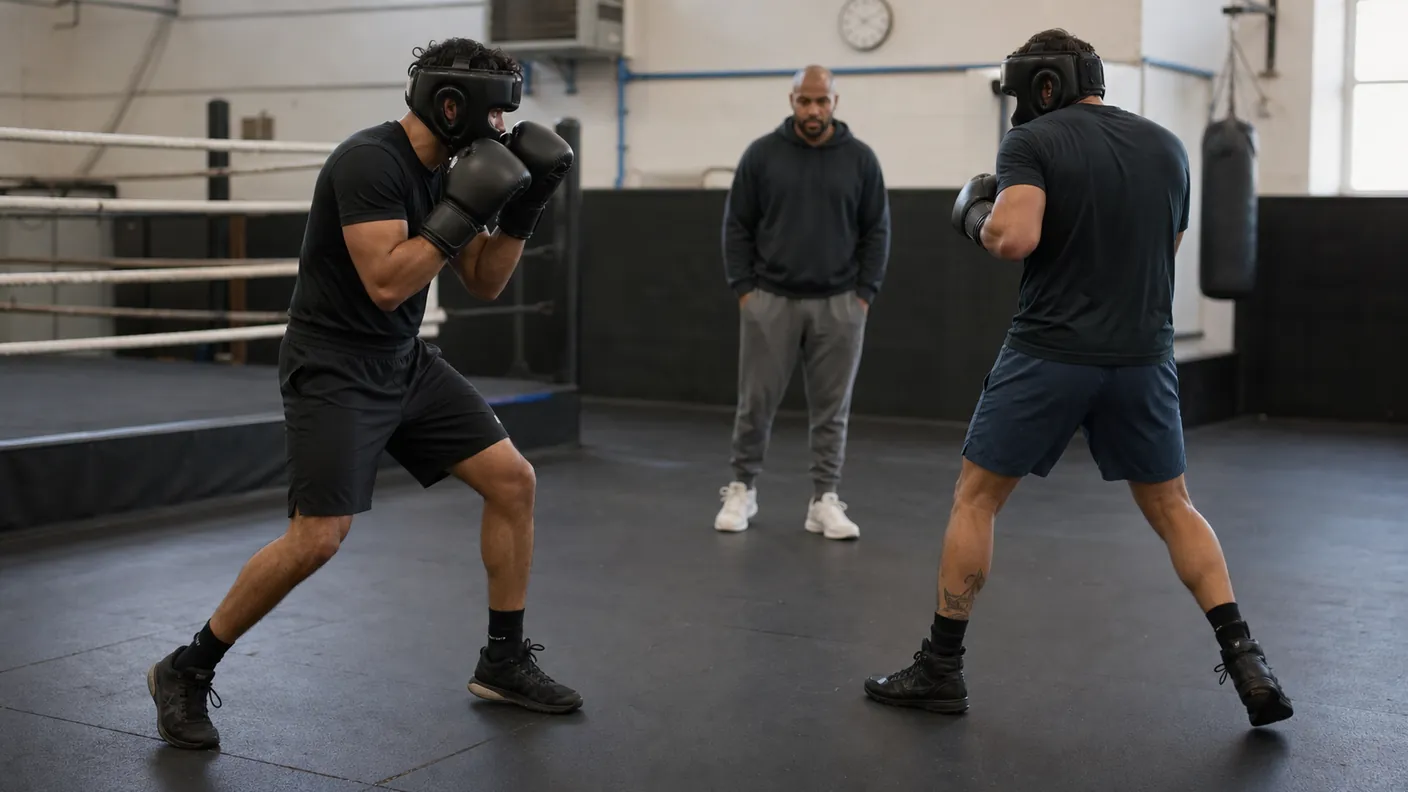
Learn how to take ground against a boxer who steps back without crossing your feet, leaning for punches or walking into a counter.
How to Cut Off the Ring in Boxing
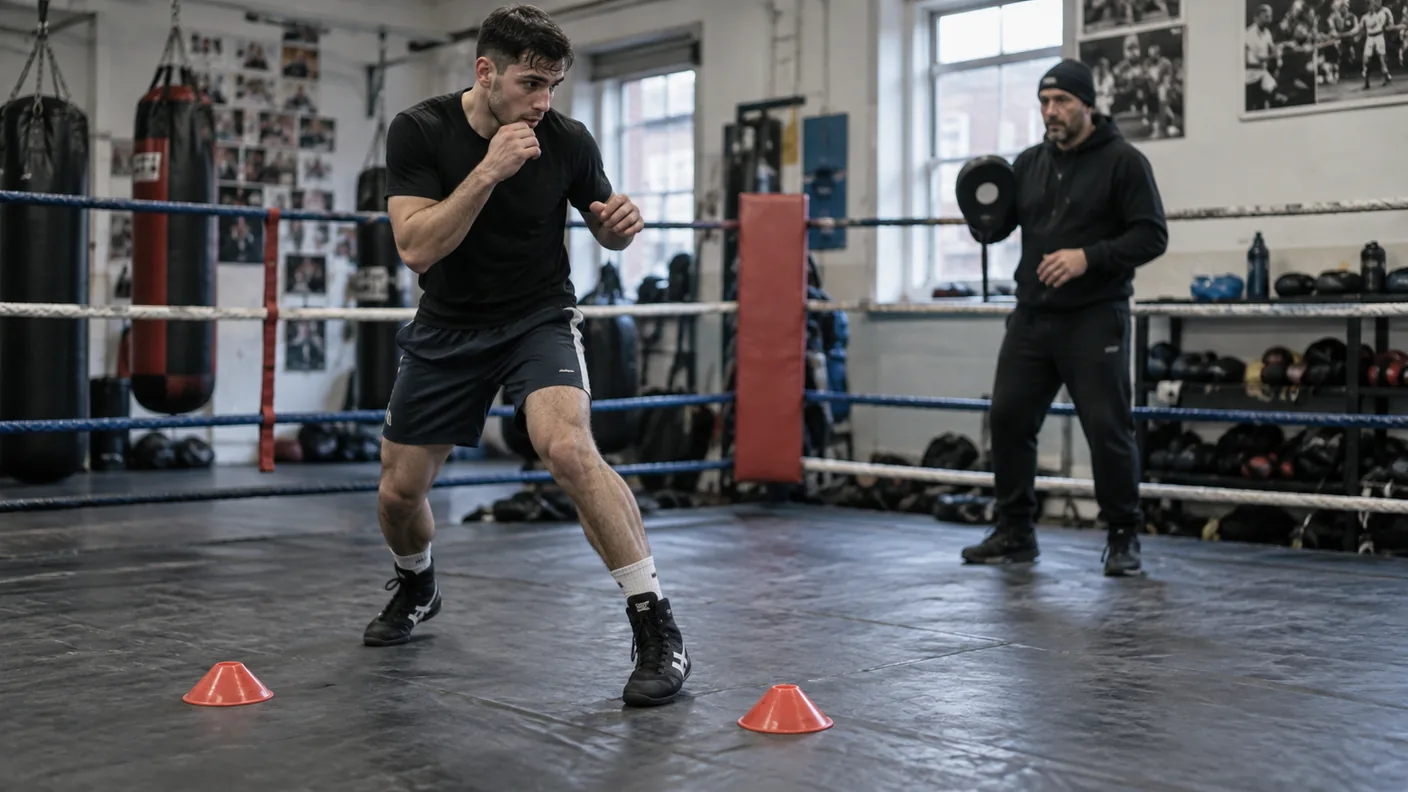
Learn to close an opponent's exits with patient feet, a working guard and a simple jab, without following them around the ring.
Was this page helpful?
It takes one tap, and it genuinely helps.
Choose your next step
Turn this article into the right action
Some readers are ready to book. Some need the class route first. Pick the route that matches what you actually want.