Pierce O’Leary vs Mark Chamberlain: What the DAZN Fight Means
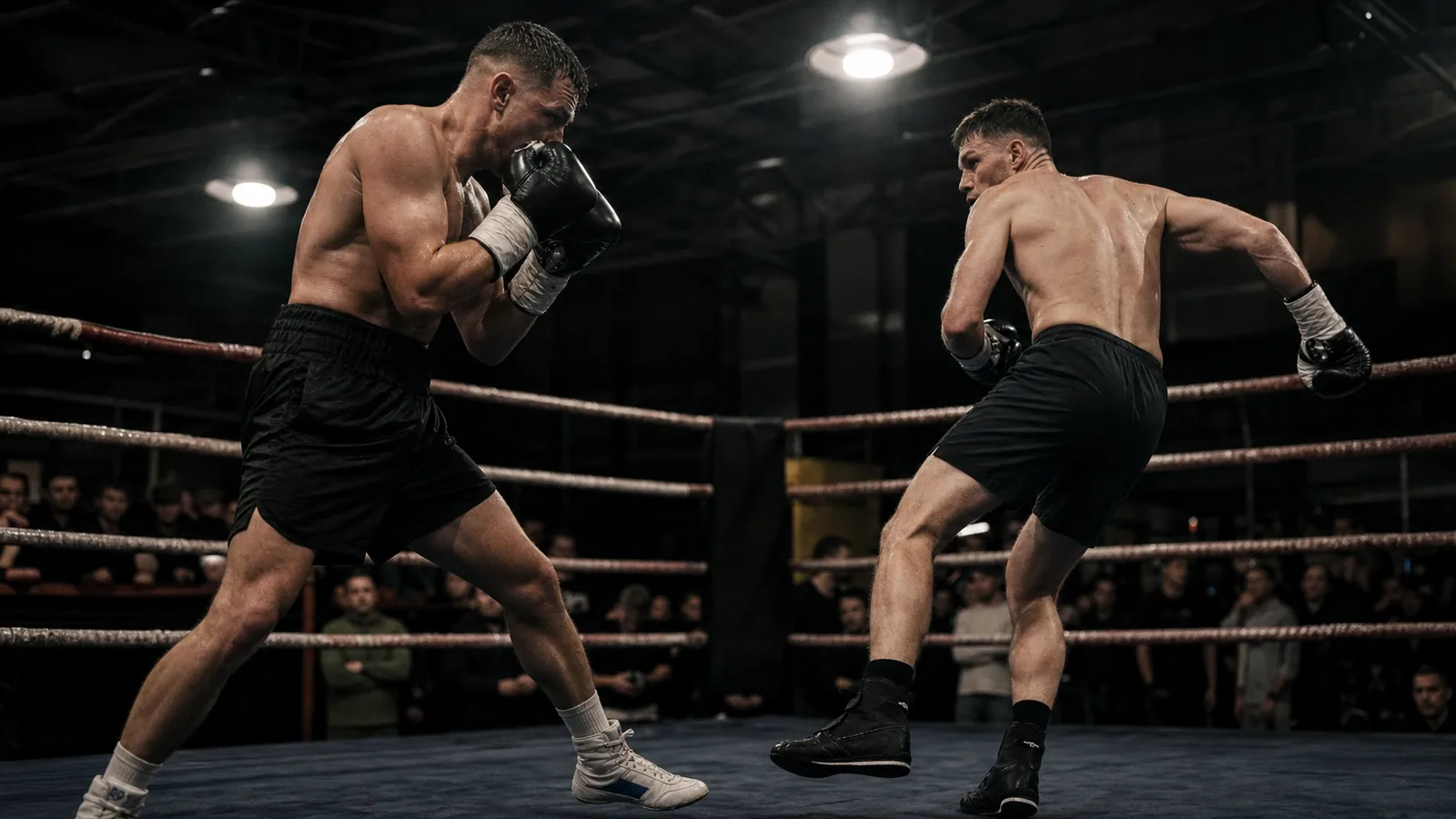
Why the fight matters now
The bout was first scheduled for March, only for Chamberlain to withdraw through illness. O’Leary instead faced Maxi Hughes and stopped the experienced Yorkshireman in five rounds to win the IBO belt. BoxingScene’s report on the rescheduled contest makes the important point: the original matchup did not disappear because it was inconvenient. It came back because it is too good to waste.
O’Leary is now carrying real momentum. His Dublin appearance against Hughes was his first professional outing in the city, and the atmosphere mattered. RTÉ reported that he has been a nine-time Irish amateur champion, is unbeaten in 19 as a professional, and is moving closer to higher-level opportunities.
Chamberlain has a different kind of pressure on him. The Waterlooville southpaw has not boxed since his absorbing draw with Jack Rafferty in August 2025. Before that, he lost a decision to Josh Padley at Wembley and had built a reputation as one of Britain’s more destructive lightweights. He is now properly established at super lightweight, but this is a hard return. An unbeaten champion, away from home, with a noisy Dublin crowd, is not the place to discover whether ring rust has followed you into camp.
The current Box.Live fight page lists Chamberlain with a one-inch height advantage, a southpaw stance and a slightly higher knockout percentage. It also lists O’Leary as the more experienced man in professional rounds. Those numbers are useful, but the fight will not be settled by a tale of the tape. It will be settled by feet.
O’Leary’s job: take away the space
O’Leary is not a wild pressure fighter. That distinction matters.
There is a type of aggressive boxer who races in behind his own enthusiasm, follows instead of cuts off, and leaves a southpaw exactly the lane he needs to score with the rear left hand. Chamberlain would enjoy that version of O’Leary. He could make him reach, turn him, and punish him as he resets.
O’Leary has to be more disciplined than that. He needs to press without chasing.
Against a southpaw, the lead foot battle is not an old coaching cliché. It decides the available attacks. O’Leary, the orthodox fighter, wants his lead foot outside Chamberlain’s. From there, his right hand has a clearer line and Chamberlain’s back foot becomes harder to use as an exit. He cannot simply march forward with his head on the centre line. He needs a jab to the chest, a step to his own left, and a willingness to work the body before loading up upstairs.
The body work could be decisive. Chamberlain’s sharpest work comes when he has room to settle at range, see the target and shoot the straight left or bring the right hook around it. Make him give ground, make him defend the ribs, and make every escape cost him a clinch or a short exchange. That is how a pressure fighter changes a bout from a boxing match into a test of composure.
O’Leary’s fifth-round stoppage of Hughes showed that he can apply pressure without losing his head. Hughes is a very different fighter from Chamberlain, but the lesson is still relevant. O’Leary did not need one miracle punch. He kept making Hughes work, closed the distance with intent and found the right moments to let his hands go.
The Tapology event listing and the dedicated bout page both frame this as a serious 12-round super-lightweight contest. O’Leary should treat the early rounds as an investment. If Chamberlain is constantly being made to pivot, hold and absorb shots downstairs, the later rounds may belong to the champion.
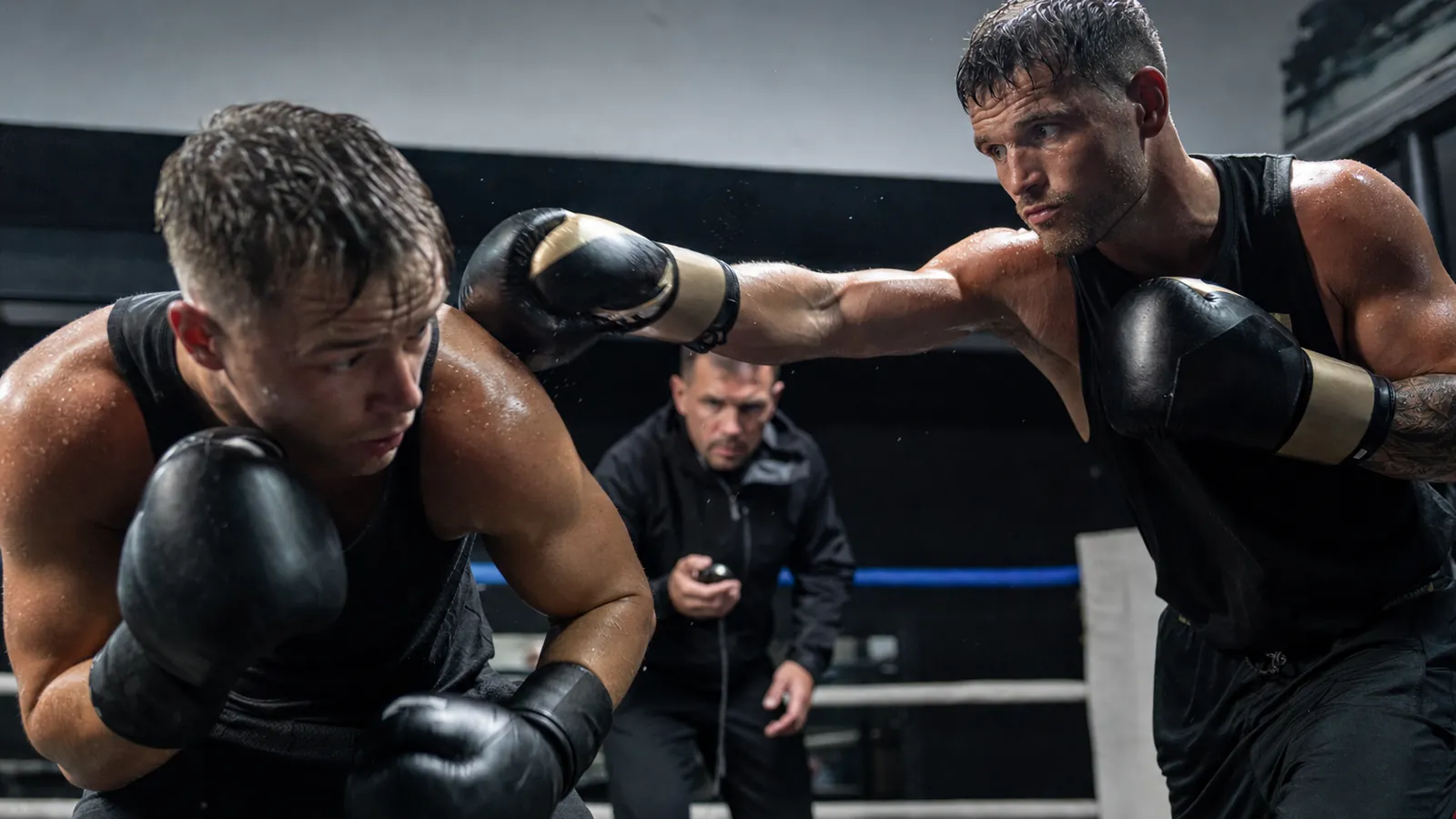
Chamberlain’s chance lies in timing, not retreat
Chamberlain does not want to spend the evening on the ropes, but neither does he need to run. His best work will come when he makes O’Leary commit and answers him in the space between entries.
A southpaw’s rear left hand is obvious. A good opponent knows it is coming. The danger is how it is created: a feint with the lead right, a small shift to the outside, a jab that occupies the guard, then the left hand through the middle or over O’Leary’s jab.
Chamberlain also needs his right hook. Against an orthodox pressure fighter, the right hook can catch him stepping in, particularly if he is too determined to get outside the lead foot. It is not a glamorous punch, but it can stop a fighter walking forward with confidence.
His draw with Rafferty matters because it showed he can work at super-lightweight against a relentless opponent. But there is a warning in that fight too. Chamberlain had to deal with sustained pressure, rough exchanges and a pace that made clean southpaw boxing difficult. O’Leary will have watched it closely.
In comments to the Portsmouth News, Chamberlain described O’Leary simply and accurately: “He’s a good fighter, strong, comes forward.” The challenger has had extra preparation after the postponement. He says there is a plan. On Saturday, that plan has to include making O’Leary miss without giving him an easy route back in.
The Dublin factor is real, but not magical
A home crowd cannot block a punch. It cannot score a round that is being cleanly lost. But it can make a contest feel urgent.
O’Leary is headlining at the 3Arena this time, rather than appearing lower on the bill. That is a step up in responsibility as well as profile. The Queensberry card includes Royston Barney-Smith against Reece Bellotti and Gary Cully against Lee Reeves, but O’Leary is the man carrying the main-event expectation.
That creates a possible trap. If the crowd demands a stoppage, O’Leary cannot start forcing one. Chamberlain is dangerous enough to punish impatience. The champion needs to win the ring first, then win the exchanges, then see what opens up.
For Chamberlain, the crowd may actually simplify the job. He is the away fighter. Nobody expects him to charm Dublin. He can stay cold, box in patches, and make O’Leary feel every missed shot.
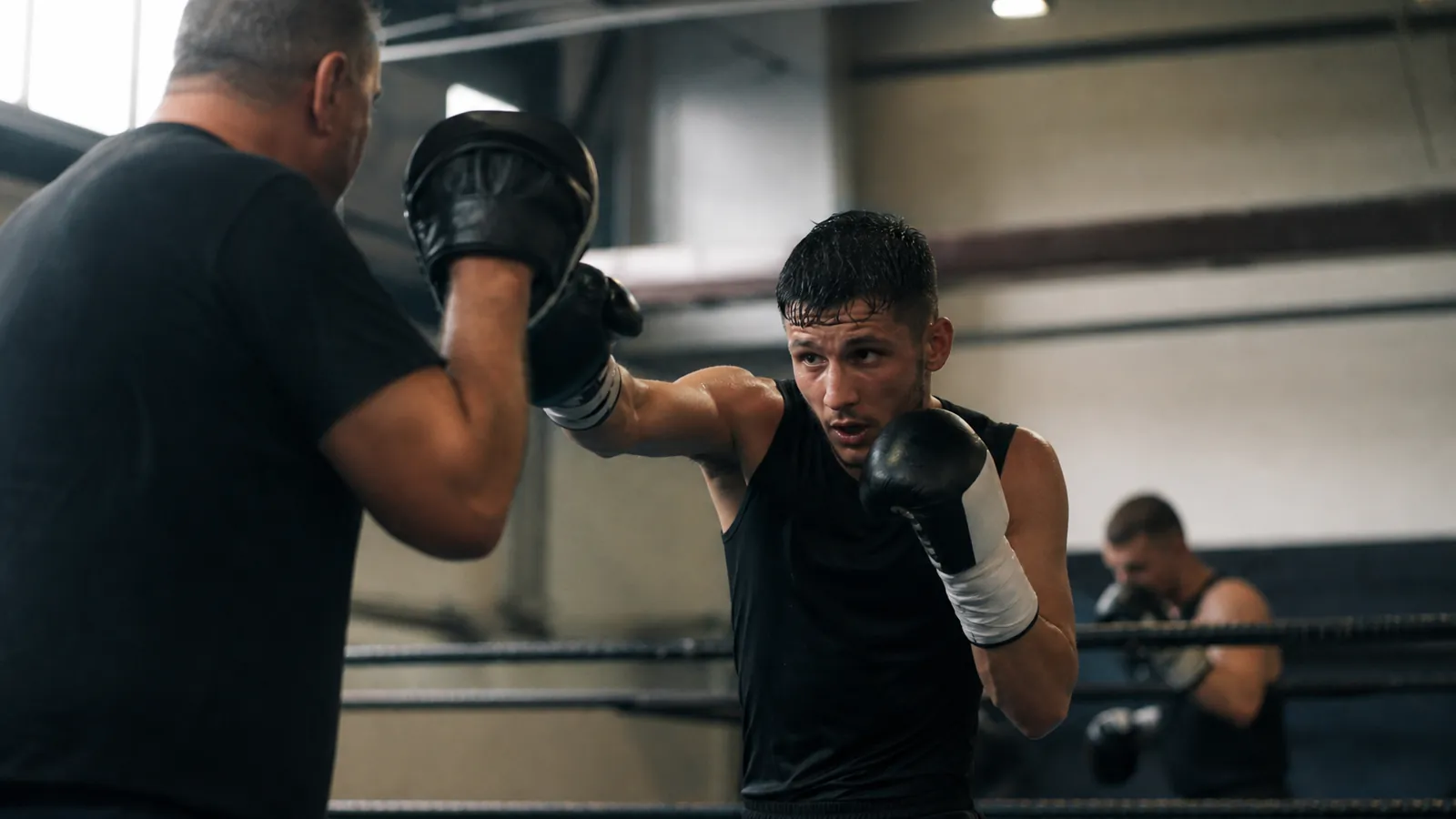
What the DAZN fight means for British and Irish boxing
This is not a four-belt unification, and it does not need to pretend to be. It is an important domestic fight because both men have something credible to lose.
O’Leary has an unbeaten record, home-city momentum and a world title belt. Chamberlain has his route back into the leading British mix at 140lb. A win for O’Leary says that he is ready to turn local support into a bigger international career. A win for Chamberlain says the Padley defeat was a setback, not a ceiling, and that his move to super-lightweight has a real future.
The broadcast is scheduled for DAZN. Box.Live’s DAZN UK listings are worth checking close to the event for any final timing changes, while Sportsnaut’s viewing guide confirms the 3Arena date and DAZN platform.
The launch press conference is also available here:
The pick
O’Leary by late stoppage.
Chamberlain has enough power and enough southpaw craft to make the first half of the fight uncomfortable. He may even win some early rounds if O’Leary follows him too squarely. But O’Leary is more active, more settled at the weight, and has the better conditions around him.
The difference should be pressure with a purpose. Not walking forward for the sake of it. Closing exits. Touching the body. Making Chamberlain reset. Taking away the time a southpaw needs to put his feet in the right place.
That is a lesson club boxers can understand too. At Honour & Glory’s Kidbrooke classes, we teach that pressure is not just throwing more punches. Proper pressure is balance, patience and control of space. It is making the other boxer work where you want them to work.
On 1 August, O’Leary has the chance to show exactly what that looks like under the lights.
H&G Team
Writer at Honour & Glory Boxing Club, a community boxing gym in Kidbrooke, South East London.
KEEP READING
Canelo vs Christian Mbilli: What the Face-Off Sets Up
A focused preview of the announced October 31 bout: whether Mbilli’s pressure can force Canelo into a sustained, high-output fight rather than a controlled counterpunching contest.
Zayas vs Boots preview: pressure before a big night
Zayas vs Boots is a pressure test. Here is what young boxers can learn from the build-up before 27 June.
Ben Whittaker vs Conor Wallace: the test behind the Birmingham hype
A fight-week preview focused on what Wallace can make Whittaker prove: control of range, discipline after exchanges and whether the home favourite can turn flair into sustained rounds.
Was this page helpful?
It takes one tap, and it genuinely helps.
Choose your next step
Turn this article into the right action
Some readers are ready to book. Some need the class route first. Pick the route that matches what you actually want.