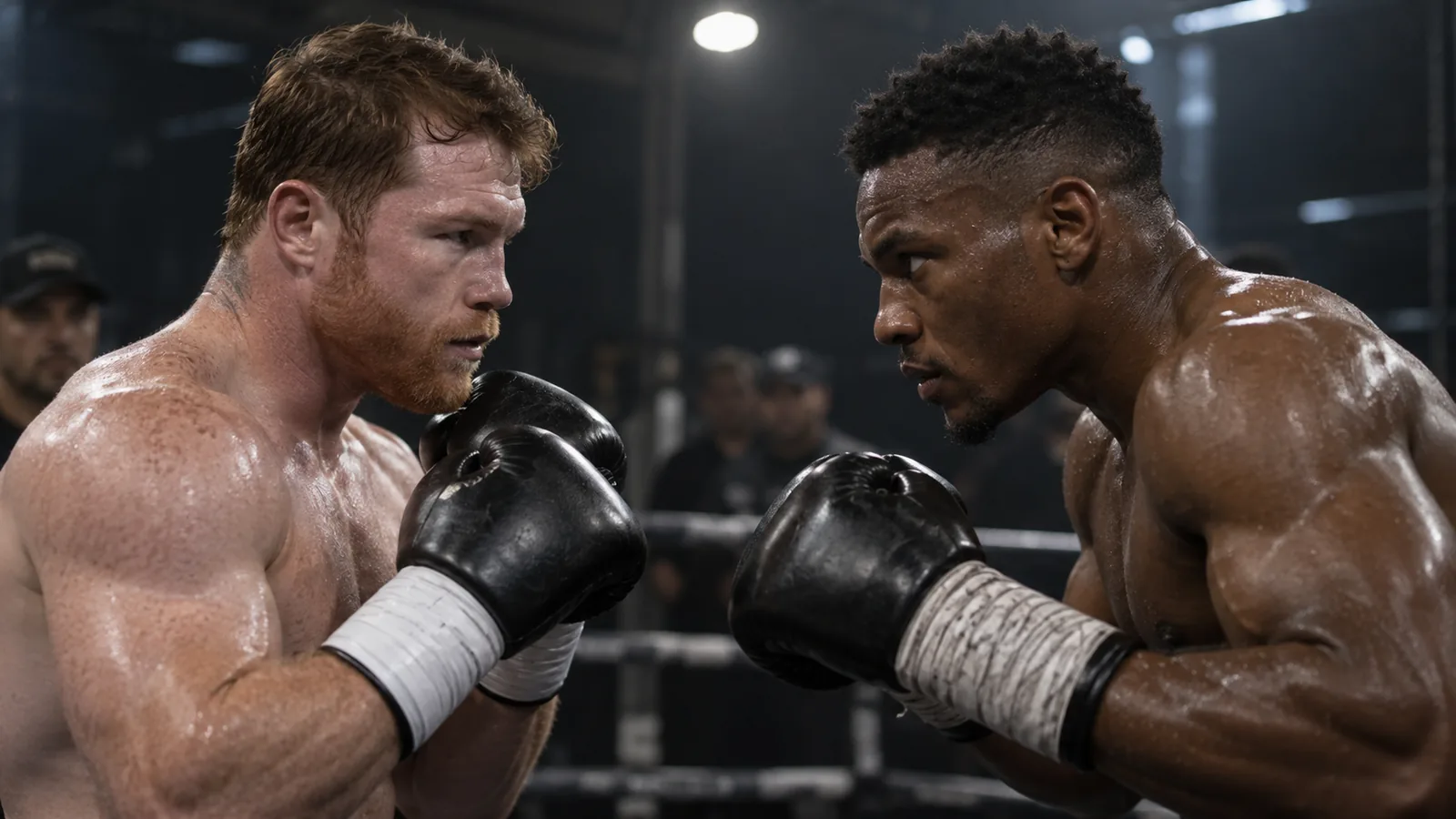
Canelo vs Christian Mbilli: What the Face-Off Sets Up
Canelo Alvarez against Christian Mbilli is not interesting because of the noise around it. It is interesting because the fight asks a very clean boxing question.
Can Mbilli make Canelo work at a pace he does not want?
The October 31 WBC super-middleweight title fight in Riyadh is now set after its original September date was moved. The Ring confirmed the new date, while the WBC has confirmed that its 168lb title is at stake. The practical details matter, but the face-off matters for another reason. It puts a pressure fighter in front of a master at controlling the temperature of a fight.
Canelo has spent much of his career making dangerous men box his fight. Mbilli has built his reputation by refusing to let opponents settle into theirs.
That is the contest.
Mbilli Cannot Be Politely Aggressive
Mbilli is unbeaten, heavy-handed and used to taking the initiative. His record includes 24 stoppages, and his recent form has made one thing clear: he is not a fighter who wants a technical fencing match at long range. Box.Live’s fight preview lists Mbilli with a higher knockout percentage than Canelo, a two-inch reach advantage and far fewer professional rounds on the clock.
The final point matters more than people think.
Canelo has experienced almost every kind of professional night: fast starters, movers, punchers, southpaws, champions, fighters who freeze, fighters who overreach, men who look dangerous until he takes their timing away. He has boxed 532 professional rounds, according to Box.Live. Mbilli has boxed 143.
Experience alone does not win a fight. It does tell you that Canelo will recognise the usual pressure-fighter traps before they fully develop.
Mbilli therefore cannot simply march forward, throw combinations and hope volume becomes a strategy. That is how he walks onto Canelo’s counters. A high guard without purposeful feet becomes a target. A lazy jab becomes something Canelo slips before firing the right hand to the body. A wide hook becomes an invitation for Canelo to take half a step back and make the aggressive fighter pay for his own ambition.
Mbilli needs pressure with shape.
That means a jab that is not merely a range finder but a tool to block Canelo’s vision. It means stepping to Canelo’s exits rather than following him in straight lines. It means hitting gloves, shoulders and arms when the clean head shot is unavailable, because those touches can still slow a fighter’s feet and make the next exchange harder to escape.
Most importantly, it means starting again after every reset.
Canelo is excellent at winning a sharp exchange, watching an opponent hesitate, then taking the next thirty seconds at his own pace. Mbilli cannot allow one counter to erase his whole plan. He needs to accept that Canelo will land clean shots and keep building the pressure anyway.
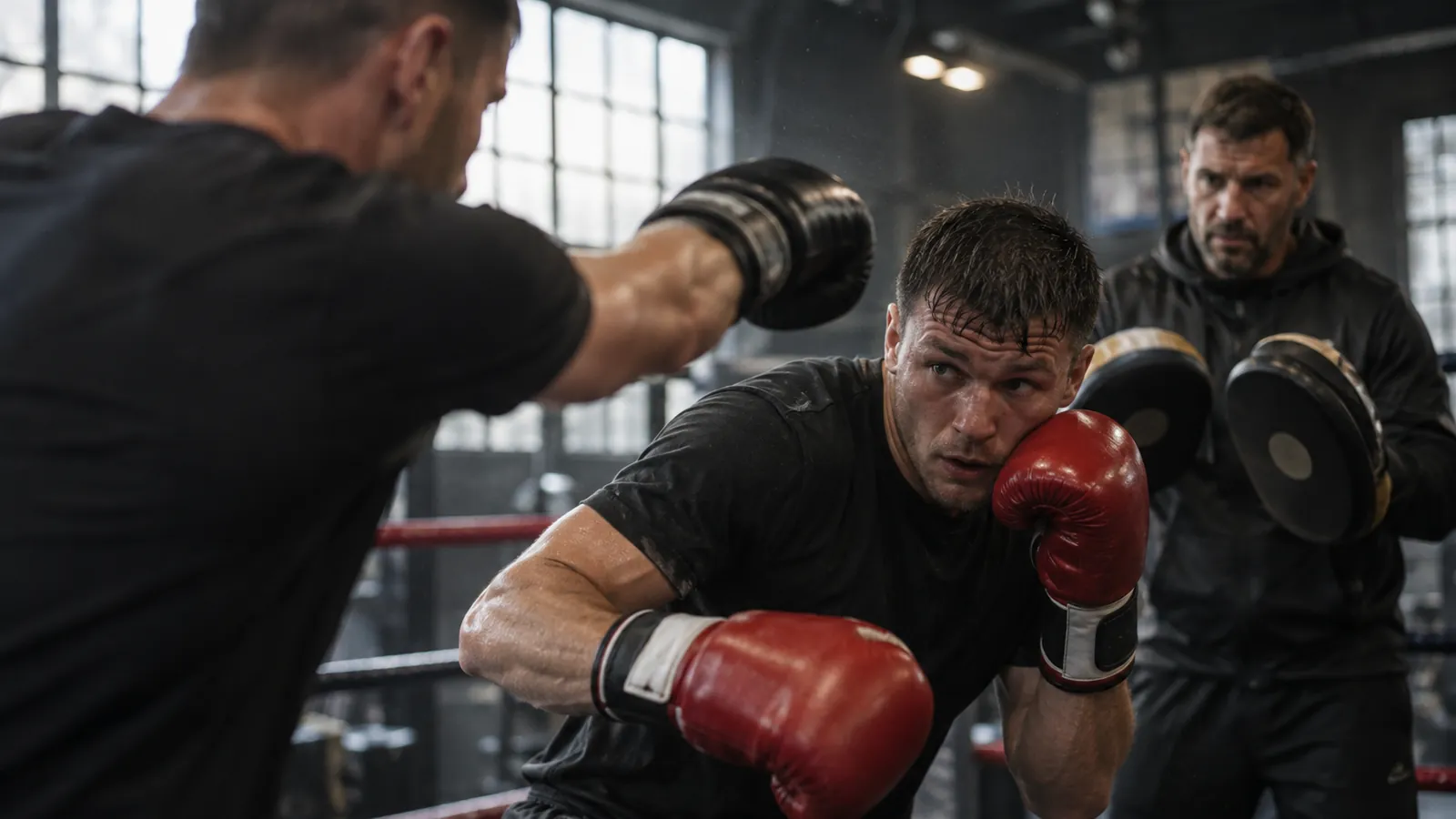
Canelo Wants a Fight of Short Bursts
At his best, Canelo does not need to throw ten punches to win an exchange. He makes one or two count more than an opponent’s four or five.
He is a superb reader of rhythm. He waits for the repeated step. He notices when a fighter reaches after missing. He sees when the jab comes back low. Then he lands something hard enough to alter the next minute of the round.
That is why Mbilli’s pressure is such a serious test, but also such a dangerous style choice against this opponent.
Canelo’s best counters are not random shots. They are answers to predictable entries. If Mbilli comes in square, Canelo can turn him. If Mbilli reaches with the lead hand, Canelo can counter over it. If Mbilli stays in front after a combination, Canelo can go downstairs with the left hook or bring the right hand over the top.
The danger for Canelo is different. His controlled counterpunching works best when the opponent gives him space to see and time to choose. Mbilli’s job is to reduce both.
A younger Canelo was happier fighting at a high pace for long stretches. The version we have seen more recently is more selective. He is still dangerous, still accurate and still one of the best body punchers in the sport, but he is not going to waste punches to impress anyone. He wants the other man to overwork, overcommit and become available.
Mbilli needs to make that selectivity uncomfortable.
If Canelo throws twenty meaningful punches in a round and lands the better shots, he can win a quiet round. If Mbilli forces him to defend forty or fifty serious attacks, then responds to every Canelo counter with another organised entry, the fight starts to ask different questions.
That is the gap between pressure and activity. Activity fills a round. Pressure changes the opponent’s choices.
The Lester Martinez Draw Is a Warning and a Lesson
Mbilli’s last fight was not a routine win. He drew with Lester Martinez in a ten-round battle on the Canelo versus Terence Crawford undercard. The Ring’s report on the new date notes that Mbilli was elevated from interim champion after Crawford retired, following that split draw.
The draw matters because it showed both sides of Mbilli.
He can produce violent, sustained spells. He can make a fight physical. He can keep coming when the easy route would be to take a breather and admire his own work.
But he can also be hit. Against an elite counterpuncher with Canelo’s timing, that is not a small flaw. Canelo does not need a wide-open target for long. Give him a clear lane to the body or a predictable head-line entry and he can bank a round, damage confidence and force a tactical rethink.
Mbilli cannot treat toughness as defence. Taking a shot to land a shot might work against many super-middleweights. Against Canelo, it has to be calculated. If he is going to trade, he needs to finish his combinations in positions where he can either clinch, step off or make Canelo turn.
The fight will not be won by who looks toughest in the first two rounds. It will be won by who controls the sixth, seventh and eighth, when fatigue reveals whether the early plan was real.
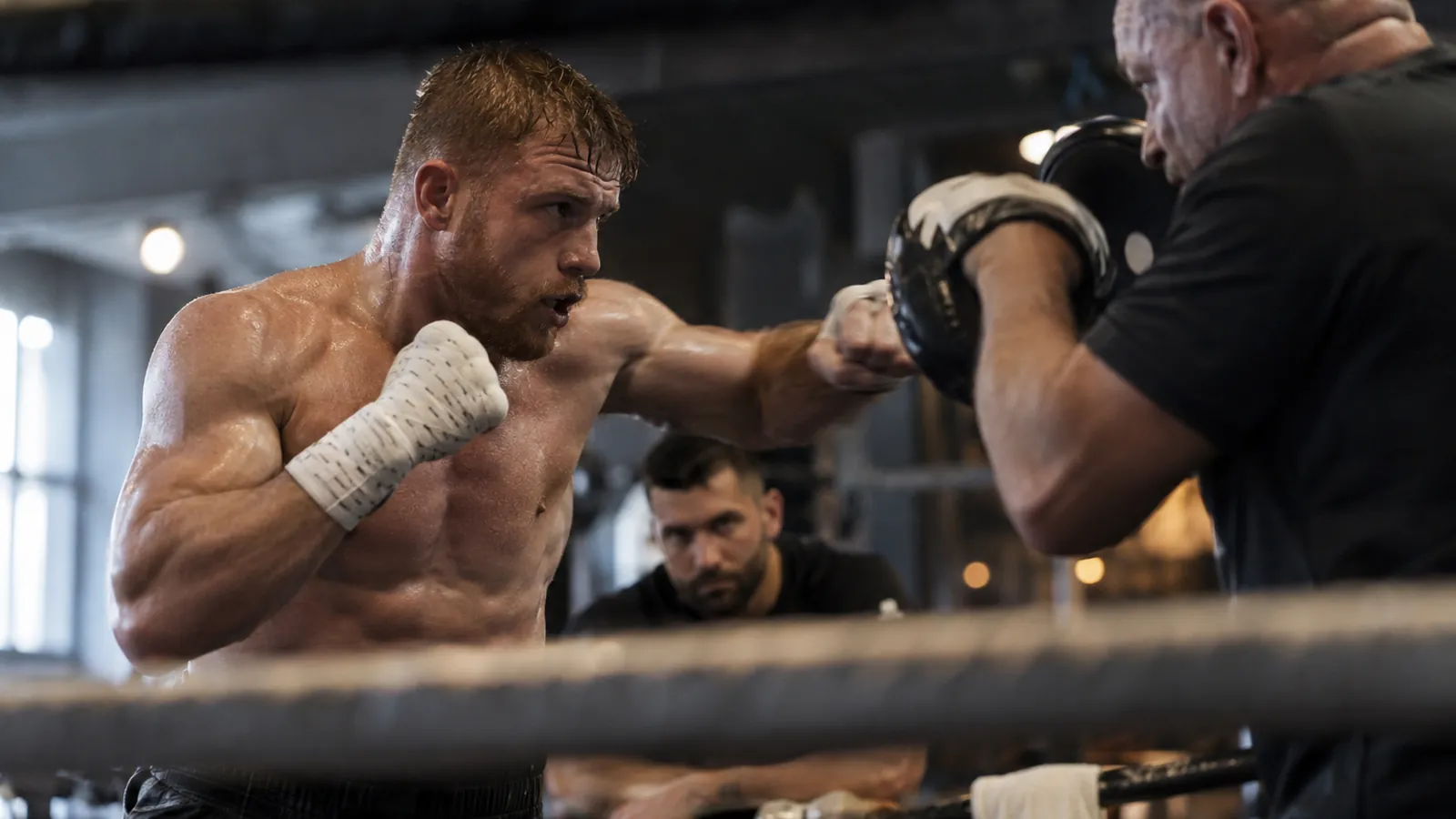
The First Four Rounds Will Set the Terms
Mbilli has to win the argument early, even if he does not win every round.
He needs to show Canelo that standing still is not an option. He needs to make the champion work around the ropes, not simply pose there waiting to counter. He needs to touch the body, close the exits and use feints before launching the big attacks.
Canelo, meanwhile, needs to make Mbilli doubt the entry. He wants a slow opening in which every rush ends with Mbilli being clipped, turned or made to reset at range. If Mbilli becomes cautious, Canelo gets the exact contest he wants: measured, reactive and fought in short moments that he can own.
The Bad Left Hook report on the rescheduled fight confirms it will be Canelo’s first fight since his decision defeat to Crawford in September 2025. That lay-off adds another layer. Canelo may not need to look old to lose rounds. He only needs to be a fraction slower to reset against pressure, a fraction less sharp when punishing entries, or a fraction less willing to let his hands go.
Mbilli has openly framed the fight around that possibility. He told The Ring that he questioned whether Canelo could handle his pressure and volume, saying: “I throw a lot of punch, a lot of pressure.” That assessment was reported by Bolavip.
It is a bold claim. It is also the only claim Mbilli can reasonably make.
He is not going to out-experience Canelo. He is not going to outwait him. He has to make the fight feel too busy, too physical and too relentless for Canelo to reduce it to a series of beautiful counters.
My View: Mbilli Has to Make It Ugly, Not Reckless
Mbilli can win this fight, but only if he understands the difference between forcing exchanges and donating them.
Canelo remains the more proven fighter, the sharper counterpuncher and the man most likely to turn an early mistake into a decisive moment. He should be the favourite because he has solved better fighters than Mbilli.
But Mbilli is not being brought in to stand at the end of Canelo’s jab and lose politely. His pressure gives this fight a proper shape. It gives Canelo a problem that cannot be answered with one clean counter in round two.
My expectation is that Canelo has the better moments, especially early. Mbilli has to make those moments expensive. He has to keep his feet underneath him, work the body, take away the easy exits and refuse to let one clean Canelo shot become permission for a quiet round.
If he can do that, this becomes a real high-output fight. If he cannot, Canelo will slow it down, pick his openings and make Mbilli look like another opponent who confused forward movement with pressure.
For anyone watching in the UK, Box.Live’s UK boxing TV schedule is worth checking nearer the event, with the fight currently listed for DAZN pay-per-view.
At Honour & Glory, we teach the same lesson in every hard session: pressure only works when your feet, defence and purpose arrive with you. If you want to learn how to close distance without walking onto counters, book a free trial at Honour & Glory Boxing Club.
H&G Team
Writer at Honour & Glory Boxing Club, a community boxing gym in Kidbrooke, South East London.
KEEP READING
Pierce O’Leary vs Mark Chamberlain: What the DAZN Fight Means
A focused preview of the August 1 domestic matchup: whether O’Leary’s pressure can deny Chamberlain the space to build his southpaw attacks.
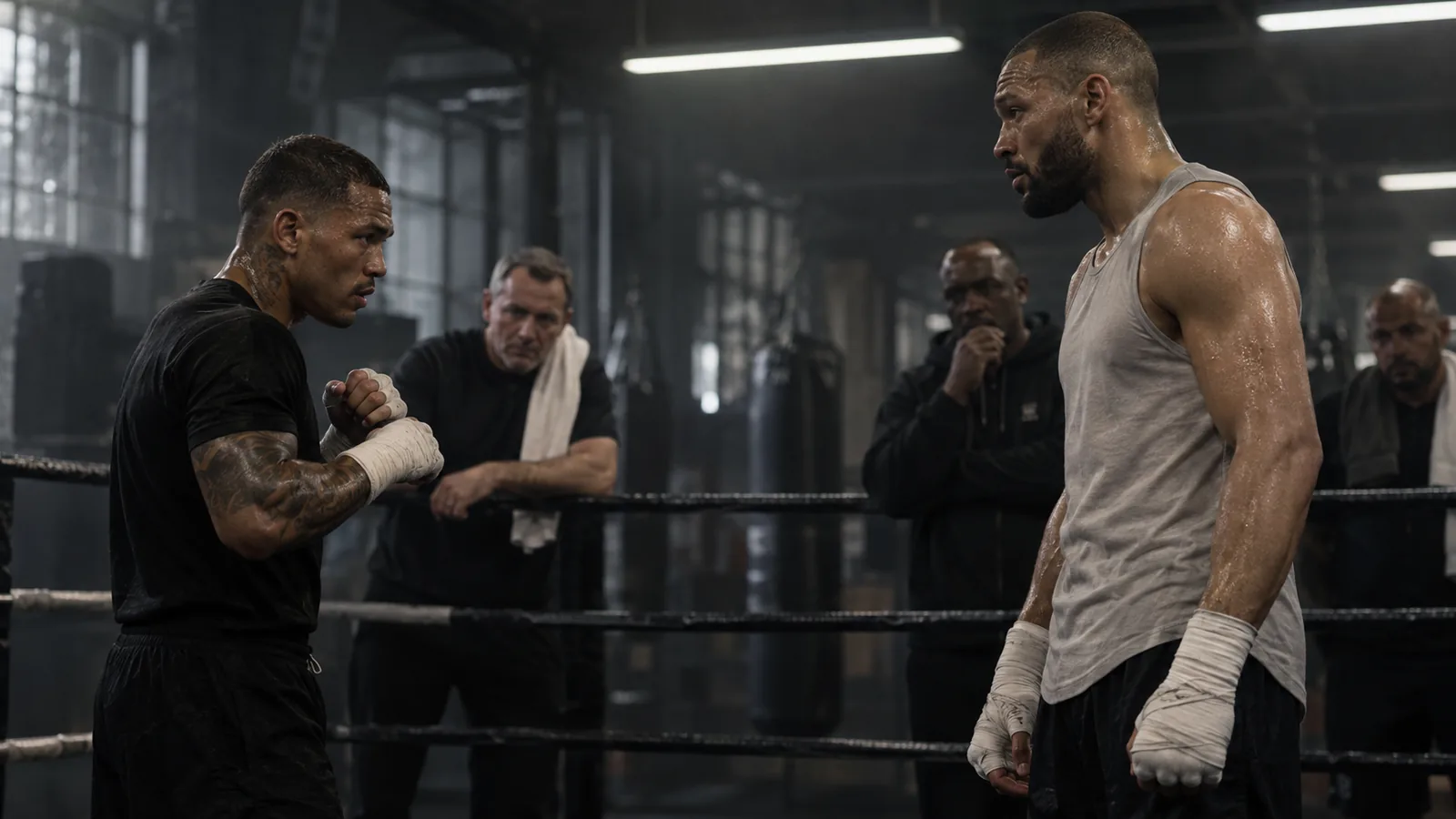
Benn vs Eubank Jr 3 at 168lb: does the trilogy make sense?
A proposed third fight at super-middleweight changes the physical and sporting question: whether a rubber match adds clarity or simply extends a rivalry beyond its natural point.
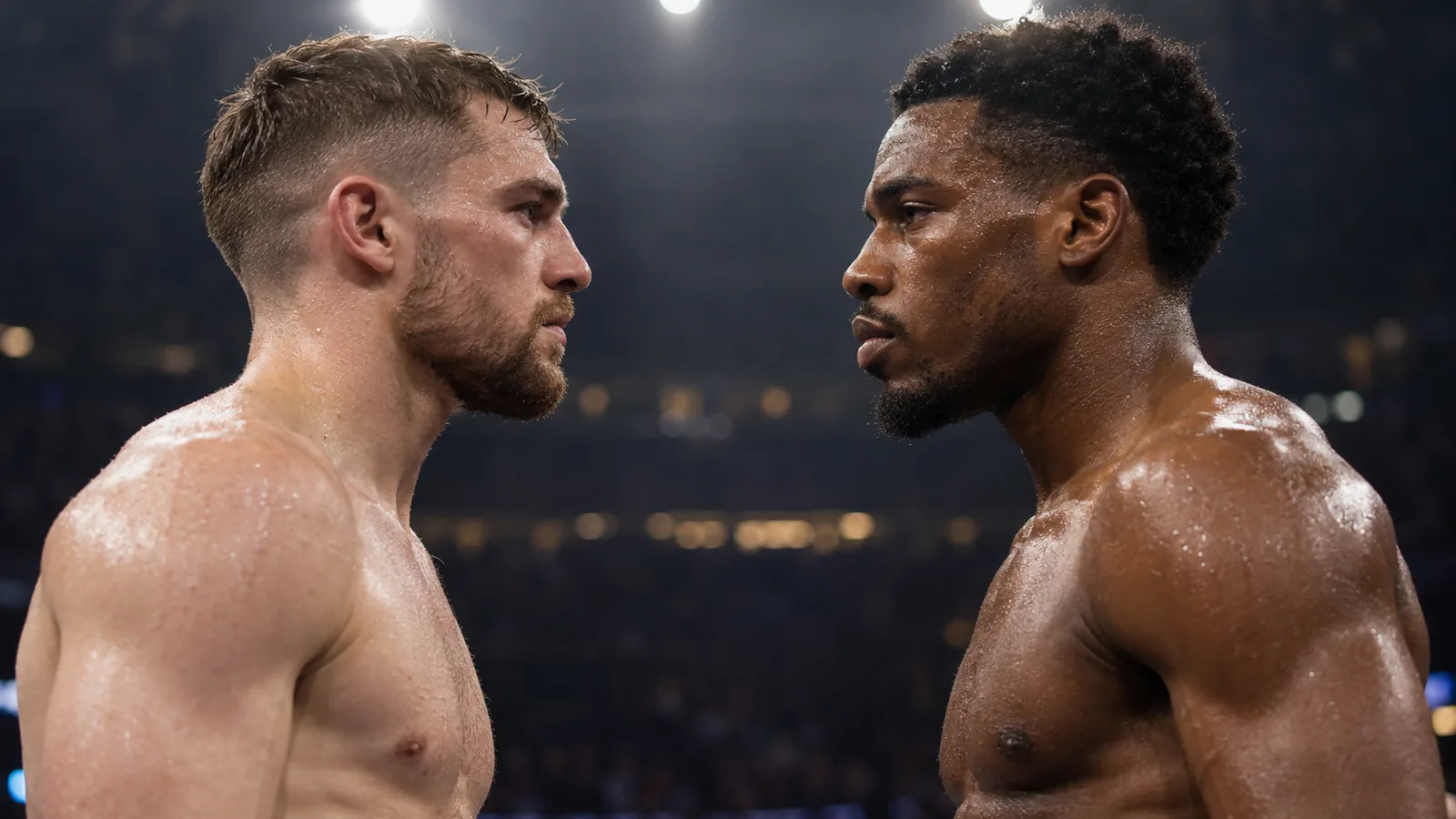
Smith vs Puello: fight-week guide
Preview the confirmed contest, tactical questions and UK viewing information at Utilita Arena, Sheffield, UK on 2026-10-24. Verify the exact event date and do not confuse an earlier meeting with this bout.
Was this page helpful?
It takes one tap, and it genuinely helps.
Choose your next step
Turn this article into the right action
Some readers are ready to book. Some need the class route first. Pick the route that matches what you actually want.