Pat Brown vs John Hedges: British cruiserweight title route

Pat Brown vs John Hedges: the British cruiserweight title route is suddenly wide open
A British title fight between two unbeaten prospects can sound like a tidy promotional story. Pat Brown has the Olympic profile, the Manchester crowd and six stoppages from six professional outings. John Hedges has more rounds, more professional experience and a southpaw style that has already troubled better-known domestic names.
But the September 19 meeting at Manchester’s Co-op Live is more important than a contest between two clean records.
The vacant British and Commonwealth cruiserweight titles give the winner a direct route into the serious business of the division. These are not decorative belts for an undercard fighter to flash in an interview. They place a boxer in the domestic lead group at a weight class where the top table is moving, titles are changing hands and a properly matched British champion can build real momentum quickly.
On Matchroom’s official event page, Hedges is listed at 12-0 with three knockouts, while Brown is 6-0 with all six wins inside the distance. That contrast gives the fight its shape before either man has thrown a punch: Hedges has the longer apprenticeship; Brown has supplied the more destructive headlines.
Neither route is automatically better. September 19 will tell us which one is ready for twelve hard rounds with a title on the line.
A proper domestic fight, not a protected prospect showcase
British boxing has become too comfortable with calling a fight a “test” when one boxer has clearly been selected to lose. This is not that.
Brown is a 2024 Olympian, trained by Jamie Moore, and a fighter Matchroom have moved with purpose. His knockout run has made him one of Britain’s most exciting young professionals, but the important detail is that his team did not keep feeding him men who were there only to survive a few rounds. In April, Brown stopped experienced Czech cruiserweight Vasil Ducar in the eighth round.
That result matters more than the final statistic. Ducar had been ten rounds with future world champion Chris Billam-Smith, had gone the distance with Cheavon Clarke, and knew how to make a talented young fighter work. Brown did not have everything his own way. He was put under pressure, tasted difficult moments, and still found the body shots and composure to force the stoppage. That is a better education than another first-round blowout.
Hedges presents a different problem entirely.
The Essex southpaw has already gone beyond the prospect stage in terms of rounds and experience. BoxingScene’s report on the fight notes his consecutive victories over Nathan Quarless and Ellis Zorro. Those are useful results because they show Hedges can operate in a more measured, tactical fight. He does not need a frantic exchange to get his work done.
That may be why Brown is favoured, but not comfortably so. Brown has the bigger punch and home support. Hedges has the awkward stance, the longer professional record and the confidence of a man who knows he can box late into a contest.
A British title should demand exactly that kind of uncertainty.

Why the vacant belts matter
The British title has always been at its best when it acts as a route rather than a retirement gift.
Win it, defend it against credible domestic challengers, and suddenly every promoter has a reason to talk to you. A British champion can become a European challenger, move into international rankings, or force a bigger domestic fight that may otherwise have been avoided. The Commonwealth belt adds another layer of status, but the crucial prize here is position.
The cruiserweight division is especially well suited to this sort of route. It has enough depth in Britain to create meaningful fights, but it is not so congested that a champion disappears into a queue for years. One good win can alter the map.
That is why this fight carries more weight than Brown’s record against Hedges’ record. The winner will not simply be able to call himself unbeaten. He will have a title, a visible route, and a credible argument that he belongs in the next conversation.
The Co-op Live event listing makes clear how seriously the show is being pitched: Brown, Manchester’s own, against Hedges for the British and Commonwealth cruiserweight titles in a major arena. The local angle is obvious, but the risk is just as real. Brown is not being handed a belt in front of his own supporters. He is being asked to beat a mature, mobile southpaw who will be more than happy to spoil the homecoming.
For Hedges, it is an even sharper opportunity. He has spent much of his career learning on major bills and boxing in front of large audiences without being the centre of the promotion. This time, he gets the headline slot and the chance to take two significant belts back to Takeley.
He has said he is happy being treated as the underdog. That makes sense. Hedges does not need to win the press conference. He needs to make Brown reset, hesitate, and fight at a pace that does not suit a puncher looking to turn the arena into a celebration.
Hedges has the style to make Brown think
Brown’s power is real, but big punchers are not unbeatable because they punch hard. They become dangerous when opponents make predictable entries and stand where they can be hit.
Hedges is a southpaw, and that alone changes the geometry. Brown will need to win the lead-foot battle, find his jab without reaching, and be careful not to give Hedges an easy line for the straight left. Against an orthodox opponent, Brown can often make his size and strength felt quickly. Against a disciplined southpaw, he may have to build the fight before he can break it.
That is where the first few rounds matter.
Hedges should not try to prove he can punch harder than Brown. That would be foolish. His job is to make Brown miss by small margins, touch him with the right jab, use the left hand when Brown squares up, and make the favourite work for every clean exchange. If Hedges can take Brown beyond the early danger period without giving away too many rounds, the fight becomes increasingly interesting.
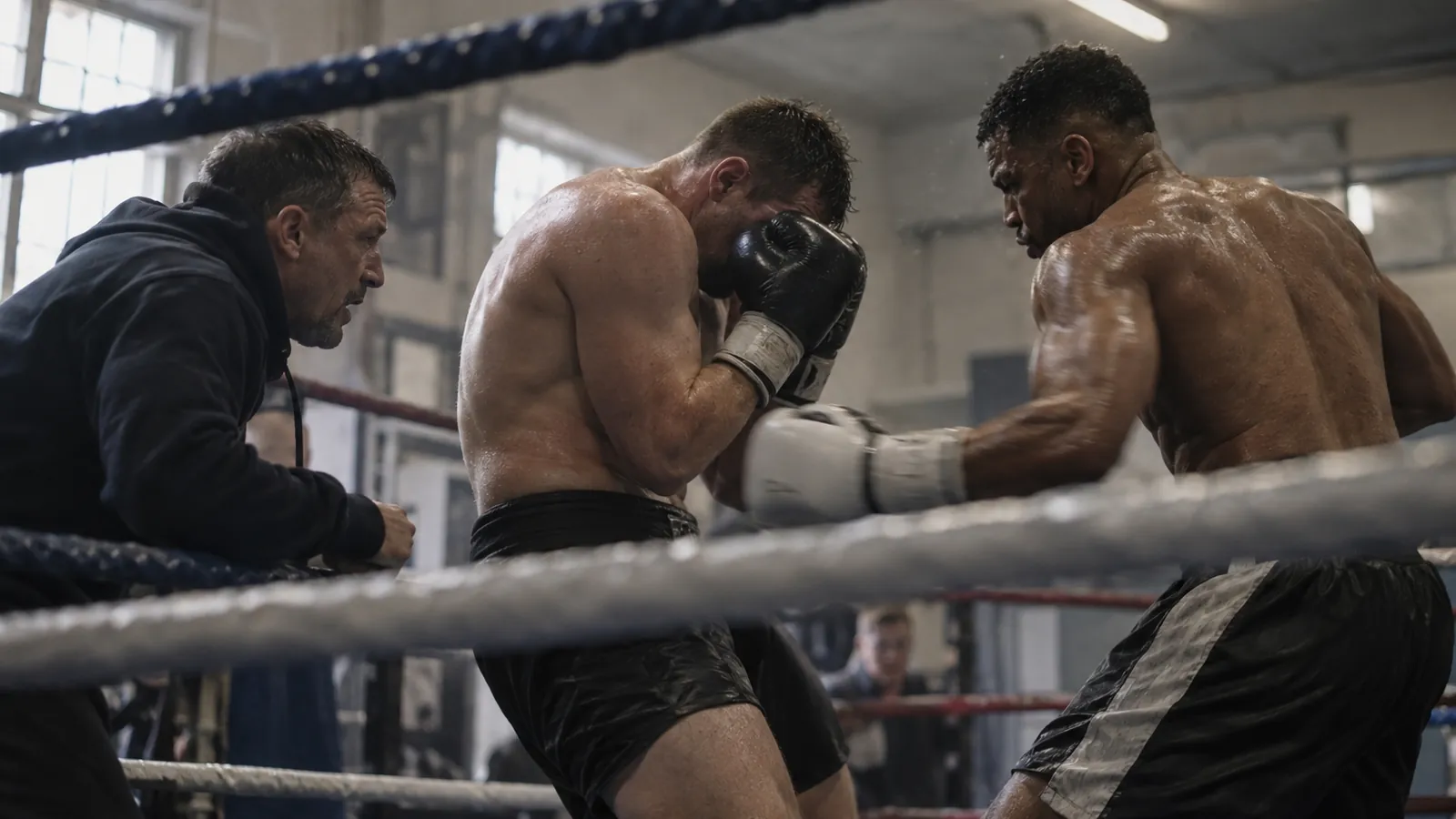
Brown’s route is more direct, but it still requires patience. He needs to touch Hedges to the body, cut off the ring without following him in straight lines, and avoid loading up. The temptation in front of a Manchester crowd will be to force the stoppage. The smarter approach is to make Hedges feel Brown’s weight and power gradually, then take advantage when the southpaw starts to hold ground.
Brown has shown against Ducar that he can work through difficulty. This is the night to show that he can work through style.
The winner should think bigger, but not skip steps
There is a habit in modern boxing of treating domestic belts as something fighters should collect and immediately outgrow. That is backwards.
The British title is valuable when a boxer uses it properly. A strong defence against another hungry domestic contender can be more meaningful than an obscure international belt against an imported opponent with no real chance. British boxing still understands title history, rivalries and fights with local stakes. The cruiserweight division needs those contests.
The winner of Brown versus Hedges should not rush into calling for the world champions before the gloves are off. He should make the British and Commonwealth titles matter. Defend them. Take a hard fight. Build the profile. Let the next challenger earn his way in.
That is particularly true for Brown, who has only six professional bouts, regardless of how impressive those six bouts have been. A title win would be a major achievement, not evidence that the learning is complete. For Hedges, victory would confirm that his longer route through the professional ranks has given him the tools to beat a high-level athlete with serious momentum.
The DAZN announcement confirms the fight will be shown live worldwide on DAZN, while Box.Live’s fight guide lists the twelve-round cruiserweight contest at Co-op Live. Fans heading to Manchester can find event and ticket information through Co-op Live or the ticket listings here.
The verdict: Brown has the power, Hedges has the questions
Brown deserves favouritism. Six knockouts in six fights, an Olympic background, a major home crowd and an eighth-round stoppage over Ducar make a persuasive case. He looks like a fighter with the physical tools to go much further than domestic level.
But Hedges is not an opponent designed to make Brown look good. He is the type of boxer who can make an exciting fighter look ordinary if that fighter gets impatient. His southpaw stance, ring experience and willingness to accept the underdog role give him a credible route to the upset.
My view is that Brown gets to him late, after Hedges has made the early rounds awkward and competitive. Brown’s body work, strength and sustained pressure should become more significant as the fight develops.
Yet the pick is secondary. The real value is that one of them will come out of Manchester with a belt, a proper domestic identity and a live route through cruiserweight. That is what British title fights are supposed to do.
At Honour & Glory, we teach that boxing is built through position, patience and taking opportunities when they arrive. If you are in Kidbrooke or south east London and want to learn those fundamentals for yourself, book a free trial session.
H&G Team
Writer at Honour & Glory Boxing Club, a community boxing gym in Kidbrooke, South East London.
KEEP READING
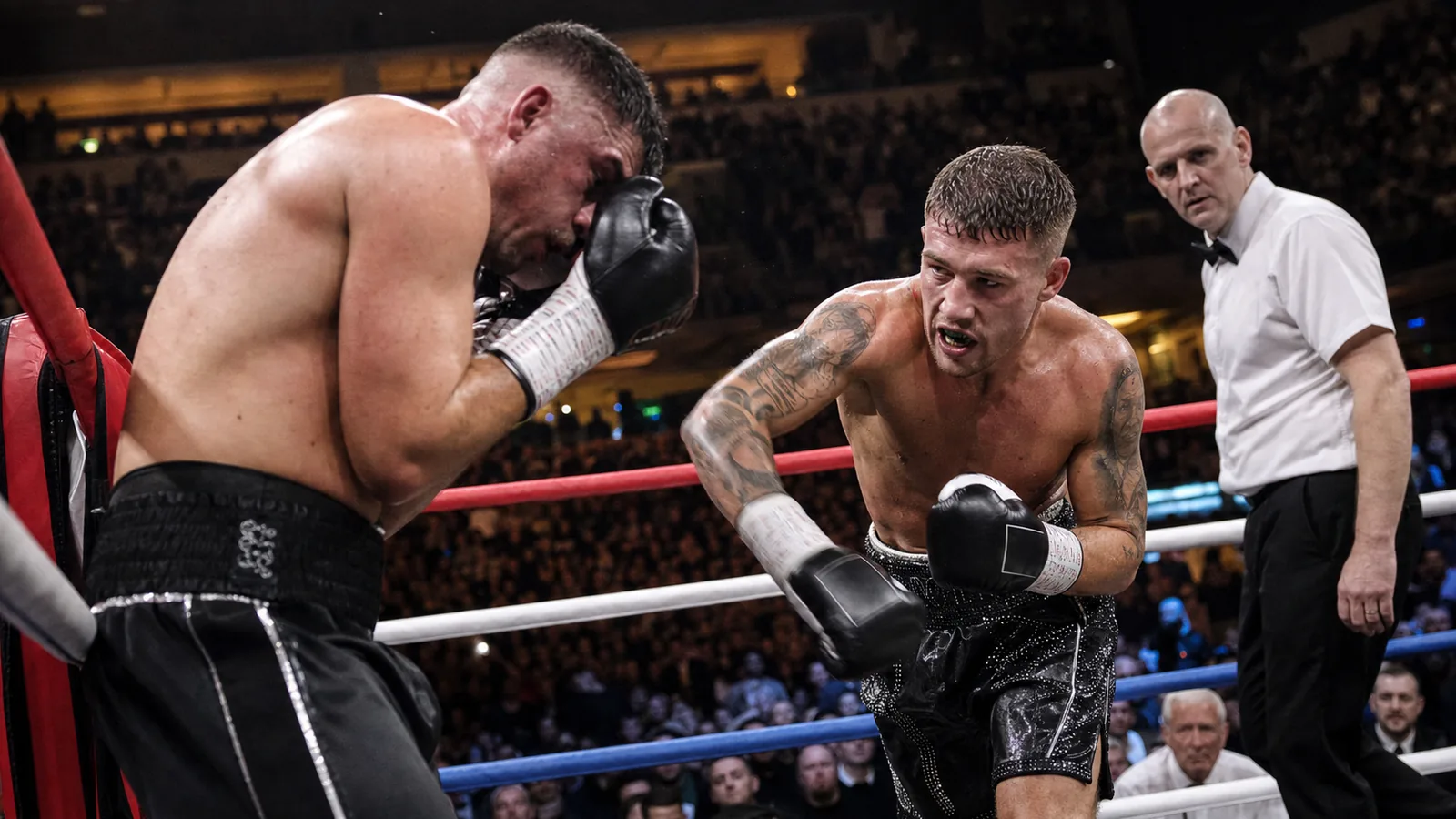
Troy Williamson vs Callum Simpson: why British titles matter
Use the Leeds fight to explain the value of a properly matched domestic title bout: British and Commonwealth belts still make a fighter prove they can handle pressure, travel and a live home crowd before chasing world-level opportunities.
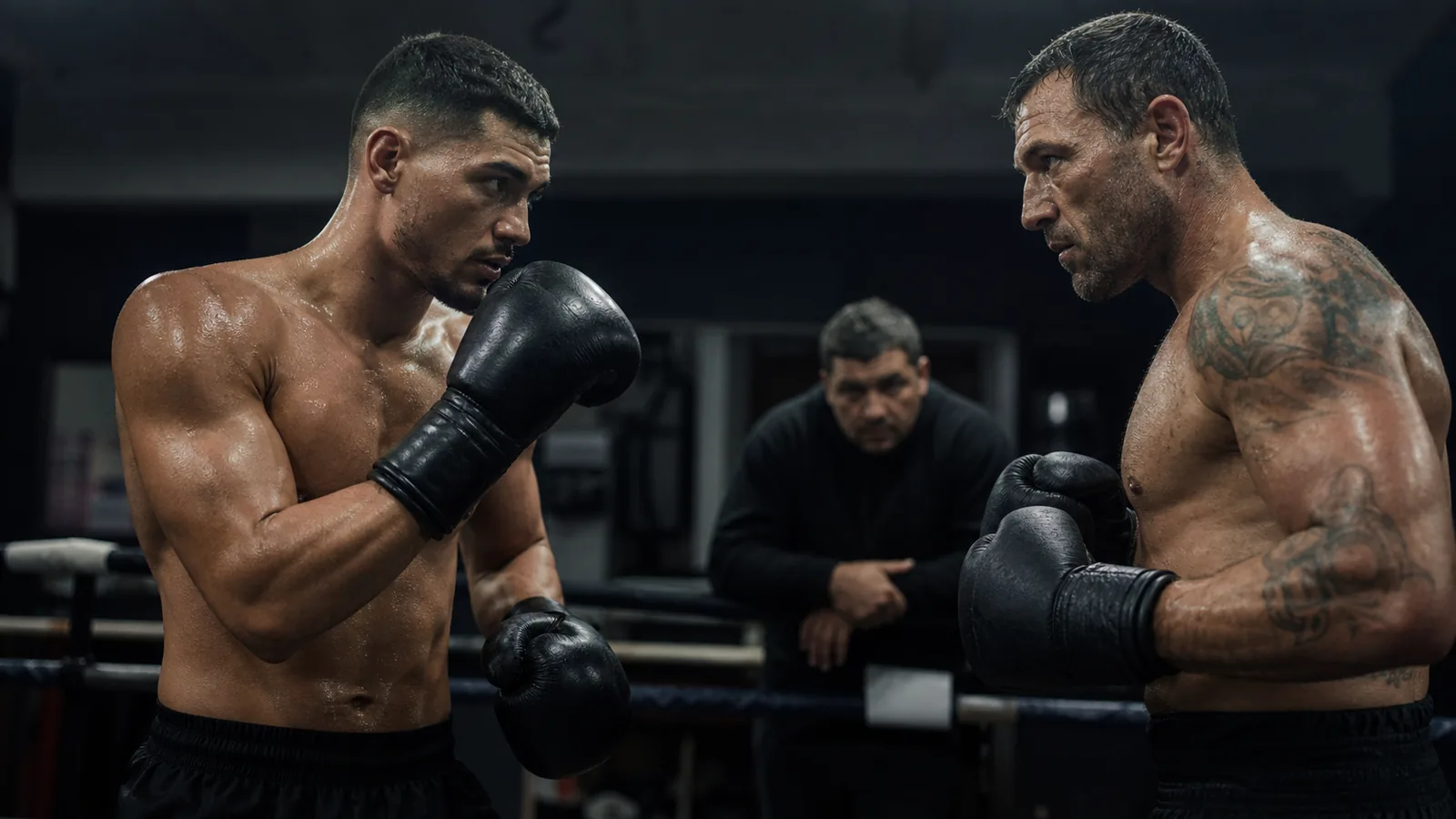
Opetaia vs Mikaelian: Why the cruiserweight title fight matters
A focused look at the reported Jai Opetaia-Mairis Mikaelian announcement and what a difficult, experienced challenger asks of a dominant cruiserweight champion.

Jack Massey vs Chev Clarke: cruiserweight lessons
Chev Clarke climbed off the canvas twice to stop Jack Massey. The full fight is a useful lesson in pressure, recovery, tempo and why domestic boxing can be brutal education.
Was this page helpful?
It takes one tap, and it genuinely helps.
Choose your next step
Turn this article into the right action
Some readers are ready to book. Some need the class route first. Pick the route that matches what you actually want.