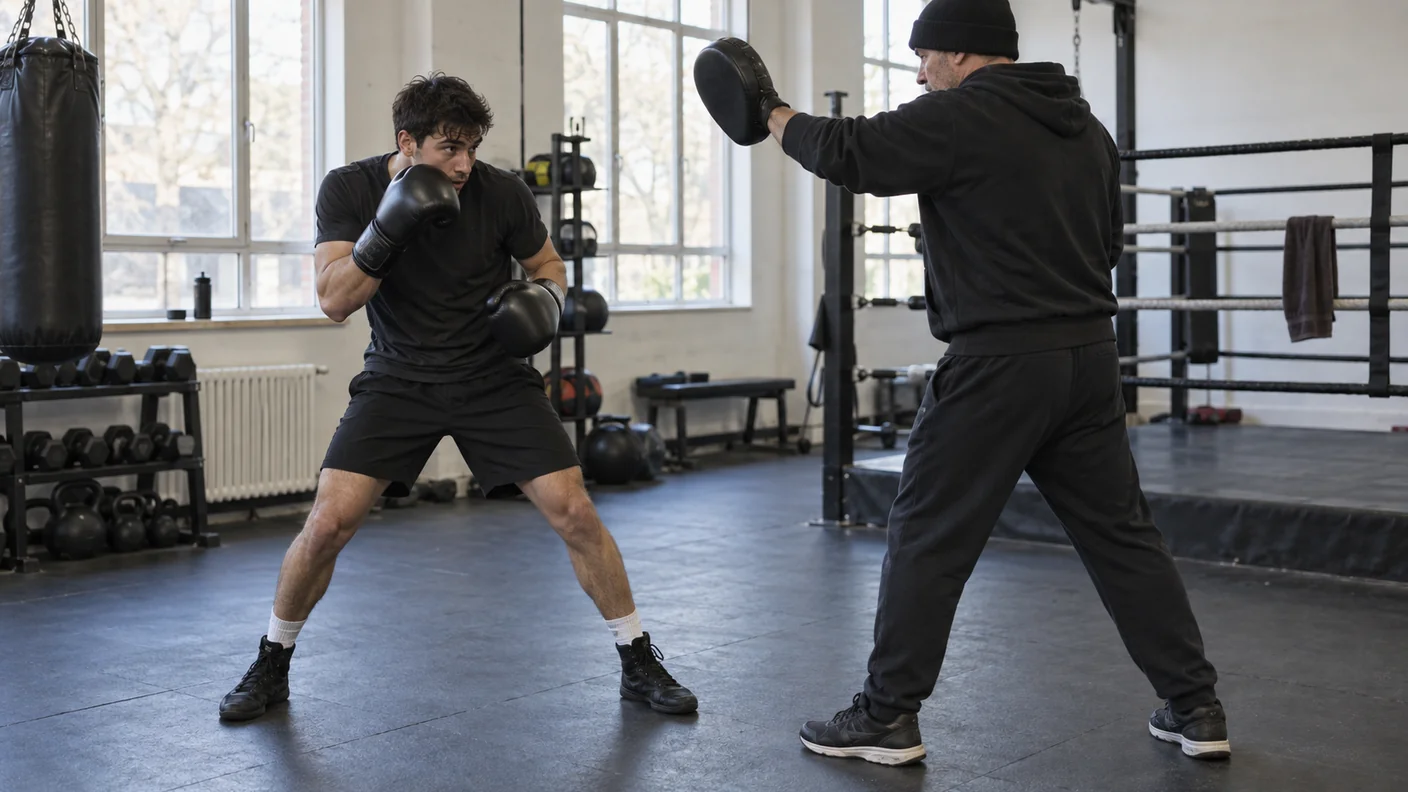
A pre-slip is a small head movement made before the other boxer has thrown. In an open stance matchup, it can take your head off the centre line, help your lead foot find useful space and make a straight rear hand easier to throw.
It can also become a bad habit quickly. If you lean too far, chase outside foot position or decide that every pre-slip earns a left hand, you are no longer creating an angle. You are showing the other boxer where you plan to be.
The useful version is modest. You show a believable position, watch what the other boxer does, then decide whether to jab, step, throw a straight shot or leave the exchange alone.
The video below is a useful reference for the open-stance picture. Watch the head movement and feet together. The detail is not a dramatic slip. It is a small change that keeps the boxer ready to move again.
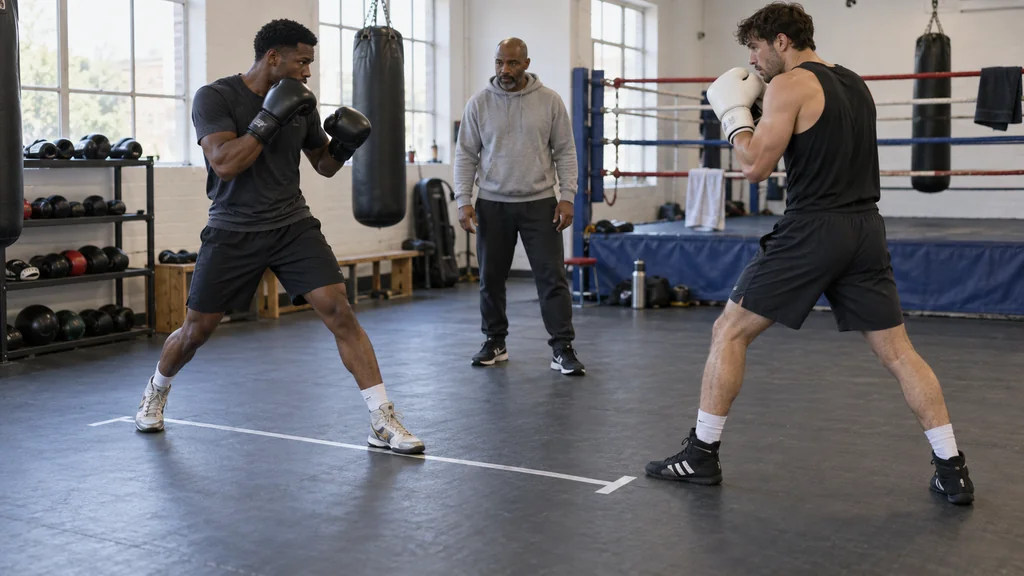
What a pre-slip is trying to achieve
Imagine a southpaw facing an orthodox boxer. The southpaw has the right foot and right hand forward. The orthodox boxer has the left foot and left hand forward. Their lead feet are competing for a similar piece of floor, while both rear hands have a direct route through the middle.
A pre-slip is a small movement towards the outside of that lead-foot relationship. It puts the head slightly away from the obvious straight line and gives the lead foot a chance to take an angle without a large lunge. The move is preparation, not an attack on its own.
That distinction matters. The outside line can improve the route for the rear hand, but it does not make you safe. The other boxer can still jab, step, hook, change rhythm or use their own rear hand. A good pre-slip gives you a better question. It does not give you a guaranteed answer.
Our wider guide to southpaw stance, footwork and angles explains the open-stance matchup. This drill is narrower: it teaches how to prepare the angle without falling across the lead foot to claim it.
Keep the head movement small
Start in a normal stance with both knees soft and your hands in a working guard. Shift the head only far enough to move it off the centre line. The lead shoulder may turn a fraction and the front knee may accept a little more weight, but your eyes should remain on the other boxer's chest and shoulders.
Do not bend at the waist. Do not pull the head behind the rear knee. Do not tip so far that the back hand needs a separate journey to get back into play. If the movement makes you feel stretched, it is too large.
A biomechanics study of boxing punches shows why this matters. Useful punches are not arm actions bolted onto a poor base. The feet, trunk and upper body have to work together. A pre-slip that leaves the feet underneath you can support a jab, straight shot, guard or exit. A big lean cannot.
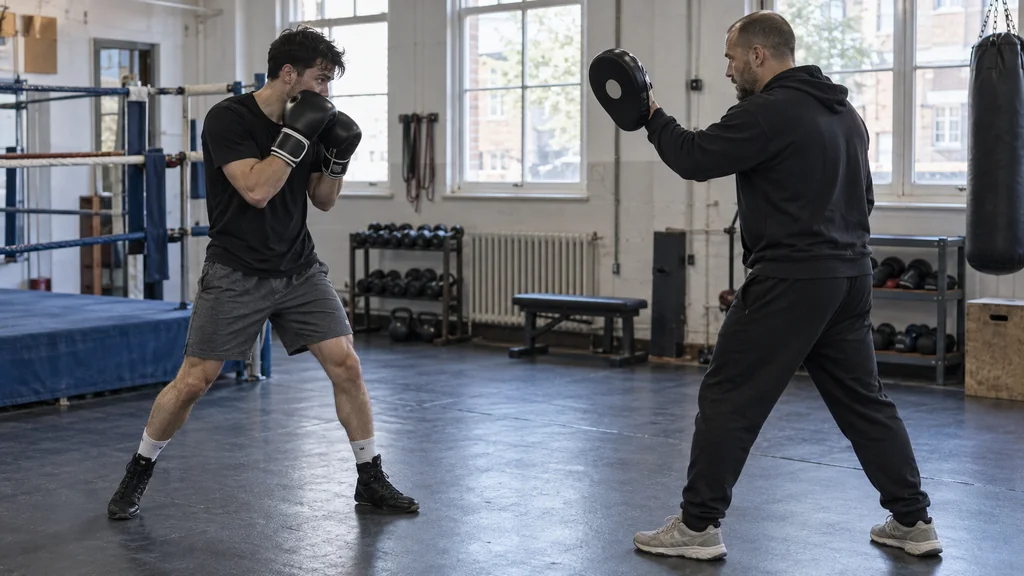
Use the lead foot as a quiet follow-up
The pre-slip can prepare a lead-foot step, but the step must stay small enough for the stance to follow. For a southpaw, that usually means the right foot moves a few inches towards the outside of the orthodox lead foot. For an orthodox boxer facing southpaw, reverse the picture.
The rear foot then follows just enough to restore the normal gap. You are not planting your front foot across the other person's toes. You are not crossing your feet. You are moving the whole stance to a slightly better line.
The useful test is simple: after the step, could you throw a measured rear straight, cover a return jab or take one step back without rebuilding yourself first? If the answer is no, the foot has travelled too far.
England Boxing's coaching handbook puts balance, stance and controlled progression before more elaborate work. That order is sensible here. Start with a safe position that you can repeat. Add speed only when the feet and guard arrive together.
Make the pre-slip a question, not a promise
The best reason to use this movement is to read a reaction. A compact pre-slip can make the other boxer show whether they want to jab, pull away, reach with the lead hand or hold a high guard.
If they freeze behind the guard, a light jab may be available. If they step back, take the space calmly rather than chasing them with a long cross. If they throw a straight line, you may already be in a better position to cover, slip again or take an exit. If nothing changes, return to stance and do not force the exchange.
That is why a pre-slip should not become a metronome. The same movement at the same beat will soon be read as easily as a telegraphed jab. Mix it with ordinary stance, a lead-hand touch, a small step out or no movement at all. The other boxer should have to look before deciding what you are doing.
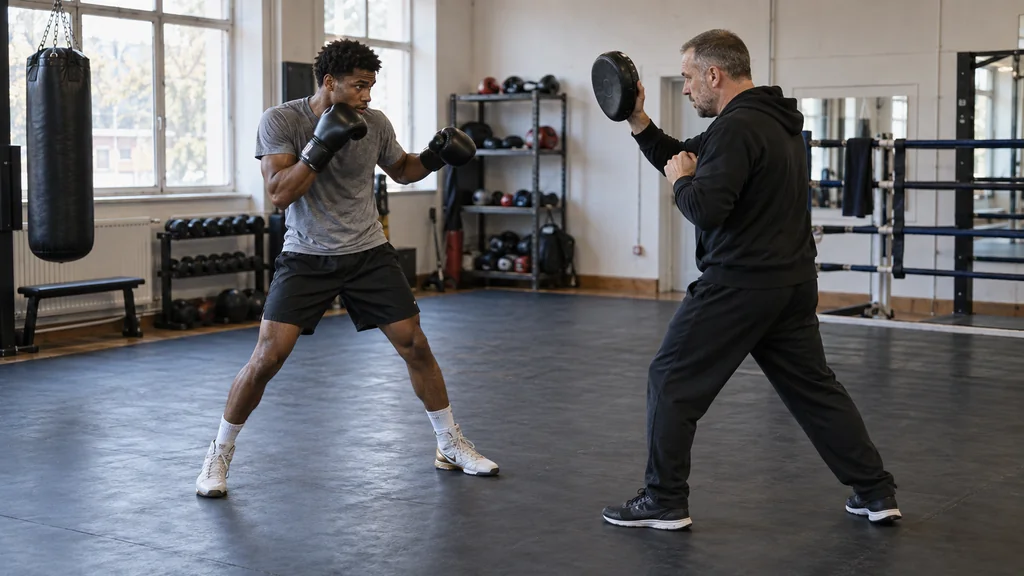
Build the drill in three stages
This is a coached partner drill, not a reason to rush into hard sparring. Use a mirror, floor line or focus mitt first. The aim is to make the movement ordinary before adding decisions.
Round one: slip and freeze
Work from your usual stance. Make one small pre-slip towards the outside line, then hold for a count. Check that the eyes stay forward, the guard is still available and the head remains between the feet.
Return to the starting stance before each repetition. Ten settled movements are more useful than fifty rushed ones.
Round two: step and check
Place a strip of tape on the floor to represent the other boxer's lead foot. Pre-slip, move your lead foot only a short distance outside the tape, then bring the rear foot with you. Freeze again.
At the finish, show a jab without throwing it. If the shape does not allow a clean jab, the step has been too ambitious. Reduce the distance and repeat.
Round three: choose one answer
Now ask a coach or partner to give one of three slow cues after the movement: a mitt at head height, a light lead-hand line, or no target.
On the mitt, throw one measured rear straight only if the range is honest. On the lead-hand line, cover, parry or step away as agreed with the coach. With no target, return to guard. The point is not to complete a sequence. It is to connect position with judgement.
Four mistakes to stop early
The first is chasing the outside foot. A giant step can put your foot outside theirs, but it also drags your head forward and gives them time to hit or pivot away. Take a useful angle rather than trying to win a line drawn on the floor.
The second is slipping before every entry. The pre-slip works because it is one possible picture. If you use it every time, you have made a reliable tell for the other boxer.
The third is throwing the rear hand because the feet look right. The rear straight belongs only when the distance, target and balance agree. A good angle can still leave the target too far away.
The fourth is staying on the new line after the moment has passed. Bring the hands home, take a small exit or settle back into stance. The angle is useful only while you can still see and defend from it.
Where this fits in training
Use the pre-slip after you can hold a stable stance, throw a clean jab and make basic defensive movements without folding forward. It works well in shadow boxing, light partner drills and pad rounds. It does not need hard contact to teach the important part.
For most recreational boxers, the gain is not a clever highlight. It is knowing that you can change the line by a few inches, see a clearer picture and stay organised enough to make the next decision well.
If you are in Kidbrooke, Greenwich or nearby, our Recreational Adults boxing classes use coached footwork, pads and technical partner drills to turn small movements into useful boxing habits.
H&G Team
Writer at Honour & Glory Boxing Club, a community boxing gym in Kidbrooke, South East London.
KEEP READING
Southpaw Stance in Boxing: Footwork, Angles and Drills
A practical southpaw stance guide for beginners and improving boxers: foot position, the right jab, the straight left, orthodox matchups, common mistakes and coach-led drills.
Outside Slip to Rear Body Shot: Boxing Drill
Use a compact outside slip to move off the jab line, then return a rear body shot without reaching or losing your guard.
Rear Slip to Rear Pivot Boxing Drill
Use a compact rear slip and small pivot to leave the centre line without throwing yourself out of range or out of stance.
Was this page helpful?
It takes one tap, and it genuinely helps.
Choose your next step
Turn this article into the right action
Some readers are ready to book. Some need the class route first. Pick the route that matches what you actually want.