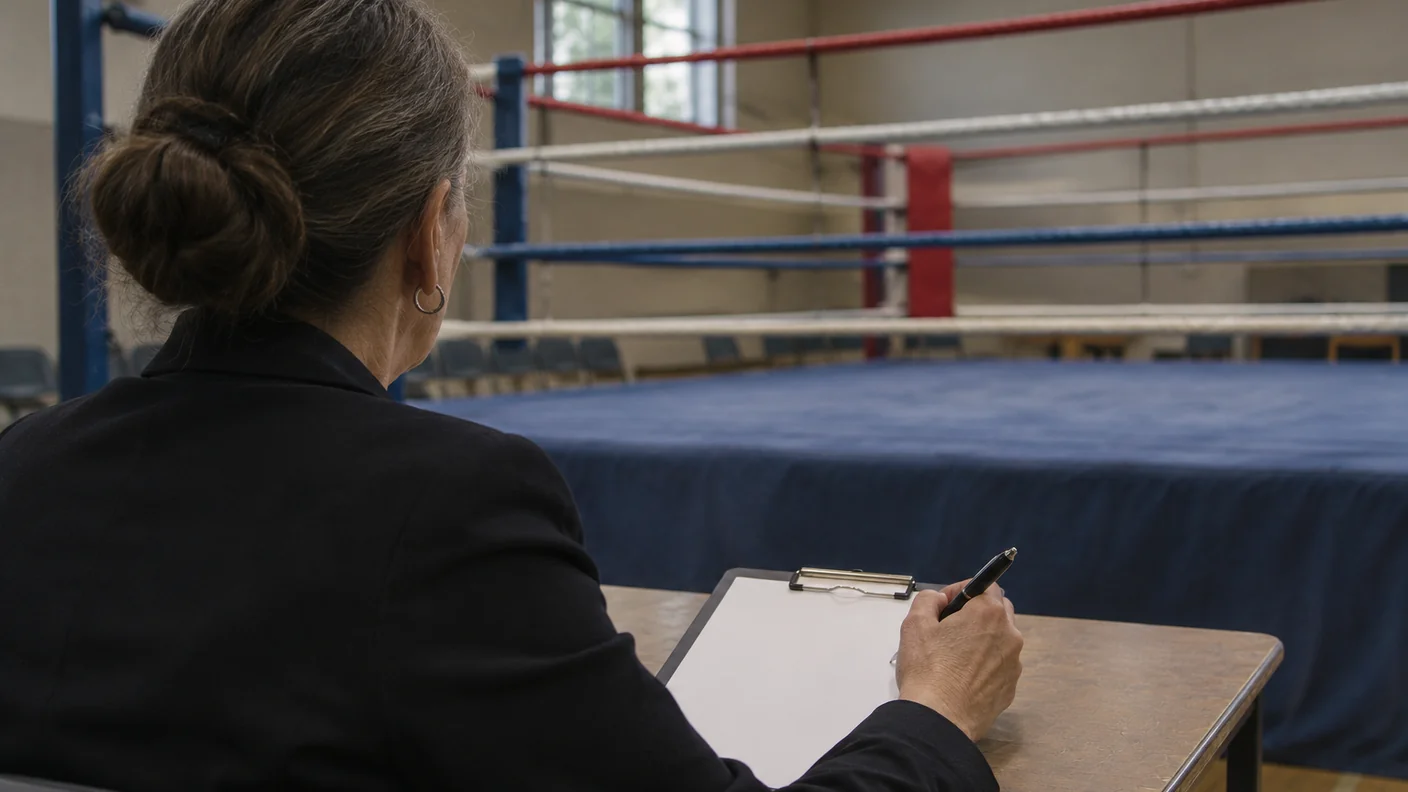
We would expand periodic open scoring to a limited number of professional bouts and have the results evaluated independently. We would not make it universal on faith. The format already exists, and the case for it is simple: a boxer should have a chance to act on the official scores before the fight is over. The harder question is what both boxers do once they know.
What open scoring changes under existing rules
Start with the judging. Under the Association of Boxing Commissions Unified Rules, one professional ruleset, three judges use the 10-point must system. The referee alone has the authority to stop the contest. The ABC judging manual tells judges to score each round independently, without keeping a running bout score or taking notice of outside comments. It lists clean, effective punching, effective aggression, ring generalship and defence. Counting punches alone does not tell you who won the round.
Periodic open scoring releases each judge's accumulated official totals at set points while the bout is still going. In its July 2026 statement on open scoring, the WBC describes announcements typically made after rounds four and eight in formats that use it. Its Grand Prix rules give a specific example: the official scores go to both corners and are announced publicly after rounds two and four.
Those are official scores, not a television commentator's card, live punch statistics or an AI verdict. The WBC argues that disclosure improves transparency, strategy, accountability and excitement. Those are reasons to test wider use, not comparative evidence that it delivers all four.
A corner can act on a score it knows
Imagine a 12-round bout in which one boxer trails 78-74 on two cards after eight rounds and is level at 76-76 on the third. Assume every round so far was scored 10-9, with no knockdowns or deductions. Four straight 10-9 rounds for the trailing boxer would only bring each of those two deficit cards level at 114-114. That is a different conversation from thinking the bout is a round either way.
A coach who thought the approach was just about working now has to decide what is worth changing. The numbers cannot tell the corner why a judge awarded a close round to the opponent, or which adjustment the boxer can actually carry out. They can stop the corner spending another round defending a lead that exists only in its own reckoning. Seeing all three cards matters here: the level card tells a different story from the other two.
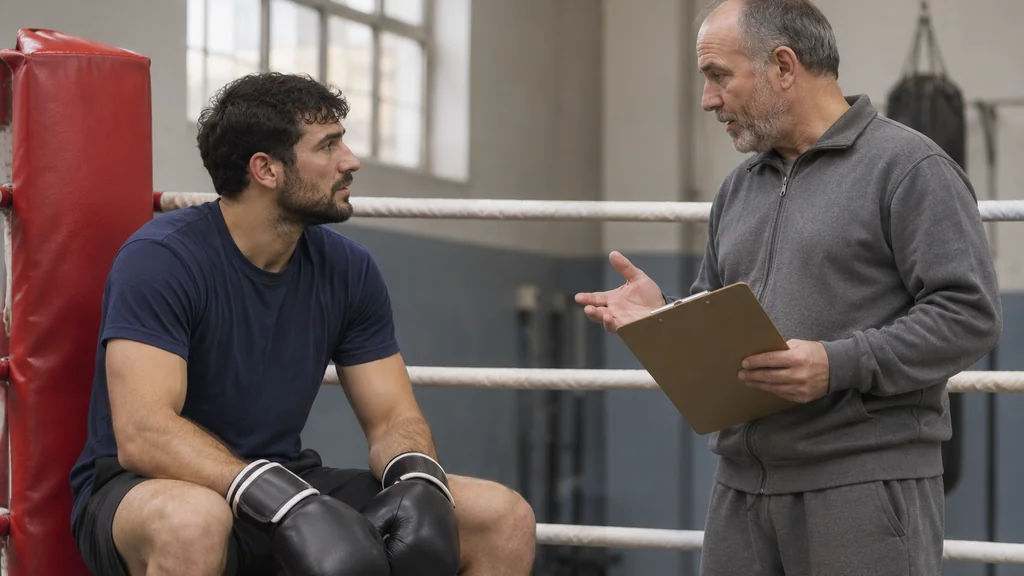
The images are illustrations of generic scenes, not photographs of real officials or events.
The best objection is that the fight itself changes
If two cards show a clear lead, the boxer ahead may decide there is little reason to initiate another exchange. The boxer behind may chase and force work that was never there. There is a better version of the same ending: the trailing boxer applies measured pressure, the leader has to solve a different problem and the last four rounds become more contested. Both are plausible predictions. Neither is a result we can assume.
Nor should a review mark down a boxer for defending well. Making an opponent miss, controlling range and answering when there is an opening is skilled work, even in a quiet round. What would concern us is a repeated shift towards leaders avoiding engagement altogether, especially if corners gained little from the information. Fans might also miss the uncertainty of the final verdict. We would give more weight to what the boxers can do with the scores than to preserving a surprise for the audience, but that does not settle what happens between the bells.
There is a judging cost to consider too. A crowd can react to a card the moment it goes up, and a judge may hear it before scoring the next round. Public scrutiny can help people ask better questions about a disputed score. It cannot correct the original judgement by itself, and it is no substitute for protecting each judge's independence.
The pilot we would back
Our proposal is a commission-approved pilot in scheduled 12-round professional bouts with consenting adult boxers. Release the verified totals from all three judges after rounds four and eight, to both corners and the public at the same time. Keep the judging criteria, rest period, medical arrangements and referee authority unchanged. Keep the display out of the judges' sight where practical and do not feed the totals back to them.
A designated official should check the release against the submitted cards. If a number is wrong, correct it through the same channels, notify both corners and retain a record of what was shown and when. If the totals cannot be verified within the interval, notify both corners of a missed release and record it without extending the break. A scoreboard that is accurate three rounds later has already failed the corner that needed it.

Independent researchers should set out the questions and sample plan before the pilot starts. Compare with matched bouts in which the official totals remain undisclosed until the final result. Check whether both corners received and understood the same numbers in time, whether late rounds still produced meaningful exchanges rather than simply more punches, and whether judges reported pressure after announcements.
We would also compare official round scores with independent reviews, keeping reviewers unaware of the official totals where feasible. A review panel can identify patterns of disagreement. It cannot tell us that every difference is an official error. Fan opinion is worth collecting, but a more popular broadcast is not proof of fairer judging.
What would change our view?
Repeated delays or display errors would weaken the case. So would leaders consistently withdrawing from engagement without a clear gain in corner understanding. If accurate scores reached both corners on time, corners understood their position better and late-round engagement did not visibly worsen, we would support another cautious expansion. That would not prove the format belongs in every professional bout or that it makes boxing safer.
The future we would back is selective use where the information proves useful. If the trade-off is poor, keep it limited or drop it. One good broadcast is not enough to make either decision.
Good feedback still needs a useful next step
A score tells you where you stand. A coach watching you on pads can tell you whether you landed cleanly and stayed balanced, then give you one thing to change. That is the idea behind technical rounds with one job.
If you are in Greenwich or elsewhere in South London, Honour and Glory is at 122 Broad Walk, Kidbrooke, London SE3 8ND. Our Recreational Adults boxing classes are for ages 17 and over, and competitive sparring is not required.
H&G Team
Writer at Honour & Glory Boxing Club, a community boxing gym in Kidbrooke, South East London.
KEEP READING
Misfits Boxing Rules: Rounds, Scoring and Fouls
How Misfits Boxing rounds, scorecards and stoppages work, why formats differ between bouts, and what to check before the opening bell.

Gym or Boxing: Which Is Better for Fitness?
A practical answer to whether a gym or boxing is better for fitness, weight loss, confidence and long-term consistency.

Best Boxing Journeymen
The best boxing journeymen are not cannon fodder. They are experienced professionals who teach prospects, protect standards, and expose weak matchmaking.
Was this page helpful?
It takes one tap, and it genuinely helps.
Choose your next step
Turn this article into the right action
Some readers are ready to book. Some need the class route first. Pick the route that matches what you actually want.