Luke McCormack’s British title knockout: what changed late
Luke McCormack’s British Title Knockout: What Changed Late
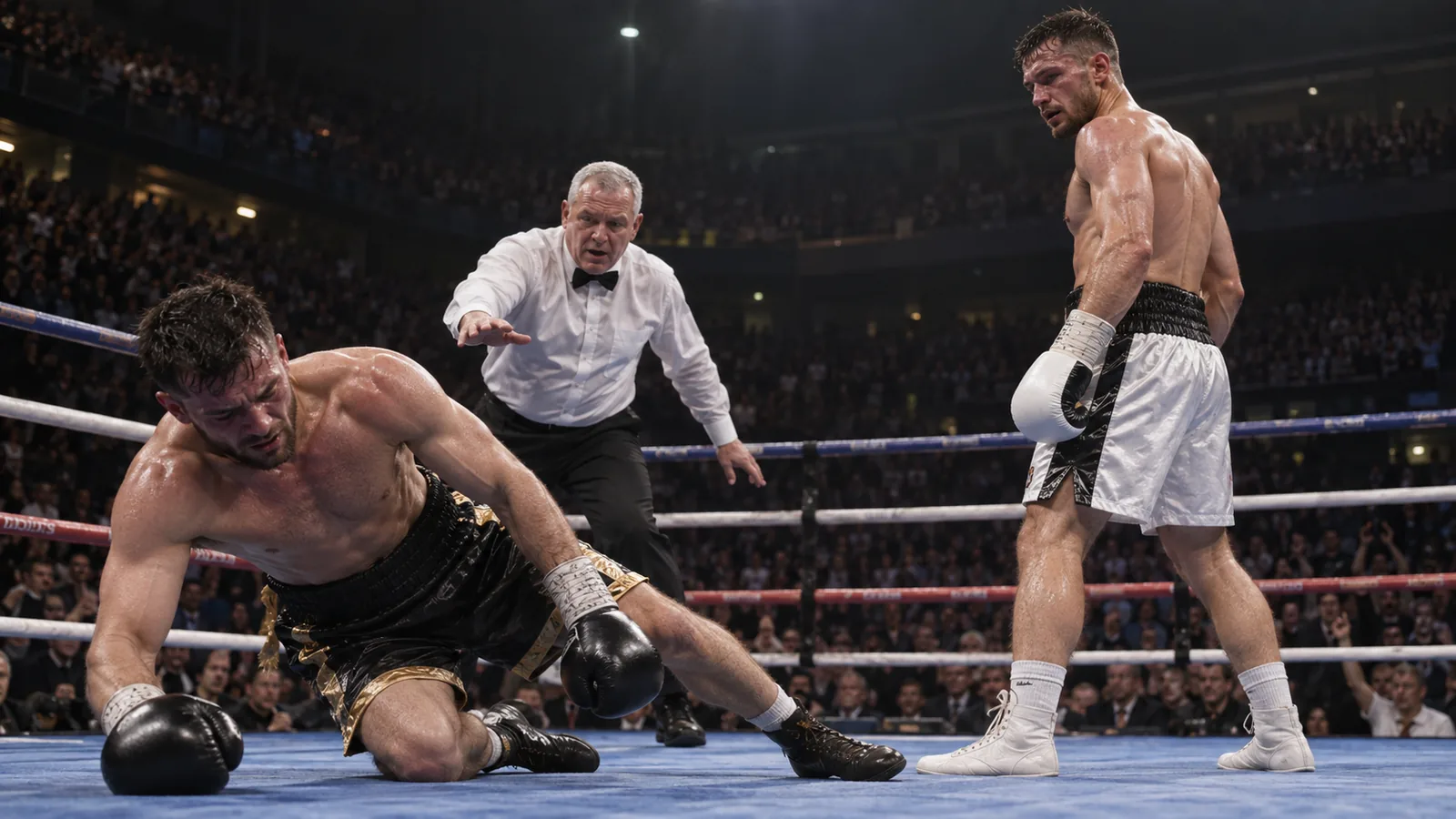
Luke McCormack did not need a dramatic rescue act to win the vacant British super-lightweight title. He was in control of Kay Prospere long before the finish. What made the tenth-round knockout impressive was the restraint before it.
McCormack kept working, kept asking questions, and did not turn a patient winning performance into an impatient hunt for one big shot. Then, with 1:28 gone in round ten, a right hand through the middle ended it.
The official result was a tenth-round knockout, making McCormack British champion in only his sixth professional fight. Fightmag’s results and World Boxing News’ live report both recorded the finish, with the latter identifying the decisive shot as a right uppercut. That is a rapid route to the Lonsdale Belt, but the footage shows why a small pro record does not always tell the whole story.
McCormack arrived with a serious amateur background, years training around high-level professionals and a clear sense of how he wanted the fight to unfold. Before the bout, he told Boxing News that work with Ben Davison, Lee Wylie and Barry Smith had changed how he studied opponents and reacted to what was in front of him. That did not sound like promotional chat on Saturday night. It looked like the plan.
The knockout was the headline. The rounds before it are the lesson.
The British title is meant to make you prove it
Domestic title fights can be awkward in a way that glossy international fights are not. The opponent knows the level. The stakes are clear. The rounds are long enough for early confidence to become fatigue, doubt or desperation.
McCormack entered the contest at 5-0, with only 22 professional rounds behind him. The Ring’s pre-fight profile rightly pointed out the apparent risk: Prospere had considerably more professional experience and McCormack had only recently completed his first ten-rounder, against Kane Gardner.
That previous distance mattered.
It is easy to call a ten-round fight useful after a boxer wins the next one. It is more accurate to say that it gave McCormack evidence. He knew he could maintain focus beyond the point where a four or six-round prospect fight becomes familiar. He knew he could keep making decisions while tired. That is different from simply being fit.
Prospere was not there to be a prop. He had the tougher, older fighter’s job: make the younger man work, deny him a rhythm, survive the clean spells and force a question late. Early commentary on the official highlights made the tactical problem clear. McCormack could not be allowed to settle into his range and dictate the pace. Prospere needed to turn it into something rougher and less orderly.
He never quite managed it.
McCormack built pressure rather than chased a knockout
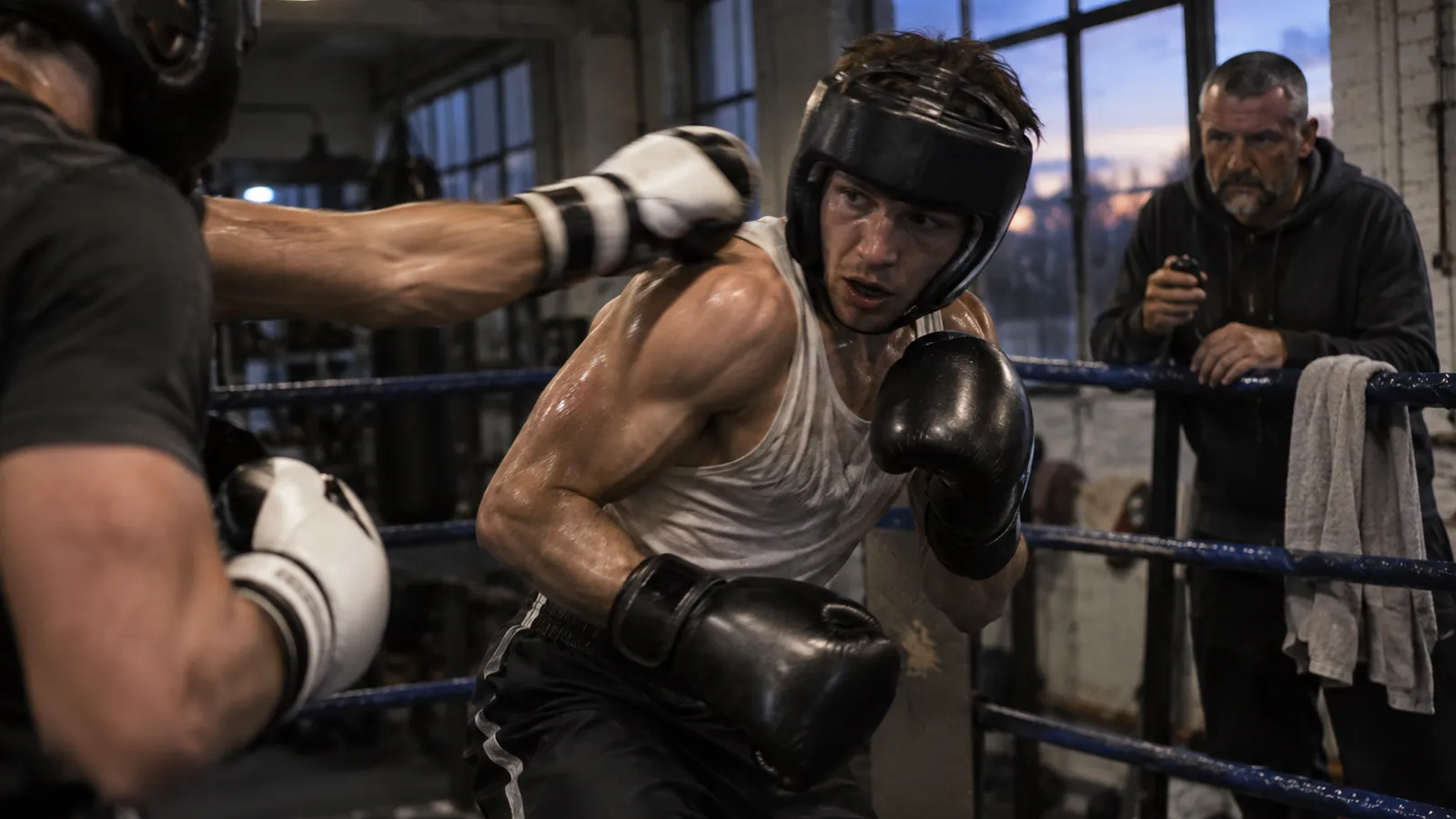
The first thing to notice is that McCormack did not sprint at Prospere. He worked from the outside, found his right hand, invested in the body and used his feet to alter the angle.
That matters against a compact, shell-like guard. If you stand in front of that defence and throw hooks around it all night, you can look busy while landing on arms and gloves. McCormack did not accept that trap. He moved around the outside, threw to the body, then came back to the head from a different line.
The highlights show the shape of the work. A right hand lands. A body shot makes Prospere cover. McCormack takes a small adjustment with his feet and looks again. There is no large, theatrical movement. Just repeatable pressure.
That is what good pressure looks like. It is not angry walking. It is taking away options.
By the middle rounds, Prospere was being made to defend more than he was being allowed to initiate. He still had moments, including a sharp right hand that reminded McCormack to stay awake, but the important detail was McCormack’s response. He did not overreact. He came back to the body and resumed the job.
A lot of fighters lose their shape after being clipped. They either rush to prove they are not hurt or become passive for a round. McCormack did neither. He took the information, tightened the work and carried on.
That is late-round composure being built in the early rounds.
The body work did more than score
People often talk about body shots as if every good one must produce a delayed collapse. That is not how most effective body work operates.
Sometimes it changes the opponent’s guard. Sometimes it makes him less willing to throw back. Sometimes it takes a little sharpness from the legs or makes a clinch more tempting than an exchange. Often it simply makes the next round more expensive.
McCormack’s shots downstairs helped create the final opening because they made Prospere protect several targets at once. A high, tight guard can be stubborn. It can also narrow the defender’s view and leave the middle line available when fatigue starts to affect reactions.
The commentary in the highlights picked up on exactly that problem. As McCormack broke Prospere down, the shots up the middle became more relevant. The guard was protecting the sides and the head, but it was also asking Prospere to stay disciplined under sustained physical and mental pressure.
That is hard enough in round three. It is much harder in round ten.
For boxers training in Kidbrooke, the usable lesson is simple: body work is not a side quest. It helps shape the whole fight. A controlled body jab, a compact hook under the elbow or a straight shot to the centre can make an opponent hesitate, square up or bring the hands lower. The point is not to throw wild low swings. The point is to make the opponent solve more problems.
What changed in the tenth
The result may suggest a sudden finish. The footage suggests a final answer to a question McCormack had been asking all night.
By the tenth, he had not become reckless. If anything, he looked more settled. The pace had stayed high, but he was still balanced enough to bend his legs, rotate properly and throw through the target rather than reaching for it.
The finish came up the middle because the rest of McCormack’s work had earned that line. He had used the body. He had changed angles. He had made Prospere cover and reset. He had stayed patient when the knockout was not immediately available.
Then he found the shot.
That is the difference between a knockout punch and a knockout process. The punch gets replayed. The process is what coaches should care about.
It also explains why the win looked mature despite McCormack’s limited pro experience. He did not confuse control with permission to coast. He kept applying pressure without forcing exchanges. He did not let Prospere’s durability irritate him. As the commentary observed late in the highlights, McCormack simply got on with the job.
That sounds basic. It is not.
A domestic title fight can tempt a boxer into trying to make a statement too early. McCormack made one by refusing to chase it.
A serious start, not a finished product
The win moves McCormack to 6-0 and makes him British champion at 140lbs. BoxRec’s record page and Tapology’s fighter profile are useful reference points for a career that has moved quickly after a delayed start.
The aim now should be sensible. McCormack told The Ring that he wants to make three successful defences and keep the Lonsdale Belt outright before moving towards European and world level. That is the right ambition. A British title is a major achievement, but it should also be a place to gain rounds, face different styles and learn what happens when opponents arrive with a full training camp and a reason to take risks.
Saturday’s Birmingham card was broadcast on DAZN, as listed in the UK boxing schedule and covered in the Mirror’s fight-night guide. McCormack’s performance was not the main event, but it may have supplied the clearest piece of boxing from the card.
He did not need to prove that he could punch. The tenth-round finish did that.
He proved something more useful: sustained pressure works when it has shape, and composure matters most when a title fight starts asking for more than talent.
At Honour & Glory, that is how boxing should be learned. Build the stance, guard, balance and patience first. Then add pressure without losing your head. Our boxing classes in Kidbrooke are for ages 7+ and are built around those habits, whether you are learning the basics or trying to make your sparring more purposeful.
H&G Team
Writer at Honour & Glory Boxing Club, a community boxing gym in Kidbrooke, South East London.
KEEP READING
British Boxing History: From Bare-Knuckle Fights to Olympic
British boxing did not begin with the Marquess of Queensberry. It began much earlier and stranger. Here is the full arc from prize fighting to Olympic champions.
Itauma Stops Franklin: A Heavyweight Shift
Moses Itauma became the first fighter to stop Jermaine Franklin. What that fifth-round knockout tells us about British heavyweight boxing.
Turning Professional in British Boxing: The BBBofC Application Route
A source-led guide to the current British Boxing Board of Control boxer application route, what must come from the Board, and what to discuss with a licensed trainer before turning over.
Was this page helpful?
It takes one tap, and it genuinely helps.
Choose your next step
Turn this article into the right action
Some readers are ready to book. Some need the class route first. Pick the route that matches what you actually want.