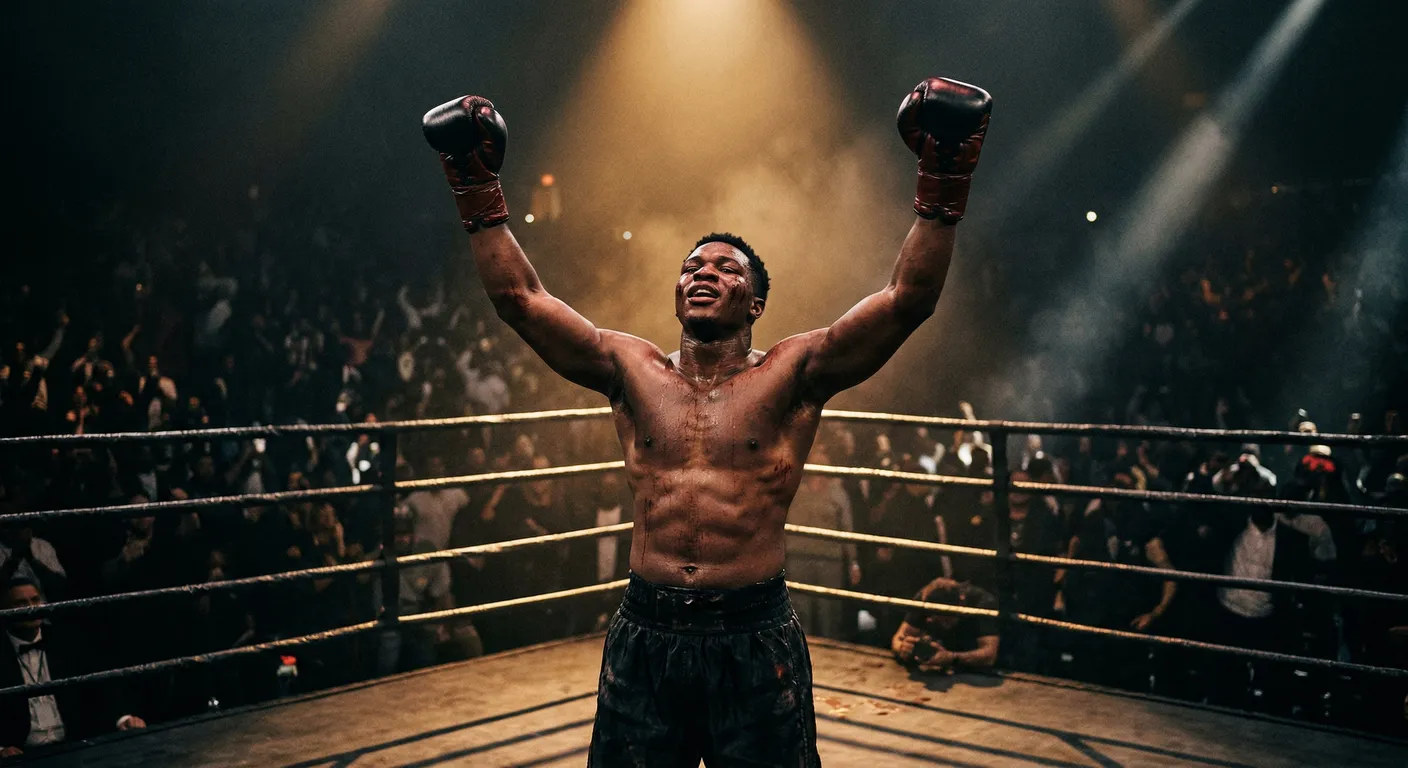
Nobody had stopped Jermaine Franklin. Not Anthony Joshua over twelve rounds at The O2. Not Dillian Whyte across ten bruising rounds at Wembley Arena. Franklin had built an entire professional identity around being the man who was always there at the final bell.
On Saturday 28 March, at the Co-op Live Arena in Manchester, Moses Itauma ended that reputation in five rounds.
The 21-year-old British heavyweight dropped Franklin in the third with a short right hook behind the ear - the first knockdown of Franklin's professional career - before closing the show in the fifth with a left uppercut followed by a clubbing right hand that sent the American face-first to the canvas. Referee Steve Gray did not bother counting. The fight was over at 1:33 of round five, and Itauma's record moved to 14-0 with 12 knockouts.
This was not just another win for a young prospect. It was the kind of performance that forces the entire division to recalibrate.
Why the Franklin Stoppage Matters
To understand what Itauma did, you need to understand who Franklin was. The 32-year-old from Saginaw, Michigan entered the ring at 24-2 with 15 knockouts and a chin that had become the stuff of heavyweight folklore.
In April 2023, Joshua landed 117 total punches across twelve rounds and could not put Franklin down. In November 2022, Whyte won a disputed majority decision at Wembley that many observers scored a draw, and Franklin walked out on his feet. Last September in Las Vegas, Franklin outpointed Olympic bronze medallist Ivan Dychko over twelve rounds.
Nobody questioned Franklin's durability. It was the one thing everyone agreed on.
Itauma did not just beat that durability. He demolished it. As the Guardian reported, the knockout sequence was "savage" - a left uppercut on the inside followed by a right hand that left no doubt. Franklin went from upright to face-down in less than two seconds.
"It is not the shots you load up with," Itauma said afterwards. "It is the shots that you do not see."
The Fight Round by Round
What separated this performance from a simple knockout highlight was how Itauma got there. He did not charge in recklessly. He took his time, worked behind the jab, and trusted his power to find the openings.
The first two rounds were controlled and methodical. Itauma landed sharp right hooks and left-hand combinations, going to the body consistently. Franklin absorbed everything and kept moving forward, but the speed difference was obvious from the opening bell.
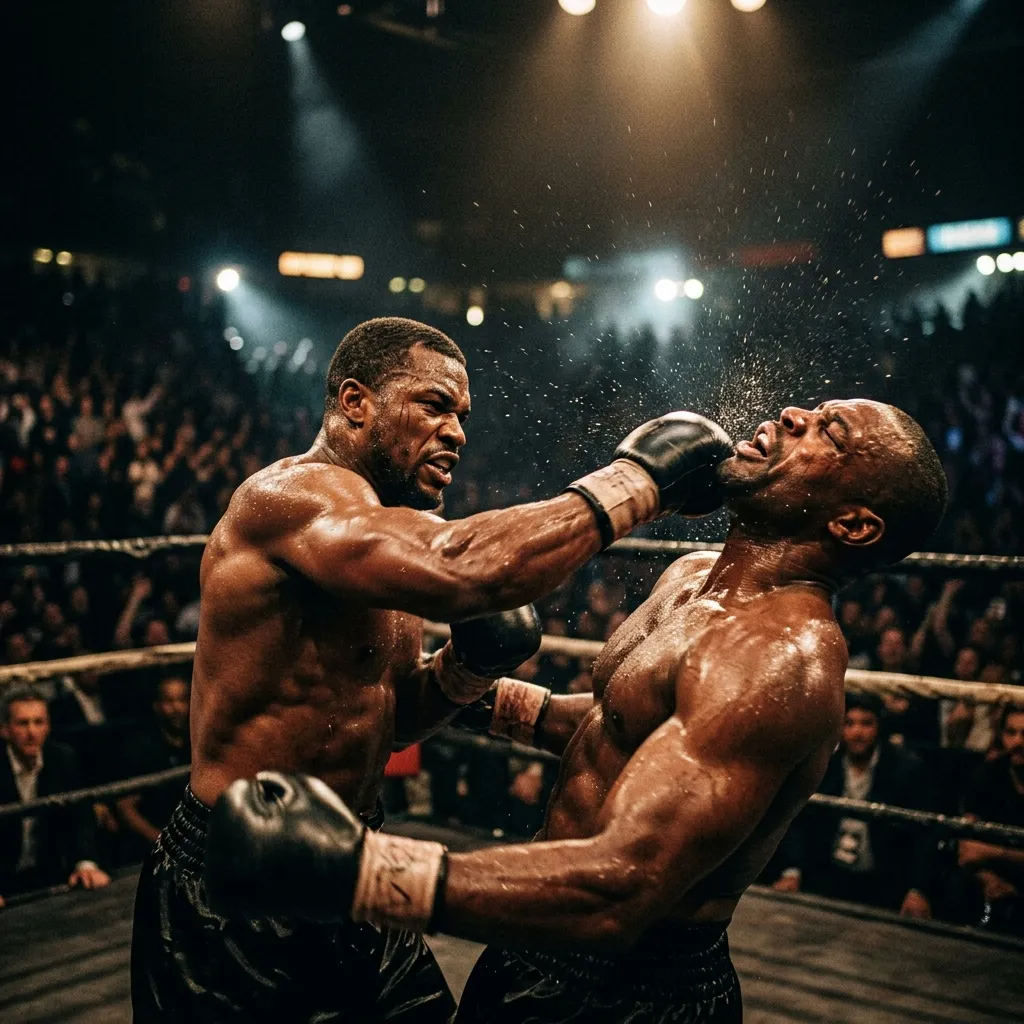
Round three changed the fight. A heavy right hook early in the round rocked Franklin, and a follow-up body shot drove through his guard before a terrific right hook put the American on the canvas for the first time in his career. Franklin rose and even threw a punch before the bell - stubborn to the last - but the damage was done.
Franklin had his best moments in the fourth, landing body shots and showing flashes of the competitive spirit that had frustrated Joshua. But Itauma drove him to the ropes with a left hand late in the round, and any sense of momentum evaporated.
The fifth was clinical. Itauma landed a right hook that wobbled Franklin, followed with a left hand that buckled him further, and then the finishing combination - that left uppercut and right hand - ended it emphatically.
What This Means for Itauma's Title Path
Promoter Frank Warren was direct after the fight. "I am pretty confident he will fight for a world title this year," Warren told DAZN. He indicated Itauma would likely have one more tune-up fight in July before pursuing a belt later in 2026.
The title picture offers several routes. Itauma is positioned as a WBO mandatory challenger and ranked highly by the WBA. Oleksandr Usyk and Fabio Wardley hold the four major belts between them, and Itauma has made it clear he wants to test himself at that level.
"I would love to fight Usyk," Itauma said. "There is a pecking order I need to respect - I will wait my turn."
At 21, time is the one asset Itauma has that almost no other heavyweight contender can match. The comparisons to a young Mike Tyson are inevitable - similar age, similar knockout rate, similar ability to end fights against durable opponents. But as Boxing Insider noted, Itauma's technical foundation from the amateur system gives him tools that separate him from a pure puncher. The jab, the footwork, the defensive awareness - these come from years of structured coaching that Tyson only developed later in his career.
The Amateur Pathway That Built Him
This is the part of the story that matters most to anyone reading this on a boxing club website.
Itauma did not appear from nowhere. He came through the British amateur system, competing at youth and junior level, winning national titles and representing Great Britain internationally before turning professional at 17. His brother Prince is on the same pathway. The amateur structure - community clubs, volunteer coaches, structured competition - is what produced the fighter the world saw on Saturday night.
We wrote about this in detail when Itauma was first making waves as a prospect. The point then was the same as it is now: the explosive finishes and the sold-out arena shows all started with a kid learning to hold his guard up properly in a community gym.
That is the same pathway every member at Honour and Glory trains in. The same pad work, the same footwork drills, the same discipline of turning up and putting in the rounds. Whether you are training as an amateur with competition goals or boxing purely for fitness and confidence, the fundamentals are identical.
Not every young boxer will become Moses Itauma. Most will not compete at all, and that is completely fine. But the qualities that the sport develops - discipline, composure under pressure, physical confidence, the ability to think clearly when things get difficult - those translate into everything else.
The Bigger Picture for British Heavyweight Boxing
The heavyweight division is in the middle of a generational shift. Tyson Fury has stepped away. Joshua is in the later stages of his career. Usyk, at 39, will not hold the belts forever.
Itauma sits at the front of the queue for what comes next. At 21 with a 14-0 record and 12 knockouts, including the first-ever stoppage of a fighter who went the distance with two former world champions, the trajectory is clear. A world title fight before the end of 2026 looks not just possible but likely.
For British boxing, that is significant. For community boxing clubs, it is a reminder that the pathway works. The kid who walks into your gym this week and learns to skip, learns to wrap their hands, learns to throw a straight jab - that is where every professional career begins.
Get on the Same Pathway
If you have been thinking about trying boxing, there is no better time. Honour and Glory runs sessions for all ages and experience levels, from complete beginners to those working towards amateur competition.
H&G Team
Writer at Honour & Glory Boxing Club, a community boxing gym in Kidbrooke, South East London.
KEEP READING
British Boxing History: From Bare-Knuckle Fights to Olympic
British boxing did not begin with the Marquess of Queensberry. It began much earlier and stranger. Here is the full arc from prize fighting to Olympic champions.
The Most Iconic Boxing Venues in the UK
The venue shapes the fight. Some of the most memorable nights in British boxing happened in specific places for specific reasons. Here are the venues that matter.
Boxing Training for British Army Fitness: What the SCA Tests
The British Army introduced a new Soldier Conditioning Assessment in 2025. Here is how boxing training maps to every component of it.
Was this page helpful?
It takes one tap, and it genuinely helps.
Choose your next step
Turn this article into the right action
Some readers are ready to book. Some need the class route first. Pick the route that matches what you actually want.