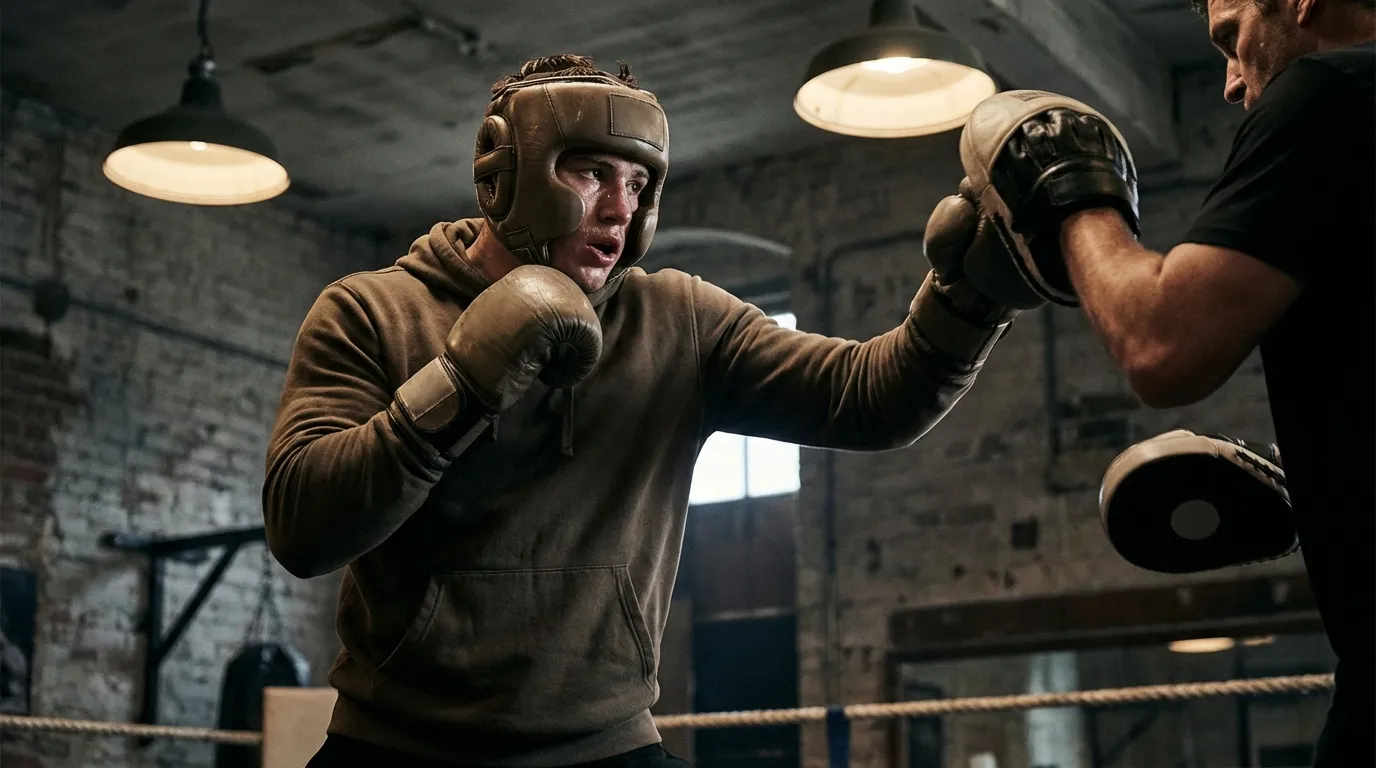
Moses Itauma turned professional at 17. By 19, he was knocking out grown men with the kind of power that makes heavyweight boxing exciting again. But the story that matters is not the knockouts - it is what happened before them.
Itauma did not appear from nowhere. He came through the amateur system, trained at a community boxing club, and developed his skills the same way every young boxer does - one session at a time, learning the basics before anything else.
That is worth remembering when you watch him fighting on BT Sport. The explosive finishes started with a kid learning to hold his guard up properly.
The Amateur Foundation
Starting Young
Itauma began boxing at a young age, following his brother into the gym. He competed extensively as a youth amateur, representing Great Britain internationally and winning medals at European and World Youth Championships.
The amateur system in British boxing is structured, well-coached, and genuinely world-class. It is the same pathway that produced Anthony Joshua, Nicola Adams, and dozens of other Olympic and professional champions.
What makes Itauma's story relevant for parents considering kids boxing is that he did not start in a professional gym doing professional things. He started in a community club, doing the same drills your child would do - skipping, shadow boxing, learning to throw a straight punch.
Why Youth Boxing Matters
The benefits Itauma got from youth boxing go well beyond fighting ability:
Discipline. Amateur boxing demands commitment. You turn up, you train, you listen to your coach. There is no room for laziness or attitude. Kids who box learn to work hard because the sport simply does not function any other way.
Confidence. Learning to box gives young people a quiet confidence that shows in everything else they do. It is not aggression - it is self-assurance. Itauma has carried himself with composure beyond his years throughout his professional career, and that comes from growing up in the gym.
Physical development. Boxing is one of the most physically demanding sports for young people. Coordination, balance, reflexes, cardiovascular fitness, upper and lower body strength - it develops everything simultaneously.
Structure. For a lot of kids, the boxing gym is the most structured environment in their lives. At Honour & Glory, our coaches set clear expectations and the kids respond to it. It is remarkable how quickly even the most energetic 7-year-old settles into the routine of a boxing session.

The Professional Transition
Power That Translates
Itauma's professional debut made people sit up. The power he'd shown as an amateur - unusual for that age and weight class - translated immediately to the professional game where the gloves are smaller and the knockouts are more frequent.
His punching technique is fundamentally sound. He sits down on his shots, generates power through his legs and hips rather than just his arms, and has natural timing that allows him to catch opponents clean. These are not things you develop overnight. They are the product of years of repetition in the gym.
Ring Intelligence
For someone so young, Itauma shows unusual composure in the ring. He does not rush, does not panic, and rarely wastes energy. He picks his moments, sets up his big shots with the jab, and trusts his power to do the work when the opening appears.
This is amateur boxing's influence. In the amateurs, you learn to think. Rounds are short, scoring is based on clean punches, and wild swinging gets you nowhere. That disciplined approach stays with fighters when they turn professional.

Where Itauma Fits in the Heavyweight Picture
The heavyweight division is in transition. Oleksandr Usyk unified the heavyweight world champion titles in 2024, Tyson Fury stepped away from the ring, and a new generation is pushing through. Itauma sits at the front of that queue.
His amateur record included gold medals at youth and junior level, competing in schools, juniors, and youth European championships before turning professional. That amateur pedigree matters. The fighters who dominate the heavyweight division almost always have deep amateur foundations. Anthony Joshua won Olympic gold. Usyk won multiple gold medals across amateur championships before his professional career (source). His professional record tracks his bouts, including his Commonwealth heavyweight title win at age 20.
What separates Itauma from other young prospects is the combination of age and power. He is the youngest heavyweight in recent history to generate this level of knockout power against senior opposition. His professional record already includes wins that would challenge more experienced fighters. At 19, he has time on his side in a way that few heavyweight prospects ever have.
The comparisons to Mike Tyson's early career are inevitable. Tyson turned professional at the same age and similarly devastated opponents with explosive power. But Itauma's technical foundation from the amateur system gives him tools that Tyson developed later in his career. The jab, the movement, the defensive awareness. These come from years of structured coaching that starts in community clubs exactly like ours.
What Parents Should Know About Youth Boxing
Safety
This is always the first question, and it should be. Youth boxing in the UK is heavily regulated by the ABA (Amateur Boxing Association of England). At clubs like Honour & Glory, every coach is DBS checked, first aid trained, and safeguarding certified.
For younger junior members aged 7-9, sessions focus on non-contact skills - coordination, basic technique, fitness, and fun. There is no sparring, no contact between children, and no pressure to compete.
For juniors aged 10-16, controlled pad work is introduced alongside more advanced technique. Sparring is only available for those in the amateur programme and is always supervised, with full protective equipment.
The Commitment
Youth boxing does not require a massive time commitment. Sessions at Honour & Glory run 2-3 times per week, each lasting about an hour. That is enough to develop skills, build fitness, and become part of the community without overwhelming a child's schedule.
The cost is deliberately low. Our junior sessions are £5 each because we are a community club, not a commercial gym. No joining fee, no monthly contract.
The Path Forward
Not every kid who boxes will become Moses Itauma. Most will not compete at all, and that is completely fine. The skills they learn - discipline, fitness, confidence, respect - are valuable regardless of whether they ever step into a competitive ring.
For those who do want to compete, the amateur pathway is clearly structured. Club-level bouts, regional championships, national championships, and international representation. Our coaches can guide talented juniors through every stage.

Start Their Journey
Itauma's career began in a gym not unlike ours - a community club where coaches cared about developing young people, not just producing fighters.
If your child is interested in boxing, book a free trial at Honour & Glory. We run younger junior sessions in junior sessions on Monday, Wednesday and Friday. All equipment provided.
Parents and carers cannot stay to watch sessions. Please speak to the coach before the class if your child needs help settling in.
The next Moses Itauma is somewhere in south east London right now. Maybe they just need a gym to walk into.
H&G Team
Writer at Honour & Glory Boxing Club, a community boxing gym in Kidbrooke, South East London.
KEEP READING
Best Activities for Football-Mad Kids in South East London
Your child loves football. Here are the clubs, academies, and complementary sports in SE London that will actually develop them - not just keep them busy.
Famous Boxers Who Started as Teenagers
The greatest boxers in history started young. But what did their early training actually involve, and what does that tell us about how young people should approach the sport?
Back to School Fitness - Boxing for Teenagers
September means new routines. For teenagers wanting to get fit outside of school PE, boxing offers strength, confidence, and genuine skill development.
Was this page helpful?
It takes one tap, and it genuinely helps.
Choose your next step
Turn this article into the right action
Some readers are ready to book. Some need the class route first. Pick the route that matches what you actually want.