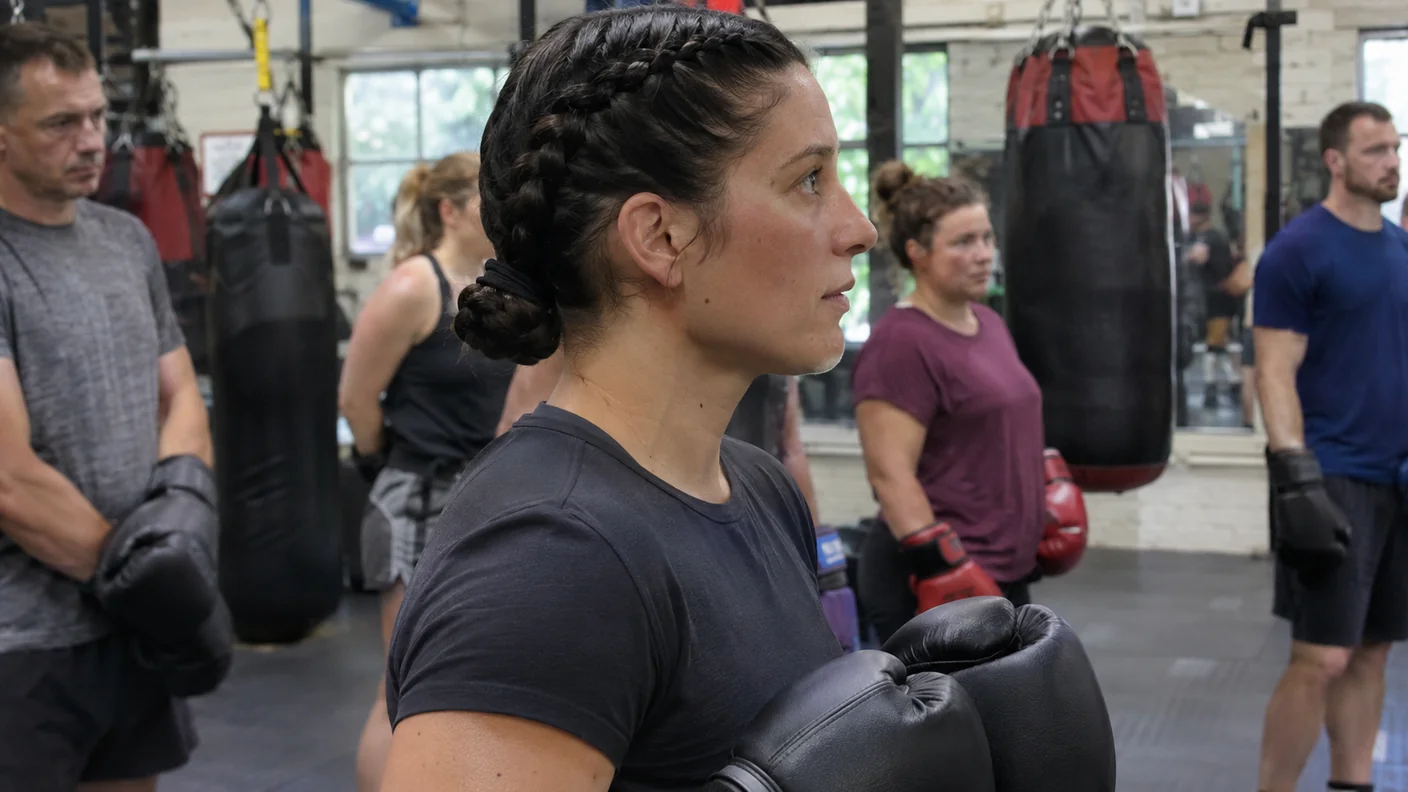
Long hair is not a reason to put off boxing. It is simply one thing to sort before the warm-up starts.
The useful test is not whether your hair looks neat when you leave the house. It is whether you can see clearly, put gloves on without catching anything, turn your head, and work through a round without touching your hair every ten seconds. If the answer is no, the style needs another minute before class begins.
This is not only a cosmetic detail. In competition, World Boxing's rules say long hair must be secured and must not limit a boxer's vision.
England Boxing's current rulebook update is another reminder that kit and presentation are safety matters once contact is involved. A normal beginner class is not a bout, but the same common sense helps.
Start with the type of session you are doing
For a first class, most people are learning stance, basic footwork, bags, pads and conditioning. You do not need a competition hairstyle to learn a jab. You do need hair that stays off your face and lets you make a proper fist inside the glove.
A low ponytail can be enough for easy shadowboxing or a gentle fitness circuit. It is not always enough once you are skipping, doing pad rounds or turning the head quickly. A swinging ponytail can hit your face, catch under a glove when you wipe sweat, or keep pulling your attention away from the coach.
Partner drills raise the standard. If you are working pads, moving around another person or practising controlled defence, your hair should not become something they have to avoid. Contact sparring is a separate step with its own kit and coaching conversation. If you are heading that way, ask the coach what works with the headguard before you arrive.
The best practical options are simple
The best hairstyle is the one you can repeat without turning your changing room routine into a project.
A single braid for straightforward training
A firm braid works well when your hair is long enough to hold it. It keeps the length together, reduces loose strands and is usually more comfortable than a high ponytail under ordinary gym movement.
The weakness is the loose tail. If the braid reaches your shoulders or below, fold it up and secure it with a second soft tie. You do not want it swinging across your back while you turn or falling forward when you bend to pick up gloves.
Braids into a low bun for busy sessions
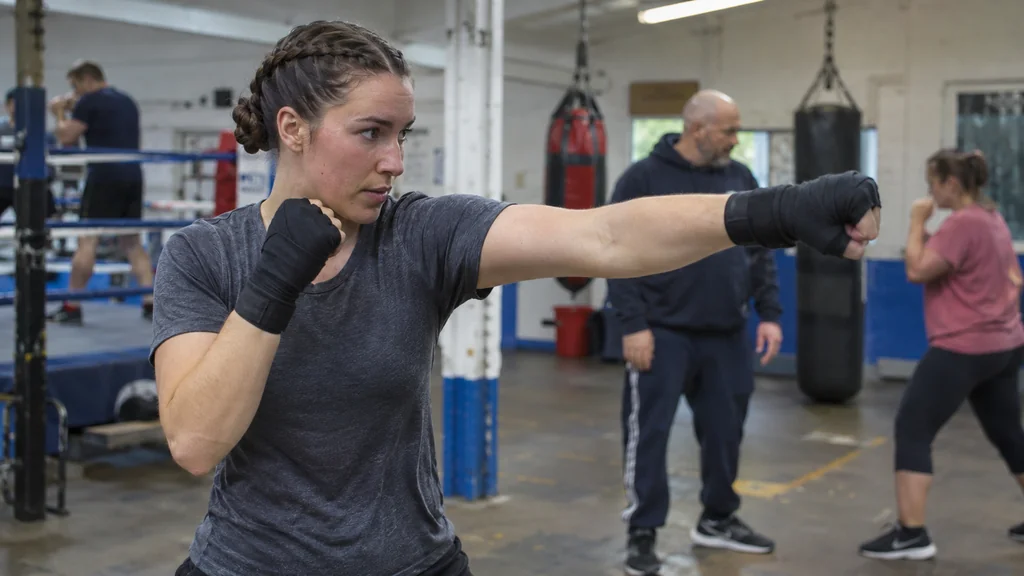
Two close braids gathered into a flat low bun are a strong option for people who train often. They keep the hair close to the head, make it easier to see, and do not leave a long tail to catch against your neck or shoulders.
Keep the bun low and compact. A large high bun can interfere with a headguard later, press into the back of your head during sit-ups, or come loose when you start sweating. Flat and secure beats fussy.
A low ponytail for a short session
A low ponytail is better than leaving your hair down. It is quick, comfortable and fine for a calm first session when you are mainly seeing how the class feels.
Be honest about it, though. If it keeps brushing your cheeks during a warm-up, it will be worse once your heart rate rises. Use a second tie to braid or loop the length before the technical part of class begins.
Do a 30-second check before you put gloves on
You do not need a mirror test that takes ten minutes. Run through four quick checks.
- Look left and right. Hair should not come across either eye.
- Dip into your stance and rise again. The style should not pull painfully at the scalp.
- Put your gloves on and bring both hands to guard. Nothing should catch around your wrists, neck or face.
- Do ten light slips and turns without punching. If the tie shifts, remake it now rather than halfway through a round.
This is also the moment to take out jewellery and check that your hair accessories are soft. A hard clip may feel harmless while you stand still, but it is uncomfortable under pressure and does not belong in close partner work. Our guide to what to wear to a boxing class keeps the rest of the first-session kit simple.
If you wear rings, hoops, chains or a watch, use the same approach and remove them before the warm-up. Our practical guide to jewellery at boxing class explains why that small habit matters.
Do not let a tight hairstyle become another problem
Secure does not mean painful.
A style that pulls at the hairline, gives you a headache or makes you keep adjusting the back of your head is too tight for a hard session. The aim is to remove a distraction, not replace it with a different one. A slightly lower braid or a softer tie often solves the problem.
The same applies to extensions, a fresh style or hair that is still damp after washing. Tell the coach if you need a minute to adjust before pads or partner work. There is no prize for trying to look unbothered while you cannot see properly.
If you use a headband, treat it as help for short fringe or sweat rather than the main solution. A headband does not secure the length at the back. Put the hair into a braid, bun or both first, then add the headband only if it improves your vision.
Ask the coach before a new type of drill
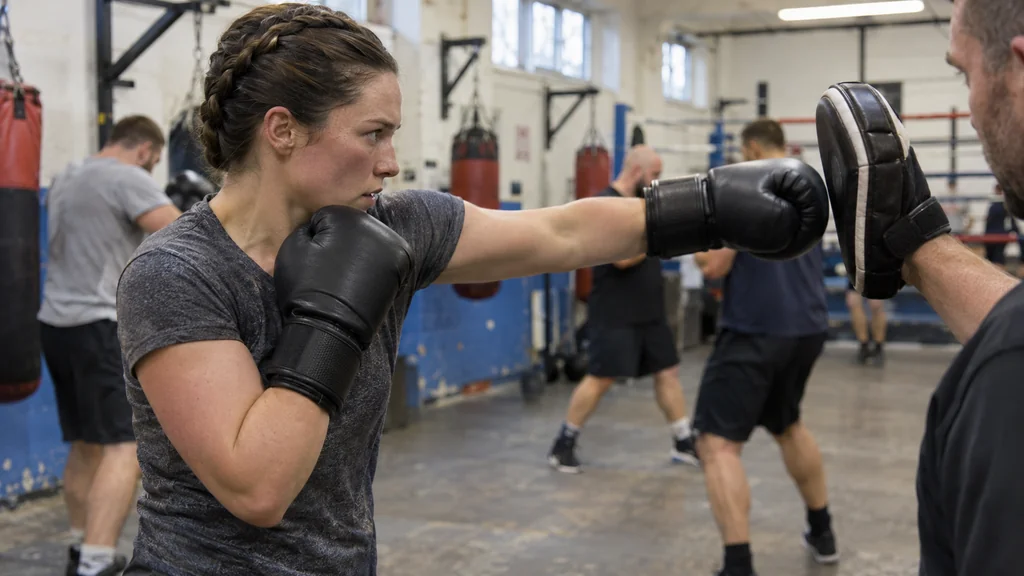
A coach does not need your entire hair routine. They do need to know if a style affects what you can do safely.
Say something early if your hair is very long, you have a new scalp treatment, you are wearing extensions, or you are trying headgear for the first time. A coach can suggest a version of the drill that keeps things simple. It is much easier to solve before a round than when you are already hot, gloved up and frustrated.
This is especially useful for people who are nervous about beginning. You do not need perfect kit, polished footwork or a fighter's haircut to join a class. You need comfortable clothes, water, a secure enough hairstyle and the willingness to be taught.
Our Recreational Adults boxing classes are a sensible place to learn the basics at your own pace. If you are coming from Greenwich or nearby south east London, a simple first session is enough to work out which style feels right in a real gym.
Keep the rule simple
If your hair stays out of your face, does not pull, does not catch under your gloves and does not become someone else's problem in partner work, it is doing its job.
Start with a braid or a low, flat bun. Test it in the warm-up. Adjust it once if needed. Then get on with the boxing.
H&G Team
Writer at Honour & Glory Boxing Club, a community boxing gym in Kidbrooke, South East London.
KEEP READING
How Long Does It Take to Get Good at Boxing?
How long to learn boxing? Here is an honest timeline from complete beginner to confident boxer, based on real training experience.
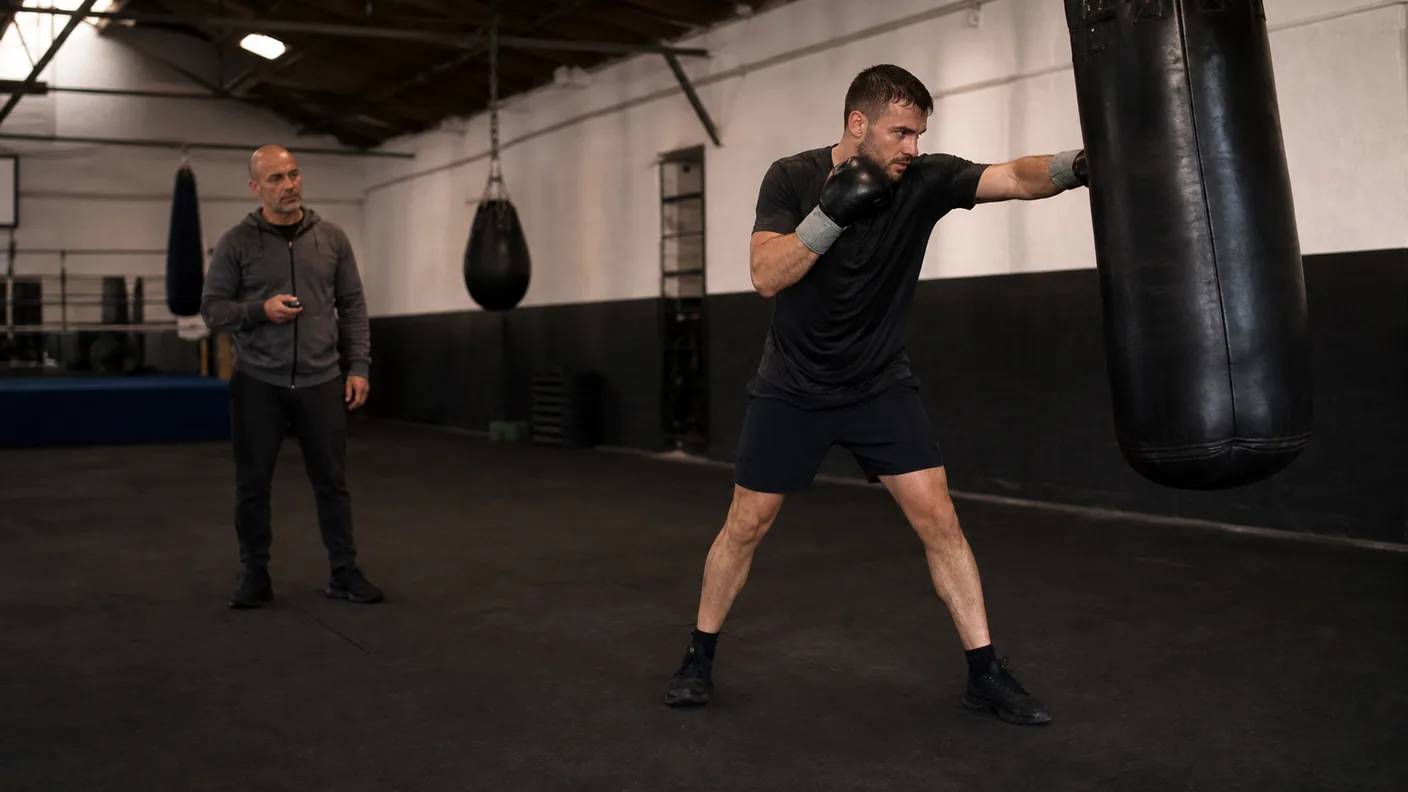
How Long Should Beginner Boxing Rounds Be?
Beginner boxing rounds do not need to be three minutes. Learn how to choose a length that keeps your technique useful.
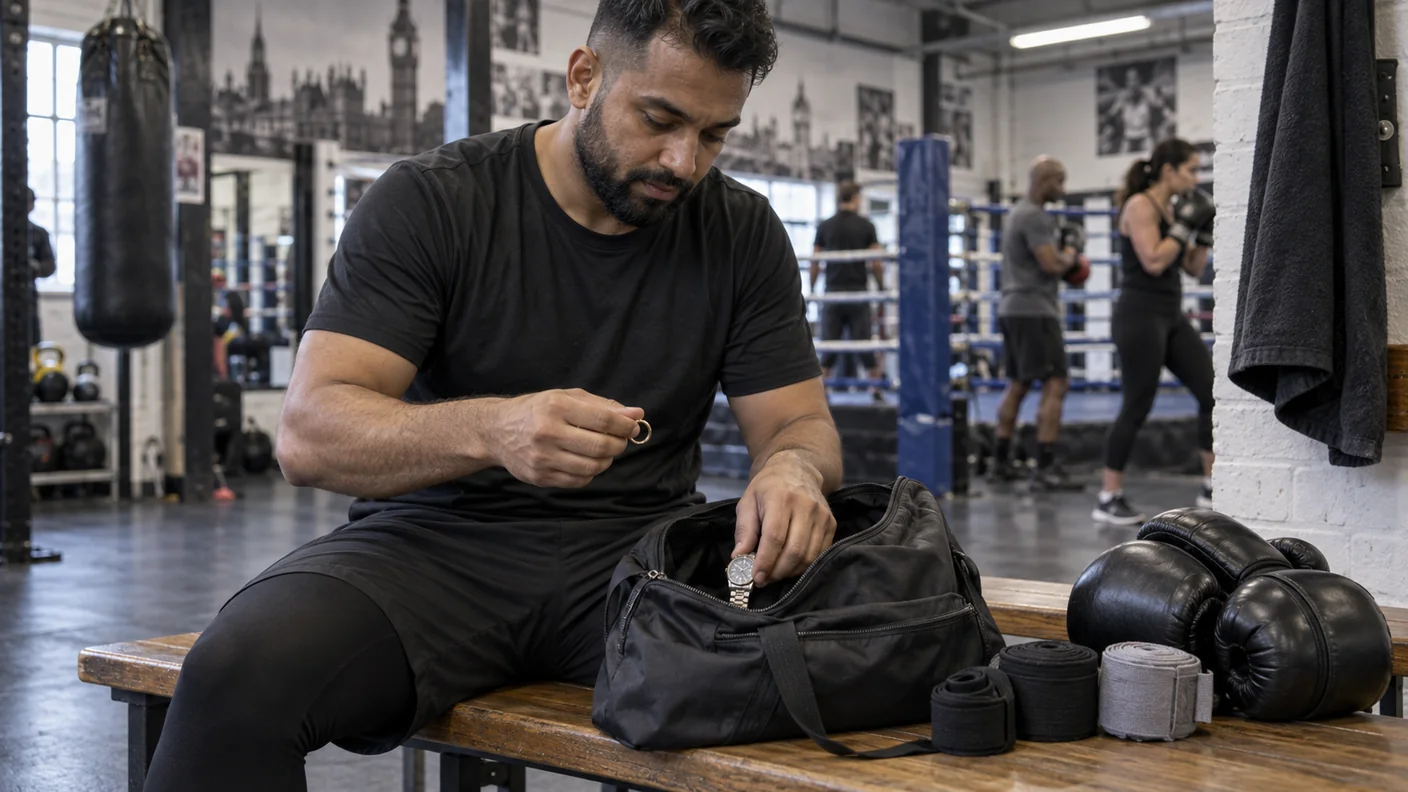
Can You Wear Jewellery to Boxing Class?
Rings, watches, necklaces and piercings can catch, cut or distract in boxing. Here is what to remove before class and why.
Was this page helpful?
It takes one tap, and it genuinely helps.
Choose your next step
Turn this article into the right action
Some readers are ready to book. Some need the class route first. Pick the route that matches what you actually want.