Joshua Buatsi rejects shot-fighter claims before title bid
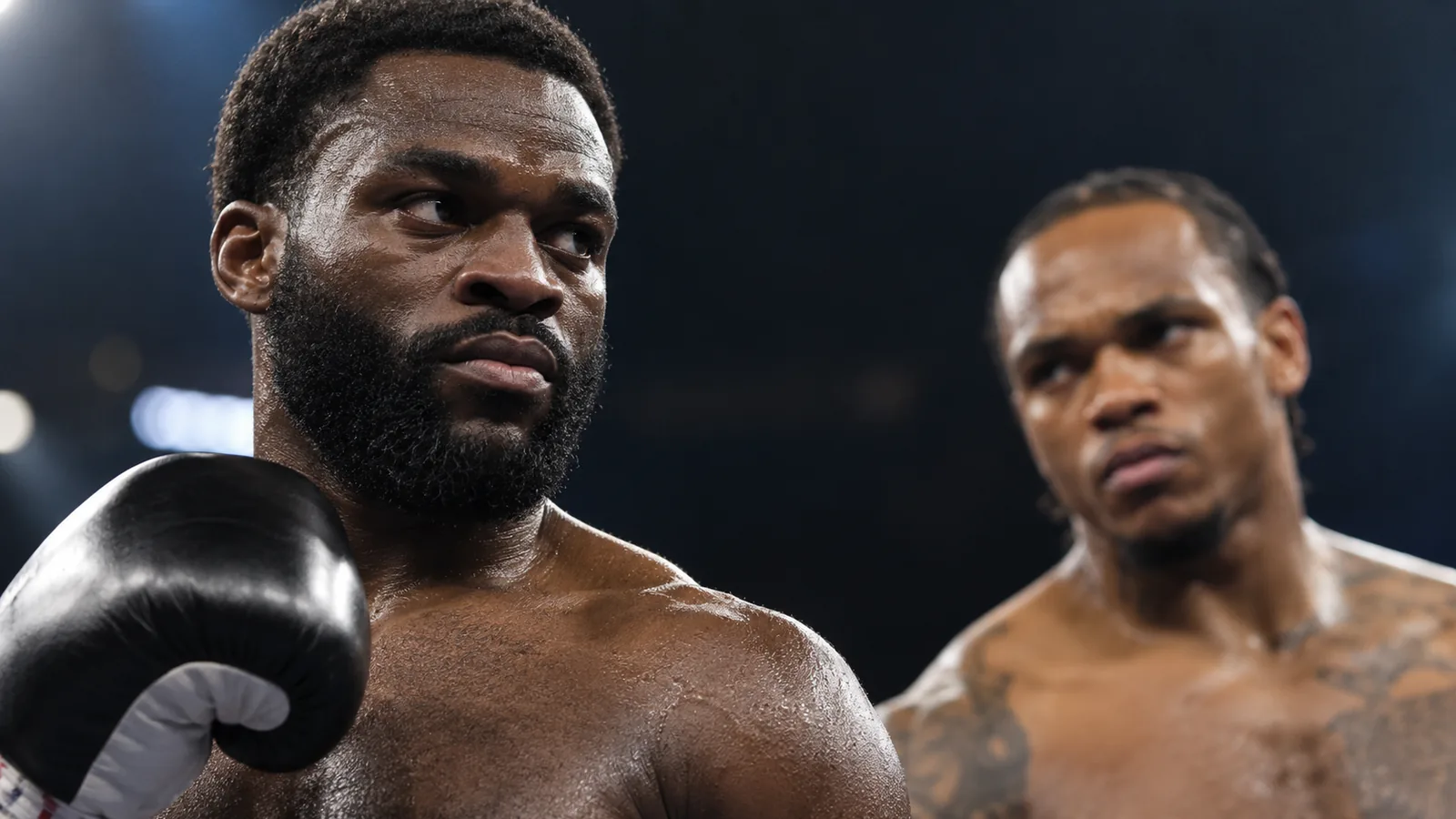
Joshua Buatsi Has Heard the Doubters. Now He Has a World Title Fight to Answer Them
Joshua Buatsi does not need to pretend the questions are not there.
The London light-heavyweight has been called a fighter in decline, a man who has missed his moment, and, more bluntly, a “shot fighter” by critics who have watched the division move quickly around him. The debate has gathered pace since the long-discussed Anthony Yarde fight failed to materialise and Buatsi’s path became less straightforward than many expected.
On 7 November, he gets the clearest possible answer. Buatsi faces Willy Hutchinson at Manchester’s AO Arena, and their rematch has been upgraded from an interim contest to a fight for the vacant WBC light-heavyweight world title. DAZN confirmed the change after David Benavidez chose to remain at cruiserweight.
That is not a token belt, a regional strap or a route to a mandatory position. It is the full WBC championship at 175lbs. For Buatsi, it is a chance to replace speculation with a result that cannot be argued away.
The “shot fighter” accusation is lazy, but the concern is understandable
Boxing is ruthless with fighters who do not look brilliant every time. One defeat, one flat performance or one fight that fails to happen can change the language around a boxer remarkably quickly.
Buatsi has never been built as a loud, confrontational figure. He does not spend every week calling rivals out on social media, and he has rarely sold his career through noise. That restraint can work against a fighter when others in the division are more willing to make headlines.
But calling Buatsi finished is a stretch.
His first contest with Hutchinson, on the Anthony Joshua versus Daniel Dubois bill at Wembley in September 2024, was a hard, competitive fight. Buatsi won a split decision, dropping Hutchinson in the sixth and ninth rounds. The scorecards, 117-108 and 115-110 for Buatsi on two cards, show how clearly two judges saw it, although the fight itself was far more awkward and demanding than those totals suggest.
The WBC title preview rightly identifies those knockdowns as the central facts of the first meeting. Buatsi did not simply nick a close fight. He found decisive moments against a dangerous, unpredictable southpaw who had confidence, ambition and little interest in making life comfortable for him.
Still, the fight revealed why some observers remain unconvinced. Hutchinson’s movement, feints and willingness to throw from strange positions disrupted Buatsi’s usual rhythm. Buatsi can be patient to a fault. At his best, that patience means he controls distance, applies educated pressure and lands the cleaner, heavier shots late. At his worst, he can surrender rounds while waiting for the perfect opening.
That is the distinction that matters against Hutchinson in the rematch. This is not about whether Buatsi can throw a right hand. It is about whether he can impose a sharper, more convincing version of himself over 12 rounds.

The Anthony Yarde fight became a talking point instead of a fight
A Buatsi-Yarde match has been discussed for years because it makes obvious sense.
Two London-based light-heavyweights. Two men with world-level experience. Two fighters with supporters who would turn a major British arena into a proper occasion. It would have been a significant domestic fight, not because either man needs a local rivalry to validate his career, but because the styles and stakes were there.
The problem is that talk does not settle anything.
There have been public exchanges around the fight for a long time, including Buatsi responding to Yarde comments, earlier discussion of a possible call-out, and repeated debate over whether the contest could be revived. There has also been scrutiny of negotiation reports and sanctioning-body manoeuvres, including this discussion of an interim-title negotiation order.
None of that is the same as signing the contract.
It is easy for boxing supporters to reduce a stalled fight to a simple accusation: one man must have avoided the other. Realistically, the sport rarely works that neatly. Promoters, broadcasters, mandatory positions, purse splits, timing and title opportunities can all alter the route within weeks. The earlier discussion around a proposed Buatsi-Hutchinson purse arrangement is a reminder that the business side can decide a match before the public gets a clean explanation.
Buatsi should not be judged as though the Yarde fight never happening automatically proves fear or decline. Equally, he cannot live forever on the idea that it would have been a great British fight.
A world title bout is more important.
Yarde remains a credible and potentially excellent opponent. The archived debate over whether Buatsi versus Yarde could return to the table shows how much appetite there is for it. But Buatsi’s immediate job is not to win a social-media argument about Yarde. It is to beat Hutchinson and become WBC champion.
Buatsi has to show more than he showed first time
The first fight gives Buatsi an advantage, but it also gives Hutchinson information.
Hutchinson now knows he can make Buatsi work. He knows that his unorthodox attacks can create uncertainty, and he knows that he can get close enough to compete with a fighter who was once treated as a clear favourite to reach world-title level.
That could make him more dangerous, not less.
For Buatsi, the ideal performance is controlled rather than reckless. He should target Hutchinson’s body early, establish his jab and avoid allowing the fight to become a contest of isolated bursts. Hutchinson is at his best when he can make opponents reset, second-guess themselves and chase him into mistakes.
Buatsi is at his best when he is physically authoritative. He needs to use his feet to close space, his jab to keep Hutchinson from setting traps, and his strength in the clinch and at mid-range to take energy out of the challenger.
There is also a psychological point. Buatsi cannot enter this fight trying to prove every critic wrong with one spectacular round. Fighters who become obsessed with answering public criticism often force knockouts that are not available. A disciplined win would be more valuable than an emotional shoot-out.
The full event details, including the supporting bouts and broadcast information, are available through British Boxing News’ fight-night guide and The Independent’s viewing information. Fans looking to attend can also check Buatsi’s Ticketmaster listing.

A title changes the argument, not just the record
There is a tendency in British boxing to treat a world title as the end of the discussion. It is not. It is the beginning of a more demanding one.
If Buatsi beats Hutchinson, he will not suddenly become immune from criticism. The light-heavyweight division remains packed with difficult fights, and the WBC belt will make him a target for every ambitious contender. Benavidez’s decision to vacate does not make the championship meaningless. It simply creates an opening, and boxing is about taking openings when they arrive.
What it would do is change Buatsi’s position completely.
He would no longer be discussed mainly as an Olympic bronze medallist, a talented British contender or one half of a fight with Anthony Yarde that never happened. He would be a reigning world champion with the power to make future decisions from a position of strength.
That matters. A champion can pursue Yarde because it is a big fight, rather than needing it as proof of ambition. A champion can seek unifications. A champion can demand that the division comes to him.
For young boxers in Kidbrooke, from seven years old upwards, there is a simple lesson in Buatsi’s situation. Careers do not always move in a straight line. You can have a difficult night, hear criticism and watch expected opportunities disappear. The response is not a speech. It is preparation, discipline and taking the next serious chance properly.
At Honour & Glory Boxing Club’s classes, that is the part of boxing worth learning early. You cannot control every decision around you. You can control how ready you are when the bell goes.
Buatsi has spent years being judged against the version of his career people expected. On 7 November, against a familiar and awkward opponent, he has the opportunity to be judged on something far more concrete: whether he can win the WBC light-heavyweight title.
My view is clear. He is not a shot fighter. But against Hutchinson, he needs to look like a champion before he can call himself one.
H&G Team
Writer at Honour & Glory Boxing Club, a community boxing gym in Kidbrooke, South East London.
KEEP READING
Buatsi vs Hutchinson 2: why the rematch needs fresh answers
The tactical questions Joshua Buatsi and Willy Hutchinson need to answer in a rematch, from controlling distance to making effective adjustments.
Ben Whittaker vs Anthony Yarde: why the offer matters
Tunde Ajayi publicly offering Whittaker a route to Anthony Yarde creates a meaningful domestic light-heavyweight talking point: a developing fighter being tested against an established British contender.
Fury vs Joshua 2026: Why British Boxing Still Needs It
Why a proposed Fury-Joshua fight matters for British boxing: heavyweight legacy, public interest and the lessons of two contrasting careers.
Was this page helpful?
It takes one tap, and it genuinely helps.
Choose your next step
Turn this article into the right action
Some readers are ready to book. Some need the class route first. Pick the route that matches what you actually want.