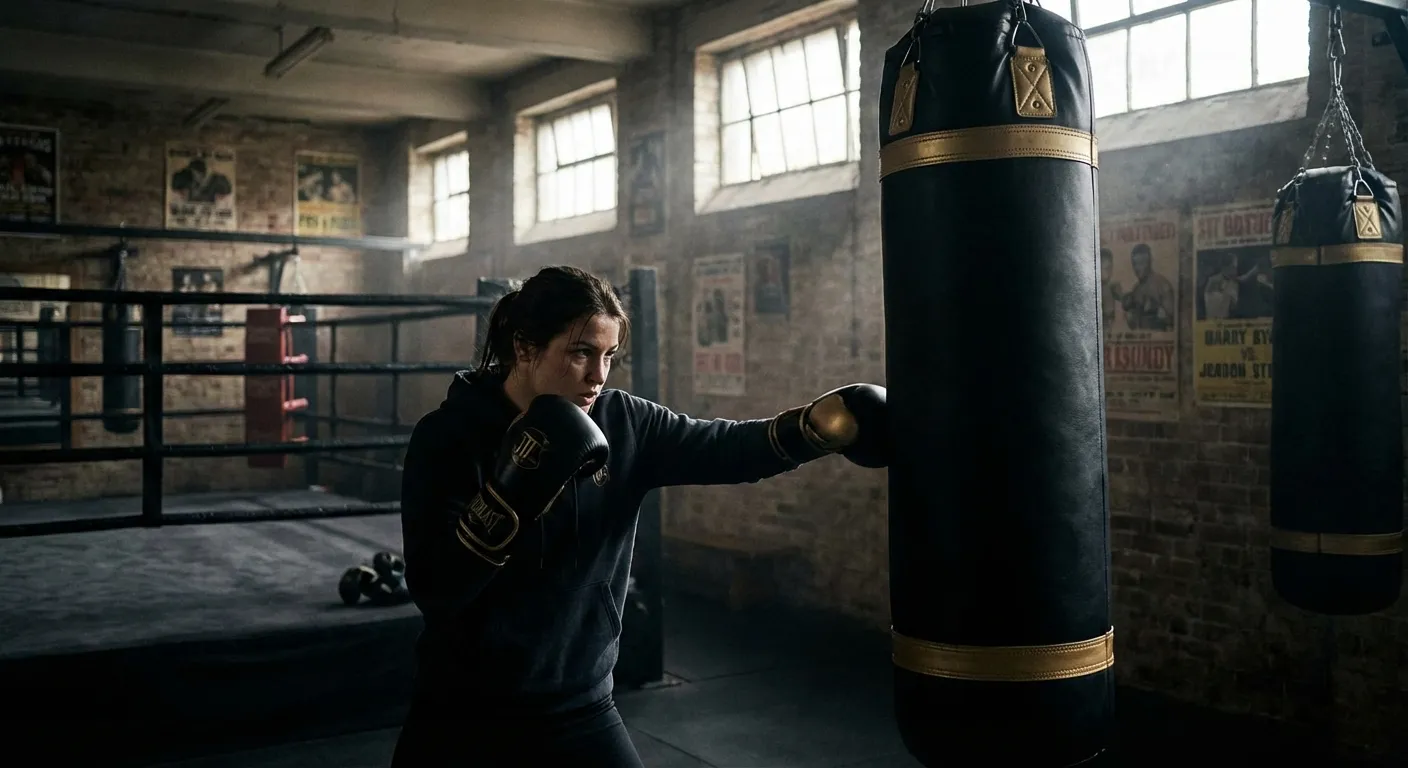
British women's boxing had a watershed moment with Nicola Adams winning gold at London 2012. What followed was not a brief peak. It has been a sustained period of development that has produced multiple world champions and a generation of young fighters who grew up thinking women's boxing was normal (source).
Here is who matters right now.
Natasha Jonas
Jonas has had one of the most interesting careers in British boxing. There was amateur success, then professional struggle, then a late-career flourishing that saw her hold world titles deep into her thirties.
She was the first British woman to box at the Olympic Games, competing at London 2012 as a lightweight, where she lost to Katie Taylor in the quarter-finals (source). The professional journey was difficult after that. She drew one world title challenge and lost another to Taylor before she finally broke through.
The breakthrough came in February 2022, when she stopped Chris Namus inside two rounds to win the vacant WBO super-welterweight title, at the third time of asking (source). She was named the British Boxing Board of Control's British Boxer of the Year for that year, the first woman to win the award.
Jonas later moved down to welterweight and became a unified champion, holding the IBF and WBC belts. In January 2024 she retained the IBF title against Mikaela Mayer by split decision. The reign ended in March 2025, when she lost a unanimous decision to Lauren Price and surrendered both belts (source). She was forty years old.
What Jonas represents is that boxing success does not follow a straight line, and the age at which it arrives is less predictable than other sports suggest.
Why she matters for women starting boxing now
Jonas is proof that starting later, having setbacks, and developing gradually does not preclude real achievement. For the large number of women who come to boxing in their thirties or later, she is the right person to point to.
Sandy Ryan
Ryan, from Nottingham, came through one of the strongest amateur backgrounds in the British game. She boxed for Great Britain and England, taking a silver medal at the 2014 World Championships and gold at the 2018 Commonwealth Games (source).
She won the vacant WBO welterweight world title in April 2023, beating Marie Pier Houle on points in Cardiff. Later that year she fought Jessica McCaskill in a unification bout in Orlando that ended in a split draw, with Ryan keeping the WBO belt (source).
The harder chapter followed. Ryan lost the WBO title to the American Mikaela Mayer by majority decision in September 2024, then lost the rematch by unanimous decision in March 2025 (source).
I include Ryan deliberately, because her story is more honest than a clean run of wins. She reached the top, held a world title, and then ran into an opponent who beat her twice. That is the reality of the sport for most fighters who get near the top. How she rebuilds from here is the part worth watching.
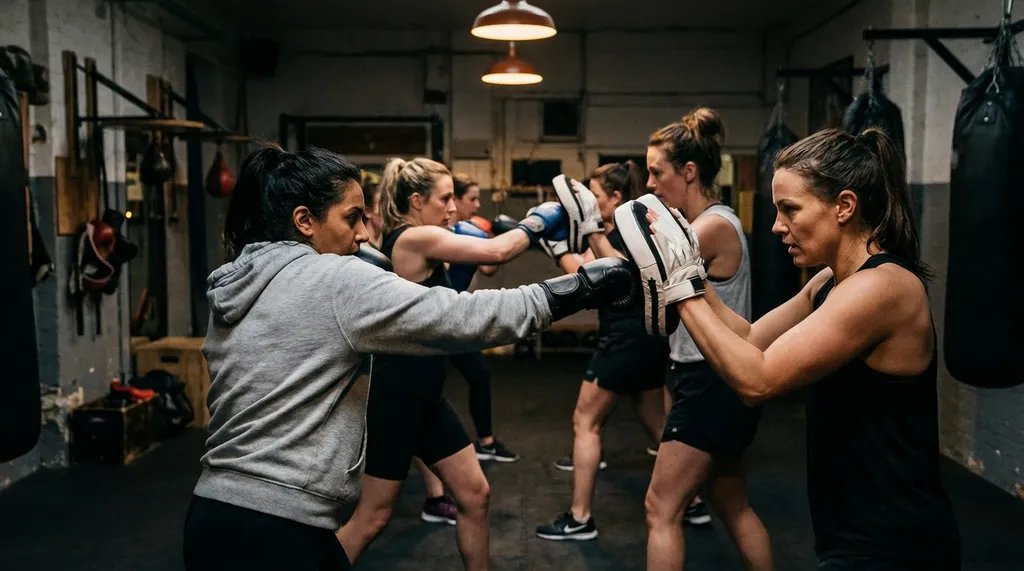
Caroline Dubois
Dubois is, for my money, the most complete young talent in British boxing right now, male or female. The amateur record tells you why. She was Youth Olympic champion in 2018, World Youth champion, and a four-time European Youth champion before she ever turned over (source). The story of her early years at Repton, where she trained for a time as a boy called Colin, has been well told.
As a professional she has been just as serious. In April 2026 she beat Terri Harper by unanimous decision in London, dropping her in the sixth round, to unify the WBC and WBO lightweight world titles (source). That win took her professional record to thirteen wins and one draw, with no defeats.
Her style is composed, technical, and built on a very high ring IQ. It is not always the most spectacular to watch, but it is brutally effective. The comparison with her brother Daniel, the heavyweight, is instructive. Two completely different approaches, both of them effective.
She is still in her early twenties. The frightening part for the rest of the division is how much room she has to improve.
Lauren Price
Price has one of the most unusual sporting backgrounds you will find in a boxing ring. Before she turned to the sport full-time she was an international footballer, playing for Cardiff City and winning caps for Wales, and she was a multiple-time world kickboxing champion as well (source). She gave up football in 2014 to concentrate on boxing.
That decision paid off at the highest level. She won Olympic middleweight gold for Team GB at the Tokyo Games, beating China's Li Qian in the final (source). She turned professional in 2022 and moved quickly.
In March 2025 she produced the best performance of her career so far, out-boxing Natasha Jonas over ten rounds to add the IBF and WBC welterweight titles to the WBA belt she already held, becoming a unified champion (source). Undisputed status, with all four major belts, is the obvious next target.
Price is the kind of athlete who shows that the disciplines required for elite performance carry across sports. Training discipline, competitive calmness, and the ability to perform under pressure are not specific to any one game.
The Amateur Scene
The named professionals are the visible part of British women's boxing. The amateur scene is where the depth is.
England Boxing's women's programme has produced multiple European and World Championships over the past decade. The pathway from club level through to national competition is more developed now than at any point in the sport's history (source).
For women training at club level, including at Honour and Glory's Women's Boxing sessions, the pathway to competition exists if they want it. It is not a distant professional world. Amateur competition at county and national level is accessible from any ABA-affiliated club.
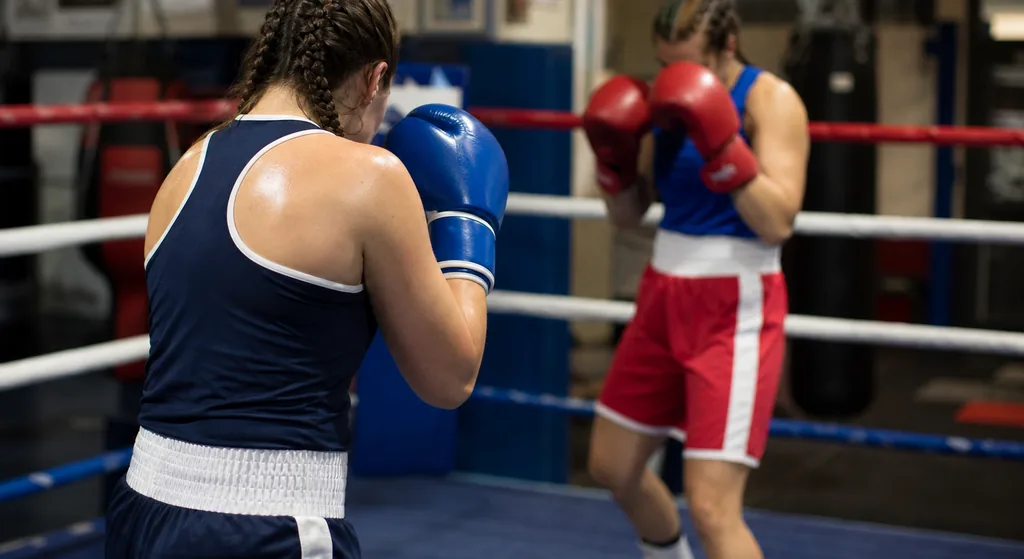
What This Generation Changes
The women training at boxing clubs now are the first generation who can look up to professional British women's champions as a natural thing rather than an exception. Adams, Jonas, Ryan, Dubois, Price. This is a substantial list, and it grows each year.
This matters for the culture of gyms. The assumption that women in boxing are novelties, or that they belong in a separate space from "real" boxing, is harder to sustain when women hold world titles across multiple weight classes.
For women thinking about starting boxing, whatever your age and whatever your goals, the sport has never been more welcoming or more culturally supported than it is right now.
H&G Team
Writer at Honour & Glory Boxing Club, a community boxing gym in Kidbrooke, South East London.
KEEP READING
Boxing for Women Who Have Never Exercised: Where to Start
Starting boxing with no exercise history is not an obstacle. It is actually a common starting point. Here is exactly what to expect and how to approach the first sessions.
Boxing for Women Over 40: Why It Fits So Well
For women over 40, boxing offers strength, confidence, conditioning and a serious mental reset. Here is why the sport fits this life stage.
Boxing After Trauma: Safety, Choice and Support
Some women find boxing confidence-building, but it is not trauma treatment. Choose the pace, contact level and environment carefully.
Was this page helpful?
It takes one tap, and it genuinely helps.
Choose your next step
Turn this article into the right action
Some readers are ready to book. Some need the class route first. Pick the route that matches what you actually want.