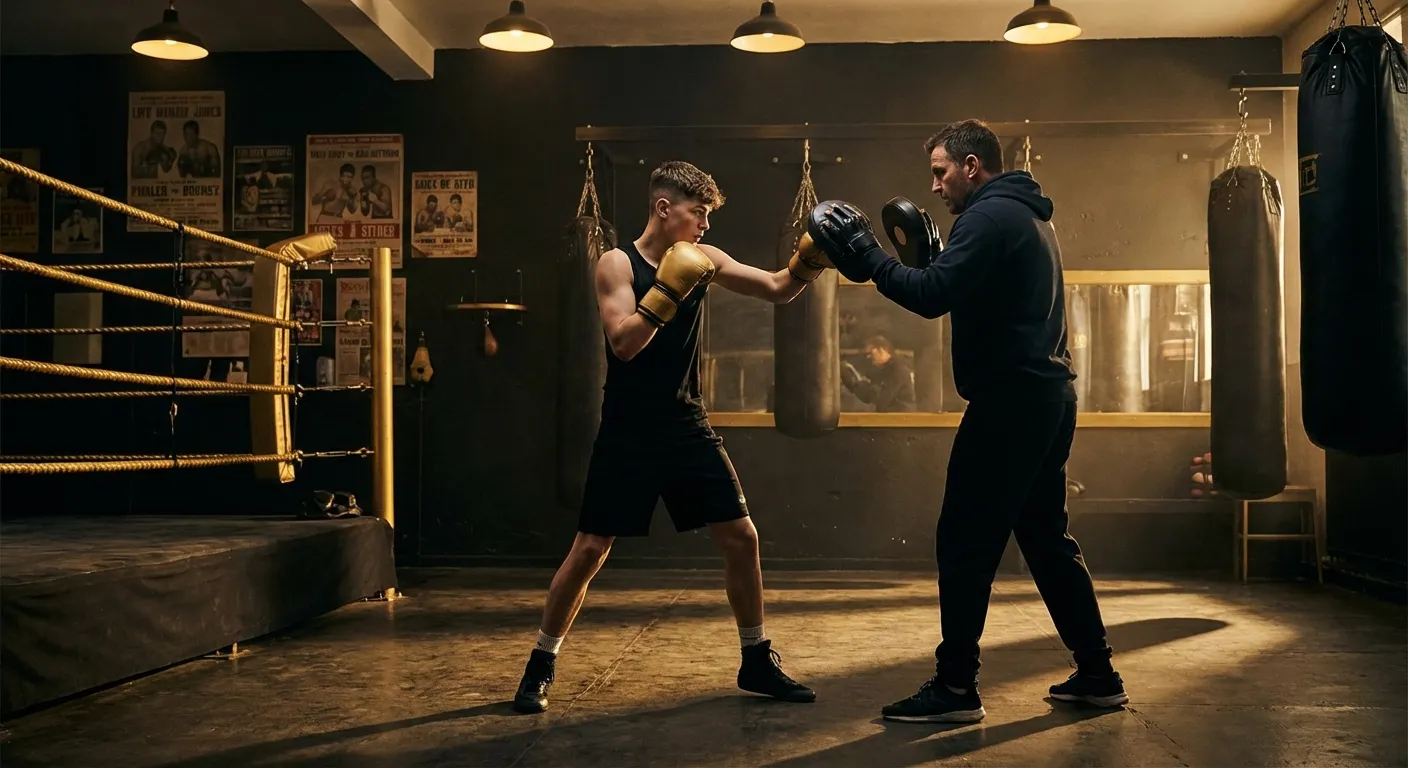
Muhammad Ali had his first boxing lesson at 12 years old. He went on to become arguably the greatest heavyweight in history.
This is a fact often used to justify pressuring young children into serious training regimes. It is also misleading in several important ways.
Here is what the early training of famous boxers actually looked like - and what it tells us about how young people should be introduced to the sport.
Muhammad Ali
Ali was born Cassius Clay in Louisville, Kentucky. At 12, his bicycle was stolen and he went to a police officer named Joe Martin to report it, saying he was going to beat up whoever took it. Martin, who ran a boxing gym, told him he should probably learn to fight first.
What followed was not intensive professional training. It was gym work - bag work, rope, basic technique. Ali trained at Martin's gym after school. He was not on a professional pathway. He was a kid learning a skill that he happened to be extraordinary at.
Ali competed in amateur boxing from 12 through to 18, winning the light heavyweight gold medal at the Rome Olympics in 1960. Those six years of amateur development were the foundation of everything that followed (source).
The lesson is not "start young and train hard." The lesson is "start young, learn the basics well, and compete at an appropriate level."
Joe Frazier
Frazier grew up in extreme poverty in Beaufort, South Carolina. He started boxing seriously at 16, after moving to New York and then Philadelphia where he found a gym.
What struck his early coaches was not his speed or technique - his jab was never his best punch - but his work ethic and his willingness to absorb instruction. He had started boxing relatively late compared to many future world champions, and his coaches noted that this meant he was more psychologically ready to work seriously.
Frazier won the Olympic heavyweight gold medal at Tokyo 1964, four years after first starting to train seriously (source).
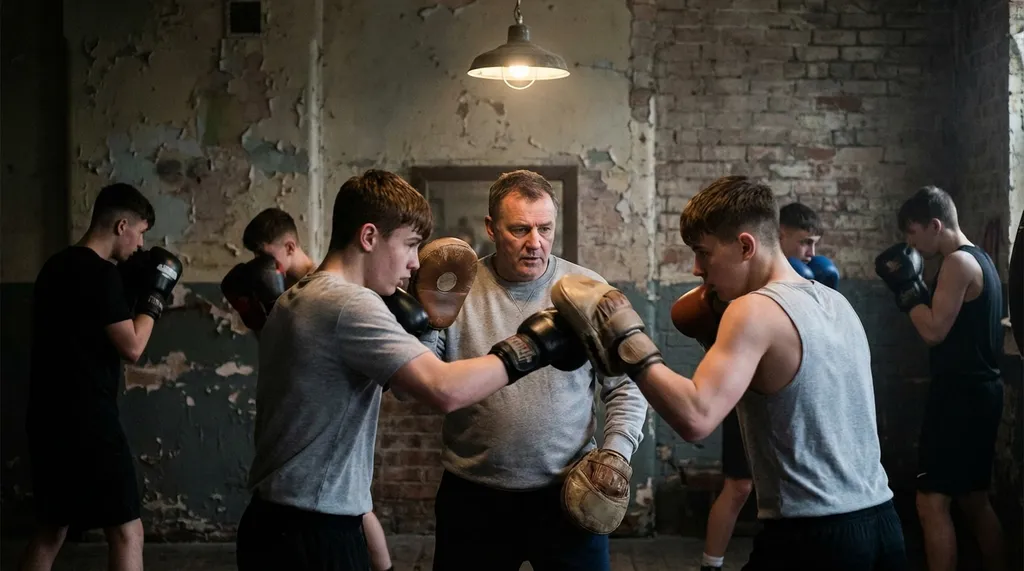
Lennox Lewis
Lewis was born in London but grew up in Canada, where he took up boxing at 13. He trained at a local gym in Ontario and developed through the Canadian amateur system, eventually winning the super-heavyweight gold at Seoul 1988 - representing Canada rather than Britain.
His early training was technical. Canadian amateur coaches at the time placed significant emphasis on fundamentals - footwork, defence, controlled punching. This technical base was visible throughout Lewis's professional career in his footwork and his ability to fight at distance.
The detail worth noting: Lewis did not turn professional until he was 23. His teenage years were spent on technique development and amateur competition, not chasing professional exposure.
Mike Tyson
Tyson's story is the most often told and the most often misunderstood.
Tyson was a troubled teenager in Brooklyn - genuinely troubled, with a record of arrests and violent incidents - when he came to Cus D'Amato's gym in Catskill, New York at 13. D'Amato recognised extraordinary talent and, eventually, took Tyson in as a ward.
What D'Amato gave Tyson was not just boxing instruction. It was structure, a home, a psychological framework for channelling his aggression. The peek-a-boo style D'Amato taught him was built around Tyson's specific physical attributes - explosive speed, low centre of gravity, powerful hooks.
The training regime was intensive by any standard. But D'Amato understood that Tyson's need was not just physical development. It was the kind of contained structure that gave a volatile personality somewhere to exist safely.
Tyson turned professional at 18. By 20 he was the undisputed heavyweight champion of the world. By 23, without D'Amato - who died when Tyson was 19 - the structure that had contained him began to fracture.
Nicola Adams
Adams tried boxing at 12 at a leisure centre class. She did not have the immediate-star quality story that many boxing biographies construct. She trained, developed, had setbacks, trained more.
The breakthrough came slowly. She won her first major international title at 27. The amateur career that culminated in Olympic gold was built over fifteen years of patient development - not a childhood prodigy trajectory (source).
This is the most representative story for most people. Talent plus sustained work over time, not talent plus instant success.
What the Research Actually Shows About Starting Age
Studies on youth athletic development consistently show that early specialisation - focusing intensely on one sport before adolescence - produces worse long-term outcomes than multi-sport development with later specialisation.
The boxers who became the best in the world mostly did not specialise exclusively in boxing in their childhood. They were physically active across multiple activities, and boxing became primary in mid-to-late teenage years.
This maps to what sports science understands about the developmental windows for different athletic qualities. Coordination and movement skills develop best before 12. Physical power and conditioning are better developed after puberty.
What This Means for Young Boxers Now
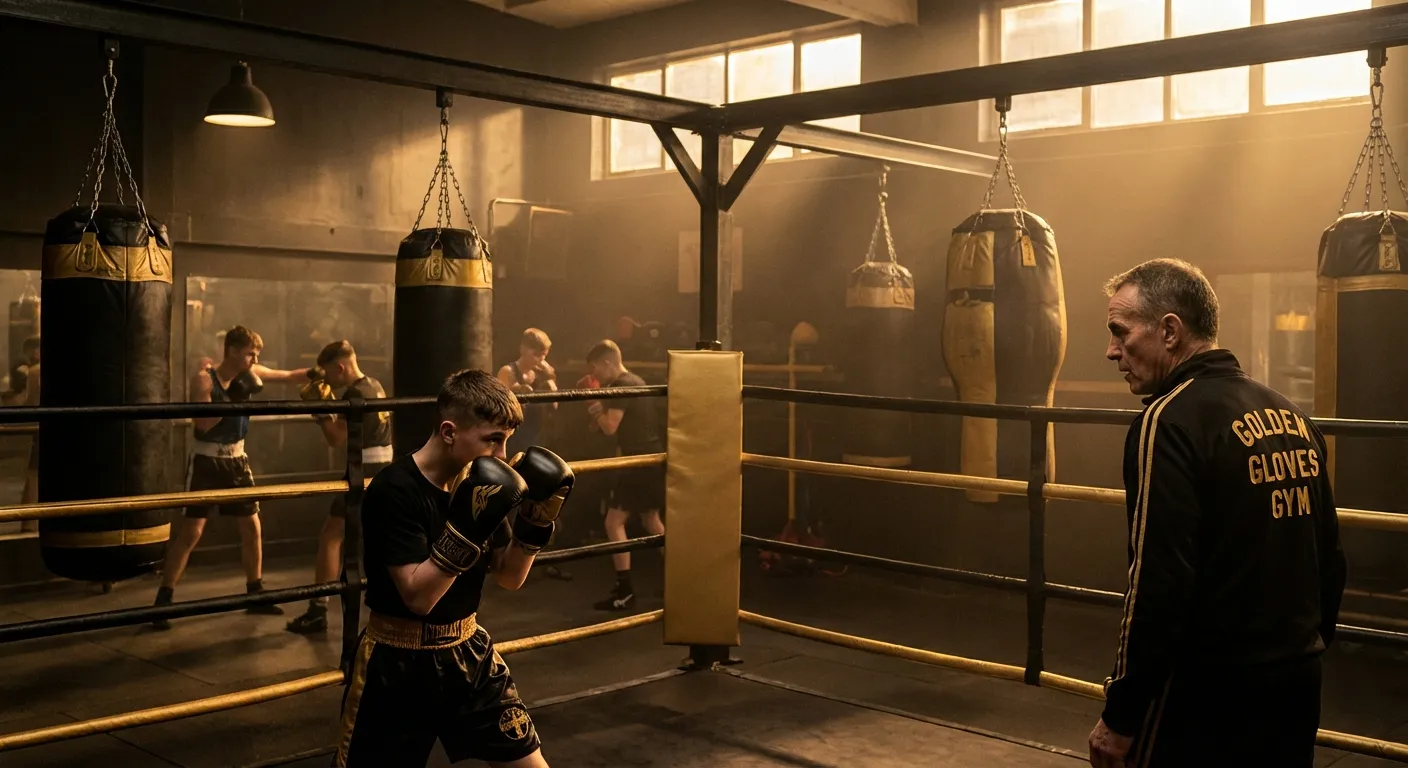
For children starting boxing at Honour and Glory's Junior classes, the goal at 10-14 is not to produce champions. It is to develop movement skills, learn basic technique, build confidence and discipline, and find out if boxing is something they love.
Children who love it, who come back reliably and engage genuinely, tend to develop into the best young boxers. Forced early specialisation produces burnout and dropout.
The famous boxers who started young succeeded because they found something that clicked for them and were given appropriate development over time. The ones who did not go on to great things despite early promise mostly burned out, were overtrained, or were pushed through a system before they were ready.
Start whenever, train appropriately for your age, love the process. That is the model.
H&G Team
Writer at Honour & Glory Boxing Club, a community boxing gym in Kidbrooke, South East London.
KEEP READING
Back to School Fitness - Boxing for Teenagers
September means new routines. For teenagers wanting to get fit outside of school PE, boxing offers strength, confidence, and genuine skill development.
How Boxing Can Help Children Build Resilience
Resilience is one of the most valuable things we can help children develop. Boxing builds it through specific mechanisms that other activities do not replicate as effectively.
Moses Itauma: Heavyweight Future
At 19, Moses Itauma is already being talked about as a future world heavyweight champion. His journey from youth amateur boxing to professional knockout artist.
Was this page helpful?
It takes one tap, and it genuinely helps.
Choose your next step
Turn this article into the right action
Some readers are ready to book. Some need the class route first. Pick the route that matches what you actually want.