Chessboxing does not let you hide in the part you prefer.
If chess is your thing, you still have to settle your breathing, get your gloves on or off cleanly and face the same position again. If boxing is your thing, you still have to see the threat on the board before the clock eats your time. That is the point of it.
H&G is gathering interest for an adult chessboxing class. There is no confirmed class date or price. This is the useful bit: how the H&G format works, where the game ends, and how a boxing beginner can start without being pushed into contact.
The H&G round sequence
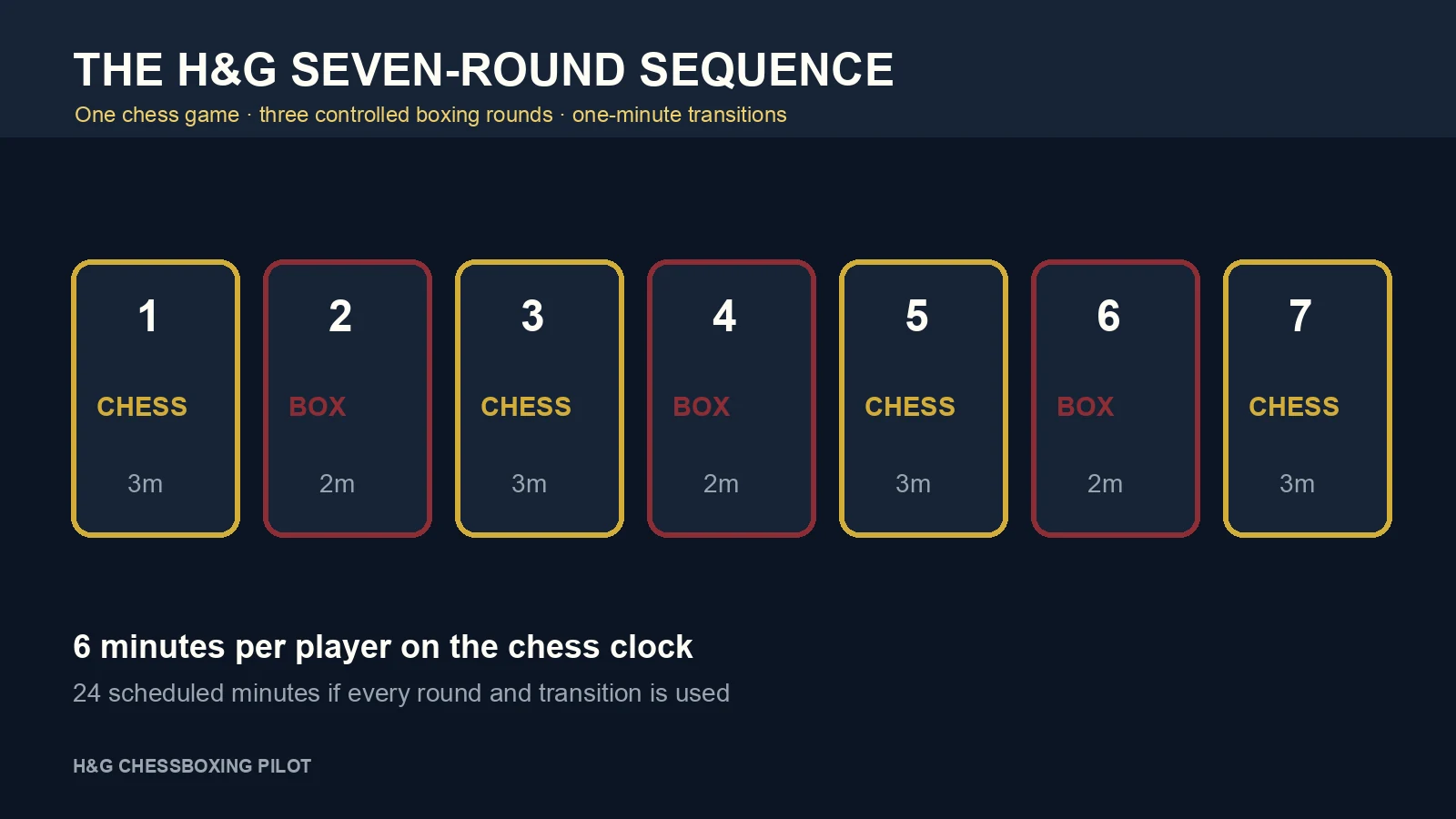
The full format has seven alternating rounds. It starts and ends with chess:
- Chess for three minutes
- Boxing for two minutes
- Chess for three minutes
- Boxing for two minutes
- Chess for three minutes
- Boxing for two minutes
- Chess for three minutes
There is one minute to change over after each of the first six rounds. That gives four chess windows, three boxing windows and six chances to reset properly rather than stumble from one job into the next.
The game is continuous. When a chess round ends, the pieces stay where they are. You do not start a new opening after the boxing work. You come back to the same attack, hanging piece or awkward endgame with the time you have left.
That is why the changeover matters. A player who can calm down, look at the whole board and make a sensible move has an edge over the player who rushes because they feel tired. It is not about acting unaffected. It is about getting organised quickly.
Six minutes each on the chess clock
Each player has six minutes for the whole chess game. It is not six minutes in every chess round.
Your clock runs while it is your move. Make the move, press the clock and your opponent's time starts. When a three-minute chess window ends, both clocks stop. Whatever is left on your clock carries into the next chess window.
Four windows make 12 minutes of possible board time. Two players with six minutes each have the same 12-minute total between them. One player may arrive at the last round with a minute to think. The other may have almost none. That is not bad luck. It is how they used the clock.
The chess rules are normal FIDE Laws of Chess: legal moves, check, checkmate, resignation, clocks and draws all come from there. If you spot a problem with the board or clock, say so. Do not start moving pieces or pressing buttons during a boxing round to fix it yourself.
Use the one-minute transition well
The minute between rounds is not a rest with nothing to do. It is enough time to change equipment, get seated, take a breath and establish whose move it is. That sounds basic. It is also where people get sloppy.
Keep the board alone while the boxing work is on. No friend should be whispering a move. No coach should be pointing at a fork. No one needs a chess engine anywhere near the session. When the board returns, the decision belongs to the player whose clock is running.
The simplest habit is the best one: sit down, look at both kings, check the clock, then look for your move. Do not grab the first piece because the room is noisy or your shoulders are tight.
How the chess game ends
Checkmate ends the game. So does resignation. Stalemate is a draw: the player to move has no legal move but is not in check. A dead position is also a draw when no possible series of legal moves can lead to checkmate. Players can agree a draw, and a qualifying repetition can be drawn under the applicable FIDE repetition rules.
There are exactly 12 minutes of chess windows and exactly 12 minutes on the two clocks combined. That means the final chess window does not run out before the chess time does. Under the FIDE Laws of Chess, if a player does not complete their next move before their flag falls, that player normally loses on time. The game is a draw if the opponent could not possibly checkmate by any legal sequence.
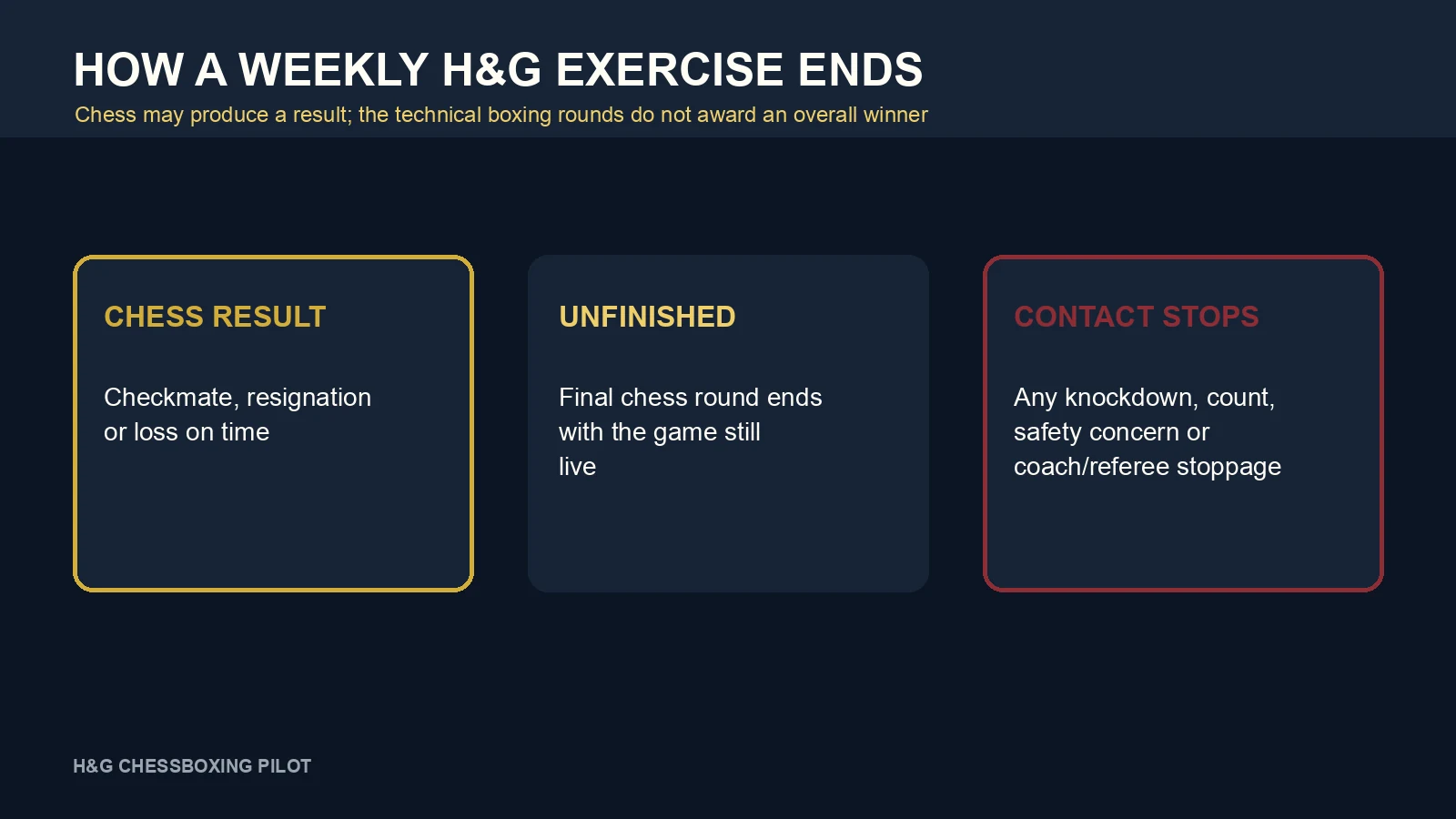
The clock result matters as much as the position. Do not play on after flag fall and do not turn the boxing rounds into a scorecard to produce a winner.
The boxing rounds are training, not a knockout contest
The weekly boxing rounds are controlled technical work. They are not an unofficial bout, and there is no overall boxing winner. The coach can reduce the pace, change the pairing or stop the contact if the work is no longer useful.
That is different from a public chessboxing show. Chessboxing Nation, a current London organiser, describes its events as alternating chess and boxing until checkmate or KO. That is an event setting. H&G is using the alternating format for coached weekly training, where the aim is to make good decisions and leave with better habits.
A beginner can start without contact
You do not need sparring experience to begin. The non-contact route can use stance work, footwork, shadowboxing, pads, bags and short conditioning rounds before you return to the chessboard. You still train the switch between physical work and clear thinking.
Start with H&G Recreational Adults boxing if boxing is new to you. Learn how to stand, move, defend and work with a partner before adding more pressure. Contact is coach assessed. Good chess does not make somebody ready for it, and a hard punch does not make somebody good at the board.
Chessboxing at H&G in Kidbrooke
H&G is collecting interest at our Kidbrooke boxing club. No date or price has been confirmed. Read the proposed H&G chessboxing class format, then see our guide to training for chessboxing for a practical first session.
H&G Team
Writer at Honour & Glory Boxing Club, a community boxing gym in Kidbrooke, South East London.
KEEP READING
What Chess Rating Do You Need for Chessboxing?
What the 1000+ Chess.com Rapid guide means for the six-minute chessboxing format, and how adults can find the right start.
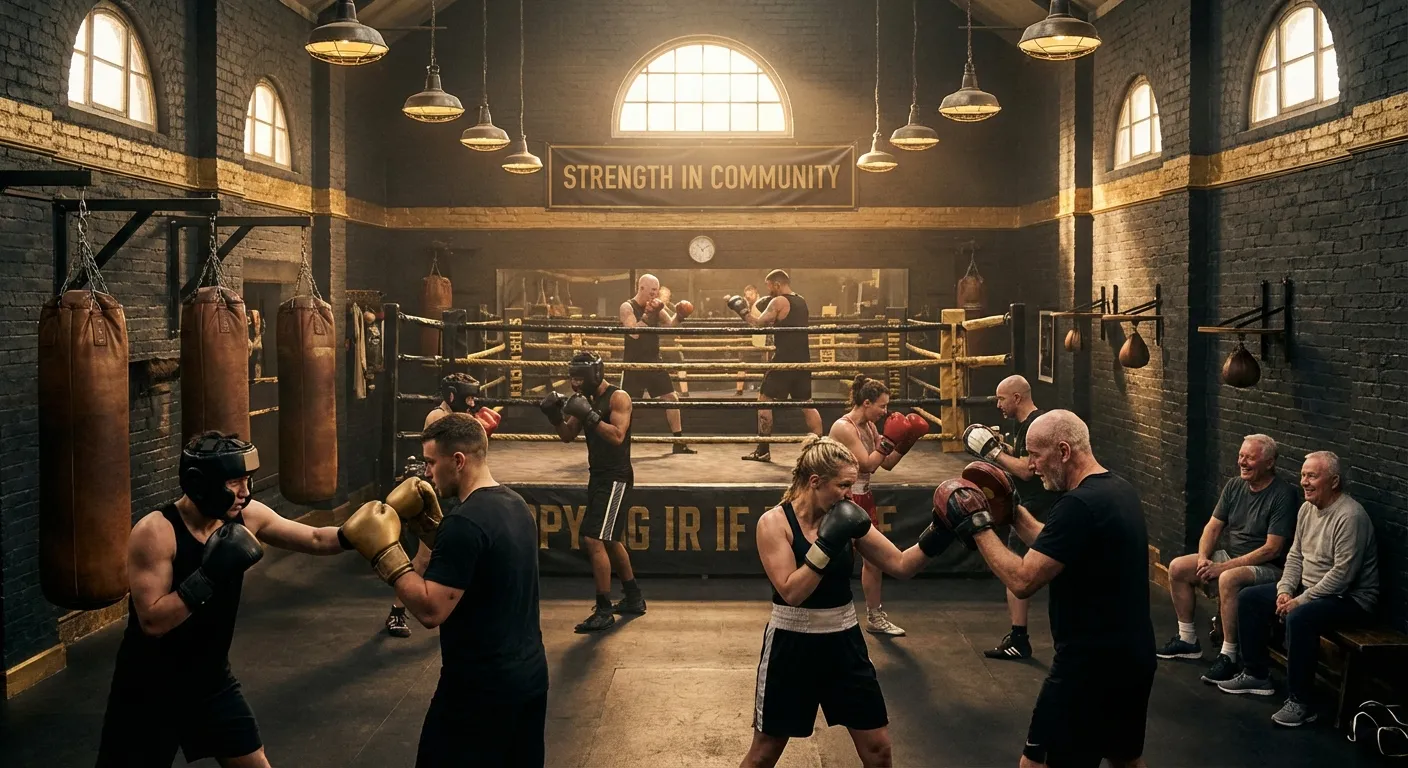
Social Prescribing and Boxing: What It Means
Social prescribing allows GPs to refer patients to non-clinical community activities. Boxing clubs are increasingly part of this network. Here is what it means and how to access it.
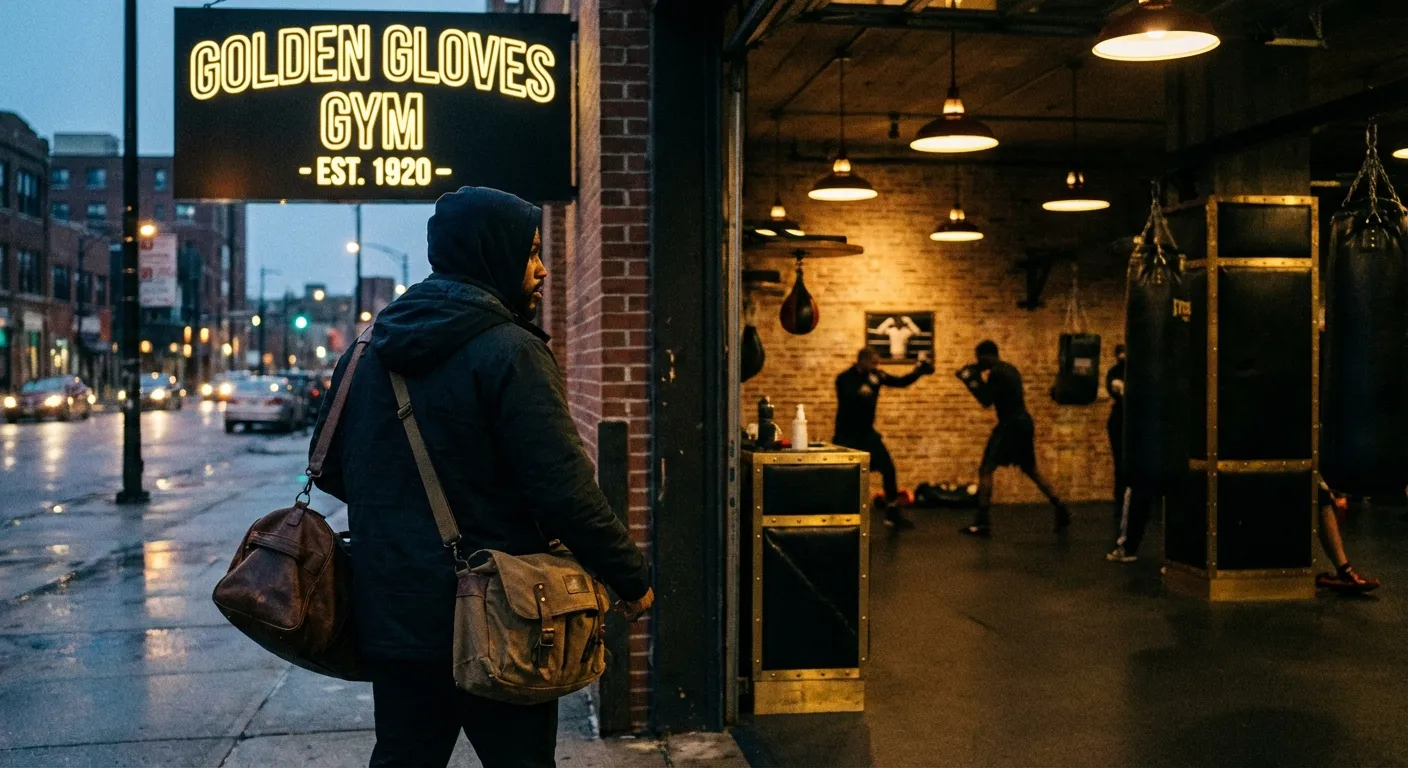
Boxing for Commuters in South East London: How to Fit
Long commutes make consistent exercise difficult. Here is how people commuting from south-east London have made boxing training work around working hours.
Was this page helpful?
It takes one tap, and it genuinely helps.
Choose your next step
Turn this article into the right action
Some readers are ready to book. Some need the class route first. Pick the route that matches what you actually want.